

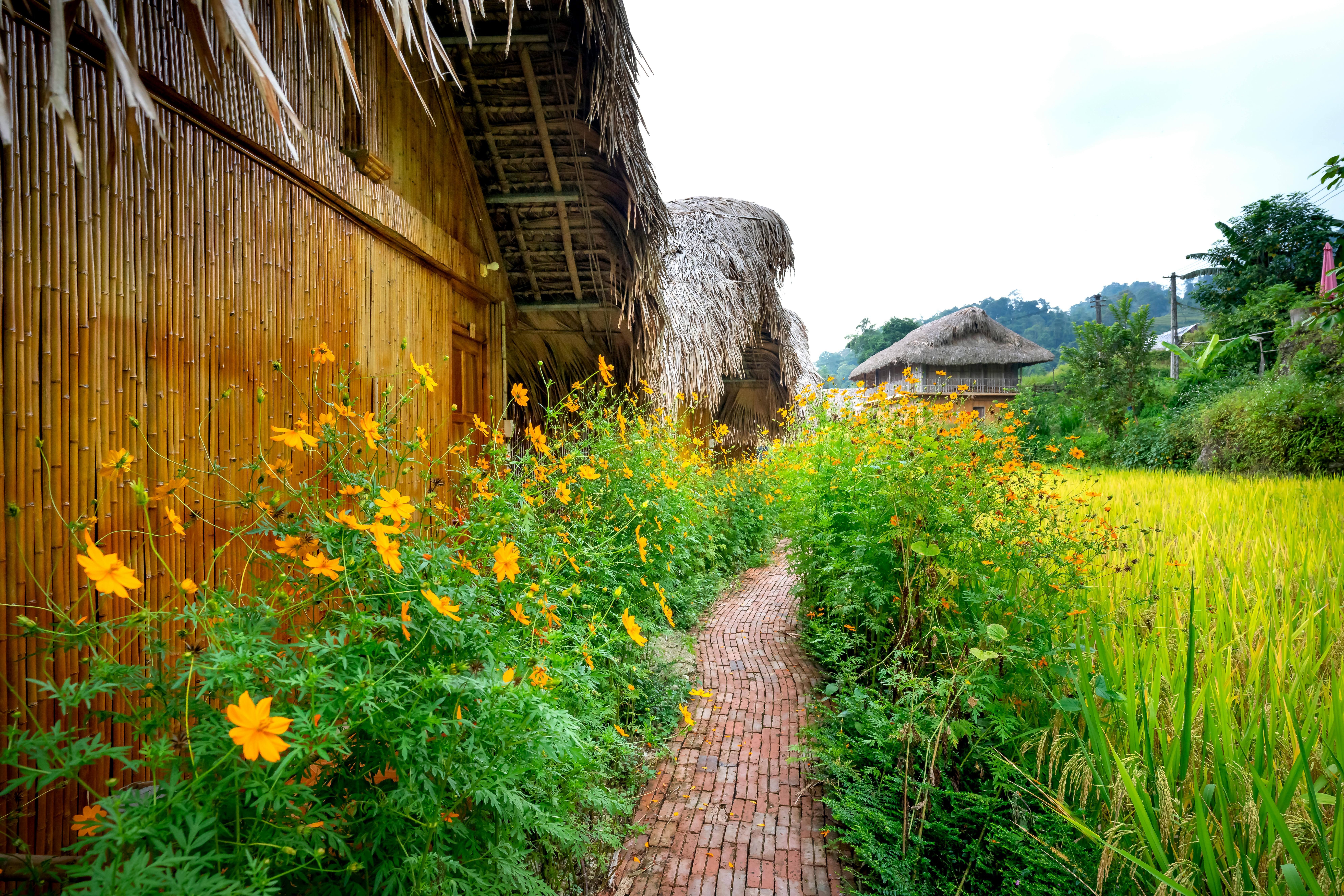
Image: Bungalows near grassy hills in a village, showcasing fancy mud and bamboo huts that blend rustic design with the natural landscape.
Mud and Bamboo Architecture: Sustainable Building Techniques Explained
The Art of Mud and Bamboo Construction: Principles and Practices
Mud and Bamboo Architecture: Raw, Smart, and Seriously Underused
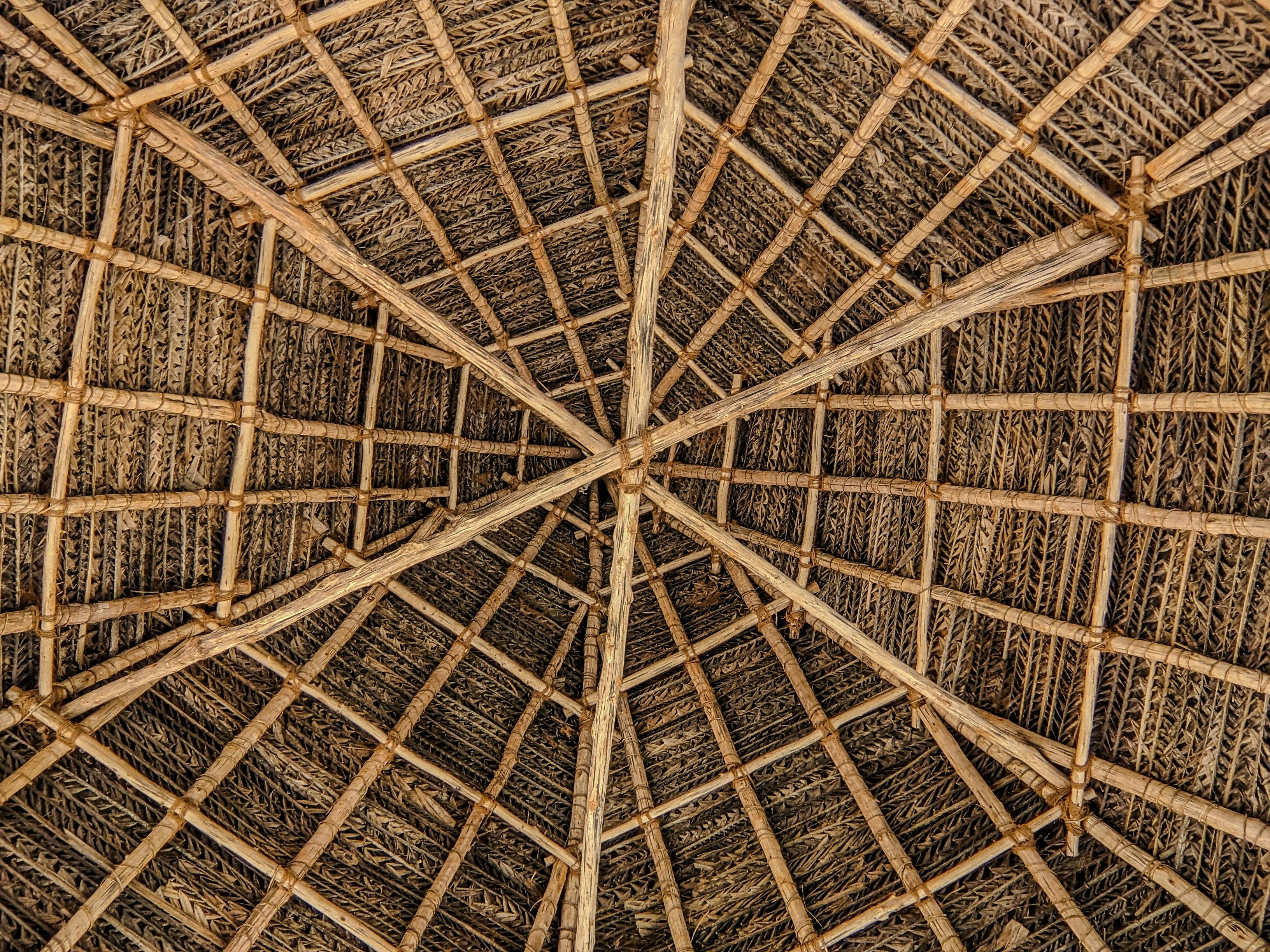
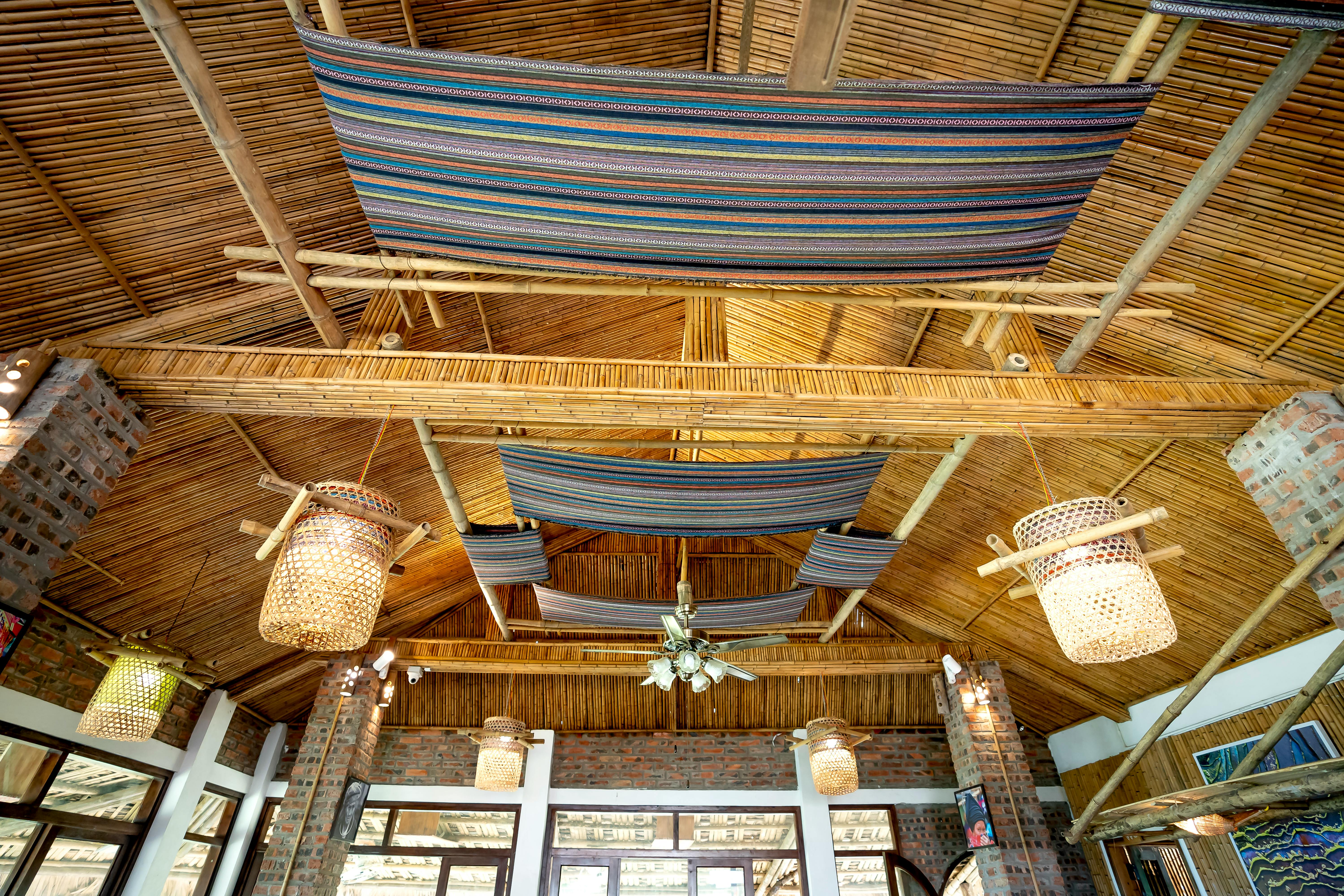
Image: Low-angle shot of a mud and bamboo ceiling in Willemstad, Curaçao, emphasizing the use of natural materials in sustainable architecture.
Good design doesn’t always mean glass and concrete. Sometimes it’s earth under your feet and bamboo in your hand—simple, strong, and surprisingly effective. That’s what mud and bamboo architecture is all about.
And no, this isn’t some romantic throwback to rural huts. We’re talking durable, sustainable, low-cost, climate-adaptable buildings that can go head-to-head with modern materials—if you know how to use them right.
Down below, we’ll break down the essentials. Real examples, smart strategies, and practical reasons why this humble combo still works today.
What Makes Mud and Bamboo a Solid Combo?
It’s not just tradition. It’s logic.
● Locally available materials
Mud is literally everywhere. Bamboo grows fast. You don’t need a supply chain—you need a shovel and some basic skill.
● Climate control built in
Thick earthen walls keep heat out and warmth in. No AC? No problem. And bamboo roofs offer lightweight coverage that holds up in tropical storms.
● Saves money without cutting corners
You’re not sacrificing quality. You’re using a smarter resource. Plus, no cement bill.
● Good for the planet
Less concrete = lower emissions. Bamboo = fast renewable. Enough said.
How Mud and Bamboo Are Shaping Eco-Friendly Architecture
Traditional Meets Modern: Mud and Bamboo Architectural Innovations
How It's Built: Real Techniques That Work
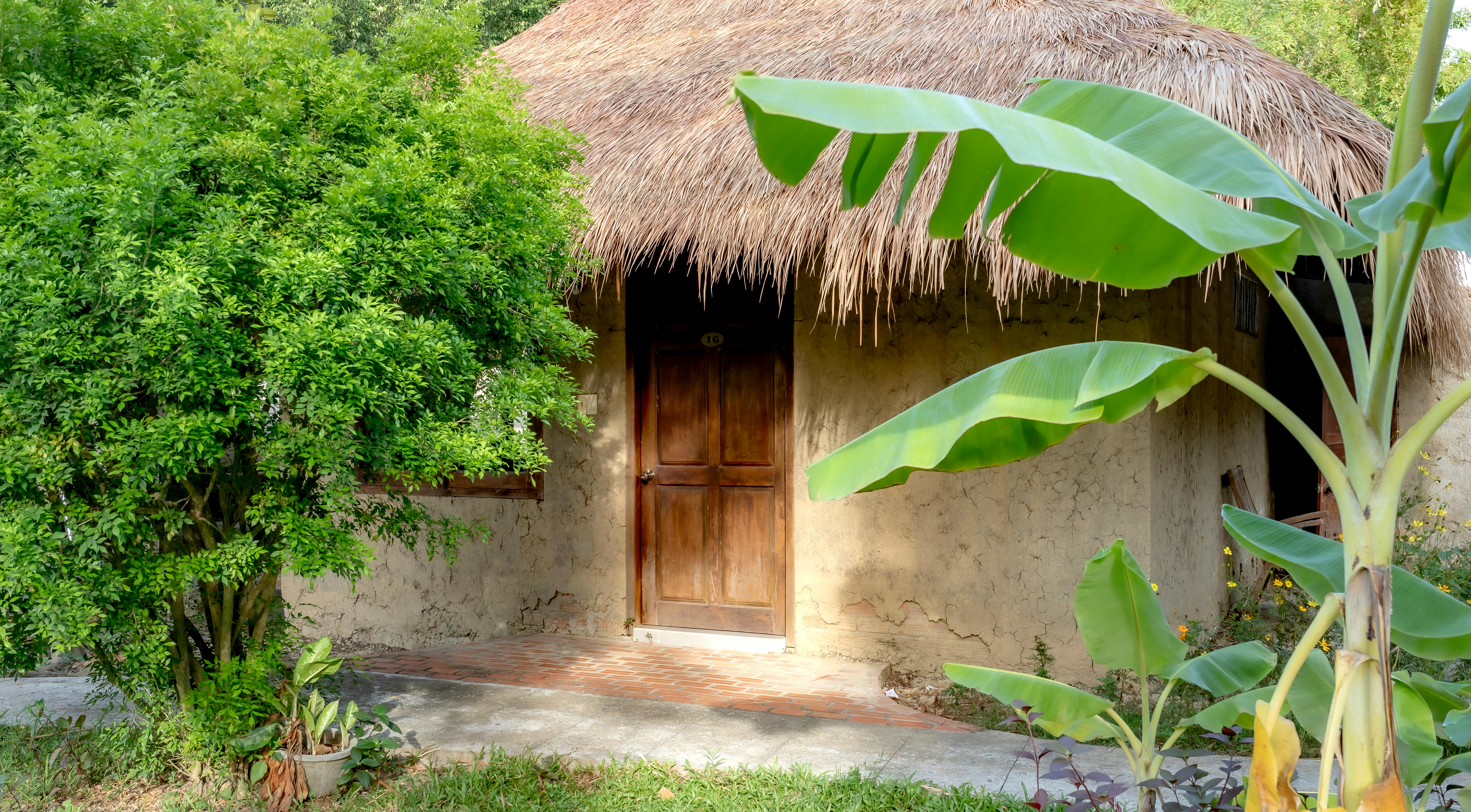
Image: House with a thatched roof in a forest, constructed with mud and bamboo, showcasing eco-friendly materials and a harmonious connection with nature.
So how do you make something solid out of mud and grass?
Here’s what actually works in the field:
● Wattle and Daub
A frame of bamboo is woven (like a basket) and then plastered with mud.
→ Used in: Southeast Asia, Africa, parts of Europe
→ Strength: Flexible, good for earthquake-prone areas
● Cob Walls
Mud mixed with straw and built up in layers. No framework. Just form and pack.
→ Used in: UK, Middle East, Nepal
→ Strength: Thick, heavy-duty walls. Great insulation.
● Rammed Earth with Bamboo Roofing
Walls made by compacting layers of earth. Roof supported by bamboo trusses.
→ Used in: India, China, Mexico
→ Strength: Clean lines. High durability if protected from water.
Building with Nature: Insights into Mud and Bamboo Structures
Mud and Bamboo Architecture: Combining Tradition with Sustainability
Real-World Examples That Get It Right
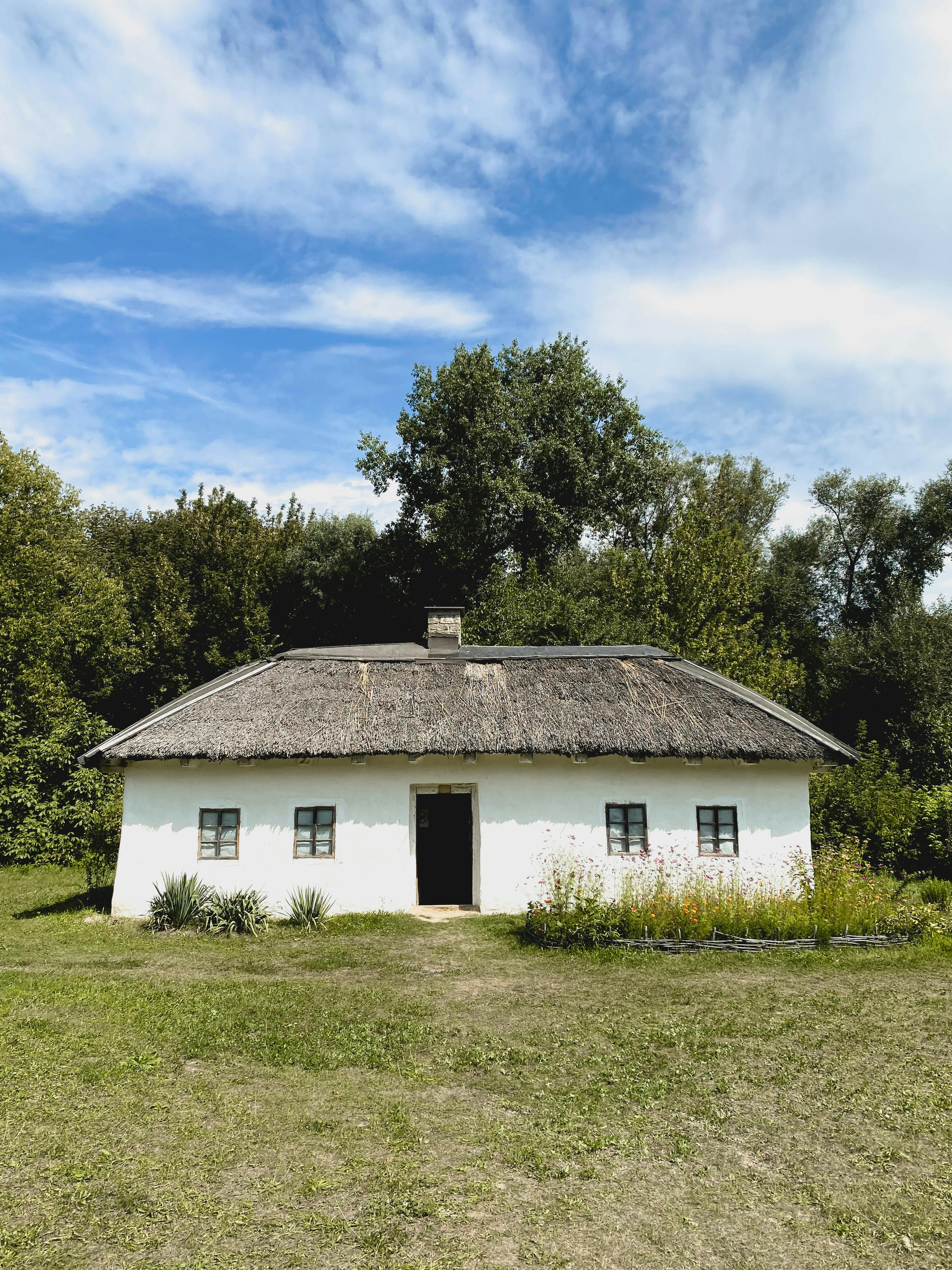
Image: Facade of a house made from mud and bamboo, painted white for a modern, sleek appearance while maintaining natural building materials.
Let’s look at a few projects that didn’t just work—they stood out.
● METI Handmade School – Bangladesh
Designed by Anna Heringer and Eike Roswag.
Mud walls, bamboo structure. Built by locals. Award-winning. Still standing strong.
● Green School – Bali
Completely off-grid. Uses bamboo for structure, walls, and even furniture. Combines traditional techniques with smart engineering.
● Earth & Bamboo Homes in Auroville – India
Built for modern living using ancient methods. Water-resistant earth blocks, vaulted bamboo roofs. Sleek, simple, functional.
Don’t Be Fooled: There Are Challenges
Not every project is foolproof. Here's what to plan for:
● Water is your biggest enemy
Mud erodes. You need wide eaves, raised foundations, and good drainage.
● Skilled labor matters
These aren’t DIY weekend projects. You need people who actually know how to mix, layer, and build right.
● Local weather will shape your method
What works in South India won’t hold up in a Canadian winter. You have to adapt materials and structure to suit your region.
Related: Housing Concepts Explained: From Traditional Styles to Minimalist Trends
Why Architects Are Still Using It Today
This isn’t nostalgia. It’s smart design.
● Costs are rising—Mud and bamboo slash building costs by up to 70% in some areas.
● Climate change is real—These materials help reduce the carbon footprint.
● Clients want natural—Earthy, warm, local-looking homes are back in demand.
● Durability has been proven—Many of these homes are still standing after 100+ years.
In Focus: What Modern Designers Can Learn from This
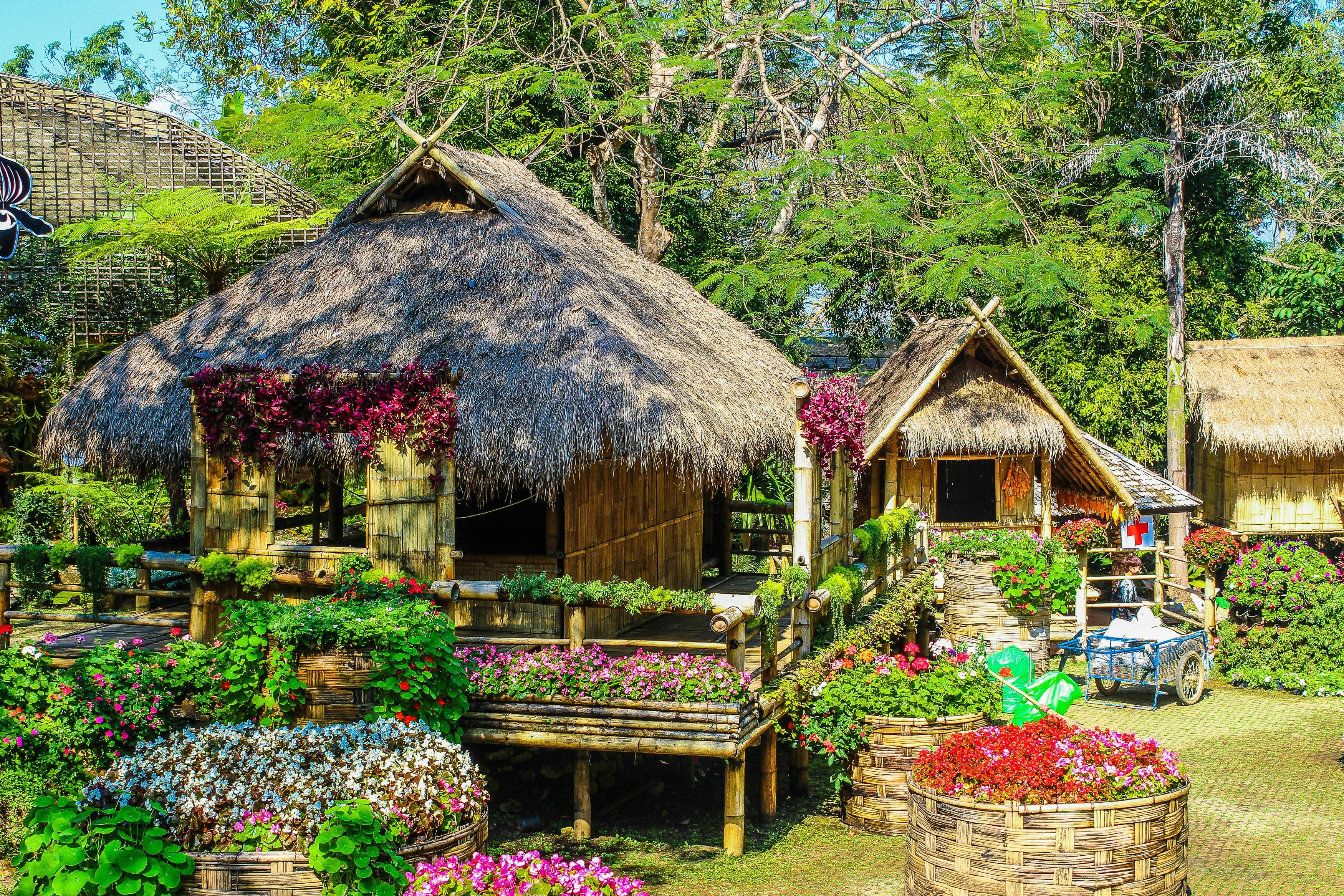
Image: A countryside settlement with small mud and bamboo huts, showcasing simple, sustainable living that harmonizes with the surrounding natural environment.
Image: Mud and bamboo huts nestled in lush greenery, creating a tranquil environment that blends naturally with the surrounding nature.
Bamboo isn’t weak—It’s just unfamiliar to modern builders.
It has a higher tensile strength than steel (per weight) and, when treated properly, lasts decades.
Combine it with smart joints, new coatings, and modular planning, and suddenly bamboo’s not rustic anymore—it’s high-tech natural engineering.
Same goes for mud. With compressed earth blocks, lime stabilizers, and hybrid wall systems, you can build multi-story homes with the same old dirt.
Do & Don’t: The Smart Way to Use Mud and Bamboo
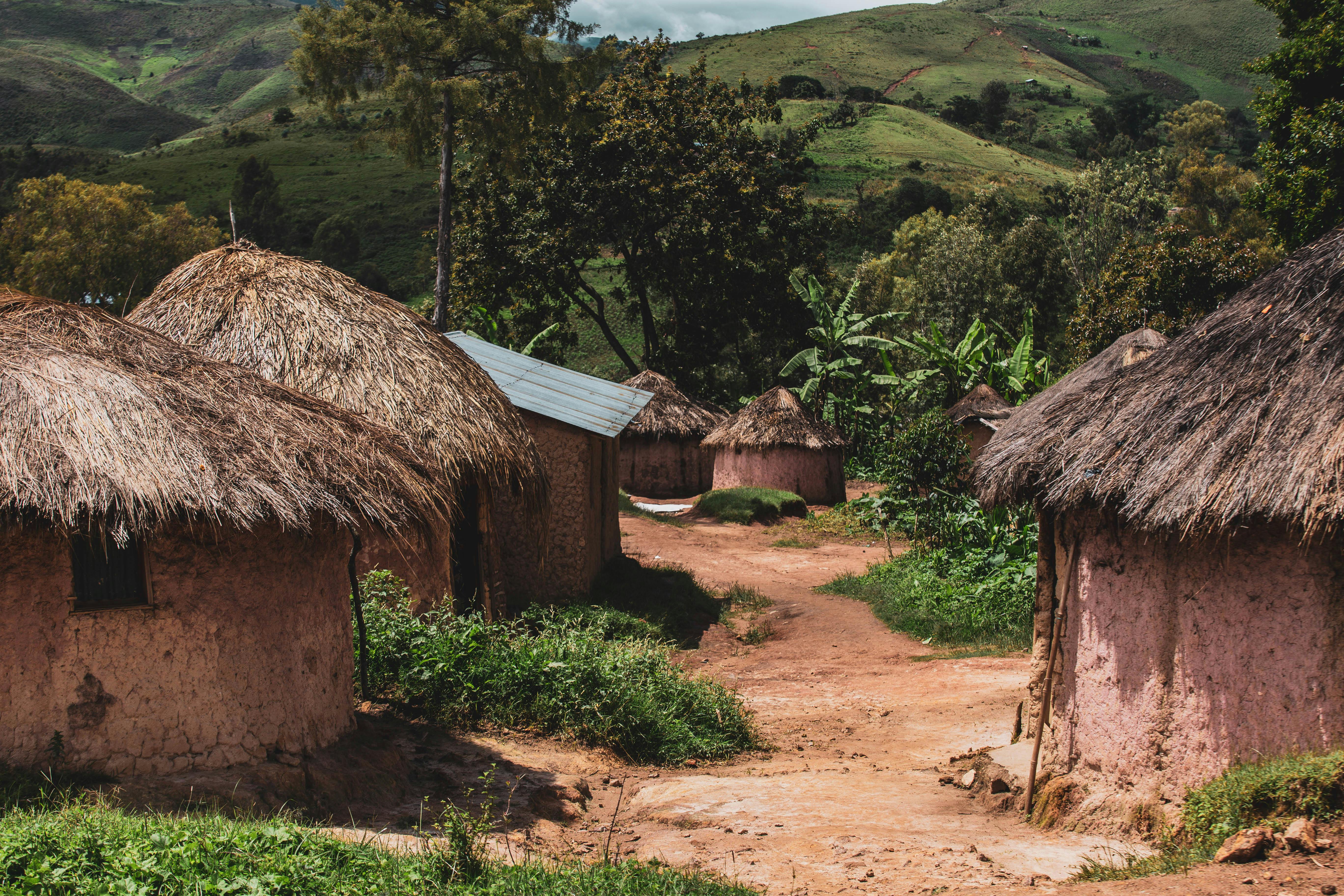
Image: Authentic rural cottages in a village, showcasing mud and bamboo huts built with traditional methods, highlighting sustainable living in a rural environment.
DO:
✓ Use experienced builders, or train your crew properly
✓ Protect from water—wide overhangs, stone foundations, lime plaster
✓ Plan airflow—these materials can handle heat, but ventilation helps
✓ Mix modern + traditional—don’t be afraid to hybridize
DON’T:
✕ Don’t build in flood zones
✕ Don’t skip proper bamboo treatment (pests love untreated cane)
✕ Don’t assume it’s “cheap” design—it takes skill to get right
✕ Don’t overcomplicate—keep the structure simple and grounded
Mud and Bamboo Architecture (Part 2)
How to Build Smarter Using Hybrid Techniques
Short version:
Want the beauty and breathability of mud with a little extra durability and polish? Hybrid techniques are the sweet spot. You get the strength of bamboo with the sculptability of mud—and the final result doesn’t have to look like a DIY weekend experiment.
What Is a Hybrid Bamboo-Mud Wall?
Simple: It’s a frame made of bamboo (or timber) filled with a mixture of earth materials—like cob, adobe bricks, or wattle-and-daub.
The idea?
▪ Bamboo gives it a strong skeleton
▪ Mud fills the gaps and handles insulation
▪ Finish it right and you’ve got a wall that’s tough, breathable, and feels amazing to live in
Three Versions That Actually Work (And When to Use Each)
1. Bamboo + Cob Infill (Best for DIYers)
What it is:
Vertical bamboo frame + hand-sculpted cob mixture (soil, straw, sand, water)
Why it works:
▪ You can shape niches, benches, even curved walls
▪ It’s forgiving—easy to repair and tweak as you go
▪ Great for rustic aesthetics
Tips:
● Always test your soil mix first (30% clay, 70% sand is a good start)
● Build up in layers—don’t rush it
● Let each section dry a bit before stacking higher
2. Wattle and Daub (Best for Light Walls or Interiors)
What it is:
A lattice of thin bamboo strips (wattle) plastered over with daub (mud + fiber)
Why it works:
▪ Less material, faster drying
▪ Looks sleek when smoothed and lime-plastered
▪ Excellent for partition walls or decorative panels
Watch out for:
✖ Too much water in your daub—will slump and crack
✖ Gaps in the bamboo weave—daub needs something to grip
3. Adobe Blocks with Bamboo Frame (Most Durable)
What it is:
Sun-dried bricks made from mud, stacked within a bamboo or wood frame
Why it works:
▪ Bricks cure in the sun—faster building
▪ Stronger than cob if made right
▪ Easy to transport if you're working on multiple buildings
Extra advice:
✔ Use a solid plinth (stone or concrete) to keep bricks dry
✔ Use wire mesh + plaster for longer life on outer walls
✔ Seal joints well with a good earth mortar
What to Focus On When Using Bamboo + Mud Together
Let’s keep this simple. If you're aiming for strength, comfort, and longevity:
✔ Focus on:
▪ Keeping bamboo dry (raised foundations, roof overhangs)
▪ Mud mix that’s not too wet or too dry
▪ Tying bamboo joints well (rope, bolts, dowels)
▪ Letting walls breathe—don’t use plastic or cement coatings
▪ Working in sections—not trying to build everything in one go
🚫 Avoid:
▪ Shortcuts with sealing—mud hates direct rain
▪ Skipping test batches of cob or adobe
▪ Building without roof shade or gutters
▪ Using store-bought clay without knowing its composition
Real-Life Hybrid Done Right
A school project we worked on used vertical bamboo posts, woven strip infill, and light cob packing. No cement, no paint. Just lime wash and well-angled rooflines. Kids said it was the coolest classroom in summer—and the warmest in winter. Teachers noticed students stayed more focused. Comfort matters.
In Focus:
Why Breathability Beats Insulation (Sometimes)
Most folks think “insulated” means synthetic foam or fiberglass.
But earthen walls don’t trap heat or cold—they balance it.
That means in hot climates, they absorb heat during the day and release it slowly at night.
In colder spots, they hold warmth better than you'd expect (especially if you add straw or sawdust).
So if you’re thinking about layering your hybrid walls—don’t seal them in. Let them breathe.
Common Questions
Q: Can I use mud and bamboo in urban construction?
Yes—but check building codes. Use lime-stabilized mixes and reinforced frames to meet safety standards.
Q: How do you stop bamboo from rotting?
Keep it dry, raise it off the ground, and flame-treat or soak in borax-boric acid solution. Done right, it lasts decades.
Q: Is mud hard to maintain?
Nope. Small cracks? Patch with a wet mix. Walls worn down? Add another earthen plaster layer. It’s low-tech for a reason.
Related: Starting Your Mud and Bamboo Project: A Practical Guide
Shocking But True
● Bamboo has a higher strength-to-weight ratio than steel.
● Mud homes have been shown to outperform concrete in thermal comfort in some Indian climate zones.
● Some earthen structures are still standing after 1,000 years—look at parts of Iran, Yemen, and Mali.
Part 3
How to Finish Mud and Bamboo Walls Without Ruining Them
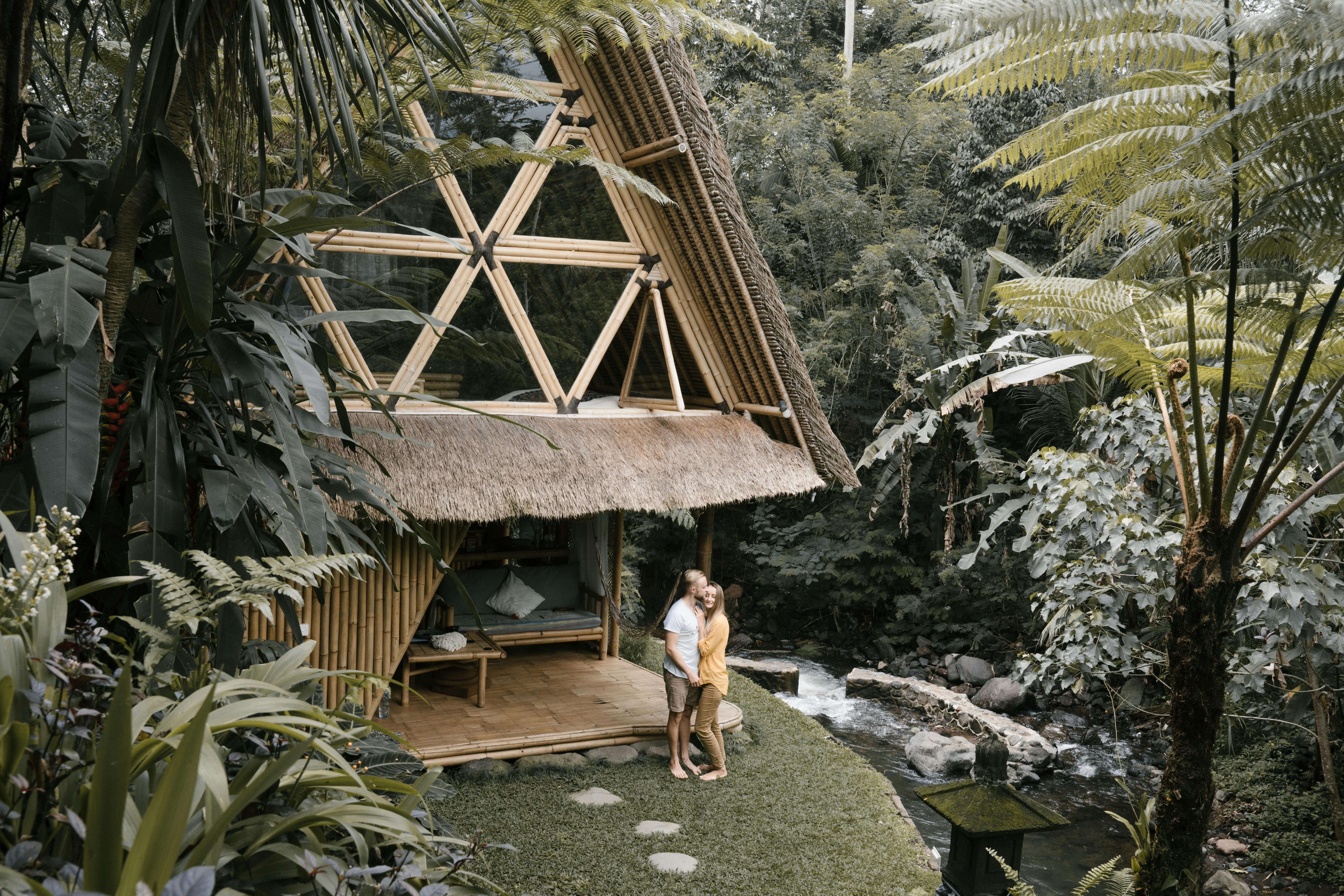
Image: A couple standing in the garden near their mud and bamboo hut in the countryside, showcasing sustainable living and a connection with nature.
You’ve got your walls up. The frame’s solid. But here’s where a lot of people mess it up: they either overdo the finish—or skip it altogether. A good finish does two things: it protects the wall, and it brings out the natural texture and beauty of what you just built.
No cement. No paint that peels. Just stuff that works with your walls—not against them.
Natural Plasters That Actually Last
Forget store-bought plaster mixes packed with chemicals. There are simpler options that blend beautifully with mud walls.
● Lime Plaster (Best for Outer Walls)
Why it works:
▪ Water-resistant
▪ Breathable
▪ Hardens over time
Tips:
✔ Use 1 part hydrated lime to 2–3 parts sand
✔ Apply in thin layers—don’t slather it on like frosting
✔ Let it cure slowly, don’t rush the drying
● Clay Plaster (Best for Inside)
Why it works:
▪ Easy to repair
▪ Holds up well indoors
▪ Natural matte look
How to make it better:
▪ Add straw or animal hair for strength
▪ Use natural pigments to tint it—iron oxide, turmeric, charcoal, etc.
▪ Finish with a clay wash or beeswax to seal without suffocating it
Surface Ideas That Aren’t Boring
If you're thinking all mud walls have to be brown and crumbly, you're missing the fun part. Here’s how to give it personality:
▫ Earth Pigment Washes – Mix local soil with lime or clay for soft earthy tones
▫ Stencil Art – Carve or press shapes into slightly wet walls, then lime-wash over
▫ Exposed Bamboo Grids – Leave parts of the frame visible—highlight the craft
▫ Niches + Curves – Build them into the wall as you go—adds character and function
How to Build a Roof That Works With Mud + Bamboo
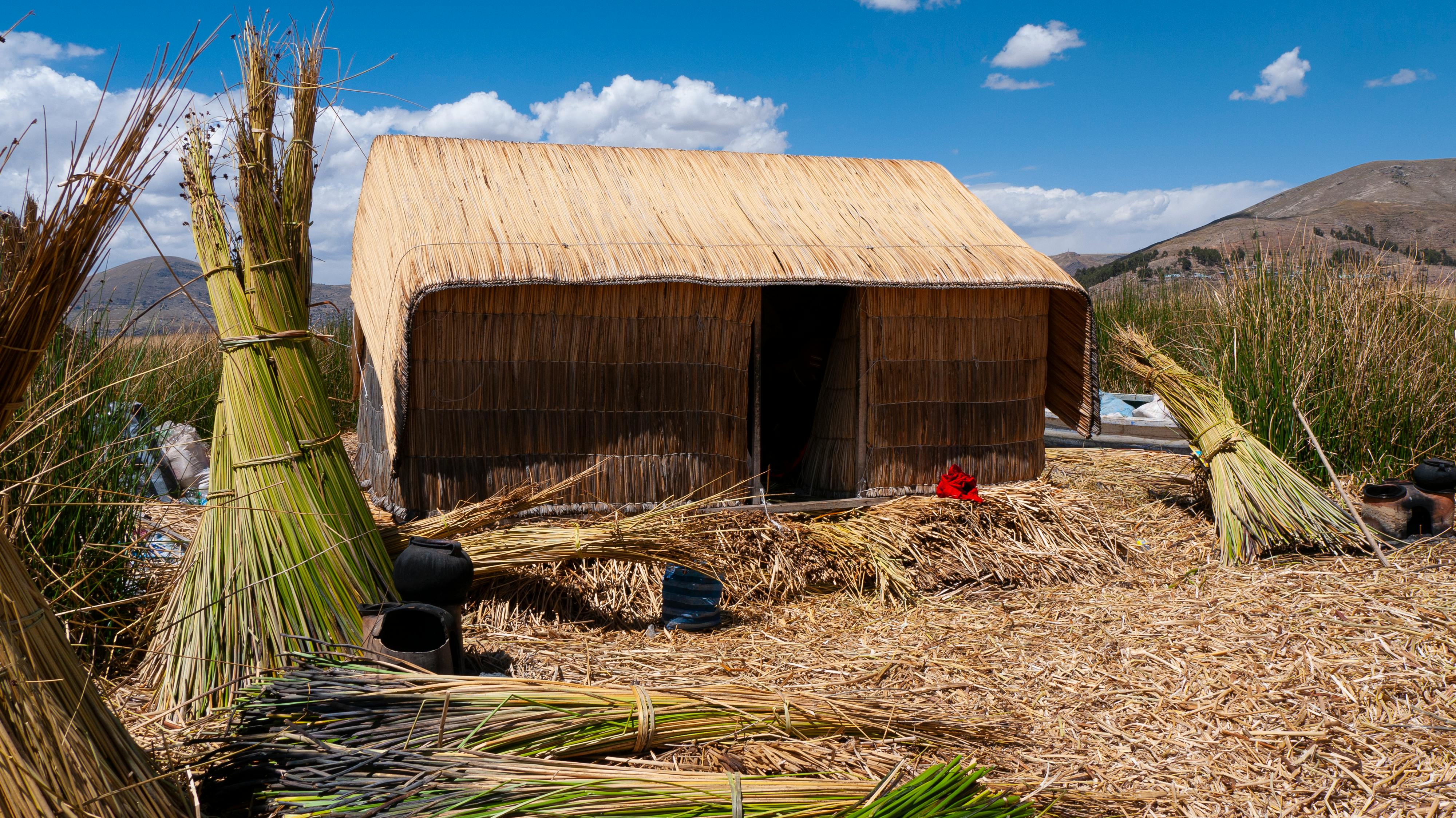
Image: The roof of a mud and bamboo hut in a rural area, highlighting traditional construction methods using sustainable, natural materials.
No matter how great your walls are, if your roof fails, everything underneath does too. Here’s what to keep in mind:
1. Wide Overhangs
At least 50 cm–1 meter of roof overhang protects your walls from direct rain.
2. Lightweight Roofing Options:
● Corrugated metal (if insulated below)
● Thatched roofs (but check local fire codes)
● Tiled bamboo structure with clay tiles (strong + beautiful)
3. Ridge Venting for Breathability
If your climate’s hot, let warm air escape naturally through a roof vent or clerestory.
Bonus: Modern Tools That Make the Job Easier
Even if you’re sticking to traditional materials, you can still cheat smart.
● Use a spirit level and masonry string to keep mud bricks straight
● Electric mixers help with big plaster batches
● Bamboo splitters save time (and your hands)
● Basic CAD sketch for layout saves redo work later
● Solar-powered LEDs + fans help you live off-grid in comfort
Do & Don’t: Finishing Mud and Bamboo Projects
DO
✔ Raise bamboo off the ground
✔ Use breathable finishes like lime or clay
✔ Embrace imperfection—mud is not drywall
✔ Blend modern tweaks with traditional logic
DON’T
✖ Don’t trap moisture inside the wall
✖ Don’t slap on cement or plastic paint
✖ Don’t skimp on roof design
✖ Don’t forget to overhang + drain properly
Horrible Build Mistakes We’ve Seen
One guy built his dream mud cabin—walls were solid, bamboo looked good. Then he painted the whole thing with cheap latex paint. Within 6 months, the wall couldn’t breathe, cracks showed up, and the humidity got trapped inside.
Another team used untreated bamboo for beams and didn’t raise it off the foundation. Termites had a buffet within the first year. Structure had to be rebuilt from scratch.
Lesson? Stick to breathable materials, always protect bamboo from the ground up, and don't get fancy with finishes that suffocate natural materials.
Why Companies Love Mud-Bamboo Experts (And What Level You Need to Reach)
If you’re thinking about turning this into a career, you should know—there’s huge demand for people who actually know what they’re doing.
● NGOs and disaster-relief builders want fast, low-impact, durable designs
● Eco-resorts and hotels are going full rustic-luxury and need skilled craftspeople
● Sustainable architecture firms look for talent who understand natural materials
● Local governments are funding community builds in rural areas
You don’t need a degree to start. But you do need hands-on builds, smart design logic, and the ability to explain it clearly. Start with your own structures, log the progress, take photos, write what worked—and what didn’t.
That’s your real-world portfolio.
Part 4
Making Mud and Bamboo Projects Legal, Livable, and Scalable
So you’ve got the design, the materials, and the passion. Now comes the hard truth: it doesn’t matter how beautiful your build is if it fails an inspection, floods in a storm, or can’t handle basic utilities.
Let’s break down how to avoid all that—without losing what makes natural building feel alive and intentional.
1. Understanding Building Codes (Yes, Even for Natural Homes)
No, mud homes aren’t exempt from basic building laws—even if they’re low-impact. But here’s what’s good:
You can often still build legally—if you plan ahead and document your process.
Here’s what to prep:
● Load-bearing calculations (especially for bamboo frames)
● Site drainage plans – show you’re not creating a flood zone
● Roof load and weather resistance – especially snow/wind resistance
● Material testing results – basic soil and plaster test docs help
● Fire safety considerations – even for earthen homes, code usually requires this
Pro tip:
Call your local municipality or planning department before you build. Ask about “alternative building material permits” or “owner-builder exemptions.” These terms are your best friends.
2. When (and How) to Mix in Modern Materials
You don’t need to be a purist to build a sustainable, safe structure.
Here’s where modern tweaks can help, not harm:
✔ Foundations – Reinforced rubble trench or stabilized earth blocks with lime are good options. Concrete is fine if isolated and raised.
✔ Roof flashing – Use galvanized metal around eaves and beams—keeps water off critical points.
✔ Treated bamboo ends – Just the ends touching support brackets. Keeps pests out.
✔ Anchor bolts – Used to tie your frame securely to the ground (essential in windy zones).
What to avoid:
✖ Covering walls in cement
✖ Synthetic water-proofing that traps moisture
✖ Gluing everything into place instead of letting it flex and breathe
3. Plumbing and Electric: The Non-Destructive Way
Don’t worry—you can totally have running water and lights in a mud house.
You just need to plan it early.
Plumbing tips:
▪ Use PVC or PEX—lightweight and easier to embed in earthen walls
▪ Add pipes through flexible channels (like bamboo sleeves or plastic tubing)
▪ Don’t bury deep plumbing—keep it easy to access for fixes
Electrical tips:
▪ Run wires in conduits, tucked into grooves or surface-mounted cleanly
▪ Use a raised fuse box away from walls that might move or shift
▪ Pick LED fixtures with low voltage—safe and energy-efficient
Important:
Keep everything repairable without busting open the wall. A good rule: If you can’t fix it in 20 minutes with basic tools, you’ve buried it too deep.
4. Scaling Up: How to Expand Without Losing the Soul
Want to build a mud guesthouse, rural classroom, or even a tiny eco-resort? Great. But scaling natural builds isn’t just copying your first hut six times.
Here’s what you need to shift:
▪ Plan for logistics – How many bricks, how much clay, how much straw? Scaling = serious quantities.
▪ Switch to modular – Build in stages. Walls that slot together, repeatable room shapes.
▪ Add workflow – Drying bricks, prepping bamboo, plaster curing—all needs timelines
▪ Bring in teams – If you’re going bigger, you need trained hands. Consider teaching while building.
Case Example:
A rural school project in India built 6 classrooms with bamboo roofs and earthbag walls—but they failed on drainage. After one rainy season, they had to redo entire foundations.
The fix? They raised the floor with lime-stabilized mudcrete and added crushed stone beneath. Problem solved.
Moral of the story? Build smarter, not just bigger.
Final Wrap-Up: You Made It This Far—Now Make It Work
Building with mud and bamboo isn’t just a “look” or a style—it’s a full approach to architecture. It’s about working with your climate, not against it. Using local stuff. Letting materials move, breathe, and settle into place like they belong.
But to pull it off, you’ve got to balance the craft with common sense:
● Don’t skip over the basics—drainage, roof design, and protection always come first
● Be smart about what you mix in—modern tricks are fine when they support the system
● Don’t just build once—iterate, test, tweak, and get better
● Take photos, notes, build models, and share—it’s how you become the expert people trust
You’re not just stacking mud and tying bamboo.
You’re creating architecture that breathes, lasts, and feels like it belongs.
Why Cardboard Doesn’t Belong in Your Natural Build
If you’re working with mud and bamboo, odds are you’re trying to keep things natural, low-cost, and breathable. So, yeah—someone’s probably suggested throwing some cardboard in the wall for “extra insulation.”
Let’s stop that right there.
Cardboard might seem like a clever DIY insulator (it’s everywhere, it’s free, and it feels thick), but it’s one of those materials that backfires hard once it’s in the wall. Especially in natural builds that depend on breathability and moisture control.
Here’s Why Cardboard Fails in Mud or Bamboo Construction:
▪ It traps moisture—and holds onto it.
Your walls need to breathe. Mud, clay, lime—they’re all about airflow. But once cardboard gets damp (which it will), it turns into a soggy sponge and invites mold. That’s not just bad for the structure—it’s bad for health.
▪ No real R-value.
Cardboard only gives you around R-1 per inch, which doesn’t help much in winter or summer. It’s better than nothing, but not by much. You’d need stacks of it to make a difference, and at that point—it’s a moldy firetrap.
▪ Not durable.
Even in a protected wall cavity, cardboard breaks down over time. One humid season, and you’ll be dealing with insects, rot, or worse—structural collapse of your filler layer.
▪ It’s a fire risk.
Cardboard’s not treated for fire safety. You might be using mud plaster, sure—but if the structure ever dries out, any gaps in your plaster make that wall flammable.
Better Natural Insulation Options for Mud + Bamboo Walls
Want insulation that actually fits the logic of natural, breathable architecture? Here’s what actually works:
● Straw bale (compressed, breathable, high R-value)
● Sheep’s wool (natural thermal + sound insulation)
● Hempcrete (good for walls + thermal mass)
● Cork panels or granules (moisture-resistant + lightweight)
● Light clay straw (great in bamboo frames)
These options don’t just insulate—they stay breathable, resist mold, and last for years without needing fancy treatments.
Cardboard Might Work for... Temporary Jobs Only
If you’ve got cardboard, it’s fine to use it for:
▪ Blocking a draft short-term
▪ Creating formwork molds (that’ll be removed)
▪ A layer under flooring to protect against cold—short-term only
▪ Staging mockups for testing wall layering or spacing
But if it’s going into your walls or roof permanently—don’t do it.
Bottom Line: Don’t Cut Corners That Cost You Later
Yes, cardboard is free. But if you’re putting real time into a mud-and-bamboo build, your effort deserves better. A wall that traps moisture, warps, and turns into compost inside? That’s not sustainable—that’s a redo waiting to happen.
Stick with materials that work with your walls, not against them.
FAQs: What People Actually Ask
Q: Does mud housing fall apart in rain?
A: Only if it’s poorly designed. Use lime plaster, proper drainage, and overhangs.
Q: Is bamboo safe in earthquakes?
A: Yes. In fact, it’s preferred in seismic areas because it flexes under pressure.
Q: Can this work in cities?
A: Absolutely. Several modern buildings now combine earth blocks and bamboo frameworks—especially in eco-focused developments.
Q: Is it cheaper than brick?
A: Often yes. The savings on materials offset the labor costs if done right.
Resources & References
● The Mud House Design Guide – Auroville Earth Institute
● METI Handmade School Case Study
● Green Building Materials – IGBC
Recommended Books
Best Seller Recommendation
Building with Earth: Design and Technology of a Sustainable Architecture – Gernot Minke
(Available in Hardcover and Kindle)
Why It’s a Favorite:
-
Real architectural case studies
-
Covers everything from walls to waterproofing
-
Perfect for architects, designers, and serious DIYers
Best Features:
✔ Step-by-step techniques
✔ Weatherproofing methods
✔ Structural planning tips
Why Buy:
This isn’t just theory—it’s a visual, practical guide that walks you through every step of working with earth in construction.
So, What’s the Takeaway?
You don’t need concrete and steel to build something strong, beautiful, and long-lasting.
Mud and bamboo have done the job for centuries—and they’re still doing it today. If you design with intention, understand the climate, and respect the materials, you’ll end up with buildings that aren’t just eco-friendly—they’re alive, breathing, and built to last.
Want to build smarter? Maybe it’s time to get your hands dirty—literally.
Want to Keep Learning? Here’s What to Check Out Next:
Best Books on Natural Architecture
● Building with Earth by Gernot Minke
● The Hand-Sculpted House by Ianto Evans
● Bamboo Architecture & Design by Chris van Uffelen
Official Resources
● UN-Habitat Natural Building Manual
● CRATerre – Earth Architecture Lab
● INBAR – International Bamboo and Rattan Organization
Free Inspiration
● Earthbag Village by One Community
● The Mudhouse Design Manual (India)
● Rainwater harvesting and wall curing tips on YouTube from Auroville Earth Institute
Related
- Starting Your Mud and Bamboo Project: A Practical Guide
- Natural Building Materials: A Comprehensive Guide for Builders and Students
- Natural Insulation Materials: Types, Benefits, and Practical Tips
- Impact of the Built Environment on the Natural Environment
- How Nature Teaches Balance: A Guide for Architects and Designers
- Natural Stone for Architecture: Types, Benefits, and Design Insights
- Natural Stone Benchtops: What You Need to Know
- Organic Parametric Architecture: Fluid Forms Inspired by Nature
- Biophilic: Nature-Inspired Living and the Power of Design
- Biophilic Design: Transforming Cities with Nature-Inspired Architecture
- 14 Patterns of Biophilic Design: Merging Nature with Cutting-Edge Architectural Trends
- Biophilic Interior Design: Nature’s Influence on Indoor Spaces
- Nature in Parametric Design: Harnessing the Beauty of Organic Forms
- Building with Vernacular Materials: What You Should Know
- Understanding Vernacular Architecture: A Beginner’s Guide