
Local Materials, Climate Logic, and What Modern Buildings Forgot
Vernacular architecture is easy to praise and easy to misunderstand.
People see mud walls, bamboo frames, thatched roofs, stone houses, courtyard plans, or raised timber homes and call them charming, sustainable, or traditional. Sometimes they are. But the real value is not the old look. It is the logic behind the building.
Vernacular architecture is built from local conditions. Climate. Material. Labor. Repair habits. Culture. Available tools. Daily life. It usually grows from repeated use, not from one architect trying to create an image.
That is why copying the style without copying the system usually fails.
What Vernacular Architecture Means
Vernacular architecture is the everyday architecture of a place. It is shaped by local materials, local weather, local customs, and the building knowledge passed through communities over time.
It is not one style.
A mud-brick village in Egypt, a stone trullo in southern Italy, a bamboo house in a humid region, a thatched cottage, a courtyard house, and a stilted timber home can all be vernacular. They do not look the same because they solve different problems.
The point is not nostalgia. The point is fit.
A good vernacular building usually answers a few hard questions without needing much explanation:
- What material is nearby?
- What climate problem has to be solved first?
- Who knows how to build and repair it?
- How does the building support daily life?
- What can be maintained without expensive outside systems?
Climate Comes Before Style
The strongest vernacular buildings do not start with appearance. They start with weather.
Hot-dry regions often use thick earth or stone walls, small openings, shaded courtyards, and thermal mass. Hot-humid regions often need airflow, shade, raised floors, and light materials that can dry. Cold regions favor compact forms, insulation, protected openings, and materials that hold heat. Wet regions need steep roofs, drainage, raised bases, and parts that can be replaced before rot spreads.
That is the first lesson modern design often forgets: a building can look local and still perform badly if it ignores climate.
| Climate pressure | Common vernacular response | Why it works |
|---|---|---|
| Hot and dry | Thick earth walls, courtyards, small openings, shade | Thermal mass slows heat movement and shaded spaces reduce direct sun. |
| Hot and humid | Raised floors, deep overhangs, open screens, cross ventilation | Air movement and drying matter more than heavy heat storage. |
| Cold or mountain climate | Compact plans, thick walls, steep roofs, protected entries | Heat loss is reduced and snow or rain is shed away from the structure. |
| Wet or flood-prone areas | Stilts, steep roofs, replaceable cladding, raised storage | The building avoids trapped water and protects the living level. |
Local Materials Are Not Just Romantic
Local materials are useful because they usually come with local knowledge.
Mud, clay, stone, timber, bamboo, reeds, straw, thatch, and palm leaves are not automatically sustainable. They become useful when people understand how they age, how they fail, how they should be detailed, and how they can be repaired.

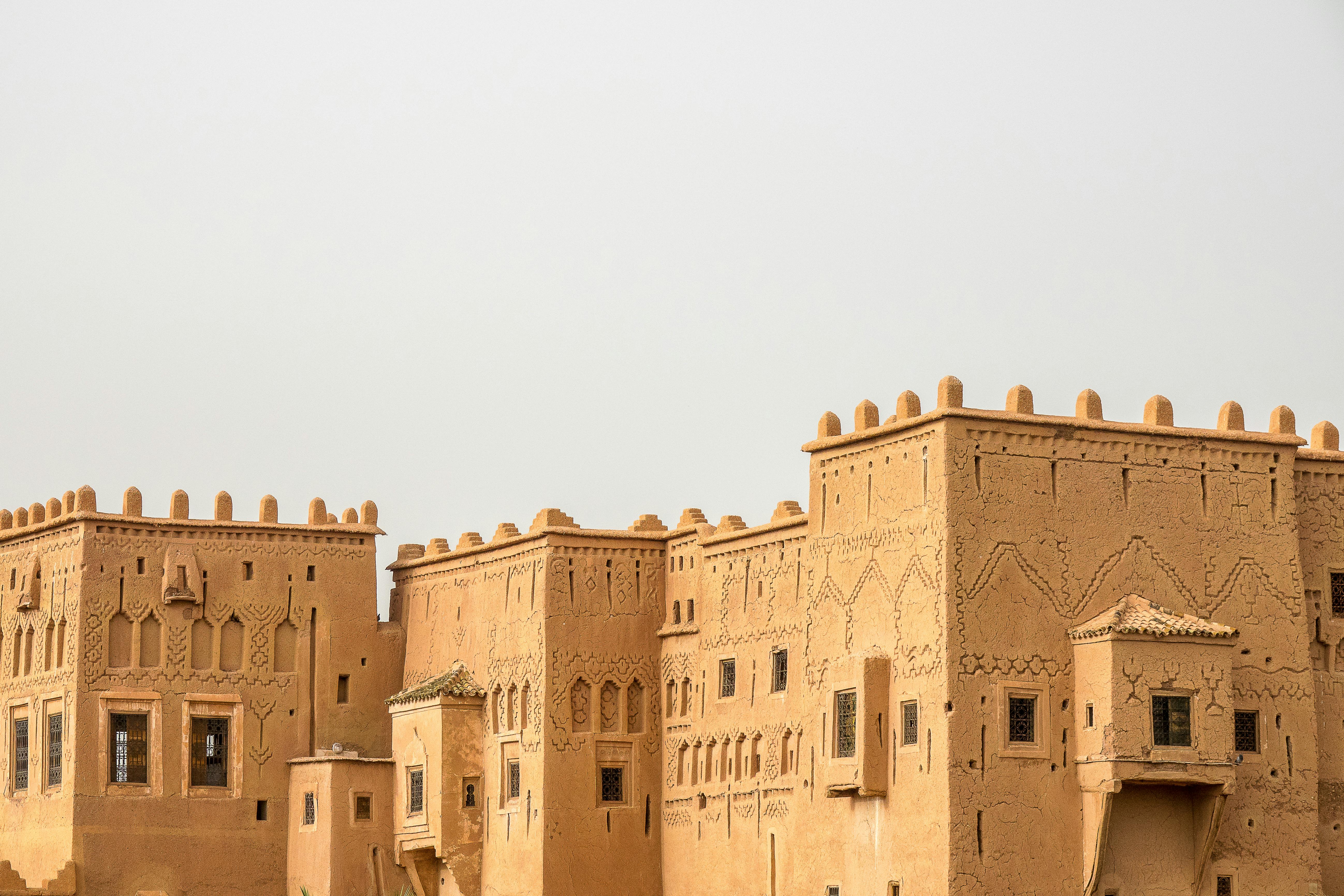
Mud and clay can be excellent in hot, dry climates because they provide thermal mass and can often be sourced locally. But they need proper foundations, roof protection, plaster maintenance, and water control.
Stone can last for centuries, but it is heavy, labor-intensive, and only makes sense when the region has the material and the skill to use it well.
Bamboo grows quickly and can be strong and flexible, but it needs correct harvesting, drying, treatment, joinery, and protection from insects and moisture.
Thatch can insulate well and shed rain when detailed properly, but it is not maintenance-free. It has to be renewed, protected, and inspected.
The Maintenance Nobody Mentions
This is where vernacular architecture gets oversold.
A mud wall, bamboo frame, or thatched roof may be low-carbon, local, beautiful, and practical. It may also need maintenance that a modern owner is not prepared to do. Traditional buildings often worked because repair was part of the culture. People knew when to replaster, rethatch, replace a post, patch erosion, treat bamboo, or rebuild a damaged section.
When that repair culture disappears, the building becomes fragile.
The mistake is thinking local materials are automatically easy. They are often easy for the people who know them. They can become expensive or risky when used by a contractor who only copies the look.
Before using a vernacular material today, ask who will maintain it, how often, with what tools, and at what cost. If the answer is vague, the design is not ready.
Mud, Clay, and Earth Walls

Earthen construction includes adobe, cob, rammed earth, mud brick, and earthen plaster. These systems vary, but they share one major strength: they use material from the ground and can create walls with strong thermal mass.
That does not mean dirt is enough.
Soil mix matters. Stabilization may matter. Roof overhangs matter. Capillary breaks matter. Foundations matter. A beautiful earth wall can fail quickly if rainwater, splashback, or rising damp is ignored.
This is why old earthen buildings often have strong roof protection and regular plaster maintenance. The wall is not a magic material. It is part of a system.
Stone, Thick Walls, and Regional Permanence

Stone vernacular buildings often feel permanent because the material is heavy, durable, and tied to the ground. In many regions, stone walls offered mass, stability, and protection from weather.
But stone is not simple. It requires labor, lifting, shaping, wall thickness, good drainage, and knowledge of how the wall handles water. Dry-stone construction, lime mortar, rubble walls, and cut stone all behave differently.
A stone building fails when modern designers treat stone as a decorative skin instead of a wall system with weight, joints, drainage, and movement.
Bamboo and Lightweight Structures

Bamboo is often described as “nature’s steel.” That phrase can be useful, but it can also make people careless.
Bamboo can be strong, fast-growing, lightweight, and flexible. In humid and seismic regions, that flexibility can be valuable. But untreated bamboo is vulnerable. Moisture, insects, poor joints, and bad detailing can destroy the promise quickly.
The lesson is not “use bamboo everywhere.”
The lesson is to match the material to the climate, treatment method, structural role, and maintenance culture.
Thatch and Replaceable Roofs

Thatch is one of the clearest examples of a vernacular material that people romanticize too quickly.
A good thatched roof is not just straw thrown on a frame. It depends on pitch, thickness, tying method, ridge treatment, drying, and regular replacement. In the right climate and culture, it can be practical. In the wrong setting, it becomes a maintenance problem.
That is true of many vernacular materials: they work best when their replacement cycle is understood from the beginning.
Examples That Show the Logic
Famous vernacular buildings are useful when they are studied for their decisions, not only their appearance.

The Larabanga Mosque in Ghana is often discussed as an example of Sudano-Sahelian architecture. Its earthen walls and timber elements are not just visual features. They belong to a climate, craft, and repair tradition.
The lesson is not that every hot-climate building should imitate the form. The lesson is that material and maintenance are inseparable.

The trulli of Alberobello in southern Italy show another kind of vernacular intelligence. Their form grows from stone, local technique, and regional conditions. Their value is not just the conical roof. It is the whole relationship between material, wall thickness, form, and local building practice.

Earthen settlements in North Africa show how architecture can merge with landform and climate. The color match is not the real point. The real point is that earth, wall thickness, shade, and compact settlement patterns can work together.
Hassan Fathy and the Modern Vernacular Problem

Hassan Fathy is one of the best-known modern architects associated with vernacular building ideas. His work with mud brick, vaults, domes, courtyards, and local craft challenged the idea that modern architecture had to depend on imported industrial materials.
His lesson was not that old techniques should be copied blindly.
The harder lesson was that housing, climate, cost, skill, and culture have to be designed together. If a building system depends on local builders, then the people who build and maintain it are part of the architecture. If the design ignores them, the project weakens.
That is still the challenge today. Architects like to borrow vernacular form. The better work borrows vernacular responsibility.
When Vernacular Architecture Works Best
Vernacular logic works best when the project is tied to a real place and a real maintenance culture.
| Good fit | Why it works | What to check first |
|---|---|---|
| Small buildings and houses | Material choices, passive comfort, and local labor can be controlled more carefully. | Maintenance, code approval, drainage, and skilled labor. |
| Rural or regional projects | Local materials and builders may still be available. | Whether the craft knowledge still exists. |
| Hot-dry climates | Earth and stone can use thermal mass effectively. | Rain protection, foundation detailing, and plaster maintenance. |
| Humid or flood-prone climates | Raised floors, light structures, and ventilation can reduce moisture problems. | Rot, insects, storm resistance, and treatment methods. |
| Cultural or heritage-sensitive work | Local forms can protect identity and continuity. | Whether the design respects use, not just appearance. |
When It Fails
Vernacular architecture fails when it becomes costume.
A hotel copies a village roof but ignores the climate. A luxury house uses rammed earth as a backdrop but hides steel, waterproofing, and mechanical systems behind the image. A developer adds “local” materials without local labor. A designer imports bamboo into a climate where nobody knows how to treat or repair it.
That is not vernacular architecture.
That is style extraction.
The building may photograph well, but the logic is gone. The material becomes decoration. The culture becomes branding. The maintenance becomes someone else’s problem.
Modern Vernacular Architecture
Modern vernacular architecture does not mean freezing a building tradition in the past.
Good modern work can use traditional lessons with better testing, safer structures, improved insulation, treated materials, seismic upgrades, fire protection, moisture control, and modern services. The goal is not to reject technology. The goal is to stop using technology as an excuse to ignore place.
A modern earthen wall may need a better foundation and roof detail. A bamboo building may need tested treatment and engineered connections. A thatched roof may need modern fire and moisture protection. A stone building may need drainage and insulation strategies that older buildings did not have.
The best version is not old versus new.
It is local intelligence with modern responsibility.
What Students Should Learn From It
For architecture students, vernacular architecture is not only a history topic.
It is a design test.
Can you explain why a wall is thick? Why a window is small? Why a house is raised? Why a roof is steep? Why a courtyard works? Why a material belongs there? Why a community can maintain it?
If the answer is only “because it looks traditional,” the design is weak.
A good vernacular study should produce better questions about climate, structure, comfort, labor, culture, and cost. That is more useful than memorizing a list of famous examples.
What Homeowners and Builders Should Take From It
Homeowners should not copy vernacular architecture just because it looks warm, rustic, or sustainable.
Start with climate and maintenance.
Ask whether the material suits the site. Ask how the roof protects it. Ask who knows how to repair it. Ask whether local code allows it. Ask what happens after ten wet seasons, two freeze-thaw cycles, or one termite problem.
Builders should be just as careful. Vernacular methods can save money when the material, labor, and detailing are local and understood. They can become expensive when everyone is learning on the job.
The smart version is not cheap nostalgia. It is building with fewer blind spots.
FAQ
What is vernacular architecture?
Vernacular architecture is building shaped by local climate, materials, culture, labor, and daily use. It usually develops over time through practical experience rather than through a single formal design style.
What is an example of vernacular architecture?
Examples include adobe houses in hot-dry climates, bamboo houses in humid regions, trulli in southern Italy, thatched cottages, raised stilt houses, and earthen buildings in North and West Africa. The common thread is local adaptation.
Is vernacular architecture sustainable?
It can be, but not automatically. Local materials, passive cooling, repairable parts, and low transport impact can make it sustainable. Poor detailing, lost maintenance knowledge, or climate mismatch can make it fail.
What materials are used in vernacular architecture?
Common materials include mud, clay, adobe, rammed earth, stone, timber, bamboo, reeds, thatch, grass, palm leaves, and other materials available near the building site.
Can vernacular architecture be modern?
Yes. Modern vernacular architecture can combine local materials and climate logic with tested structure, moisture protection, insulation, seismic design, fire safety, and modern building services.
What is the biggest mistake when using vernacular ideas today?
The biggest mistake is copying the appearance without the system. A roof shape, mud wall, bamboo frame, or courtyard does not work by itself. It has to match climate, structure, maintenance, local skill, and daily use.
Why is vernacular architecture important?
It shows how buildings can respond to place instead of fighting it. For modern design, the value is not nostalgia. The value is learning how climate, material, culture, labor, and repair shape better buildings.
Further Reading
- Architecture Without Architects by Bernard Rudofsky
- Building with Bamboo by Gernot Minke
- Architecture for the Poor by Hassan Fathy
Read Next
For a broader sustainability path, read Sustainable Architecture Degrees.
For city-scale and landscape thinking, read Urban and Landscape Design Courses.