
Better Options, Bad Fits, and Wet Crawl Mistakes
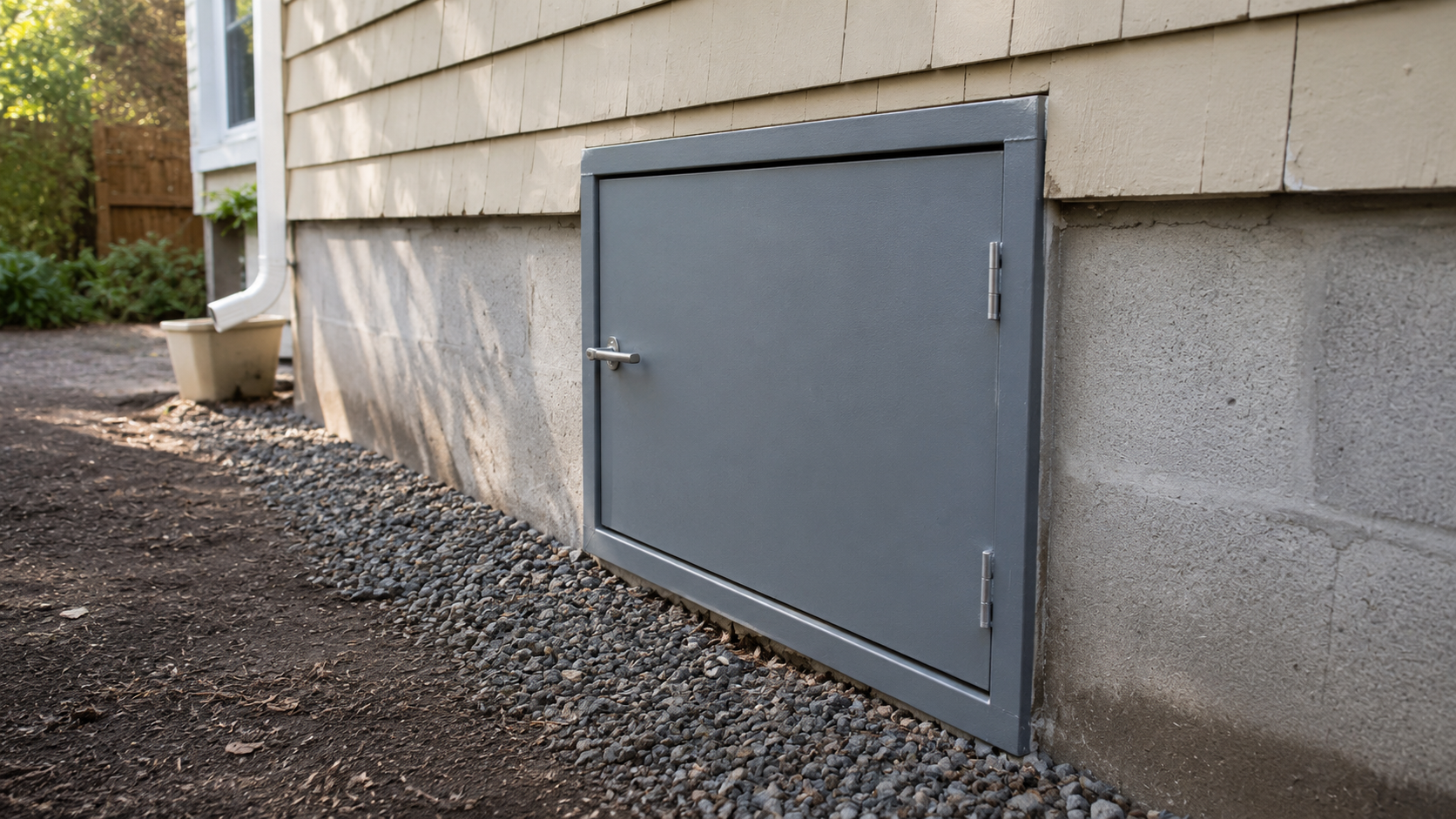
Image by ArchitectureCourses.org. A crawl-space door works best when the opening is usable, the frame is solid, and the area below it stays clear of soil, plants, and splashback.
A crawl-space door is one of those parts people ignore until it starts failing in public.
It sags. It rusts. Animals get in. Rain splashes against it. The latch barely works. Then somebody needs access under the house and the whole thing suddenly matters.
That is the real job of a crawl-space door. It is not decoration. It is not just a panel closing a hole in the foundation. It is an exterior access point that has to deal with weather, grade, pests, repeated opening, and whatever the crawl below is already doing wrong.
A good crawl-space door should close tightly, hold up to weather, open when somebody actually needs it, and sit in a wall condition that is not already set up to rot, rust, or flood it.
What this door is really doing
A crawl-space door has four jobs.
- keep weather out
- keep pests out
- give real access under the house
- survive being ignored for long stretches without falling apart
That last one matters more than people think. A lot of crawl-space doors fail because they live in the worst conditions around the house. Low to grade. Wet splash zone. Mud, mulch, insects, weeds, and no real maintenance. Then people buy the cheapest replacement they can find and act surprised when it ages badly again.
The expensive mistake is treating the door like a trim item instead of an access assembly in a rough location.
Start with the opening, not the product
If the opening itself is bad, a better door will only improve the look of the problem.
I would check the foundation opening first. Is it square enough to take a new unit cleanly? Is the surrounding block, concrete, or framing sound? Is the grade outside already too high? Does water collect below the opening? Is the bottom edge of the old door rotting because the opening sits in a splash zone that should have been corrected years ago?
That is the sequence that keeps people from buying the wrong thing. The door comes after the opening and the grade condition, not before.
If the area below the opening stays wet after storms, go next to water in a crawl space after rain or crawl space drainage system. A better access door will not stop a bad water path by itself.
Where bad crawl-space doors usually fail
The failure points are usually boring.
The bottom edge rots or rusts because it sits too close to wet soil. The latch gets loose. The fit was sloppy from the beginning, so the door never sealed well. Thin panels warp. Hinges corrode. Animals find a weak corner. Then the whole assembly starts looking temporary even if it was installed years ago.
This is not usually a mystery. Most crawl-space door failures come from some combination of low quality, bad fit, and bad grade around the opening.
| Problem | What Usually Caused It | Better Move |
|---|---|---|
| Rotting or rusting lower edge | Door too close to grade or splash zone | Fix grade and replace with a more durable unit |
| Loose fit and visible gaps | Wrong size or sloppy install | Measure the opening correctly and fit the new unit cleanly |
| Warping panel | Thin low-quality door in a rough exterior location | Use a sturdier material and better frame support |
| Animals getting in | Weak latch, torn screen, or bad corner fit | Stronger closure and tighter perimeter |
| Door buried by soil or mulch | Bad exterior maintenance and wrong grade | Clear the opening and rework the area around it |
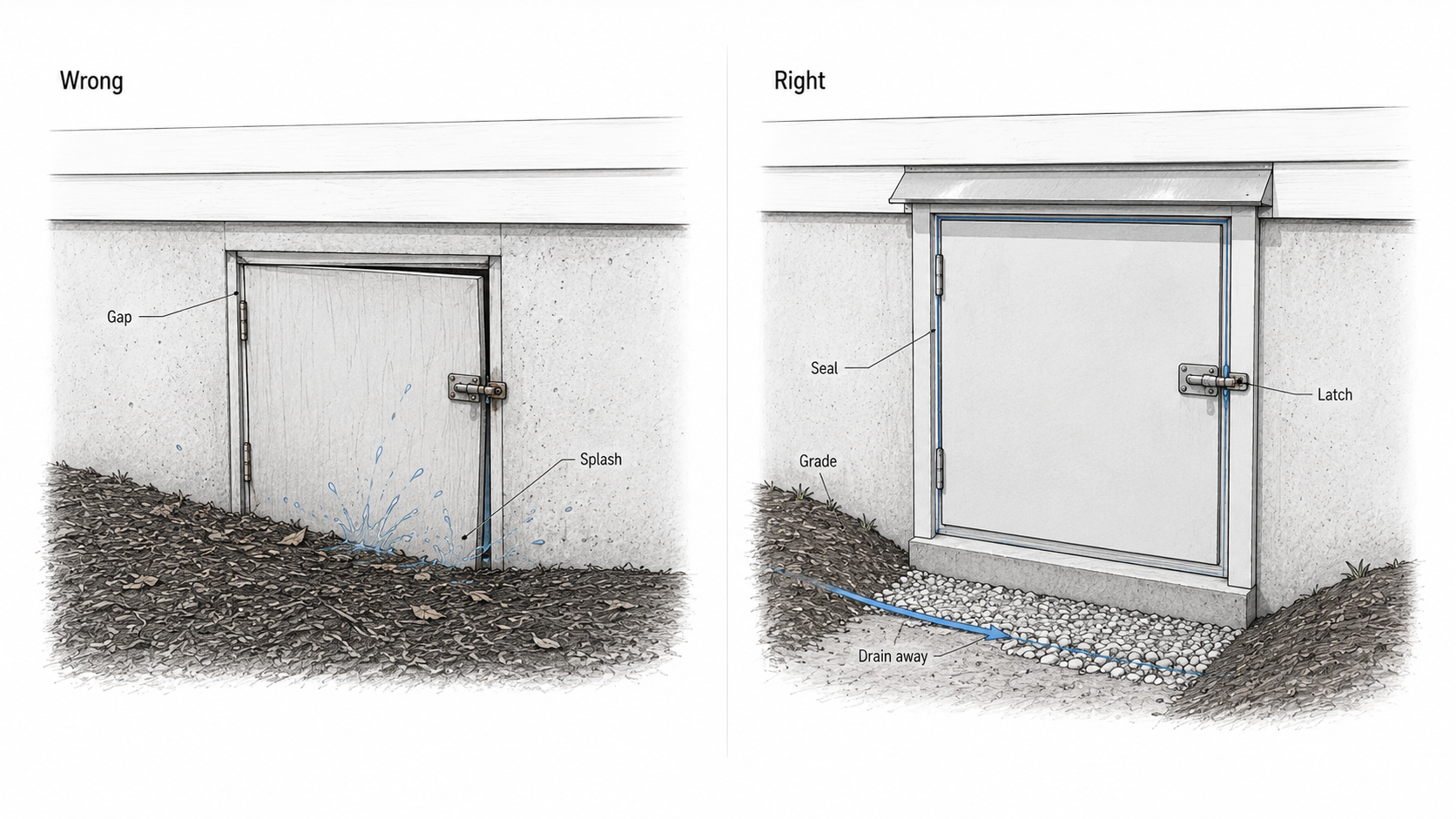
Illustration by ArchitectureCourses.org. A crawl-space door holds up better when it sits a little higher, seals tighter, and sheds water away from the opening instead of collecting splash and dirt at the bottom edge.
Small door, big access problem
A lot of crawl-space doors are just too small.
They technically give access, but not useful access. You can squeeze through them. You cannot get tools through them cleanly. You cannot remove damaged material easily. You cannot service equipment under the house without turning every trip into a miserable crawl.
This matters because access affects every repair that comes later. Moisture work. insulation work. mold cleanup. jack posts. plumbing. electrical. ducts. Even inspection gets worse when the opening is undersized.
A crawl-space door does not need to be oversized for drama. But it should be large enough that a real person can get in and out without fighting it every time.
What size usually works better
The right size depends on the house and the opening, but the main point is simple: size the access door for actual use, not just for minimum closure of the hole.
If somebody may need to bring equipment, remove wet insulation, inspect framing, or work on plumbing and ducts, the opening should reflect that. A tiny access door that saves a little foundation cutting or framing work now can make every future crawl-space job slower and more expensive.
I would rather have a clean, workable access door than a small neat one that makes every future repair worse.
Plastic, metal, or something heavier?
Most crawl-space doors land in three broad material lanes.
Plastic or molded composite units are common because they are cheap, light, and do not rust. Some are fine. Some feel flimsy fast. The better ones work well when the opening is decent and the exposure is not abusive.
Metal doors feel sturdier and usually look more substantial, but bad metal in a wet splash zone is asking for trouble. Rust catches up with it.
Heavier framed access panels usually make more sense where the opening sees hard weather, repeated use, or rougher service conditions. They cost more, but they usually belong to a different quality level entirely.
The mistake is thinking material alone decides everything. It does not. A better material in a bad opening still gives you a bad result.
What works better here
| Option | Use This When | Avoid This When |
|---|---|---|
| Basic plastic access door | The opening is simple, exposure is moderate, and the crawl is not heavily used | The area stays wet, exposed, or abused |
| Metal crawl-space door | You want a stiffer door and the grade/weather condition is under control | The lower edge sits in constant moisture or splashback |
| Heavier framed access panel | You want a more durable long-term access point | The opening itself is bad and you are trying to skip fixing it |
The grade around the door matters as much as the door
This is where a lot of these openings lose.
The door sits too low. Soil builds up. Mulch gets piled against it. A downspout throws water too close. Rain splashes dirt against the lower edge. The panel stays damp longer than it should. The latch corrodes. The frame starts looking rough. Then the door gets blamed for conditions the opening never should have had in the first place.
A crawl-space door should not be fighting wet grade every day.
If the outside condition still pushes water toward the opening, the smarter spend may be fixing the grade and drainage before buying a nicer panel.
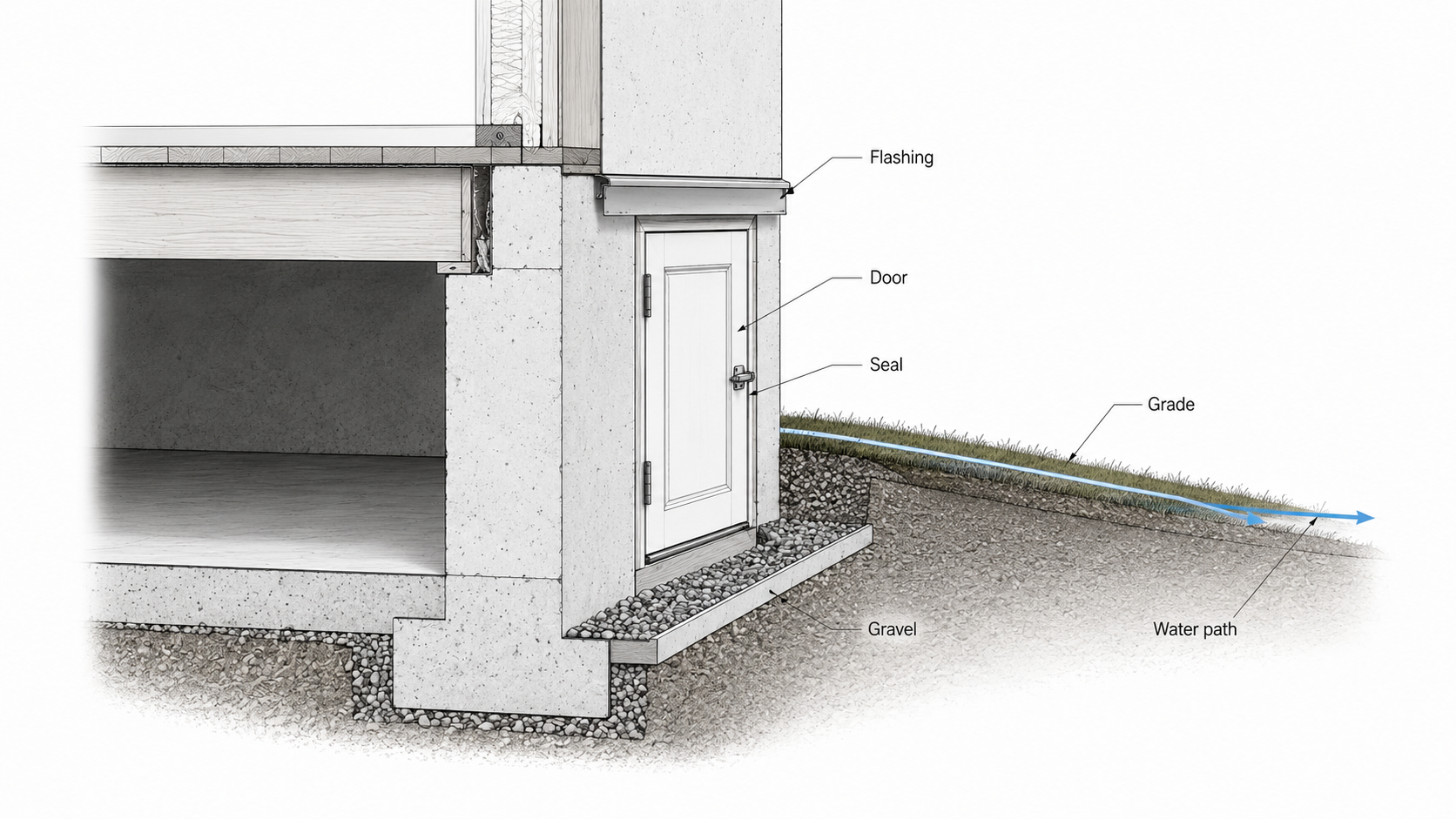
Illustration by ArchitectureCourses.org. The panel is only part of the job. The opening, seal, flashing, gravel strip, and exterior grade all have to keep water moving away from the access point.
Weather seal matters, but it is not the whole answer
People love the idea of a tighter seal because it sounds like the obvious fix.
Yes, the door should fit well. Yes, it should close cleanly. Yes, gaps around the edge are bad. But a better seal does not fix splashback, standing water, or an opening that sits in the wrong place relative to the grade.
This is the same mistake people make with other crawl-space details. They focus on the edge treatment because it is visible and easy to buy. The bigger failure is usually the condition around it.
If the crawl is moving toward sealing, the door has to follow that logic
This is where some access doors get chosen wrong.
If the crawl is being treated more like a controlled sealed space, the access door needs to behave like part of that system. Better closure. Better fit. Better perimeter sealing. Less tolerance for sloppy gaps and flimsy framing.
You do not need a heroic product. You do need a door that matches the crawl strategy.
That is why a basic loose exterior panel that might be fine on an old open vented crawl can feel obviously wrong on a cleaner encapsulated crawl-space setup.
If that is the direction of the house, read crawl space encapsulation vs vapor barrier only and conditioned crawl space vs encapsulated crawl space next.
Do not choose a door that only looks closed
Some crawl-space doors look fine from ten feet away and act terrible up close.
The panel sits crooked. The latch feels weak. The fit is rough at one corner. The frame flexes. It technically closes, but not in a way that inspires much confidence.
That is the kind of door people end up kicking shut or weighting down with a block, and that tells you everything about the quality of the assembly.
A crawl-space door should close positively. It should look like it belongs to the opening, not like it barely won the argument.
What people get wrong first
Usually one of these:
- buying the replacement before measuring the opening properly
- choosing the cheapest unit for a rough wet location
- ignoring the grade around the opening
- keeping the opening too small because enlarging it feels annoying
- treating the access door like a trim problem instead of an access problem
The expensive mistake is not always the product. A lot of the time it is staying loyal to a bad opening or a bad exterior condition and expecting the new door to overcome it.
One more thing: access affects every future repair
This is why I would not dismiss this page as just a little exterior detail.
A bad crawl-space door keeps making the next job worse. Inspection gets harder. Wet insulation removal gets slower. Plumbing access gets tighter. Moisture work gets more awkward. Equipment install gets more frustrating. Even a decent contractor will work slower if the opening is miserable.
That is why a good crawl-space door earns more than its own replacement cost over time. It lowers the friction on everything that may need to happen under the house later.
What I would check before ordering one
- the actual size and shape of the opening
- whether the surrounding wall is sound enough for a clean install
- whether the grade and splash zone around it are already working against the door
- whether the crawl needs a better access size, not just a new panel
- whether the crawl is staying vented or moving toward a more sealed setup
If those answers are still fuzzy, buying the product first is early.
Where to go next
If the next job is the actual replacement work, go next to replacing a crawl-space door.
If you are creating a new opening or changing the exterior access setup, go to crawl-space door installation.
If the bigger issue is getting better access from a different location, use crawl-space access from inside the house.
If the opening sits in a wetter area and the crawl below still takes on moisture, read water in a crawl space after rain and crawl space humidity.
FAQ
What is the best material for a crawl-space door?
The best one for your house is the one that fits the opening well, handles the exposure, and matches the crawl strategy. Material matters, but fit and grade matter just as much.
How big should a crawl-space door be?
Big enough for real access, not just technical entry. If someone may need to get tools, equipment, or damaged material through it, size matters more than people admit.
Should a crawl-space door be sealed?
It should close tightly and fit cleanly. The exact level of sealing depends on whether the crawl is staying vented or moving toward a more controlled sealed condition.
Why does my crawl-space door keep rotting or rusting?
Usually because the area around it stays too wet. The lower edge is often losing to bad grade, splashback, or constant moisture near the opening.
Can I just replace the panel and keep the same opening?
Sometimes. But if the opening is undersized, damaged, out of square, or sitting in a bad grade condition, keeping it exactly as it is may be the wrong economy.