

Architectural Rulers: The Tools Every Designer Actually Uses
Which Ones Work—and Which Ones Don’t
Architect-approved review of architectural rulers. What works, what breaks, and why scale matters more than you think.
You might think of rulers as just simple measuring sticks, but when it comes to architecture, they’re the unsung heroes of the profession.
Forget skyscrapers and grand designs for a moment—the real magic starts with a humble architectural scale ruler.
The Best Architectural Rulers Reviewed
We break down the top rulers used by working architects, including picks from Alvin, Staedtler, and Mr. Pen. Which ones are accurate? Durable? Actually worth the money? Let’s get into it.
→ FIELD PICK:
Alvin Architect Scale Ruler (Amazon) – Pro-grade, engraved markings, serious durability. My most-used tool.
Architectural Rulers:
The Unsung Heroes of Design (Yes, Really)
From 1/4" to 1:100 metric, here’s how to pick the right architectural ruler—and avoid rookie mistakes in your drawings.
Architectural Rulers: The Tools That Actually Run the Studio
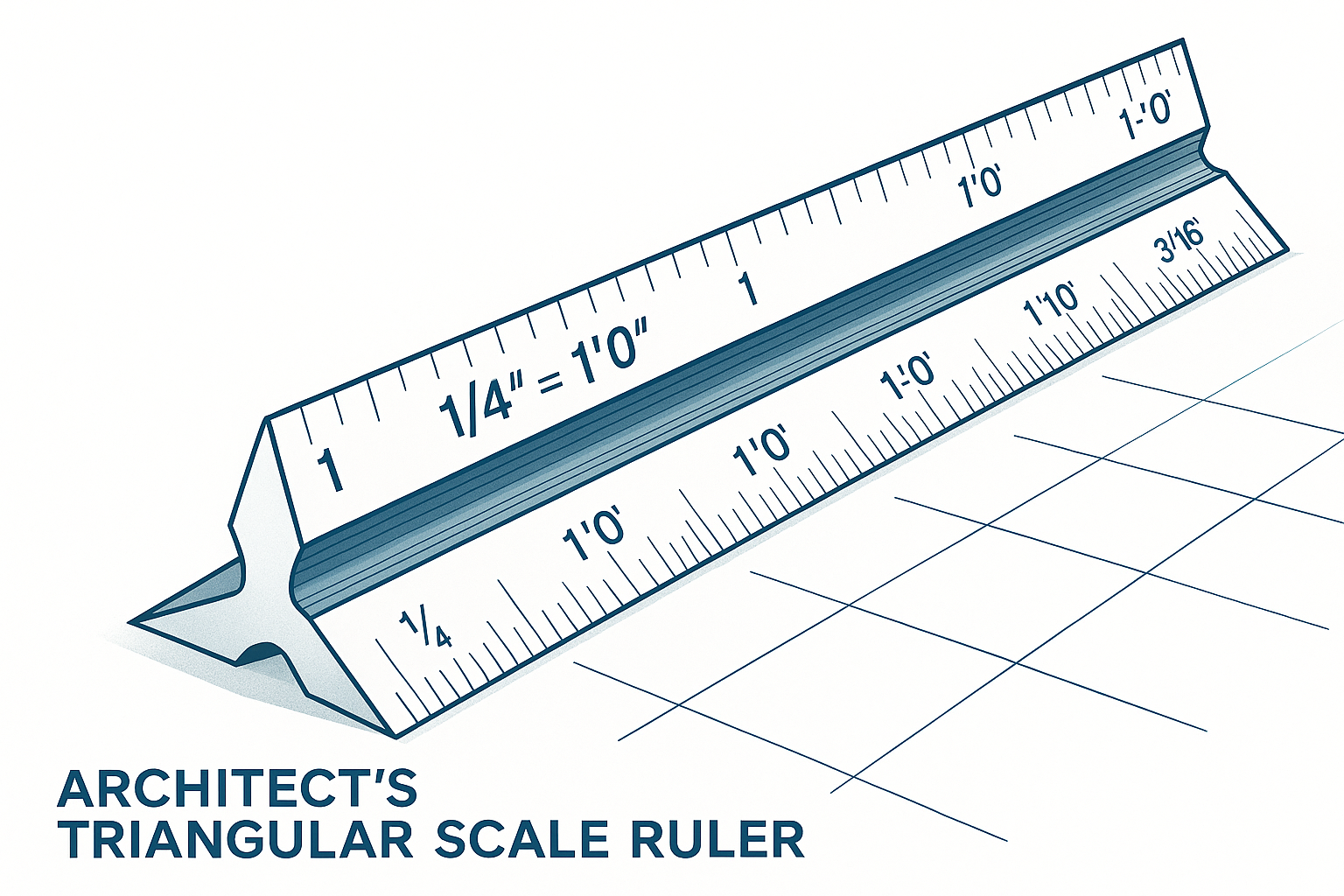
You don’t need a fancy laptop or 3D scanner to start designing. You need a ruler. A good one.
Architects use them every single day—to draft, check scale, or explain a plan to someone who doesn’t speak Revit.
Here’s what actually matters.
Standard Architect Scales: Know These First
● 1/16 Scale – Super detailed. Great if your eyes still work. Most people avoid it unless they’re into pain.
● 1/8 Scale – The sweet spot when you’re fitting buildings on a page. Good for layouts, fast work, or general schematics.
● 1/4 Scale – The standard. If you’ve worked on real plans, you’ve used this. But mix it up with 1/8 by mistake and your walls are now 100 feet thick.
Metric Scales: No Fractions, No Drama
● 1:50 – Metric equivalent of 1/4" scale. Clean and predictable. Most floor plans outside the U.S. are done at this size.
● 1:100 – Use this for site plans, context layouts, or showing a whole block on one sheet.
Heads up: Mixing imperial and metric is a great way to wreck your drawing. Keep both on hand, but label clearly or pay the price.
Digital Architect Rulers: When You’re Sick of Tick Marks
● Digital Scale Ruler – Fast, accurate, and lets you skip the guesswork. Just don’t rely on it during a battery crisis.
Materials: What You’re Actually Holding
● Aluminum Scale Ruler – Solid, heavy, doesn’t bend. If you drop it, the floor takes the damage.
● Metal Architect Ruler – Sleek, stiff, and built for cutting. Bonus: it makes you look like you know what you’re doing.
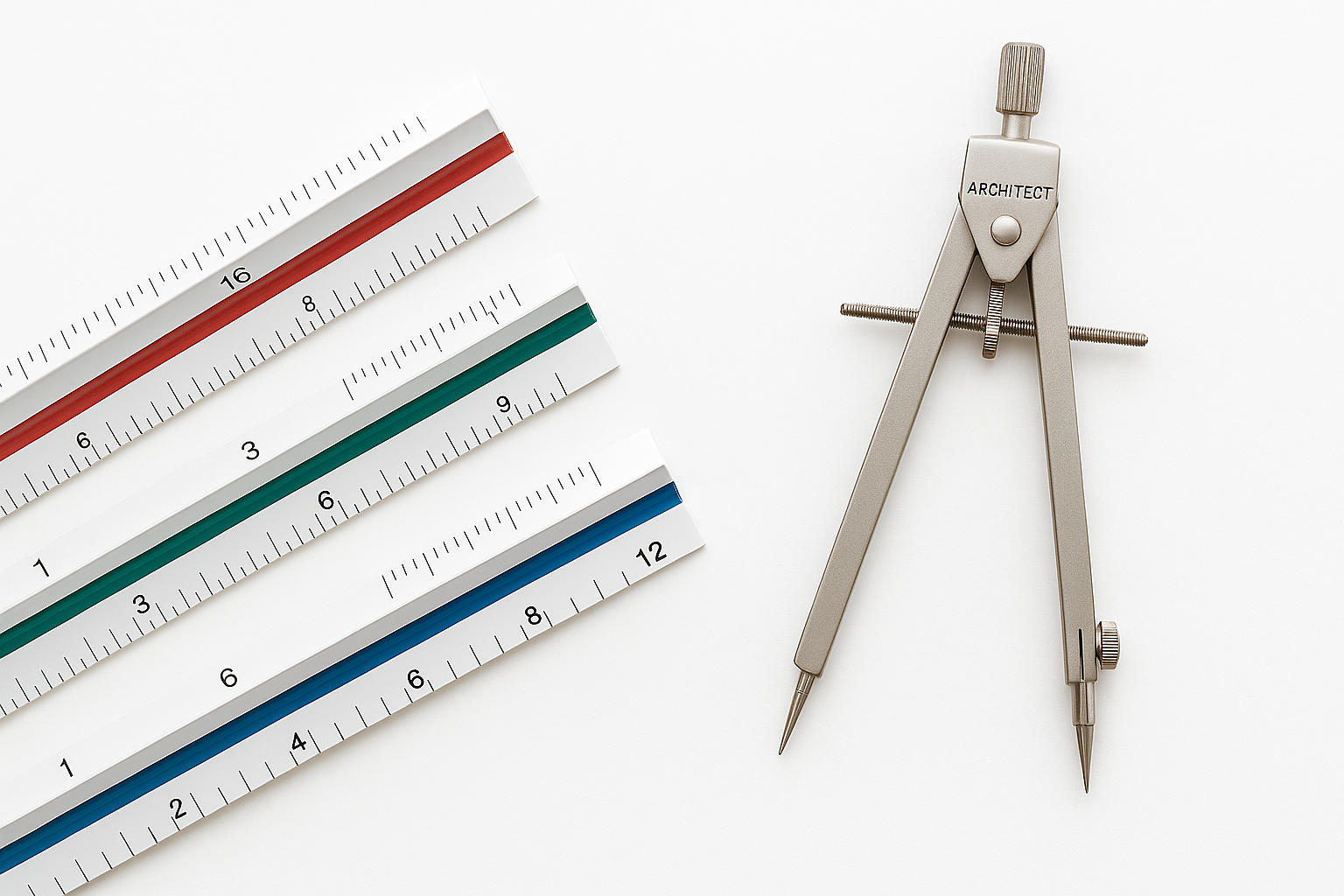
● Triangular Architect Scale – Six scales, one tool. This is the one you’ll actually use every day.
→ FIELD PICK:
Mr. Pen Triangular Aluminum Scale – Durable, dead accurate, and cheap enough to replace if you lose it in the studio mess.
Top Brands That Don’t Suck
● Alvin – Classic, pro-level gear. If it’s in your studio drawer, it’s probably this.
● Staedtler – German precision. Every line lands where it should. Sharp, no-nonsense design.
● Helix – Budget-friendly, reliable, and hard to break. You’ll forget you even bought it—it just keeps working.
Specialty Rulers: The Rest of the Squad
● Architect Triangle Ruler – Always gives you a true 90. Simple, reliable, and great for fast sketches.
● Parallel Ruler – For people who can’t draw straight. Helps lock in horizontal lines without a T-square.
● T-Square – Big sheets, long runs, perfect lines. Makes your workspace feel like a real drafting table, not just a desk.
How to Use a Scale Ruler (Without Screwing It Up)
● Pick the right scale side
● Align it with your drawing
● Read the damn number
● Convert it to real-world size
Tip: Don’t use 1/8 when you meant 1/4. That’s how you end up with 20-foot kitchen counters.
→ PRINTABLE RULER: Forgot yours? Print one online. It’s flimsy, but it’ll save you in a pinch.
→ SCALE WORKSHEETS: Still guessing? Get some practice sheets and learn how to eyeball like a pro.
One time I switched from 1/8 to 1/4 halfway through a drawing. Didn’t notice till we printed. The kitchen island was 20 feet long. Keep your scale straight. Mark it bold. Always.
FIELD TEST
What I Actually Use
Here’s what I’ve carried in my bag over the years:
▪ Alvin Architect Ruler – Solid, weighty, clean engravings. Best for precision work.
▪ Staedtler Triangular Scale – Lighter, great markings, survives drops. Still sharp after years.
▪ Mr. Pen Triangular Scale – My go-to for students. Six scales. Solid for the price.
▪ Helix Ruler – Cheap backup that somehow never breaks.
▪ Alvin Hollow Scale – Good when I need to pack light—less solid, but does the job.
✕ What I Don’t Recommend: Any ruler with painted-on markings—they fade fast.
→ STARTER TOOL: Mr. Pen Triangular Ruler (Amazon) – Six scales, affordable, and accurate enough for studio or field use.
Final Word: Why the Ruler Still Rules
A good ruler doesn’t just measure—it keeps your whole design from falling apart.
Architects use them every day to keep ideas real, drawings tight, and mistakes small. Doesn’t matter if it’s 1/4", 1:100, or digital—if it scales clean, you’re winning.
Keep one in your bag. Keep one on your desk. And keep one around when someone questions your plan.
Because nothing shuts down bad feedback faster than a dead-straight line.
→ Pro Tip: If you only own one tool, make it a good ruler. You’ll use it more than anything else.
Quick FAQ: Architectural Rulers, Explained Fast
What’s the difference between an architectural ruler and a regular one?
An architectural scale converts measurements into real-world sizes—like 1/4" = 1'-0". A regular ruler just gives raw inches or cm.
How do I pick the right ruler?
Use 1/4" or 1/8" scales for most building plans. Metric? Go 1:50 or 1:100. A triangle ruler with multiple scales covers everything.
Why not just go digital?
Old-school rulers don’t run out of battery. They’re fast, hands-on, and still the best for sketches and quick checks.
What’s best for beginners?
Start with a Mr. Pen or Helix triangle ruler—cheap, durable, easy to read.
Can I use it for interior design?
Yes. Use 1/4" or 1/8" scale to draw accurate room layouts and furniture placement.
Related Reads
Drafting Degrees & Education
-
2-Year Drafting Degree: Skills, Career Paths, and Opportunities
-
How an Online Drafting Degree Can Boost Your Career in Architecture
Careers in Drafting
Tools & Techniques
Specializations in Drafting
Architectural Ruler Index
Tools, Scales, Materials, and Uses
Architectural Ruler Types
-
Architectural scale ruler – A tool used to measure scaled drawings accurately in architecture and drafting
-
Triangular scale ruler – A 3-sided ruler with six common architectural or engineering scales
-
Flat scale ruler – A basic 2-sided version with fewer scale options; slimmer and easier to store
-
Digital architectural ruler – A modern tool that shows measurements on a screen, great for quick conversions
Common Scales
-
1/16 scale ruler – For highly detailed architectural drawings
-
1/8 scale ruler – Used for general layouts and scaled floor plans
-
1/4 scale ruler – The most widely used scale in residential and commercial plans
-
1/2 scale ruler – For large details or oversized elements
-
1:50 metric scale – Metric version of 1/4 scale; common in international design work
-
1:100 metric scale – Best for site plans and full-building layouts
Materials and Builds
-
Aluminum architectural ruler – Durable, warp-resistant, and built for long-term use
-
Metal architect ruler – Heavier than plastic, good for precision and cutting
-
Engraved scale ruler – Features etched markings that won’t rub off with use
Top Ruler Brands
-
Alvin architectural ruler – Known for precision, pro quality, and durability
-
Staedtler architect ruler – German-engineered with high-contrast markings
-
Helix architectural ruler – Budget-friendly and dependable
-
Mr. Pen triangular ruler – Popular pick for students and professionals alike
How-To and Resources
-
How to use an architectural ruler – Guides for reading and applying different scale markings
-
Architect scale worksheet – Practice sheets to learn scale translation
-
Printable architectural scale ruler – Downloadable version for emergency use or learning
-
Online architectural ruler – Digital tools that simulate scale rulers on screen
Specialty Rulers
-
Architect triangle – Right-angle triangle used for precise sketching
-
Parallel ruler – Helps maintain straight lines when drafting by hand
-
T-square ruler – Essential for long, clean horizontal lines on large paper
Other Uses
-
Scale ruler for interior design – Used to create room layouts and furniture plans to scale
-
Convert engineer to architect scale – Helps translate between engineering and architectural units
Affiliate Notice
Some links in this article are affiliate links. If you buy something through them, we may earn a small commission—at no extra cost to you. Every tool listed was picked based on real use and field-tested reliability