
Free Art Deco Course: Learn Architecture, Design, and History in One Place
This is a free course that goes deep into Art Deco architecture, design, and interiors. It covers the movement’s history, its defining features, and how it continues to influence cities and homes today.
Master Art Deco
The course was built with input from architects, designers, and artists who work with Deco in real projects. They’ve restored historic theaters, designed modern Art Deco houses, and studied the style’s details for years.
That means you get more than a surface overview. You learn how to recognize Art Deco characteristics, apply them in interiors, and see how the movement shaped everything from skyscrapers to furniture.
By the end, you’ll understand not just what makes Deco iconic, but how to use its geometry, materials, and colors in your own work.
COURSE OUTLINE
Module 1: The Origins and History of Art Deco
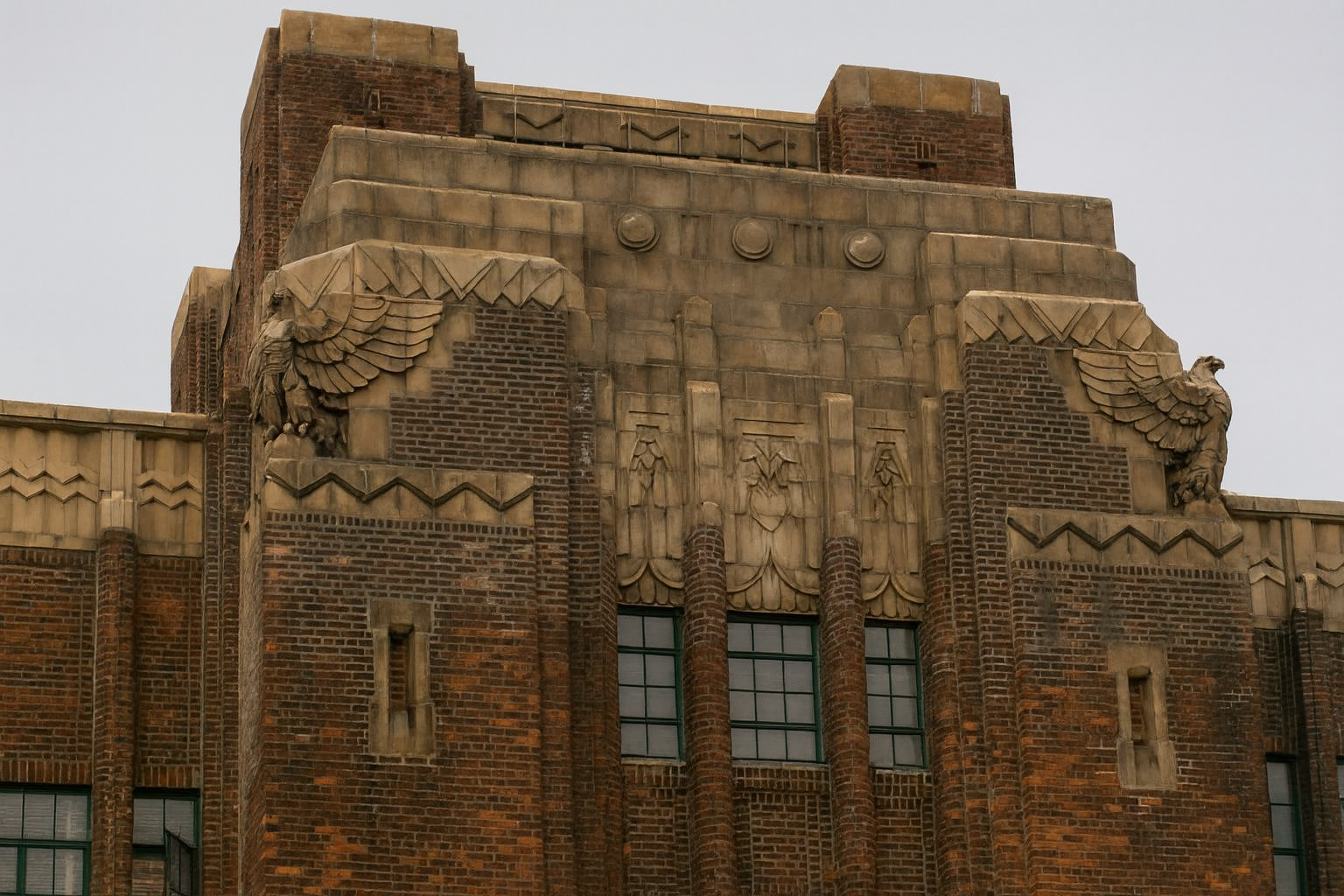
Art Deco didn’t appear out of thin air. It grew out of global influences, cultural shifts, and the optimism (and struggles) of the early 20th century. This module breaks down how it all came together.
Pre-Art Deco Roots
-
What came before: Art Nouveau’s flowing lines and the industrial revolution’s machine-made power.
-
Global inspiration: Egyptian motifs after Tutankhamun’s tomb was found, African patterns, Asian lacquer, and Mayan geometry all feeding into Deco’s bold language.
The Roaring Twenties
-
Why the 1920s made Art Deco explode—cities booming, jazz, cinema, and a hunger for luxury.
-
The 1925 Paris Exhibition that launched Deco as the style of modern glamour.
The 1930s Shift
-
The Great Depression reined in the excess. Designs became simpler, sleeker, and more aerodynamic.
-
Streamline Moderne emerges—curved edges, chrome trims, and less ornament but still very Deco.
1940s and WWII Era
-
Deco continues but with practicality front and center—wartime materials cut back the lavish details.
-
Public buildings and transport hubs adopt stripped-down Deco influences.
1950s Revival and Beyond
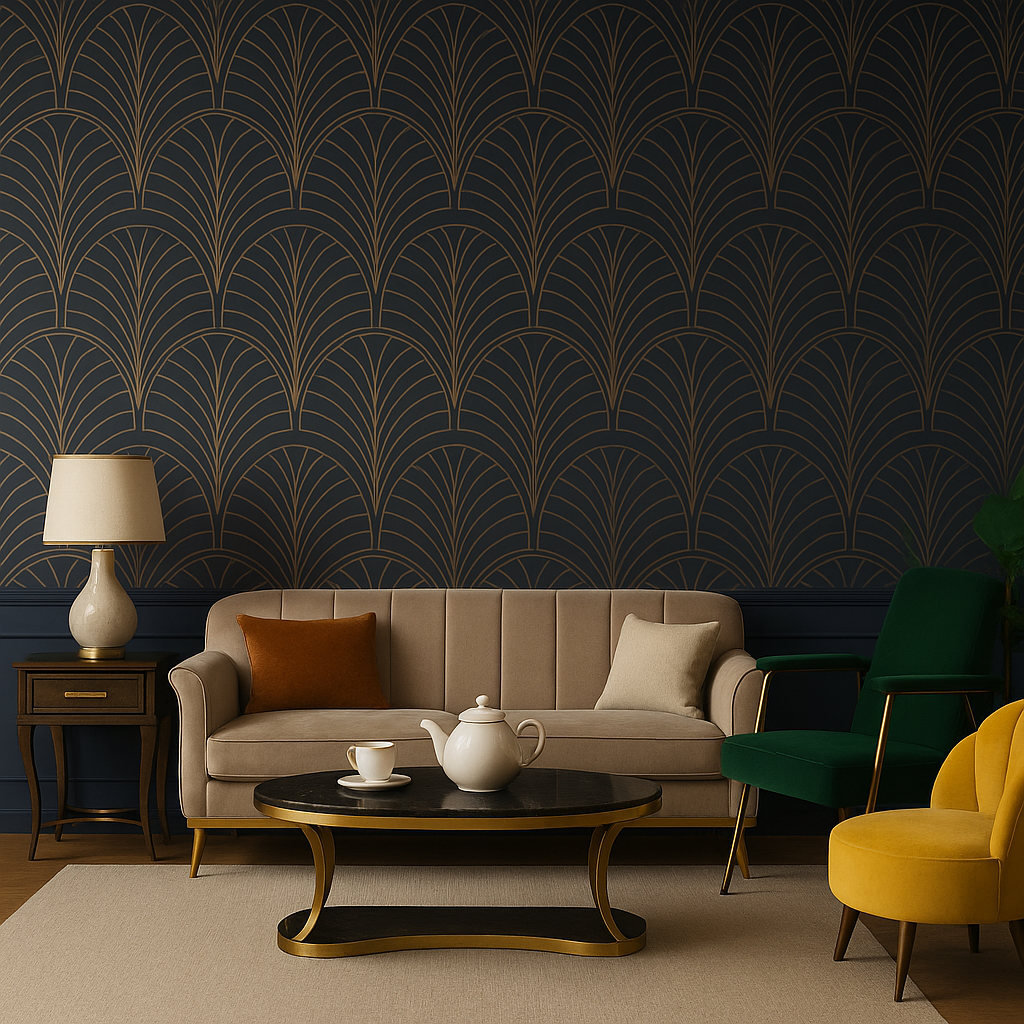
-
Art Deco mixes with Mid-Century Modern in the post-war years.
-
Miami’s pastel Tropical Deco keeps the style alive in residential and urban spaces.
-
Late 20th-century revivals in fashion, interiors, and cinema reintroduce Deco to new generations.
By the end of Module 1, you’ll see how Deco wasn’t just a style—it was a response to its time. Each wave reflected what people valued: luxury in the 20s, resilience in the 30s, pragmatism in the 40s, and nostalgia in later revivals.
Module 2: Characteristics of Art Deco (Visual Guide)
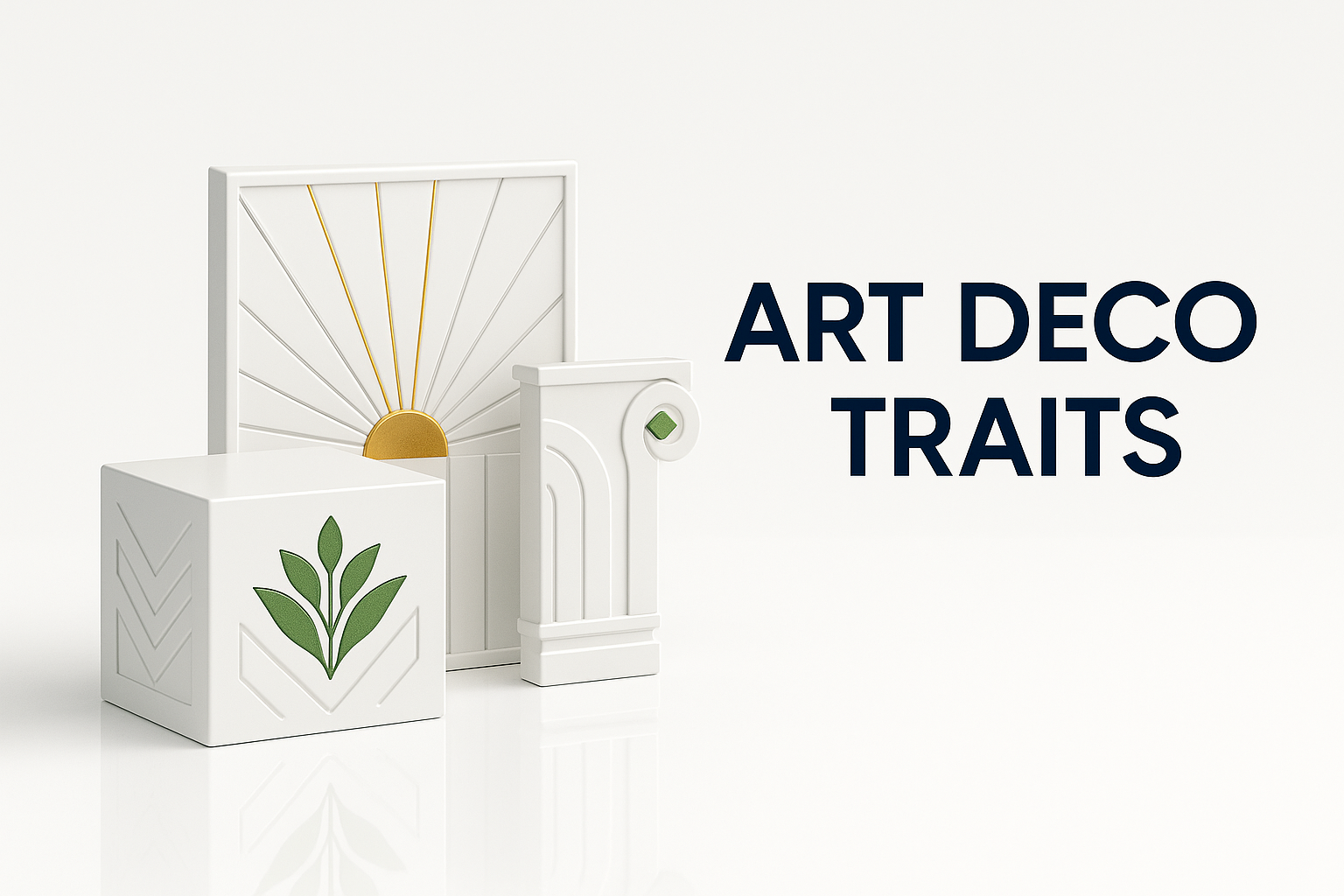
What makes a building, room, or object instantly recognizable as Art Deco? It’s the combination of bold geometry, rich materials, and patterns that balance luxury with modernity.
Core Features
-
Symmetry and clean geometry—everything feels balanced and intentional.
-
Strong vertical lines on facades, paired with stepped or tiered forms.
-
High-end materials: chrome, marble, glass, lacquer, and exotic woods.
Motifs and Patterns
-
Iconic visuals: sunbursts, chevrons, zigzags, lightning bolts, stylized flowers, and Egyptian-inspired details.
-
Industrial progress meets ancient influence: machine precision combined with motifs from Egypt, Asia, and the Americas.
Shapes and Forms
-
Curves blended with angles—circular railings, rounded windows, and arched entries alongside sharp spires and grids.
-
Streamlined silhouettes that still feel futuristic even today.
Where to Spot It
-
Interiors: terrazzo floors, mirrored panels, bold chandeliers.
-
Exteriors: stepped crowns (think Chrysler Building), decorative spandrels, and polished stone facades.
-
Furniture: sleek credenzas, lacquered tables, velvet seating with chrome trims.
By the end of this module, you’ll know how to walk into a space (or look up at a skyline) and instantly recognize the signature “Deco look.”
Module 3: Art Deco in Architecture
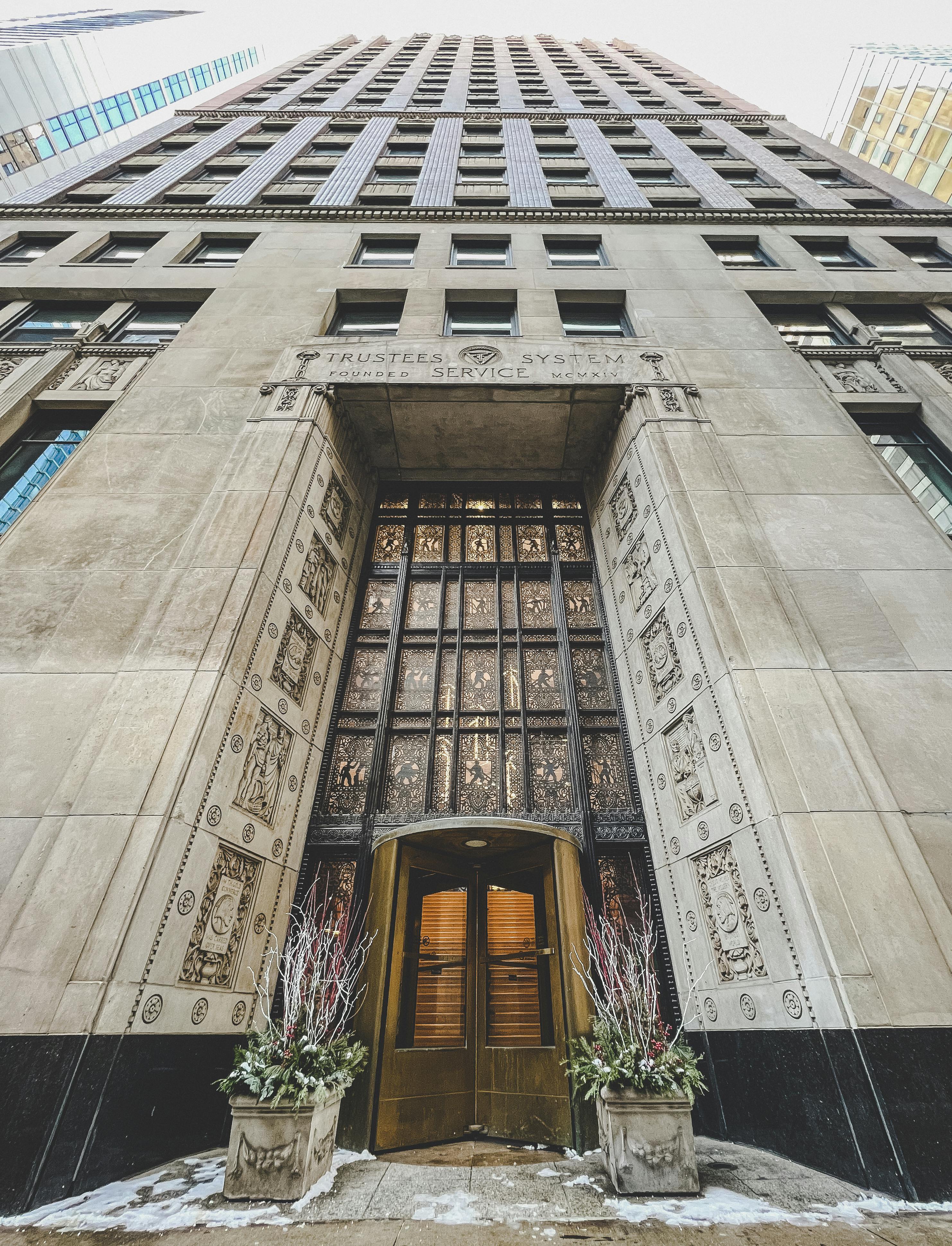
Art Deco left its boldest mark on buildings. From New York’s skyline to seaside towns in New Zealand, the style shaped how cities wanted to look modern, powerful, and glamorous.
Iconic Landmarks
● Chrysler Building, New York: Stainless steel crown, sunbursts, and auto-inspired details.
● Empire State Building, New York: Vertical lines and grand Deco lobby murals.
● Rockefeller Center, New York: A mix of monumental scale and ornate detailing.
● Palais de Chaillot, Paris: French Deco blending symmetry with monumental presence.
● Napier, New Zealand: A whole city rebuilt in Deco style after the 1931 earthquake.
Regional Variations
Art Deco never looked the same everywhere.
● United States: Skyscrapers and theaters with chrome, glass, and terrazzo.
● United Kingdom: Factories like the Hoover Building—industrial, but colorful.
● Australia: Sydney’s Anzac Memorial and coastal Deco homes.
● Germany: Heavier, more stripped-down Deco mixed with Bauhaus influences.
Residential Design
Deco wasn’t only for grand towers. It showed up in homes too:
● Bold, geometric facades with flat roofs and rounded corners.
● Symmetrical layouts with decorative entryways and stained glass.
● Interiors filled with lacquered furniture, bold rugs, and dramatic lighting.
Why It Still Matters
Walk through Miami’s South Beach, Mumbai’s Marine Drive, or Los Angeles’ Eastern Columbia Building—you’ll see Deco alive today. It’s not just history; it’s a style that shaped skylines and still defines the identity of entire cities.
Module 4: Art Deco in Interior Design
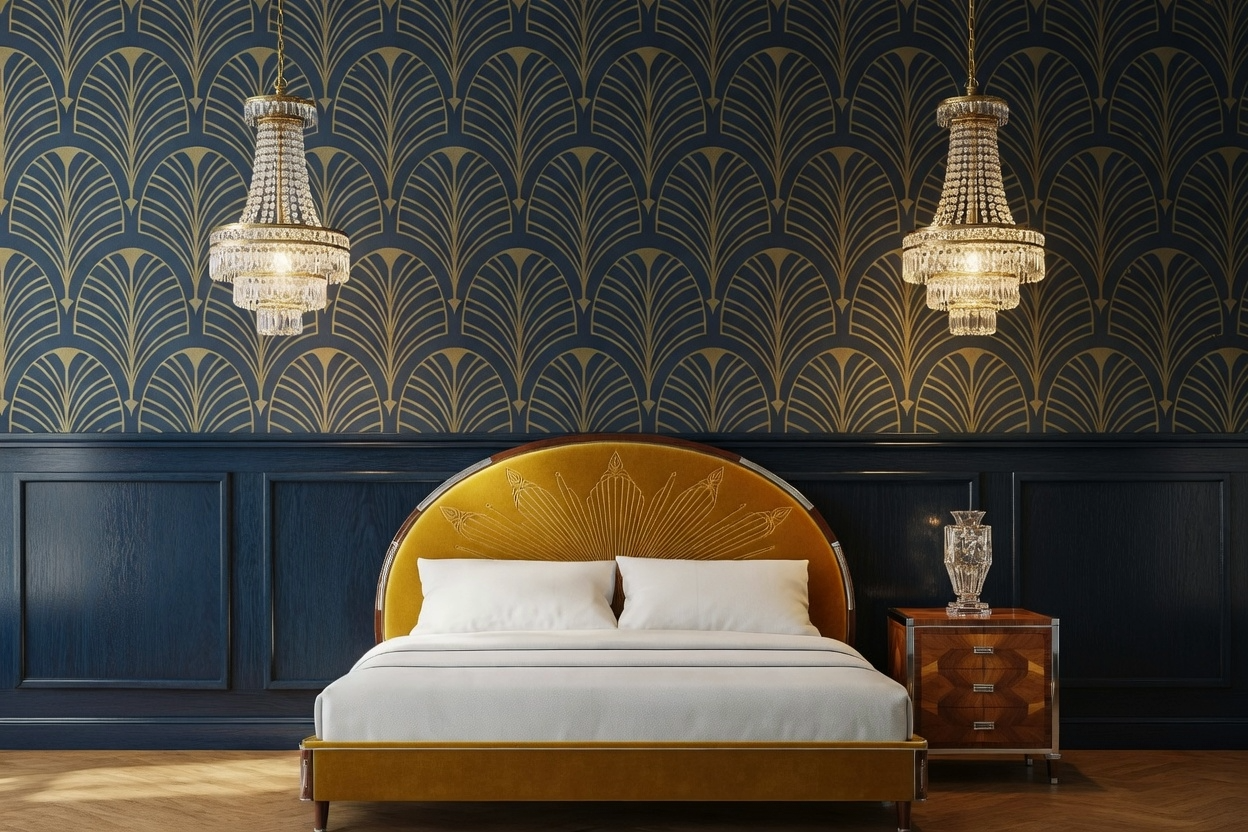
Art Deco interiors were designed to impress, but they also had a practical side. The mix of bold geometry, rich materials, and clever layouts makes them surprisingly adaptable to modern living. Here’s how to bring Deco indoors—room by room.
Living Spaces: Glamour with Comfort
Art Deco living rooms balance drama with livability.
● Rugs: Geometric patterns (zigzags, chevrons, fans) anchor the room without taking over.
● Furniture: Curved armchairs, velvet sofas, or glass-and-chrome tables set the tone.
● Accents: Mirrors, lamps, and side tables with metallic trims add Deco sparkle.
● Small Space Tip: Use one standout piece—a sunburst mirror or scalloped chair—rather than layering too many bold items.
Kitchens and Bathrooms: Practical but Stylish
Deco wasn’t limited to lobbies or lounges. Everyday rooms got the treatment too.
● Kitchens:
– Geometric tiled backsplashes in black-and-white or jewel tones.
– Chrome or brass handles on cabinets.
– Frosted-glass pendant lights with strong frames.
● Bathrooms:
– Sunburst or zigzag tiles for floors and walls.
– Curved sinks and tubs echoing streamlined Deco forms.
– Gold-framed mirrors or Deco-style sconces for subtle luxury.
Colors and Materials: Deco’s Signature Mix
Getting the palette right is half the battle.
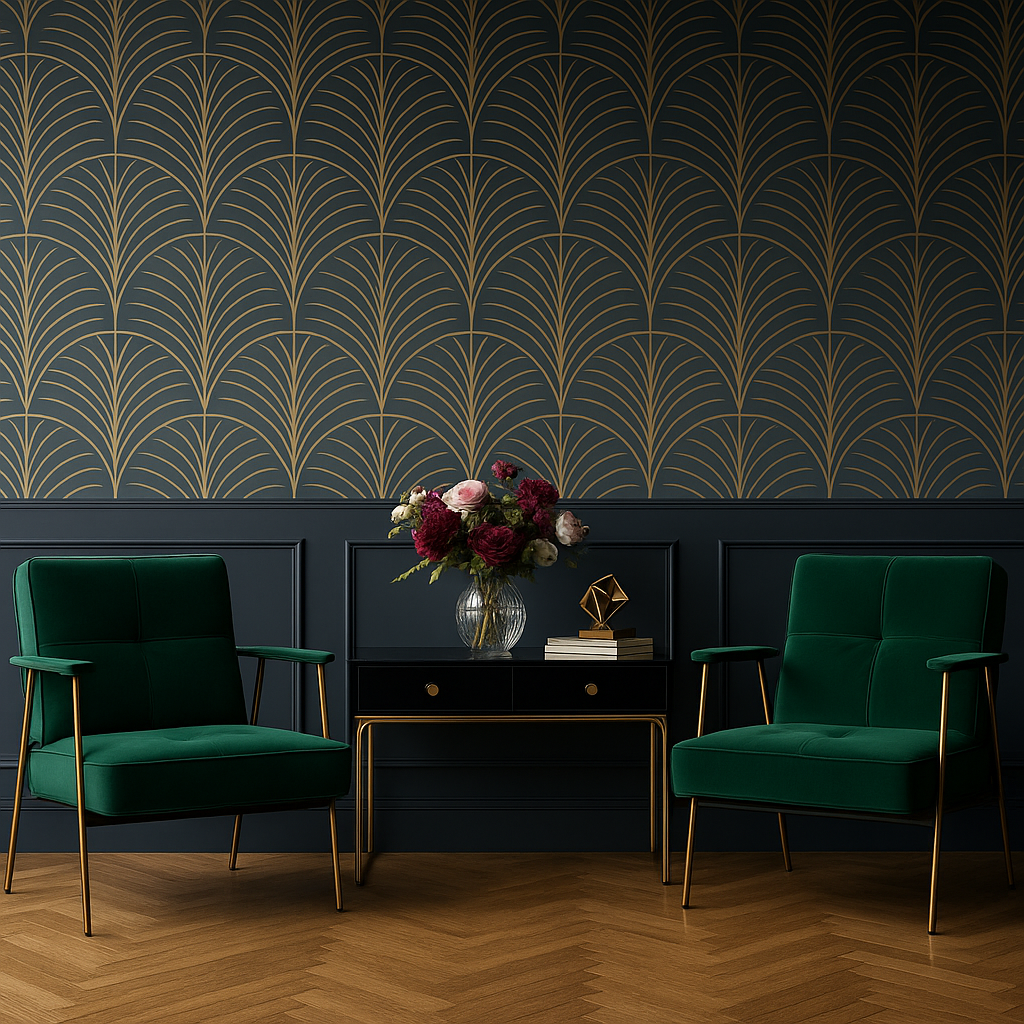
● Colors: Deep jewel tones (emerald, sapphire, ruby) paired with black, white, or cream bases. Metallic accents in gold, silver, or bronze for contrast.
● Materials: Velvet and leather for upholstery, rich woods like walnut or ebony for warmth, glass and chrome for light-catching details.
Specific Rooms Where Deco Works Best
● Dining Room: A bold chandelier with geometric tiers over a polished wood or glass table. Velvet dining chairs with metallic trim for richness.
● Bedroom: Scalloped or sunburst headboards, jewel-toned bedding with gold edging, mirrored nightstands to bounce light around.
● Home Office: Streamlined desks, leather chairs, and wall art using Deco typography or geometric prints.
Blending Deco with Modern Design
Not every space can handle full Deco immersion. Blending often works better.
● Pair Deco pieces with minimalist backdrops to avoid clutter.
● Stick to two or three bold Deco elements per room—a chandelier, a patterned rug, or a lacquered cabinet.
● Keep the color palette tight so modern and Deco elements feel cohesive.
Quick Rule of Thumb
If it feels heavy, simplify. Deco interiors shine when they’re bold but not overwhelming. A single dramatic piece—like a chandelier or mirror—can do more than filling the room with competing details.
Module 5: Art Deco Furniture
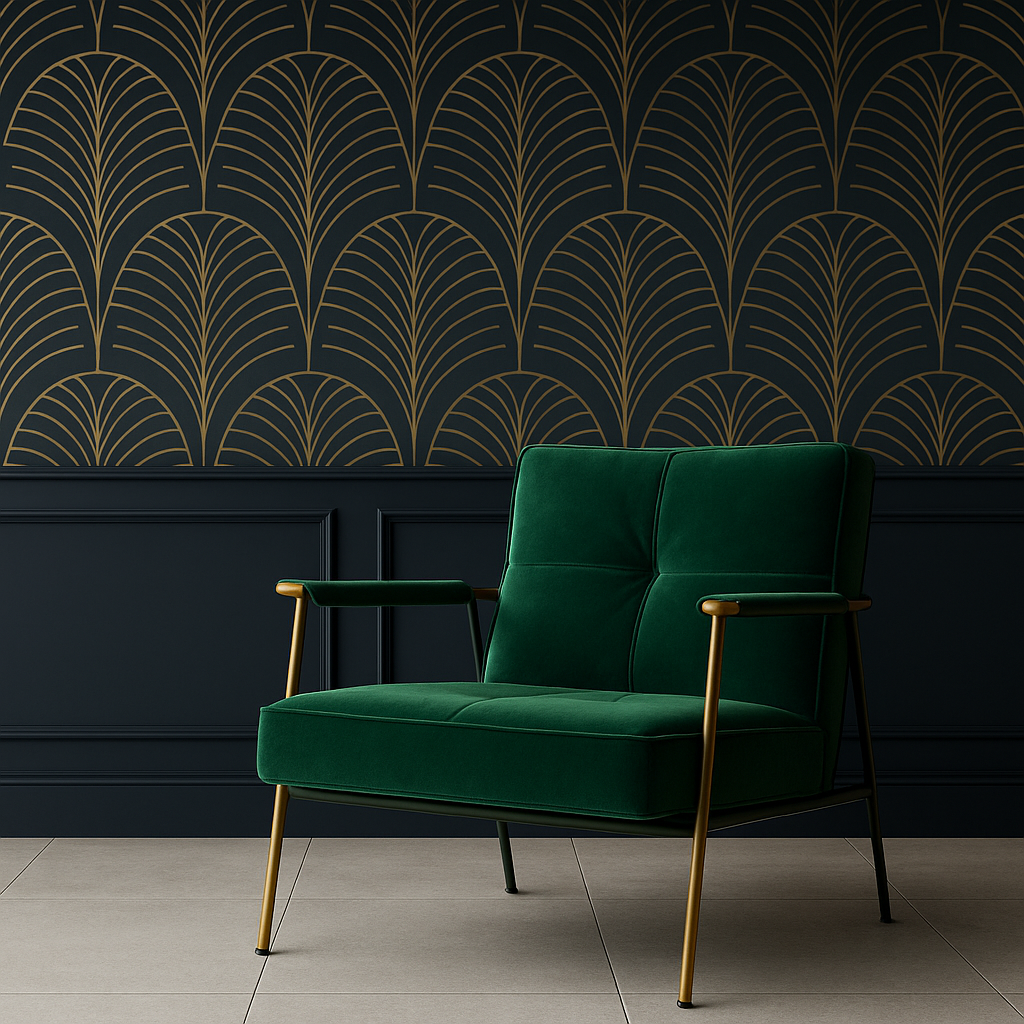
Art Deco furniture wasn’t just functional—it was designed to impress. Every piece carried bold geometry, rich materials, and flawless craftsmanship. Today, whether you’re restoring originals or adding Deco-inspired touches, furniture is one of the easiest ways to bring the style into your space.
Types of Furniture
● Chairs and Sofas: Rounded backs, scalloped edges, and upholstered in velvet, leather, or patterned fabrics. Think club chairs with chrome legs or a curved velvet sofa in emerald green.
● Tables and Storage: Sleek coffee tables with lacquered tops, sideboards with inlaid wood patterns, and consoles with mirrored fronts.
● Bar Carts: A Deco icon—mirrored shelves, chrome rails, and streamlined frames. Perfect for dining rooms or lounges.
Materials and Craftsmanship
Art Deco furniture was about luxury, but also about celebrating modern industry.
● Woods: Exotic woods like ebony, walnut, or zebrawood, often inlaid with patterns.
● Metals: Chrome, brass, and polished steel for trim, handles, and legs.
● Glass and Mirror: Used in table tops, cabinets, and panels to reflect light and add drama.
● Craftsmanship: Most pieces were custom-made, with attention to symmetry and detail that set them apart from mass-produced furniture of the time.

How to Choose the Right Piece
● Authentic vs. Reproduction: Originals from the 1920s–30s are collectible but expensive. High-quality reproductions can capture the look without the cost.
● Start Small: If a full Deco set isn’t realistic, begin with a statement chair, a bar cart, or a mirror.
● Look for Geometry: Chevron inlays, sunburst motifs, and stepped forms are classic Deco markers.
● Balance: Pair bold Deco furniture with simpler modern pieces to keep the room from feeling overcrowded.
Real Example:
In one project, a single mirrored Deco sideboard became the anchor of a modern dining room. Paired with neutral walls and a simple wood table, the piece added instant glamour without overwhelming the space.
Quick Tip:
When shopping, check construction quality. Authentic Deco furniture is heavy, solid, and richly detailed. If it feels flimsy or over-ornamented, it’s probably not worth the investment.
Module 6: Art Deco Artwork and Accessories
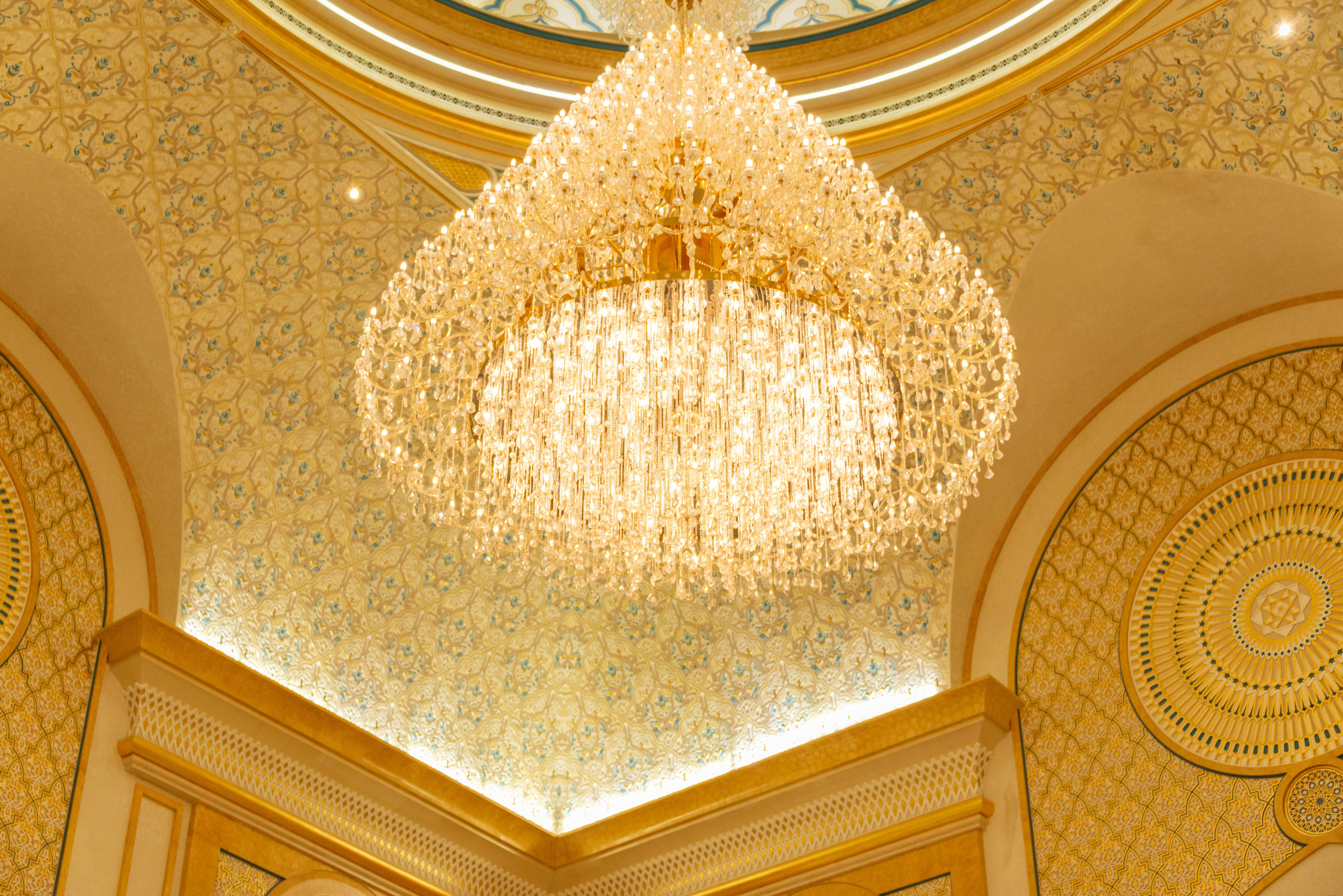
The small things often carry the most Deco impact. Artwork and accessories bring the glamour home.
Paintings and Artists
● Tamara de Lempicka – Known for sleek, stylized portraits with a metallic edge.
● Erté – Master of theatrical, fashion-driven Deco illustrations.
● Jean Dupas – Murals and panels that turned public buildings into art galleries.
Decorative Elements
● Stained glass with zigzags and sunbursts.
● Bronze and chrome sculptures with stylized figures.
● Monograms and geometric wall panels used in lobbies and homes.
Collectibles
● Figurines, clocks, and jewelry remain sought-after. Originals are pricey, but reproductions bring the same feel.
● Tip: Always check for authenticity marks if buying vintage.
Module 7: Art Deco Worldwide
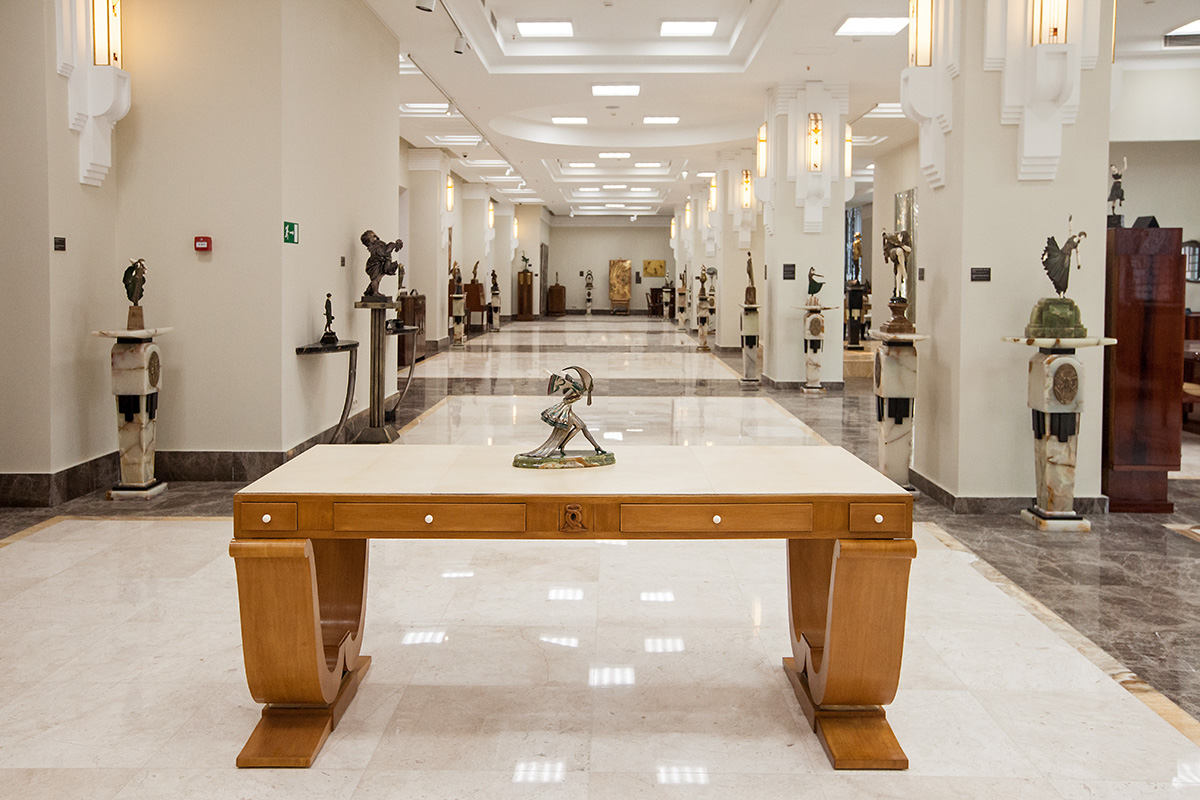
Deco didn’t stop at Paris or New York. It adapted to every corner of the world.
United States
● Skyscrapers like the Chrysler Building, theaters, and Hollywood sets spread Jazz Age glam.
Europe
● France gave Deco refinement. The UK mixed Deco with functionalism, while Germany leaned into bold industrial lines.
Asia & Oceania
● Mumbai’s Marine Drive is lined with Deco gems.
● Napier, New Zealand, was rebuilt entirely in Deco after a 1931 earthquake.
Latin America & Africa
● Argentina’s Edificio Kavanagh brought Deco height to Buenos Aires.
● African colonies saw Deco adapted with local motifs and climates.
Why it matters: Each region bent Deco to its own culture, making it one of the first truly global styles.
Module 8: Art Deco in Modern Design
Deco never died—it just keeps evolving.
Neo Deco
● Designers borrow Deco symmetry, metallics, and luxe materials but soften it with modern minimalism.
Contemporary Applications
● Hotels use Deco lobbies with geometric marble floors and chandeliers.
● Homes and apartments adopt velvet sofas, brass accents, and bold wallpapers.
Speculative Design
● Futuristic “Neo-Deco” concepts explore what Deco would look like with digital tools—think 3D-printed zigzags and chrome-like composites.
Key Point: Deco today is flexible—it can be opulent or subtle depending on how you use it.
Module 9: Creating Art Deco Spaces
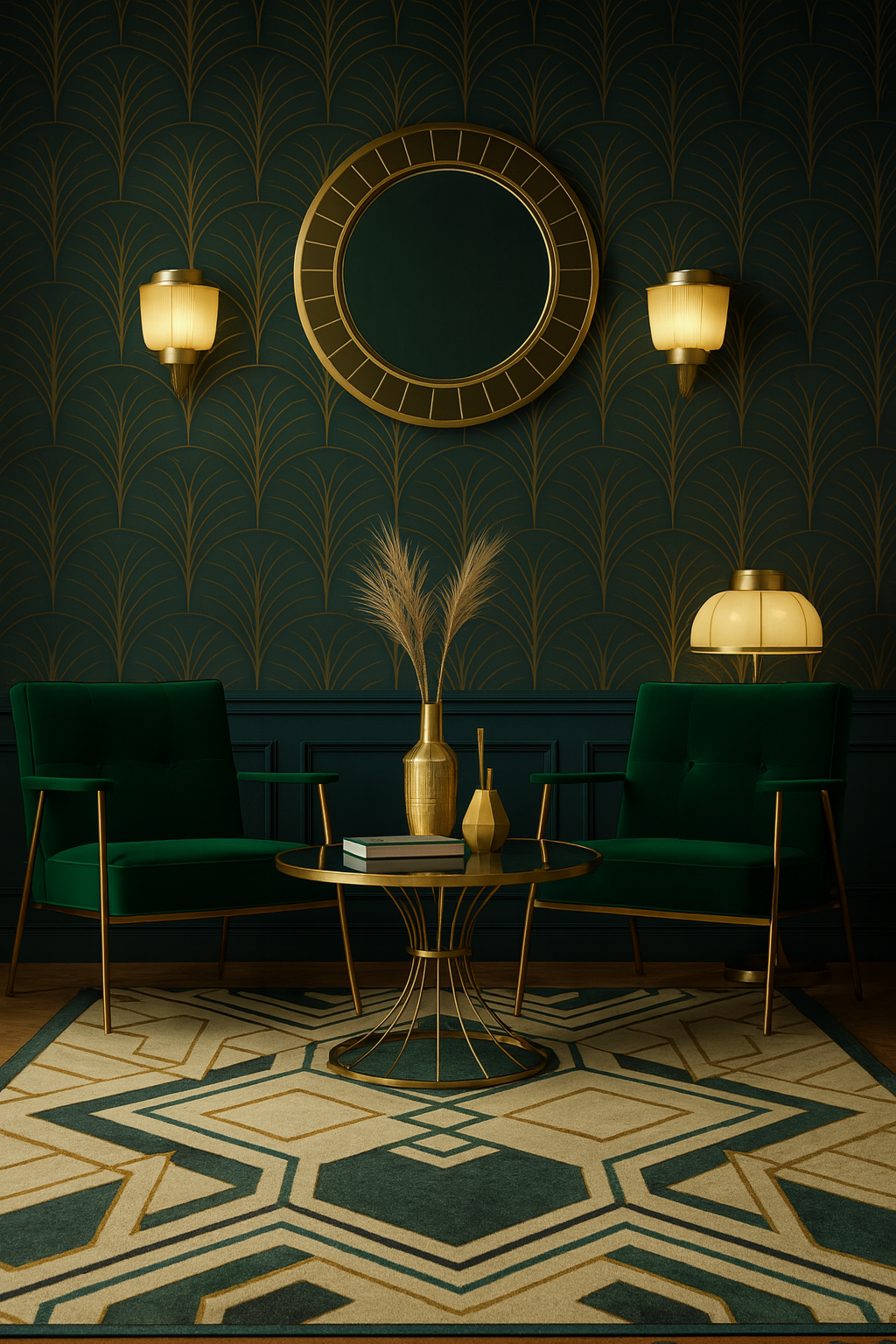
You don’t need a 1930s mansion to go Deco. Small moves make a big impact.
By Room
● Living rooms: Statement mirrors, geometric rugs, and velvet seating.
● Bedrooms: Scalloped headboards, jewel-toned bedding, mirrored nightstands.
● Kitchens: Black-and-white geometric backsplashes, chrome hardware.
● Bathrooms: Bold floor tiles, frosted glass lighting, metallic trims.
Mixing Styles
● Pair Deco with minimalism—one or two Deco pieces are enough.
● Stick to symmetry when blending with modern interiors.
Budget Tips
● Mirrors, lamps, and rugs are affordable entry points.
● Use reproductions for furniture to avoid the high cost of originals.
Module 10: Secrets of Art Deco Most People Don’t Know
Deco looks obvious—zigzags, chrome, bold colors—but its story runs deeper.
Hidden Inspirations
● Egyptian sun motifs, Mayan step forms, and African zigzags all fed Deco’s vocabulary.
Industrial Edge
● Chrome, Bakelite, and aluminum were brand-new materials in the 1920s. Deco turned them into symbols of progress.
Mass Luxury
● Deco wasn’t just for the elite. Factories made affordable Deco furniture and lighting so middle-class homes could share in the glamour.
Beyond Interiors
● Deco shaped fashion, jewelry, posters, trains, and even cars. The streamlined 1930s automobile is pure Deco.
Revival Wave
● Deco came back strong in the 1980s. Many revival pieces—mirrored dressers, zigzag lamps—are now collectible in their own right.
Why it matters: Knowing these details helps you spot authentic Deco, avoid fake knockoffs, and appreciate how a century-old style still fuels design today.
FAQ
1. What is Art Deco, and how is it different from Art Nouveau?
Art Deco is all about bold geometry, sleek lines, and luxury, while Art Nouveau focuses on organic curves and floral patterns. Think of Art Deco as sharp and glamorous, and Art Nouveau as soft and romantic.
2. Can Art Deco fit into a modern home?
Absolutely! Art Deco works well with modern interiors. Add a few statement pieces like a sunburst mirror or a velvet chair, and you’ll have a stylish, updated space with Deco vibes.
3. How can I tell if an Art Deco piece is authentic?
Look for hallmarks like geometric patterns, luxurious materials (chrome, lacquer, exotic woods), and the craftsmanship typical of the 1920s-1930s. Always check for labels or provenance if buying vintage.
4. Why are Art Deco items so expensive?
Authentic Art Deco pieces are highly sought after for their historical significance and craftsmanship. Limited production and the use of premium materials also drive up prices.
5. What are the most iconic Art Deco buildings I can visit?
Some must-see examples include the Chrysler Building and Rockefeller Center in New York, the Palais de Chaillot in Paris, and Napier's Art Deco district in New Zealand.
6. What’s the difference between Art Deco and Neo Art Deco?
Neo Art Deco is a modern reinterpretation of the original style. It keeps the bold geometry and luxurious feel but tones down the extravagance for today’s minimalist preferences.
7. Can I mix Art Deco with other styles?
Yes! Art Deco pairs beautifully with mid-century modern, industrial, or even minimalist designs. The key is to balance bold Deco pieces with simpler elements to avoid overwhelming the space.
What You’ll Take Away
This course gives you everything you need to truly understand Art Deco—its origins, key features, and influence on design worldwide.
Here’s what you’ll learn:
- How Art Deco began and evolved across decades.
- The defining elements that make Art Deco instantly recognizable.
- Tips for identifying Deco features in architecture, furniture, and decor.
- Practical ways to incorporate Deco into your own space or projects.
- Insights into how the style adapted and thrived globally.
By the end, you’ll have real, hands-on knowledge that goes beyond surface-level trivia. From recognizing iconic Deco patterns to appreciating its role in modern design, you’ll feel confident spotting and even using this timeless style in creative ways.
Art Deco Specific Decades
- 1920s Art Deco: The emergence of the style during the Roaring Twenties.
- 1930s Art Deco: How the Great Depression influenced Art Deco designs.
- 1940s Art Deco: Late-period adaptations during World War II.
- 1950s Art Deco: Revival elements and their integration into mid-century modern design.
Art Deco in Modern Times
- Modern Art Deco: How the style has been reimagined in contemporary designs.
- Neo Art Deco: Fusion of Art Deco elements with modern minimalism.
- Future Deco: Speculative takes on evolving Art Deco influences.
Regional and Cultural Art Deco
- Mexican Mirror Art: Unique interpretations of Art Deco in Mexican craftsmanship.
- Tropical Art Deco: Art Deco adaptations in tropical climates.
- Southwestern Wall Decor: Regional influences merging with Art Deco design.
- Art Nouveau Art Deco: The transition and overlaps between the two movements.
Art Deco in Architecture
- Art Deco Architecture: Study of architectural features, including skyscrapers, theaters, and government buildings.
- Art Deco Architectural Style: Insights into how the style influenced global architecture.
- Art Deco Building: Famous buildings showcasing Art Deco elements, such as the Chrysler Building.
- Empire State Art Deco: Analysis of Art Deco influence in the iconic Empire State Building.
- Art Deco House Plans: Home designs inspired by the Art Deco movement.
- Art Deco Home Style: Characteristics of residential designs with Art Deco influences.
Art Deco Colors and Materials
- Gold Art Deco: How gold is used as a defining feature in Art Deco designs.
- Art Deco Colors: A palette including black, gold, silver, and jewel tones.
- Art Deco Fabrics: Upholstery and textiles reflecting the period's elegance.
- Art Deco Tiles: Ceramic and glass tiles for flooring and walls.
- Art Deco Materials: Common materials like chrome, glass, and lacquer.
Art Deco Inspired Spaces
- Art Deco Inspired Living Room: Creating spaces with a mix of vintage and modern influences.
- Art Deco Inspired Decor: Accessories and layouts echoing Art Deco designs.
- Art Deco Lounge Room: Relaxation spaces inspired by Art Deco lounges.
- Art Deco Accent Wall: How to use bold patterns and colors on feature walls.
Art Deco and Interior Design
- Art Deco Interior Design: Key principles for incorporating Art Deco into interiors.
- Art Deco Interior Style: How furniture, lighting, and layout reflect the Art Deco ethos.
- Art Deco Living Room: Tips for creating a chic Art Deco-inspired living room.
- Art Deco Bedroom: Incorporating luxurious and bold Art Deco touches in bedroom design.
- Art Deco Kitchens: Sleek and stylish kitchen designs inspired by Art Deco aesthetics.
- Art Deco Bathroom Design: Using tiles, fixtures, and layouts to evoke the 1920s-1930s style.
Art Deco Furniture
- Art Deco Chair Styles: A guide to iconic chair designs from the Art Deco period.
- Art Deco Dining Room Chairs: Features and materials used in classic Art Deco dining chairs.
- Art Deco Lounge Chair: Comfortable and stylish seating inspired by Art Deco design.
- Art Deco Furniture Style: Overview of furnishings with bold shapes and luxurious materials.
- Art Deco Recliner Chair: Combining functionality with Art Deco elegance.
Art Deco Shapes and Style
- Art Deco Shapes: Overview of geometric patterns and forms characteristic of Art Deco design.
- Art Deco Aesthetic: Key features of the glamorous and streamlined Art Deco look.
- Art Deco Design Characteristics: Distinctive traits that define Art Deco, including symmetry, bold colors, and motifs.
- Art Deco Patterns: Iconic repeating designs like zigzags, chevrons, and sunbursts.
- Art Deco Geometric Patterns: Exploration of angular, streamlined designs popular in architecture and decor.
- Art Deco Motifs: Specific decorative elements like fans, feathers, and stylized florals.
Art Deco Artwork and Artists
- Art Deco Art Style: Exploring how Art Deco influenced visual arts.
- Art Deco Paintings: Notable paintings and artists from the Art Deco era.
- Artist Tamara de Lempicka: A spotlight on one of the most famous Art Deco painters.
- Erte Art Deco: Contributions of Erté to the Art Deco aesthetic in illustrations and fashion.
- Tamara Łempicka Paintings: Analysis of her iconic works and their lasting influence.
- Art Deco Graphics: How graphic design was shaped by the movement.
Art Deco Decor and Accessories
- Art Deco Wall Art: Popular motifs and styles for wall decorations.
- Art Deco Monogram: Customized initials with an Art Deco flair.
- Art Deco Accents: Small decorative items like vases and lamps for an Art Deco touch.
- Art Deco Posters: Vintage posters that epitomize the Art Deco style.
- Black and Gold Art Deco: A timeless combination symbolizing Art Deco luxury.
- Art Deco Stained Glass: Using glasswork to incorporate the era's aesthetic.
Miscellaneous and Collectibles
- Art Deco Collectibles: Rare items like figurines, clocks, and jewelry from the era.
- Art Deco Gifts: Unique gift ideas for enthusiasts of the style.
- Art Deco Murals: Large-scale decorative artworks reflecting the movement.
- Art Deco Sculptures: Ornamental and functional sculptures.