
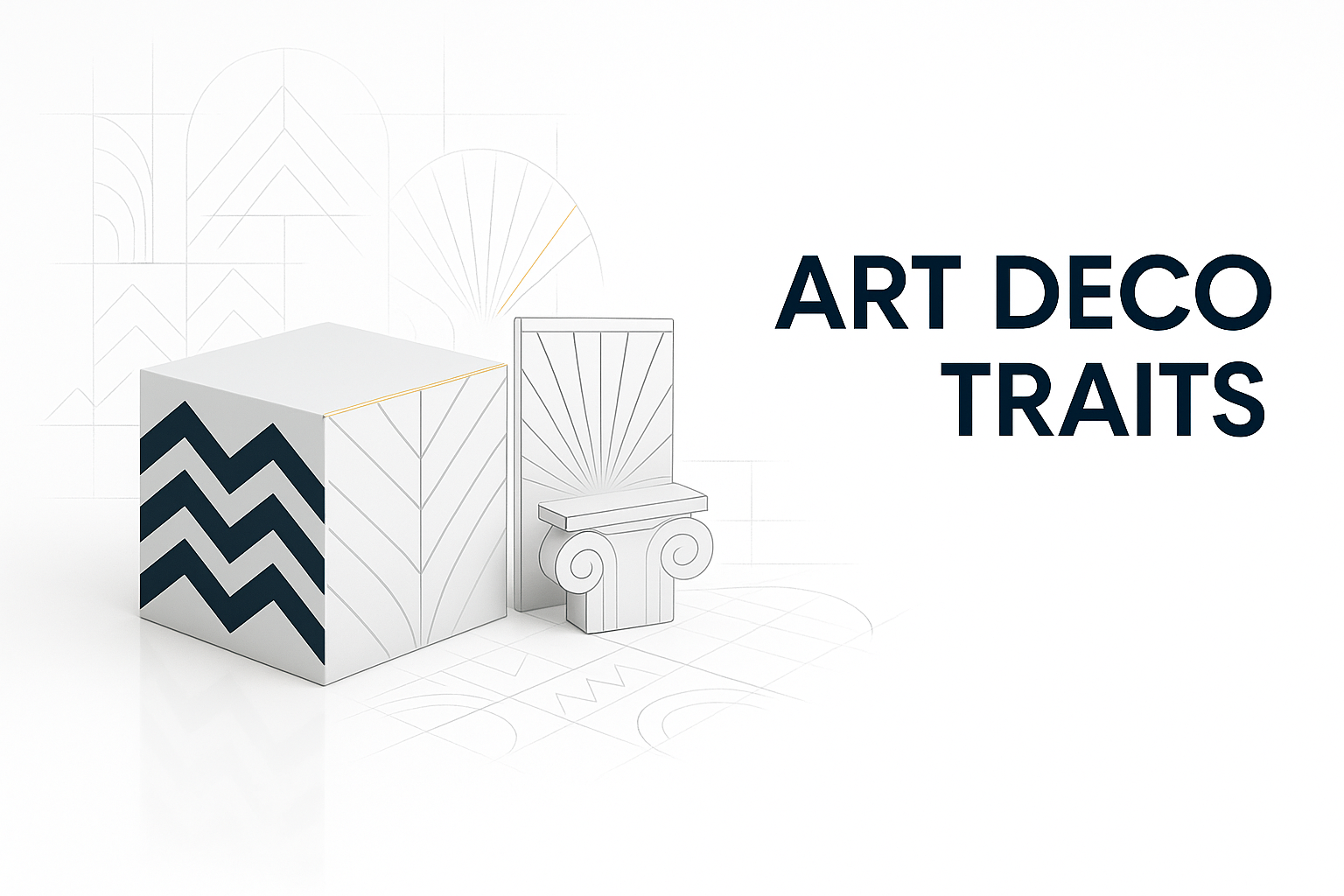
How to Spot Art Deco: A Simple Visual Guide
Art Deco stands out once you know the signs. Look for clean symmetry, bold geometry, and materials that feel rich such as chrome, marble, or lacquered wood. Add in patterns like zigzags, chevrons, or sunbursts and you have Deco.
You will see it in skyscrapers with stepped crowns, theaters with glowing chandeliers, and houses with bold entryways. Inside, it shows up in velvet chairs with curved arms, mirrored tables, and patterned floors.
The difference between real Deco and a poor copy is detail. Authentic pieces are balanced, precise, and built to last. Knockoffs look flashy but fall apart on closer inspection.
Once you train your eye, spotting Deco becomes second nature whether you are walking past the Chrysler Building or picking out a coffee table for your living room.
Art Deco's Timeless Appeal: What Makes It Iconic?
The distinctive elements that continue to make Art Deco a favorite in design today.
Art Deco Elements: How to Spot the Style Anywhere
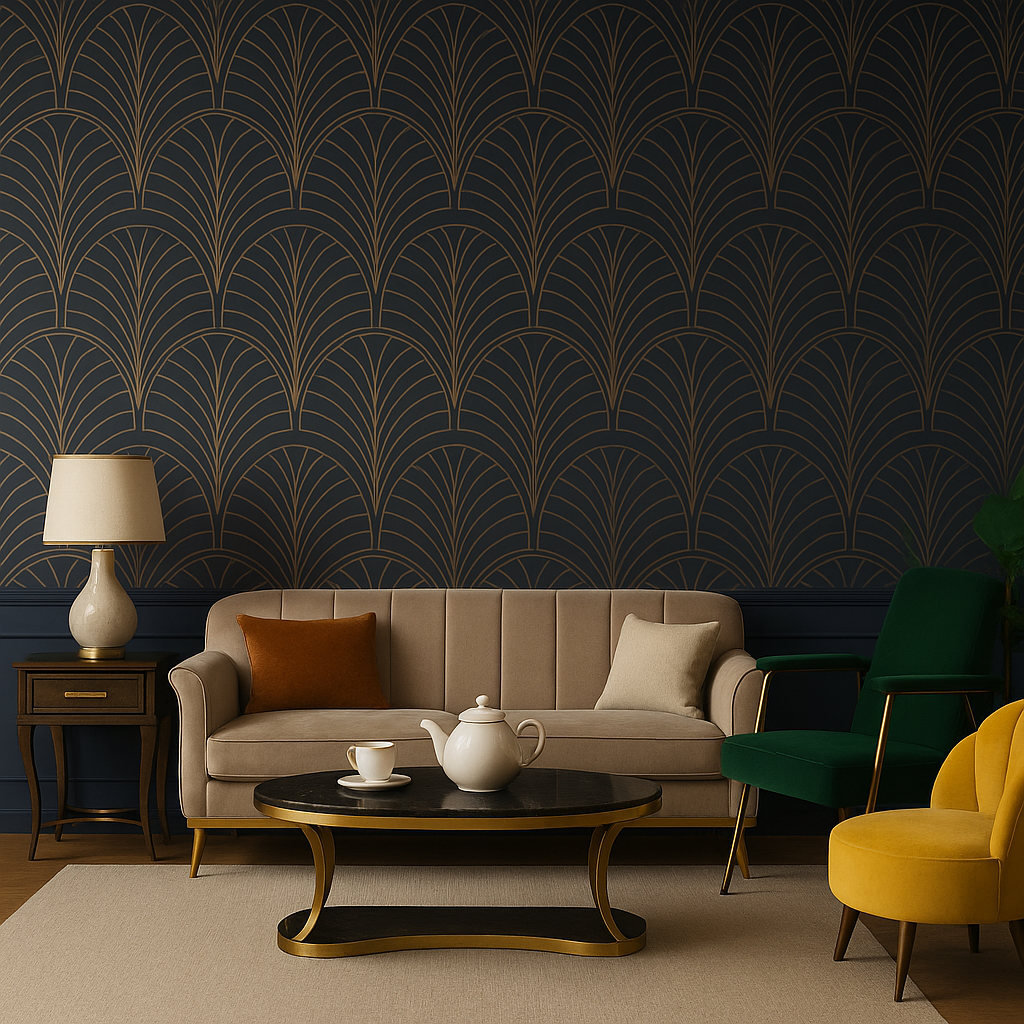
Art Deco is easy to recognize once you know what to look for.
How to Spot Art Deco
The Basics
● Symmetry and bold geometry – straight lines, stepped forms, and angular patterns.
● Distinct motifs – zigzags, chevrons, sunbursts, and stylized florals.
● Luxurious materials – chrome, brass, marble, glass, lacquer, and exotic woods.
● Striking colors – jewel tones, black and gold, silver, or bold contrasts.
Example: Walk into the Chrysler Building lobby and you’ll see polished marble, chrome accents, and a glowing sunburst ceiling.
Where You’ll See It
● Skyscrapers – stepped crowns, vertical lines, and ornate spires (Chrysler, Empire State).
● Theaters and hotels – chandeliers, mirrored walls, dramatic stone floors.
● Homes – bold entryways, stained glass windows, metal railings, geometric gates.
● Furniture and decor – velvet chairs, mirrored tables, lacquer cabinets, chevron rugs.
Example: Miami’s South Beach is lined with Deco hotels painted in pastels, accented with curves and porthole windows.
Real vs Fake
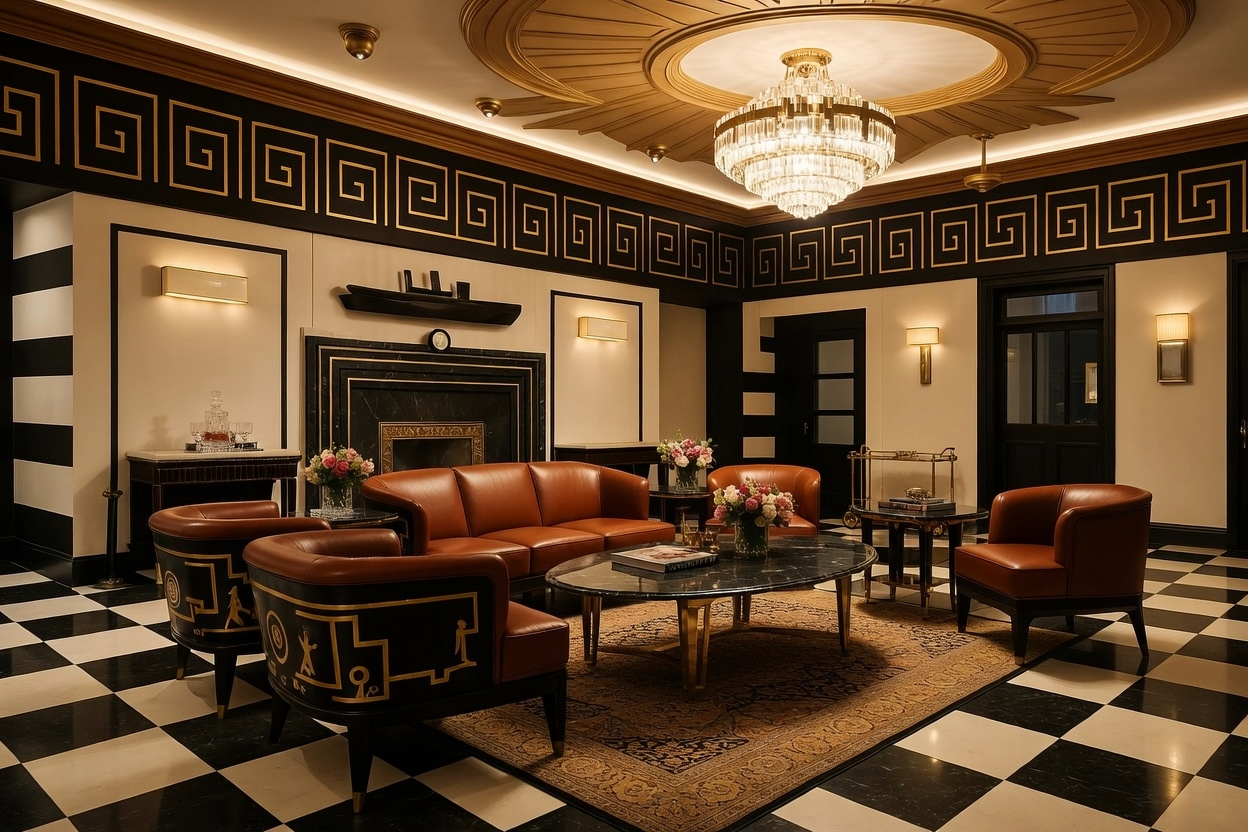
Real Deco
✓ Balanced proportions and clean symmetry
✓ Durable, authentic materials (stone, polished wood, solid metals)
✓ Fine detailing like inlays, carvings, or etched glass
✓ Designs that combine glamour with utility
Fake Deco
✕ Cheap, flashy finishes like gold paint instead of brass
✕ Random or sloppy patterns
✕ Lightweight builds with little durability
✕ Surface-level copies that miss Deco’s precision
Example: A real Deco bar cart will have chrome framing and glass shelves built to last. A knockoff might use shiny plastic that looks cheap under close inspection.
Art Deco Elements in Detail
Now that you know the quick cues, here’s a deeper breakdown of the key characteristics of Art Deco and how to spot them.
1. Bold Colors
Deep jewel tones (emerald, sapphire, ruby), high-contrast black and gold, and metallic finishes.
Where to Spot It: Theater lobbies, vintage Deco interiors, or modern Deco-inspired accent walls.

IMAGE: A close-up of an Art Deco vase with Egyptian-inspired patterns.
2. Geometric Patterns
Chevron floors, zigzag tiling, sunburst doors, fan-shaped motifs.
Where to Spot It: Skyscraper spires, stained glass windows, terrazzo floors.
3. Streamlined Forms

Smooth curves meeting sharp edges, influenced by machines and industry.
Where to Spot It: Miami’s Tropical Deco facades, curved stair railings, aerodynamic furniture.
4. Metallic Accents

IMAGE: A vintage Art Deco chandelier in chrome with frosted glass panels.
Chrome, brass, steel, and polished trims add sparkle and luxury.
Where to Spot It: Elevator doors, cabinet handles, chandelier frames.
5. Symmetry and Balance

IMAGE: A close-up of Art Deco railings with gazelle motifs.
Repeating motifs and carefully proportioned layouts.
Where to Spot It: The Rockefeller Center façade, Deco-era office lobbies, symmetrical shelving.
6. Luxurious Materials

IMAGE: A sleek Art Deco armchair with a lacquered frame and velvet upholstery.
Marble, exotic woods, lacquer finishes, mother-of-pearl inlays.
Where to Spot It: Hotel lobbies, Deco-era bank interiors, restored vintage furniture.
7. Ornate Detailing
Carved stone, etched glass, mosaic tiling, stylized figures.
Where to Spot It: Theater ceilings, decorative railings, historic Deco staircases.
8. Vertical Emphasis
Tall windows, spires, tiered crowns pointing upward.
Where to Spot It: The Empire State Building, Eastern Columbia Building, Deco apartment blocks.
9. Consistency in Design
Every element—door handles, light fixtures, wall patterns—fits the overall style.
Where to Spot It: Deco theaters, cohesive hotel interiors, carefully restored homes.
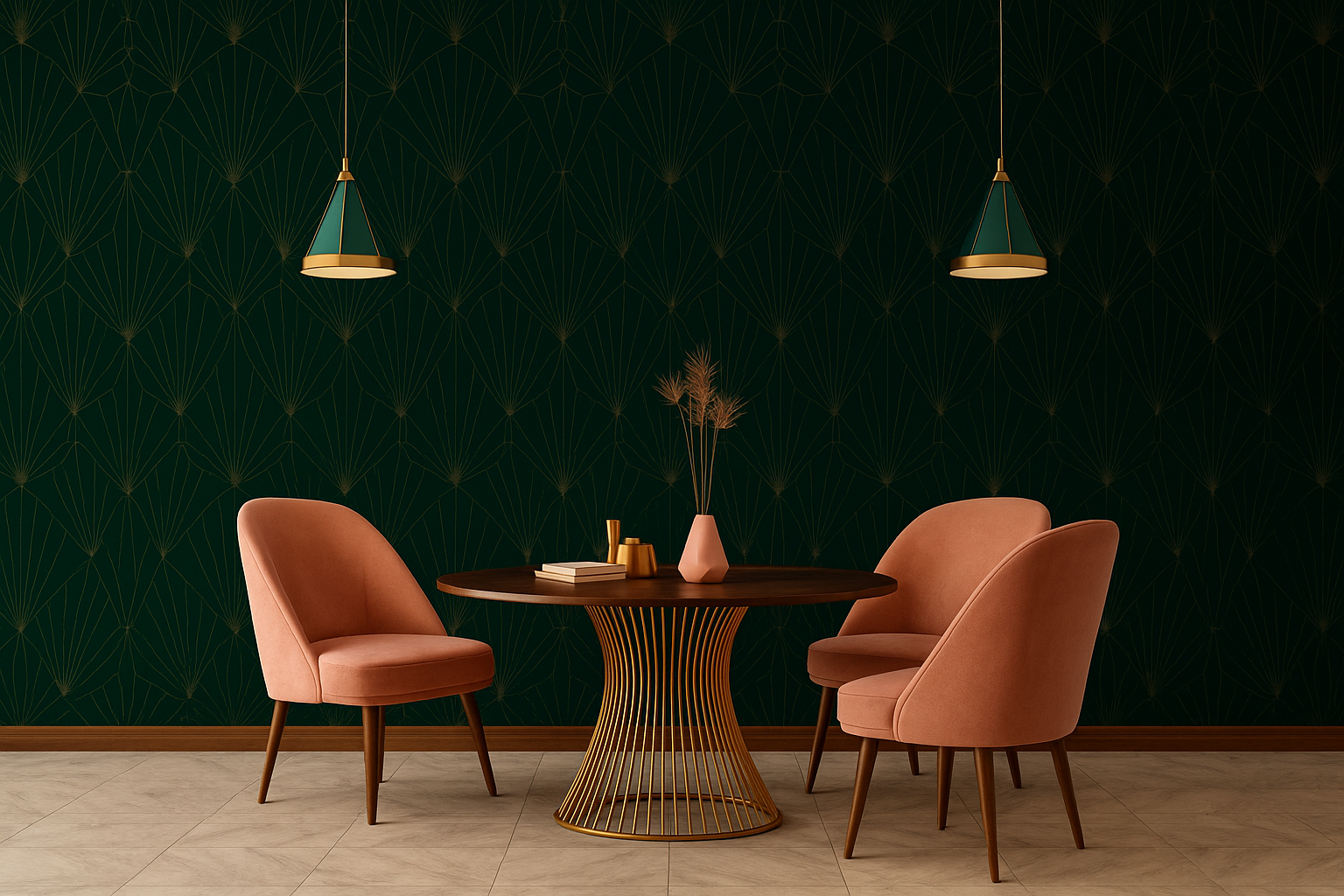
10. Decorative Windows
Rows of tall, narrow windows with patterned spandrels or colored glass.
Where to Spot It: Chicago libraries, Deco civic buildings, restored apartments from the 1930s.
The Payoff
Once you learn these cues, spotting Art Deco becomes second nature. You’ll recognize it in skyscrapers with glowing spires, theaters with jewel-toned lobbies, homes with geometric railings, and even a single lacquered chair with velvet upholstery.
You might like: Mastering Art Deco Interior Design: Secrets from the Experts
Art Deco’s Influence on Modern Design
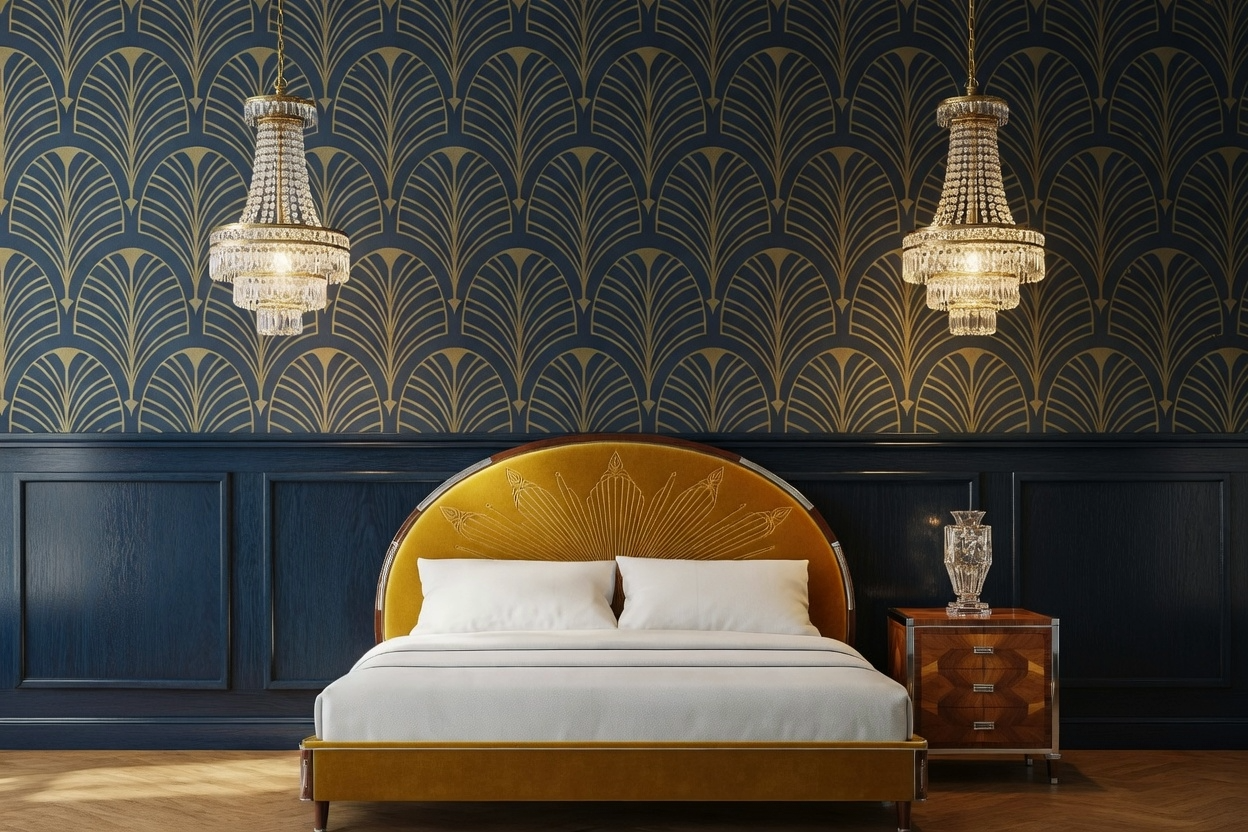
Art Deco is not stuck in the past. It shows up in today’s homes, hotels, and city skylines. Once you know the signs like geometry, shine, and symmetry you will see it everywhere.
Where It Shows Up Now
● Geometric tiles in kitchens and bathrooms. Hexagons, chevrons, and fan shapes give walls and floors depth instead of flatness.
● Metallic accents in furniture. Chrome table legs, brass pulls, and gold trim prove a little shine makes a room feel rich.
● Mirrored surfaces from wall panels to side tables. They bounce light and make spaces feel bigger.
I have seen plenty of clients choose a gold mirror or geometric rug without realizing it was Deco. They liked the balance and glamour. That is the power of the style.
What Defines Modern Art Deco
-
Geometry reimagined. Chevrons and zigzags simplified into sleek forms.
-
Minimalist luxury. Bold statement furniture paired with neutral spaces and a single jewel tone.
-
Reflective materials. Mirrors and polished metals that brighten and expand a room.
-
Function first. Multipurpose furniture, open layouts, and hidden storage.
-
Layered textures. Velvet with glass, wood with chrome. Deco thrives on contrast.
-
Rich but restrained color. Jewel tones balanced with black, white, or cream.
-
Statement lighting. Tiered chandeliers, geometric sconces, and bold pendants that also act as sculpture.
-
Purposeful accessories. One standout piece instead of clutter everywhere.
The Hidden Side of Deco
Most people miss how practical Deco was.
● Symmetry as function. Balanced layouts created calm and order.
● Tech forward. It embraced neon, elevators, radios, and airplanes when they were new.
● Smart use of materials. Exotic woods used in thin inlays, durable metals that lasted for decades.
● Secret storage. Mirrored bars and hidden drawers to keep rooms sleek.
● Lighting tricks. Glossy paint, polished stone, and reflective metals that spread light around.
There is also a quieter side to Deco. Pastel palettes, small zigzag details, and brushed brass hardware show the style can be subtle as well as dramatic.
Why It Still Works
Deco is bold yet adaptable. You can bring it into a home with a mirror, a rug, or a light fixture without overdoing it. It makes homes sharp, offices inspiring, and cities glamorous. Movies, fashion, and design still borrow its look because it delivers both beauty and discipline.
For more on this topic, see our free Art Deco course. It dives into the architecture, interiors, and design history in full detail.

Closing Thought
Art Deco endures because it looks good and it works. Once you know how to spot the geometry, the shine, and the symmetry, you will see it everywhere. Old skyscrapers, modern condos, even the furniture in your own living room carry its mark. That is the real power of Art Deco. It never went away.
FAQs
70 Questions People Actually Ask About Art Deco Architecture and Design
General Basics
1. What is Art Deco architecture?
Art Deco is a design style from the 1920s and 1930s marked by bold geometry, symmetry, and rich materials like chrome, marble, and exotic woods.
2. When did Art Deco start?
It took off after the 1925 Paris Exhibition, though its roots were already forming in the early 1920s.
3. Why is it called Art Deco?
The name comes from the 1925 “Exposition Internationale des Arts Décoratifs et Industriels Modernes” in Paris.
4. How is Art Deco different from Art Nouveau?
Art Nouveau is flowing and nature-inspired. Art Deco is sharp, geometric, and industrial.
5. What are the defining features of Art Deco?
Symmetry, geometric shapes, vertical lines, metallic finishes, and luxury materials.
6. Is Art Deco the same as Streamline Moderne?
No. Streamline Moderne is a later offshoot with more curves and less ornamentation.
7. Why did Art Deco become so popular?
Because it symbolized progress, wealth, and optimism after World War I.
8. Is Art Deco still relevant today?
Yes. Its influence shows up in interiors, furniture, lighting, and even tech design.
9. Where is Art Deco most visible today?
Miami’s South Beach, New York skyscrapers, Mumbai, and Napier, New Zealand.
10. What materials define Art Deco?
Chrome, brass, glass, marble, lacquer, exotic woods, and polished stone.
Buildings and Architecture
11. What is the most famous Art Deco building?
The Chrysler Building in New York City.
12. Is the Empire State Building Art Deco?
Yes. Its vertical lines, symmetry, and lobby decor are classic Deco.
13. Which European landmarks are Art Deco?
Palais de Chaillot in Paris and the Hoover Factory in London.
14. Did Art Deco influence skyscrapers?
Absolutely. Skyscrapers like the Empire State Building emphasized height with Deco ornamentation.
15. Are there Art Deco buildings in Asia?
Yes. Shanghai’s Peace Hotel and Mumbai’s Marine Drive are world-class examples.
16. Is Miami known for Art Deco?
Yes. South Beach has the largest collection of tropical Deco buildings.
17. What is Tropical Deco?
A playful version of Deco in Miami with pastel colors and nautical motifs.
18. Are there Art Deco homes?
Yes. Many 1930s houses were built with geometric facades, stained glass, and bold entryways.
19. Do Art Deco buildings use stained glass?
Yes. Often with geometric or stylized floral patterns.
20. What is a hallmark of Deco exteriors?
Stepped facades, spires, strong vertical lines, and geometric ornamentation.
Interiors and Decor
21. What defines an Art Deco interior?
Bold symmetry, metallic accents, velvet furniture, and geometric patterns.
22. What colors were used in Deco interiors?
Jewel tones like emerald, sapphire, ruby with metallic gold, silver, and black-and-white contrasts.
23. What kind of furniture is Art Deco?
Streamlined, geometric, with chrome or lacquer finishes.
24. Are mirrored surfaces Art Deco?
Yes. Mirrored tables, consoles, and cabinets were staples.
25. What lighting is Art Deco?
Tiered chandeliers, geometric pendants, frosted sconces, and dramatic uplighting.
26. Did Art Deco use wallpaper?
Yes. Bold patterns like zigzags, chevrons, and stylized florals.
27. What textiles define Deco?
Velvet, leather, silk, and patterned rugs.
28. How do you spot Art Deco in kitchens?
Geometric tiles, chrome hardware, lacquered cabinetry.
29. What makes a bathroom Deco?
Bold tiled floors, geometric mirrors, and chrome or glass fixtures.
30. Are fireplaces part of Deco interiors?
Yes. Often tiled with geometric or sunburst patterns.
Furniture and Objects
31. What is an Art Deco chair?
A chair with curved arms, lacquered wood, velvet or leather upholstery, and metallic detailing.
32. Are bar carts Art Deco?
Yes. Many Deco homes featured mirrored or chrome bar carts.
33. What woods were used in Deco furniture?
Mahogany, walnut, ebony, and exotic veneers.
34. What makes Deco furniture different from modern minimalist?
Deco celebrates ornament and luxury, while minimalism strips decoration away.
35. Is lacquer an Art Deco finish?
Yes. Glossy lacquered wood was a hallmark of Deco furniture.
36. What accessories scream Deco?
Sunburst mirrors, chrome clocks, and geometric sculptures.
37. Did Deco influence jewelry?
Yes. Jewelry featured sharp lines, bold colors, and exotic motifs.
38. Are rugs part of Deco design?
Yes. Rugs with zigzag or chevron motifs tied interiors together.
39. Are Deco pieces expensive today?
Authentic antiques are pricey. Reproductions are widely available.
40. What’s a budget-friendly Deco touch?
A mirrored side table, geometric wallpaper, or a sunburst mirror.
Cultural Context
41. Did Hollywood use Art Deco?
Yes. Deco became the backdrop of Golden Age cinema sets and theaters.
42. Was Art Deco global?
Yes. It spread from Paris to the US, Latin America, Asia, and Africa.
43. Why did Deco decline?
World War II shifted focus to function and cost, leading to modernist minimalism.
44. Did Deco influence cars?
Yes. Streamlined cars of the 1930s took cues from Deco geometry.
45. What is the Jazz Age connection?
Jazz clubs and theaters embraced Deco interiors with bold glamor.
46. Did fashion follow Deco?
Yes. Dresses with geometric beadwork and metallic accessories mirrored architecture.
47. Was Deco political?
In a way. It symbolized optimism, progress, and national pride during the interwar years.
48. Did Deco borrow from other cultures?
Yes. Egyptian, African, Asian, and Native American art influenced patterns and motifs.
49. What role did the 1925 Paris Expo play?
It launched Deco globally and showcased its modern luxury.
50. Is Art Deco taught in architecture schools?
Yes. It’s studied as a key style that bridges tradition and modernity.
Modern Applications
51. Is Art Deco coming back?
Yes. Interiors and fashion heavily borrow from Deco today.
52. How can you add Deco to a modern home?
Use bold lighting, geometric rugs, metallic trims, and jewel-toned furniture.
53. Can Deco work in small apartments?
Yes. A few strong pieces like a mirror or rug can set the tone without crowding.
54. Are hotels still built with Deco touches?
Yes. Many boutique hotels use Deco-inspired design for glamour.
55. How does Deco show up in technology?
Geometric patterns and sleek metallic finishes in gadgets echo Deco aesthetics.
56. What is Neo Art Deco?
A revival that blends Deco glamor with modern simplicity.
57. Can Deco mix with minimalism?
Yes. A restrained mix of Deco lighting with minimalist furniture works well.
58. How do designers update Deco today?
By simplifying patterns, using sustainable materials, and toning down extravagance.
59. Is Deco sustainable?
It can be. Original Deco often used durable materials like glass and metal that lasted.
60. Why does Deco appeal today?
Because it balances function with flair, something modern design often lacks.
Restoration and Preservation
61. Why preserve Art Deco?
Because it represents innovation and optimism from a transformative era.
62. What challenges exist in restoring Deco?
Restoring chrome, marble, and lacquer finishes is expensive and labor-intensive.
63. Can Deco buildings be updated with modern systems?
Yes, but it requires careful integration to keep authenticity intact.
64. Are there grants for preserving Deco?
Yes. Many heritage groups and city councils fund Deco restoration projects.
65. What is the hardest Deco element to restore?
Intricate mosaics and chrome finishes often require specialist work.
66. What cities invest most in Deco preservation?
Miami, New York, Mumbai, and Napier are strong leaders.
67. Can you restore Deco interiors at home?
Yes. Start with furniture refinishing, mirror restoration, and period-correct lighting.
68. Are Deco theaters still in use?
Yes. Many restored Deco theaters operate as cinemas or event venues.
69. Is Deco furniture worth restoring?
Yes. Restored originals hold high value for collectors.
70. Where can I learn more about Deco preservation?
Art Deco societies worldwide, like ADSNY (Art Deco Society of New York), provide resources.
Resources
- Art Deco Society of New York
https://www.artdeco.org
Dedicated to preserving and celebrating Art Deco architecture and design. - The Victoria and Albert Museum (V&A), London
https://www.vam.ac.uk
Offers in-depth resources on Art Deco artifacts and design. - National Trust for Historic Preservation
https://savingplaces.org
Learn about preserving Art Deco buildings and interiors. - International Coalition of Art Deco Societies
https://www.icads.info
A global network dedicated to Art Deco heritage.