
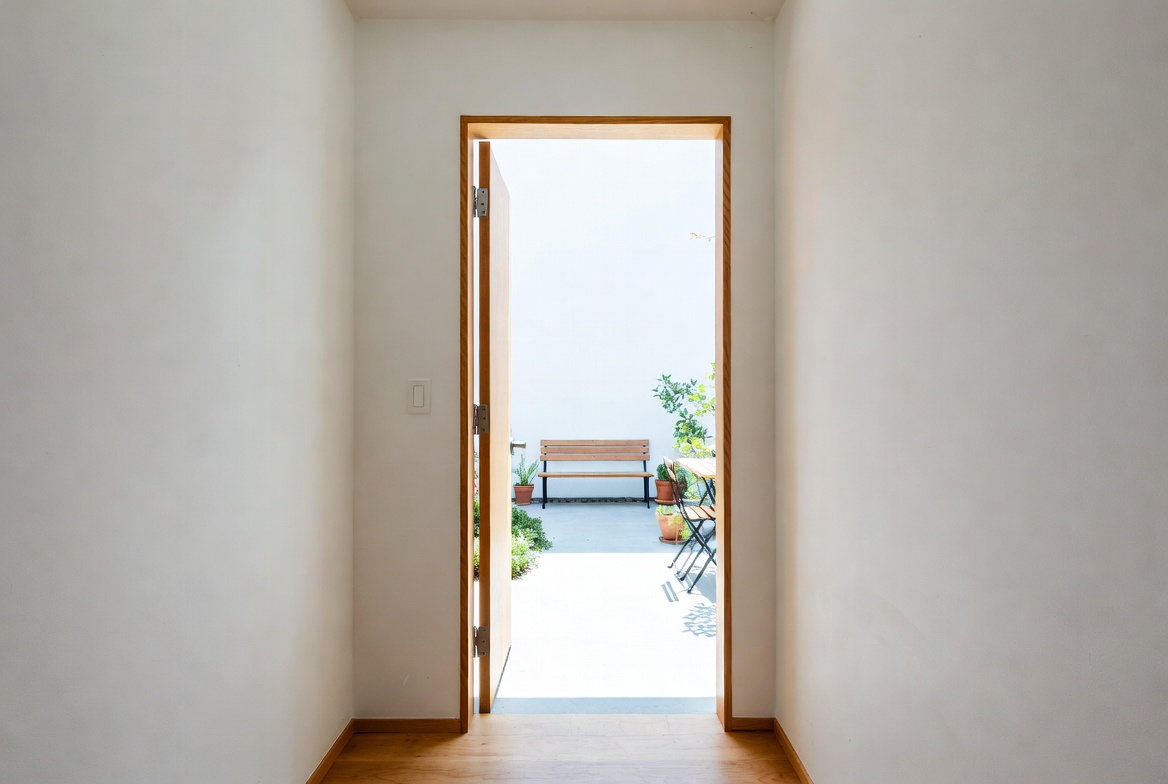
Image by ArchitectureCourses.org. A straight view from the interior to the patio makes the small layout feel calm, connected, and easy to read.
Small Home and Garden Ideas
Small spaces show mistakes fast.
A bad layout feels tighter. Too much furniture eats the room. A weak garden plan turns into clutter. But when the design is right, a small place can feel clear, useful, and surprisingly generous. That is what makes small-scale design worth paying attention to.
If the inside still feels unresolved, start with Small House Design. If you are trying to make a one-level plan work harder, Single Floor House Design is the better next read.
Think In One Line, Not Separate Zones
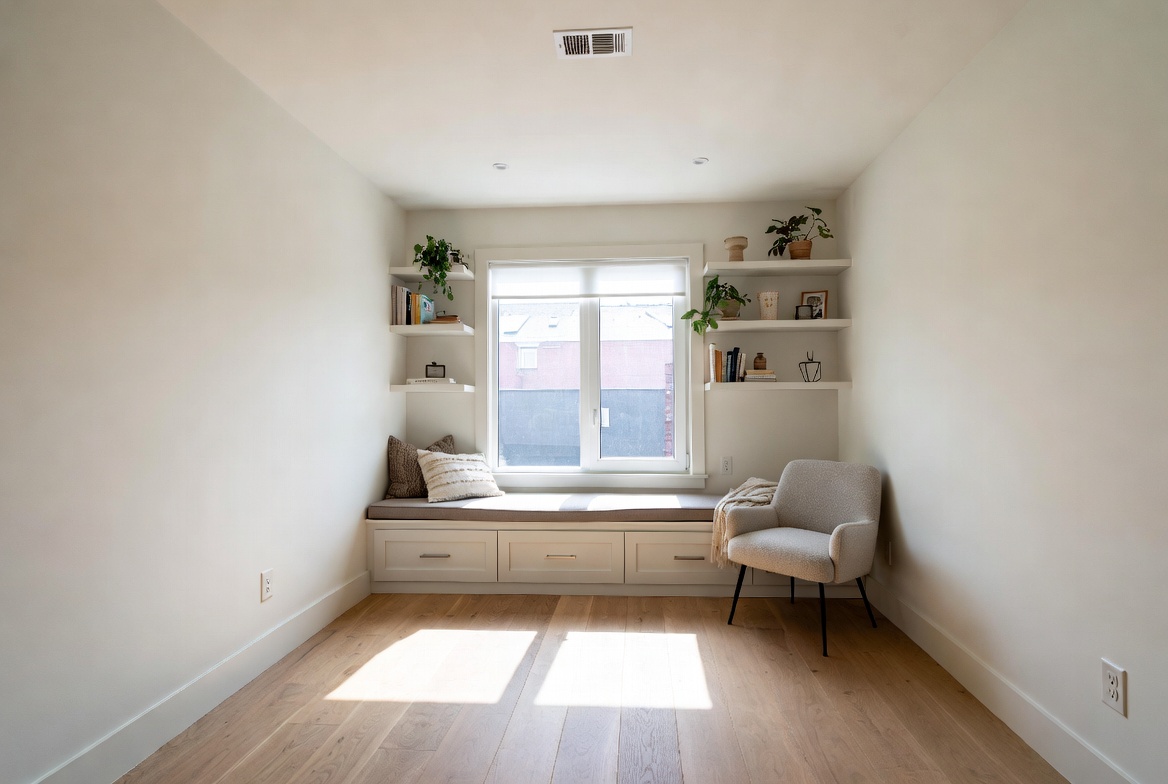
Image by ArchitectureCourses.org. Built-in seating and shelving keep storage on the edges so the middle of the room stays open.
The biggest small-home mistake is treating every area like its own little project.
Front entry. Living room. Dining corner. Patio. Side yard. Herb pots. Storage bench. They all get designed one by one. Then the place feels chopped up.
A better move is to draw one line through the whole property.
Stand at the front door and ask:
- What do you see first?
- Where does your eye stop?
- Can you read a clear path through the house?
- Does the outdoor space feel connected or tacked on?
Small houses feel bigger when that line is simple. One main path. Fewer turns. Fewer visual blocks. Fewer moments where furniture or planters interrupt movement.
This matters even more in studio-like layouts, casitas, and small backyard homes. If you are planning one of those, Small Casita Designs is worth opening next.
Make The Outdoor Space Do A Job
Small gardens fail when they try to do ten things at once.
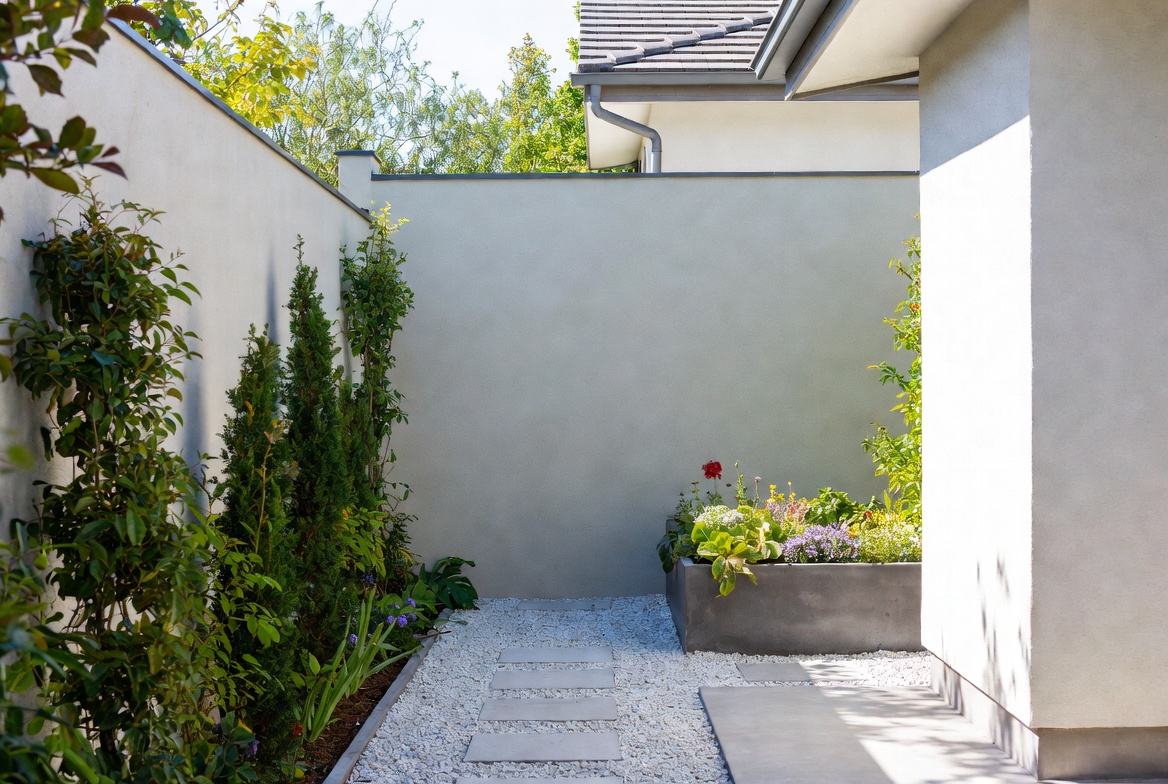
Image by ArchitectureCourses.org. A narrow planted strip and simple path give the outdoor space structure without making it feel crowded.
A little yard does not need a dining set, a fire pit, six pots, a bench, a raised bed, a water feature, and string lights all fighting inside the same few feet. Pick the main job first.
Good small outdoor jobs:
- a coffee spot by the morning sun
- a shaded seat near the back door
- a grilling corner with one prep shelf
- an herb wall close to the kitchen
- a slim path with strong planting and no furniture at all
Once the outdoor space has one clear use, everything gets easier. Furniture size gets easier. Planting gets easier. Lighting gets easier.
The smaller the space, the more important that decision gets.
| Outdoor Move | What It Does | Best For | What Goes Wrong |
|---|---|---|---|
| Small dining set | Creates a place to eat outside | Patios you will use often | Looks cramped if chairs cannot slide out cleanly |
| Built-in bench | Saves floor space and adds storage potential | Narrow patios and side yards | Feels bulky if it blocks windows or doors |
| Vertical planting | Adds green without eating the path | Balconies, tight patios, courtyard walls | Turns messy if every pot is different |
| One small tree or tall anchor plant | Gives structure and shade | Front yards and corner gardens | Too many tall elements make the space feel crowded |
| Open paving with fewer objects | Makes the space feel calmer and wider | Tiny backyards and shared outdoor areas | Feels bare only when the edges are weak |
Need planting ideas that work on walls and railings instead of the ground? 10 Creative Vertical Garden Ideas for Balconies fits this page well because it solves the same small-space problem from the garden side.
Use The Edge Of The Room
Small rooms get easier when the center stays open.
That sounds obvious, but a lot of rooms get filled from the middle out. A coffee table too large for the sofa. Two side tables when one would do. Open shelves projecting into the room. Random baskets parked where the walking path should be.
Better moves:
- wall-mounted lamps instead of deep bedside lamps
- floating shelves where the floor needs to stay clear
- built-in benches under windows
- storage ottomans instead of extra cabinets
- a dining bench on one side instead of chairs on both sides
In a small home, the edge of the room is doing more work than the middle. Use it.
The same rule applies outside. Keep planters, storage boxes, and benches to the perimeter so the patio or yard still reads as usable space.
This part matters: if your main issue is visual noise rather than lack of square footage, Small Minimalist Living Rooms is the stronger companion page.
Repeat Materials From Inside To Outside
A small home feels larger when the materials keep talking across the threshold.
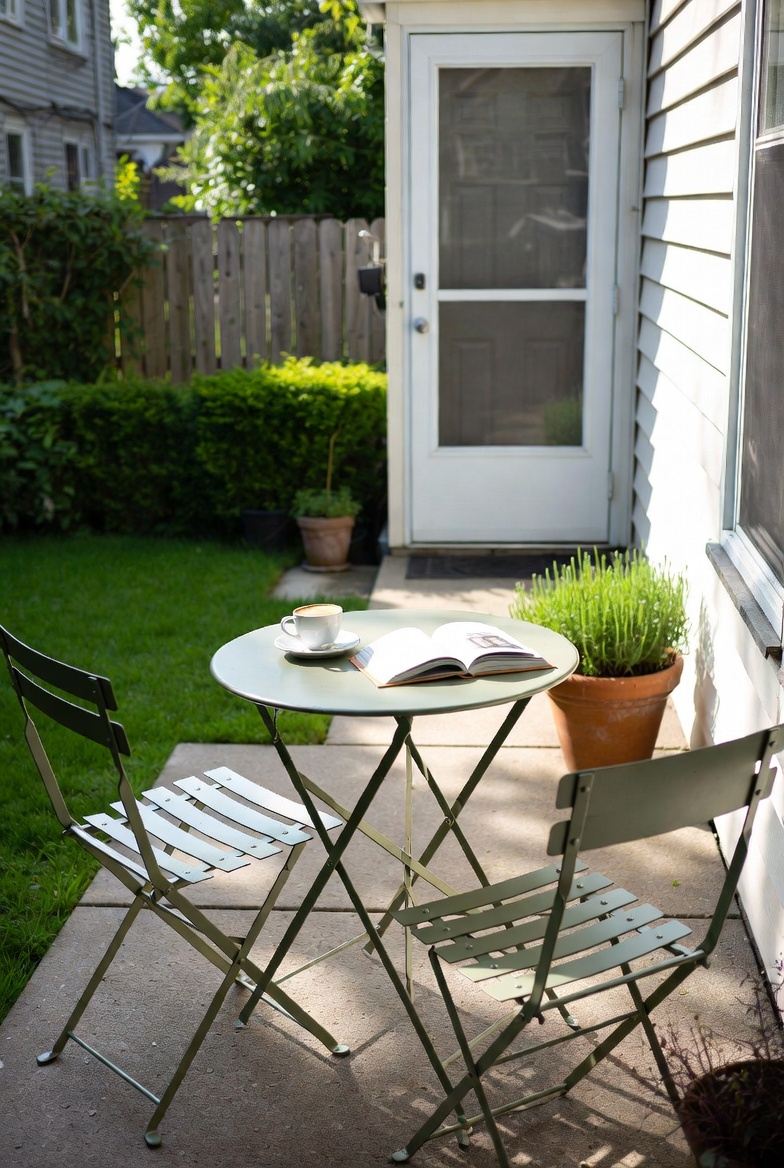
Image by ArchitectureCourses.org. A tiny patio works better when it has one clear use instead of trying to do everything at once.
That does not mean the patio has to match the flooring exactly. It means the house should not feel like one design ended at the back door and a different one started outside.
Easy ways to do this:
- repeat one wood tone in both places
- carry black metal from indoor hardware to outdoor lighting or furniture
- use the same plant color range as the interior textile palette
- keep the hardscape and the entry colors calm if the interior already has a lot going on
This is one reason small houses with simple palettes often look stronger than small houses loaded with many “cute” ideas. The repetition buys calm. Calm buys space.
Front Yards Need Restraint
A small house front does not need to try hard. It needs scale, order, and a clear entry.
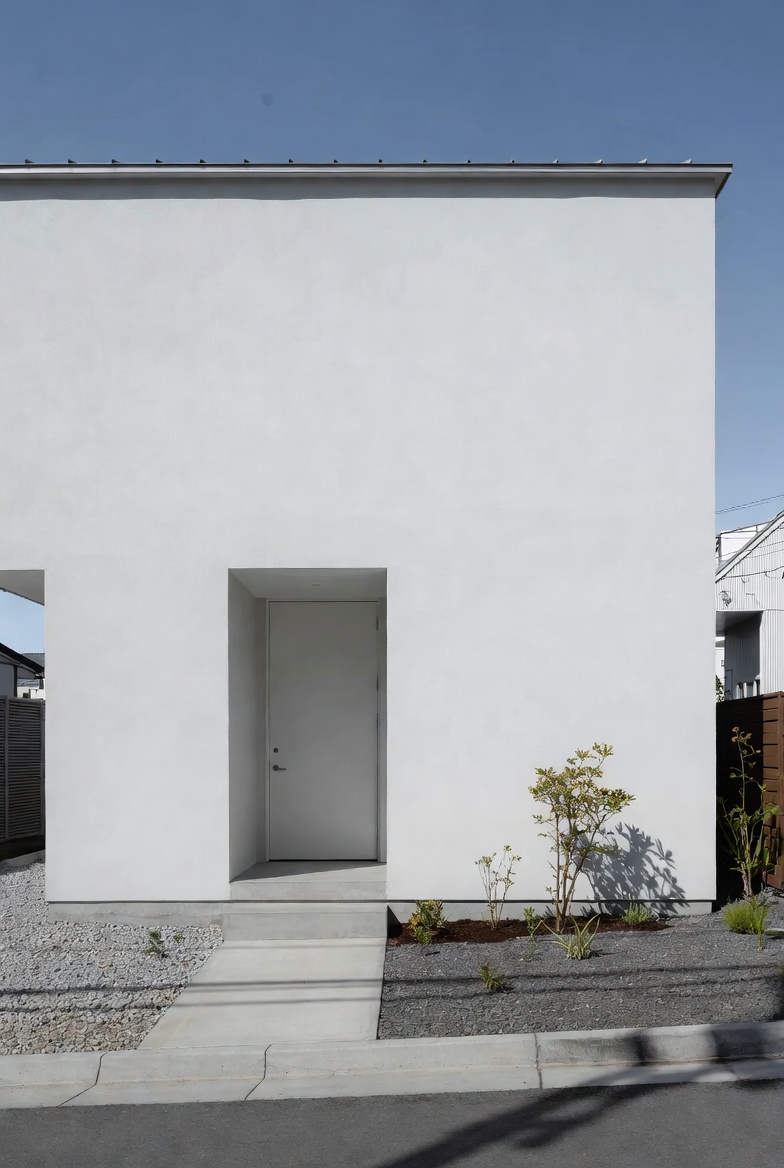
Image by ArchitectureCourses.org. A small front reads better when the entry, planting, and facade stay simple and scaled to the house.
The common miss is overdecorating the facade because the house feels small. Too many shutters, too many colors, too many pots, too many trim accents. The house ends up fussier, not stronger.
Better front-yard moves:
- one path that reads clearly from curb to door
- one strong planting bed instead of scattered pots
- a porch or small stoop that looks intentional, even if tiny
- a limited material palette on railings, trim, and hardscape
If the front still needs work, use a tighter sibling page instead of bloating this one. Small House Front Design covers facade moves better, and Front Elevation Designs for Small Houses is the better page when the issue is the front composition itself.
Storage Has To Be Built Into The Plan
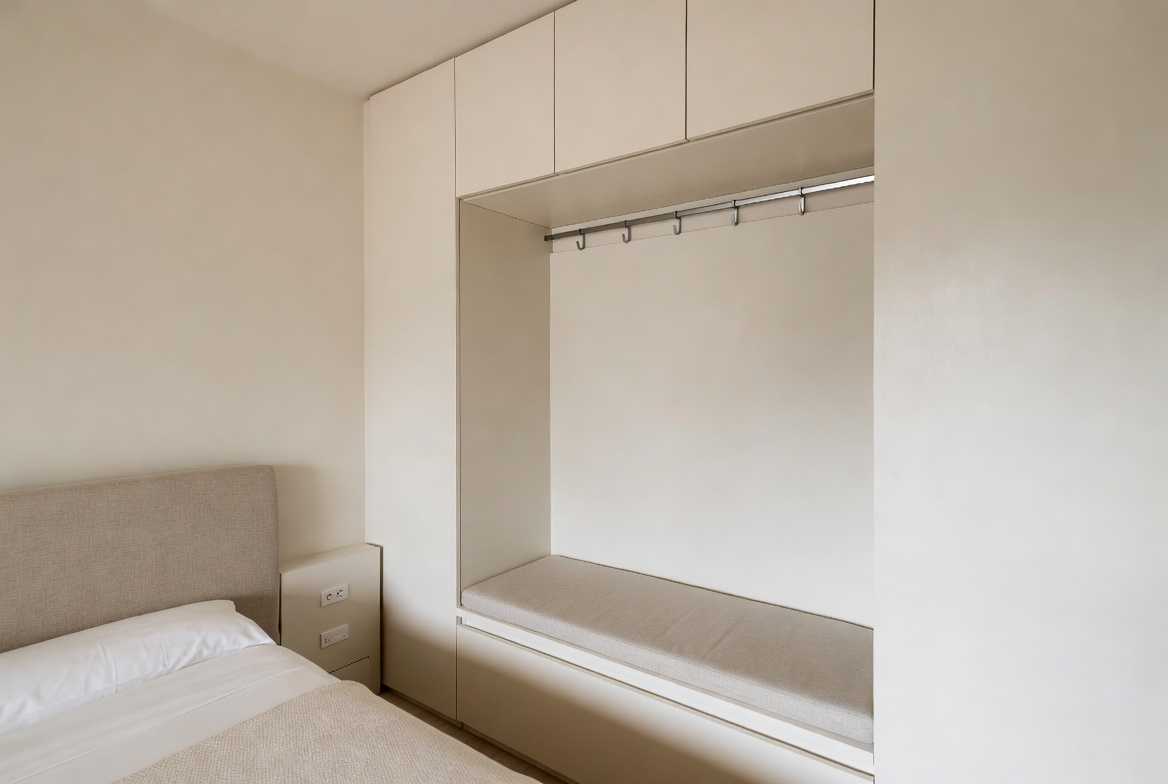
Image by ArchitectureCourses.org. Integrated storage works better in a small room than adding loose furniture after the layout is already full.
In a small house, clutter spreads faster because there are fewer dead corners to hide it.
That is why storage cannot be an afterthought.
Some of the best small-home storage is barely visible:
- drawers under benches
- hooks and narrow wall rails at entries
- cabinetry wrapped around a bed wall
- low storage under windows
- garden storage hidden inside a bench or slim shed wall
The wrong move is buying loose organizers after the room is already full. Small homes work better when storage is part of the architecture, not a pile of fixes added later.
Do This Instead Of This
| Do This | Instead Of This | Why |
|---|---|---|
| Pick one main outdoor use | Trying to fit every garden idea into one patio | A clear job makes the whole space calmer and more usable. |
| Keep the middle of the room open | Floating extra furniture in every corner | Open center space makes a room read larger immediately. |
| Use built-ins or wall-mounted pieces | Adding freestanding storage everywhere | Freestanding pieces eat the exact space small homes need most. |
| Repeat a few materials inside and out | Treating the patio like a separate design universe | Continuity makes the house feel longer and less chopped up. |
| Use one strong planting bed or vertical garden | Scattering small pots all over the yard | Too many little objects make tight spaces feel messy fast. |
| Fix the front entry clearly | Adding decorative clutter to make the house feel bigger | Small facades need clarity more than extras. |
The Garden Should Help The House
A small garden is doing more than looking pretty.
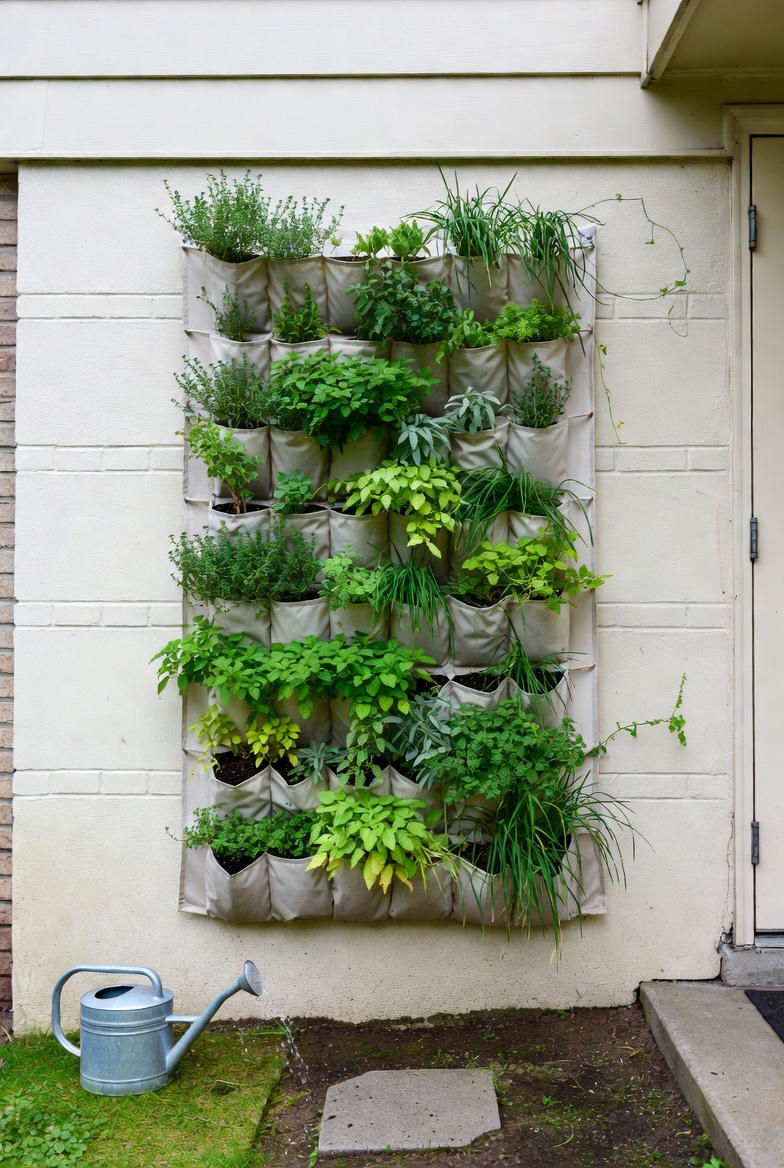
Image by ArchitectureCourses.org. Vertical planting adds usable green space without taking over the ground plane.
It should help with privacy, shade, view control, and the feeling of space around the house. Even a narrow strip can do that if it is planted with intention.
Good small-garden roles:
- soften a blank wall
- screen one bad view instead of trying to hide everything
- mark the entry with one repeated plant type
- bring kitchen herbs or edible planting close to the door
- pull your eye toward a small focal point at the end of a path
That last one matters. A small place feels bigger when the eye has somewhere useful to go.
One bench under a tree. One tall planter at the end of a walk. One tidy herb wall by the kitchen. One good move will beat ten cute little ones.
Rooms That Earn Bigger Effort
Not every room needs the same level of work.
In most small homes, these places give the best return:
Entry
Fix the first five feet. Hooks, shoe storage, one bench, one light, one strong path. The house will feel better every day.
Kitchen
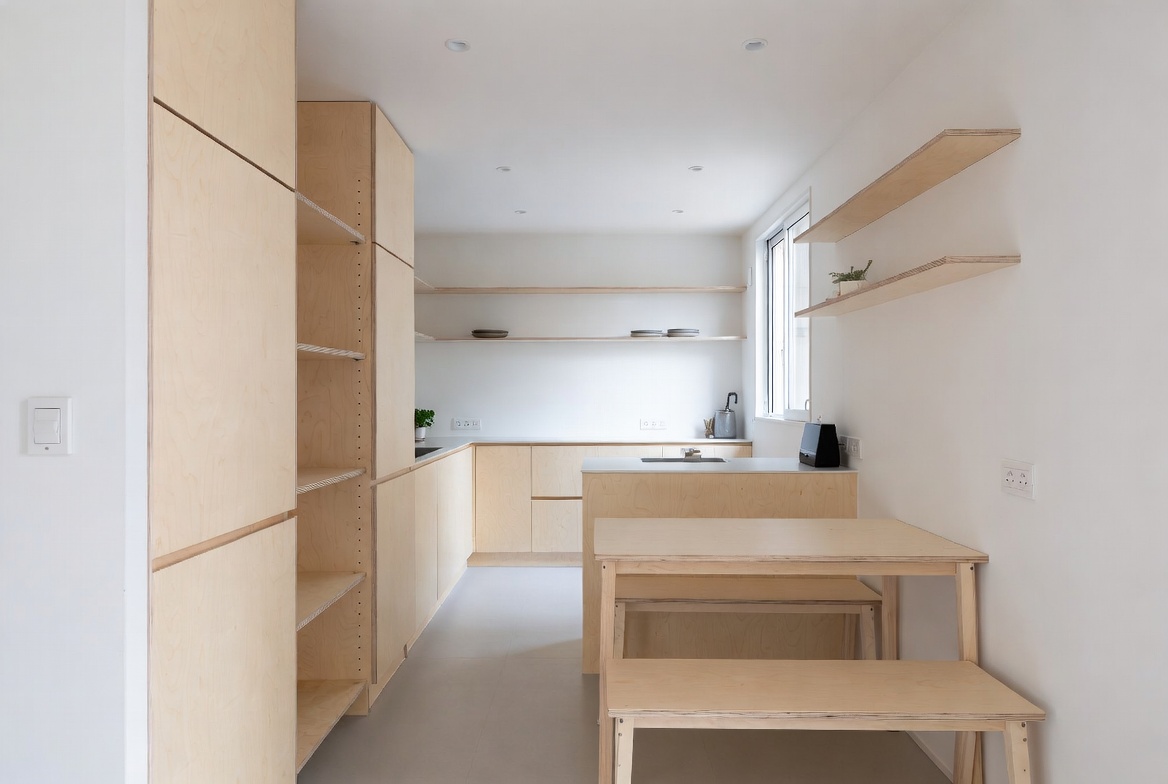
Image by ArchitectureCourses.org. Built-in storage and a tight layout make a small kitchen work harder without filling the floor.
Clear the counters, use vertical storage, and keep the floor open. A small kitchen improves fast once the extra stuff leaves.
Living Area
Use fewer seats, not more tiny seats. One good sofa and one flexible chair often work better than four undersized pieces.
Patio Or Yard Edge
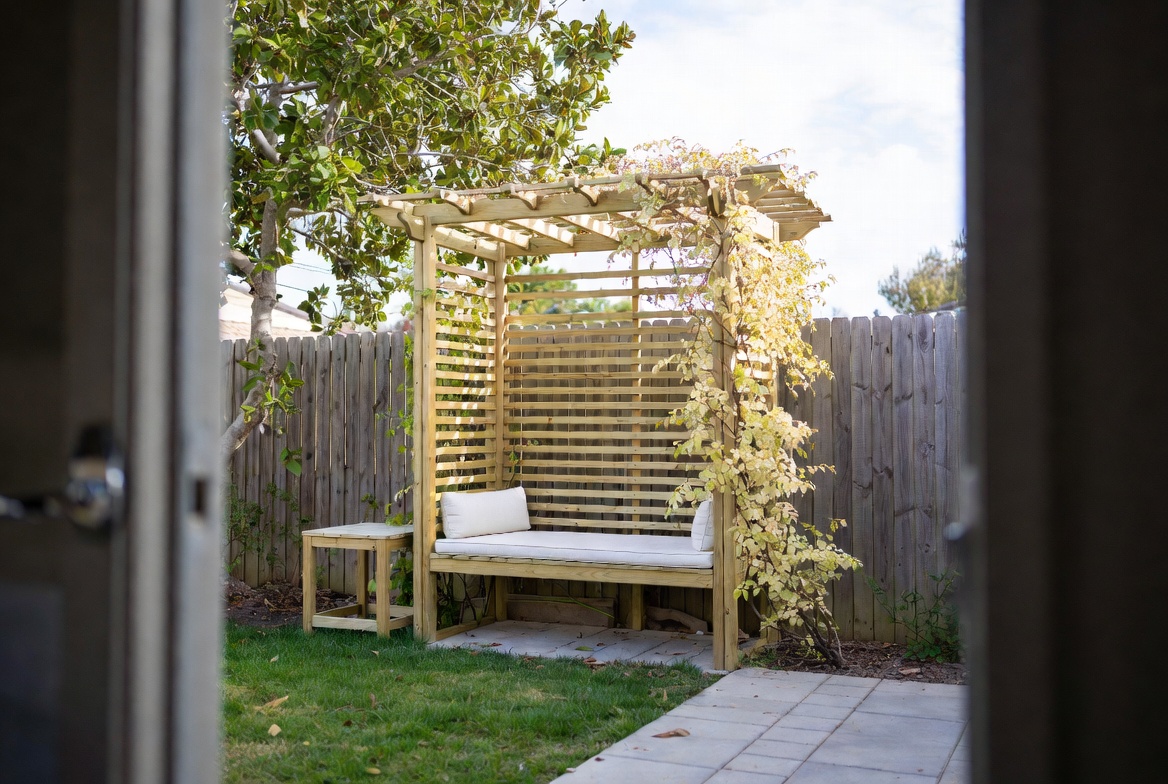
Image by ArchitectureCourses.org. One shaded bench can give a small yard a clear purpose without filling it with extra furniture.
The first outdoor seating area closest to the house does more for daily life than a decorative corner at the far end of the lot.
If your main question is broader tiny-house style direction, that belongs on pages like Modern Tiny House Design or Tiny House Design, not here.
What To Skip On This Page
This topic gets weak when it starts drifting into every small-house subject on the site.
So this page should not try to become:
- a tiny house regulations guide
- a prefab buying page
- a cost article
- a “what is a tiny house” explainer
- a types-of-tiny-houses roundup
Those are separate jobs and should stay separate.
Read this next works better than stuffing them all in here: Tiny Homes Regulations and Building Codes, Prefab Tiny Homes, Tiny Home Cost, and Types of Tiny Houses.
FAQ
How do you make a small home feel bigger without adding square footage?
Keep circulation simple, use the edges of the room for storage and seating, reduce the number of furniture pieces, and connect the indoor space visually to the patio or garden.
What is the best garden idea for a very small yard?
One clear outdoor use plus vertical planting is a strong starting point. A tiny patio with one bench and one planting wall works better than trying to fit a full garden into a narrow strip.
Should a small front yard have lots of plants?
No. Small fronts read better with fewer, stronger planting moves. One tidy bed or one repeated plant type is often enough.
What kind of furniture works best in a small home?
Furniture that stays tight to the wall, does more than one job, or folds away cleanly. The goal is to free the center of the room.
Can a tiny patio still be useful?
Yes, if it has one clear job. Coffee spot, dining corner, or herb wall. It only becomes frustrating when it is forced to do everything at once.
Read This Next
Need the broader planning page? Go to Small House Design.
Working on a smaller detached unit or backyard living space? Small Casita Designs is the better fit.
Fixing the facade next? Open Small House Front Design or Front Elevation Designs for Small Houses.
Need planting ideas for balconies, walls, or tight patios? Use 10 Creative Vertical Garden Ideas for Balconies.
Trying to understand the legal or money side of tiny living? Go to Tiny Homes Regulations and Building Codes, Prefab Tiny Homes, or Tiny Home Cost.