
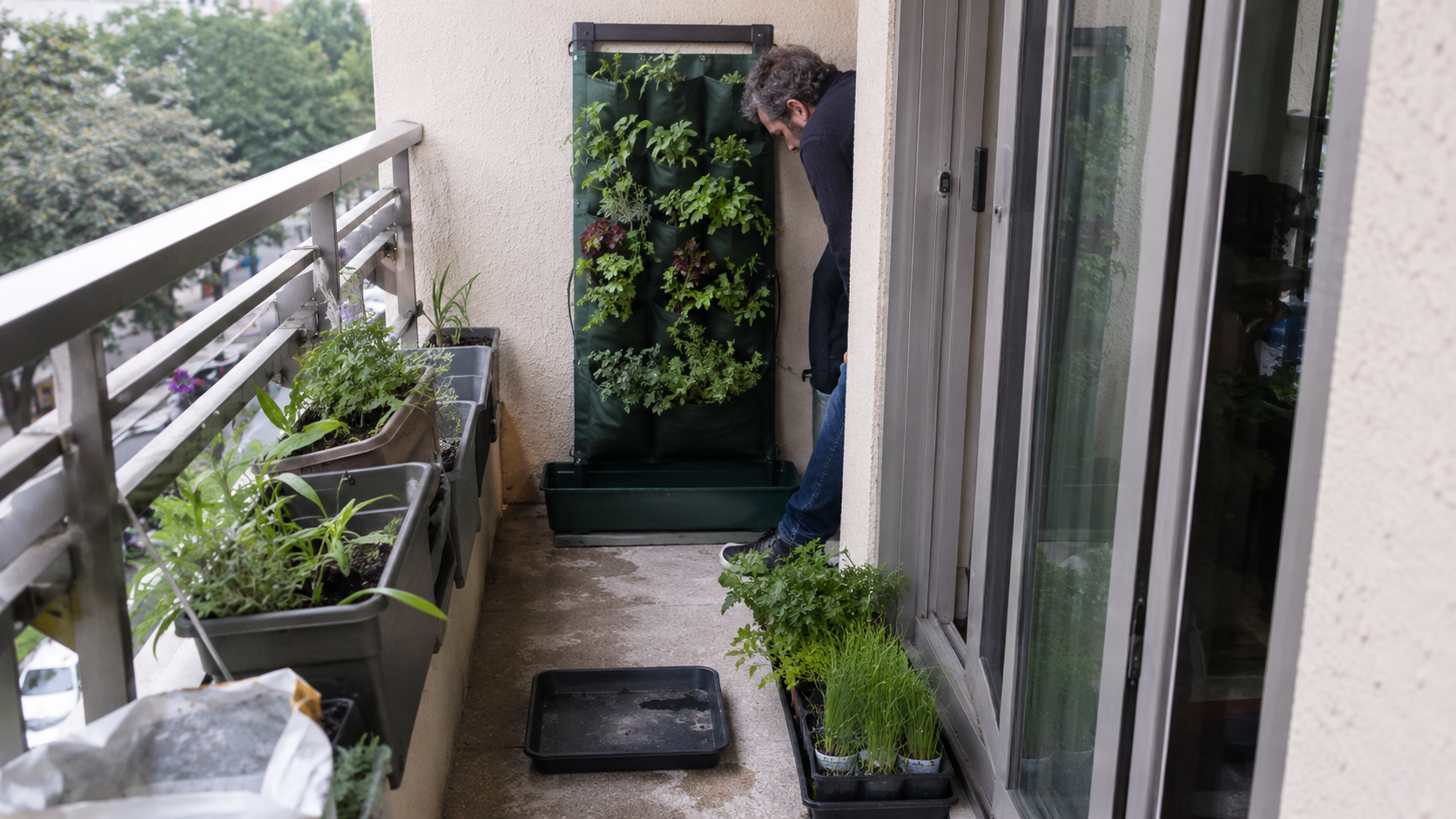
Image by ArchitectureCourses.org. A balcony vertical garden should be planned around walking clearance, drainage, wind, and wet weight before the plants go in.
A balcony vertical garden can make a small outdoor space feel calmer, less exposed, and easier to live with. It can also block the only walking path, drip onto the balcony below, catch wind like a sail, overload a weak rail, or turn into a dry brown wall after one hot week.
Start with the balcony, not the plant list. Check the wind, water path, rail rules, sun exposure, walking clearance, and wet weight first. The plants come after that.
A good balcony vertical garden should make the balcony easier to use, not harder. If you have to squeeze past pots, mop runoff every morning, or worry every time the wind picks up, the layout is wrong.
Check The Balcony Before The Plants
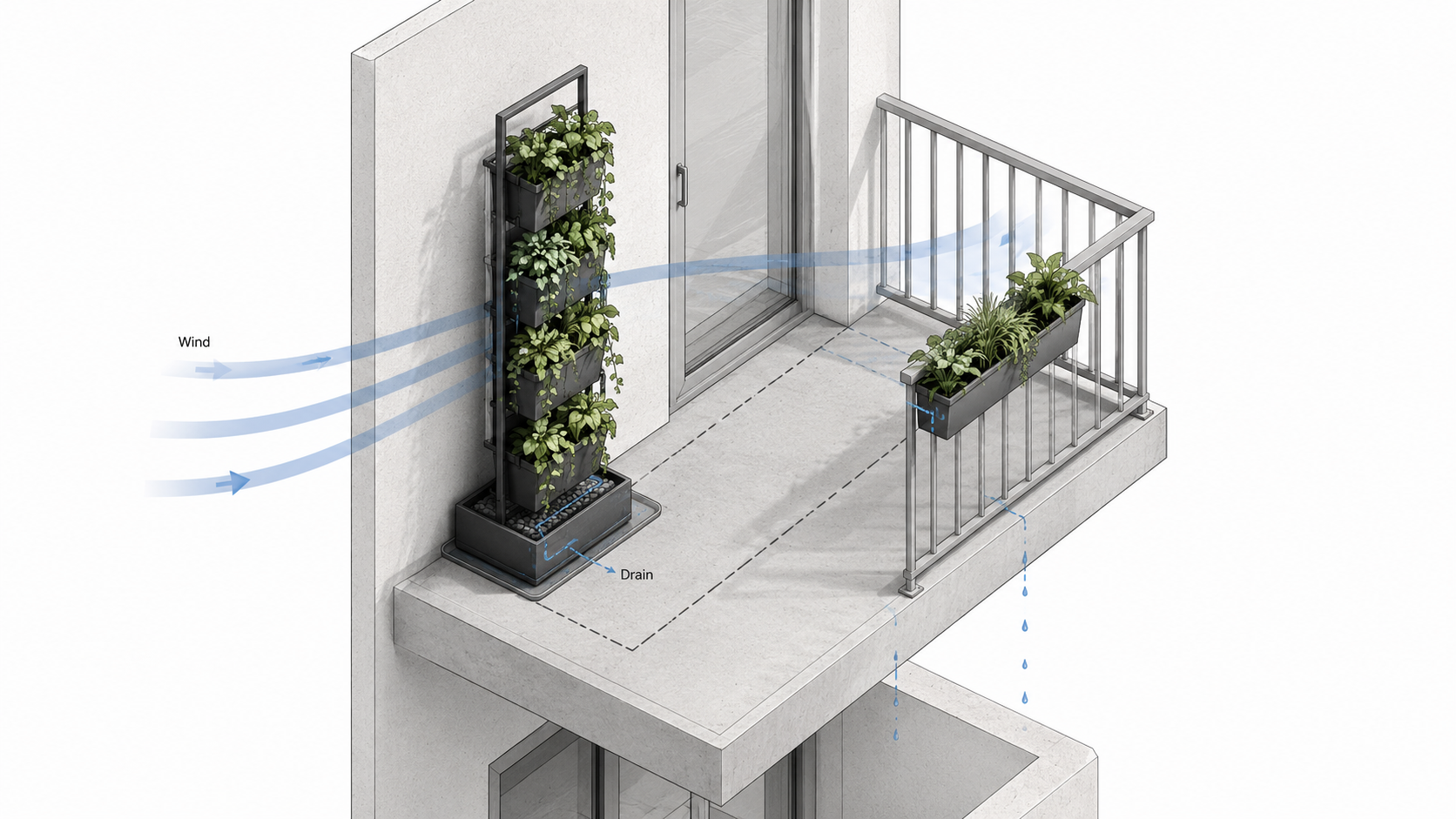
Illustration by ArchitectureCourses.org. A balcony vertical garden needs a stable base, controlled drainage, and enough walking clearance before the plants matter.
A balcony is not a yard. It has edges, rules, neighbors, weight limits, and weather exposure. That makes vertical gardening useful, but also less forgiving.
Before choosing planters, stand on the balcony and mark the parts you actually use. Where do you step out? Where does the door swing? Where would a chair go? Where does water already collect after rain? Which side gets hard afternoon sun? Which corner gets the strongest wind?
The best vertical garden usually goes where it does not steal the balcony’s basic function. A narrow balcony may need one slim freestanding tower, not a full wall. A windy balcony may need low, heavy planters instead of hanging baskets. A rental balcony may need removable systems, not drilled panels.
For the broader vertical-garden planning logic, start with vertical gardens. This balcony page is the smaller, more practical version: what fits outside an apartment or small upper-floor space without causing new problems.
Wind Changes Everything
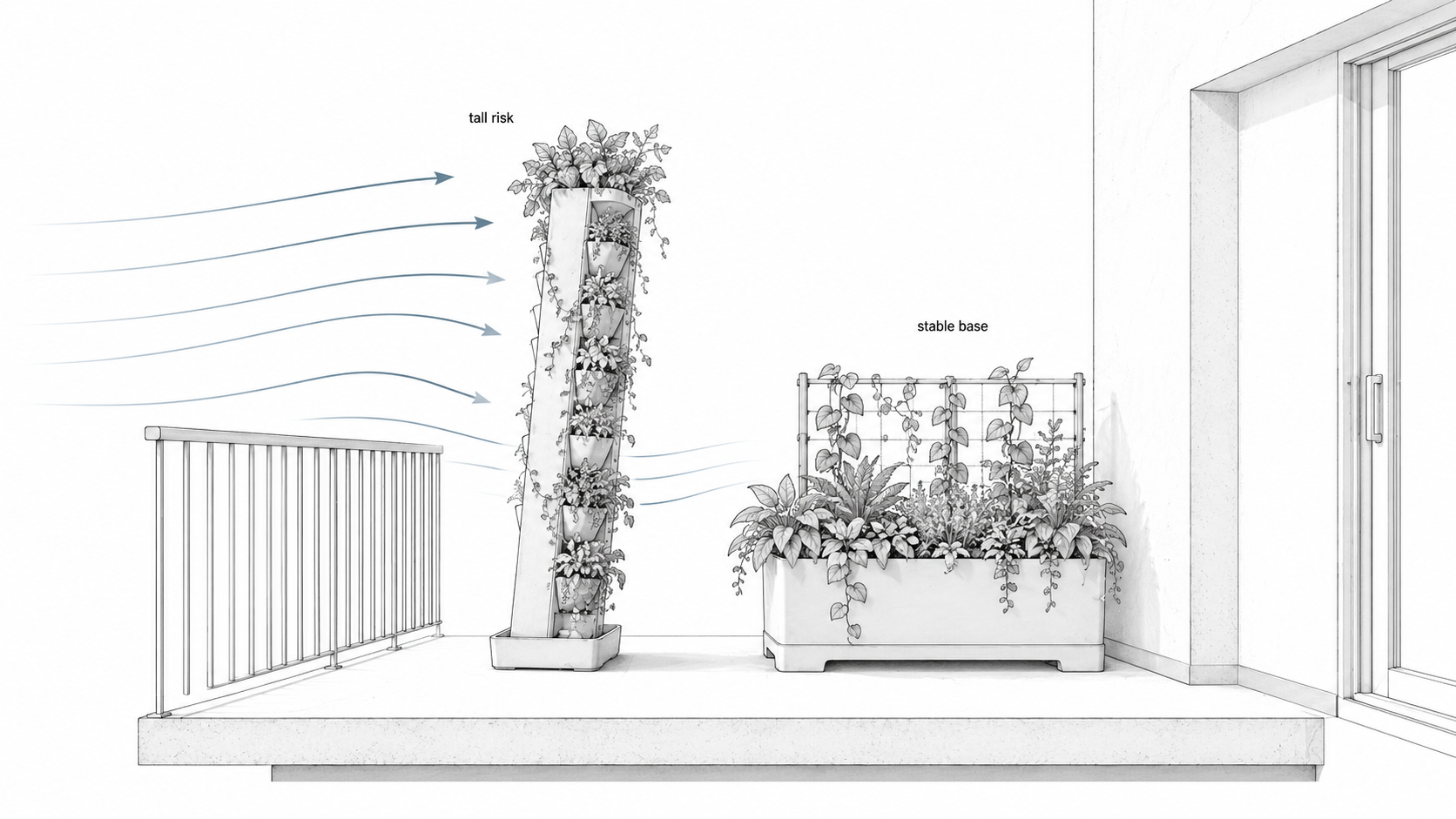
Illustration by ArchitectureCourses.org. Wind can turn a tall balcony planter into a problem, especially after the soil is wet and the plants catch more air.
Wind is the part many balcony garden articles treat like background weather. It is not background. On upper floors, wind decides which planters stay put, which plants dry out, and which arrangements become annoying or unsafe.
Hanging planters look easy until they swing. Tall stackable planters look efficient until they become top-heavy with wet soil. Fabric pockets look light until a full wall of damp planting medium starts pulling on hooks, straps, or rail attachments.
If your balcony gets strong gusts, keep the garden lower, heavier, and more stable. Use the wall for shelter only if you are allowed to attach to it safely. Put heavier planters near the floor. Avoid tall, narrow towers unless the base is broad and protected from wind.
The Neighbor Below Gets A Vote
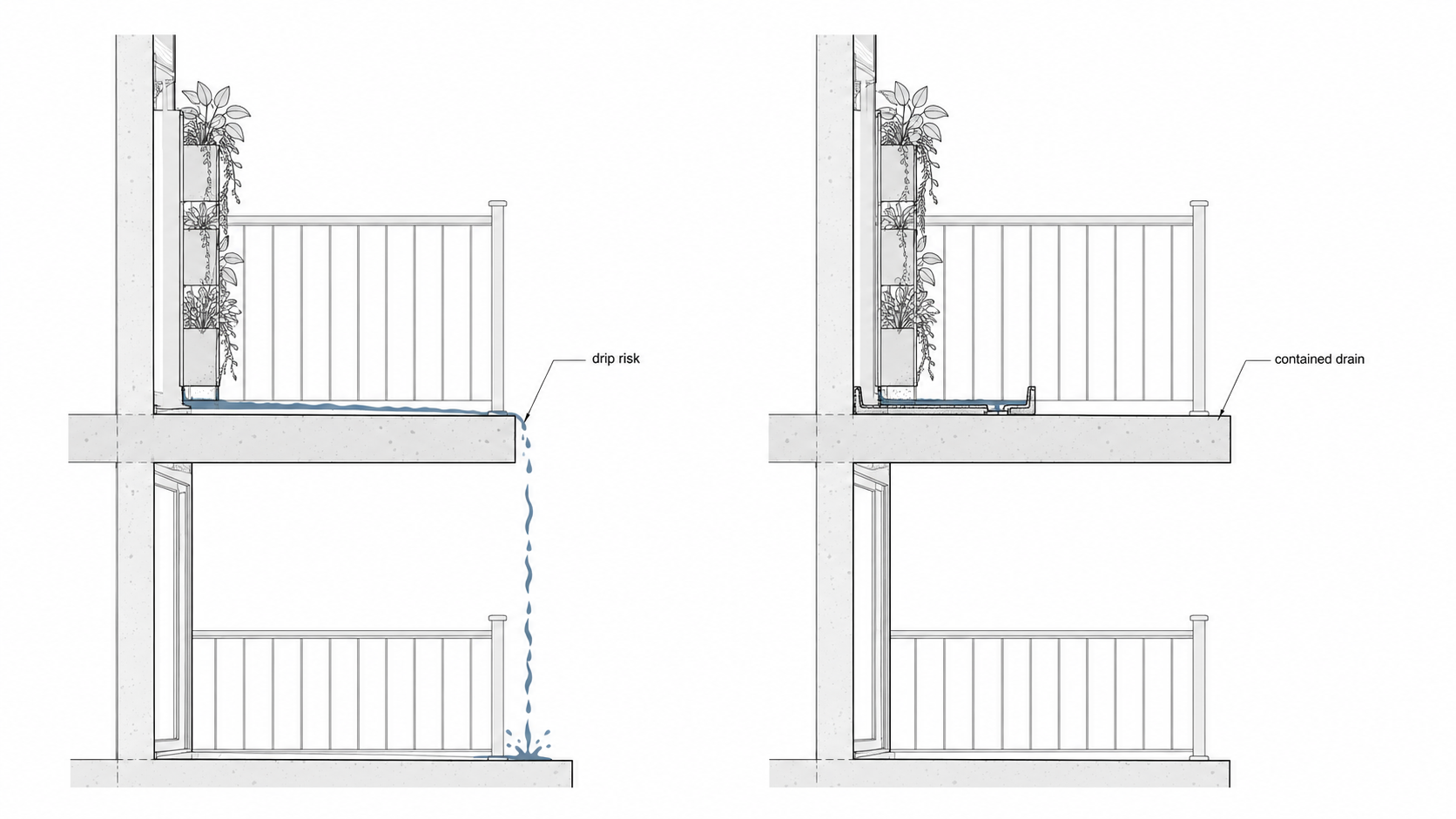
Illustration by ArchitectureCourses.org. Balcony planters need controlled drainage because water, soil, and fertilizer runoff can become a problem for the neighbor below.
This is the part most balcony vertical garden advice skips.
Water does not disappear because the planter is pretty. It runs through pockets, drips from baskets, stains concrete, collects in saucers, or falls onto the balcony below. A balcony garden that works for you but drips onto someone else is not working.
Check the water path before you install anything. If you water from the top, where does the extra water go? If rain hits the planter, does the runoff stay in a tray or spill over the edge? If a pocket leaks, can you see it before it stains the wall or slab?
The safest balcony systems keep water visible. Freestanding planters with trays are easier to inspect than wall pockets hidden behind foliage. Rail planters need drip control. Hanging baskets need saucers or careful placement. If the only drain path is “down,” rethink the setup.
This is also where maintenance becomes a neighbor problem. Dead leaves, spilled soil, fertilizer runoff, and standing water all travel. A balcony vertical garden should be pleasant from inside the apartment and harmless from below.
Freestanding Usually Beats Wall-Mounted For Renters
In a rental, the safest vertical garden is usually the one that does not attach permanently to the building. Freestanding towers, ladder shelves, slim plant stands, and movable stacked planters can still give you height without drilling into walls, siding, or balcony structure.
Wall-mounted systems can work, but they need permission, proper anchors, drainage control, and a plan for removal. Adhesive hooks and light brackets are not a magic answer. Heat, moisture, wind, and wet soil can expose weak mounting fast.
For a patio or balcony where drilling into the wall is a bad idea, a freestanding vertical raised planter is often the safer product type to compare first. Still check wet weight, wind exposure, drainage, and walking clearance before treating it as renter-safe.
Rail Planters Need Rules, Not Hope
Rail planters are useful when floor space is tight, but they should not be treated casually. The railing is a safety element first. Do not overload it, weaken it, block it, or hang anything that could fall.
Keep rail planters light, secure, and easy to remove. Avoid large wet soil volumes on the rail. Do not hang heavy ceramic pots over the outside edge. If the building has balcony rules, follow them. Some buildings do not allow outward-facing planters at all because of fall risk and drainage complaints.
The cleaner move is often to mount planters toward the inside of the balcony, not outside the rail. You still get greenery, but you reduce risk to people below.
Wall Pockets And Fabric Planters Dry Unevenly
Fabric pocket planters are popular because they are cheap, light, and easy to hang. They also create one of the most common balcony problems: uneven moisture.
Top pockets dry first. Lower pockets can stay damp. Plants near the sunny side decline faster. Plants tucked behind foliage may stay shaded and wet. After a few weeks, the wall starts looking patchy: some plants stretch, some yellow, and some dry out even though the whole panel was watered.
Use pocket planters for compact herbs, small flowers, or tough trailing plants. Avoid deep-rooted plants and thirsty vegetables unless the pockets are large enough and watering is easy to control. If the wall is hard to reach, skip fabric pockets and use a freestanding system you can inspect from both sides.
Stacked Planters Work When The Base Is Honest
Stacked planters can be the best small-balcony option because they use vertical space without covering the wall. They work especially well for herbs, strawberries, compact flowers, and some leafy greens.
The weak point is stability. A stacked planter filled with wet soil is heavier than it looks. If it is narrow, tall, and exposed to wind, it can lean or tip. Put the heaviest part low. Keep the tower close to a protected wall or corner. Do not place it where someone has to brush past it every time they step outside.
Light also changes from tier to tier. Top plants may get stronger sun and dry faster. Lower plants may sit in shade. Choose plants by position, not just by what looked good at the garden center.
Best Balcony Vertical Garden By Situation
| Balcony Condition | Better Choice | Be Careful With |
|---|---|---|
| Narrow balcony | Slim freestanding tower or inside-facing rail planter | Deep shelves that block walking space |
| Windy balcony | Low, heavy planters near the floor | Hanging baskets and tall narrow towers |
| Rental balcony | Freestanding planter, ladder shelf, removable rail planter | Drilled wall panels or permanent trellises |
| Hot west-facing balcony | Drought-tolerant herbs, tough flowers, shaded lower tiers | Thin pockets with thirsty plants |
| Shady balcony | Ferns, pothos-type foliage, shade-tolerant annuals | Tomatoes, basil, and sun-hungry vegetables |
| Balcony with neighbors below | Planters with visible trays and controlled runoff | Drip-heavy hanging baskets |
Plant Choice Starts With Sun And Wind
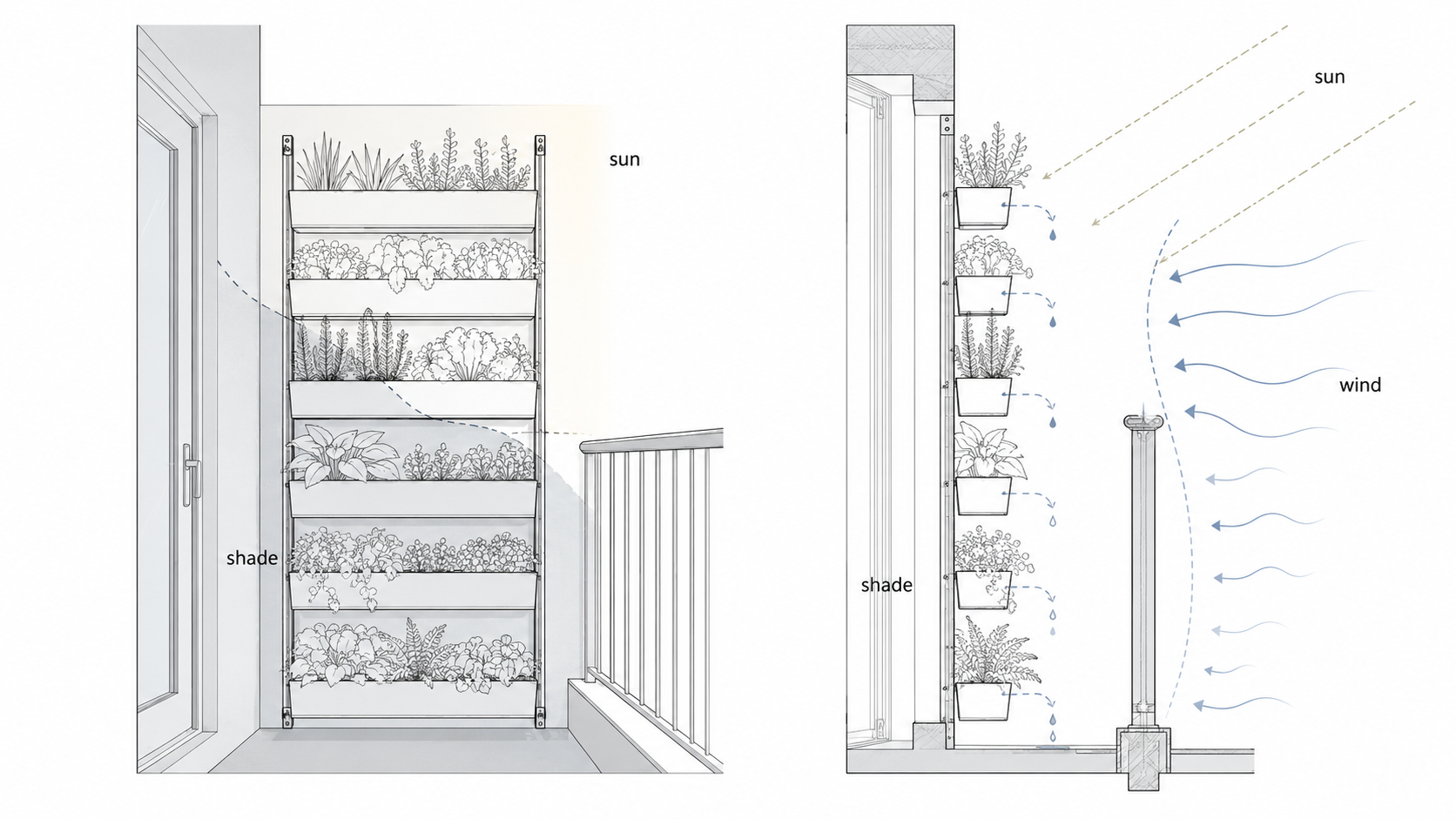
Illustration by ArchitectureCourses.org. Balcony plants should be chosen by sun, shade, wind, and planter level, not by a generic plant list.
The best balcony plants are not universal. They depend on sun, shade, wind, heat, and how often you can water.
Sunny balconies can handle thyme, oregano, rosemary, strawberries, compact flowers, and some leafy greens if watering is steady. Very hot balconies may punish basil, lettuce, and shallow-rooted plants unless they get afternoon protection.
Shady balconies are better for ferns, pothos-type foliage, philodendron, impatiens, and other shade-tolerant plants. Do not force tomatoes, peppers, or basil into weak light and expect them to perform.
Wind matters too. Delicate stems dry and break faster. Thicker leaves, compact growth, and lower placement usually do better than tall, soft plants on exposed upper floors.
What Fails After The First Month
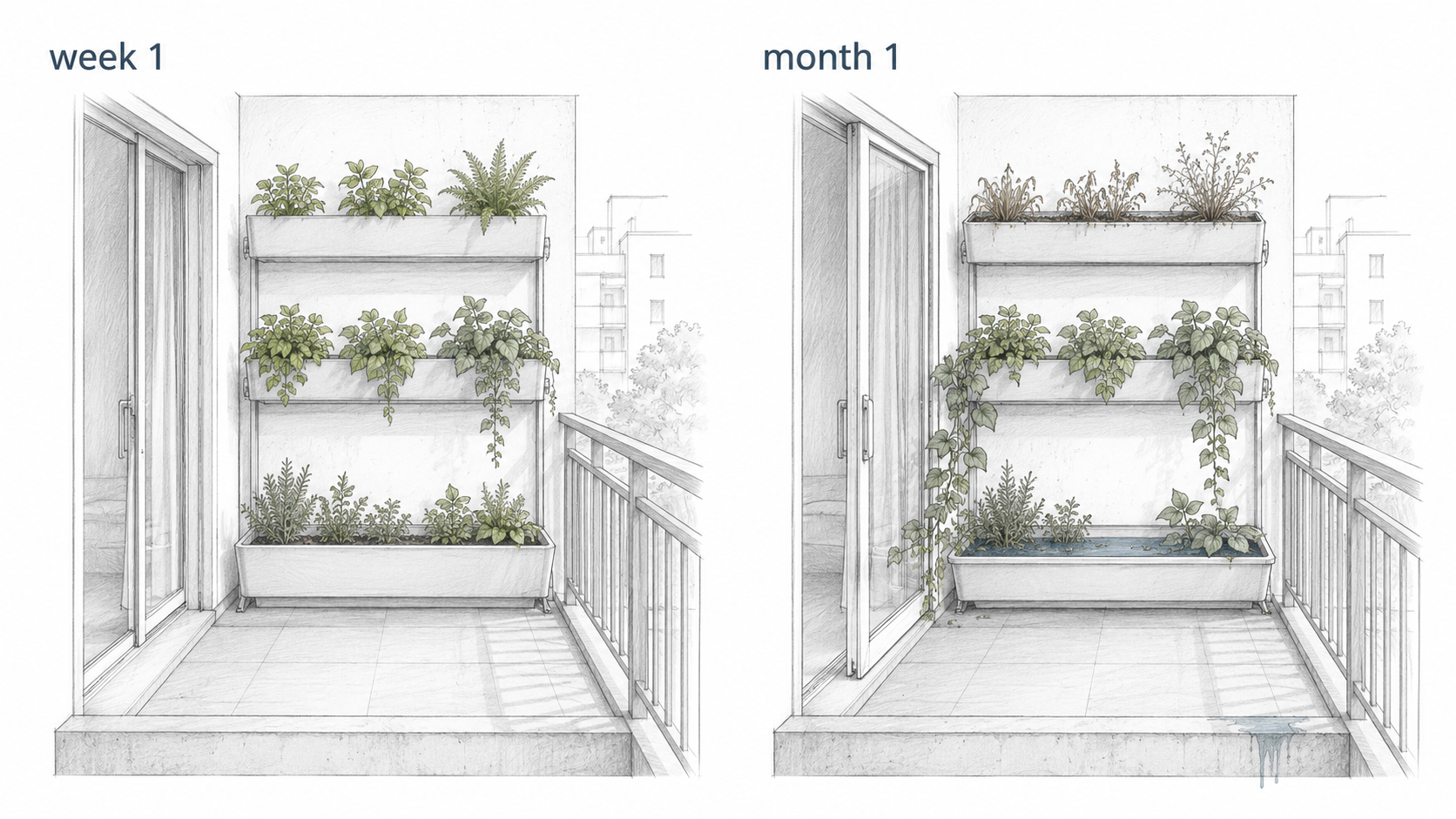
Illustration by ArchitectureCourses.org. Many balcony vertical garden problems show up after the first month, when water, wind, growth, and daily use start testing the setup.
The first weekend is easy. The planters are new, the plants are full, and the balcony photographs well. The real test starts later.
After a month, the weak parts show up. The top tier dries before the bottom. A rail planter starts staining the slab. A trailing plant blocks the door. A hanging basket swings into the wall. The chair you planned to use no longer fits. A plant that looked compact at purchase starts taking over the only clear corner.
This is why I would rather see a smaller balcony garden that can be maintained than a dense wall that looks impressive for two weeks. Leave room to reach the plants. Leave room to sit. Leave room to clean spilled soil and move a planter during bad weather.
A balcony garden should survive normal use, not just a photo.
Layout Mistakes That Make The Balcony Worse
- Putting the tallest planter where the door opens.
- Hanging planters outside the rail without checking building rules.
- Using heavy ceramic pots high on the wall or rail.
- Covering the only sunny wall with plants that do not need much light.
- Letting water drain toward the neighbor below.
- Filling every surface until the balcony no longer works as a balcony.
The last point matters. A balcony is already small. A vertical garden should free floor space, not turn the balcony into a crowded storage rack for plants.
What To Use Instead Of A Full Wall
A full green wall is rarely the best first balcony garden. Smaller systems are easier to test, move, water, and fix.
| Instead Of | Use This First | Why It Is Safer |
|---|---|---|
| Full wall pocket panel | Three to five removable wall planters | Easier to water, inspect, and replace |
| Heavy rail garden | Inside-facing rail planter | Less fall and drip risk |
| Permanent trellis | Freestanding trellis in a planter box | Better for renters and easier to remove |
| Tall narrow tower | Lower stacked planter with wider base | More stable in wind |
| Mixed plant wall | One plant group with similar needs | Less watering conflict |
Watering Without Making A Mess
Balcony watering needs more control than garden-bed watering. You are working above a slab, rail, wall, and maybe another balcony below.
Water slowly. Use planters with trays you can see. Empty standing water before mosquitoes or root problems show up. Avoid fertilizer runoff over the balcony edge. If you use a drip system, test it while you are home, not right before leaving for a weekend.
A moisture meter can help if you use deeper pots or stacked planters where the surface dries faster than the root zone. A long-probe soil moisture meter is not a cure for bad drainage, but it can stop some of the guessing.
Keep The Balcony Usable
The best balcony gardens leave a clean path from the door, a place to sit or stand, and enough room to water without bumping into everything.
A few strong planting zones usually work better than plants everywhere. Use one vertical feature, one low planter, and maybe one rail planter. That is often enough to change the feel of the balcony without making it hard to use.
If the balcony is already tight, skip the “lush wall” goal. Aim for shade, texture, scent, and privacy in the smallest number of pieces.
FAQ
What is the best vertical garden for a small balcony?
Usually a freestanding vertical planter, slim ladder shelf, or inside-facing rail planter. These give height without taking over the floor or requiring permanent wall attachment.
Can I hang planters outside a balcony railing?
Only if your building allows it and the planter is designed for that use. In many buildings, outward-facing planters are a problem because of fall risk, drainage, and maintenance complaints.
How do I stop water from dripping onto the balcony below?
Use visible trays, saucers, slow watering, and planters that drain inward. Avoid hanging baskets or wall pockets that dump excess water over the edge.
What plants work best on a windy balcony?
Compact, tougher plants usually do better than tall delicate ones. Herbs like thyme and oregano, compact flowers, and thicker-leaf plants often handle exposed conditions better than soft leafy plants.
Can I grow vegetables in a balcony vertical garden?
Yes, but choose compact crops and check light first. Lettuce, herbs, strawberries, and some compact peppers can work. Tomatoes need more sun, soil volume, support, and watering than many small vertical systems provide.
Are fabric pocket planters good for balconies?
They can work for small, lightweight plants, but they dry unevenly and can stay damp at the bottom. They are better as a small test system than as a full balcony wall.
Should renters avoid wall-mounted balcony gardens?
Usually, yes. Freestanding or removable systems are safer unless the landlord or building rules clearly allow wall attachments.
Read This Next
Start with vertical gardens for the full wall, water, light, system, and maintenance guide.
For a broader outdoor-space view, use home garden design. For the indoor design side, see biophilic design.
The Balcony Still Has To Work
A balcony vertical garden should make the space better to use. It should not block the door, trap water, annoy the neighbor below, or make the rail carry more than it should.
Start with one stable system. Watch the wind. Watch the water. See what survives the first hot week and the first storm. Then add more. That slower approach usually gives you a better balcony than trying to turn every surface green at once.