
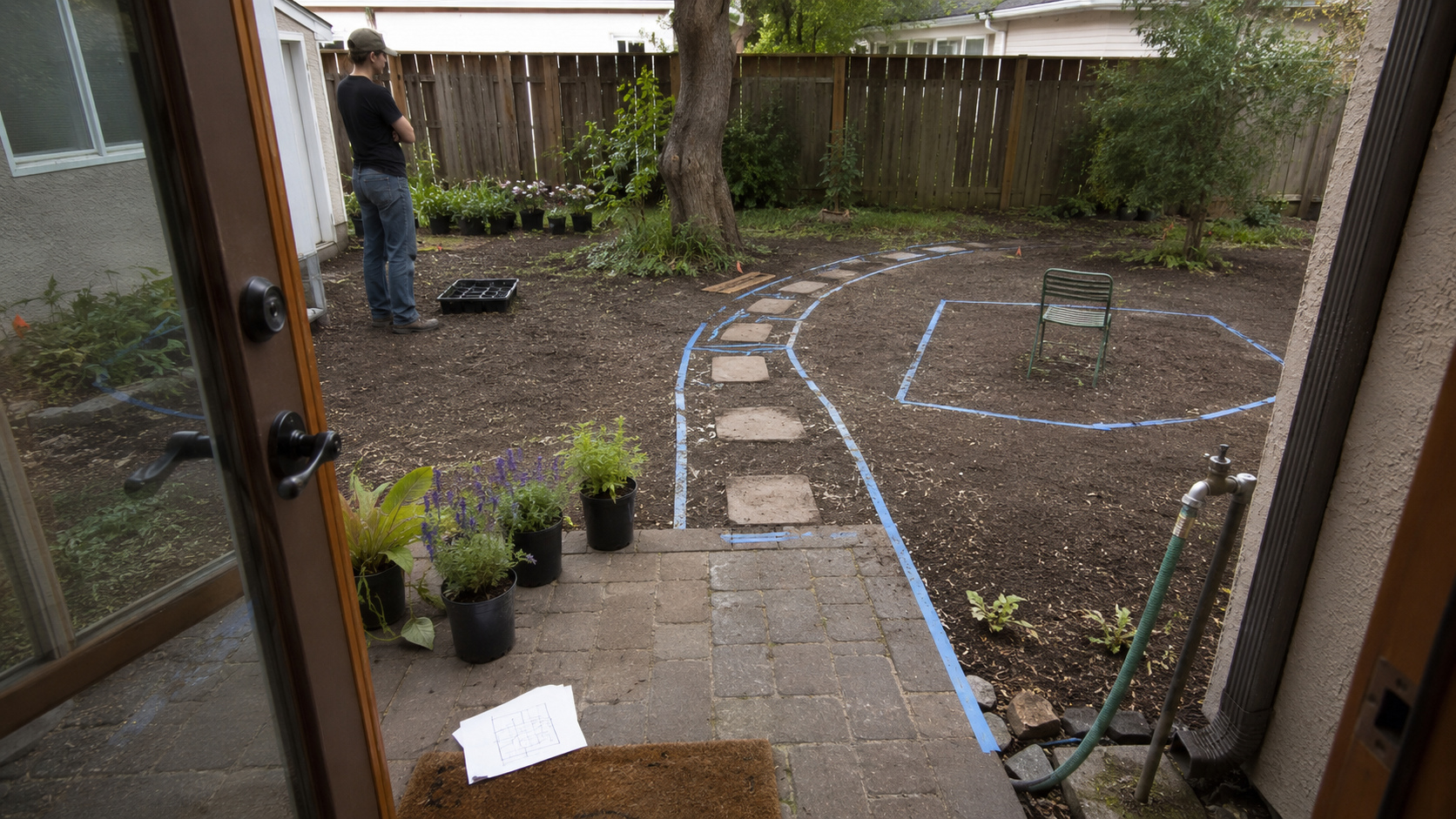
Image by ArchitectureCourses.org. Home garden design works better when the door, path, shade, water, and seating are planned before the plants are chosen.
A home garden usually goes wrong before the plants are chosen. The door opens into the wrong spot. The path cuts through the seating area. The sunny bed gets shade by afternoon. Water runs back toward the house. The chair looks good in the plan but sits in glare all summer.
Start from the house, not the plant list. A garden is part of the home’s daily movement: where you step out, where you sit, what you see from inside, where water goes, where shade lands, and how much maintenance the layout asks for later.
Plants matter. They just should not be the first decision. A garden that works with the door, path, shade, water, privacy, and maintenance routine will usually feel better than a prettier plant collection that fights the way the house is used.
Start At The Door
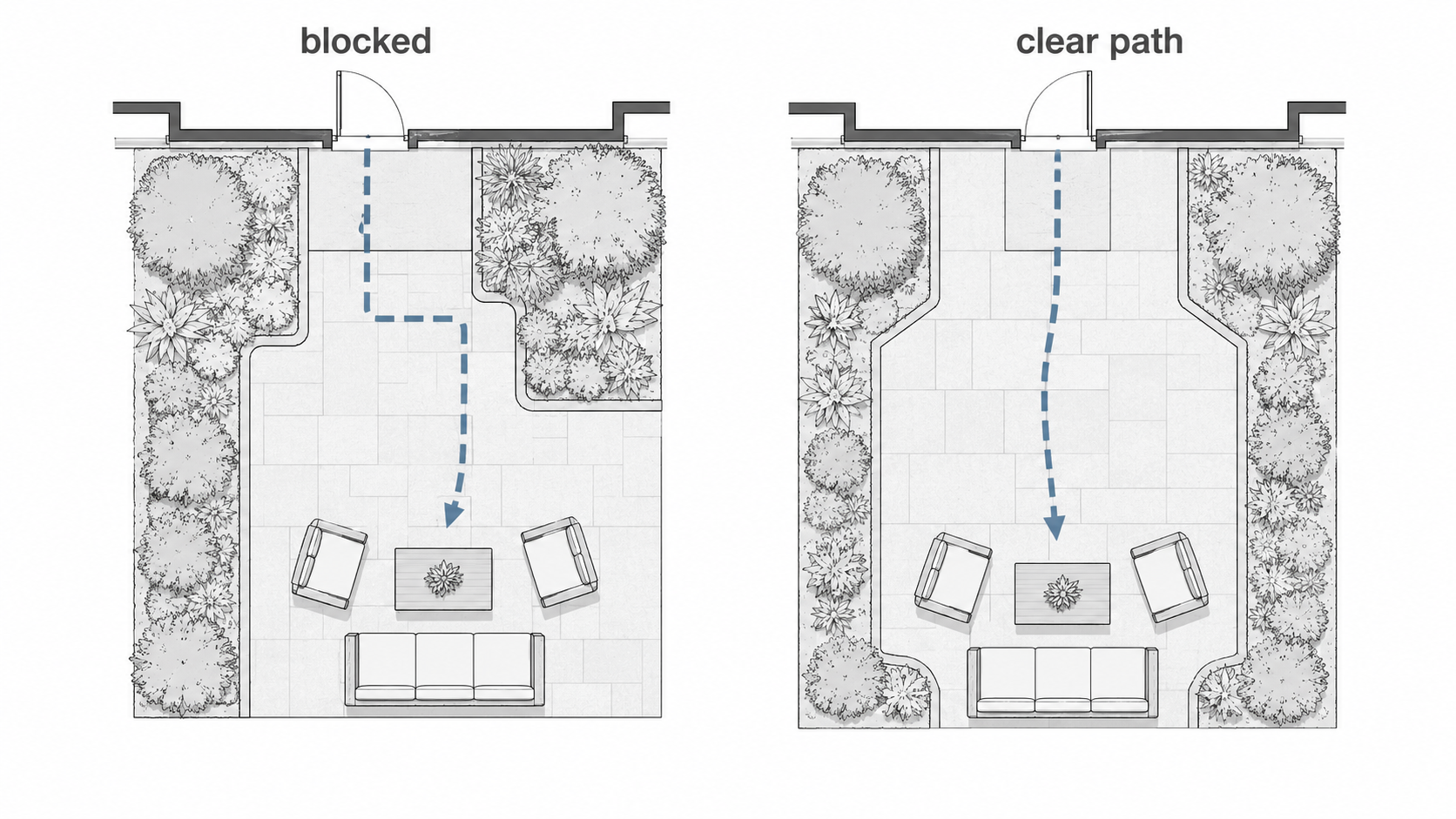
Illustration by ArchitectureCourses.org. The first garden design decision is often the route from the door to the place people will actually sit.
The first garden design decision is often the least glamorous one: what happens when you open the door?
If the door opens onto a narrow step, awkward landing, wet patch, or crowded row of pots, the garden starts with friction. That friction matters. People avoid outdoor spaces that are annoying to enter. They use the places that feel easy.
Stand at the door and look outward before you draw anything. Where should your foot land? Where should the first path begin? Can someone carry a tray, watering can, or chair without turning sideways? Does the door swing into a planter? Does the dog, child, or guest have a clear route?
A small paved landing often does more for a garden than another flower bed. It gives the house a proper handoff to the yard. From there, the path, seating, planting, shade, and privacy can make sense.
For laying out a garden from the house outward, a long tape is more useful than guessing from the window. A simple 100-foot open reel measuring tape is enough for checking door-to-seat distance, bed depth, path width, and where the garden starts to feel tight.
The Garden Has To Work From Inside Too
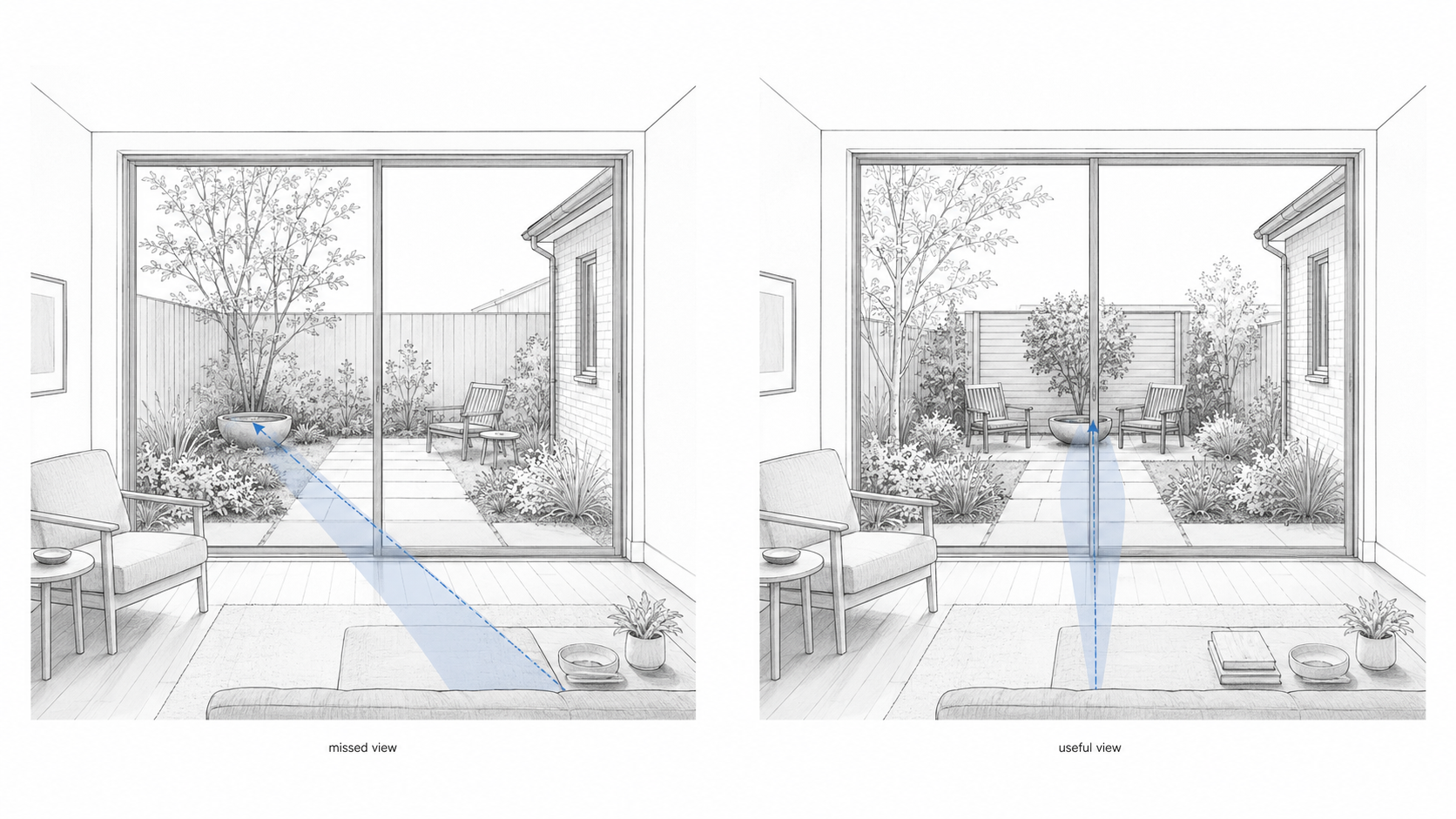
Illustration by ArchitectureCourses.org. A home garden should be planned for the view from inside the house, not just for how it looks when you stand outside in the yard.
A garden is used outside, but it is seen from the kitchen, dining room, bedroom, office, hallway, or back door every day.
That changes the design. The best planting bed may not be the one farthest from the house. The best focal point may be the one you see while making coffee. A small tree, bench, water bowl, raised planter, or seasonal bed can matter more if it sits on the main view line from inside.
This is where many garden plans waste money. They push the “nice” part of the garden too far away, then leave the daily view as a blank fence, air conditioner, trash bins, or a dead corner beside the patio.
Before choosing plants, stand inside the house and look out. What do you see first? What should be hidden? What should be framed? Which window deserves the strongest view? A garden that looks good from inside gets used even on days when nobody steps outside.
Paths Decide Whether The Garden Gets Used
Paths are not decoration. They decide how the garden is used, watered, cleaned, crossed, and maintained.
A path should go where people already want to go. If the grill, shed, hose, gate, compost bin, seating area, or back door is on one side, the path should respect that. A pretty curved path that makes every trip longer will get ignored. People will cut across the lawn or step through planting beds.
Make the main path clear enough for real use. A narrow stepping-stone route may look charming, but it can become frustrating when carrying tools, groceries, cushions, or a watering can. Small gardens need simple paths even more than large ones because every awkward turn is felt.
The useful test is basic: can you walk from the door to the main sitting place without brushing plants, stepping into mud, or moving furniture? If not, fix the path before adding more plants.
Shade Is A Design Material
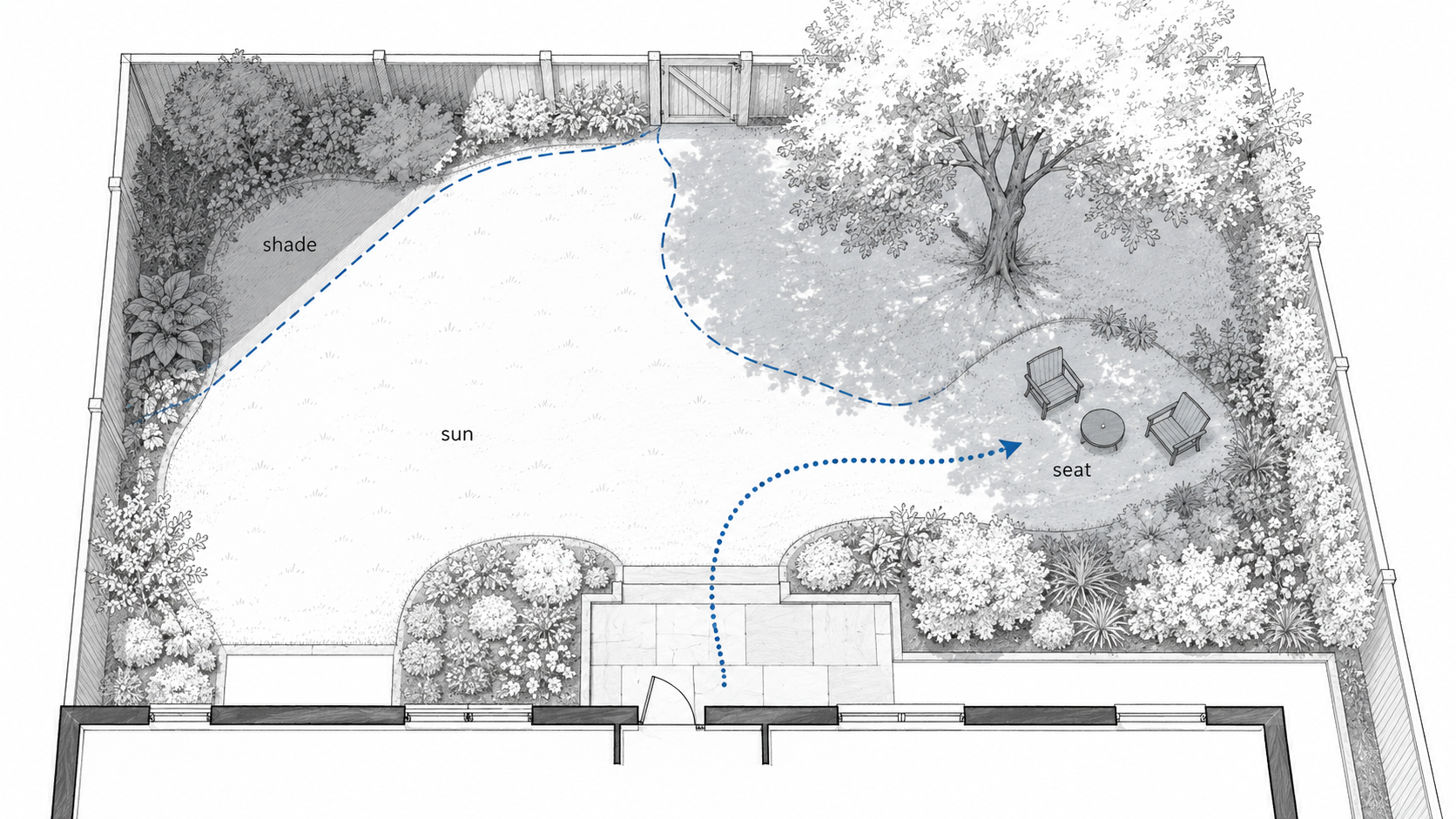
Illustration by ArchitectureCourses.org. Shade should be planned like a design material because it decides where people sit and which plants survive.
Shade is not a leftover condition. It is one of the main materials in home garden design.
People sit where shade is comfortable. Plants survive where light matches their needs. Paving heats up where sun sits too long. A garden that ignores shade usually becomes a place that looks good at the wrong time of day.
Watch the garden in the morning, afternoon, and evening. The best seating zone may not be the biggest open space. It may be the edge of a tree shadow, the side of a wall, or a corner that gets shade when you actually want to sit outside.
Plants should follow the same logic. Sun-loving plants belong where they get reliable sun. Shade plants should not be forced into exposed afternoon heat. A bed that gets morning sun and afternoon shade behaves differently from one that bakes all day.
Water Has To Leave Somewhere
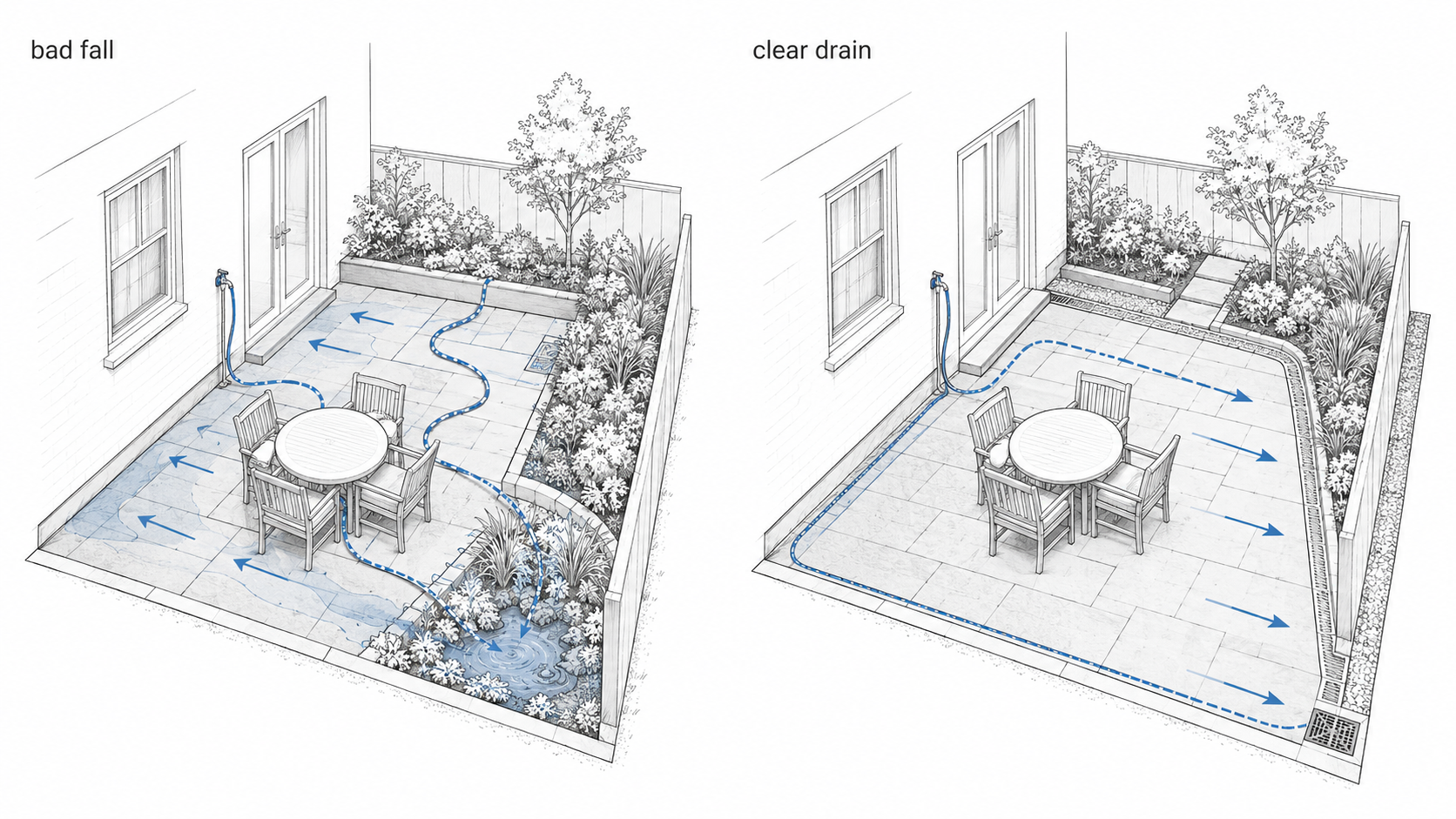
llustration by ArchitectureCourses.org. A garden layout should make water movement and maintenance access obvious before paving and planting are fixed.
Water is the quiet design problem. It does not care how nice the planting plan looks.
A garden should move water away from the house, away from doors, away from seating areas, and out of low pockets where roots will sit wet. Before adding beds, patios, gravel, or raised planters, check where water already goes after rain.
Look for stains, moss, soft soil, puddles, eroded mulch, damp foundation edges, and muddy shortcuts. Those marks are telling you more than a mood board can. A beautiful bed in the wrong wet corner becomes a maintenance problem. A patio with poor fall becomes slippery. A planter beside the house can trap water where you wanted softness.
The same rule applies to watering. If the hose path crosses the sitting area every day, the layout is wrong. If the far bed is annoying to reach, it will be neglected. Put thirsty plants where watering is simple. Put low-maintenance planting where access is harder.
Privacy Should Be Placed, Not Sprinkled Everywhere
Privacy planting works best when it solves a specific exposure problem. It fails when every edge of the yard gets treated the same.
Start by naming what needs privacy. Is it the seating area? A bedroom window? The view from the neighbor’s second floor? The patio door? The trash area? Each one needs a different response.
A hedge along the whole property line may be expensive and unnecessary. Sometimes one small tree, one trellis, one layered shrub group, or one raised planter blocks the important view better than a long wall of plants.
Be careful with fast-growing privacy plants. Fast growth feels like a shortcut in year one. In year three, it can become pruning, crowding, roots, shade, and blocked paths. Privacy should be planned for mature size, not nursery size.
Plants Come After Use, Light, And Maintenance
Plant choice becomes easier after the garden’s use is clear. A plant list built before the layout usually turns into compromise: the wrong plant in the wrong light, too much watering, beds that are too deep to maintain, or shrubs that outgrow the walkway.
First decide what each part of the garden has to do. Is it for sitting, screening, pollinators, herbs, shade, color, drainage, or a view from inside? Then choose plants that fit that job.
| Garden Zone | Design Job | Plant Choice Should Prioritize |
|---|---|---|
| Near the door | Clean entry and daily view | Low mess, compact growth, year-round structure |
| Seating edge | Comfort, softness, privacy | Scent, texture, controlled height, low thorns |
| Sunny bed | Color, pollinators, herbs, food plants | Heat tolerance and water access |
| Shaded corner | Cooling, texture, quiet background | Shade tolerance and moisture fit |
| Far edge | Screening or low-maintenance background | Mature size, toughness, low pruning demand |
A garden design book can help with plant structure and bed composition, but use it as a design reference, not a shopping list. The Well-Designed Mixed Garden is useful for understanding how trees, shrubs, perennials, and seasonal planting work together over time.
The Three-Week Test
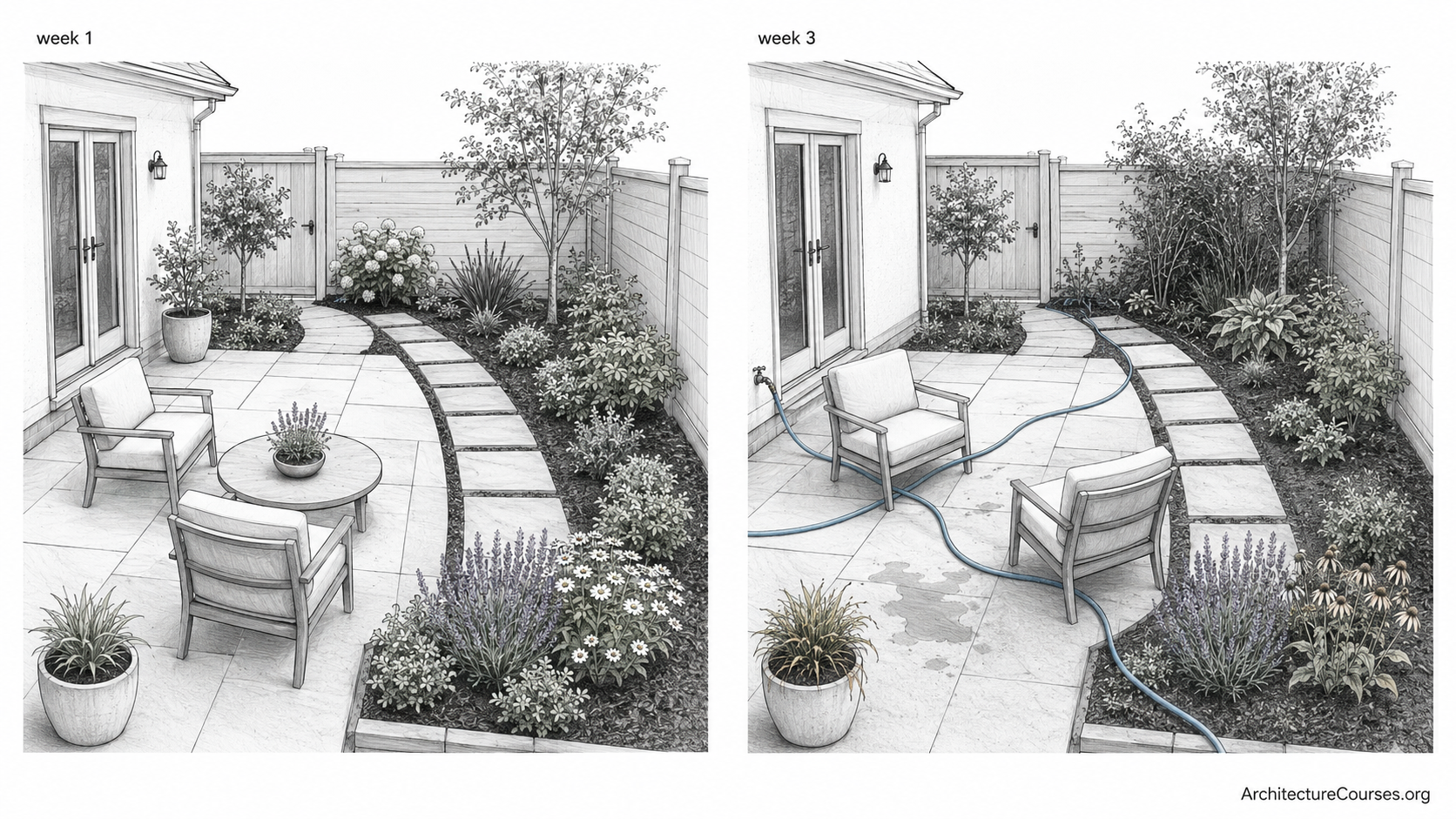
Illustration by ArchitectureCourses.org. Many home garden design mistakes show up after a few weeks, when shade, water, maintenance, and daily use start testing the layout.
The first weekend lies.
New plants look full. Fresh mulch hides bad grading. The chair looks fine before anyone sits in it. The new path feels charming before the fifth trip with a hose. The garden photograph looks better than the daily routine.
Three weeks later, the truth starts showing. The seating area gets too much glare at the hour you wanted to use it. The hose crosses the path. One plant is frying. Another sits in shade and sulks. The far corner is already being skipped because it is annoying to water. A chair leg sinks into soil. Mulch washes onto the paving. The “easy” bed needs more weeding than expected.
This is why I would rather see a smaller, honest garden plan than a dramatic one that depends on constant attention. A good garden should pass normal use. You should be able to step outside, sit down, water what needs watering, trim what needs trimming, and get back inside without fighting the layout.
The three-week test is simple: what has already become annoying? That is usually the part to fix before buying more plants.
Small Gardens Need Fewer Moves
Small gardens are often ruined by too many ideas. A little patio, a narrow side yard, or a compact urban backyard cannot carry every style at once.
Pick fewer moves and make them stronger. One clear path. One useful seating place. One good privacy layer. One main planting rhythm. One vertical element if space is tight.
This is where vertical gardening can help, but only when it solves a space problem. A vertical garden can soften a wall, grow herbs near a door, or add privacy without taking up much floor area. It should not become another maintenance burden. For that narrower topic, use vertical gardens and the balcony-specific guide at balcony vertical garden.
In a small garden, empty space is not wasted space. It is how the garden breathes. Leave room for a chair to move, a person to pass, a plant to grow, and water to drain.
Materials Should Match The House
A garden usually looks better when its hard materials make sense with the house. That does not mean everything has to match perfectly. It means the garden should not feel like it belongs to a different property.
Look at the house first: siding color, brick tone, roof color, window trim, porch material, steps, foundation, and existing paving. Then choose garden materials that relate to those conditions.
Gravel, concrete pavers, brick, stone, wood, metal edging, and raised beds all carry a different feeling. The wrong material can make a modest garden feel busy or disconnected. The right one can make a simple planting plan look intentional.
The safest material palette is usually the one that repeats something already present on the house, then adds one garden material for contrast.
| House Condition | Garden Material Direction | Be Careful With |
|---|---|---|
| Brick house | Gravel, stone, simple steel edging, restrained planting | Clashing red/orange pavers |
| White or light siding | Wood, pale gravel, green structure, simple pots | Too many bright container colors |
| Modern exterior | Simple paving, strong geometry, fewer plant types | Rustic clutter and mixed ornaments |
| Older cottage-style house | Layered planting, softer edges, gravel or brick paths | Overly slick hardscape |
| Small urban yard | Lightweight planters, vertical support, compact seating | Heavy features that eat the whole space |
Where AI Helps And Where It Misleads
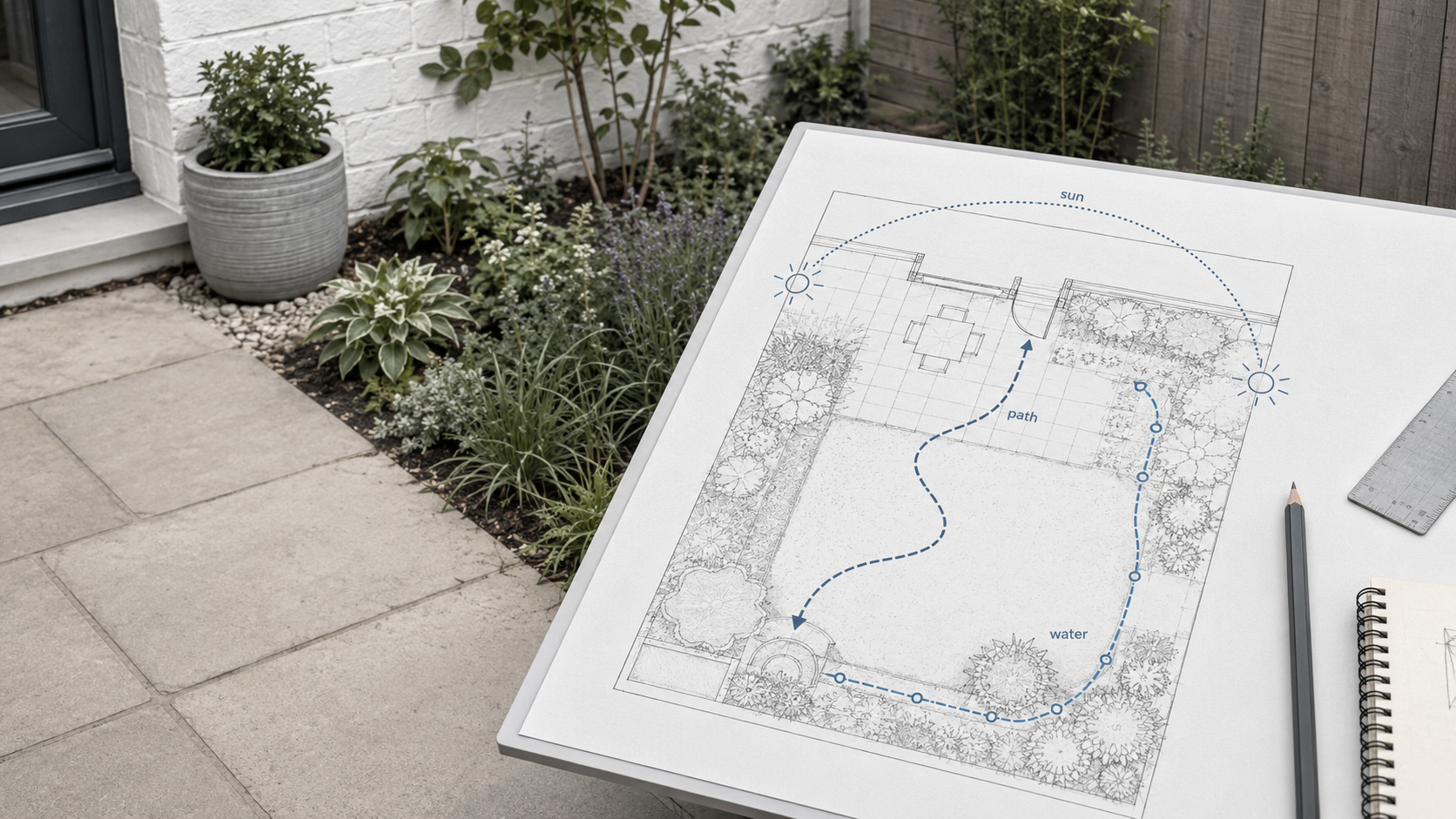
Illustration by ArchitectureCourses.org. AI can help test a garden layout for sun, paths, and watering, but it cannot replace checking the real site.
AI can help with home garden design, but it should be used as a checking tool, not a fantasy generator.
It can help you test layout ideas, compare plant groupings, think through sun exposure, build a maintenance checklist, and visualize different path or seating arrangements. It can also help translate a rough plan into options you might not have considered.
The weak point is reality. AI does not feel the afternoon heat against your fence. It does not know that the hose bib is awkward, the soil stays wet in one corner, the neighbor’s window overlooks the patio, or the gate needs a wider turning space. It may produce a beautiful garden that cannot be watered, maintained, afforded, or built on the site you actually have.
Use AI after you gather site facts. Take photos. Mark sun and shade. Measure the space. Note drainage, wind, privacy, and views from inside. Then ask AI to help compare options. The better your site notes, the more useful the output becomes.
| AI Can Help With | Still Check Yourself |
|---|---|
| Testing path and seating options | Door swing, slope, furniture size, daily movement |
| Generating plant combinations | Local climate, mature size, water needs, availability |
| Visualizing style directions | Whether the materials match the house |
| Creating maintenance checklists | Whether you will realistically do the tasks |
| Comparing sun/shade strategies | Actual site observation through the day |
Home Garden Design By Situation
The right garden plan depends on the house and the way the outdoor space is used.
| Situation | Start With | Avoid |
|---|---|---|
| Small backyard | One clear path, one seating zone, compact planting | Too many separate “rooms” |
| Deep narrow yard | View lines, repeated planting, one destination point | Random features along both sides |
| Sunny patio | Shade, heat-tolerant planting, water access | Delicate plants in small hot pots |
| Shady garden | Texture, foliage contrast, pale surfaces, seating comfort | Forcing sun-loving flowers |
| Low-maintenance yard | Fewer beds, tough shrubs, mulch, reachable watering | Complex seasonal planting everywhere |
| Family garden | Open use area, safe paths, durable planting edges | Fragile planting in every corner |
| Privacy problem | Specific sightline blocking | Hedging every boundary by default |
Common Mistakes
- Buying plants before deciding where people walk and sit.
- Putting the seating area where it looks good, not where shade and comfort work.
- Ignoring the view from inside the house.
- Letting water run toward the foundation, door, or patio furniture.
- Choosing plants by nursery size instead of mature size.
- Making beds too deep to reach without stepping into them.
- Adding privacy plants everywhere instead of blocking the actual view problem.
- Forgetting where the hose, tools, bins, cushions, and maintenance route will go.
The last mistake is common because maintenance feels separate from design. It is not. If the garden is hard to maintain, the design is not finished.
Tools Worth Using Before You Buy Plants
A good garden does not need fancy tools at the beginning. It needs better checking.
- Use a long tape to measure the garden from the door, not from memory.
- Mark the main path with hose, string, or painter’s tape before building it.
- Place a chair where you think the seating area belongs and sit there at the time of day you expect to use it.
- Check soil moisture below the surface before assuming plants need more water.
For pots, raised beds, and newly planted areas, a long-probe soil moisture meter can help reveal what is happening below the dry-looking surface. It does not replace judgment, but it can prevent some overwatering and underwatering mistakes.
FAQ
How do I start designing a home garden?
Start at the door. Check where people enter, where they walk, where they sit, what they see from inside, where shade falls, and where water drains. Plants come after those decisions.
What is the biggest mistake in home garden design?
Treating the garden like a plant shopping project instead of a layout problem. The wrong path, seat, shade, or water direction can ruin even good plant choices.
How do I make a small garden feel bigger?
Use fewer moves. Keep one clear path, avoid oversized furniture, repeat materials, and place the strongest planting or focal point where it can be seen from both inside and outside.
Should I choose plants or layout first?
Choose the layout first. Once you know the light, water access, bed size, seating position, and maintenance route, plant selection becomes much easier.
How do I design a low-maintenance garden?
Use fewer planting zones, tougher plants, reachable beds, mulch, simple irrigation, and clear access. Low maintenance usually comes from restraint, not from one magic plant list.
Can AI help design a garden?
Yes, but only after you collect real site information. AI can help compare layout ideas, plant groupings, sun/shade options, and maintenance plans. It cannot replace measuring, watching drainage, checking shade, or understanding how the space is used.
How important is drainage in garden design?
Very important. Water should move away from the house, doors, seating areas, and low planting pockets. Drainage problems usually become maintenance problems later.
Read This Next
For tight spaces and planted walls, use vertical gardens. For apartment and small outdoor spaces, see balcony vertical garden.
If the garden is part of a larger nature-connected design strategy, read biophilic design.
The Yard Still Has To Work
A home garden should make the house easier to live in. It should give you a clear way outside, a comfortable place to sit, a view worth seeing, water that moves safely, and planting you can maintain without resenting it.
Start with the door. Trace the path. Watch the shade. Follow the water. Sit in the chair before you build the patio around it. Then choose the plants.
That slower order usually creates a better garden than buying everything that looked good on a Saturday morning.