
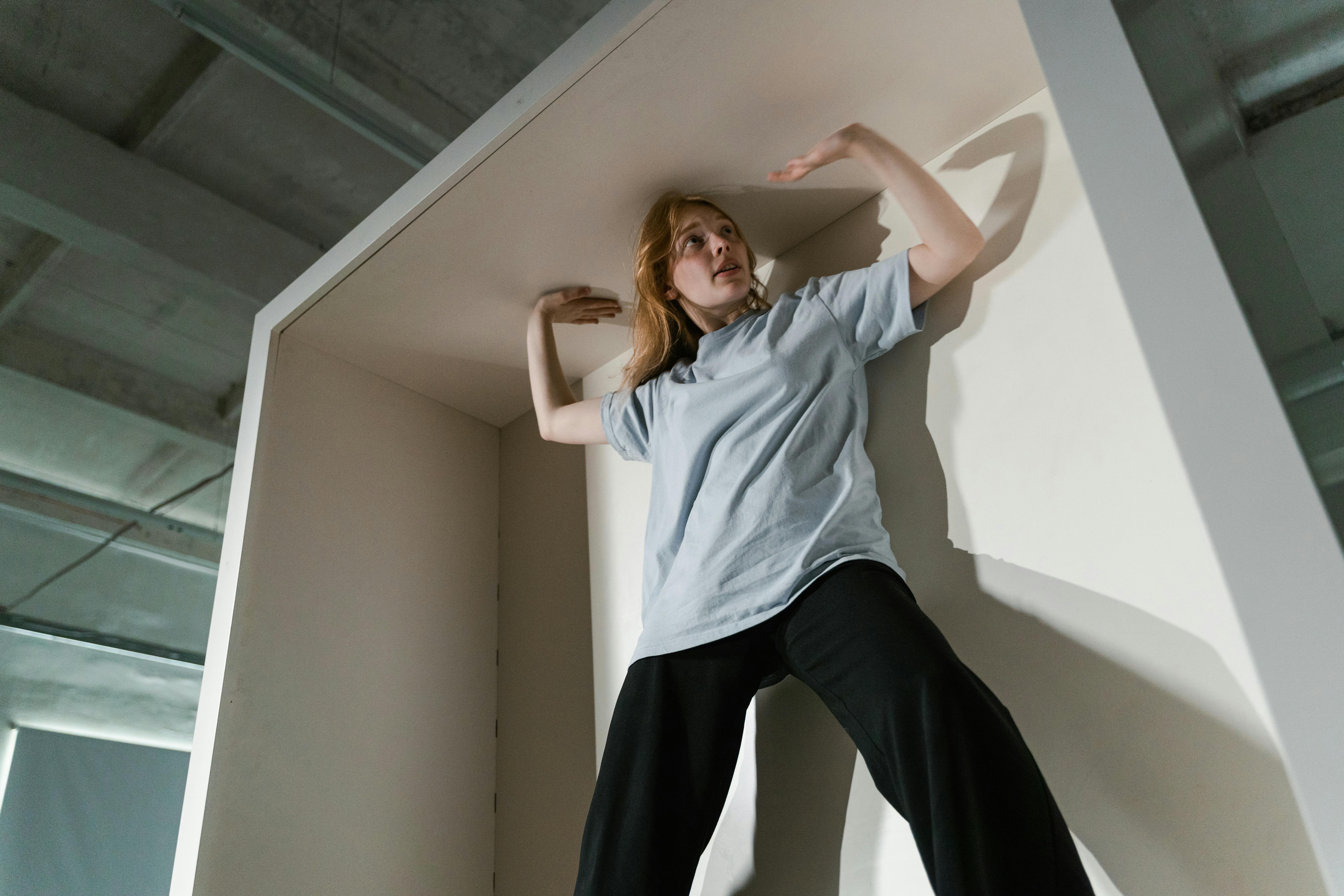
Image: A fearful woman in a tight cabinet space, conveying the emotional effects of claustrophobic architecture and highlighting the psychological influence of built environments.
How Architecture Shapes Our Feelings and Behaviors
Designing Spaces That Support Mental Well-being
The Psychology of Architecture: How Design Shapes Emotion, Behavior, and Well-Being
What Is the Psychology of Architecture?
The psychology of architecture is all about how buildings and spaces affect how we feel and behave. It’s not about whether a room looks nice—it’s about what that space does to your body, your brain, and your mood.
We’re talking real-world stuff here.
Not theory. Not fluff.
A window in the right spot can help you focus better.
A cramped hallway can spike your stress.
A warm material underfoot can instantly make you feel more at home.
So why are architects paying attention to psychology?

Because they’ve seen it work.
Because more and more clients want spaces that feel good, not just spaces that look good.
And because mental health, productivity, and community are just as important as structure and style.
This shift has changed how we design:
● Hospitals are built for healing, not just function.
● Offices are laid out to boost energy and reduce burnout.
● Homes are designed for real life, not just square footage.
Design isn’t just visual.
It’s emotional.
And once you start noticing how spaces affect you, you’ll never unsee it.
How Architecture Shapes Us

Image: Gloomy man seated in a cold, dark interior lacking natural light and air circulation, illustrating how poor architectural design can negatively affect mood and emotional well-being.
Our surroundings shape us more than we realize. Every hallway, every window, every ceiling height—it’s all feeding your nervous system cues on how to behave, what to feel, and how to move.
It’s subtle but constant.
Think about it:
● A cozy café with soft lighting makes you want to stay.
● A cluttered office makes it hard to concentrate.
● A well-designed street makes people walk, smile, interact.
● A sterile lobby makes you feel awkward—even if you can’t explain why.
Here’s what’s working behind the scenes:
● Light controls mood, focus, and even sleep.
● Color can calm you down or ramp you up.
● Layout and flow can make a space feel effortless—or frustrating.
● Scale and proportion affect how “human” or “cold” a space feels.
● Sound and acoustics shape how peaceful or chaotic it is.
The best architecture doesn’t just stand there.
It responds to us.
It works with how people think, feel, and move.
And when a space is designed well—you feel it, even if you don’t know why.
The Emotional Impact of Architectural Design
Can Building Design Influence Your Mood?
How Design Influences Mood

Image: Man seated on a gray couch in a lifeless interior space, where dull design choices and lack of expressive elements reflect emotional emptiness and disengagement.
Here’s something simple but powerful:
Design directly affects how we feel.
A bright, open room with clean lines? You’ll feel alert.
A dim, cluttered space? You’ll probably feel drained—even irritated.
Let’s break it down.
● Bright spaces = more energy. That’s why gyms, studios, and classrooms often use big windows or skylights.
● Cluttered layouts = mental overload. It’s like your brain doesn’t know where to look or what to focus on.
● Low ceilings = pressure. You feel physically and mentally boxed in.
● Narrow hallways = anxiety. Especially in high-traffic areas.
● Overly echoey rooms = overstimulation. Think of busy restaurants where the noise makes you want to leave early.
On the flip side…
● Soft textures, good lighting, and thoughtful flow? That’s comfort.
● Balanced color schemes? That’s calm.
● Smart space planning? That’s clarity.
Design can lift you up—or wear you out.
The difference is in the details.
Understanding the Psychological Effects of Architecture
Healing Through Design
Architecture can’t cure you—but it can help you heal.
Hospitals and clinics are being redesigned not just to function, but to feel better. To calm nerves. To support recovery. To reduce stress before the meds even kick in.
This isn’t abstract. It’s happening in real buildings.
Here’s what’s working:
● Natural light: More windows mean less fluorescent fatigue. Daylight lifts mood and helps regulate sleep.
● Silence zones: Quiet areas for rest and reflection reduce sensory overload and anxiety.
● Soft materials and curves: Gentle layouts, rounded furniture, and warm tones feel safer—especially in pediatric and mental health wards.
● Biophilic elements: Indoor gardens, green walls, or even just nature views speed up healing.
It’s design that supports the body and the brain.
And the result? Fewer re-admissions, better sleep, happier staff, and calmer patients.
Related: Human-centered design
Case Study: The Role of Natural Light

Image: Girl resting on a white bed in a naturally lit space, where soft and bright colors promote emotional well-being, illustrating the healing power of thoughtful architectural design.
Let’s talk windows.
We underestimate how much natural light affects us—but our biology doesn’t. Your body is wired to respond to daylight.
Here’s what it does:
● Regulates circadian rhythm → Better sleep
● Boosts serotonin → Better mood
● Increases alertness and energy → Better productivity
And no, you don’t need a full glass wall to get the benefits.
A few smart moves work wonders:
● Add skylights in dark hallways.
● Keep window shades adjustable so light can change with the day.
● Use glass panels between rooms to spread light naturally.
● Paint surrounding walls in light-reflective colors to bounce light around.
You’ll see this in schools where students score higher near windows. In offices where employees get less burnout. In homes where people just feel better.
Light heals. And the best part? It’s free.
The Role of Color in Architecture
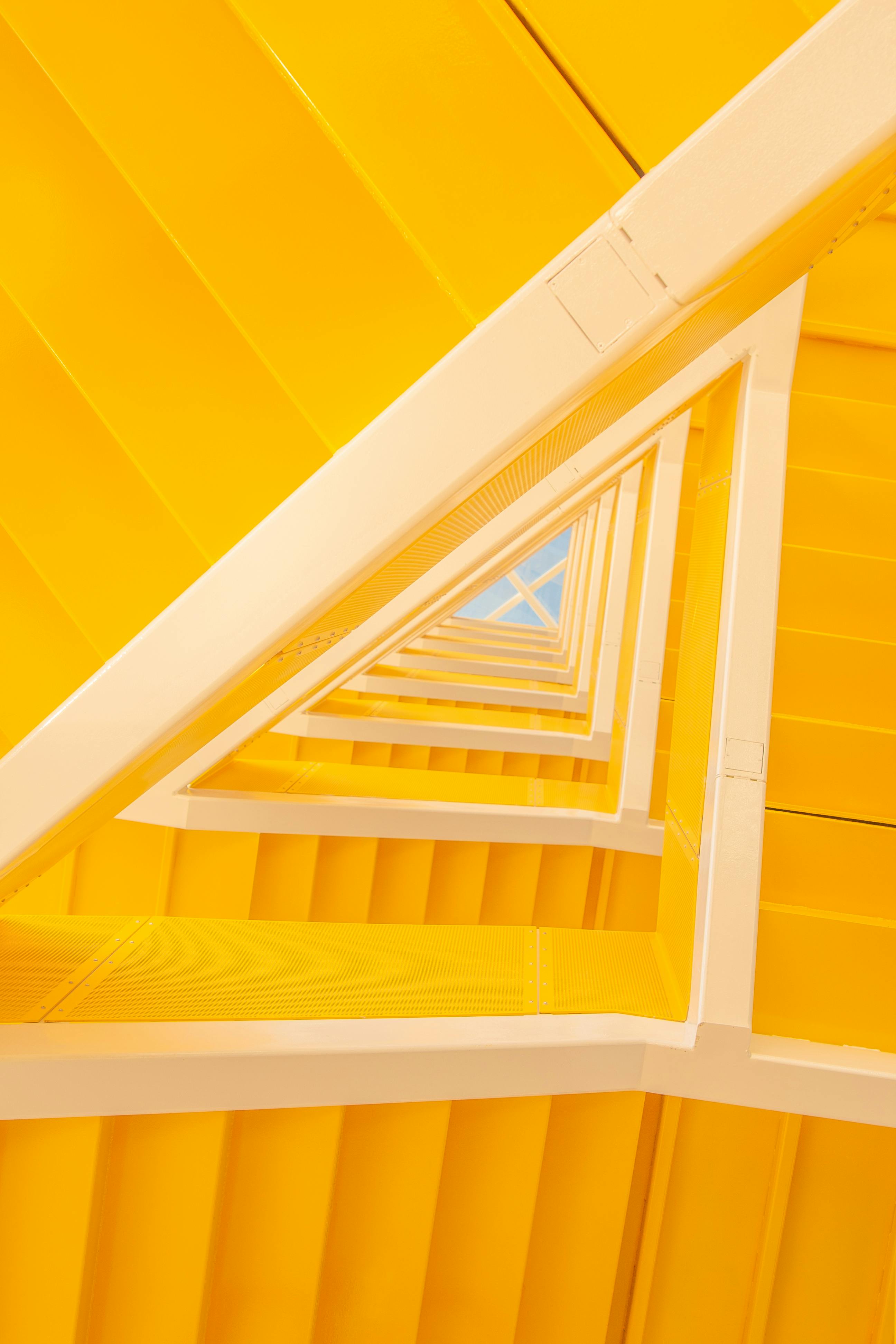
Image: Bold yellow stairway inside a modern building, illustrating how interior color choices like yellow enhance energy, optimism, and creative atmosphere through design.
Color talks to your brain—quietly but constantly. It shapes how you feel in a space without you even realizing it.
Here’s a quick guide:
● Warm tones (reds, oranges, yellows) → Energy, excitement, connection
● Cool tones (blues, greens) → Calm, focus, restoration
● Neutral tones (greys, beiges, soft whites) → Clean, grounded, balanced
But where you use them matters.
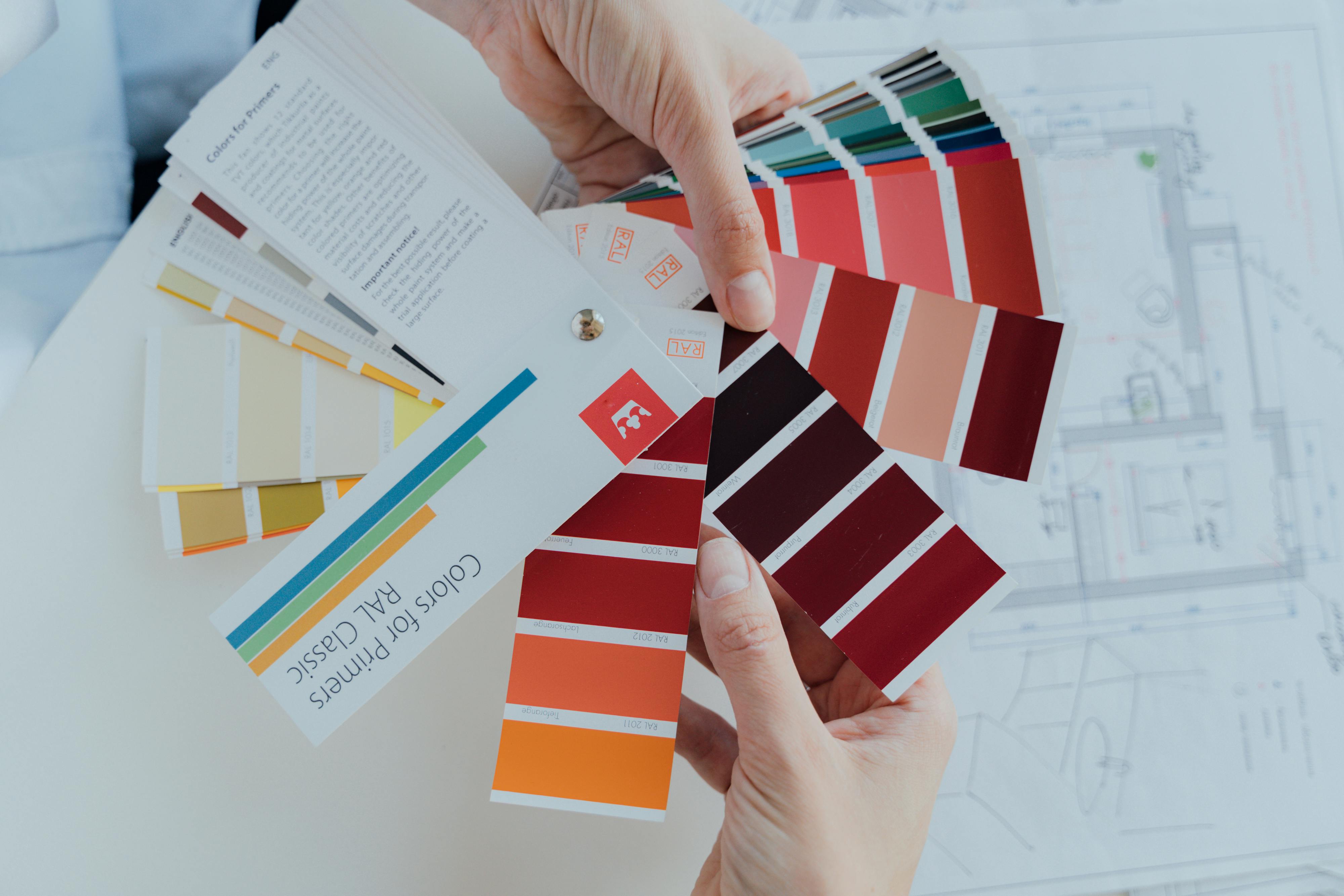
Image: Color palettes with an architectural blueprint, demonstrating the process of choosing colors that complement design elements in building and interior architecture.
Let’s break it down by room:
● Bedrooms → Go for soft blues and greens. These signal rest, comfort, and emotional quiet.
● Workspaces → Stick with whites, light greys, and soft neutrals. They help you stay alert without feeling overwhelmed.
● Social areas → Add pops of red, orange, or gold to encourage conversation and warmth.
● Healthcare spaces → Use muted greens, gentle creams, and soft tones. They calm the nervous system and help patients feel safe.

Image: Organized palette of color samples used in architecture and interior design, illustrating how color selection influences mood, spatial perception, and emotional response.
Too much color? That’s stimulation overload. Too little? It feels lifeless.
The trick is finding the balance between emotion and energy—color makes that possible.
Related:
The Psychological Effects of Space and Scale
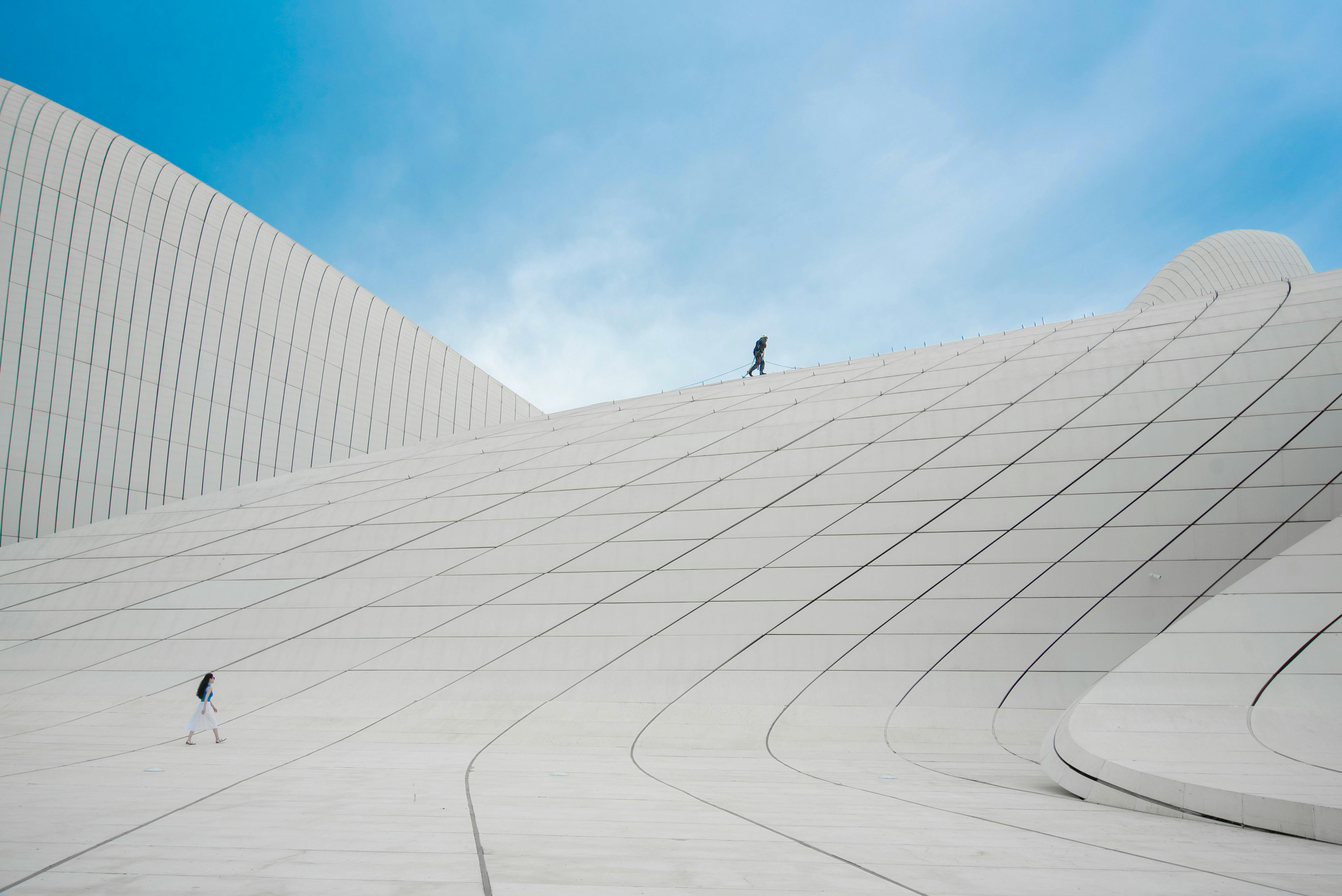
Image: Modern architectural marvel with minimalist design and monumental scale, where the presence of people emphasizes the vastness of space and the impact of scale in built environments.
Space changes everything.
Not just how a room looks—but how it feels.
Open, airy rooms make us breathe easier. Cramped, narrow spaces? They trigger stress. Fast.
You’ve felt it. Ever walked into a big public building that felt cold or intimidating? That’s scale gone wrong. Too big, and you feel small and unwelcome. Too small, and you feel boxed in.
The sweet spot? It’s called human-scale design.
That means:
● Benches that are easy to sit on—not too high, not too deep
● Doorways that feel inviting—not like a tunnel or a castle gate
● Ceiling heights that don’t make you feel like you're in a shoebox—or a church nave
● Layouts that follow how we actually move, relax, or talk
Great design meets people at their level. Literally.
It’s not about big or small. It’s about just right.
Biophilic Design: Nature in Architecture
We’re wired for nature.
Always have been.
Biophilic design taps into that—bringing the outdoors in.
This isn’t just about adding a plant in the corner.
It’s about creating spaces that feel alive.
Spaces that breathe.
Why it works?
● Nature calms the nervous system.
● Greenery lowers blood pressure and heart rate.
● Natural textures make things feel grounded and real.
Here’s what biophilic architecture actually includes:
● Natural light—skylights, big windows, sunlit corridors
● Indoor plants—not just for show, but for air and mood
● Raw materials—wood beams, stone walls, bamboo panels
● Nature views—even a glimpse of sky or trees through a window makes a difference
The result?
Spaces that feel softer, safer, and more human.
Even in cities. Even in offices. Even in hospitals.
We weren’t built for drywall and LEDs.
We were built for forests, light, and fresh air.
Biophilic design brings a little of that back.
Related:
The Power of Texture and Material
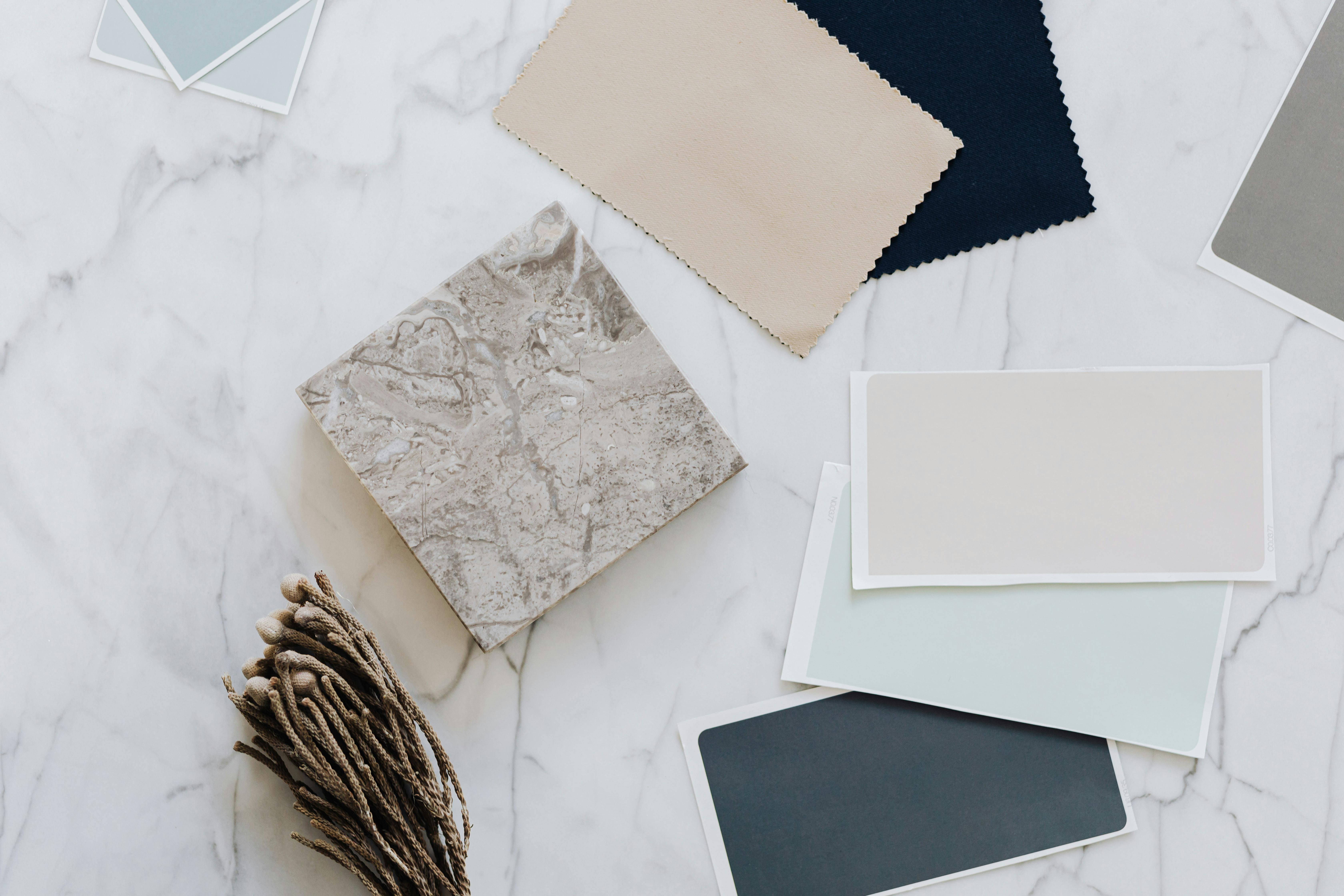
Image: Collection of paper, fabric, and neutral-toned craft materials highlighting how texture and material choices influence sensory perception and emotional response in architectural design.
Let’s get tactile for a second.
Texture matters.
Not just how a space looks—but how it feels.
Run your hand across a smooth stone wall. Now try a cozy fabric cushion. Different emotional reactions, right?
Here’s the breakdown:
● Hard vs. soft: Hard surfaces feel sharp and precise. Soft ones feel safe and restful.
● Warm vs. cold: Wood = cozy. Steel = sleek. Neither is better—it depends on what you want people to feel.
● Natural vs. synthetic: We often feel more grounded and at ease around real materials.
Let’s match material to mood:
● For warmth → Use wood, fabric, woven textures, rugs, and matte surfaces
● For modern calm → Use concrete, glass, brushed steel, and clean lines
● For playfulness → Use colorful tiles, mixed patterns, and tactile contrasts like brick next to velvet
Design isn’t just what you see.
It’s what you touch, hear, and feel.
Sensory design goes beyond the visual—and that’s what makes it powerful.
The Feel of Different Architectural Styles
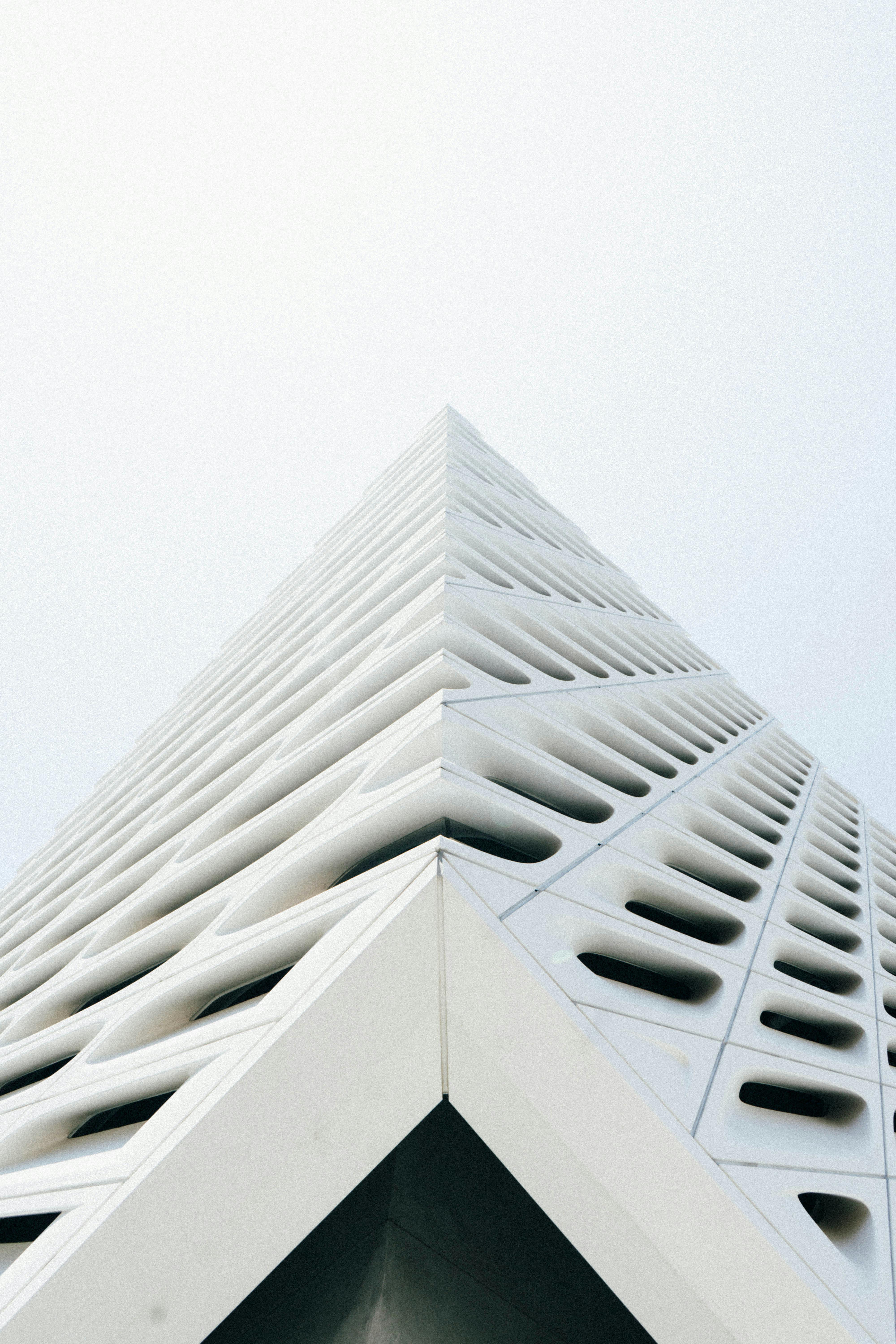
Image: Low angle photo of a white modern building in Los Angeles, highlighting the minimalist design that promotes openness and clarity in architecture.
Every architectural style sends a message. Even if you don’t notice it at first, your body does.
Classical architecture feels grounded.
Think columns, symmetry, proportions that echo old temples.
It whispers stability, order, and permanence.
Modern architecture strips things back.
Clean lines, open space, lots of light.
It speaks clarity, calm, and purpose—a design that says, “Let’s keep it simple.”
Postmodern architecture? That’s where things get playful.
It breaks rules. It surprises you.
It mixes materials, colors, and shapes to create something unexpected.
Each one triggers different feelings:
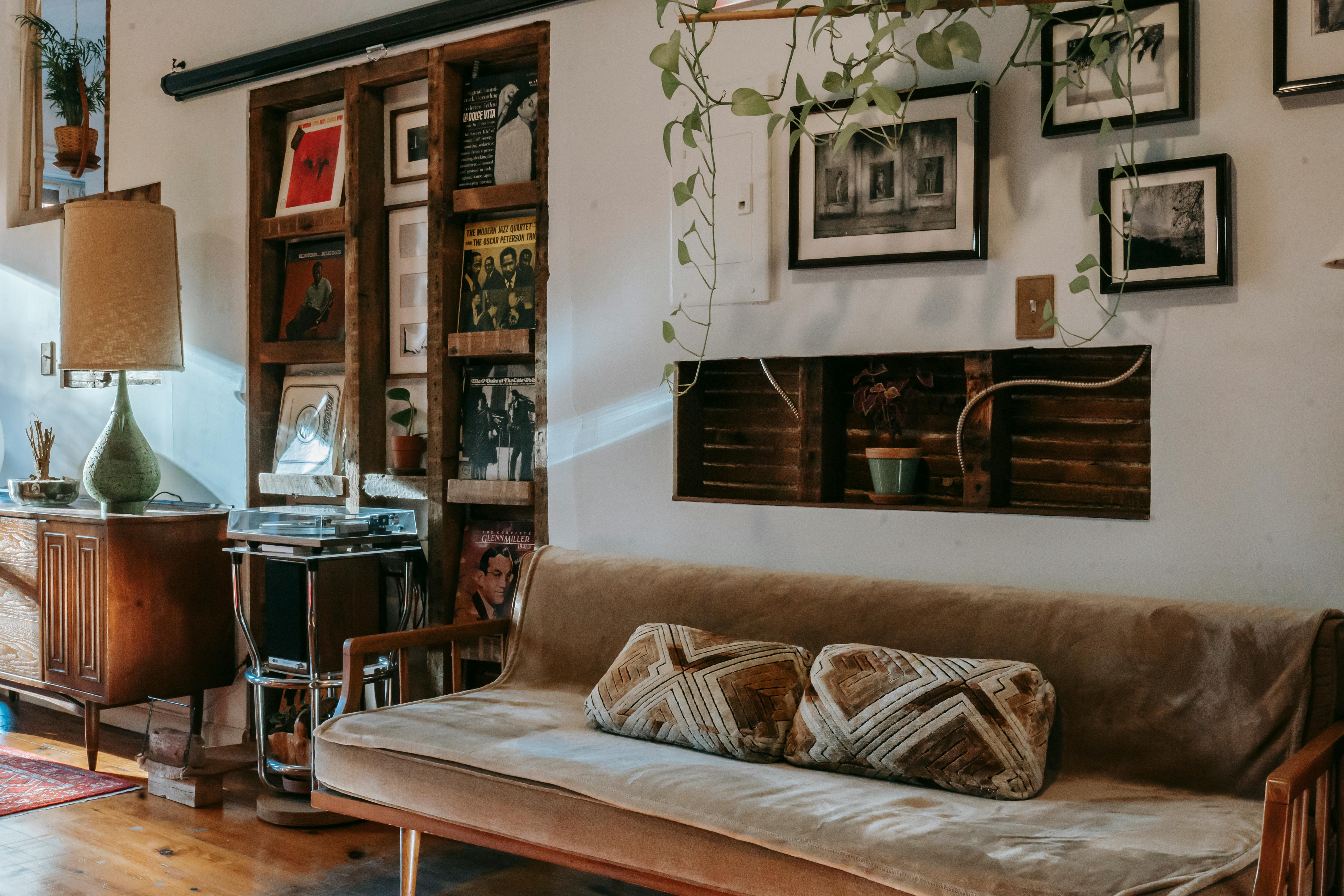
Image: Vintage-styled room with a shelf of vinyl records, a comfortable sofa, and wooden cabinet, evoking a sense of nostalgia, comfort, and a peaceful, relaxed atmosphere.
The Image: The space conveys a feeling of nostalgia, warmth, and personal connection, as vinyl records often evoke memories of the past. The combination of vintage decor and soft furnishings creates a cozy and emotionally soothing environment, ideal for relaxation and quiet reflection.
● Classical → Safe, predictable, sometimes a little formal
● Modern → Peaceful, focused, almost meditative
● Postmodern → Curious, energized, even a bit amused
You don’t need to know the name of a style to feel its tone.
Good design talks to your senses, not just your brain.
Urban Design and Mental Health
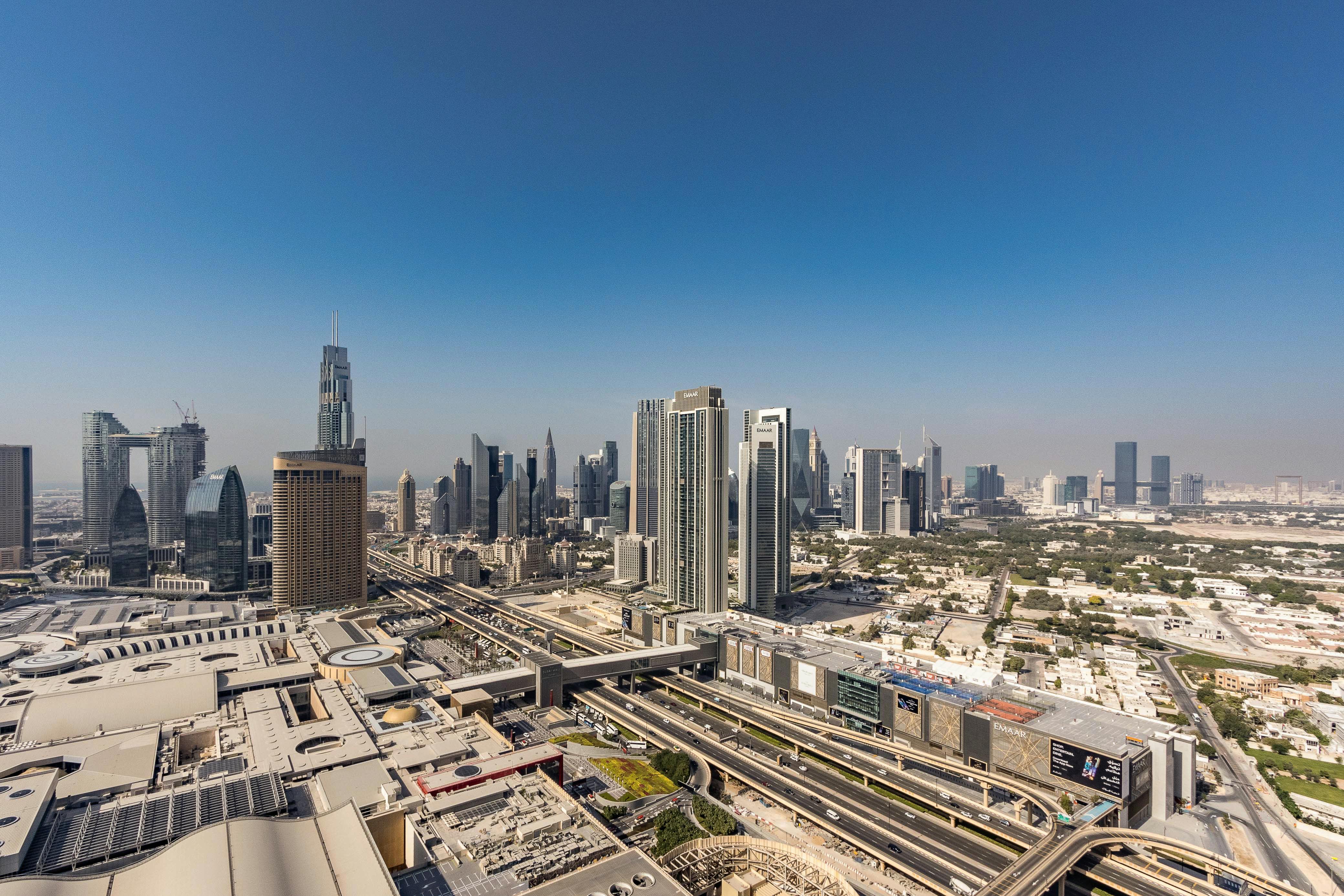
Image: Dubai cityscape with iconic skyscrapers, exemplifying modern urban design that conveys innovation, luxury, and progress while also emphasizing a fast-paced, high-energy environment in its architecture.
Cities can either support your mental health—or work against it.
A neighborhood with parks, wide sidewalks, and trees? That’s a place that invites connection, calm, and daily movement.
But cities filled with concrete, noise, and no place to sit or gather? They breed stress, isolation, and mental fatigue.
Let’s get real—your brain wasn’t made for asphalt and horns. It craves nature, rhythm, and human interaction.
Want better cities? Start small:
● Add more trees—they literally lower blood pressure
● Place benches everywhere—rest isn’t a luxury
● Design for encounters—walkways that cross, plazas that invite strangers to linger
● Break up monotony—a single flower bed in the middle of a grey block makes a difference
The goal isn’t to build utopia. It’s to build cities that feel human, not overwhelming.
Related: Kevin Lynch's 5 Elements of a City | Guide to Urban Design
Smart Buildings and Mental Comfort
Welcome to the future—where your building knows how you feel.
Smart buildings aren’t just about tech.
They’re about comfort. Real comfort.
Imagine this:
● Lights that adjust when the sun goes down.
● Heating that learns when you’re cold before you do.
● Layouts that shift depending on use—open when you need space, cozy when you don’t.
That’s responsive design.
Architecture that listens instead of shouting.
And the result?
● Less stress
● Fewer distractions
● More time spent in flow—that feeling when everything just works
We’re not far off from buildings that help you rest, work, and feel better—all by design.
Sustainable = Healthy
Let’s kill two birds with one brick.
Sustainable buildings don’t just save energy.
They boost human health.
Here’s what they bring:
● Cleaner air—thanks to non-toxic paints, better ventilation, and low-emission materials
● Quieter interiors—less noise pollution = calmer brains
● More natural light—which means better sleep, focus, and mood
● Thermal comfort—your body stays balanced, so your mind can too
This isn’t just a “green” choice.
It’s a wellness choice.
Sustainability isn’t about suffering or sacrifice anymore.
It’s about building smarter, living better, and making spaces that feel just right—for people and the planet.
Creating Environments That Enhance Human Experience
The Role of Architecture in Shaping Human Behavior
Case Study 2: Designing for Workplace Well-Being
One office. One goal: make people feel better while they work.
This wasn’t a fancy tech HQ or a creative agency with beanbags.
It was a mid-size company that wanted to ditch burnout and boost focus.
Here’s what changed—and why it worked:
✓ Natural light from big windows
They replaced cubicle walls with open zones near windows. No more working under yellowed fluorescents. Energy levels went up.
✓ Greenery placed where people gather
Not just a plant in the corner—real greenery near desks, break areas, and paths. It softened the space and made people slow down.
✓ Open zones for collaboration
These weren’t just “meeting rooms.” They were casual lounge-style areas where people could talk without feeling boxed in.
✓ Ergonomic furniture
Adjustable chairs, standing desks, and arm-friendly layouts. Not flashy—just comfortable. And that made a difference in mood.
✓ Clear, open paths for movement
No weird twists, dead ends, or narrow lanes. People flowed through the space without bumping into things or each other.
Result?
Staff reported feeling more relaxed, more connected, and more focused.
And meetings got shorter—because no one was dreading them.
How to Design With Psychology in Mind
This isn’t about making things trendy.
It’s about asking the one question most designers skip:
How will someone feel in this space?
Start there. Always.
Then think about this:
● Does the room calm or overwhelm?
● Is the layout intuitive or confusing?
● Are the materials warm or cold?
● Do people want to linger—or escape?
Balance is key.
Too much color? It's overstimulation.
Too much minimalism? It can feel sterile.
The sweet spot is visual interest + emotional calm.
That’s the kind of design people remember.
Sensory Architecture: Design You Can Feel
Architecture isn’t just what you see. It’s what you hear. What you touch. How you move. It’s what your whole body notices—even if your brain doesn’t label it right away.
Sensory architecture is about designing spaces that speak to all your senses—not just your eyes.
We’re talking real comfort. Real memory. Real experience.
Why It Matters
You don’t need to “understand design” to feel it in your bones.
Ever stepped into a place and felt instantly calm? Or instantly on edge?
That’s sensory architecture at work.
The materials, the textures, the sound, the smell of a space—it all hits you at once.
And when those things are intentional? That’s when a space becomes unforgettable.
Key Sensory Elements in Architecture
● Touch – Think warm wood, cool stone, soft leather, textured walls. What your hand brushes against changes how your brain reads the room.
● Sound – Echoey atriums vs. quiet libraries. Acoustics affect how long we stay, how much we talk, even how safe we feel.
● Smell – That faint scent of pine in a timber-framed home? It's not a bonus—it’s part of the experience. Good airflow, natural finishes, or just smart scent choices help shape mood.
● Movement – Wide stairs that invite slow walks. Ramps that guide gentle transitions. Curves that feel natural vs. sharp corners that jolt your senses.
● Light – Not just visibility. Mood. Direction. Time of day. Shadow play. Natural light makes rooms feel alive, not static.
What Happens When It’s Done Well
You feel at home even in public.
You linger longer.
You trust the space.
You breathe easier.
This is what airports, schools, clinics, and restaurants are finally starting to realize—people don’t just need space to stand in, they need space they can feel good in.
Pro Tip:
If you want to create a sensory-rich environment, start by walking barefoot, with your phone off.
What do your feet notice? What sounds do you hear? Where does your eye rest?
If it’s comfortable without distraction—you’re on the right track.
Architectural Psychology Degrees & Master’s Programs
How to Study the Psychology of Architecture—and Actually Do Something With It
What Is Architectural Psychology?
Architectural psychology is the study of how spaces affect how we feel, think, and behave. It sits at the crossroads of architecture, environmental psychology, and human-centered design.
It asks things like:
● Why do certain hospitals make people anxious—and others feel calm?
● Why do some rooms boost focus while others drain you?
● What layout helps people feel safe, energized, or connected?
In short: architectural psychology is about making design feel right, not just look right.
Why Study This? (And Why It’s Actually a Smart Move)
This field is growing fast.
People are done with buildings that look good but feel awful to live or work in. Cities are rethinking public space. Schools, clinics, and homes are being redesigned for mental health, recovery, and well-being.
So yeah—this stuff matters. And if you get trained in it? You’re ahead of the curve.
Here’s what it helps with:
● Designing schools that support learning
● Making workplaces that reduce burnout
● Planning cities that reduce loneliness
● Helping architecture teams consider human emotion, not just materials
And companies are finally getting it. UX designers do it for screens. You’ll do it for spaces.
What Can You Study?
There’s no one-size path here. But there are two main angles:
● Option 1: Psychology Degree With a Focus on Architecture
You’d study environmental psychology, cognitive science, or health psychology, with electives or research in built environments.
Great for research, consulting, or working on design strategy teams.
● Option 2: Architecture or Design Degree With a Psychology Focus
Think M.Arch with human-centered design, or interior design + behavior studies. You’ll get licensed design skills plus psychology insight.
Great if you want to build the actual spaces—or work closely with those who do.
4. Programs That Offer Architectural Psychology
Some programs blend these fields beautifully. Here's a breakdown:
🔹 Environmental Psychology – City University of New York (CUNY)
One of the most respected research-based degrees in this niche. Deep dive into how space affects behavior, especially in urban settings.
🔹 Master of Architecture with Human-Centered Design – University of Oregon
They integrate sustainability, health, and psychology into the architecture core. Very hands-on.
🔹 MSc in Environmental Psychology – University of Surrey (UK)
Research-heavy, with a practical edge. Great if you’re planning to work in policy, urban design, or housing research.
🔹 Master of Interior Architecture & Psychology – Pratt Institute (or similar programs)
Ideal for people focused on how interiors affect emotional experience.
Pro Tip: Some architecture schools let you shape your own focus in grad school. Combine design with psychology courses or thesis work that connects the dots.
5. Careers You Can Get From This Field
This isn’t a “just academic” path. There are real jobs—especially now, when companies and cities care more about mental health, behavior, and wellness.
Here’s where architectural psychology fits in:
● Healthcare Architecture
Designing hospitals, recovery centers, therapy spaces, and long-term care with well-being at the core.
● Urban Design / City Planning
Helping cities reduce stress and increase connection through green space, walkability, and sensory design.
● Workplace Design & Strategy
Crafting spaces that boost productivity, reduce burnout, and improve focus and mood.
● Interior Design With a Psychology Edge
Designing homes, schools, or hospitality with emotional comfort in mind.
● Research & Behavioral Consulting
Helping architecture or planning teams test ideas, run user studies, and apply findings.
Bonus: Even major tech companies (like Google or Microsoft) hire spatial designers who understand how space affects people.
6. Skills That Make You Stand Out
It’s not just the degree. You’ll need a mix of design instincts and psychology smarts. Here’s what helps:
● Empathy: Can you see how people feel in a space—even before they say it?
● Design Thinking: Know how to ask the right questions, not just draw plans.
● Data & Observation: Know how to spot patterns, test ideas, and use research.
● Communication: You’ll be the translator between designers and psychologists.
Real-world experience helps too. Intern at firms, shadow in hospitals, work on real design critiques.
7. Is It the Right Degree for You?
Here’s how to tell if this field fits you:
✔ You care about how people feel—not just how things look
✔ You love both design and psychology
✔ You want your work to improve quality of life, not just aesthetics
✔ You get annoyed by buildings that feel off—even if they’re “technically perfect”
If you said yes to most of that? You’re probably in the right place.
A Few Official Bodies to Know
No references needed—but it’s good to casually name-drop respected groups for credibility. These matter:
● American Psychological Association (APA) – especially their Environmental Psychology division
● American Institute of Architects (AIA) – many now emphasize wellness design
● WELL Building Standard™ – focuses on how spaces support mental and physical health
● LEED – sustainability rating system that includes human-centered design
Summary: What This Degree Does for You
Studying architectural psychology gives you:
● A rare skill combo most firms still lack
● A chance to make spaces that actually work for people
● A way to stand out in design, healthcare, UX, or planning
● A more meaningful, more human way to practice design
You’ll go beyond aesthetics—into impact.
Final Take: Why It All Matters
Architecture isn’t just steel, wood, and glass. It’s how people live inside those materials.
It’s what your home says about you.
It’s how your office makes you feel at 9am on a Monday.
It’s the reason a hospital either comforts—or overwhelms—you.
Small shifts make a big difference.
A wider path.
A deeper window ledge.
A softer floor.
A quieter ceiling.
Design changes how we feel. How we focus.
How we sleep. How we connect. How we heal.
And if we care about people, we have to care about the spaces they’re in.
Good design isn’t just “pretty.”
It’s smart, empathetic, and deeply human.
Keep Learning: Books & Courses
Want to go deeper? These are worth your time:
Books
▪ Color in Architecture – Harold Linton
Smart strategies for using color to shape space and mood.
▪ The Architecture of Happiness – Alain de Botton
A thoughtful, human take on how buildings affect our lives.
▪ Color for Architects – Juan Serra Lluch
Practical color use, broken down with clarity and purpose.