
How to buy for lower carbon, less waste, and fewer regrets?
Sustainable construction procurement is the part of the project where environmental goals either become real requirements or stay as good intentions.
That shift happens earlier than people think. Once the package is out, the product choices narrow fast. Once the buyout is done, the project is mostly living with the decisions it made on carbon, durability, waste, sourcing, packaging, toxicity, and replacement cycles. By then, the sustainability statement matters a lot less than the specification language, the tender criteria, and the submittal requirements.
This guide explains how sustainable construction procurement actually works, what belongs in the tender and buying process, what evidence matters, what usually gets missed, and how to make lower-impact procurement decisions that are still buildable when the project gets real.
What This Guide Covers
- What sustainable construction procurement means
- How procurement affects carbon, waste, durability, and material health
- What belongs in specifications, tender criteria, and submittal requirements
- How to compare low bid against best value on sustainable outcomes
- What people get wrong about local sourcing, recycled content, and low-carbon materials
- How to keep sustainability goals buildable instead of decorative
What Sustainable Construction Procurement Actually Is
Sustainable construction procurement is the process of buying construction works, materials, systems, and services in a way that considers environmental impact, resource use, supplier practices, material health, whole-life performance, and delivery realities instead of focusing only on the lowest upfront price.
That sounds broad because it is broad. In construction, procurement decisions affect more than cost. They affect embodied carbon, transport impact, demolition burden, packaging waste, replacement cycles, indoor material quality, reuse potential, and how much the contractor is forced to improvise when a “sustainable” requirement was written too vaguely to buy cleanly.
Sustainable procurement is not just a product list. It is a project decision system.
Before you move on: if the project is still being shaped at a broader level, construction project development and preconstruction planning are the right companion pages. Procurement works best when it is tied to scope, budget, and delivery logic early enough.
Procurement Starts Influencing Sustainability Before the Bid Goes Out

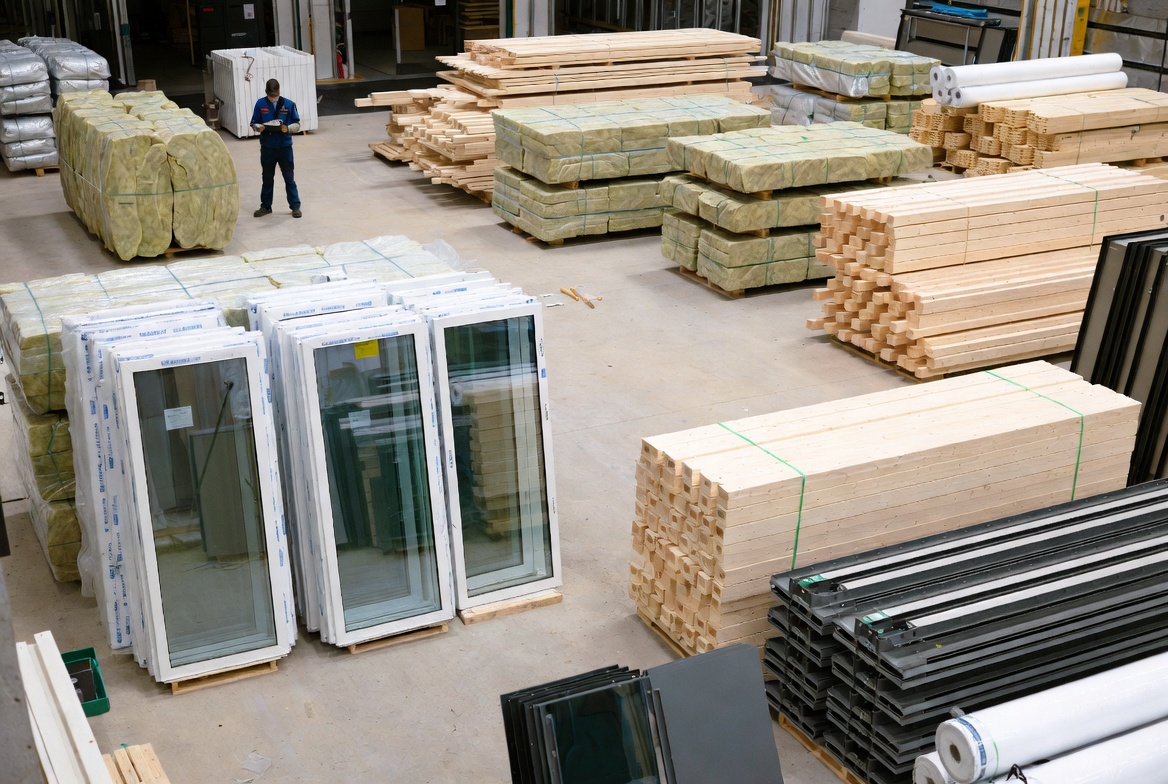
Strategic procurement planning: reviewing long-lead items, envelope components, and sustainable materials early to set the foundation for the entire construction project.
One of the biggest mistakes in this topic is treating sustainability like a material-selection issue that happens late, after the design is mostly fixed and the tender documents are nearly done.
That is too late for a lot of the decisions that matter most.
By the time the package goes out, the project may already have locked in a concrete-heavy structural scheme, a facade with high-carbon aluminum and glazing, a roof build-up that limits reuse later, or a fit-out approach that guarantees short replacement cycles. The team may also have written the specifications so tightly that better alternatives are effectively dead before bidders ever start pricing.
Sustainable procurement starts earlier than that. It starts when the team decides:
- how performance will be specified
- whether bidders will be evaluated on more than price
- whether embodied carbon data will be required
- whether reused or salvaged products can be considered
- how supplier responsibility and chain-of-custody issues will be treated
- how waste reduction, take-back, and deconstruction obligations will be written into the job
That is why procurement belongs in the design conversation, not just the buying conversation.
What Sustainable Procurement Is Trying to Change
If the topic stays too abstract, it gets useless fast. In practice, sustainable construction procurement is usually trying to improve one or more of these things:
| Procurement Goal | What It Tries to Improve | What People Commonly Miss |
|---|---|---|
| Lower embodied carbon | Reduce emissions tied to materials and construction products | Choosing a low-carbon product that is poorly documented, unavailable, or hard to install cleanly in the local market |
| Less waste | Reduce offcuts, packaging, demolition waste, and replacement waste | Ignoring standard dimensions, take-back logistics, and future disassembly |
| Better material health | Reduce harmful substances and improve indoor material quality | Talking about healthy materials without requiring usable product evidence |
| More circularity | Support reuse, adaptability, repair, and disassembly | Celebrating recycled content while still designing for short life and hard demolition |
| Stronger supplier responsibility | Improve sourcing visibility and supplier accountability | Treating one certification as if it solves every supply-chain question |
| Lower lifecycle cost | Reduce replacement, maintenance, and waste over time | Choosing the cheapest first-cost option and calling it value |
The important thing is that these goals do not always point in the same direction. A product may be local but not especially low-carbon. A product may have recycled content but poor durability. A product may have strong environmental reporting but limited installer familiarity in your market. Sustainable procurement is partly about handling those collisions honestly.
Do This Instead of This
| Do This | Instead of This | Why It Works Better |
|---|---|---|
| Specify measurable sustainability requirements early | Add a vague “green materials preferred” note late | Contractors cannot buy clearly against vague intent |
| Ask for verified product data where it matters | Assume every “eco” claim is comparable | Comparable evidence improves tender quality and submittal review |
| Evaluate durability and replacement cycles alongside price | Choose the cheapest first-cost option and hope maintenance works out | Short-life products often create more cost and waste later |
| Use performance criteria that allow lower-impact alternatives | Lock the spec so tightly that only one conventional product fits | Rigid specifications often kill better options before bidders can price them |
| Test availability, installer familiarity, and lead times | Write a sustainability requirement the local market cannot actually deliver cleanly | Procurement has to stay buildable, not just aspirational |
Embodied Carbon Has Made Procurement More Technical
This is one of the biggest changes in recent years.
Sustainable construction procurement used to get framed mostly around recycled content, FSC-style sourcing, waste reduction, and general green-building language. Those still matter. But embodied carbon has pushed procurement into a more technical and evidence-driven space, especially for concrete, steel, asphalt, glass, insulation, and facade systems.
That changes the kind of procurement questions teams need to ask. Not just “is this product greener?” but “what evidence supports that claim?”, “what category is driving the impact most?”, and “can the project compare the bidders’ submissions in a clean way?”
That does not mean every project needs a heavy carbon-accounting procurement regime. It does mean that on serious building work, especially structural and enclosure-heavy projects, teams increasingly need better product evidence than marketing language.
| What Actually Works | What People Commonly Do Wrong | Why the Better Move Matters |
|---|---|---|
| Ask for product-specific environmental data on high-impact materials | Treat all products in the same category as equal | Concrete, steel, and facade packages can vary a lot between producers |
| Target the packages that drive embodied carbon most | Spread effort thinly across every minor finish item | The biggest material packages usually deserve the hardest procurement attention |
| Compare like with like | Compare inconsistent declarations and marketing sheets as if they were equal | Uneven product data creates false confidence |
EPDs Help, but They Are Not the Whole Answer
Environmental product declarations matter. They are also easy to misuse.
An EPD gives structured environmental information. That is useful because it makes procurement more transparent than generic green claims. It gives the team a more disciplined way to compare products inside the same category.
But an EPD does not automatically make a product sustainable. It does not prove low toxicity. It does not guarantee durability. It does not tell you the product is right for the assembly, the installer market, or the replacement cycle. It is evidence. Useful evidence. Not a shortcut.
This is where teams start drifting if they are not careful. They begin collecting EPDs the way other teams collect brochures. The package looks serious. The procurement decision underneath it is still weak.
Local Sourcing, Low Carbon, and Durability Do Not Always Point the Same Way
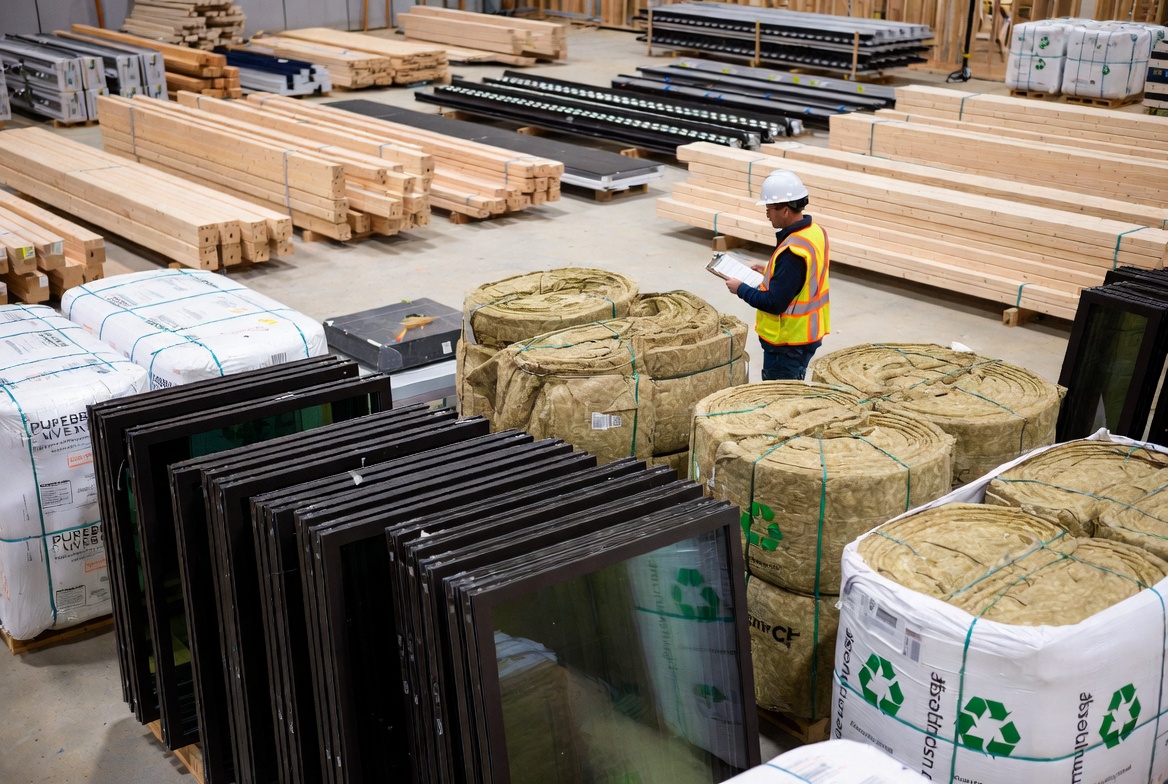
Procurement done right: key envelope and structural components secured and staged early, demonstrating smart sequencing, lead-time management, and durability focus in sustainable construction.
This is where sustainable procurement gets harder than the slogans make it sound.
People often assume local sourcing is automatically best. Sometimes it is. Shorter transport can reduce emissions, simplify logistics, and support regional supply chains. But local does not automatically mean lower embodied carbon, better quality, or longer service life. A local high-carbon product is still a high-carbon product. A durable product shipped farther can still outperform a local product that needs replacement sooner.
The cleaner way to think about it is comparison, not ideology.
| Use This When | Avoid This When | Why |
|---|---|---|
| Prioritize local sourcing when product quality, lead time, and environmental performance are broadly comparable | Assume local automatically beats every other option | Transport matters, but it is not the only procurement variable |
| Prioritize low-carbon products on high-impact packages like concrete and steel | Spend all your effort on low-impact products while ignoring the major carbon drivers | The bigger material packages usually deserve the hardest procurement attention |
| Prioritize durability where replacement is disruptive or wasteful | Choose the cheapest “green-looking” product with a weak service life | Repeated replacement is often bad sustainability procurement |
This is one reason sustainable procurement has to stay practical. It is not just about selecting the product that sounds best in isolation. It is about selecting the package that makes the most sense for the actual project.
Sustainable Procurement Has to Show Up in the Tender, Not Just the Mission Statement
This is another common failure point.
Projects often talk well about sustainability and procure badly for it. The sustainability goals sit in the front end. The tender criteria, bidder instructions, substitution rules, and submittal requirements stay conventional. Then the project acts surprised when the market responds conventionally.
If sustainable procurement is real, it usually has to show up in places like:
- prequalification criteria
- bid evaluation criteria
- material specifications
- allowed alternatives and substitution rules
- submittal requirements
- waste-management requirements
- take-back or deconstruction obligations where relevant
- reporting requirements for product data
That is what turns the goal into something enforceable. Otherwise the project is just asking the contractor to “be sustainable” in a space where price, schedule, and risk are already doing the real talking.
Also useful: construction project management workflow matters here because sustainable procurement is not only about what gets selected. It is also about how approvals, submittals, substitutions, and buyout decisions move through the project.
Low Bid Alone Usually Works Against Sustainable Procurement
This is where owners and teams have to be honest.
If the procurement route is structured around lowest upfront price and almost nothing else, the project is already making sustainable procurement harder. That does not mean low-bid tendering is always wrong. It means you should not pretend it naturally rewards lower embodied carbon, durability, circularity, cleaner product documentation, or reduced replacement cycles without additional criteria.
That does not always mean paying more. It does usually mean defining value more carefully.
On some projects, that means formal best-value evaluation. On others, it means clearer prequalification, product-evidence requirements, or durability-weighted decision-making inside a conventional procurement structure. Either way, the project has to decide what it is rewarding before it starts comparing submissions.
Bidder Capability Matters More Than People Admit
A sustainable procurement strategy is only as good as the market’s ability to deliver it.
If the contractor has never bought to embodied-carbon thresholds, never managed take-back obligations, never coordinated reuse packages, or never handled the documentation side of the requirements, the procurement process needs to account for that. Otherwise the contractor may still win the work and spend the next phase trying to reinterpret the sustainability requirements into something more conventional.
This is one reason selective tendering and prequalification can matter more on sustainable packages than on ordinary ones. Capability is not just installation skill. It is procurement skill, documentation discipline, supply-chain coordination, and willingness to price against more than the default pattern.
A lot of sustainability procurement problems do not show up because the product was impossible. They show up because the contractor team did not have the workflow to support the requirement cleanly.
Where Reuse and Circularity Usually Break Down
Circular procurement sounds great until the project tries to actually buy reused or reclaimed material under a normal schedule.
This is where the friction usually shows up:
- quantities are uncertain
- dimensions are inconsistent
- warranty expectations do not match reused components well
- testing or verification requirements are unclear
- lead times depend on salvage timing
- contractors are unsure how much risk they are carrying
None of that means reuse is a bad idea. It means the procurement route has to match the material reality. Reuse works better when the project plans for it early, designs around available stock or variability, and accepts that reclaimed material procurement behaves differently from catalog purchasing.
The principle is not hard. The hard part is writing those circular goals into contracts and packages that can still be bought, installed, and warranted without turning the job into a fight.
Sustainable Procurement Is Not Just About Materials
This is worth saying clearly because material talk dominates the subject.
Sustainable procurement also affects:
- waste hauling and segregation requirements
- temporary materials and packaging
- demolition and salvage strategy
- maintenance access and replacement logic
- supplier labor and traceability expectations
- commissioning, handover, and service-life assumptions
If a project buys a “greener” material but still designs for early replacement, difficult maintenance, heavy demolition, and weak documentation, it may still be performing badly on sustainability procurement in the bigger sense.
What People Get Wrong
A few mistakes keep repeating.
- They think sustainable procurement starts with products. It often starts earlier, with procurement strategy, scope, and specification language.
- They treat one metric like the whole answer. Low carbon matters. So do durability, material health, availability, maintenance, and waste.
- They assume EPDs settle the question. They help. They do not replace judgment.
- They write goals the market cannot deliver cleanly. That usually creates substitutions, delays, or quiet backtracking.
- They push sustainability to the contractor without changing the bid criteria. That is not a procurement strategy. That is a hope strategy.
The detail that gets missed most often is simple: sustainable procurement is only real when the tender, the buyout, and the submittal path force the project to act on it.
Spend Here, Not Here
| Spend Here | Not Here | Why |
|---|---|---|
| Early procurement strategy and specification work | Late-stage sustainability messaging | The earlier the rules are clear, the more buildable the result usually is |
| Data and review effort on high-impact material packages | Thin effort spread evenly across everything | The bigger packages usually move the environmental result most |
| Durability and replacement logic | Cheap first-cost wins dressed up as sustainability | Short-life products often cost more environmentally and financially over time |
| Contractor and supplier capability screening | Assuming every bidder can deliver the same sustainability outcomes | Capability gaps show up late if they are not tested early |
A Practical Checklist Before You Trust the Procurement Strategy
Before calling the procurement approach sustainable, ask a few blunt questions:
- Are the sustainability goals written into the tender, not just the narrative?
- Have the high-impact material packages been identified clearly?
- Is the project asking for comparable product evidence where it matters?
- Are durability and replacement cycles being weighed against first cost?
- Have availability, installer familiarity, and lead times been tested honestly?
- Is the contractor market strong enough to deliver the requirements cleanly?
- Do submittal rules and substitution rules support the procurement goals instead of weakening them?
If the answers stay vague, the project probably has sustainability language, but not yet strong sustainable procurement.
What To Do Next
Sustainable construction methods is the right next read if the question is shifting from procurement strategy to how the actual construction approach affects environmental performance.
Eco-friendly construction is useful if the reader still needs the broader building-science and material context around lower-impact building choices.
Sustainable materials is the better follow-up if the reader is moving from procurement logic into product categories, sourcing choices, and material-level comparison.
FAQ
What is sustainable construction procurement?
It is the process of buying construction works, materials, and services in a way that considers environmental impact, lifecycle performance, supplier responsibility, waste, and buildability instead of focusing only on the lowest upfront price.
Is sustainable procurement just buying eco-friendly materials?
No. It also includes specification strategy, bid evaluation, supplier capability, submittal requirements, durability, waste reduction, and how the project handles substitution and procurement risk.
What is the difference between sustainable procurement and green purchasing?
Green purchasing usually focuses on buying lower-impact products. Sustainable procurement is broader. It includes process, supplier practices, lifecycle thinking, documentation, and how procurement decisions affect the whole project.
Do EPDs prove a product is sustainable?
No. They provide structured environmental information, which is useful. But they do not automatically prove low toxicity, high durability, or overall best fit for the project.
Is local sourcing always the most sustainable choice?
Not automatically. Local sourcing can be beneficial, especially when performance is comparable, but transport is only one part of the picture. Carbon intensity, service life, quality, and replacement risk still matter.
Why does low-bid procurement often conflict with sustainability goals?
Because low bid on first cost alone does not naturally reward lower embodied carbon, durability, circularity, or stronger product documentation unless those criteria are built into the procurement rules.
What materials matter most in sustainable procurement?
Usually the bigger-impact packages first: structural materials, concrete, steel, facade systems, insulation, and other large-volume or high-carbon elements. The project should still care about finishes and fit-out, but not at the expense of missing the big drivers.
What is the biggest mistake in sustainable construction procurement?
Usually trying to bolt sustainability onto a conventional procurement process too late, after the tender logic, specification structure, and submittal rules have already been written around something else.
Official sources
- ISO 20400 – Sustainable Procurement Guidance
https://www.iso.org/files/live/sites/isoorg/files/store/en/ISO%2020400_Sustainable_procur.pdf - EPA – EPD Basics / Low Embodied Carbon Construction Materials
https://www.epa.gov/system/files/documents/2024-11/epd_basics_how_why_to_develop.pdf - EPA – Reducing Embodied Greenhouse Gas Emissions for Construction Materials and Products
https://www.epa.gov/system/files/documents/2023-11/epa-r-ocspp-oppt-fy2023-001-revised-2023-11-01.pdf - Building Transparency – EC3 Tool
https://www.buildingtransparency.org/tools/ec3/ - Building Transparency – EC3 Tool Primer
https://www.buildingtransparency.org/wp-content/uploads/2024/08/ec3-primer_for_aec_professionals.pdf - WorldGBC – Circular Built Environment Playbook
https://worldgbc.org/wp-content/uploads/2023/05/Circular-Built-Environment-Playbook-Report_Final.pdf - EU Green Public Procurement Criteria and Requirements
https://green-forum.ec.europa.eu/green-business/green-public-procurement/gpp-criteria-and-requirements_en