
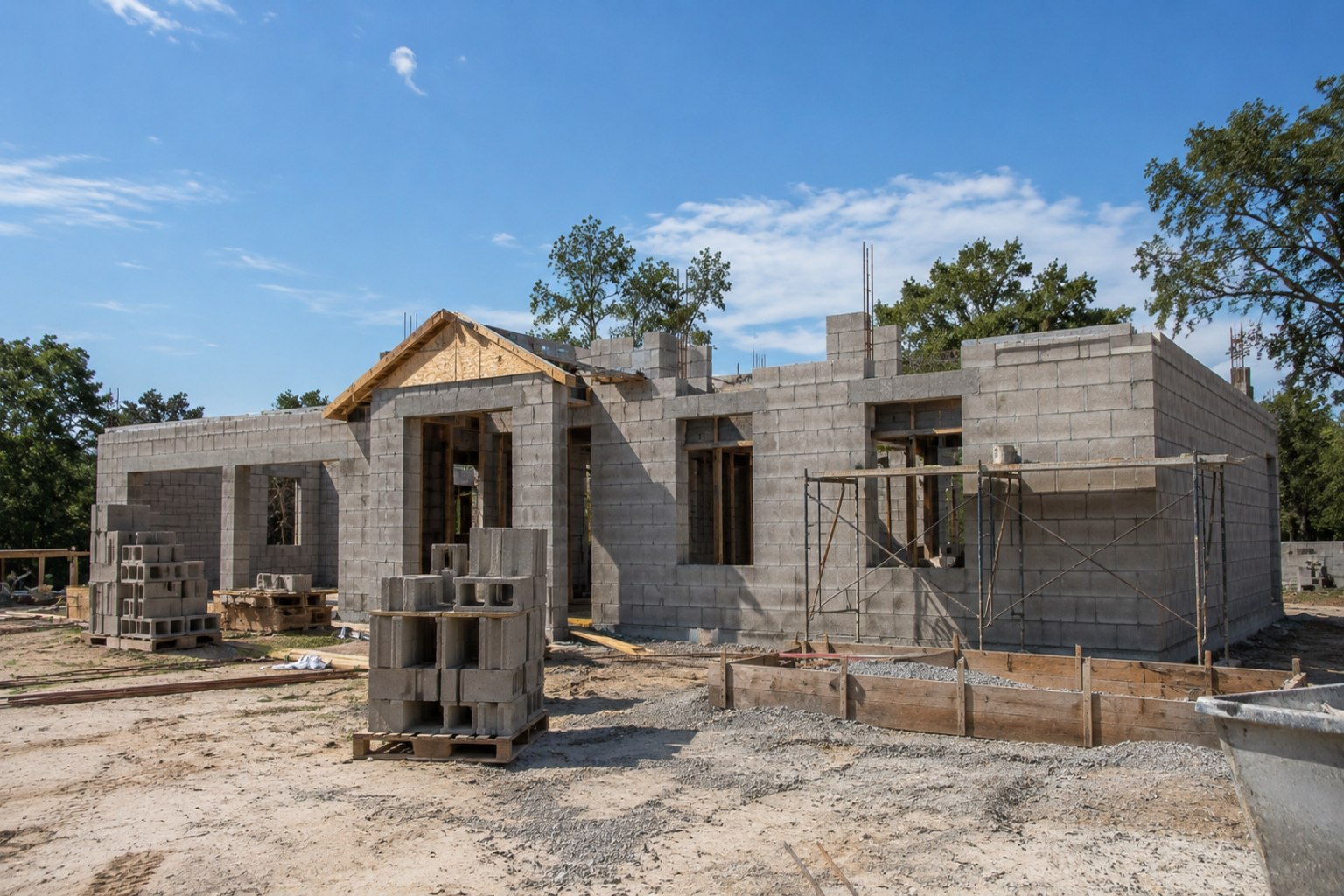
A concrete block home is not cheap just because one block looks cheap at the store.
The wall has to be laid straight, reinforced, grouted, insulated, flashed, tied to the roof, opened for windows and doors, and finished inside and outside. That is where the money goes.
Block homes can be strong, fire resistant, termite resistant, and durable. They can also be cold, damp, cracked, expensive, and hard to change later if the details are wrong.
The real question is not “Are concrete block homes good?” The real question is: who is designing the wall, who is building it, how is water handled, where is the insulation, and how are the openings detailed?

Concrete Block, Cinder Block, CMU, and Breeze Block
These names get mixed together, but they are not always the same thing.
| Name | What it usually means | Use it carefully because... |
|---|---|---|
| Concrete block | A concrete masonry unit made with cement and aggregate | This is the normal modern product for many walls. |
| CMU | Concrete masonry unit | This is the better technical term for plans and specs. |
| Cinder block | An older common name people still use | Modern blocks are usually concrete, not true old cinder block. |
| Breeze block | Decorative open-pattern concrete block | Good for screens, not a normal load-bearing house wall. |
| Besser block | Common term in Australia and New Zealand | It is regional language for concrete block masonry. |
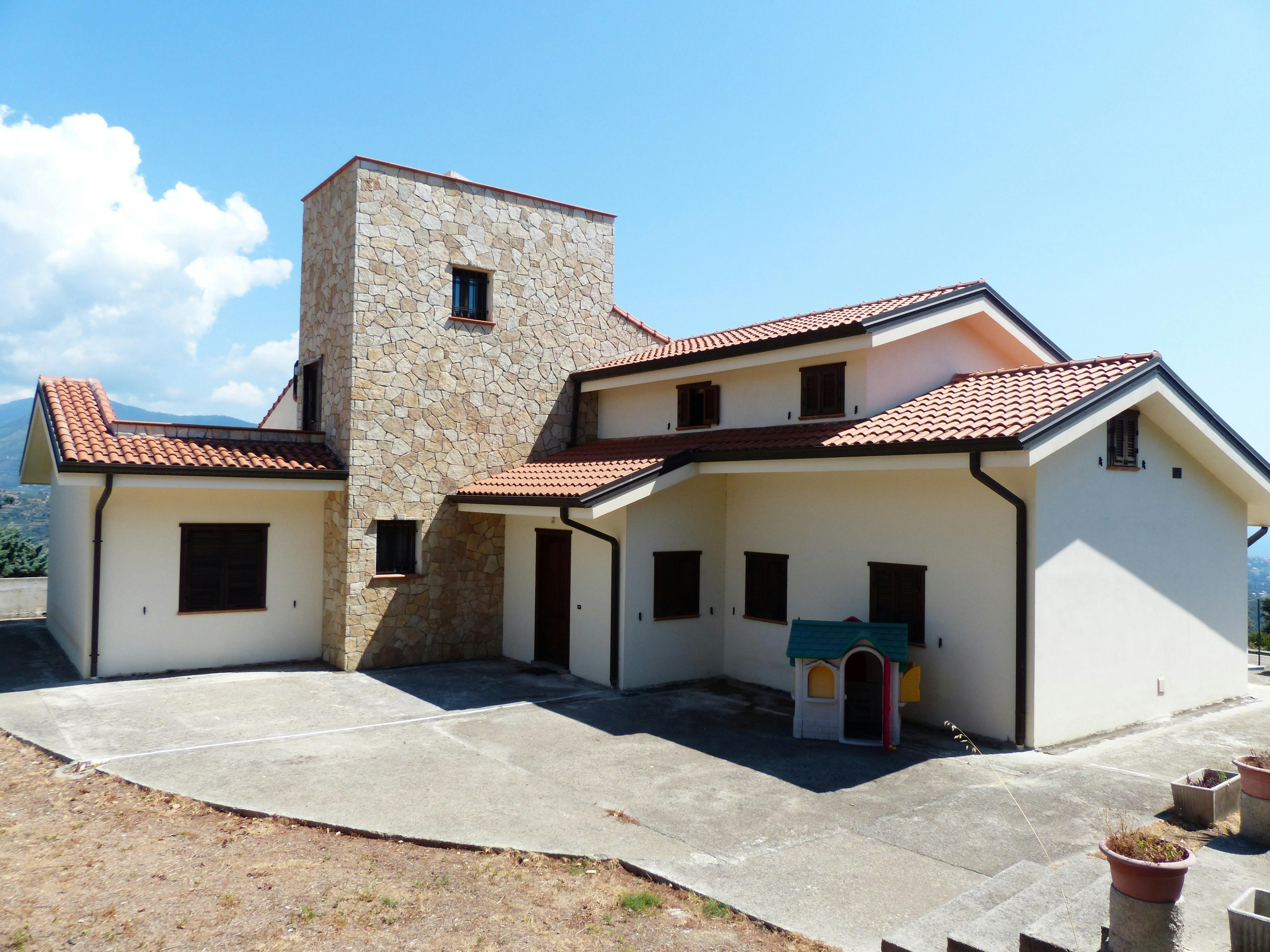
Concrete block makes the most sense where the site is hard on houses.
Termites, high wind, heavy rain, wildfire risk, hot sun, noise, and coastal exposure are all reasons to look at CMU. That does not mean block is the best answer everywhere. It means the wall system deserves a serious look.
The other test is local labor. A block house in a place with good masons is one thing. A block house in a market built almost entirely around wood framing is another.
If the crews, inspectors, engineers, and suppliers are not used to CMU houses, the learning curve can show up in the price.
Good fits
- hot, humid, termite-prone regions
- coastal and high-wind areas when engineered correctly
- wildfire-prone areas where noncombustible walls help
- urban lots where sound control matters
- small homes with simple wall shapes
- houses with stucco or masonry finishes already planned
Bad fits
- very cold climates with no clear insulation plan
- tight budgets that assume block is cheap because one block looks cheap
- complex floor plans with many corners, jogs, and openings
- DIY projects where the wall is structural or permitted
- sites with poor drainage and no waterproofing budget
Concrete Block Home Cost: The Block Is the Cheap Part
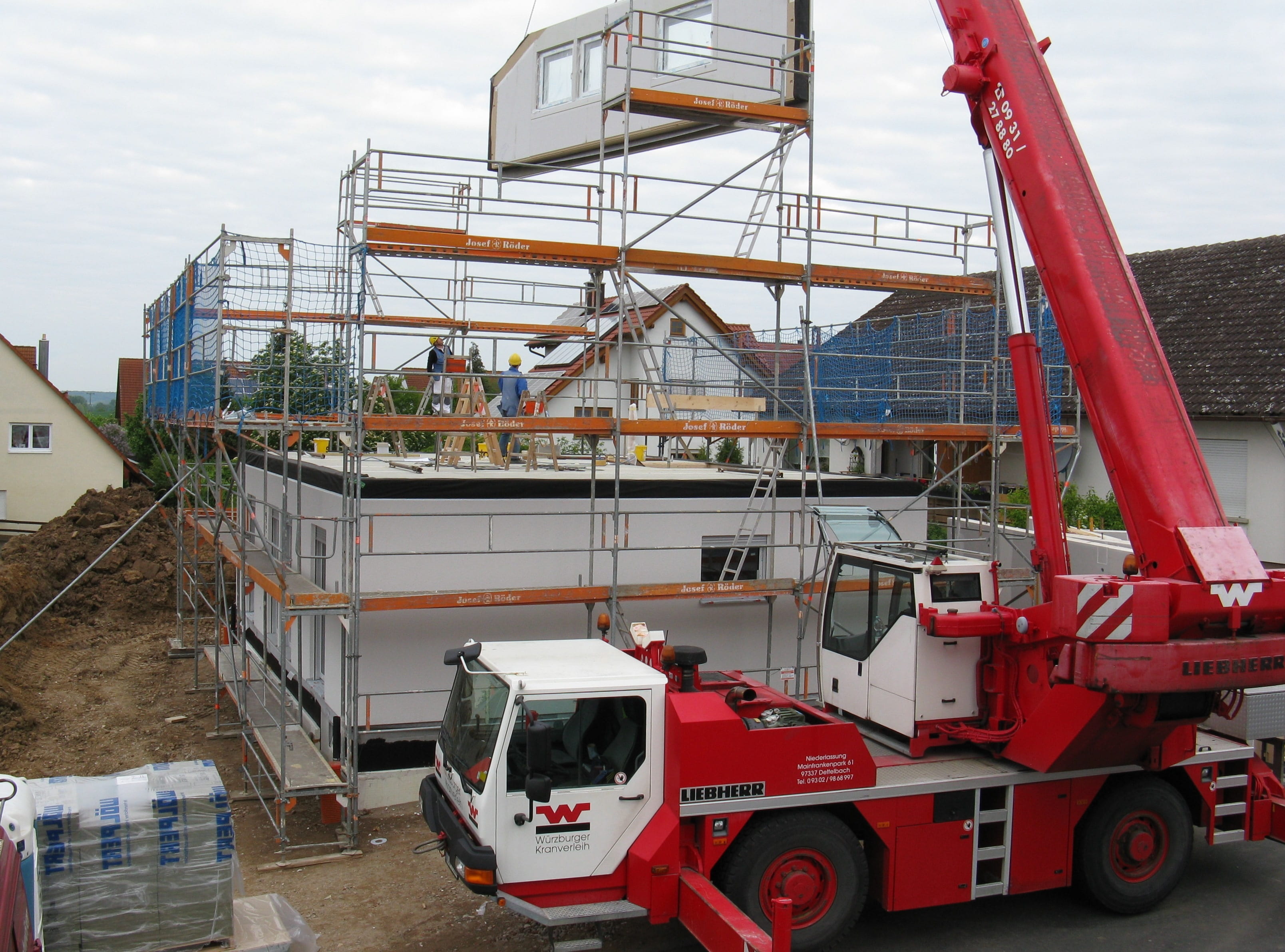
A new single-family home under construction with concrete block walls, showing the early building phase of a durable residential structure.
The cheap-looking part is the block. The expensive part is the wall.
A house wall needs footings, mortar, rebar, grout, bond beams, lintels, scaffolding, labor, insulation, waterproofing, window bucks, roof connections, interior furring, electrical chases, plumbing routes, finishes, engineering, permits, and inspections.
That is why loose-block pricing is a trap. A pile of blocks is not a house wall.
Ask for the installed price of the full wall assembly: reinforced, insulated, flashed, finished, inspected, and ready for the roof and interior trades.
| Cost item | What it includes | Why it moves the price |
|---|---|---|
| Blocks | Standard, corner, bond beam, half units, lintel units, specialty shapes | Size, density, finish, local supply, delivery, waste |
| Labor | Layout, mortar, laying block, cutting, scaffolding, cleanup | Local mason availability and wall complexity |
| Reinforcement | Vertical rebar, horizontal reinforcement, bond beams, grout-filled cores | Wind, seismic, wall height, openings, engineer’s design |
| Water control | Flashing, drainage, coatings, sealants, weeps, cap details | Rain exposure, grade, below-grade walls, finish type |
| Insulation | Exterior foam, interior furring, insulated CMU inserts, air sealing | Climate zone and energy code |
| Finishes | Stucco, paint, parge coat, drywall, plaster, cladding, trim | Exposed block is not always accepted or comfortable indoors |
For a real budget, ask for a wall assembly price. Do not ask only, “How much are concrete blocks?” Ask, “What is the installed price for the reinforced, insulated, finished wall shown on my plans?”
If the project also includes a slab, stem wall, basement, or crawl space, read concrete foundations and foundation wall construction before comparing bids.
Block Size, Weight, and Takeoff Math
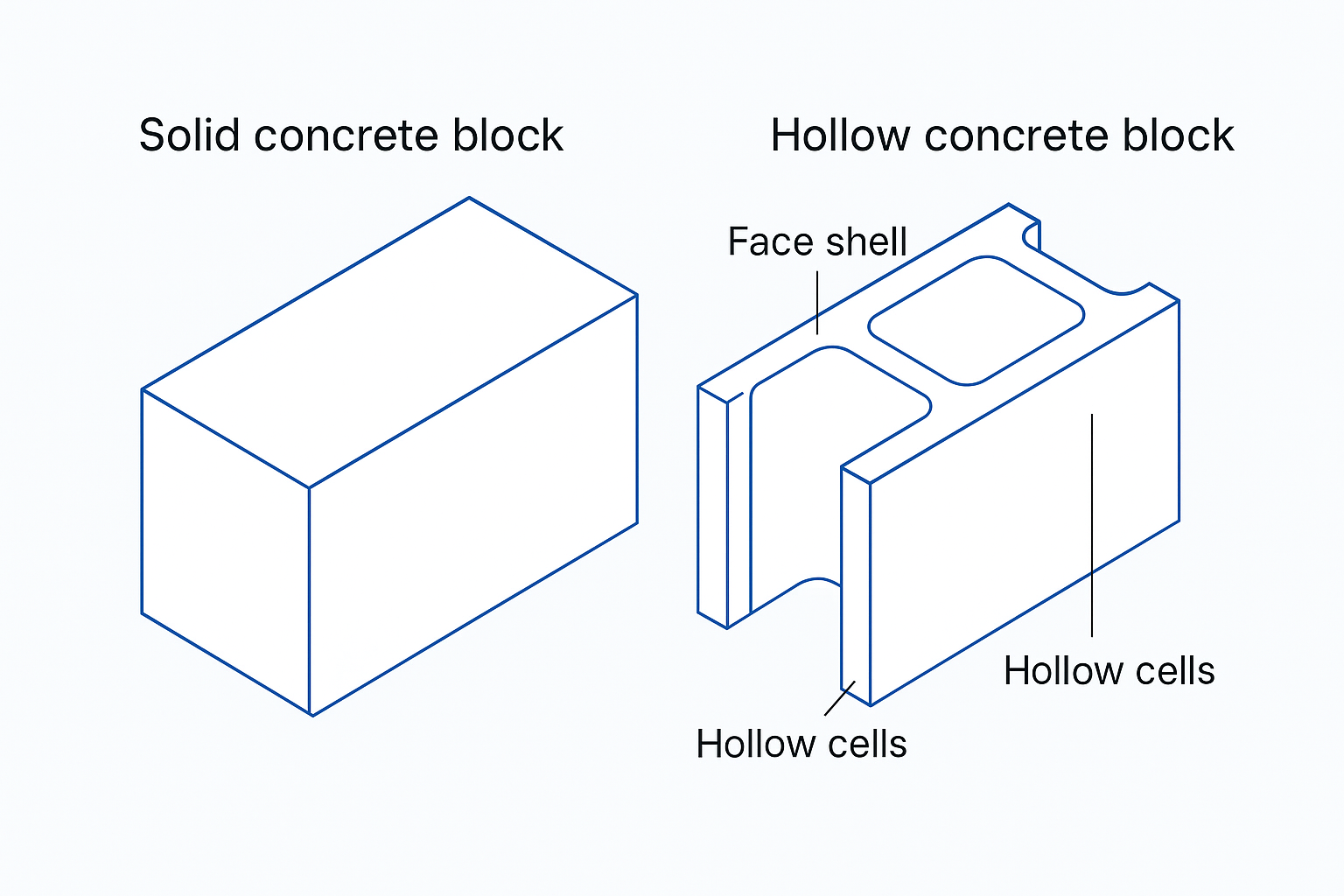
The most common block size in U.S. residential work is the nominal 8 × 8 × 16 inch unit. Actual dimensions are smaller because mortar joints complete the module.
One standard 8 × 8 × 16 block covers about 0.89 square feet of wall face. For rough estimating, use about 1.125 blocks per square foot of wall, then add waste for corners, cuts, broken units, and layout changes.
| Block type | Common use | Typical weight range |
|---|---|---|
| 8 × 8 × 16 hollow CMU | Many exterior and foundation walls | about 30 to 38 lb |
| 6 × 8 × 16 hollow CMU | Partitions, garages, lighter walls | about 26 to 30 lb |
| 12 × 8 × 16 hollow CMU | Taller or heavier walls | often around 50 lb or more |
| Solid block | Special bearing, caps, piers, heavy work | much heavier than hollow block |
Always check the supplier’s product sheet. Block weight changes with density, aggregate, moisture, and local manufacturing.
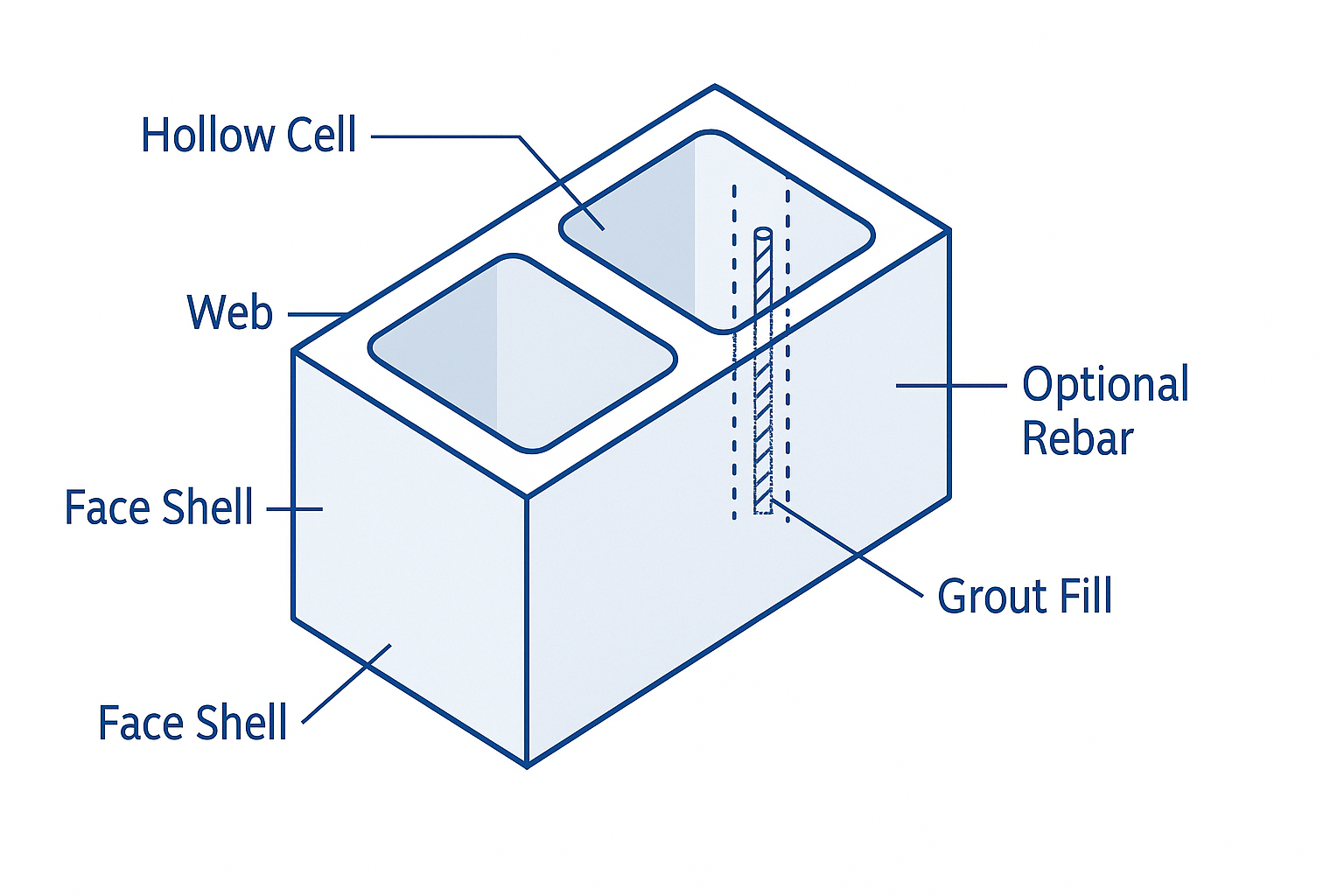
How a Concrete Block Wall Is Built
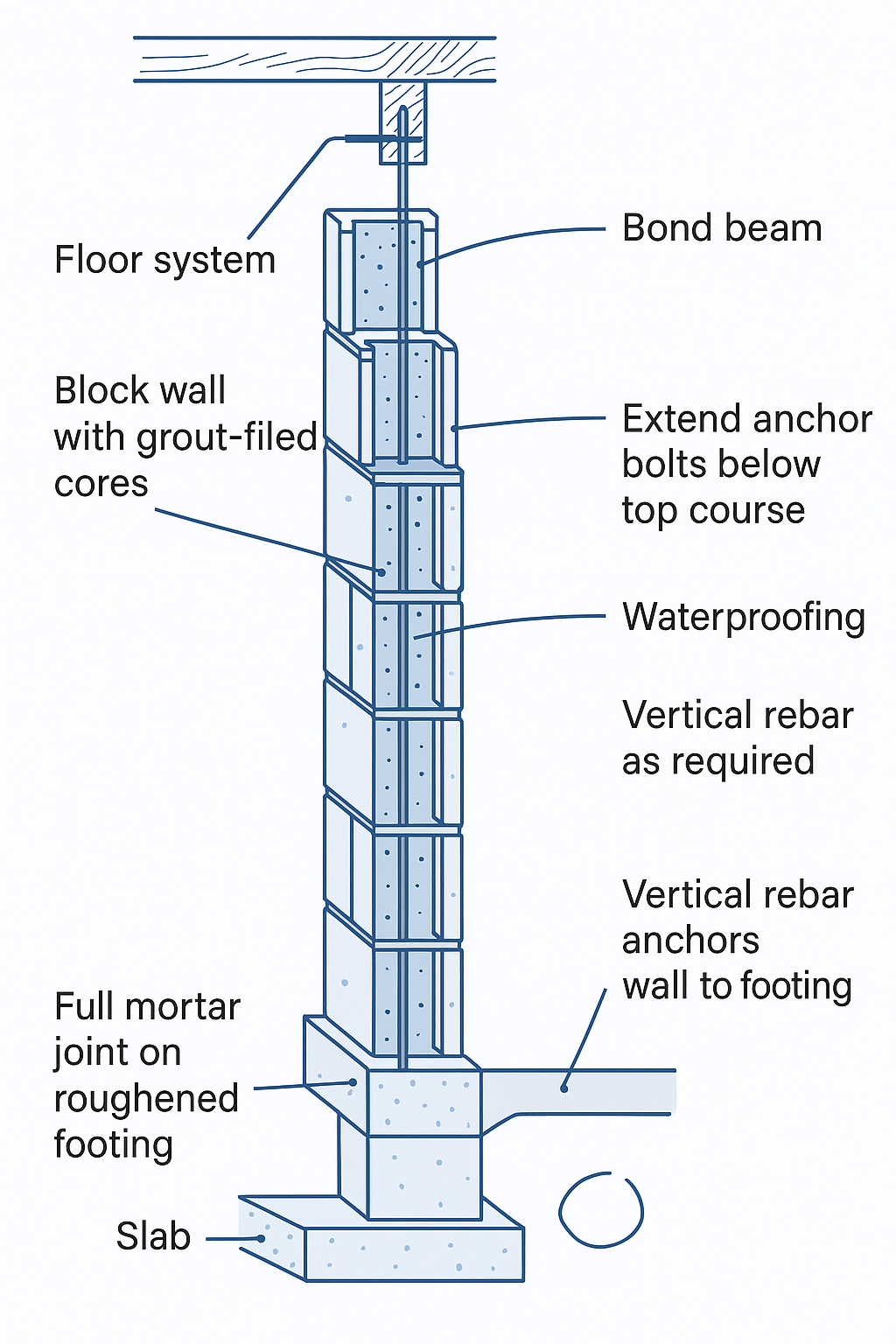
A good block wall starts below the first course. The footing has to be sized, level, reinforced, and placed on suitable soil. If the footing is wrong, the wall above can crack even if the block work looks neat.
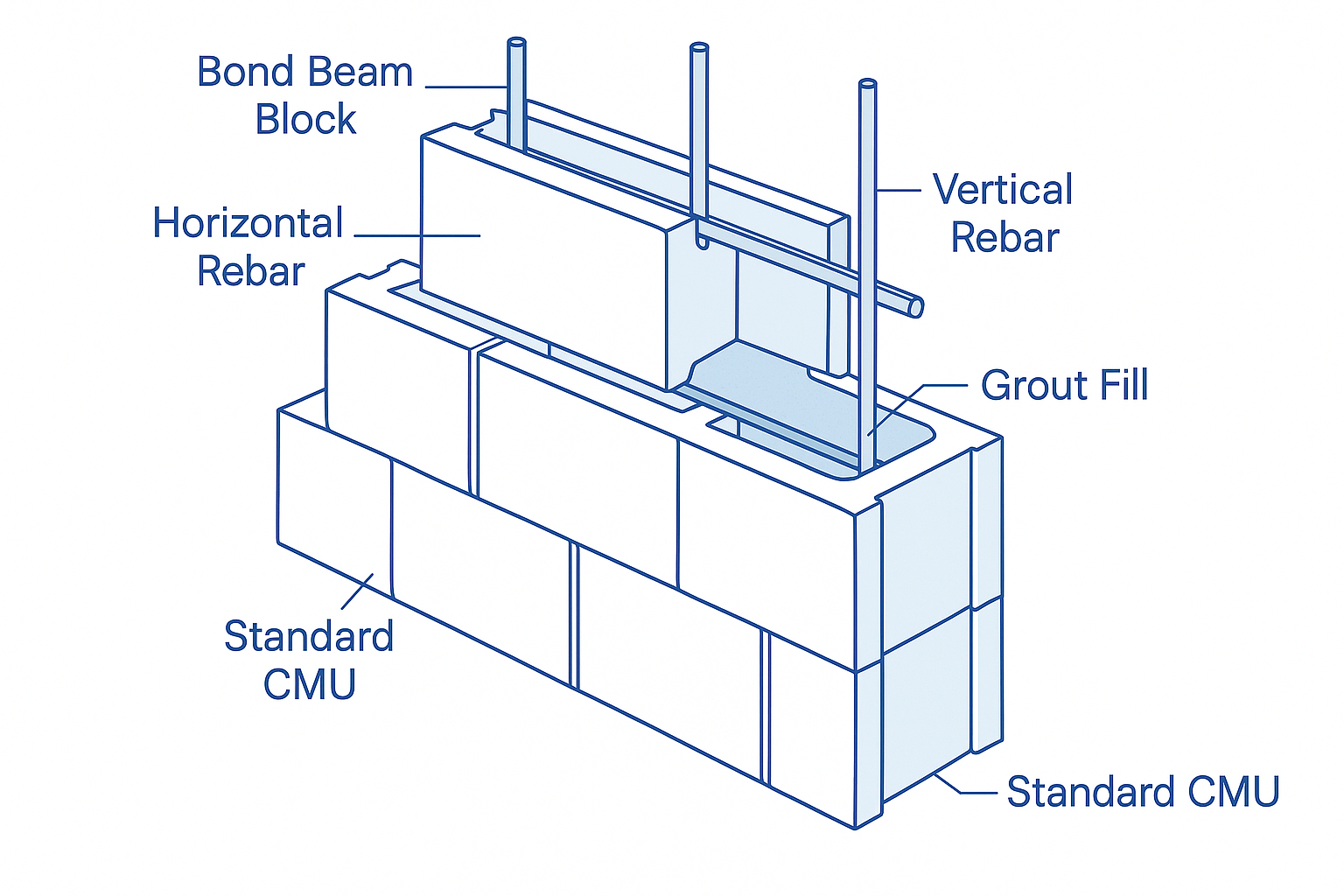
A basic structural CMU wall often includes these parts:
- a footing or slab edge designed for the load
- layout lines and first-course leveling
- mortar joints between blocks
- vertical rebar in selected cells
- grout in reinforced cores
- horizontal reinforcement or bond beams
- lintels above openings
- anchor bolts, straps, or ties for the roof and floors
- flashing and water-control details
- insulation and interior finish strategy
Windows and Doors Are Where Block Homes Get Expensive
A plain block wall is the easy part.
Windows and doors are where the work slows down. Every opening needs layout, lintels, bucks, anchors, flashing, sealants, insulation returns, trim planning, and clean drainage.
A simple block box can be controlled. A block house with huge windows, many corners, deep jogs, and complicated roof loads can get expensive fast.
Before the design goes too far, count the hard parts: corners, openings, lintels, roof bearing points, plumbing runs, electrical chases, exterior insulation returns, and sill flashing.
The wall does not fail because the block was weak. It fails where water, heat, structure, and trades all meet.
Insulation: Thermal Mass Is Not Enough
Concrete block has thermal mass. That means it can store heat and release it slowly. That is useful in the right climate. It is not the same as insulation.
A plain CMU wall has low insulation value by itself. In many climates, you need a full insulation plan.
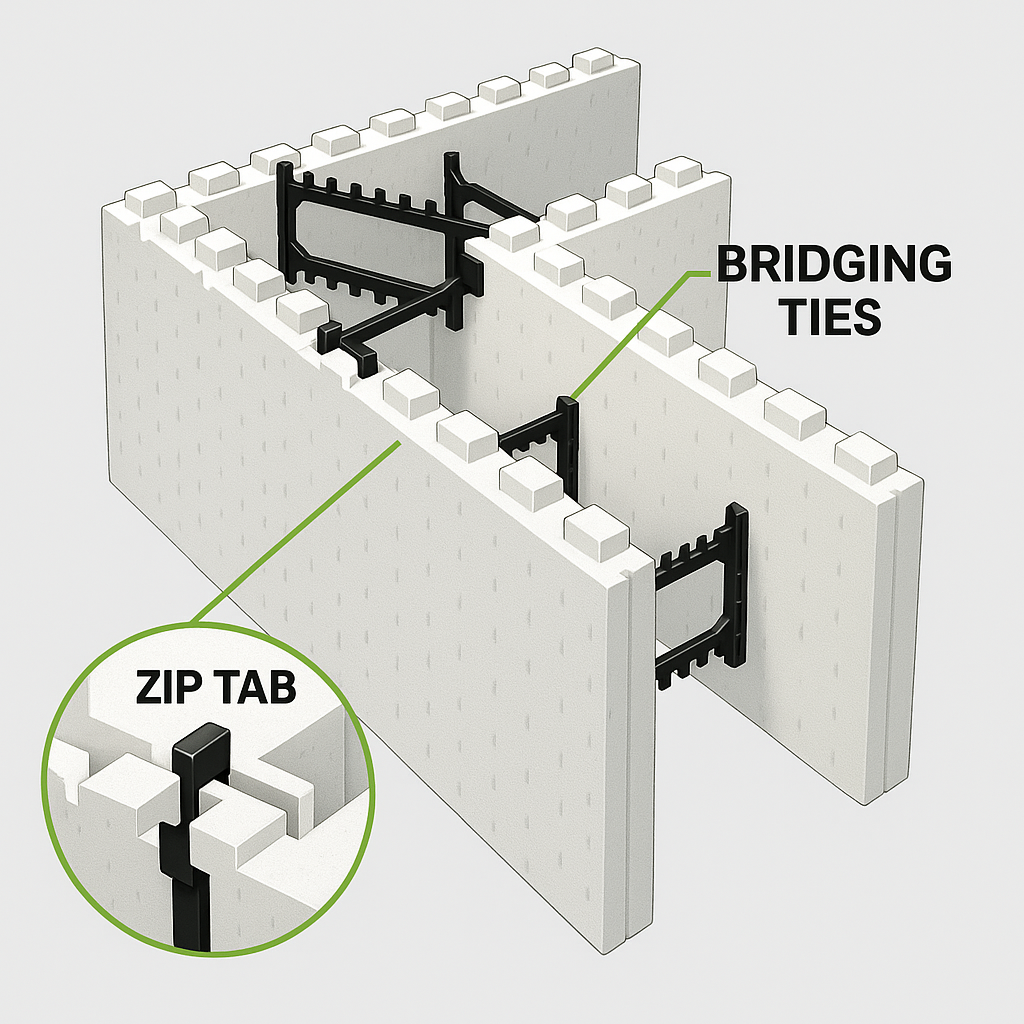
The common choices are exterior continuous insulation, interior furring with insulation, insulated CMU inserts, or a related system such as ICF.
| Insulation approach | Where it works | Main caution |
|---|---|---|
| Exterior continuous insulation | Best building-science answer in many climates | Changes window, trim, cladding, and flashing details |
| Interior furring and insulation | Common when the exterior face must stay masonry or stucco | Can create moisture risks if detailed poorly |
| Foam-filled cores or inserts | Can improve performance without a thick framed wall | Rebar and grouted cores reduce continuous insulation value |
| ICF instead of CMU | Useful when insulation and concrete are both priorities | Different system, different labor, different detailing |
If energy performance is important, ask for the whole-wall R-value or U-factor, not just the insulation label. Grout, webs, bond beams, corners, window returns, and uninsulated areas can reduce performance.
Moisture Is the Real Test
Concrete block does not rot like wood. That does not mean it is waterproof.
CMU walls can absorb water, pass vapor, stain, crack, and leak at joints, openings, caps, and below-grade areas.
Water problems often start with simple mistakes:
- soil sloping toward the wall
- missing gutters or short downspouts
- unsealed wall caps
- poor flashing over doors and windows
- no weeps or blocked drainage paths
- paint used where waterproofing was needed
- below-grade block without proper drainage and dampproofing
If the wall touches soil, water control matters even more. For below-grade work, start with exterior foundation waterproofing before choosing coatings or interior finishes.
Dry-Stack Block: Useful, But Not Magic
Dry-stack block systems can reduce mortar work, but they are not a free pass.
They still need a correct footing, level first course, reinforcement, grout, surface bonding, engineering, and local approval.
Dry-stack can make sense for small approved projects or certain engineered systems. It should not be treated as a shortcut for a permitted house wall unless the plans, product, and inspector all support it.
Block Homes, Block Foundations, and Block Veneer Are Different
Many online examples mix these together. That causes bad decisions.
| System | What carries the load? | What to check |
|---|---|---|
| CMU structural home | Concrete block walls | Rebar, grout, bond beams, lintels, roof ties, insulation |
| Block foundation | CMU foundation walls below the house | Footings, drainage, waterproofing, backfill, lateral pressure |
| Block veneer or screen | Another wall or frame carries the main load | Ties, drainage gap, flashing, movement joints |
| Decorative breeze block | Usually not the main house structure | Anchorage, wind load, privacy, cracking, maintenance |
If the project is really about foundations, use types of house foundations and foundation footings as the next step.
What Block Does Well, and What It Does Not Fix
Concrete block is good at some things. It is tough. It does not feed termites. It can be part of a strong wind or fire-resistant wall assembly. It can help with sound. It can take abuse better than light framing.
But block does not solve the whole house.
It does not insulate well by itself. It does not waterproof itself. It does not make windows cheaper. It does not make wiring easier. It does not remove the need for roof ties, drainage, flashing, finish work, and inspections.
Treat CMU as a wall system, not a magic material.
What Goes Wrong After the Wall Starts
The problem is rarely the block itself. The problem is coordination.
The electrician needs a chase. The plumber cannot cut through a reinforced cell. The window installer needs a clean buck. The roofer needs a tie-down detail. The insulation changes the trim depth. The inspector wants to see steel before grout. The owner wants smooth interior walls but did not budget for furring, drywall, plaster, or exposed conduit.
These decisions have to be made before the wall is built:
- Which cells are grouted?
- Where does vertical rebar go?
- Where are the electrical chases?
- How are window and door bucks attached?
- How does the roof tie into the wall?
- Where is the insulation layer?
- How does water leave the wall?
- What interior finish hides or shows the block?
These details look boring on paper. On site, they decide the budget.
Can You DIY a Concrete Block Home?
You can learn to lay small block walls. That does not make a structural house wall a beginner job.
DIY may be reasonable for small garden walls, low non-structural partitions, small sheds where allowed, or learning projects.
A permitted home needs code-compliant footings, wall reinforcement, inspection timing, energy details, and safe load paths.
A block wall can look straight and still be wrong inside if the rebar, grout, footing, drainage, or tie-down details are missing.
Questions to Ask Before Hiring a Mason or Builder
- Have you built full CMU homes, or mostly garden walls and foundations?
- Who is designing the reinforcement schedule?
- Which cells are grouted and why?
- How are bond beams and lintels handled?
- How are windows, doors, and roof tie-downs detailed?
- What is the insulation plan for this climate zone?
- How will flashing, weeps, wall caps, and sealants be handled?
- What inspections happen before grout is placed?
- How will electrical and plumbing lines be routed?
- Is the quote for bare block walls or finished wall assemblies?
Used or Existing Block Homes: What to Inspect
Buying an existing concrete block home is different from building one. You are looking for water paths, cracks, bad repairs, weak finishes, and poor insulation choices.
- Look for stair-step cracks at mortar joints.
- Check cracks near windows, doors, corners, and lintels.
- Look for white efflorescence, peeling paint, damp smells, and stained block.
- Check grade, gutters, downspouts, splashback, and drainage.
- Ask if the wall is reinforced, partly grouted, or unreinforced.
- Check whether interior insulation trapped moisture.
- Look for patched areas that do not match the wall.
- Ask how roof framing is tied to the masonry wall.
If the issue is cracking or movement, connect the wall inspection to the foundation. Crawl space foundation repair is useful when piers, beams, soil, moisture, and wall movement are connected.
Finishes: How to Avoid the Bunker Look
Concrete block can look cold if the design relies only on gray walls. The fix is not fake decoration. The fix is proportion, light, openings, texture, and clean detailing.
Common finish choices include stucco, paint, limewash, parge coat, exposed block, interior plaster, drywall over furring, wood screens, metal panels, and limited stone or brick accents.
The strongest block homes usually do one of two things. They either show the block honestly and keep the details crisp, or they treat the block as the structure and finish over it with a weather-smart wall system.
For style ideas, see concrete architecture. For material choices beyond standard CMU, see sustainable concrete alternatives and aerated concrete blocks.
Simple Decision Guide
| If this is your priority... | CMU may be a good fit if... | Be careful if... |
|---|---|---|
| Low first cost | The design is simple and local masonry labor is strong | You are counting only block price, not the full wall |
| Storm strength | The wall is engineered and roof/floor tie-downs are detailed | You assume block alone makes the house storm safe |
| Energy savings | The insulation and air-sealing plan is clear | You rely only on thermal mass |
| Low maintenance | Water control, caps, flashing, and drainage are done right | The wall is painted to hide moisture problems |
| Modern design | The plan has clean openings and controlled details | Too many corners and giant openings strain the budget |
What to Do Next
Choose concrete block because it fits the site, climate, labor market, wall design, and budget. Do not choose it because a single block looks cheap.
Start with a simple wall section. It should show footing, block size, rebar, grout, bond beam, insulation, interior finish, exterior finish, flashing, roof connection, and drainage.
If those details are missing, the budget is not ready yet.
FAQs
Is a concrete block home cheaper than a wood-frame home?
Sometimes, but not by default. Block can cost more when labor, reinforcement, insulation, waterproofing, and finishes are included. Local labor is the big factor.
Is a cinder block house the same as a concrete block house?
In everyday speech, people often mean the same thing. Technically, most modern blocks are concrete masonry units, not old cinder blocks made with coal cinders.
Do concrete block homes need insulation?
In most climates, yes. Concrete block has thermal mass, but plain block is not strong insulation. The wall needs a full insulation and air-sealing plan.
Are concrete block homes good in hurricanes?
Reinforced concrete masonry can work well in high-wind areas when it is engineered, grouted, reinforced, and tied to the roof and foundation correctly. The block alone is not enough.
Are concrete block homes good in wildfire areas?
Masonry walls can help because they are noncombustible, but wildfire safety also depends on roof covering, vents, windows, decks, landscaping, openings, and ember control.
Can water pass through concrete block?
Yes. CMU can absorb and move moisture. Good design uses drainage, flashing, weeps, coatings, caps, grading, gutters, and correct below-grade waterproofing.
Can I leave concrete block exposed inside?
Yes, but plan it early. Exposed block affects comfort, sound, dust, outlets, wall mounting, and the look of the room. Many homes use furring, insulation, drywall, plaster, or paint inside.
How long can a concrete block home last?
A well-built and well-maintained block home can last many decades. Moisture control, crack repair, roof drainage, and good foundations make the difference.
Read This Next
- Concrete Foundations
- Foundation Wall Construction
- Foundation Footings
- Exterior Foundation Waterproofing
- List of Building Materials
- Concrete Architecture
- Sustainable Concrete Alternatives
- Aerated Concrete Blocks
Sources used for this article
- Concrete Masonry & Hardscapes Association: CMU shapes, sizes, properties, and compressive strength
- Concrete Masonry & Hardscapes Association: CMU weights and section properties
- ASTM C90: Standard Specification for Loadbearing Concrete Masonry Units
- International Building Code, Chapter 21: Masonry
- CMHA TEK 06-02C: R-values and U-factors of single-wythe concrete masonry walls
- CMHA TEK 06-11A: Insulating concrete masonry walls
- CMHA TEK 19-02B: Design for dry single-wythe concrete masonry walls