
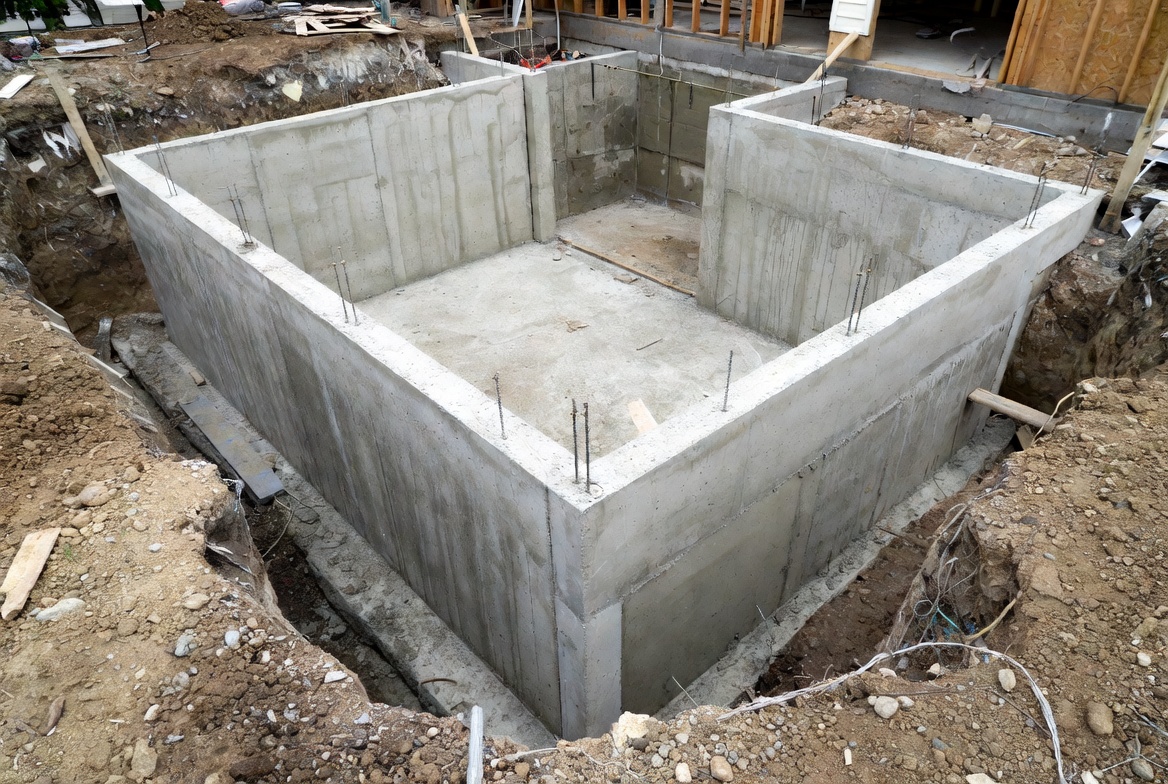
A basement foundation is not just extra square footage below grade. It is a structural system carrying the house while holding back soil and managing water at the same time.
That is why basement work gets expensive fast when the basics are weak. A wall can be strong enough on paper and still become a problem if footing bearing is poor, drainage is weak, waterproofing is thin, or backfill gets rushed.
This page sticks to the main decisions: when a basement makes sense, how it differs from a slab or crawl space, what the system includes, how it is usually built, and which mistakes come back later as leaks, cracks, and movement.
If you need the wider picture first, start with house foundations before construction. If the ground conditions are still unclear, soil analysis and site investigation should come before any confident basement decision.
What a Basement Foundation Is
In house construction, a basement foundation usually means footings below frost depth, below-grade foundation walls, drainage at the footing level, waterproofing or dampproofing on the exterior, and a basement slab inside the walls.
One thing worth clearing up early: a residential basement foundation is usually not a deep foundation in the pile-or-caisson sense. It is more often a shallow footing-and-wall system built deep enough to create usable below-grade space and reach proper bearing and frost protection.
The basement slab is part of the system, but it is not what makes the house stable by itself. The footings and walls do the structural work. The slab mainly gives you a floor surface and works with vapor, drainage, and interior moisture control.
When a Basement Makes Sense
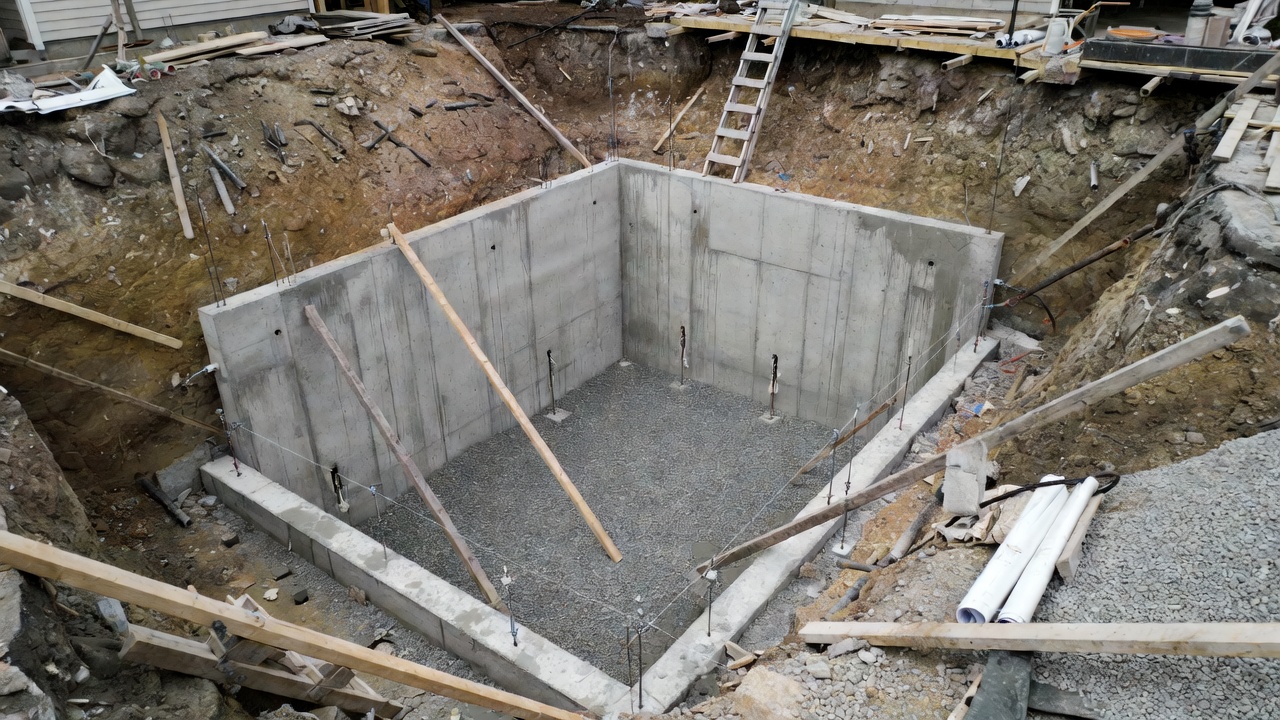
Basements earn their keep when the site, climate, and house plan line up for them.
| System | Usually Makes Sense When | Main Advantage | Main Headache |
|---|---|---|---|
| Basement | Cold climates, sloped sites, or when below-grade space adds real value | Full-height usable space | Water control and excavation cost |
| Crawl Space | Moderate elevation is useful, but full basement cost is hard to justify | Utility access below the floor | Moisture and air-sealing problems |
| Slab-on-Grade | Flat sites, good bearing, simpler layouts, tighter budgets | Fast and efficient | Less flexibility for later changes |
Basements often make good sense in colder parts of the US where excavation is already going below frost depth and the extra living or storage space helps justify the cost. They make less sense on sites with persistent groundwater trouble, very tight budgets, or conditions where a crawl space or slab solves the problem with less risk.
If you are still weighing the alternatives, crawl space foundations and slab-on-grade foundations are the right companion pages.
What the System Includes
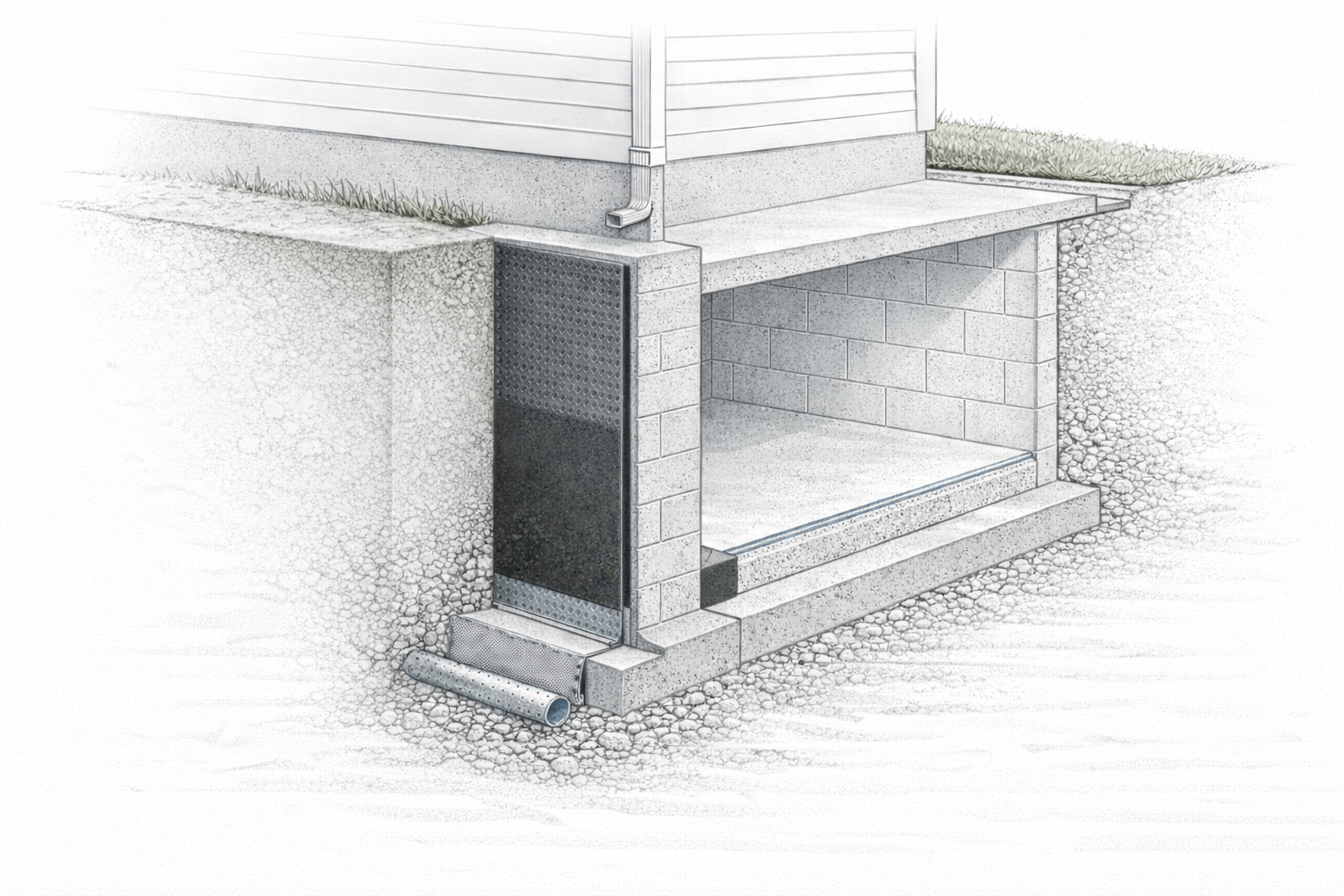
Illustration by ArchitectureCourses.org. Basement foundation section showing waterproofing, drainage, slab, and footing assembly.
A good basement foundation is not one concrete pour. It is a stack of parts that have to work together.
Footings
Footings spread the house load into the soil. Their width, thickness, bearing condition, and depth matter long before the walls are poured. If the trench bottoms are soft, overdug, wet, or full of loose fill, the rest of the basement starts from a bad position.
Also Useful. Foundation footings goes deeper into footing size, bearing, and where footing jobs usually go sideways.
Foundation Walls
Basement walls carry vertical load from the house above and resist lateral soil pressure from outside. They also have to survive wet backfill, freeze-thaw conditions, utility penetrations, and any drainage mistakes made around the house later.
Drainage and Waterproofing
This is the part too many old articles treat like an accessory. It is not. A basement wall without reliable drainage and exterior water control is being asked to fight a site problem it cannot solve by itself.
Basement Slab and Vapor Control
The slab finishes the interior floor, but the layers below it matter just as much: compacted base, vapor control where appropriate, and enough moisture planning that the finished basement does not start smelling damp six months later.
Common Basement Wall Materials
Poured Concrete
This is the default choice for many modern basements. It gives you a continuous wall with fewer joints than block and usually a cleaner surface for waterproofing and insulation. It still cracks if the wall is poorly reinforced, badly cured, or backfilled carelessly, but it is the baseline many builders start from for a reason.
Concrete Masonry Units
Block walls can work well, especially on straightforward jobs, but they bring more joints, more mortar, and more opportunities for water to find a path. Reinforcement, grout, drainage, and waterproofing discipline matter more here.
Insulated Concrete Forms
ICF systems attract projects where energy performance and continuous insulation matter. They cost more up front and demand crews who know the system, but they can make sense on higher-performance builds.
Stone in Older Houses
Stone basement foundations belong mostly to repair and restoration work now, not new residential construction. They can last a long time, but moisture, mortar loss, and uneven settlement need a different repair mindset than poured concrete.
How Basement Foundations Are Usually Built
The sequence matters almost as much as the design.
- Excavate to the required depth and get to bearing that makes sense.
- Form and place the footings.
- Form, reinforce, and place the walls.
- Install exterior waterproofing or dampproofing and footing-level drainage.
- Prepare the interior base and place the basement slab.
- Backfill in the right order, with the right material, and not too early.
That sounds clean on paper. On site, this is where many basement failures get scheduled in advance. Trench bottoms get disturbed. Drain tile gets installed badly or too high. Waterproofing gets damaged during backfill. Penetrations get added late. Soil against the wall is not what the drawing assumed.
If you want the wall side in more detail, foundation wall construction is the better next page.
Where Basement Foundations Usually Go Wrong
Water Was Underestimated
Most basement trouble still starts with water. Surface water, groundwater, poor grading, missing footing drains, blocked outlets, weak waterproofing, or sloppy penetrations all end up in the same conversation later: leaks, damp walls, efflorescence, mold, and finish damage.
A basement can survive minor cracking. It does much worse with chronic wet conditions.
Worth Knowing. Exterior foundation waterproofing and French drain and sump pump installation are the pages to read before you trust any “quick basement leak fix.”
Backfill Was Rushed
This one is common and expensive. Fresh walls get backfilled too early, with bad material, or without the structure ready to help brace the system the way the design expected. The result can be cracking, inward movement, or walls that look fine until the wet season starts.
Footing Bearing Was Never Clean
Basement walls can only perform as well as the footing support below them. Loose trench bottoms, soft pockets, uncompacted fill, and wet bearing surfaces show up later as settlement and wall distress.
Utility Penetrations Were Treated Casually
Pipes, sleeves, and later additions are routine. So are basement leaks around them. A clean wall can get turned into a wet wall fast if penetrations are added or sealed badly.
Before You Finish a Basement
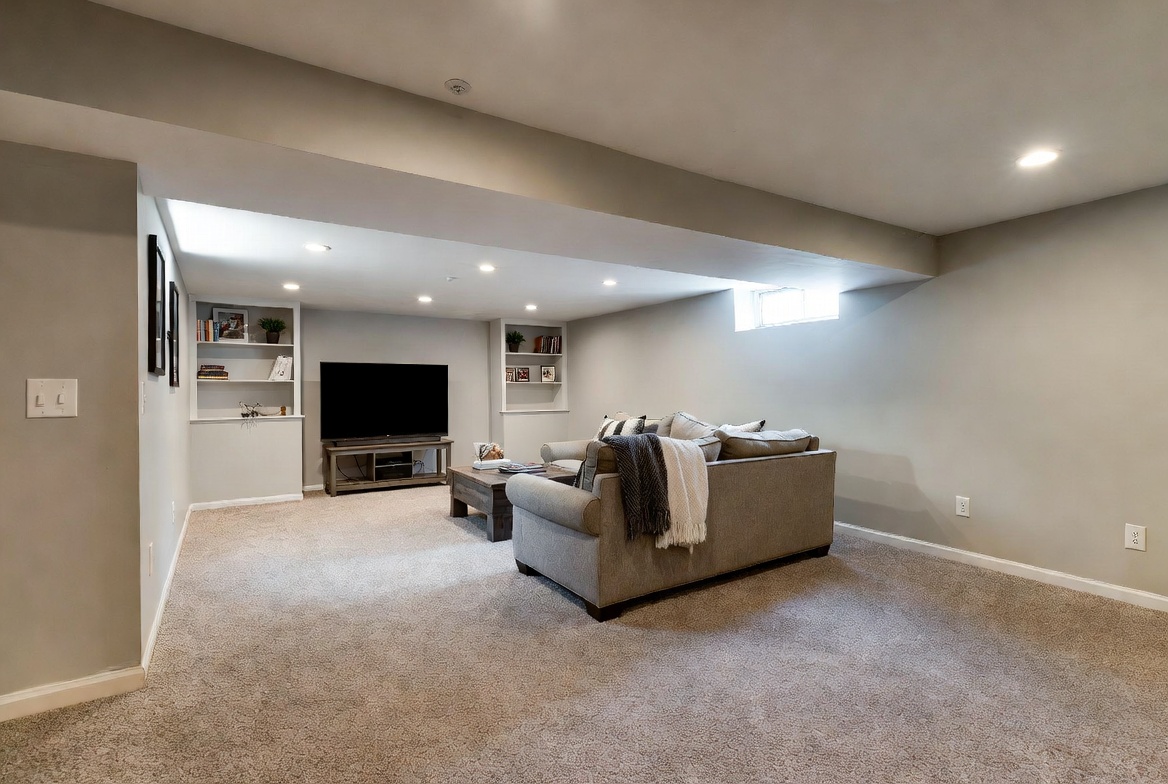
Finish work belongs after moisture control, not before it.
If a basement already has leaks, condensation, musty air, wet corners, or active cracking, drywall and flooring do not solve anything. They just hide the problem until the repair gets larger and more expensive.
On finished basements, the usual order should be: fix drainage, fix waterproofing, fix structural issues if present, confirm the space is staying dry, then insulate and finish.
This is one of the easiest ways to waste money on a house. The finishes look done. The basement still is not right.
How to Judge an Existing Basement Quickly
You do not need a dramatic failure to know a basement needs a closer look.
- horizontal cracking in walls
- bowing or leaning below-grade walls
- repeated wet spots after rain
- efflorescence, damp staining, or peeling coatings
- musty smell that never really leaves
- patches, braces, or repairs with no clear explanation
- sloped floor or movement signs above the basement
If the problem is already visible, it is usually worth reading foundation repair basics before deciding whether you are looking at a maintenance job, a drainage job, or a structural one.
FAQ
Is a basement foundation stronger than a crawl space or slab?
Not by default. A basement can support a substantial house very well, but only if the footing bearing, wall design, drainage, and waterproofing all match the site. A badly built basement is not “better” just because it is deeper.
Is poured concrete better than block for a basement?
For many modern houses, poured concrete is the default because it gives you a continuous wall with fewer joints. Block can still work well, but it needs careful reinforcement, drainage, and water control.
Can a crawl space be converted into a basement?
Sometimes, yes. But it is major work. It often means temporary support, excavation under an existing house, underpinning or new wall work, drainage, slab work, stairs, and code-compliant access. It is usually closer to a structural reconstruction than a normal remodel.
What is the most common basement mistake?
Treating waterproofing and drainage like optional extras instead of part of the structure.
Should every basement have a sump pump?
Not every one, but many do. Some sites drain well enough to daylight that a sump is not the main strategy. Others do better with one because site grading, footing-drain routing, flatter lots, or groundwater conditions make it the safer backup. If water does not have a reliable gravity path away from the house, the sump question gets more serious fast.
What’s Next If a Basement Is Still on the Table
A basement foundation can be one of the best foundation systems for a house when the site, climate, and budget support it. It gives real usable space and can perform very well for decades.
The catch is simple: basements do not forgive weak drainage, rushed backfill, or casual water management. Get the footing, wall, waterproofing, and drainage system right together, and the basement works. Miss one of those, and the house keeps arguing with the ground underneath it.
- Exterior foundation waterproofing if the main question is long-term water control outside the wall.
- French drain and sump pump installation if the site still does not have a reliable drainage path.
- Cost to build foundation and basement if the decision is starting to turn into a budget question.