
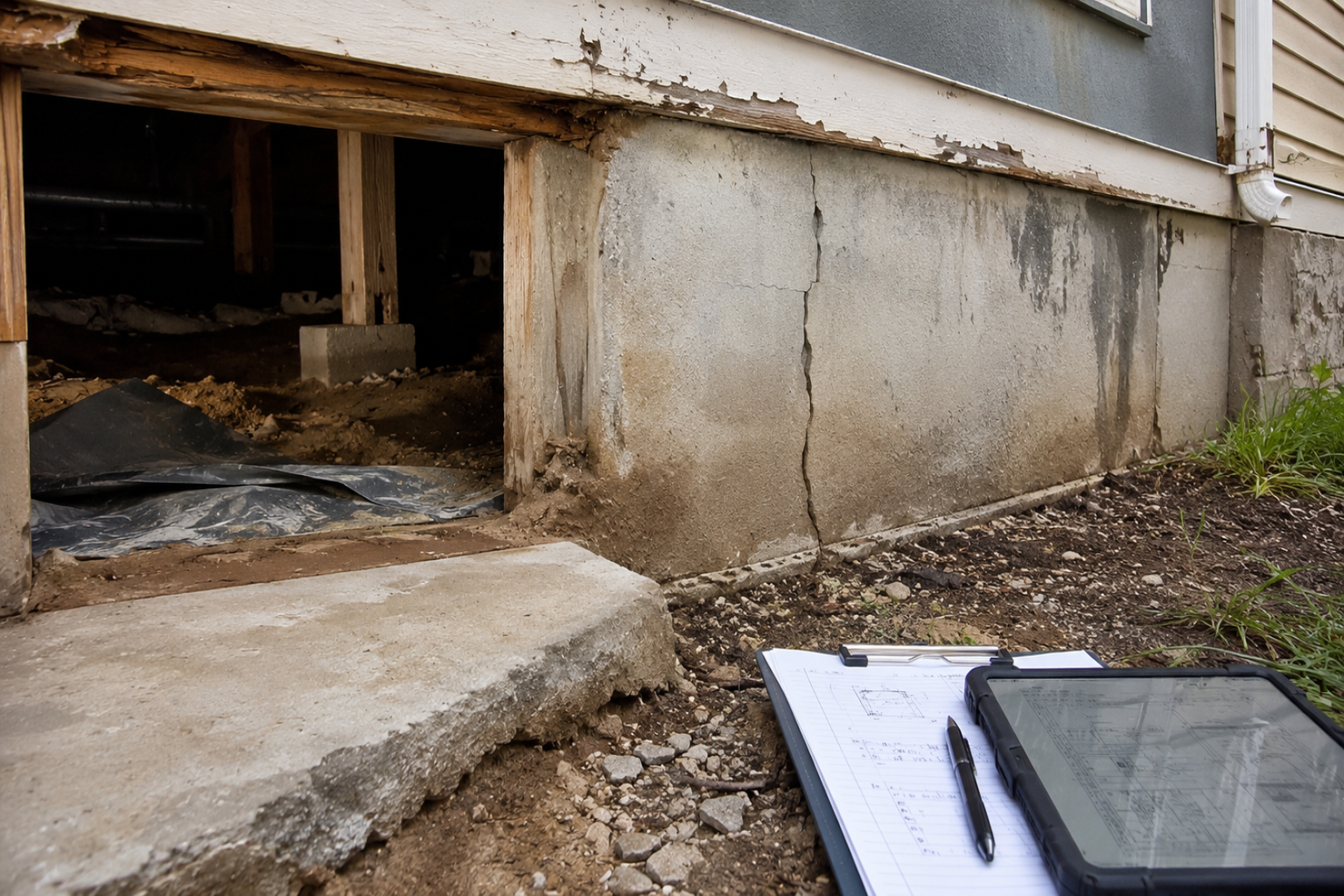

The cheapest foundation repair quote is often the one that only fixes what you can see.
A crack, low slab, wet crawl space, or sagging floor may look simple from the surface. The real cost may be under it: soil movement, bad drainage, rotten beams, weak footings, failed piers, poor access, or structural movement.
A small crack is not the same job as a settling corner. A low driveway slab is not the same as a sinking foundation. A sagging pier-and-beam floor is not the same as a crawl space with wet soil and soft beams.
Find out what is failing before you trust the price.
Foundation repair cost at a glance
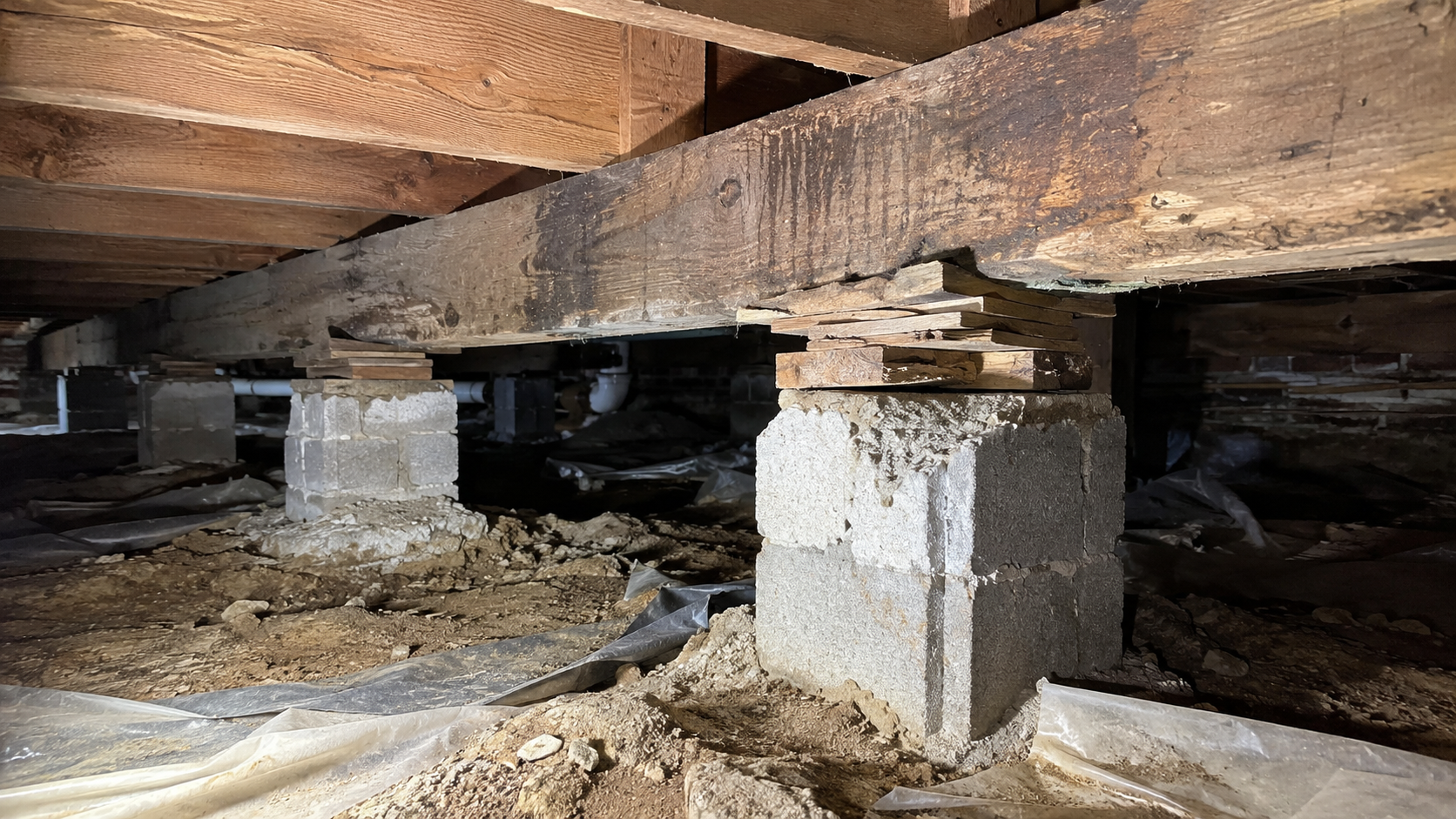
For many houses, foundation repair falls somewhere between a few thousand dollars and a much larger structural project. Small crack repairs may stay under a few thousand dollars. Larger settlement, wall movement, crawl-space structural work, underpinning, or full foundation replacement can move far beyond that.
The table below is a planning guide, not a contractor quote.
| Repair situation | Typical planning range | What changes the price |
|---|---|---|
| Small stable crack repair | $500 to $2,500 | Crack size, location, leakage, access, finish removal, and whether movement is active |
| Leaking foundation wall or crack | $1,500 to $7,500+ | Interior vs exterior access, drainage, waterproofing, excavation, and wall condition |
| Sunken slab lifting or leveling | $800 to $6,000+ | Void size, slab area, lift method, drainage cause, and whether the structure moved |
| Pier and beam foundation repair | $2,500 to $15,000+ | Number of supports, beams, shims, pads, access, moisture, and leveling scope |
| Crawl-space structural repair | $3,000 to $20,000+ | Rotten beams, joists, posts, access height, moisture, mold, drainage, and temporary support |
| Stem wall repair | $1,500 to $12,000+ | Crack type, wall movement, water entry, footing condition, reinforcement, and excavation |
| Underpinning or deeper support | $8,000 to $30,000+ | Soil, depth, engineering, number of piers, access, utilities, and structural load |
| Major foundation replacement | $25,000 to $100,000+ | House lifting, demolition, excavation, new foundation, utilities, permits, and site constraints |
The wide ranges are the point. Foundation repair is expensive when the problem is not isolated. A small crack with dry, stable concrete is one job. A crack with water pressure, soil movement, wall displacement, finished basement damage, and poor drainage is a different job.
Foundation repair cost depends on the problem type
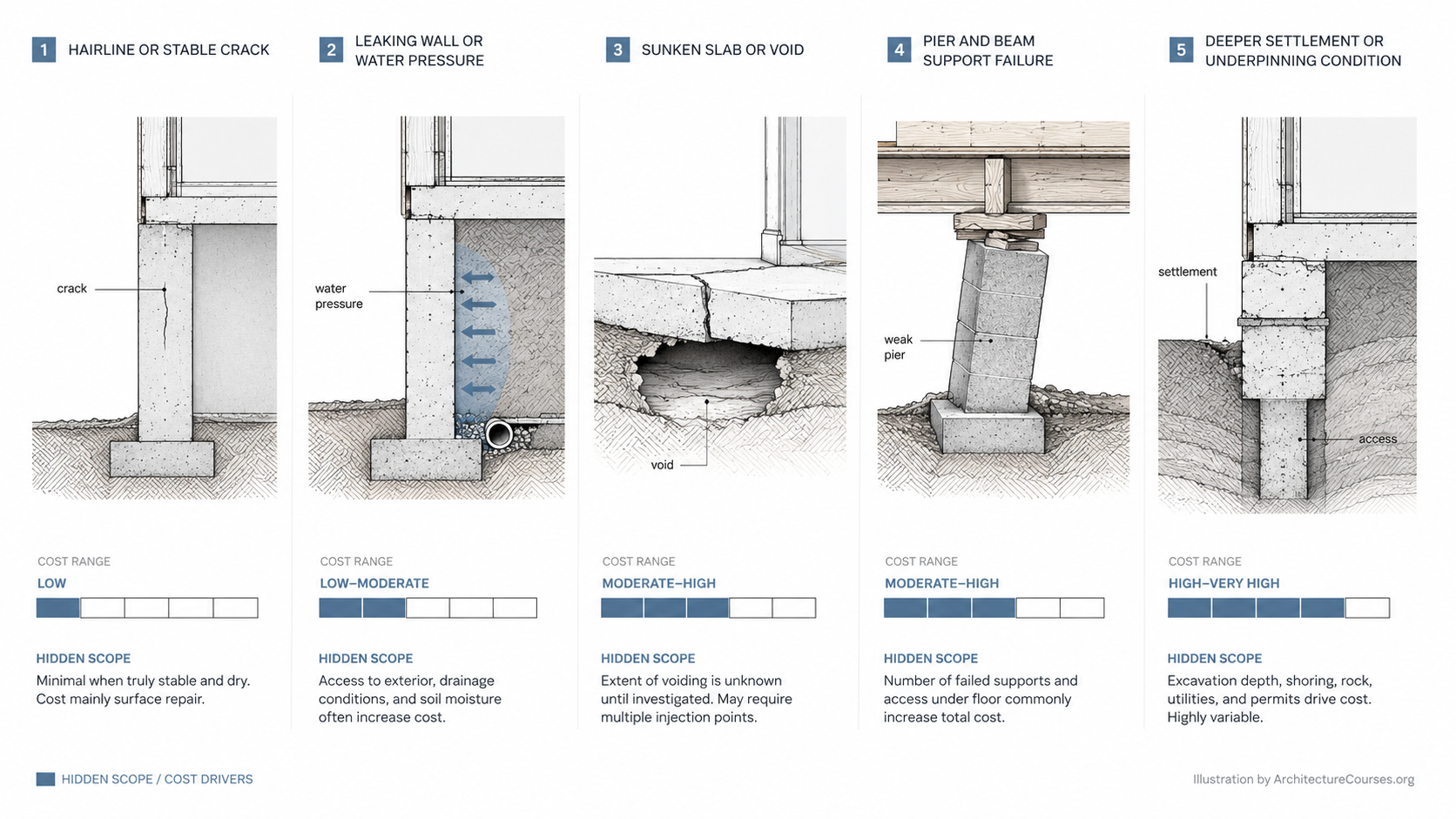
Contractors are not all pricing the same repair. A foundation crack, sunken slab, crawl-space support failure, basement wall leak, and settling foundation corner may all get called “foundation repair,” but they do not use the same labor, tools, materials, risk, or inspection process.
That is why comparing quotes by price alone can be misleading. One quote may include drainage correction, structural support, access work, and documentation. Another may only patch the visible symptom.
| Problem type | Lower-cost version | Higher-cost version |
|---|---|---|
| Foundation cracks | Dry, stable, narrow crack with easy access | Active movement, leaking crack, stair-step pattern, wall displacement, or exterior excavation |
| Slab settlement | Small sunken area with clear void below | Large slab area, recurring water washout, structural settlement, or heave |
| Pier and beam movement | Limited shim or support correction | Multiple piers, rotten beams, wet crawl space, poor pads, and staged leveling |
| Crawl-space structural damage | Localized joist or support repair | Beam replacement, moisture control, drainage, mold, pest damage, and tight access |
| Basement or stem wall trouble | Minor crack repair without wall movement | Water pressure, bowing, horizontal cracks, footing issues, or exterior waterproofing |
| Deep settlement | Localized support correction | Underpinning, helical piers, push piers, engineering, utilities, and difficult access |
For foundation type differences before repair, see types of house foundations. The same crack or floor slope can mean different things in a slab, basement, crawl-space, stem wall, or pier-and-beam house.
Crack repair cost: cheap patch or real warning?
Foundation crack repair can be one of the lower-cost foundation jobs when the crack is stable, dry, narrow, and easy to access. It becomes more expensive when the crack is moving, leaking, widening, connected to settlement, or hidden behind finished walls.
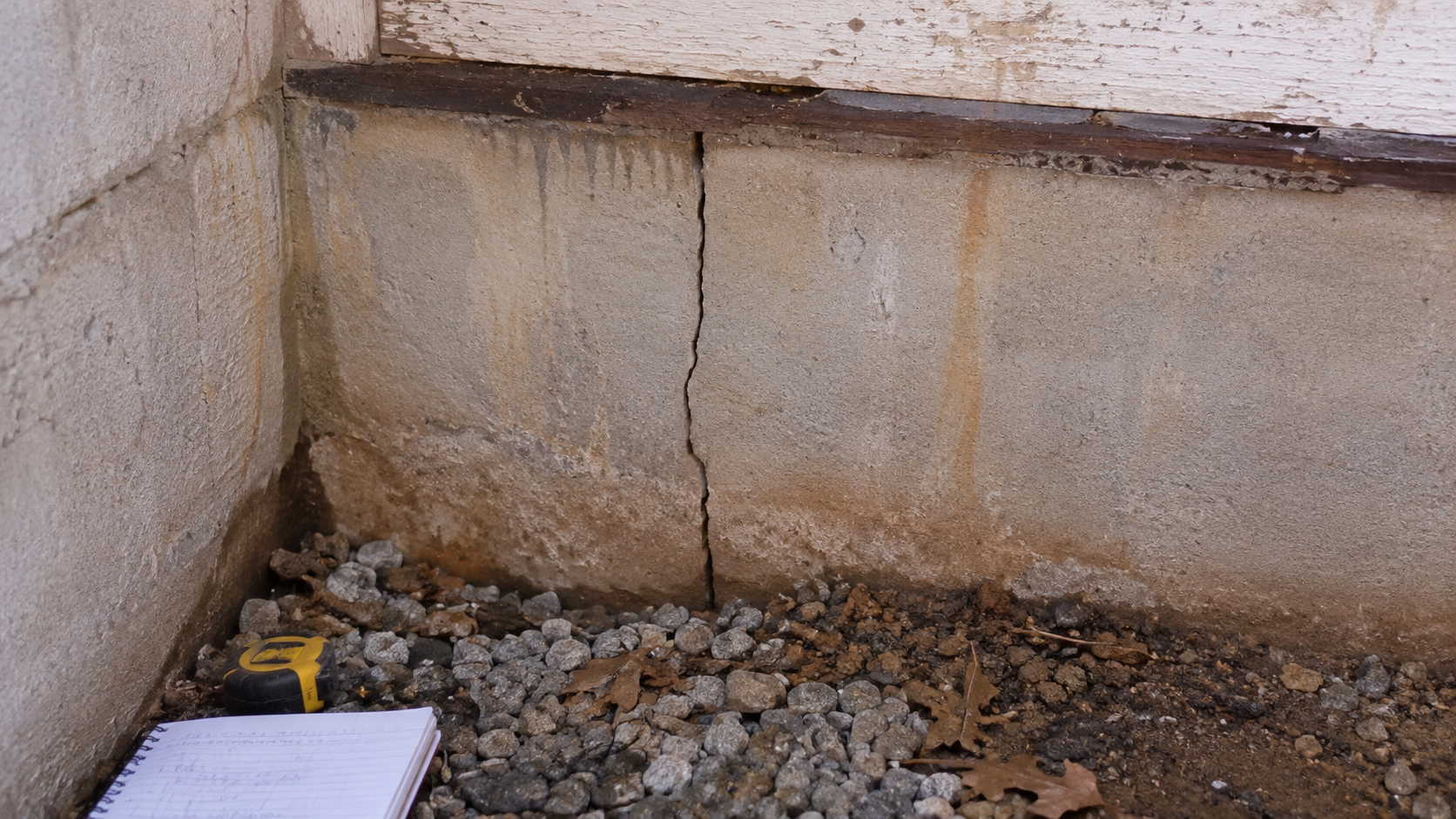
A contractor may recommend epoxy, polyurethane injection, exterior waterproofing, drainage correction, wall stabilization, or structural repair depending on the crack. Those are not the same job.
Cracks that usually need closer inspection include:
- horizontal cracks in basement or stem walls
- stair-step cracks in masonry
- widening cracks
- cracks with wall movement or displacement
- cracks with water staining or active leakage
- cracks near a settling corner
- cracks that return after patching
A low-cost patch can be wasted money if water pressure, soil movement, settlement, or wall displacement is still active. For the dedicated article, use foundation cracks once that page is published.
Slab leveling cost: the surface may not be the problem
Slab leveling is often cheaper than deeper structural foundation repair, but only when the problem is actually a slab support issue. A driveway panel, sidewalk, garage slab, patio, or interior slab area may sink because soil washed out below it. That is different from a foundation wall or footing settling.
Common slab-related cost drivers include:
- how much slab area needs lifting
- whether the slab is cracked or broken
- the size of the void below the concrete
- whether water caused the soil loss
- whether mudjacking, foam lifting, grinding, overlay, or replacement is being proposed
- whether the foundation itself moved
The wrong repair method can waste money. Grinding may make a trip edge flatter, but it does not restore soil support. Foam or mudjacking can lift a sunken slab, but drainage may still need correction. Structural settlement belongs in a different category.
For slab-specific decisions, see concrete foundation leveling.
Pier and beam foundation repair cost
Pier and beam repair costs vary because the visible floor slope may come from several different failures. The problem may be shims, piers, posts, pads, soil, beams, joists, moisture, termite damage, or a bad earlier repair.
A limited repair may involve correcting bearing under a beam or replacing a few weak supports. A larger job may involve staged leveling, new pads or footings, beam replacement, joist repair, drainage work, vapor control, and documentation.
Pier and beam cost rises when:
- multiple support lines are low
- beams or joists are rotten
- temporary jack posts are carrying permanent loads
- pads are undersized or sitting on weak soil
- the crawl space is wet or hard to access
- the floor needs staged lifting instead of a quick adjustment
- engineering or permits are required
For repair scope, see pier and beam foundation repair. If the problem is still unclear, start with pier and beam foundation problems.
Crawl-space foundation repair cost
Crawl-space foundation repair can become expensive because the foundation problem and the moisture problem often overlap. A quote may start with a sagging floor or weak support, then uncover wet soil, rotted beams, fallen insulation, mold, poor drainage, damaged joists, plumbing leaks, or pest damage.
Access matters too. A tall, dry crawl space is easier to work in than a tight, wet, obstructed crawl space with ducts, pipes, wiring, and debris in the way. The same beam repair can cost more when workers have to crawl, shore, cut, remove, and replace material in difficult conditions.
Cost drivers often include:
- crawl-space height and safe access
- temporary support during beam or joist repair
- wood rot and pest damage
- standing water or damp soil
- drainage and vapor barrier work
- mold cleanup or contaminated insulation removal
- ducts, plumbing, wiring, and other obstructions
For the broader repair topic, use crawl space foundation repair. If the water appears after storms, see water in a crawl space after rain.
Stem wall repair cost
Stem wall repair cost depends on whether the problem is a surface crack, water entry, reinforcement issue, footing problem, wall movement, or a damaged section that needs rebuilding. A small patch is not the same as a repair that requires excavation, waterproofing, reinforcement, drainage, or partial replacement.
Stem wall repairs become more expensive when:
- the crack is active or widening
- water enters through the wall
- soil pressure is pushing against the wall
- the footing below is damaged or settling
- exterior grade or concrete flatwork blocks access
- the wall needs reinforcement, not just patching
- the repair affects framing, sill plates, or slab edges
For the full repair page, see stem wall foundation repair.
Underpinning and deeper support cost
Underpinning is usually a higher-cost repair category because it changes how the structure is supported below the existing foundation. It may involve push piers, helical piers, drilled piers, new footings, grade beams, excavation, structural engineering, and careful sequencing.
This type of repair may be needed when shallow support is no longer enough, soil conditions are poor, settlement is active, or the foundation needs to transfer load deeper into stable bearing.
Cost rises with:
- number of piers or underpinning points
- depth to stable bearing
- soil conditions
- structural load
- interior or exterior access
- utility conflicts
- engineering and permit requirements
- whether the house must be lifted or stabilized in stages
For deeper support concepts, see foundation underpinning. For footing and excavation decisions, see foundation excavation depth.
What makes foundation repair cost more than expected
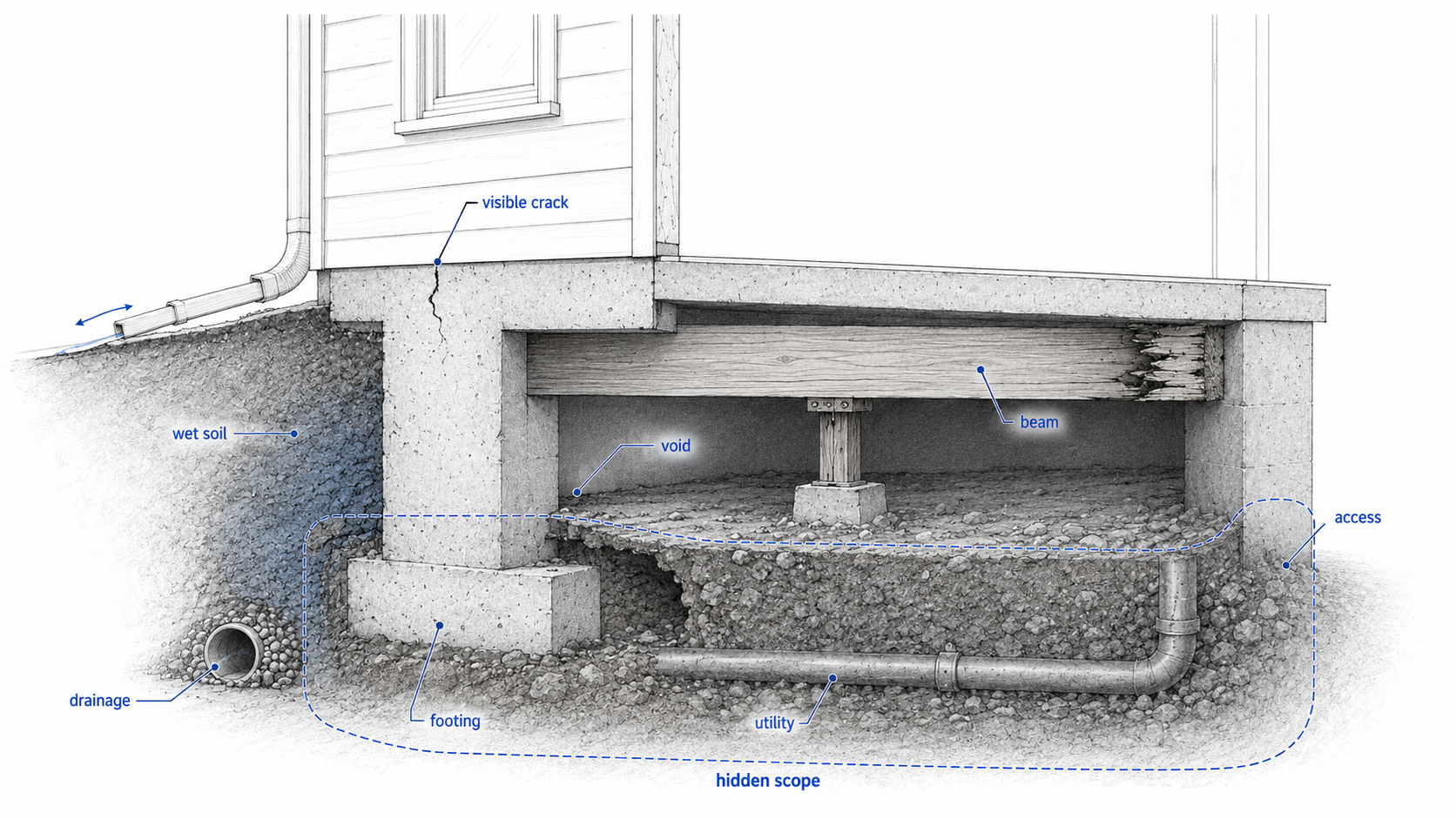
The first quote can grow when hidden conditions appear. Some of those conditions are predictable if the inspection is careful. Others show up only after finishes, soil, insulation, or damaged material are removed.
| Hidden cost driver | Why it changes the quote |
|---|---|
| Water or drainage failure | The repair may need grading, downspout changes, sump work, footing drains, waterproofing, or vapor control. |
| Weak soil or voids | The visible crack or low slab may be caused by lost support below. |
| Rotten wood framing | Crawl-space or pier-and-beam repair may require beam, joist, or subfloor work. |
| Access problems | Finished walls, low crawl spaces, landscaping, decks, concrete slabs, and utilities can slow the job. |
| Engineering or permits | Structural movement, underpinning, wall stabilization, or major support changes may need professional design or local approval. |
| Utility conflicts | Gas, electrical, plumbing, sewer, and drainage lines can complicate excavation or support work. |
| Warranty exclusions | A cheap quote may exclude water, soil movement, drainage, wood rot, or future settlement. |
The first visible symptom is not always the expensive part. The expensive part is often what the crack, slope, or wet crawl space reveals.
Cheap foundation repair can be wasted money
Cheap repair is not automatically bad. A small, stable, dry crack may not need a major structural project. The problem is a cheap repair that ignores the cause.
Watch out for quotes that only promise to:
- patch a crack without discussing movement or water
- level a floor without checking beams, supports, and soil
- lift a slab without fixing the drainage that washed out the base
- add posts without explaining footing or pad support
- seal a basement wall without addressing outside water pressure
- replace visible material while leaving rot, moisture, or access problems unresolved
A cheap visible repair may be reasonable. A cheap structural guess is risky.
What a foundation repair quote should include
A serious foundation repair quote should explain more than the final price. It should show what the contractor believes is causing the problem and what is included or excluded from the repair.
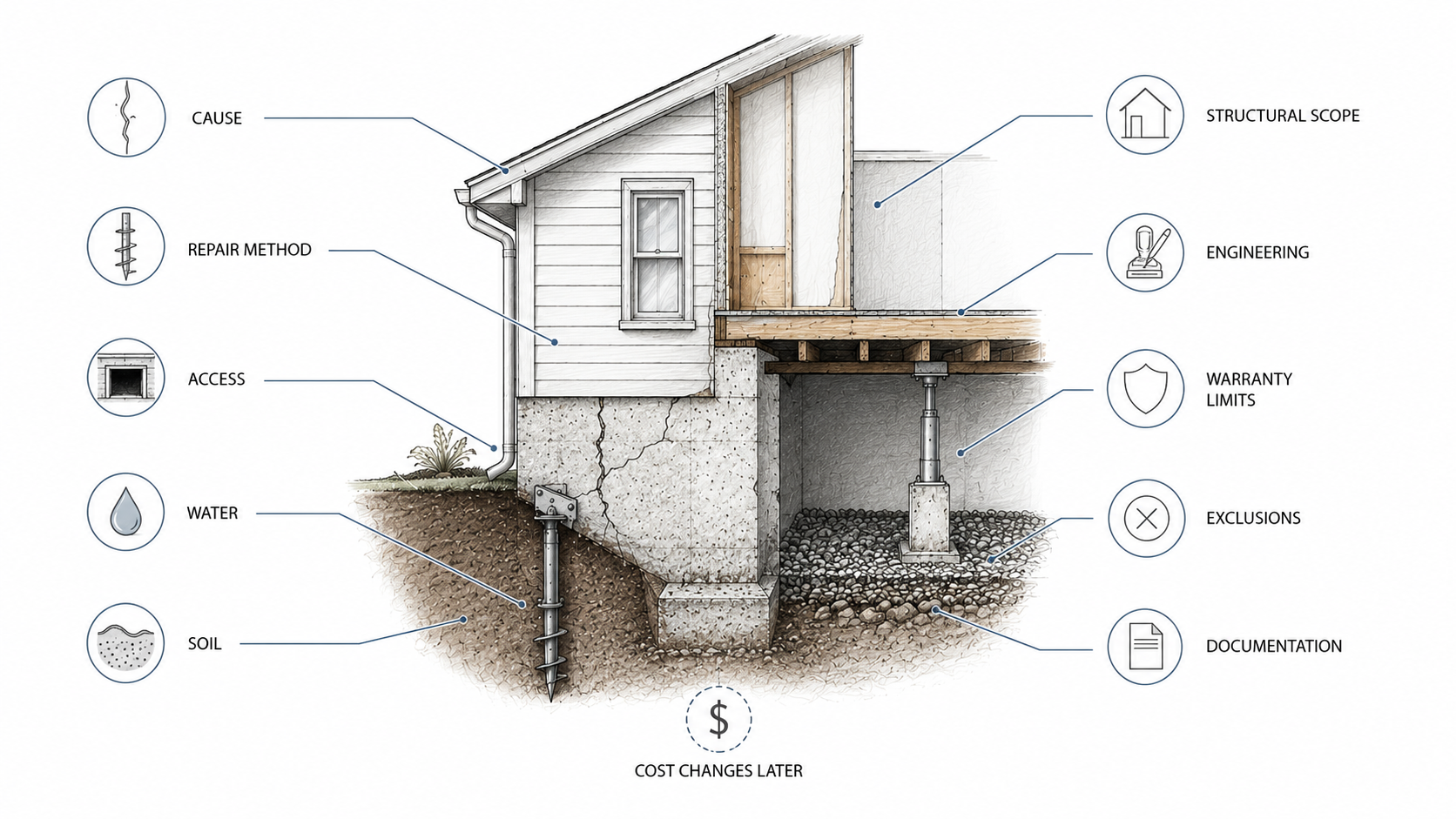
| Quote item | What to look for |
|---|---|
| Cause of movement or damage | Settlement, water, voids, soil, framing damage, wall pressure, or support failure should be identified. |
| Repair method | The quote should explain why the proposed method fits the actual problem. |
| Access and demolition | Finished walls, flooring, concrete, decks, landscaping, crawl-space access, and cleanup should be clear. |
| Water and drainage | The quote should say whether drainage, waterproofing, vapor control, or plumbing leaks are included or excluded. |
| Structural scope | Beams, piers, posts, footings, walls, slabs, and underpinning points should be described where relevant. |
| Engineering and permits | The quote should say whether engineering, inspections, or permits are part of the work. |
| Warranty limits | Read what the warranty excludes: water, soil, drainage, wood rot, plumbing, or future movement. |
| Documentation | Before, during, and after photos matter, especially for crawl spaces and buried work. |
If a quote does not explain the cause, the repair method, and the exclusions, it is hard to compare against another quote.
Inspection and engineering costs
Some foundation companies offer free estimates. That can be useful, but a sales estimate is not the same as an independent structural evaluation. When movement is serious, repeated, confusing, or tied to a purchase decision, a structural engineer may be worth the extra cost.
Engineering or inspection costs often make sense when:
- the house has major settlement or active movement
- contractors disagree about the cause
- underpinning or major support changes are proposed
- you are buying a house with visible foundation symptoms
- the repair affects load-bearing walls, beams, piers, or footings
- permits or stamped drawings may be required
- previous repairs failed
Paying for diagnosis can feel frustrating, but guessing wrong is usually more expensive.
Will insurance pay for foundation repair?
Do not assume insurance will cover foundation repair. Many policies exclude damage from long-term settlement, poor drainage, soil movement, wear, faulty construction, or lack of maintenance. Some sudden events may be treated differently, but coverage depends on the policy, cause, timing, and documentation.
Keep photos, inspection reports, contractor notes, plumbing records, drainage repairs, and any engineer letters. If you make a claim, the cause matters as much as the damage.
How to keep foundation repair cost from growing
You cannot control every soil or structural problem, but you can reduce the chance of paying for the same symptom twice.
- Fix roof runoff and downspouts before water keeps hitting the foundation.
- Keep soil sloped away from the house where possible.
- Do not ignore crawl-space water, musty air, or fallen insulation.
- Repair plumbing leaks quickly, especially near slabs, crawl spaces, and basement walls.
- Photograph cracks, floor slopes, and water stains before and after repair.
- Ask contractors what caused the movement, not only what they will install.
- Compare exclusions, not just totals.
- Do not accept “leveling” as a complete explanation.
The best foundation repair quote is not always the lowest one. It is the one that correctly identifies the cause, explains the repair, and does not hide the work that actually protects the house.
When to use the foundation repair cost calculator
Use the foundation repair cost calculators when you want a quick planning tool. Use this article when you need to understand why the calculator result or contractor quote can change.
A calculator can help compare scenarios. It cannot see wet soil, cracked beams, hidden voids, buried utilities, poor access, or a wall that is still moving.
FAQ
What is the average foundation repair cost?
Many ordinary foundation repair projects fall in the low-thousands to mid-thousands range, but the number can rise sharply when there is structural movement, water damage, underpinning, crawl-space beam repair, or full foundation replacement. The cause matters more than the national average.
Why do foundation repair quotes vary so much?
Quotes vary because contractors may be pricing different scopes. One quote may patch the visible crack. Another may include drainage, soil correction, structural support, engineering, access work, and documentation.
Is foundation crack repair expensive?
A small stable crack can be one of the cheaper repairs. A leaking, widening, horizontal, stair-step, or movement-related crack can cost much more because the repair may involve water control, wall stabilization, excavation, or structural work.
Is slab lifting the same as foundation repair?
Not always. Slab lifting can fix a sunken concrete surface when support below the slab was lost. It does not fix every foundation problem. If the footing, wall, or structural load path moved, the repair category changes.
Does pier and beam repair cost more than slab repair?
It depends on the scope. A small pier or shim correction may be limited. A wet crawl space with rotten beams, multiple failed supports, poor pads, and staged leveling can become expensive quickly.
Should I choose the cheapest foundation repair quote?
Not without checking the scope. A cheap quote may be fine for a simple crack or isolated issue, but it can be risky if it ignores water, soil, structural movement, access, or warranty exclusions.
Do I need an engineer before foundation repair?
You may need one when movement is serious, the repair changes structural support, contractors disagree, underpinning is proposed, permits require it, or you are buying a house with foundation concerns.
References
Sources used for this article
- International Code Council: 2024 International Residential Code, Chapter 4 Foundations
- U.S. Environmental Protection Agency: A Brief Guide to Mold, Moisture and Your Home
- U.S. Environmental Protection Agency: Mold and Your Home
- Occupational Safety and Health Administration: Confined Spaces in Construction
- Occupational Safety and Health Administration: Confined Spaces in Residential Construction
- This Old House: Foundation Repair Cost
- NerdWallet: Foundation Repair Cost
- Forbes Home: Foundation Repair Cost