
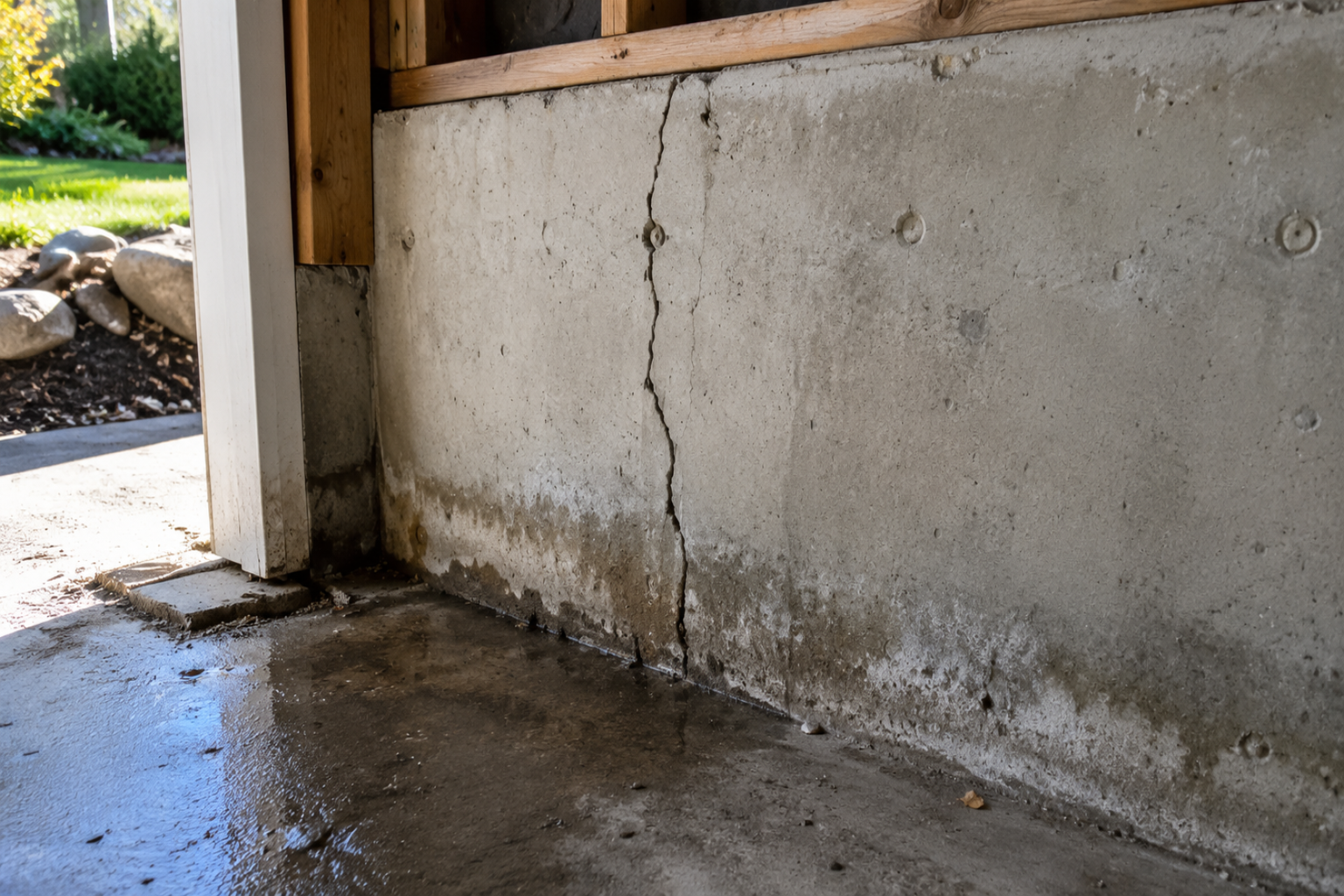


Stem wall foundation repair usually starts with a crack, a water stain, a gap near the slab edge, or a wall that no longer looks straight.
The mistake is treating every stem wall problem like a surface patch. Some cracks are minor. Some are signs that water is pushing against the wall. Some point to soil movement, poor drainage, weak concrete, failing block, corrosion, or a footing problem below the wall.
A stem wall sits between the footing and the house framing or slab. When it fails, the repair is rarely just “fix the crack.” The real question is why the wall cracked, where the water is coming from, and whether the footing and soil are still doing their job.
How a stem wall foundation works
A stem wall is the short foundation wall that rises from the footing and supports the house above. In many homes, it carries the sill plate and framing. In some slab-on-grade houses, the stem wall works with the slab edge and footing. In crawl space homes, it may form the perimeter wall around the crawl space.
The basic job is simple: carry loads down to the footing, keep the house above grade, and resist soil and moisture from outside. Problems start when one of those jobs fails.
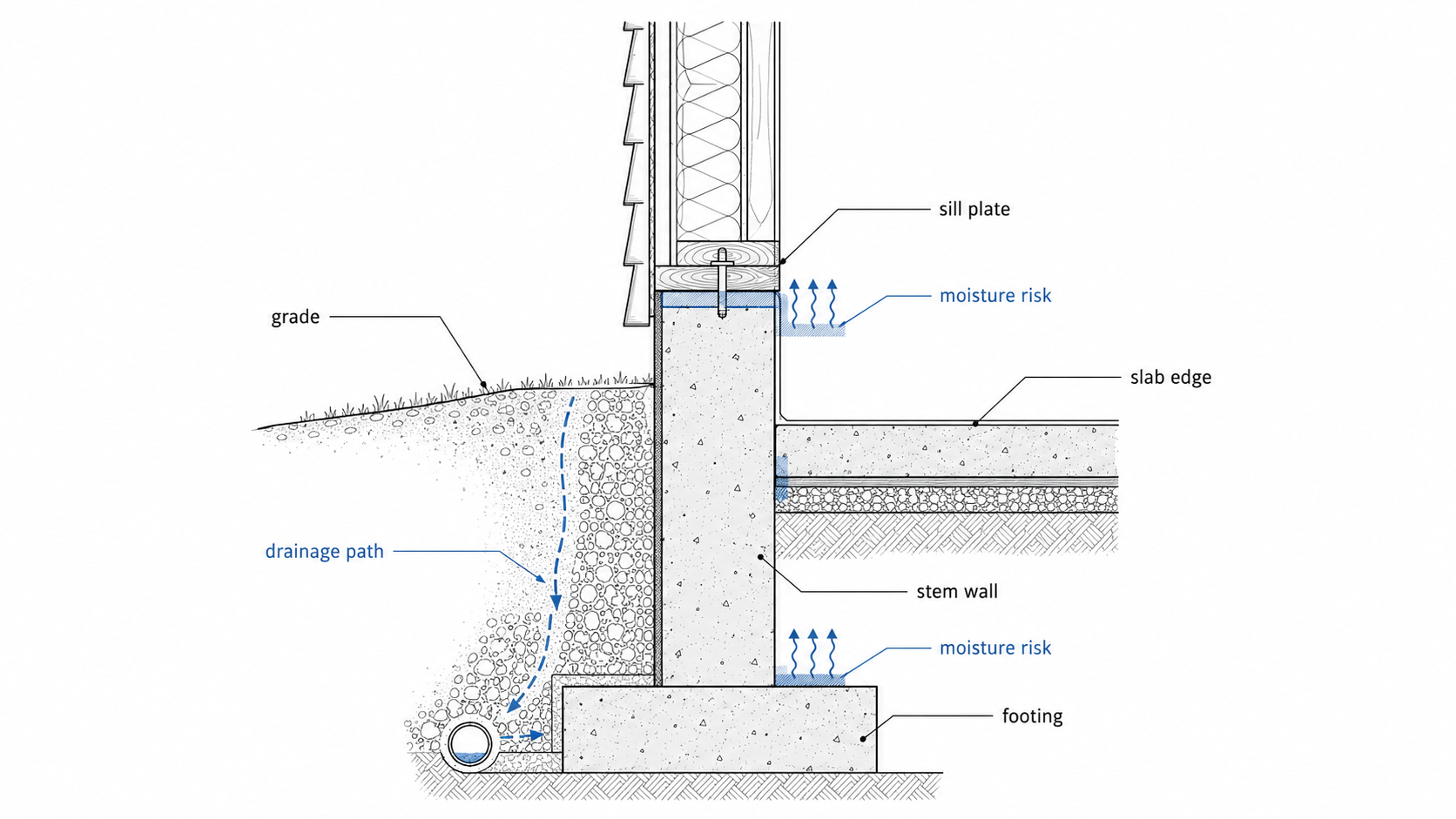
| Part | What it does | What goes wrong |
|---|---|---|
| Footing | Spreads the house load into soil | Settles, tilts, sits on weak fill, or moves with water and frost |
| Stem wall | Transfers load from the house to the footing | Cracks, bows, leaks, spalls, or separates from the slab or framing |
| Slab edge | Meets or works with the stem wall in slab homes | Gaps, heaving, cracking, or water entry at the joint |
| Drainage zone | Moves water away from the wall and footing | Clogged drains, bad grading, roof runoff, or trapped water beside the wall |
| Sill and framing connection | Connects the house to the foundation | Rot, insect damage, bad anchor bolts, or movement above the wall |
When stem wall repair is needed
Stem wall repair is needed when the wall is cracked, leaking, displaced, deteriorating, or no longer supporting the house evenly. The repair may be minor, but the diagnosis should not be casual.
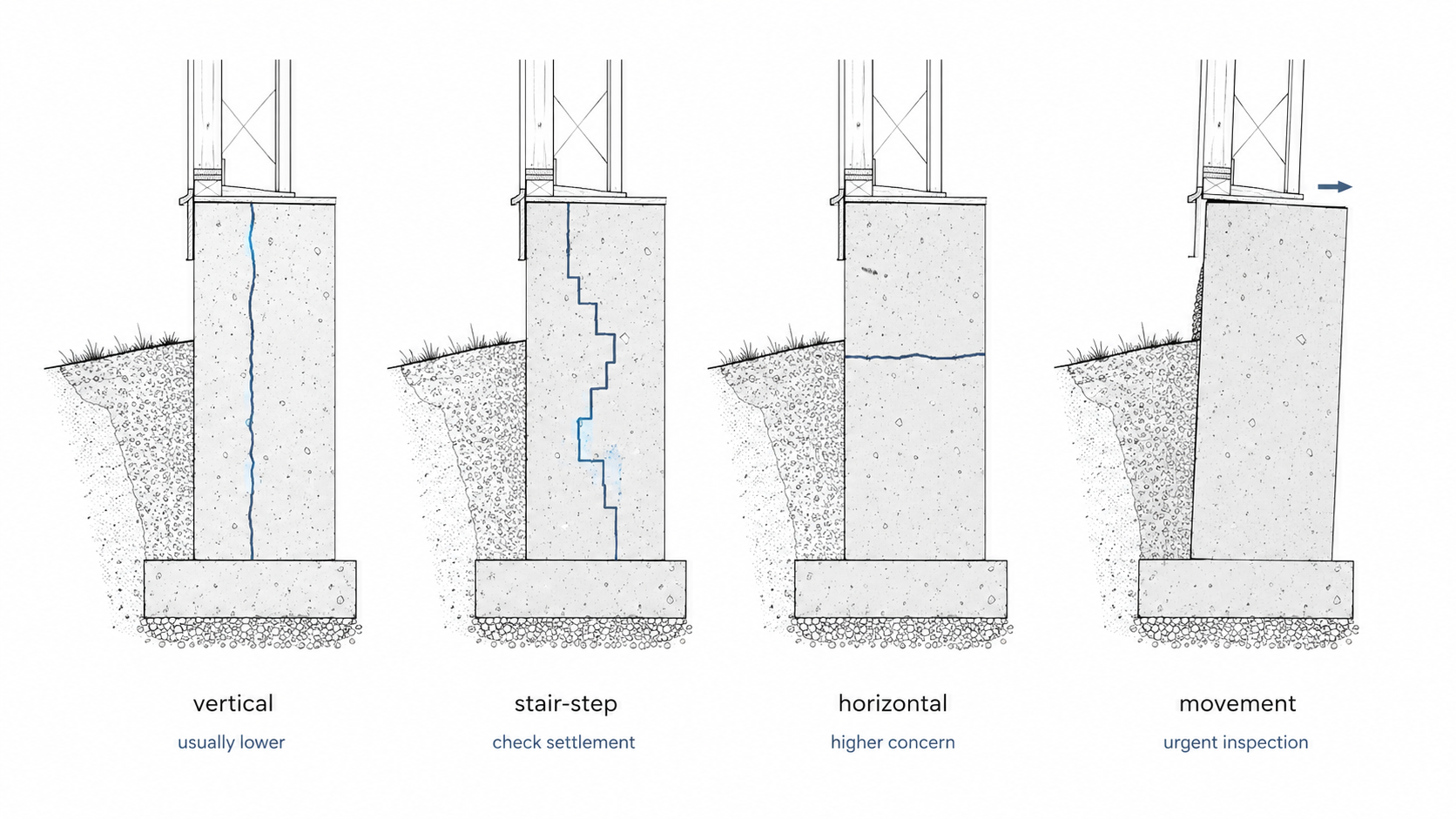
A small vertical crack in a poured concrete stem wall may only need monitoring or sealing if it is stable and dry. A stair-step crack in a block stem wall, a horizontal crack, a widening crack, or a wall that has shifted out of plane is different. That can mean soil pressure, settlement, footing movement, or a structural load problem.
If the house also has sloping floors, sticking doors, cracked drywall, or gaps between trim and walls, the stem wall may be part of a larger foundation movement problem. The guide to settlement cracks is useful when you need to separate normal cosmetic movement from warning signs that deserve closer inspection.
Read the crack before repairing it
Crack shape does not tell the whole story, but it gives the first clue. A dry vertical crack is different from a stair-step crack through block, a horizontal crack, or a crack where one side of the wall has moved forward.
Vertical cracks
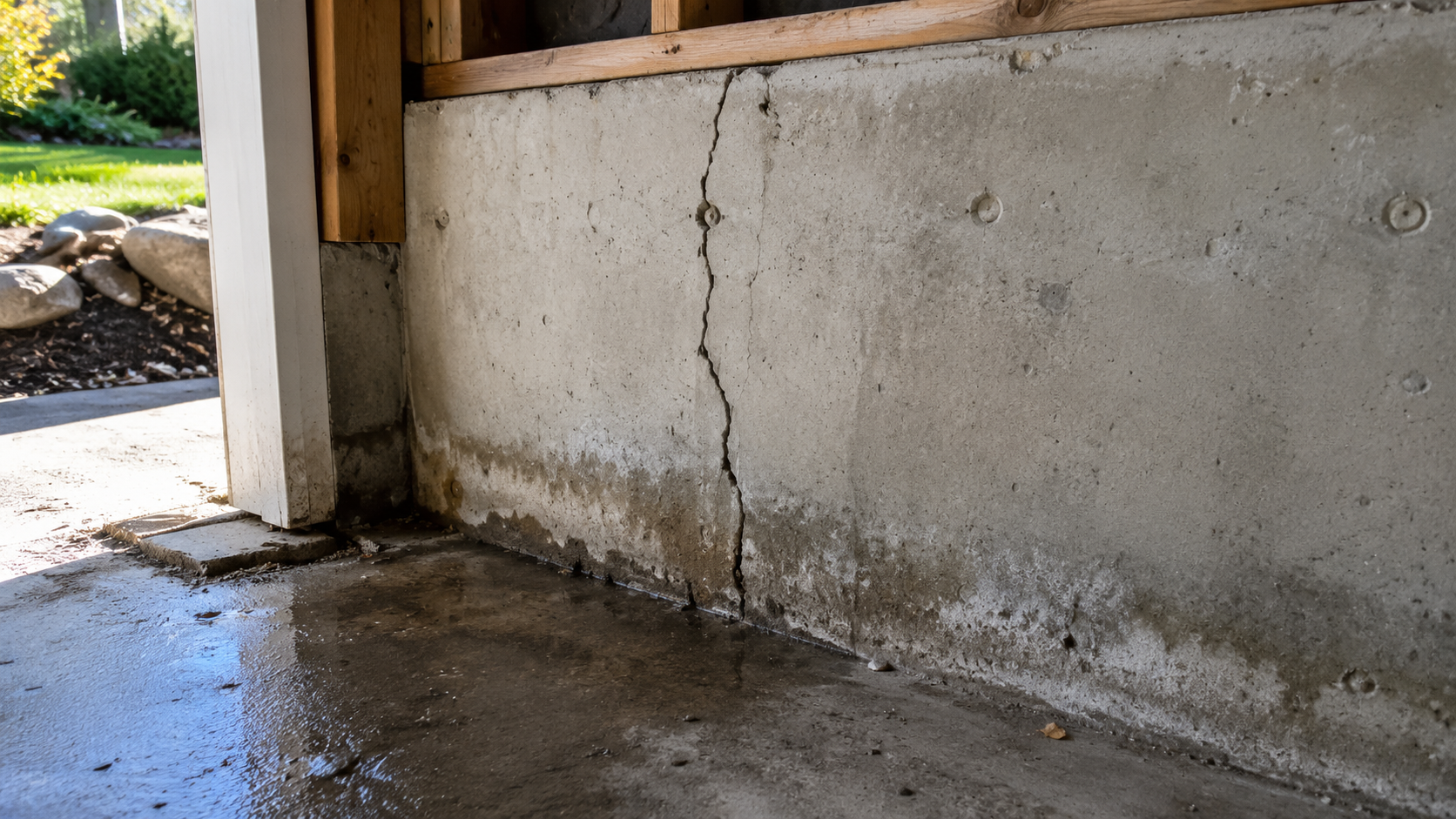
Vertical cracks are common in concrete and block stem walls. They may come from shrinkage, settlement, poor control of water, or movement at the footing. A narrow, dry, stable vertical crack is usually less alarming than a crack that leaks, widens, or has one side pushed forward.
The repair depends on whether the crack is active. Sealing a stable crack is different from repairing a wall that keeps moving.
Stair-step cracks
Stair-step cracks usually follow mortar joints in concrete block, brick, or masonry stem walls. They can point to differential settlement, weak soil, poor drainage, frost movement, or localized footing failure.
Do not judge these only by width. A small stair-step crack can matter if the wall is moving, the floor above is sloping, or water is entering after rain.
Horizontal cracks
A horizontal crack is more serious because it can mean the wall is bending under outside pressure. This pressure may come from wet soil, expansive soil, poor backfill, freeze-thaw movement, or missing drainage.
Horizontal cracks in foundation walls should be inspected carefully. Patching the face of the wall does not remove the load pushing against it.
Spalling and surface breakdown
Spalling happens when the concrete or masonry surface flakes, breaks, or crumbles. In a stem wall, this may come from water exposure, freeze-thaw damage, poor concrete, embedded steel corrosion, salt exposure, or long-term moisture at grade.
Light surface damage may be repairable. Deep spalling near reinforcement, anchor bolts, or load-bearing areas can become structural.
Water is usually the real problem
A dry crack and a leaking crack are not the same problem. Water changes the repair. It can carry soil pressure, accelerate decay, rust embedded steel, wet wood framing, damage finishes, and keep the wall moving season after season.
If water is entering through or beside the stem wall, the repair should include the water path. That may mean grading, gutters, downspout extensions, exterior waterproofing, drainage, or excavation. Surface caulk alone is rarely the full answer.
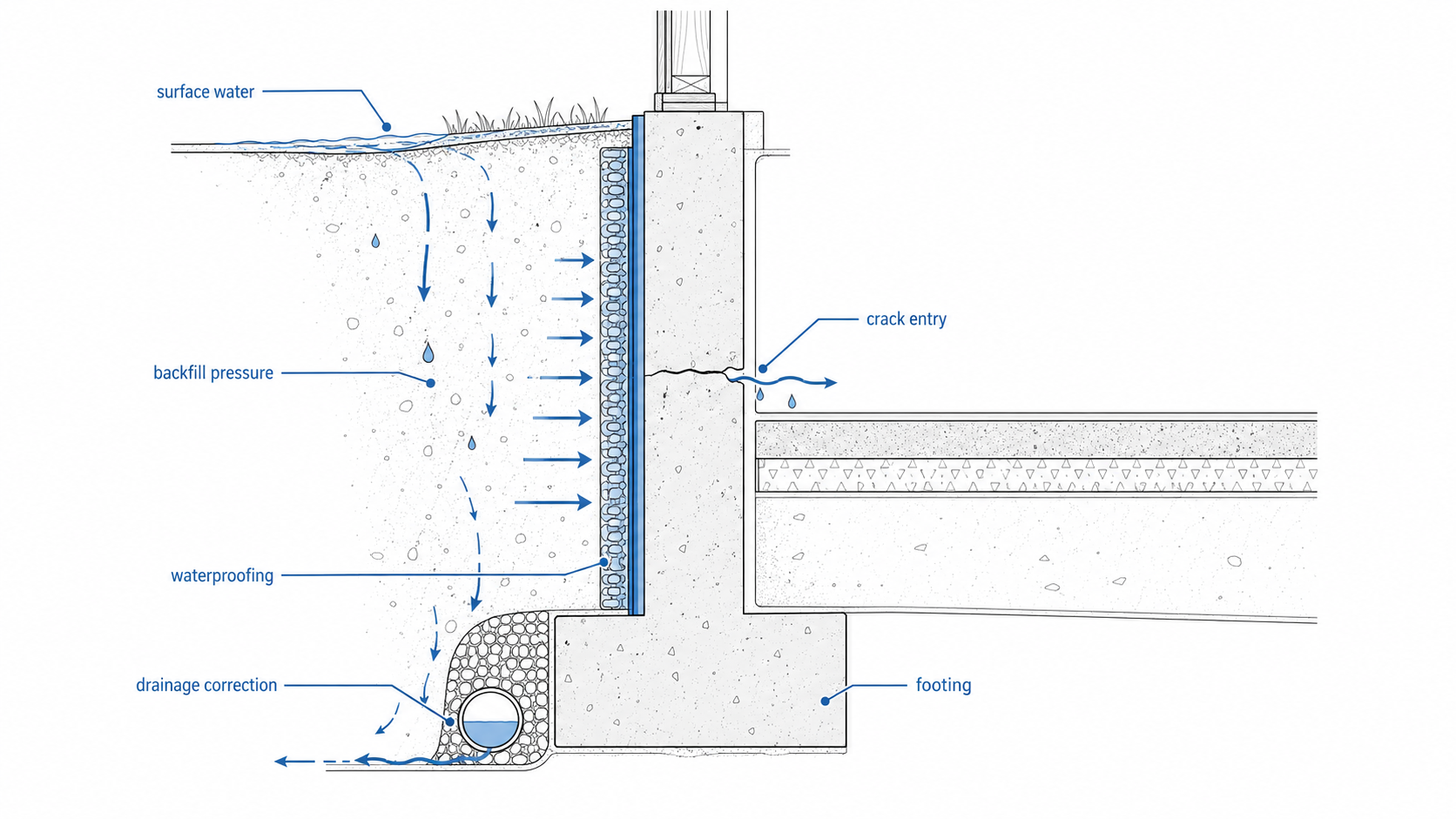
If water is the cause, the stem wall repair should connect to drainage and waterproofing. The exterior side of the wall matters because water control works better before pressure reaches the crack. Exterior foundation waterproofing explains that outside water-control layer in more detail.
Check the grade before the wall
Before repairing a stem wall crack, check where the water goes after rain. A wall can be patched perfectly and still fail again if the soil slopes toward the house, downspouts dump near the foundation, or wet backfill keeps pressure against the wall.
Look at the grade, gutters, downspout extensions, splashback from hard surfaces, soil settlement beside the foundation, and any low spots near the footing line. These conditions can keep water against the stem wall long after the crack repair is finished.
This is why a repair quote should not only describe the crack. It should say whether drainage, grading, waterproofing, or exterior access is part of the work. If the water path stays the same, the repair may only buy time.
Stem wall repair cost depends on what is moving
Stem wall repair cost is hard to price from the crack alone. The same visible crack can have very different causes.
Use the table below as planning categories, not quotes. Actual pricing depends on wall material, access, depth of excavation, drainage work, local labor, engineering, permits, finish repair, and whether the footing or house framing also needs support.
A short, stable crack may be a small repair. A cracked wall with water pressure, soil movement, access problems, damaged finishes, corroded steel, or footing movement can become a much larger project. The quote should tell you what is being repaired, not just what is being covered.
| Repair situation | Usually lower cost | Usually higher cost |
|---|---|---|
| Stable hairline crack | Monitor, seal, or minor crack repair | More if the crack leaks or keeps widening |
| Leaking crack | Interior crack sealing if the wall is stable | More if exterior drainage or waterproofing is needed |
| Block or masonry cracking | Localized repointing or repair | More if the wall is displaced or the footing moved |
| Horizontal crack or bowing | Rarely a simple patch | Can require reinforcement, excavation, drainage, or rebuilding |
| Spalling concrete | Surface repair if shallow and dry | More if steel is corroding or the section is weakened |
| Stem wall replacement | Limited wall section with easy access | Major work if the house must be supported or lifted |
The cheapest quote is often the one that ignores drainage, soil, reinforcement, access, engineering, and finish repair. That is why a stem wall repair estimate should list the cause, the repair method, the areas included, and what is excluded.
Patch, reinforce, waterproof, or rebuild
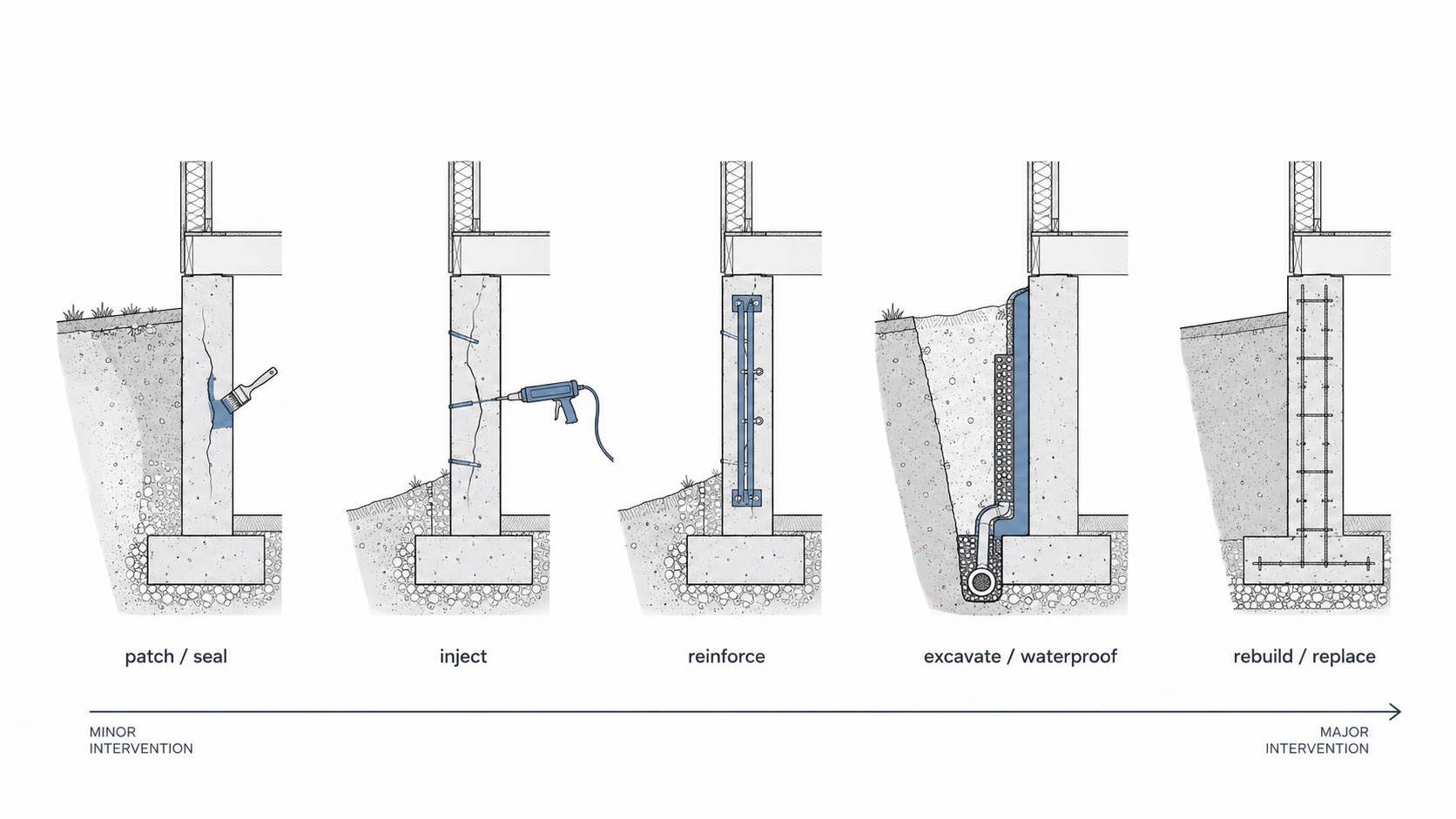
Stem wall repair is not one method. A stable surface crack, a leaking crack, a displaced block wall, and a failing wall section should not get the same repair.
Monitoring
Some cracks should be measured before they are repaired. Marking the ends of the crack, taking photos, and checking after heavy rain can show whether the crack is stable or moving.
This is not a substitute for inspection when the crack is wide, leaking, horizontal, displaced, or connected to other movement in the house.
Sealant or surface patch
Surface patching can help with shallow damage or a stable non-structural crack, but it is the weakest repair when water or movement is present. A patch on the face of the wall does not stitch the wall together, stop soil pressure, or repair a footing.
Use patching only when the wall condition supports it.
Crack injection
Injection may be used for certain concrete cracks, especially where sealing water entry is the main goal. The material and method depend on whether the crack is dry, wet, active, structural, or non-structural.
Injection is not the right answer for every block wall, displaced wall, or crack caused by ongoing settlement.
Masonry repair
Block, brick, and CMU stem walls may need mortar repair, block replacement, reinforcement, or rebuilding. Stair-step cracks in masonry should be checked for movement and water problems before repointing.
Repointing a moving wall only makes the crack look better for a while.
Reinforcement
Some walls need reinforcement instead of patching. Depending on the wall, that may involve steel, carbon fiber, anchors, bracing, or other structural methods. The right method depends on the wall type, crack pattern, soil pressure, and whether the wall is still moving.
This is where a contractor’s estimate should become specific. A vague “wall stabilization” line is not enough.
Exterior excavation and waterproofing
If water is entering from outside, the repair may require excavation, cleaning the wall, repairing cracks, applying waterproofing, adding protection board, fixing drainage, and backfilling correctly.
Exterior work costs more than an inside patch, but it may solve the real problem when outside water is driving the damage.
Stem wall replacement
Replacement is the heavy option. It may be needed when a wall section is badly displaced, crushed, undermined, poorly built, or too deteriorated to repair safely.
Replacement can involve temporary support, excavation, demolition, forming, reinforcement, concrete or masonry work, waterproofing, and reconnection to the house above. This is not a cosmetic repair.
Concrete stem wall vs block stem wall
Concrete and block stem walls fail in different ways.
A poured concrete stem wall may crack through the wall, spall at the surface, leak at cold joints, or show vertical shrinkage cracks. A block or CMU stem wall often shows stair-step cracks, mortar joint failure, bowing, or water entry through joints.
The repair should match the material. A method that works for a poured concrete crack may not fix a block wall that is moving along mortar joints.
| Wall type | Common signs | Repair concern |
|---|---|---|
| Poured concrete stem wall | Vertical cracks, spalling, cold joint leaks | Crack activity, reinforcement corrosion, water entry |
| CMU or block stem wall | Stair-step cracks, mortar failure, bowing | Joint movement, hollow cells, reinforcement, drainage |
| Brick stem wall | Mortar erosion, loose units, stair-step cracks | Moisture, weak mortar, load transfer, age |
| Crawl space stem wall | Cracks, moisture, rot at sill, uneven floors | Wall plus framing condition, not wall alone |
| Garage stem wall | Slab edge cracks, water staining, impact damage | Grade, slab movement, vehicle loads, drainage |
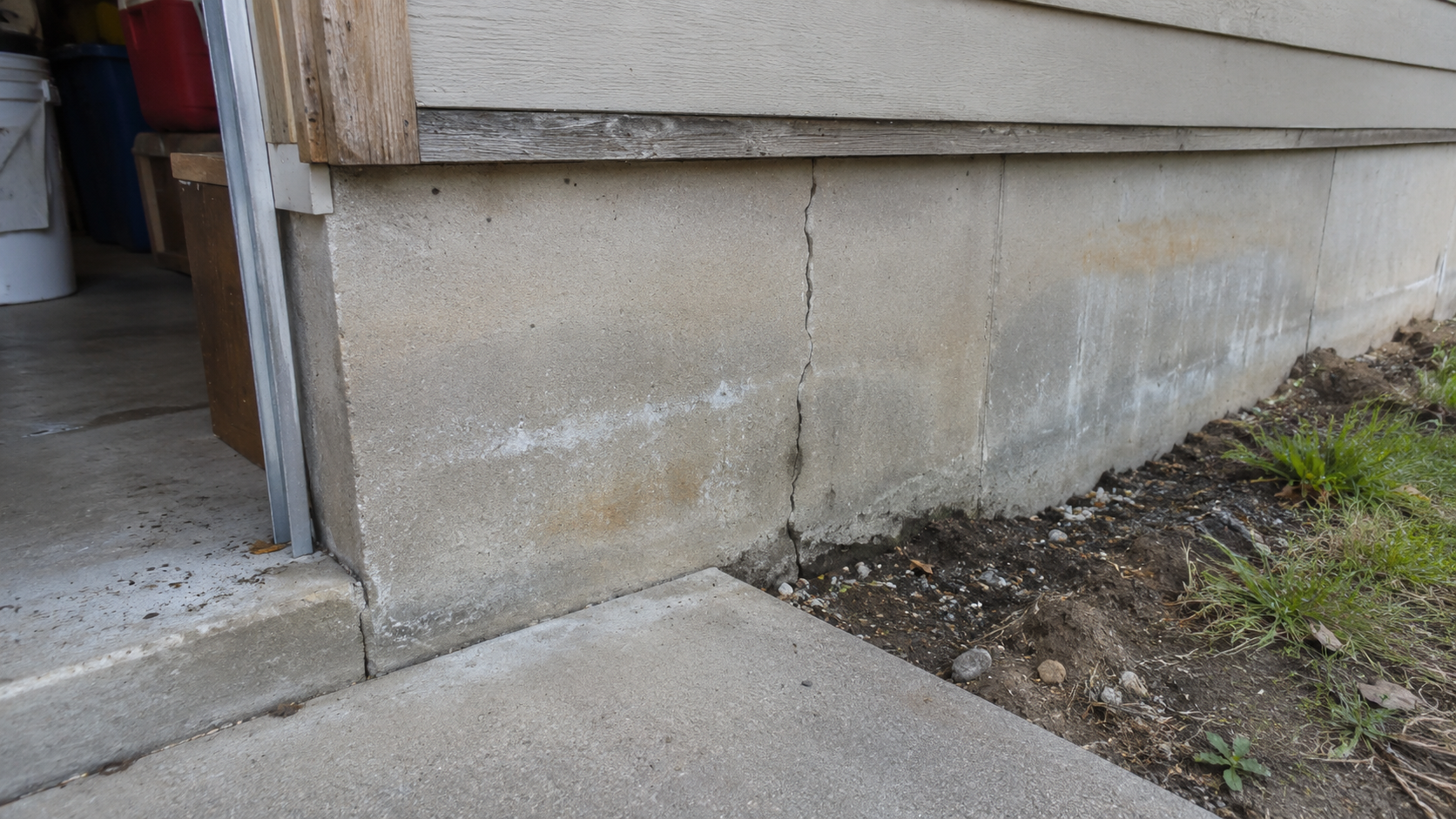
Small cracks get ignored until water shows up
Some stem wall problems look ordinary in real life. That is why they get ignored. A vertical crack beside soil, grade, or a garage slab can look like a small repair until water staining, slab movement, or exterior drainage shows that the wall is part of a larger system.
When the crawl space is part of the problem
A stem wall around a crawl space is connected to everything inside that crawl space: piers, beams, posts, moisture, soil, vapor control, and ventilation. If the crawl space is wet or the framing is sagging, fixing only the perimeter wall may leave the real problem untouched.
Look for damp soil, rotten sill plates, soft beams, temporary jack posts, cracked interior piers, and floor slope above. A stem wall crack with sagging floors may belong to a larger crawl space foundation repair problem, especially when the crawl space moisture and framing conditions are part of the same failure.
When the footing matters
A stem wall depends on the footing below it. If the footing has settled, rotated, cracked, or lost soil support, the stem wall may keep cracking after surface repair.
Footing problems are more likely when the crack pattern is wider at one end, when the wall has moved vertically, when the soil beside the foundation washes out, or when several cracks appear in the same area.
In those cases, the repair may move beyond crack sealing into underpinning, piering, excavation, or structural support. Foundation underpinning becomes relevant when the problem is below the stem wall and the house needs deeper support than a wall patch can provide.
Bad repairs that make stem wall problems worse
Stem wall repairs fail when they hide the symptom and ignore the cause.
- Patching a leaking crack without fixing outside water.
- Repointing a block wall that is still moving.
- Adding mortar to a cracked joint without checking the footing.
- Using interior sealant as the only repair for active water pressure.
- Ignoring gutters, grade, and downspouts.
- Covering the wall with finishes before the crack is monitored.
- Accepting a repair quote that does not say whether the crack is structural.
A good repair may look less dramatic than a bad one. It may start with drainage, grading, or inspection before anyone touches the crack.
Do not treat a leaking, displaced, horizontal, widening, or load-bearing stem wall crack as a casual DIY patch. Those conditions can involve water pressure, soil movement, footing problems, or structural load transfer. Patch materials can hide the warning signs while the wall keeps moving.
What a stem wall repair quote should include
A stem wall repair quote should be clear enough that you know what is being fixed and what is being ignored.
- wall material and damaged area
- crack type and location
- whether the crack is active, leaking, or displaced
- repair method and materials
- drainage or waterproofing work included
- excavation and backfill details if outside work is needed
- temporary support requirements if the wall is structural
- engineering or permit responsibility if required
- warranty terms and what voids the warranty
- exclusions, including finish repair, landscaping, concrete cutting, or access work
Be careful with one-line quotes. “Repair stem wall crack” does not tell you whether the contractor is sealing a crack, stabilizing a wall, rebuilding masonry, adding drainage, or just improving appearance.
When to call an engineer
Call an engineer or qualified foundation professional when the wall is displaced, bowing, cracked horizontally, supporting visible framing movement, or tied to sloping floors and interior damage. Also get a stronger inspection before buying a house with stem wall damage or before paying for a major repair.
A contractor may be able to repair the wall, but an engineer can help separate the cause from the sales pitch when the damage is structural or expensive.
Stem wall repair and resale
Stem wall repairs can affect resale because buyers and inspectors do not only look at the patch. They look at whether the cause was fixed.
A sealed crack with no drainage correction may raise questions. A repaired wall with photos, permit records, engineering notes, waterproofing details, and drainage work is easier to explain. Keep repair records, before-and-after photos, and warranty paperwork.
If the repair involved movement, water, underpinning, or structural reinforcement, the documentation matters almost as much as the finished wall.
What to fix first
Start with the cause, not the crack.
If the crack is dry, stable, and small, a limited repair may be enough. If the crack leaks, fix the water path before trusting the patch. If the wall is moving, check the footing, soil, and load path before paying for surface work.
A stem wall is part of the structure. The best repair is the one that explains why the wall failed, what is being repaired, and what would make the problem come back.
FAQ
What is a stem wall foundation?
A stem wall foundation uses a wall between the footing and the house framing or slab. The footing spreads the load into the soil. The stem wall raises and supports the house above grade.
Is a cracked stem wall serious?
It depends on the crack. A narrow, dry, stable vertical crack may be minor. A leaking, widening, horizontal, stair-step, or displaced crack deserves closer inspection.
Can a stem wall crack be repaired from the inside?
Sometimes. Interior crack repair may work for certain stable cracks, especially when the goal is sealing. If outside water or soil pressure is causing the problem, interior repair alone may not last.
What causes stem wall cracks?
Common causes include shrinkage, settlement, poor drainage, expansive soil, weak concrete or block, footing movement, and water pressure.
How much does stem wall repair cost?
The cost depends on the cause and repair method. A stable crack is much cheaper than a leaking wall, bowed wall, footing problem, or stem wall replacement. The quote should explain whether drainage, excavation, structural reinforcement, or engineering is included.
Can a stem wall be replaced?
Yes, but replacement is major work. The house may need temporary support, the damaged wall may need demolition, and the new wall must reconnect properly to the footing, framing, slab, waterproofing, and drainage system.
Is stem wall repair a DIY job?
Small cosmetic repairs may be manageable for some homeowners, but structural cracks, leaking cracks, displaced walls, footing movement, and repairs near load-bearing framing should not be treated as casual DIY work.
Does waterproofing fix a cracked stem wall?
Waterproofing can help stop water entry, but it does not repair structural movement by itself. If the wall is cracked because it is moving, the structural problem still has to be addressed.
References
For moisture sources, drainage, and basement water-control logic, see University of Minnesota Extension on moisture in basements: causes and solutions.
For concrete deterioration and repair background, see the U.S. Bureau of Reclamation Guide to Concrete Repair.
For foundation design, drainage, dampproofing, waterproofing, and local-code context, see ICC Chapter 4: Foundations. Local adoption and permit requirements still vary by jurisdiction.