

Gothic Revival was not a medieval copy.
It pulled older Gothic forms into newer buildings with different needs: houses, colleges, parliaments, stations, museums, and commercial blocks. The look came back, but the building types, materials, and uses were different.
That is the point. Gothic Revival was not just looking backward. It was an old language reused for newer work.
For the medieval source material behind it, go to Gothic Architecture Style, History of Gothic Architecture, and Gothic Elements in Architecture.

Exterior view of a Gothic Revival building showing pointed openings, vertical emphasis, and layered masonry.
What Gothic Revival Is
Gothic Revival is the later return of Gothic forms, mainly from the second half of the 18th century through the 19th century and into the early 20th.
You will also see the label Neo-Gothic. In practice, most readers do not need a separate page-level distinction. The useful split is between medieval Gothic and the later revival. The later urban and commercial phase can look sharper and more engineered, but it still belongs to the same broad revival story.
The key point is simple: medieval Gothic developed inside medieval construction and society. Gothic Revival re-used that language for modern institutions, modern cities, and modern identities.
Gothic Revival Was Not One Mood
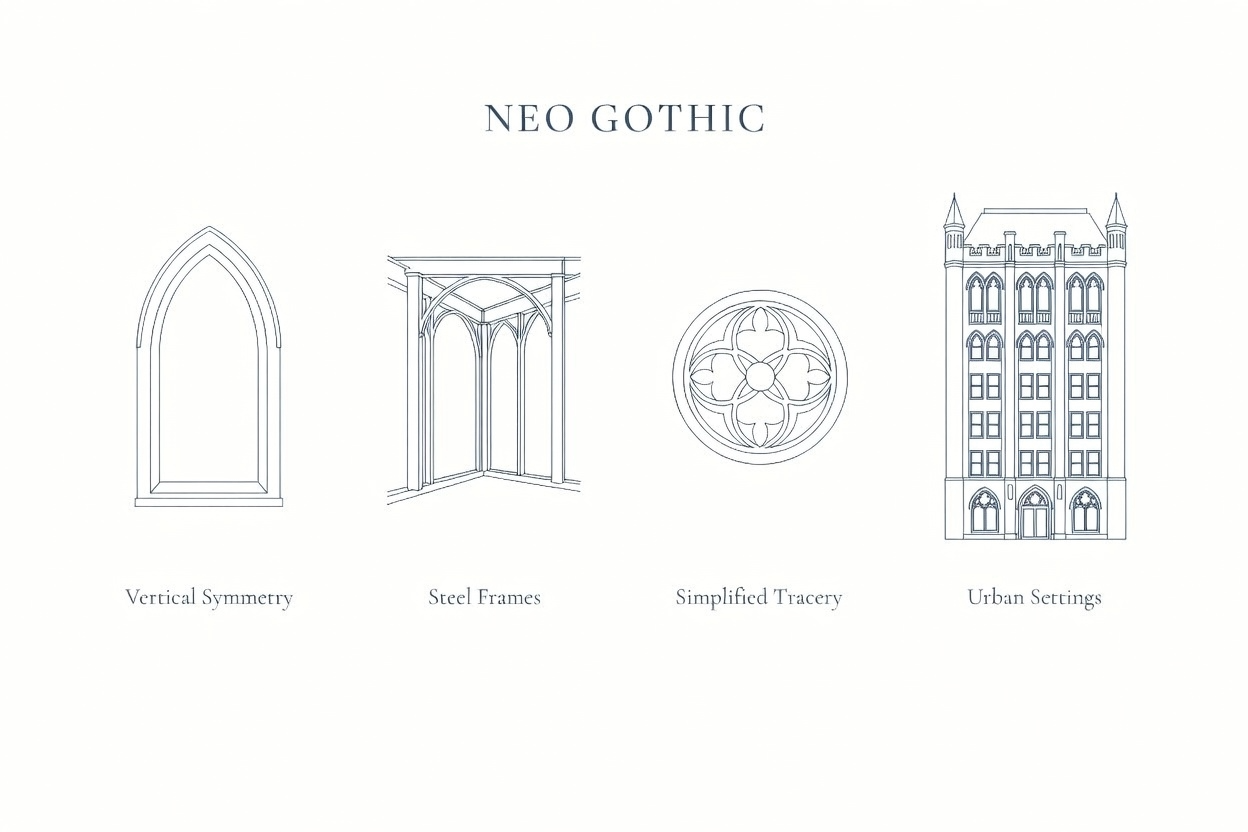
Illustration by ArchitectureCourses.org. Neo-Gothic comparison plate showing a pointed arch, structural bay, simplified tracery, and an urban facade.
The early phase could be playful and picturesque.
The later phase could be scholarly, civic, academic, or fiercely public.
Then the style moved again, into commercial towers, Beaux-Arts Gothic, Collegiate Gothic, and late urban versions that used steel frames, industrial production, and modern planning without giving up Gothic silhouette and surface language.
Why It Started
Gothic Revival grew in part as a reaction against flat classicism, smooth regularity, and the feeling that too much architecture had become correct but dead.
By the late 18th century, a lot of designers and patrons wanted buildings with more character, more historical depth, more surface richness, and more emotional charge. They were not all asking for the same thing, but Gothic gave them a usable alternative.
It also arrived at the right moment. Antiquarian study was growing. Romantic taste was shifting. Industrialization was changing daily life. Older forms started to feel like a way to recover weight, craft, memory, and public seriousness.

Pointed arches, stone screens, vertical emphasis, and dense ornament helped Gothic Revival stand apart from flatter classical public architecture.
Why Styles Come Back At All
Revival movements do not appear out of nowhere.

A visual comparison between classical restraint and the sharper, more vertical, more patterned language that Gothic Revival brought back.
They usually arrive when taste, politics, technology, money, and identity start pulling in new directions at the same time. Gothic Revival is a clean example. It was historical, but it was also modern. It looked backward to move forward.

Architectural change is usually pushed by several forces at once: technology, politics, money, culture, environment, and revival movements.
From Strawberry Hill To Westminster
The movement does not begin with a giant public building. It begins smaller and stranger.
Strawberry Hill House, Horace Walpole’s house in Twickenham, helped make the revival fashionable. It was domestic, theatrical, and personal. Then the movement hardened into something more studied and more public in the early 19th century.
That is where figures like A.W.N. Pugin matter. He pushed the revival away from costume and toward system, craft, and seriousness. The Palace of Westminster then gave the style one of its most visible public statements.
| Phase | What Changed | Useful Example |
|---|---|---|
| Mid-18th century | Picturesque domestic experiment | Strawberry Hill House |
| Early 19th century | More archaeological and serious reading of Gothic | Pugin’s influence |
| Mid-19th century | Public and institutional expansion | Palace of Westminster, St Pancras |
| Late 19th to early 20th century | Collegiate, civic, and commercial spread | Parliament Hill, Woolworth Building |
Timeline of Gothic Revival from early domestic experiments to civic, academic, and commercial expansion.
What To Look For
The quickest mistake is to think any pointed arch equals Gothic Revival. It does not.
You need a cluster of signals working together.
| Feature | What It Does | Where It Shows Up |
|---|---|---|
| Pointed arches | Sharpen openings and pull the eye upward | Doors, windows, arcades, vaults |
| Tracery | Refines the opening and gives it finer grain | Windows, screens, gables, facade panels |
| Steep gables and towers | Make the skyline active | Public buildings, houses, stations, campuses |
| Ribbed or decorated ceilings | Add structure and ceremony overhead | Halls, libraries, stairs, clubs, interiors |
| Layered stone or brick detail | Deepens shadow and surface rhythm | Public facades, domestic fronts, civic entries |
| Vertical composition | Makes the building feel taller and more urgent | Towers, bays, piers, rooflines |

Key Gothic Revival features, including pointed arches, ribs, tracery, and vertical roofline elements.
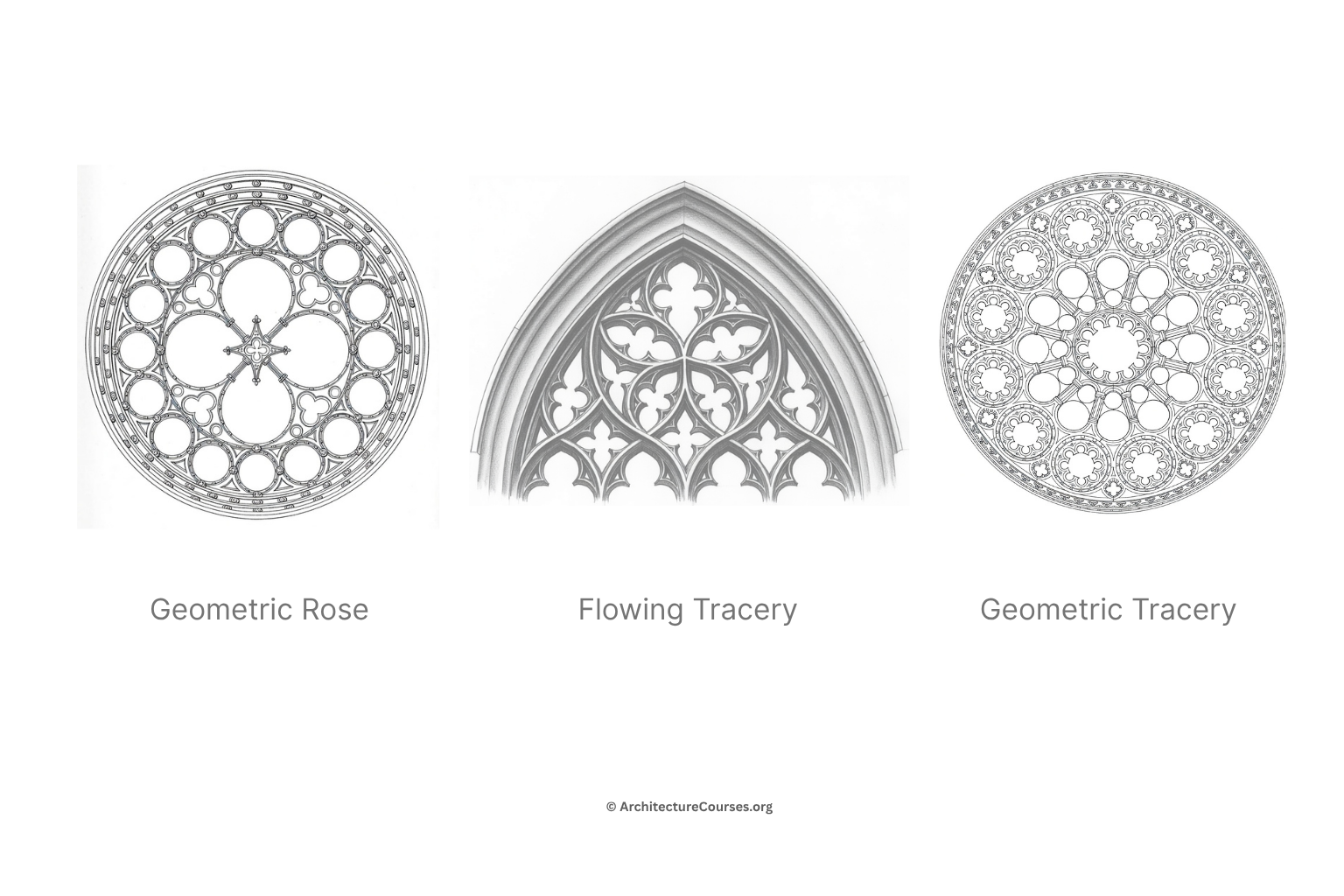
Illustration by ArchitectureCourses.org. Comparison of Gothic tracery types including a geometric rose, flowing tracery, and geometric tracery.
For the feature pages behind these parts, go to Pointed Arch, Rib Vaults in Gothic Architecture, and Gothic Tracery.
Public Buildings Are Where The Revival Got Serious
Once Gothic Revival moved into parliaments, town halls, courts, museums, railway stations, and government buildings, it stopped being a taste experiment and became a public language.
That public branch matters because it explains why the style lasted. Gothic Revival was good at projecting authority without looking flat. It could feel historical, ceremonial, and modern at the same time.
Parliament Hill is one of the clearest North American examples. St Pancras shows how the style could fuse transport infrastructure with theatrical surface language. The Woolworth Building proves the revival could even climb into the skyscraper age.

Parliament Hill in Ottawa, with Gothic Revival massing, towers, pointed openings, and dense stone detail.
Campuses Helped Keep It Alive
Gothic Revival found one of its longest afterlives on campus.
That was not an accident. Universities wanted buildings that suggested age, seriousness, continuity, and institutional gravity. Gothic did that well. It turned new campuses into places that looked older, heavier, and more established than they were.
This is where Collegiate Gothic becomes important. Princeton, Yale, Chicago, and other campuses turned the revival into a durable academic language. In Canada, the same appetite for historic weight and campus dignity shows up in major institutional settings, even when the exact stylistic mix shifts from one building to the next.
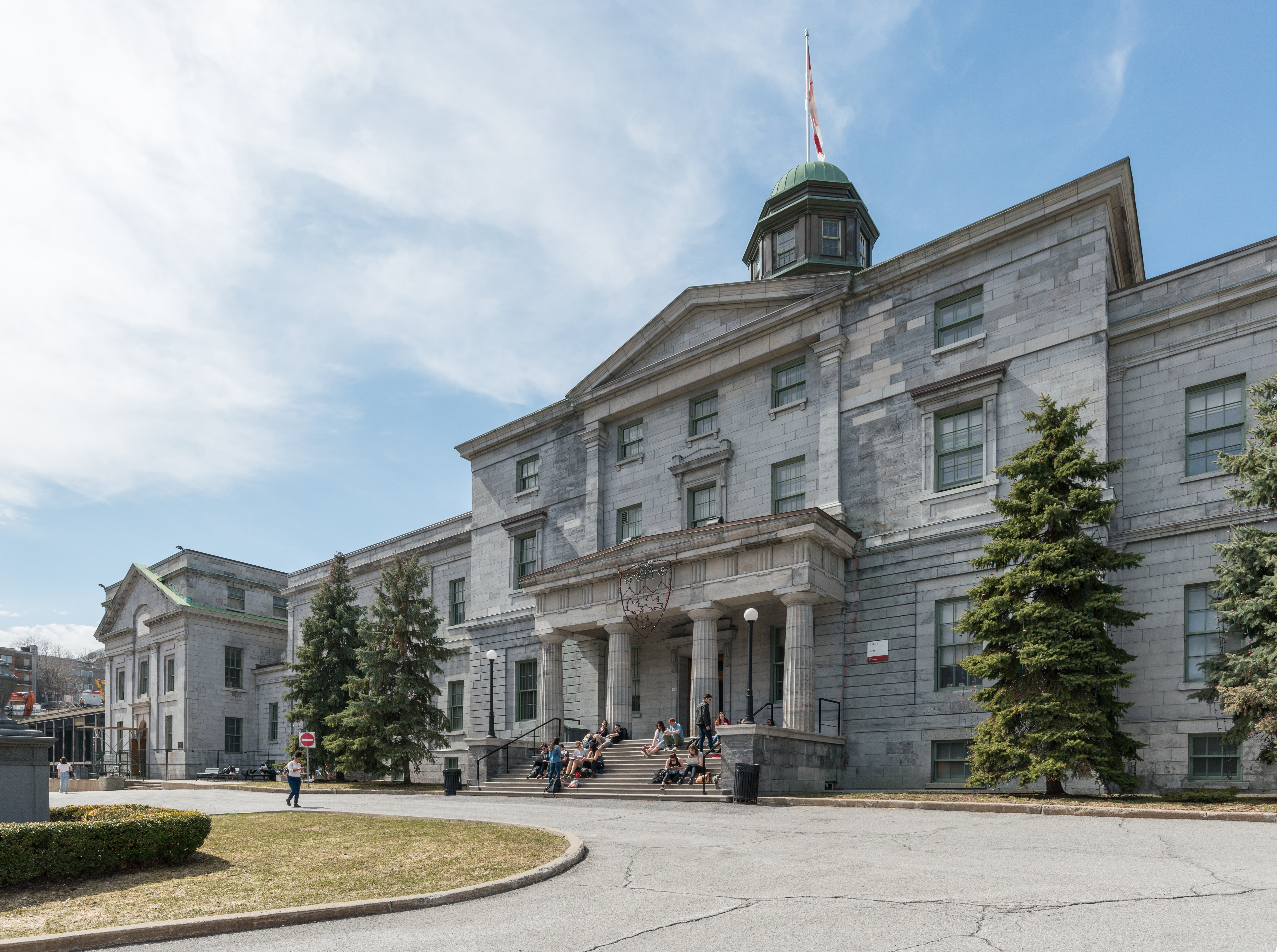
Historic university architecture in Montreal, showing how revival-era campus design used pointed openings, heavy masonry, and institutional formality.
It Worked At House Scale Too
Gothic Revival was never only monumental.
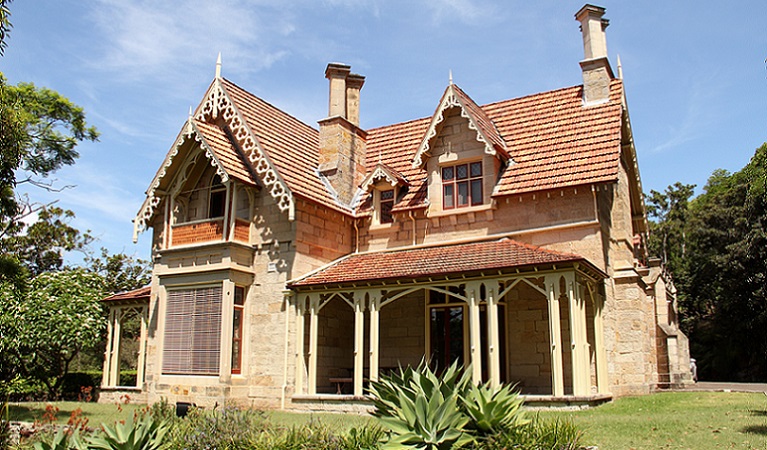
At house scale, the style could be eccentric, picturesque, or richly finished. Steep roofs, pointed windows, decorative bargeboards, battlements, carved wood, and deep-shadowed entries all helped turn domestic buildings into small dramas.
Strawberry Hill House is still the key example because it shows how the revival first became desirable in domestic life. Later Victorian Gothic houses took that energy and pushed it toward richer detail, more color, and more theatrical composition.
That branch matters because it explains why the revival kept reaching ordinary life, not just public ceremony.
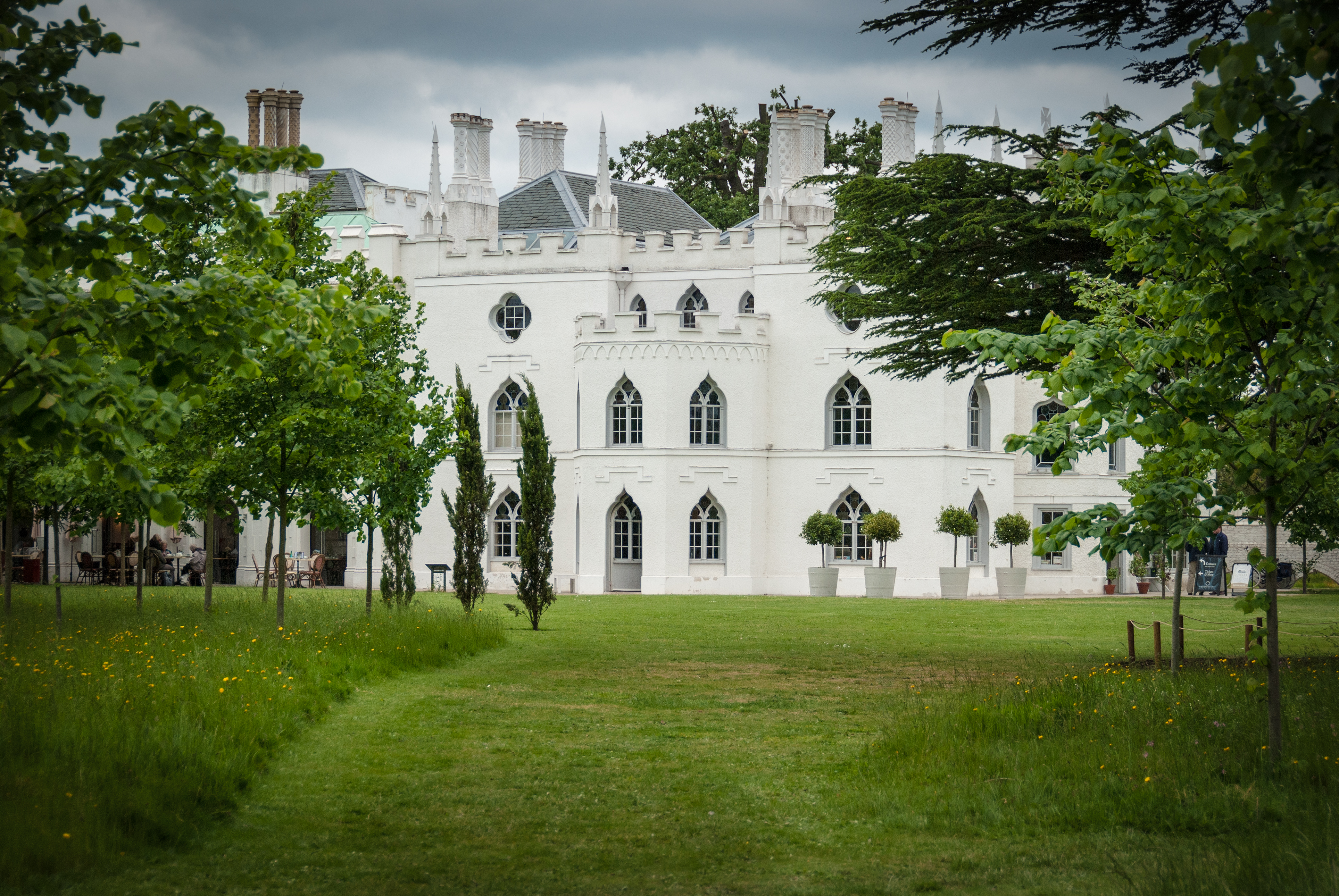
Strawberry Hill House, the early domestic branch of the revival, using battlements, pointed openings, and a picturesque silhouette.
Interiors Matter Just As Much
People often recognize Gothic Revival from the street first. But interiors carry just as much of the style.
Look for timber or ribbed ceilings, pointed interior openings, dark wood, fireplaces with carved surrounds, stained or colored glass, tall vertical proportions, and richer shadow around edges and joints. In reading rooms, clubs, halls, and domestic interiors, the revival often becomes more atmospheric than the exterior.
That is one reason the style survived so well. It was not only facade language. It could shape the whole room.

For the interior branch, go to Interior Design in Gothic Architecture and Victorian Gothic Architecture.
Why It Lasted So Long
Some styles burn bright and vanish. Gothic Revival kept mutating.
It lasted because it could do several jobs at once. It could suggest age. It could signal public seriousness. It could make a campus feel established. It could give a house drama. It could dress a commercial tower in vertical power. It could absorb new materials without losing its outline.
That is why the style kept returning in new forms. It was flexible enough to survive changes in program, scale, technology, and taste.
Why It Still Shows Up
Not because designers want to live in the 19th century.
Because the revival still offers things current architecture often struggles to deliver cleanly: silhouette, craft, weight, vertical rhythm, and a sense that the building means something in public.
You can still see Gothic Revival afterimages in civic complexes, campus expansions, restoration work, high-end residential projects, and modern buildings that borrow pointed profiles, tracery-like surface patterns, or strong upward emphasis without copying the older style literally.
Adaptive Reuse Is Now Part Of The Story
Many Gothic Revival buildings are now old enough that their second life matters as much as their first.
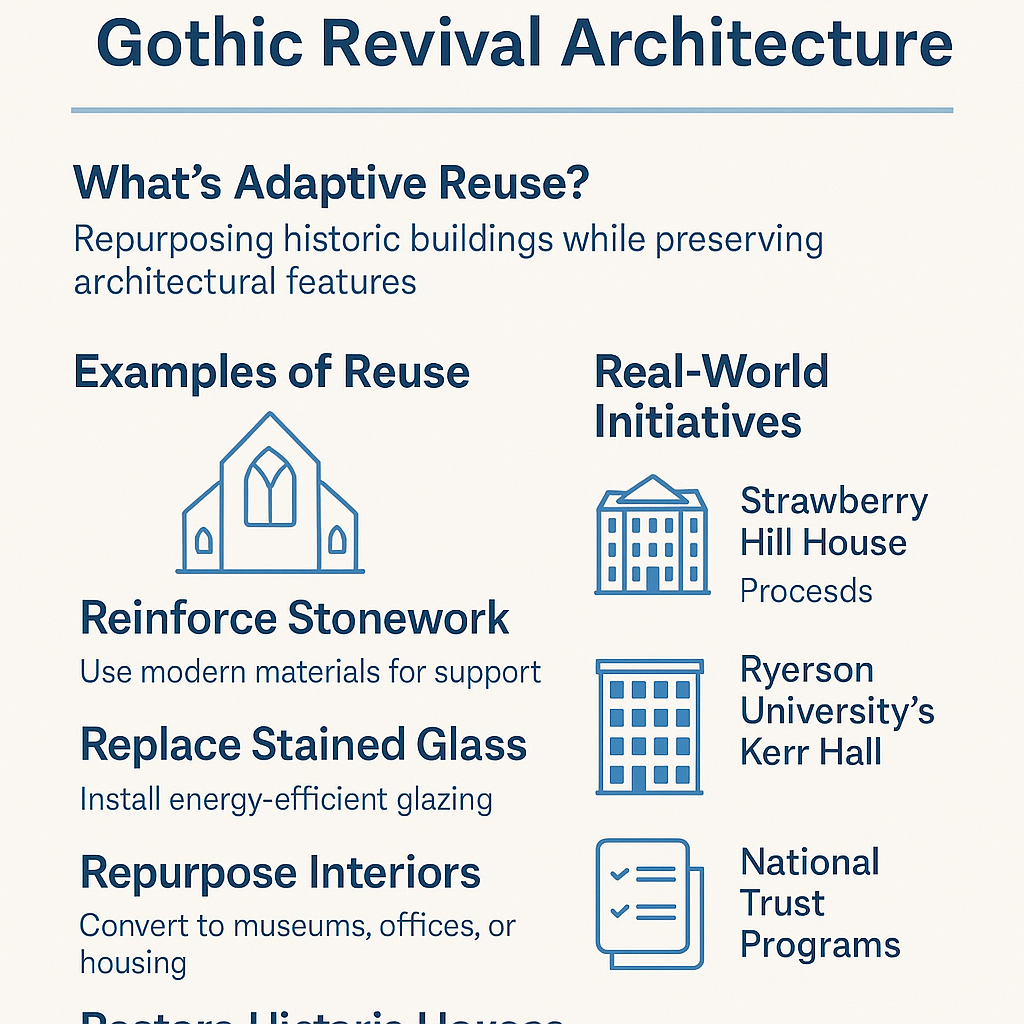
That means repair, retrofit, new services, better environmental performance, accessibility work, and careful decisions about what to preserve. Some survive as museums. Some stay in public use. Some become offices, libraries, housing, event space, or reworked campus buildings.
This is where the revival stays alive in practice. Not as a frozen photograph. As a working building stock that still has to earn its keep.
Quick Timeline
| Period | What Changes | Typical Use |
|---|---|---|
| 1740s–1770s | Picturesque domestic experiment | Country house and personal fantasy architecture |
| Early 1800s | More serious study of medieval precedent | Houses, clubs, institutional work |
| Mid-1800s | Public expansion and civic confidence | Parliaments, stations, courts, museums |
| Late 1800s–early 1900s | Campus spread and urban afterlife | Universities, halls, skyscrapers, commercial towers |
| 20th century onward | Selective reuse, echoes, and conservation | Restoration, retrofit, stylistic borrowing |
Where It Usually Goes Wrong
The first mistake is treating Gothic Revival as one fixed look.
The second is splitting Neo-Gothic off so hard that the broader revival story disappears.
The third is assuming the style belongs only to one building type. It does not. Its real strength is how many building types it could inhabit.
The fourth is focusing only on ornament and missing what the style is doing with skyline, massing, entries, shadow, and public presence.
Read This Next
For the medieval source language, use Gothic Architecture Style.
For the broader timeline, go to History of Gothic Architecture.
For the feature set behind the revival, use Gothic Elements in Architecture, Gothic Tracery, and Pointed Arch.
For the more theatrical domestic branch, use Victorian Gothic Architecture.
FAQ
What Is Gothic Revival Architecture?
It is the later revival of Gothic forms, mainly from the second half of the 18th century through the 19th century and into the early 20th, adapted for modern houses, campuses, public buildings, and commercial structures.
Is Neo-Gothic Different From Gothic Revival?
In most practical use, they belong to the same broad revival story. The more useful distinction is between medieval Gothic and the later revival.
Where Did Gothic Revival Start?
It begins in England, with early domestic experiments such as Strawberry Hill and then a more serious public expansion in the 19th century.
What Are The Main Features Of Gothic Revival?
Pointed arches, tracery, steep gables, towers, ribs, layered masonry, vertical emphasis, and dense carved detail are the main signals.
Was Gothic Revival Only Used For Religious Buildings?
No. It was widely used for parliaments, stations, courts, colleges, museums, houses, clubs, towers, and other civic or domestic work.
Why Did It Last So Long?
Because it could adapt. It worked at house scale and city scale, in stone and later steel, in campuses and commercial towers, while still carrying strong public character.