
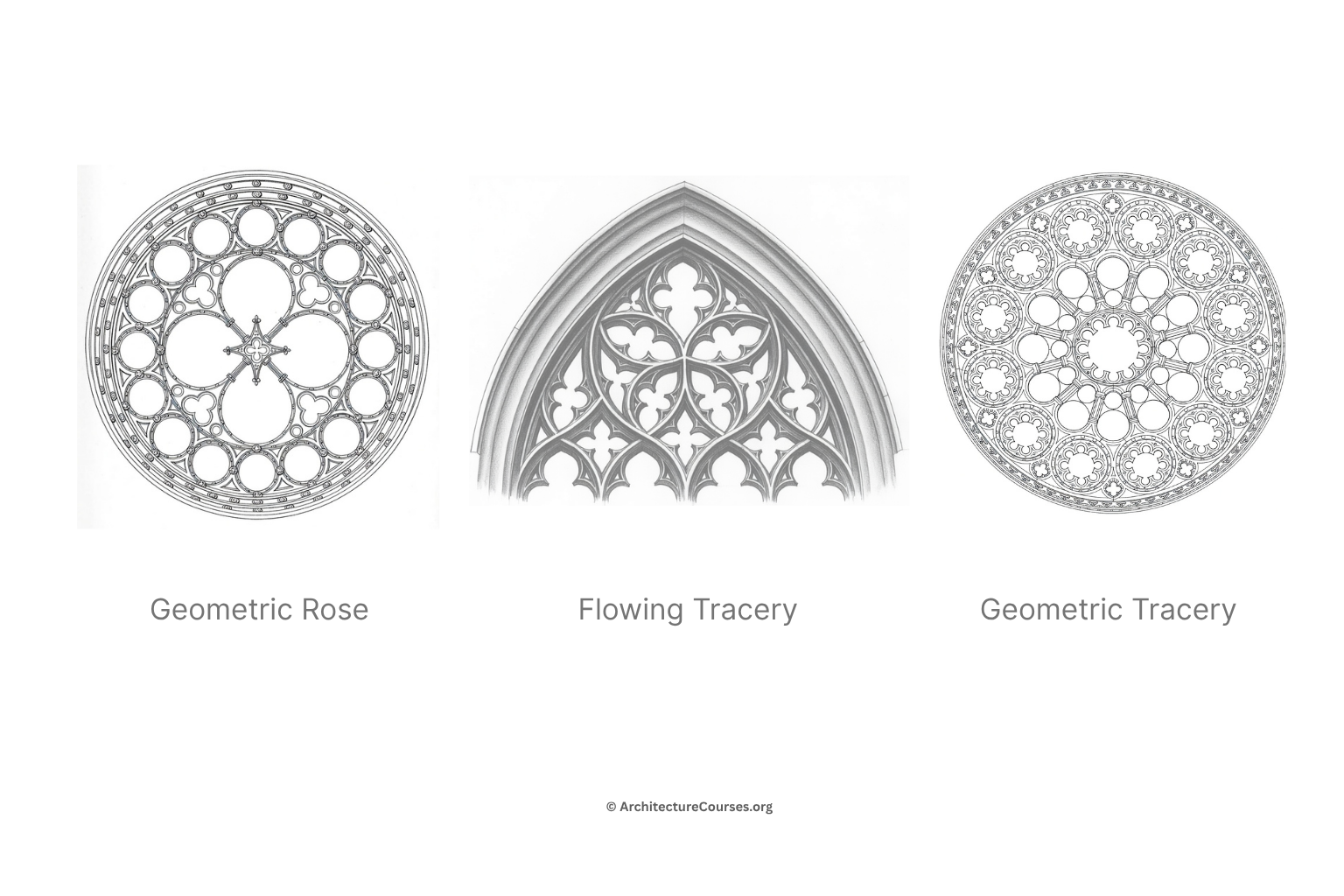
Illustration by ArchitectureCourses.org. Comparison of Gothic tracery types including a geometric rose, flowing tracery, and geometric tracery.
Gothic tracery is what turns an opening into architecture.
Without it, a window is just a hole in the wall. With it, the opening gets structure, pattern, depth, and rhythm. Light changes. The wall changes. The whole facade starts reading differently.
That is why tracery matters. It is not just decoration laid on top of a finished building. It is part of how Gothic architecture organizes the opening itself.
This page stays on that one subject: what tracery is, how it developed, the main tracery types, and how to read it in secular Gothic architecture.
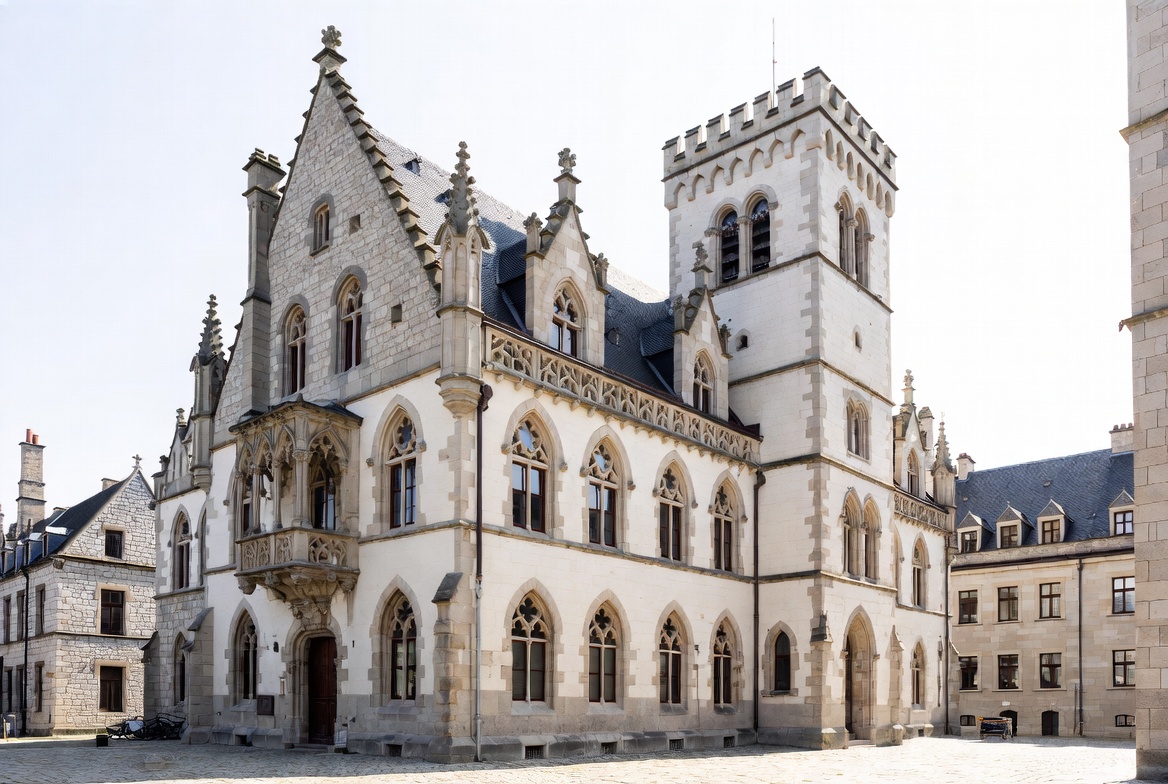
Image by ArchitectureCourses.org. A Gothic civic facade with pointed windows, tracery, and steep rooflines.
Read This Next: Gothic Elements in Architecture for the wider element set, Pointed Arch for the opening logic behind the style, and Gothic Architecture Style for the broader design language.
What Tracery Is
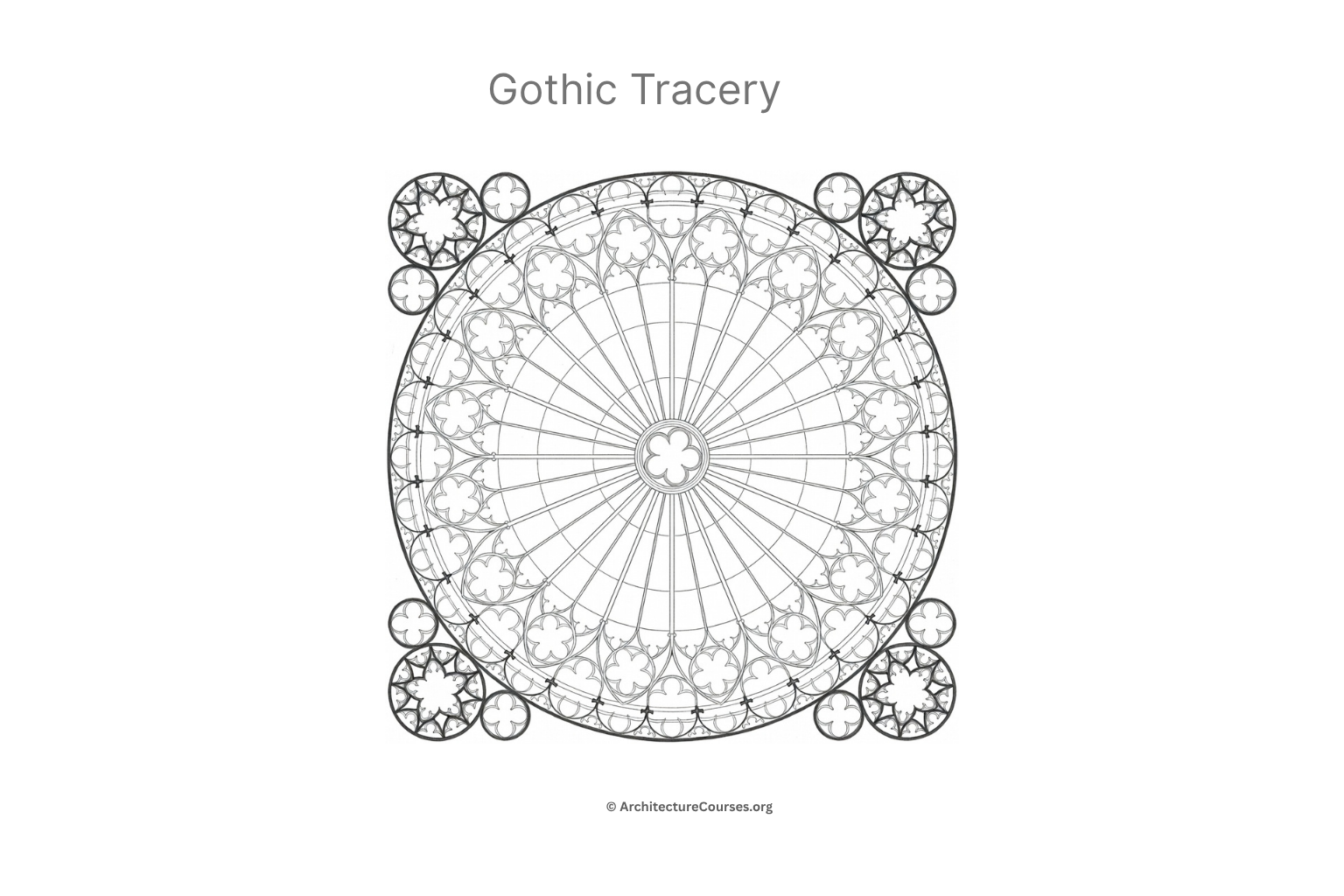
Illustration by ArchitectureCourses.org. Gothic rose tracery with radiating bar patterns, foils, and a layered circular composition.
Tracery is the stone framework inside a Gothic opening.
It divides the opening into smaller shapes and smaller fields of glass or void. It supports the opening physically, but it also controls how the opening feels. Plain. Dense. Sharp. Delicate. Heavy. Light.
That is why tracery belongs to both structure and appearance. It helps hold the opening together, and it gives the facade a finer grain than a simple punched window ever could.
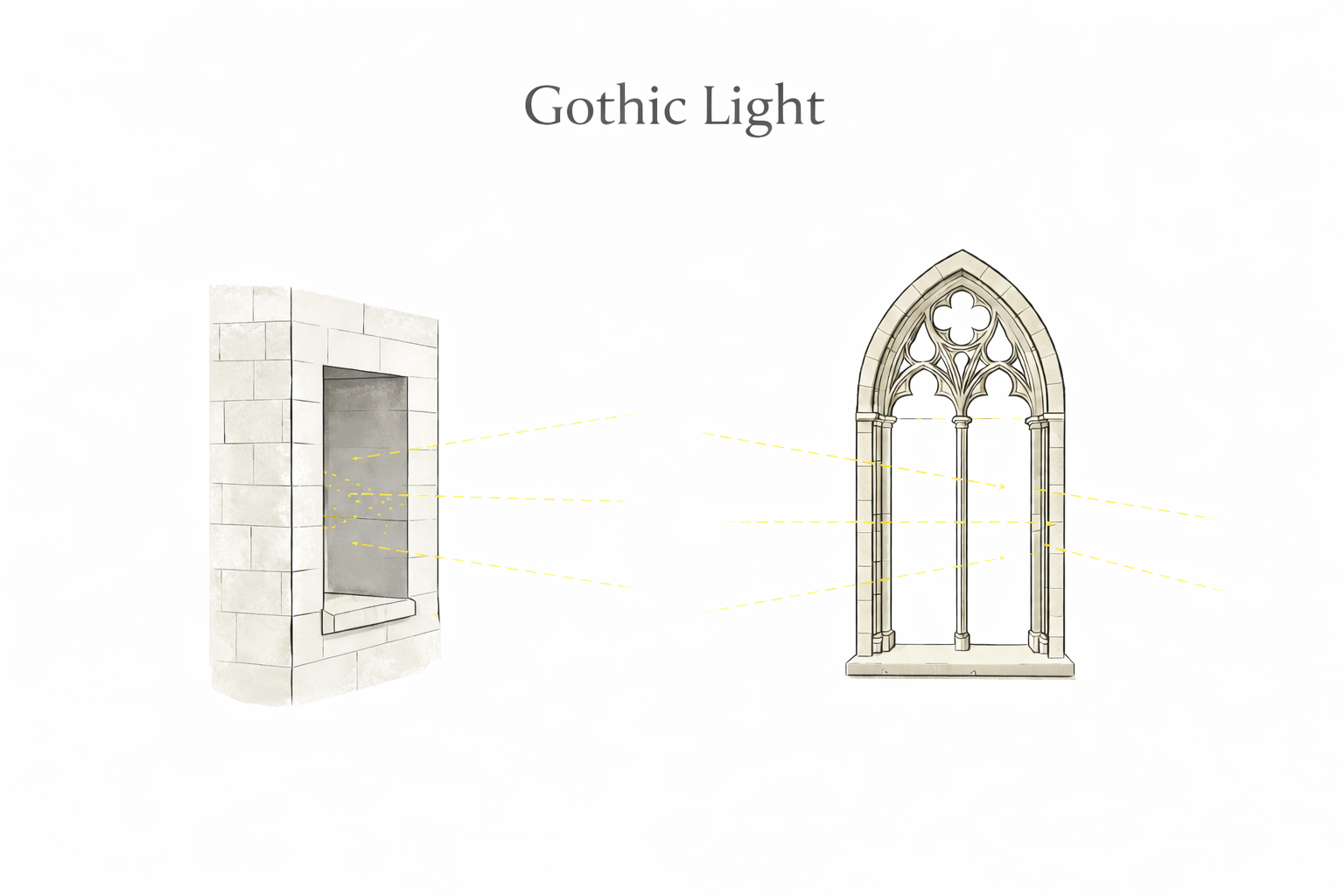
Illustration by ArchitectureCourses.org. Comparison of a plain wall opening and a Gothic tracery opening, showing how tracery changes light, depth, and surface rhythm.
What Tracery Actually Changes
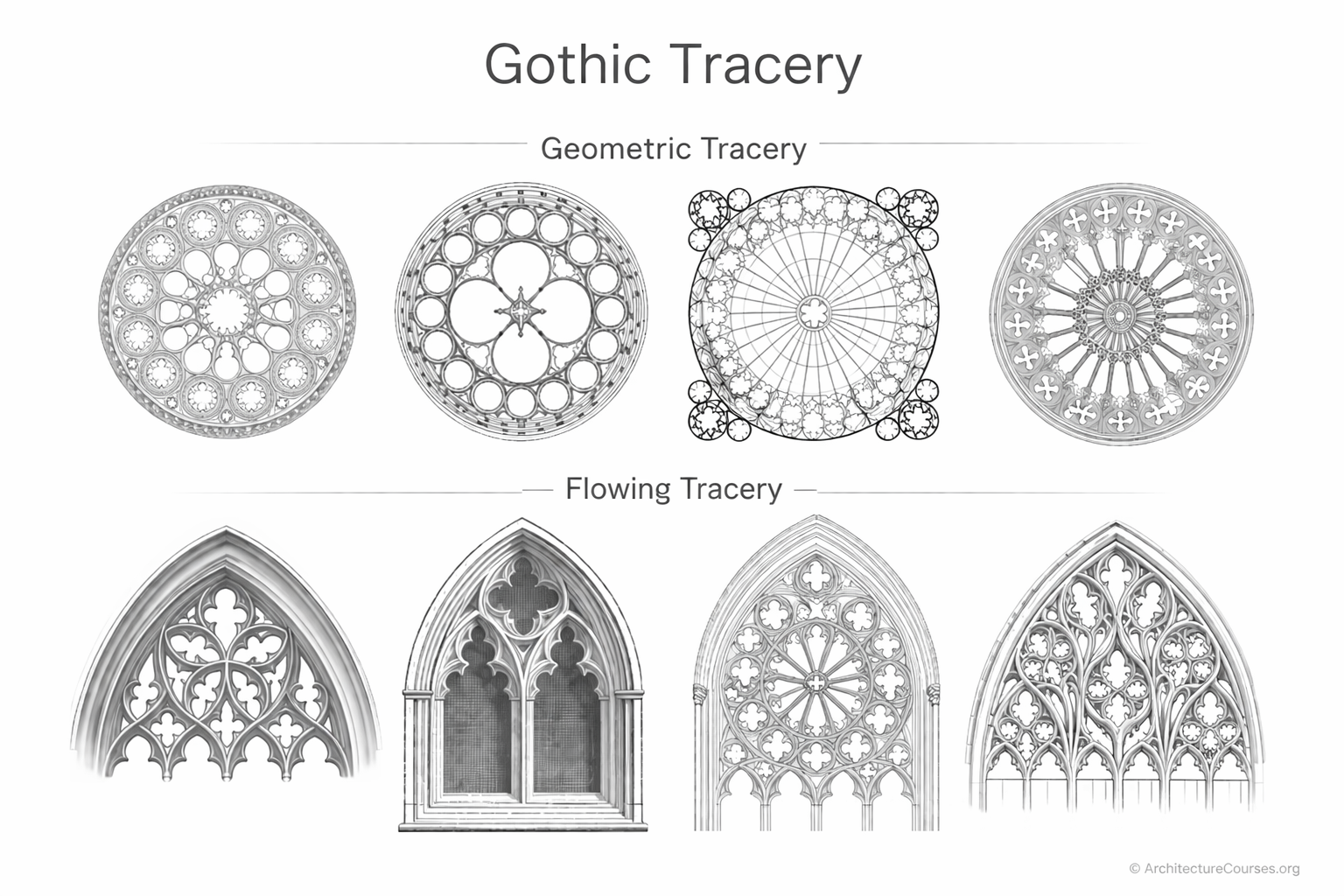
Illustration by ArchitectureCourses.org. Comparison of geometric Gothic tracery and flowing Gothic tracery patterns.
| What Tracery Changes | What Happens | Why It Matters |
|---|---|---|
| Opening size | The opening can become larger and more subdivided | The wall feels less blunt and more open |
| Light | Light enters through shaped fields instead of one blank span | The interior gets a more controlled visual effect |
| Facade rhythm | The surface gains pattern and smaller repeated units | The facade reads as more refined and articulate |
| Depth | The opening gains layered edges and inner structure | The wall starts feeling thicker and more worked |
| Style identity | The opening stops looking generic | The building reads more clearly as Gothic |
Plate Tracery
Plate tracery is the earlier, heavier form.
The stone still reads as a solid surface with shapes cut into it. The opening is present, but the wall mass is still dominant. You feel the thickness first.
That is what makes plate tracery important. It is the stage where the opening is starting to become more complex, but the stone has not yet dissolved into a finer network of bars.
Visually, it feels blunt, stable, and early. You do not get the same delicacy or openness that later tracery achieves, but you can feel the transition starting.
Bar Tracery
Bar tracery is where Gothic tracery really opens up.
Instead of carving shapes out of a thick stone plate, builders use thinner stone bars to divide the opening. That changes everything. The opening can get larger. The pattern can get lighter. The facade can take on more intricacy without collapsing into one solid block of stone.
This is the tracery most people picture when they think of Gothic windows. More elegant. More open. More refined. The stone framework still matters, but it no longer feels like the wall reluctantly making room for glass. The opening becomes a designed field in its own right.
Geometric Tracery
Geometric tracery keeps the pattern disciplined.
Circles, foils, quatrefoils, and other repeated figures give the opening a clear order. The pattern feels balanced and controlled, even when the window is large.
This matters because Gothic tracery is not always trying to look wild or fluid. Some of its strength comes from how tightly the geometry is managed. The opening reads as a composed system, not just a decorative flourish.
Flowing Tracery
Flowing tracery loosens the geometry and lets the pattern move.
The lines curve more. The opening starts feeling less rigid and more elastic. Instead of a set of stable repeated figures, the tracery begins to sweep across the window with more energy.
This is where Gothic tracery can feel almost graphic. The stone bars are still doing structural work, but the pattern starts carrying more motion and more visual drama.
That change matters because it shows how tracery develops over time. It does not stay frozen in one formal language.
How The Opening Is Built
A good tracery opening usually works in layers.
There is the outer opening itself. Then the inner divisions. Then the smaller shaped figures inside those divisions. Then the depth of the reveal and the edge profile around it.
That is one reason tracery feels richer than a flat pattern. It is not only line on a surface. It is line, depth, shadow, and thickness all working together.
Once you see that, tracery becomes easier to read. You stop looking only at the pattern and start seeing the construction of the opening.
Why Tracery Matters In Secular Architecture
Tracery is often explained as if it belongs to only one kind of building. That makes the subject smaller than it is.
Secular Gothic uses tracery too. Town halls, palaces, colleges, guild halls, courts, and urban houses all use traceried openings to add refinement, depth, and status to the facade.
In a civic building, tracery can make the public face feel more formal and more finished. In a palace or urban house, it can sharpen the window rhythm and enrich the surface without turning the whole facade into solid heaviness.
That is one reason tracery deserves its own page. It is one of the clearest ways Gothic architecture changes the wall.
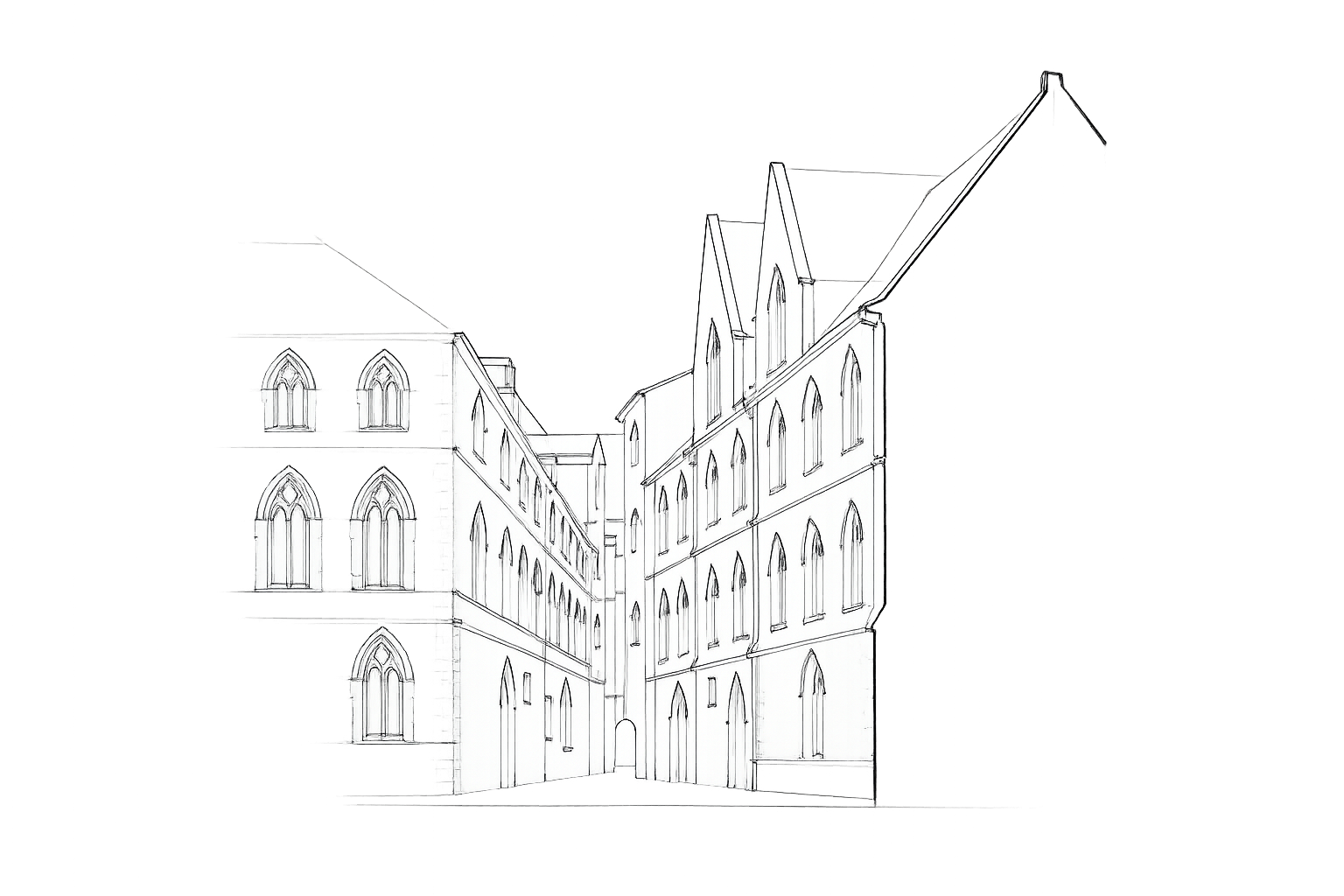
Illustration by ArchitectureCourses.org. A secular Gothic street with repeated pointed-window facades and narrow urban proportions.
How To Read Tracery On Site
If you want to read tracery quickly, use this order.
- Look at the overall opening shape first.
- Check whether the stone feels plate-like or bar-like.
- Look for repeated geometric figures or flowing curves.
- Notice how deep the opening is, not just how wide it is.
- Step back and ask what the tracery is doing to the wall rhythm.
That sequence gets you much further than staring at the pattern without reading the opening around it.
Where People Get Tracery Wrong
The first mistake is treating tracery as pure decoration.
The second is ignoring the difference between plate tracery and bar tracery.
The third is looking only at the lines and not at the thickness, shadow, and wall depth around them.
Good tracery is not a doodle in stone. It is a way of building and organizing the opening.
Why Tracery Still Holds Up
Because it solves more than one problem at once.
It supports the opening. It controls the pattern. It gives the facade finer grain. It changes how light enters. It gives the wall depth and rhythm without losing structural clarity.
That is why tracery still feels sharp now. It is not a random flourish from the past. It is a precise design tool.
Quick Type Guide
| Type | What It Looks Like | How It Reads |
|---|---|---|
| Plate tracery | Openings cut out of solid stone mass | Heavy, early, controlled |
| Bar tracery | Thinner stone bars dividing larger openings | Lighter, more open, more refined |
| Geometric tracery | Circles, foils, and repeated figures | Ordered, balanced, disciplined |
| Flowing tracery | Curving, sweeping linework | More fluid, more animated, more complex |
Read This Next
For the wider element set, go to Gothic Elements in Architecture.
For the opening logic behind the style, use Pointed Arch.
For the broader design language, go to Gothic Architecture Style.
For the structural side, use Gothic Structures.
FAQ
What Is Gothic Tracery?
Gothic tracery is the stone framework inside an opening that supports the window and shapes its pattern.
What Is The Difference Between Plate Tracery And Bar Tracery?
Plate tracery is cut from a heavier stone surface. Bar tracery uses thinner stone bars, which allows larger and more complex openings.
Is Tracery Structural Or Decorative?
It is both. It helps organize and support the opening, and it also shapes how the facade looks and how light enters.
Why Is Tracery Important In Gothic Architecture?
Because it makes larger, more refined openings possible and gives the wall a more articulate, patterned, and light-filled character.
Did Secular Buildings Use Gothic Tracery Too?
Yes. Tracery appears in civic buildings, palaces, colleges, and urban houses, not just in one narrow building type.
How Do You Spot Tracery Quickly?
Read the opening shape first, then check whether the stone is working as a heavy plate or a lighter network of bars.