
A Bachelor of Science in Architecture sounds like a clean path into architecture.
Sometimes it is.
Sometimes it is the first half of a longer route students did not realize they were choosing.
That is the problem with the BS Architecture degree. The title feels professional. The work feels architectural. The studio projects may look serious. But in many cases, the degree by itself is not the same as a professional B.Arch and may not be enough for the standard architect licensure path.
That does not make it a bad degree.
It means students need to know what the degree actually leads to before they spend four years and then find out they still need graduate school.
What a BS in Architecture Really Is
A Bachelor of Science in Architecture is usually a four-year undergraduate degree focused on design studio, drawing, digital tools, structures, environmental systems, architectural history, materials, and building technology.
In many U.S. programs, it is a pre-professional degree.
That phrase matters. Pre-professional means the degree gives you a serious architecture foundation, but it may not complete the education requirement for becoming a licensed architect. A student may still need a professional Master of Architecture later.
This is where students get caught.
They hear “architecture degree” and assume “architect path.” The two are not always the same.
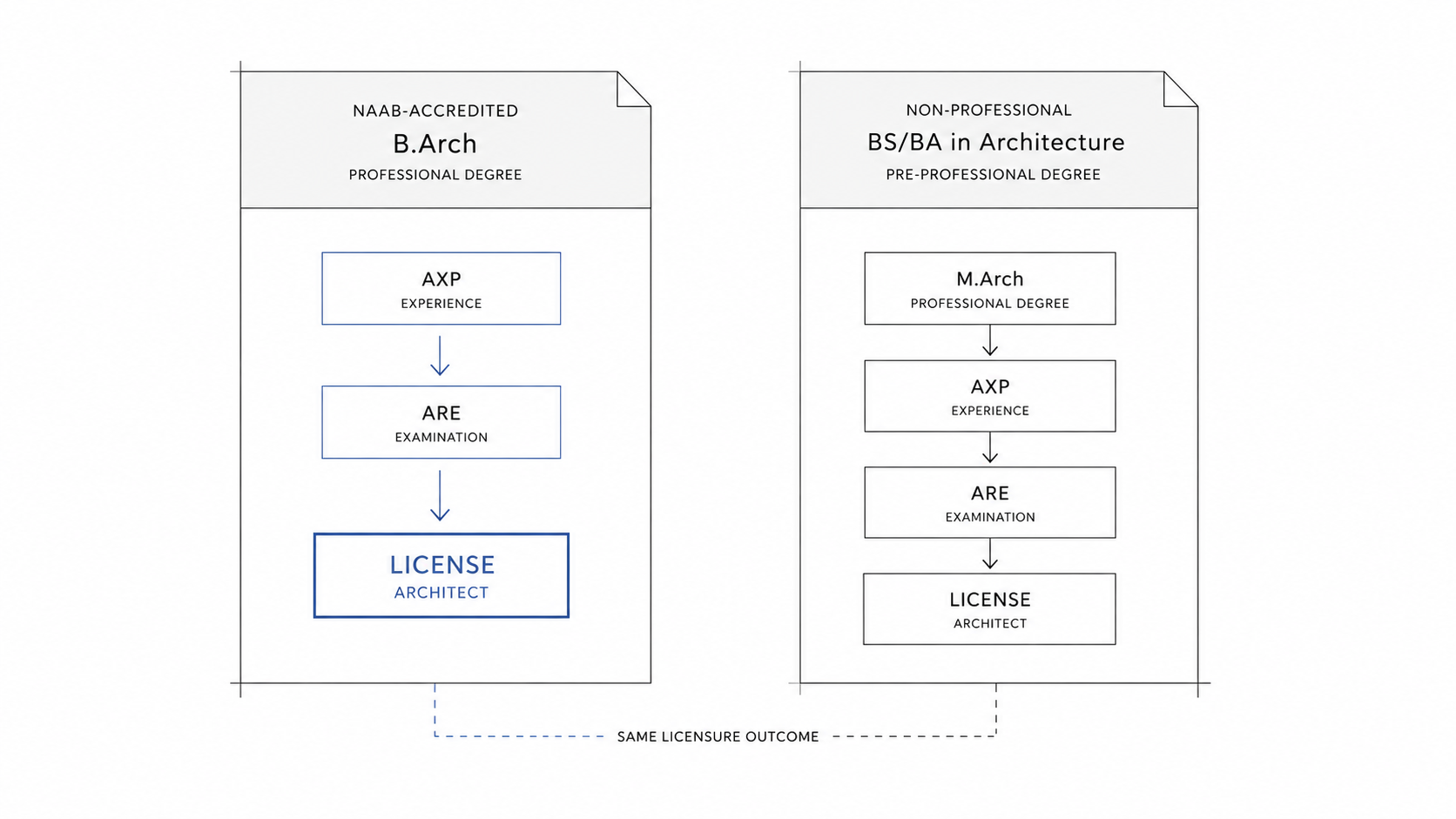
| Degree | Typical length | What it usually means | Common next step |
|---|---|---|---|
| B.Arch | 5 years | Professional undergraduate architecture degree when accredited | Experience, exams, licensure path |
| BS in Architecture | 4 years | Often pre-professional architecture foundation | M.Arch, office work, or related design work |
| BA in Architecture | 4 years | Often broader, more liberal-arts based architecture study | M.Arch or adjacent field |
For the full degree map, read Types of Architecture Degrees.
BS Architecture vs B.Arch
The BS and the B.Arch can look similar from the outside. Both may include studio. Both may include drawing, models, history, structures, and design reviews.
The difference is the professional status of the degree.
A B.Arch is usually built as the direct professional undergraduate route. A BS in Architecture often gives students a strong foundation, then expects them to complete an M.Arch if they want the standard licensure route.
That extra step changes the money.
It also changes the timeline.
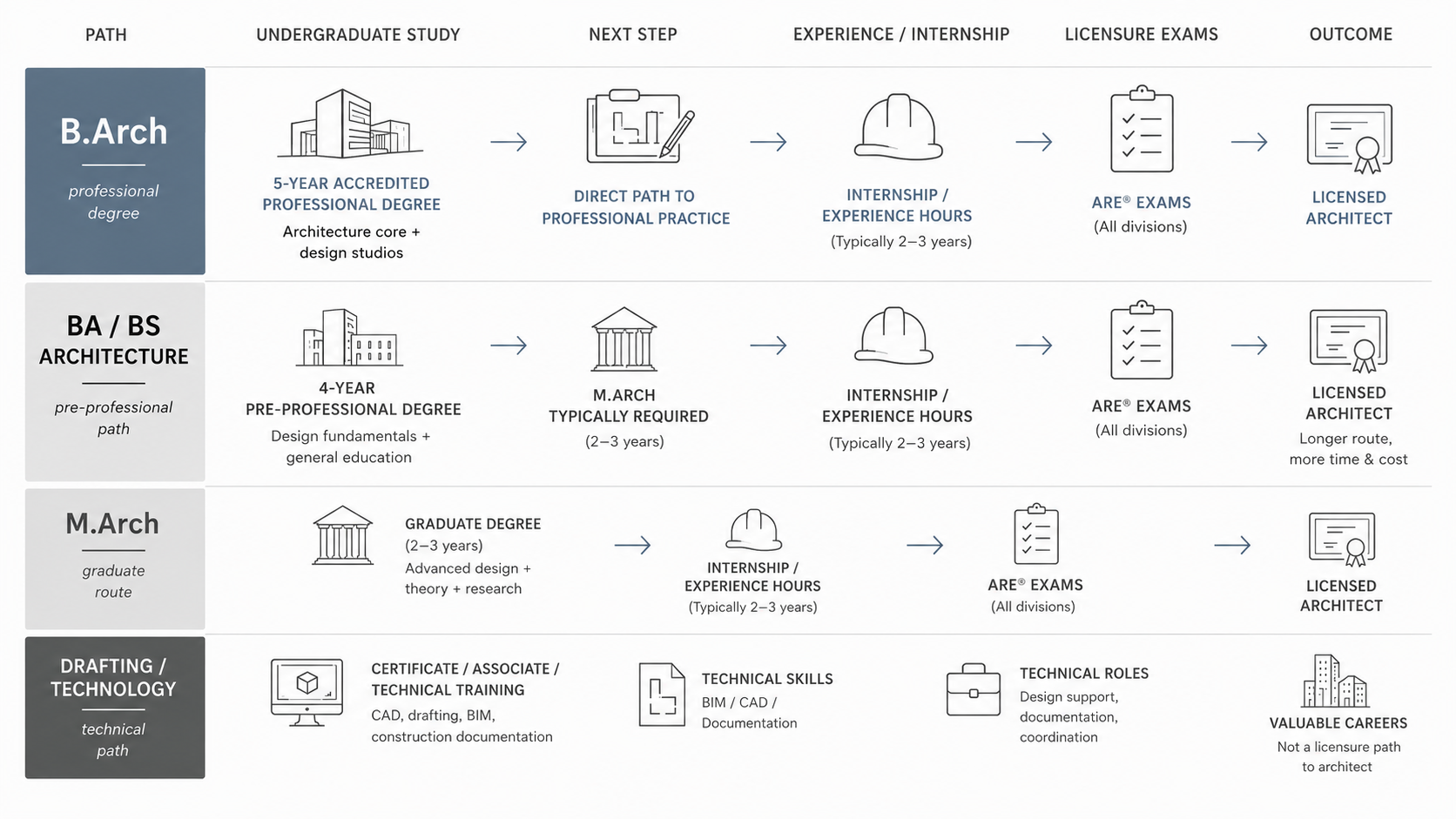
A student choosing a BS route should ask one blunt question before enrolling:
Will this degree qualify me for the next licensing step, or will I need an M.Arch first?
For the direct professional undergraduate path, read Bachelor of Architecture.
Why Students Still Choose the BS Route
The BS Architecture route can make sense.
It is often better for students who want architecture, but also want room to explore other paths. Some students use it before graduate school. Some move into BIM, digital modeling, visualization, construction coordination, planning, sustainability, interiors, or real estate development support.
Some students are not ready to commit to the five-year B.Arch path at eighteen. A BS can give them time to test the field before deciding whether the architect license is really worth the next step.
That flexibility has value.
But flexibility only helps when the student knows what is being traded away.
What You Study
A good BS Architecture program should not feel like a drawing hobby with a university name attached.
It should build real architectural discipline: studio work, technical thinking, visual communication, history, environmental logic, and enough construction awareness to stop students from designing buildings that only work as images.
| Course area | What it teaches | Why it matters |
|---|---|---|
| Design studio | Space, site, form, critique, revision | This is where architecture students learn to develop ideas under pressure |
| Drawing and representation | Plans, sections, elevations, diagrams, models | Architecture has to be communicated before it can be built |
| Structures | Loads, spans, gravity, systems, basic structural behavior | Buildings cannot be treated as floating images |
| Environmental systems | Light, air, heat, energy, comfort, climate response | Good design has to work physically, not only visually |
| Digital tools | CAD, BIM, modeling, rendering, layout | Office work depends on technical production skills |
| History and theory | Buildings, cities, movements, criticism, context | Design decisions need cultural and historical awareness |
The stronger programs connect these subjects. The weaker ones let students make attractive studio work without enough technical consequence behind it.
The Portfolio Problem
A BS Architecture degree should help students build a portfolio that can do more than look good.
If the student later applies to an M.Arch, the portfolio has to prove design development, drawing skill, spatial thinking, process, and technical growth.
Pretty images alone are not enough.
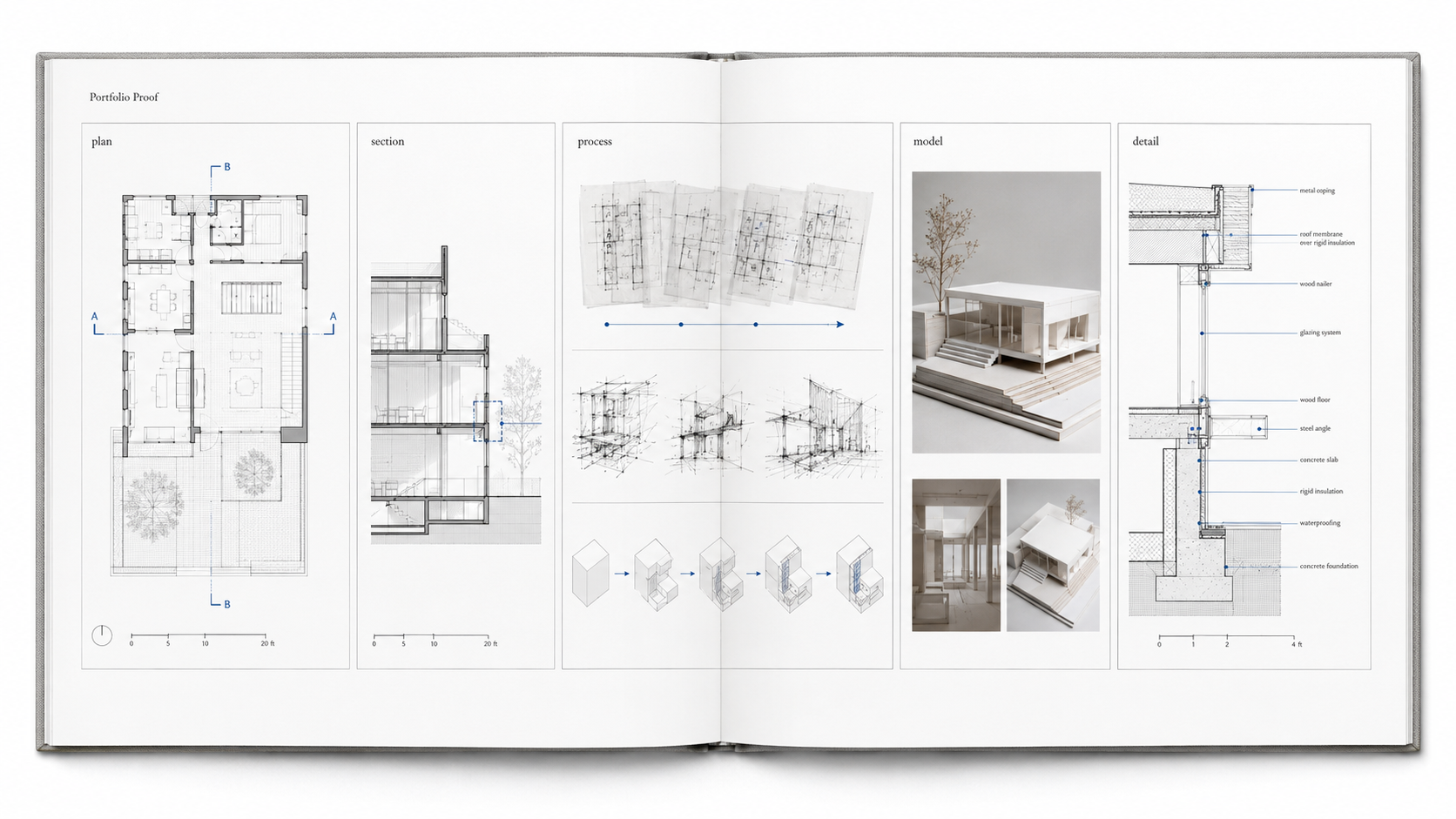
By graduation, a useful BS Architecture portfolio should show:
- plans that organize space clearly
- sections that explain height, light, structure, and relationships
- process work, not only final boards
- physical or digital model studies
- site thinking
- some construction or environmental awareness
- one or two projects strong enough for graduate applications or job interviews
If the program produces only glossy renderings, that is a warning sign.
For deeper portfolio help, read Real Architecture Portfolios.
The Cost Trap
A BS Architecture degree can look cheaper than a B.Arch because it is often four years instead of five.
That comparison can be misleading.
If the student needs an M.Arch later, the full path may become six or seven years. That can mean more tuition, more rent, more studio costs, and more years before stronger professional income starts.
| Path | Common timeline | Cost risk |
|---|---|---|
| B.Arch | About 5 years | Intense professional track from the start |
| BS Architecture + M.Arch | Often 6 to 7 years total | Extra graduate tuition and delayed earnings |
| BS Architecture only | About 4 years | May limit licensure path but can still lead to related work |
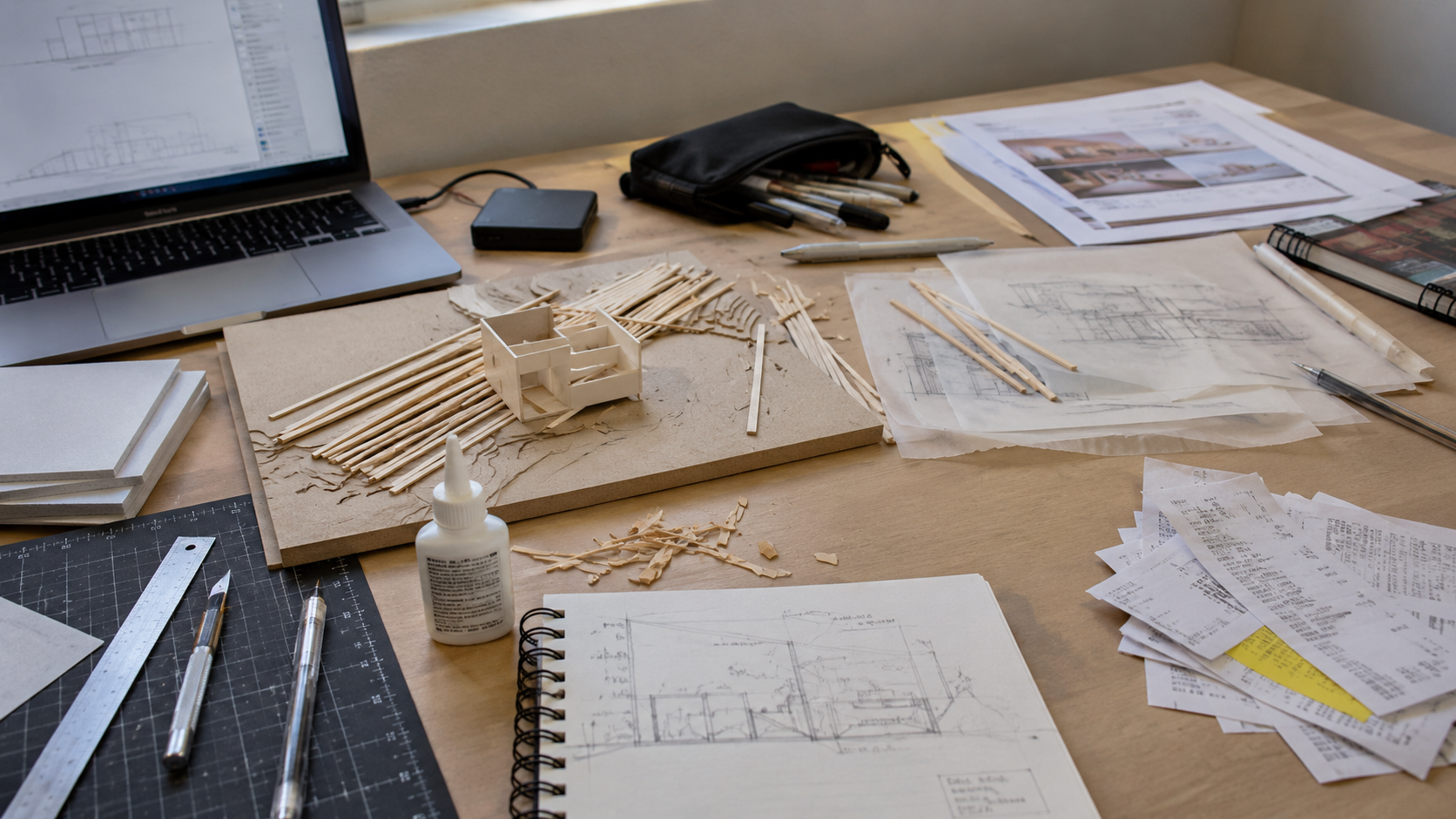
The degree cost is not only tuition. Architecture students pay through studio materials, printing, software, laptop demands, model supplies, transport, storage, and time.
The expensive mistake is comparing one year count against another without pricing the full route.
What Students Discover After Year One
This is the part brochures do not say plainly.
Architecture school is not just creative work. It is repeated correction.
Students draw something, pin it up, get criticized, redraw it, rebuild the model, change the section, fix the circulation, adjust the site plan, then do it again. Some students love that loop. Others realize they liked buildings more than they liked studio.
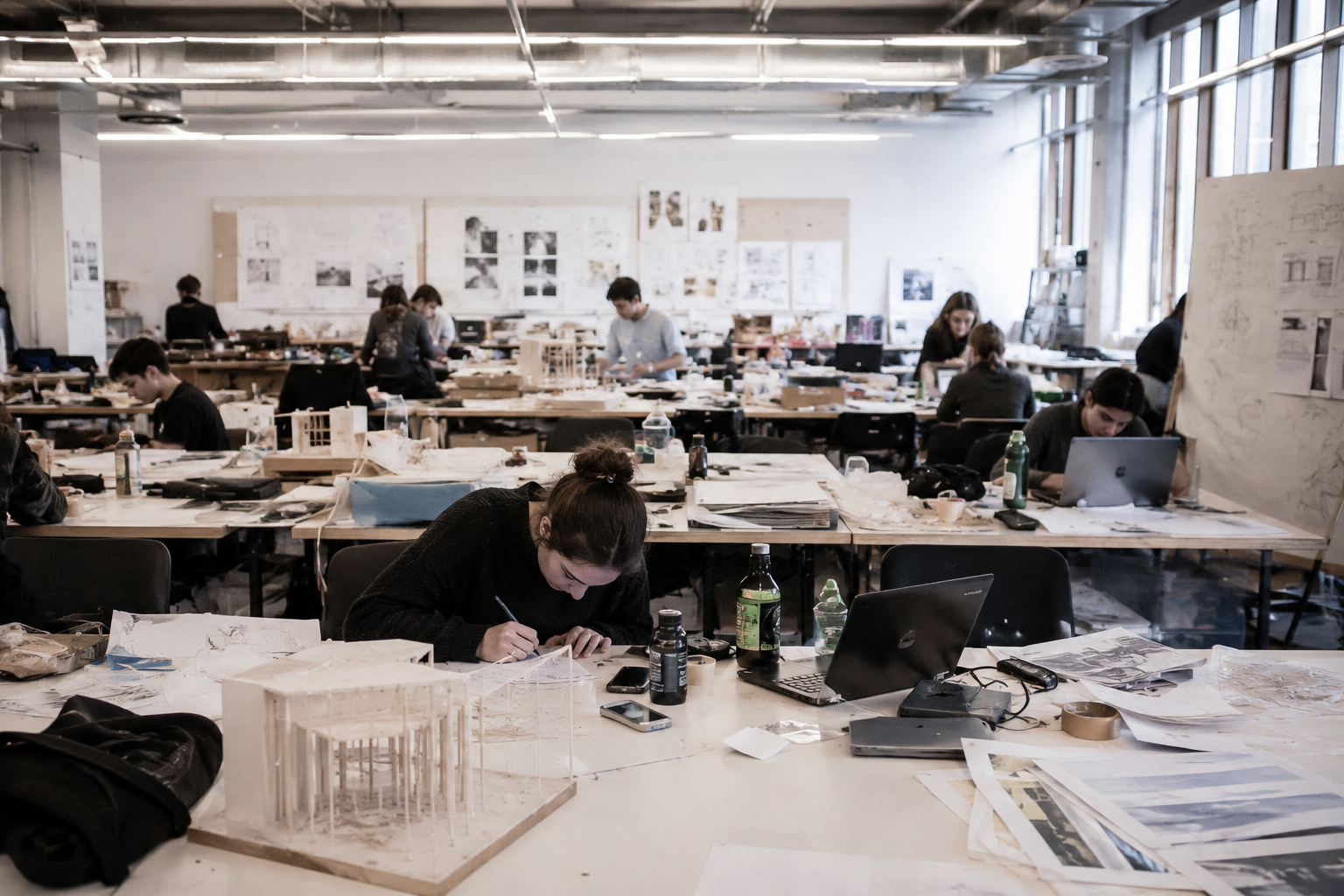
The BS route can be useful here because it gives some students room to pivot. A student may discover they prefer environmental systems, planning, visualization, construction technology, or digital coordination more than the licensed architect path.
That is not failure.
It is only failure when the student never understood the options.
Career Paths After a BS in Architecture
A BS Architecture graduate may work in architecture offices, but job titles vary.
Without licensure, graduates should be careful with the word “architect.” In many places, that title is legally protected. Early roles may use titles such as designer, architectural designer, junior designer, BIM technician, drafting assistant, visualization artist, project assistant, or design coordinator.
| Career lane | What the work involves | What helps |
|---|---|---|
| Architectural designer | Design support, drawings, models, presentations | Strong portfolio and software fluency |
| BIM or drafting role | Production drawings, model coordination, documentation | Revit, CAD, detailing, office discipline |
| Visualization | Renderings, diagrams, animations, presentation images | Graphic judgment and digital tools |
| Construction coordination | Drawings, field questions, documentation support | Technical understanding and communication |
| Graduate architecture study | M.Arch preparation for professional path | Portfolio, transcript, recommendations |
| Urban design or planning support | Maps, diagrams, site analysis, public-realm studies | Site thinking and clear diagrams |
For graduate study after the BS, read Master’s Degree in Architecture.
Online BS Architecture Degrees
Online BS Architecture programs need extra scrutiny.
Some can teach useful skills. Some help with drafting, visualization, digital modeling, history, or design theory. But architecture education depends heavily on studio culture, critique, model review, desk feedback, and accreditation rules.
A convenient online degree is not automatically a recognized professional route.
Before enrolling, check:
- whether the degree is professional or pre-professional
- whether it has accreditation that matters for your goal
- how studio critique works
- whether physical model work is required
- whether graduates enter M.Arch programs later
- whether the school publishes outcomes
For the full online-degree breakdown, read Can You Earn an Architecture Degree Online?.
How to Judge a BS Architecture Program
Do not judge the program by campus photos alone.
Look at student work. Look at graduate outcomes. Look at transfer and M.Arch placement. Look at studio culture. Look at whether technical courses are treated seriously.
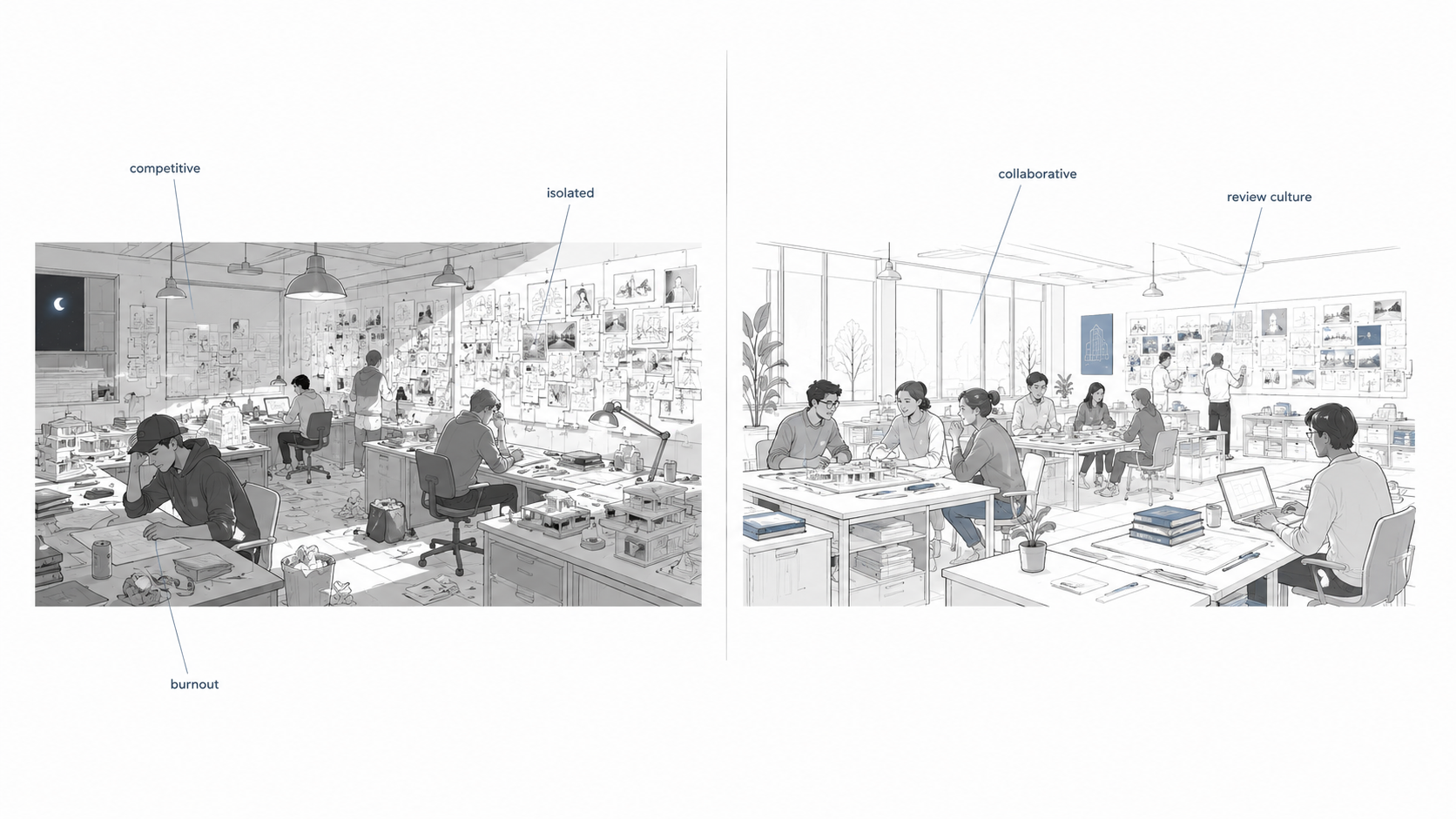
Ask these before committing:
- Is this degree professional, pre-professional, or non-professional?
- Do graduates commonly enter M.Arch programs?
- What percentage of students stay in architecture after graduation?
- How strong are the final portfolios?
- Are structures, systems, and construction taught seriously?
- Do local firms hire from the program?
- Does the school help students find internships?
- Will the degree work in the country or state where I want to practice?
For school choice, read Choosing the Right Architecture School.
Who Should Choose the BS Route
A BS in Architecture can be a good fit for students who want architecture but are not ready to lock into the most direct professional path.
It may fit students who want:
- a four-year architecture foundation
- flexibility before graduate school
- room for minors or double majors
- a path into M.Arch later
- architecture-adjacent careers
- technical or digital design roles
It may not be the best fit for students who already know they want the shortest professional licensure route and can access a good accredited B.Arch program.
Common Mistakes
| Mistake | Why it hurts | Better move |
|---|---|---|
| Assuming BS Architecture equals B.Arch | Student discovers the M.Arch requirement too late | Check professional status before applying |
| Ignoring accreditation | Licensure path becomes unclear | Check the degree against the licensing route |
| Comparing only tuition | Graduate school costs are left out | Price the full BS + M.Arch route |
| Choosing based on renderings | Technical weakness shows up later | Review plans, sections, details, and student process work |
| Assuming online is easier | Studio and recognition may be weak | Check critique, accreditation, and outcomes |
FAQ
Is a Bachelor of Science in Architecture a professional degree?
Often no. Many BS Architecture degrees are pre-professional. Some programs may have special structures, so always check the school and accreditation status.
Can I become an architect with a BS in Architecture?
A BS can be part of the path, but many students need a professional M.Arch afterward before moving through experience, exams, and licensure.
Is BS Architecture better than B.Arch?
Not better or worse. Different. B.Arch is usually more direct for licensure. BS Architecture can offer more flexibility before graduate school or adjacent careers.
What jobs can I get with a BS in Architecture?
Graduates may work in architecture offices, BIM, drafting, visualization, construction coordination, planning support, sustainability, or design-related roles.
Does BS Architecture require a portfolio?
Many programs require or recommend one, especially stronger design-focused schools. Check each program’s admissions page.
Is BS Architecture worth it?
It can be worth it if you understand the next step. It is risky when students assume it automatically replaces a professional B.Arch.
Read This Next
For the direct professional undergraduate route, read Bachelor of Architecture.
For the broader degree map, read Types of Architecture Degrees.
For graduate study after a BS, read Master’s Degree in Architecture.
For online study paths, read Can You Earn an Architecture Degree Online?.
For choosing the school itself, read Choosing the Right Architecture School.
Before You Choose the Degree
A Bachelor of Science in Architecture can be a smart degree.
It can also become an expensive detour if the student thinks it does something it does not.
The safe move is simple: check the professional status, price the full route, look at real student portfolios, and ask what graduates do next.
The degree name is only the label.
The path after it is what matters.