
The Truth About Stone Homes: Beauty, Cost, and Maintenance
Common Mistakes in Building with Stone (And How to Avoid Them)
Stone homes are beautiful—but brutal if you get them wrong. After years of trial, error, and real repairs, here’s what I’ve learned that actually works.
Building with Stone: Lessons I’ve Learned the Hard Way
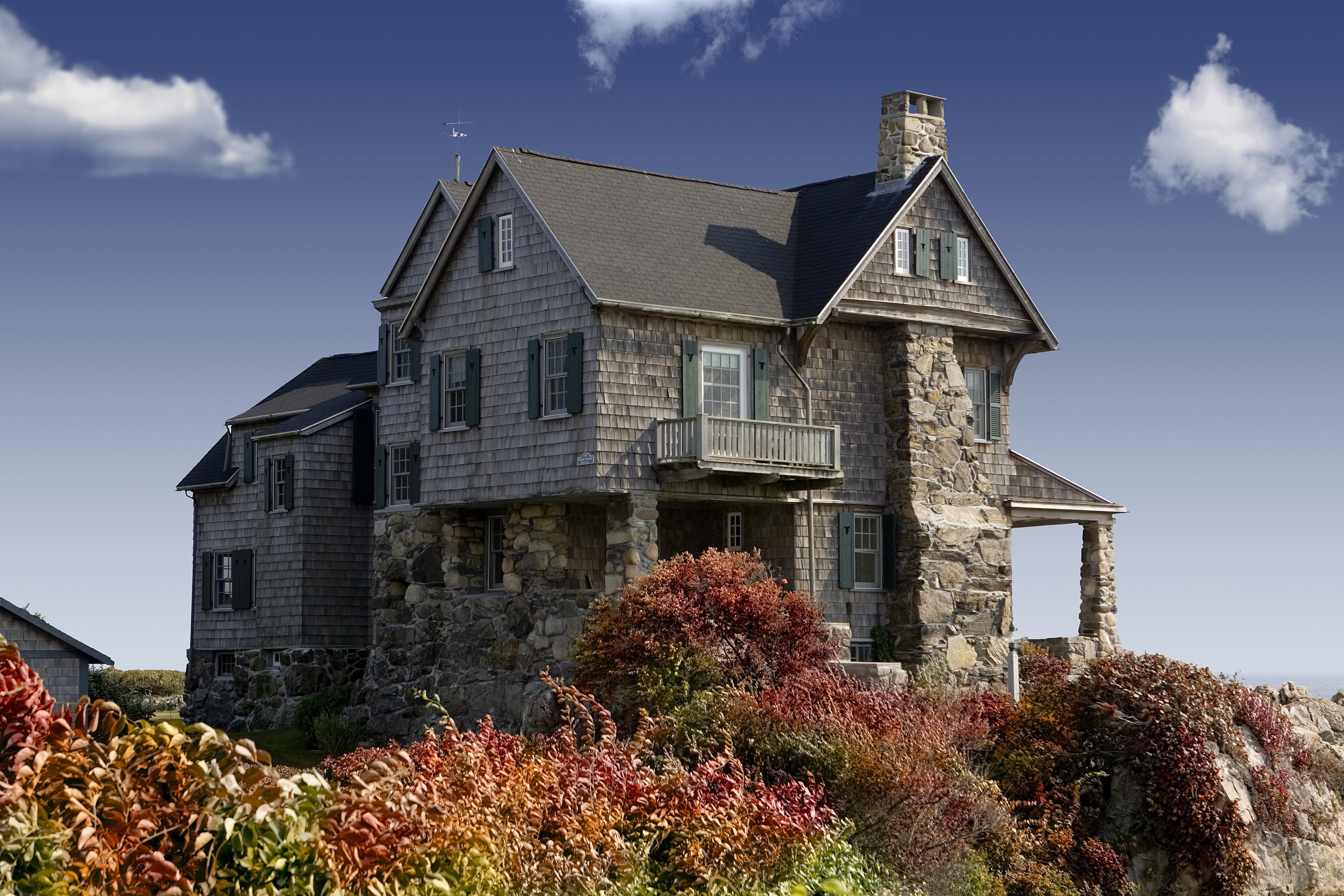
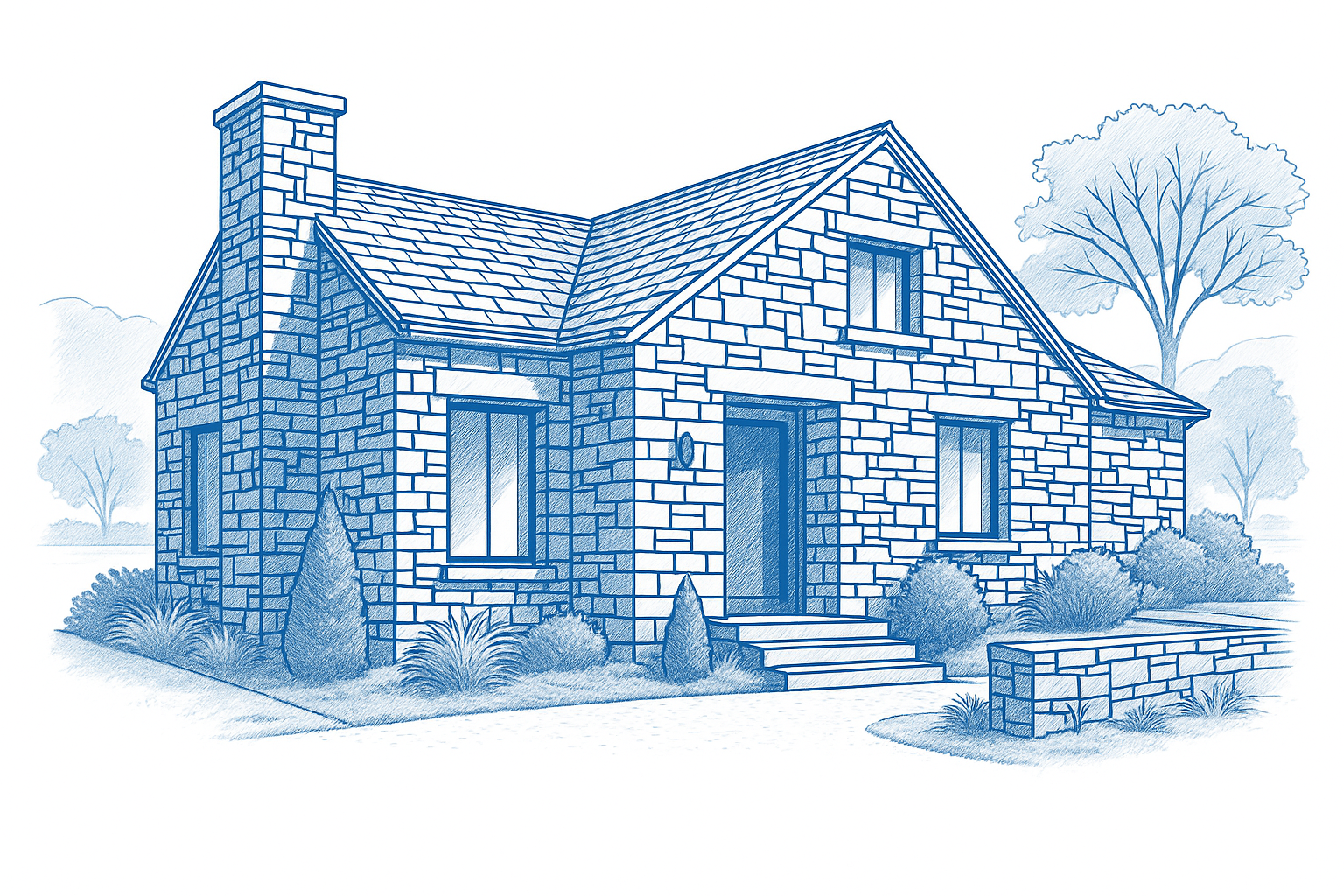
IMAGE: Classic house constructed entirely from stone, showcasing durable craftsmanship, historic character, and a strong connection to traditional architecture.
Stone homes look incredible. But after years of working with them, I can tell you: there’s a fine line between timeless beauty and costly regret. I’ve had wins, yes—but also a few disasters. And every one of them taught me something I now pass on to clients.
Here’s what I wish someone told me early on—about materials, maintenance, and getting the details right.
Does Stone Really Last Forever? Not Without This
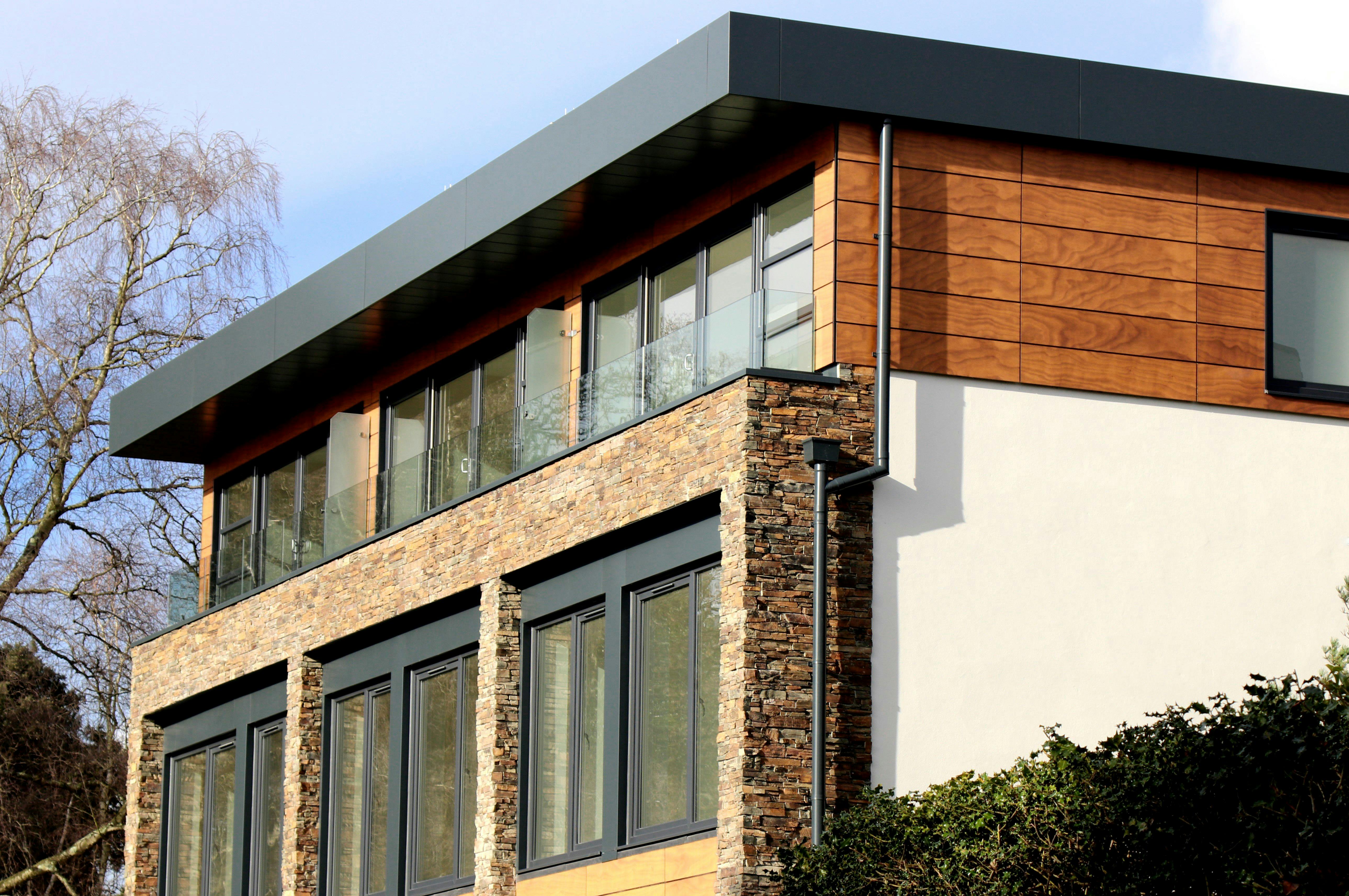
IMAGE: Facade of a modern stone house in Poole, England, showcasing contemporary design with stone construction and minimalist architectural elements.
Stone homes need drainage, insulation, and skilled masons. This guide reveals what most first-timers overlook.
Modern Stone House Design: What Actually Works
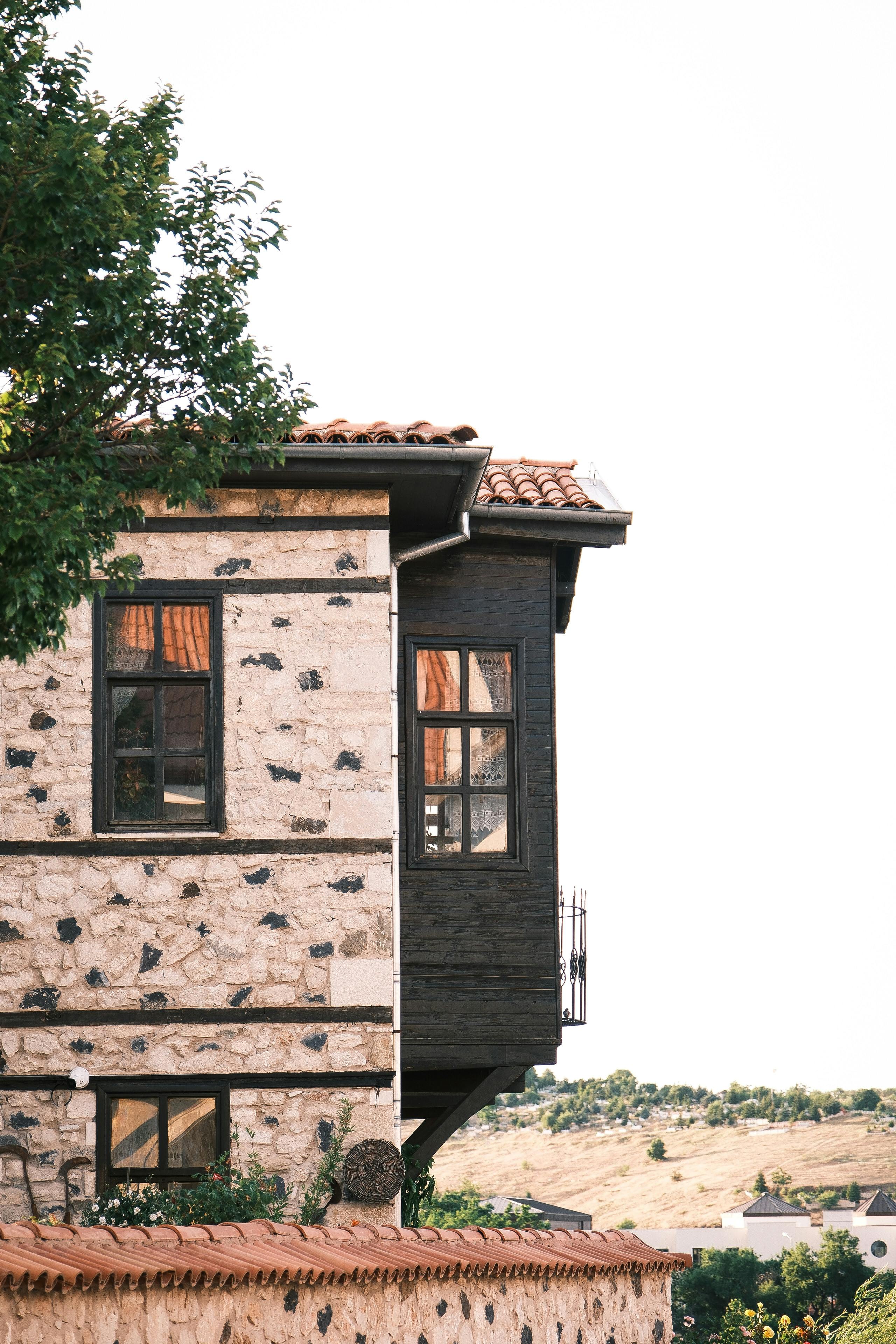
IMAGE: Traditional half-timbered stone house.
Building with stone is a real design tool. Used right, stone can create homes that feel permanent, modern, and sustainable.
But it’s not just about picking a pretty veneer. You’ve got to choose the right stone, design for your climate, and hire people who know what they’re doing.
Here’s what matters when designing stone homes today:
Environmental Benefits (If You Do It Right)
Stone lasts. Unlike wood or vinyl, it doesn’t rot, warp, or burn. That makes it a strong choice for sustainable homes—if you use the right kind.
-
Locally sourced stone means fewer transport emissions
-
No need for repainting or replacing
-
Can last generations with minimal upkeep
But remember: not all stone is equal. Soft stone like limestone can crack in freeze-thaw cycles. Harder options like granite or basalt are better in tough climates.
Design Flexibility Without Gimmicks
Modern stone homes don’t have to look like castles. You can mix stone with steel, wood, or glass for sharp contrast and clean lines.
-
Use rough-cut stone for texture
-
Combine with glass walls to bring in light
-
Add timber accents to warm up cold surfaces
This material works in both minimalist and rustic designs—if your mason knows how to handle it.
Why Craftsmanship Still Matters
Hiring a Mason for Stonework? Read This First
A good mason makes or breaks a stone house. I’ve seen beautiful designs ruined by sloppy installation.
Joints matter.
Drainage matters.
Cutting corners here just costs more later.
Stone House Exterior Design
Stone House Design: Durability, Design, and the Lessons I’ve Learned
Key Features of Stone House Exteriors
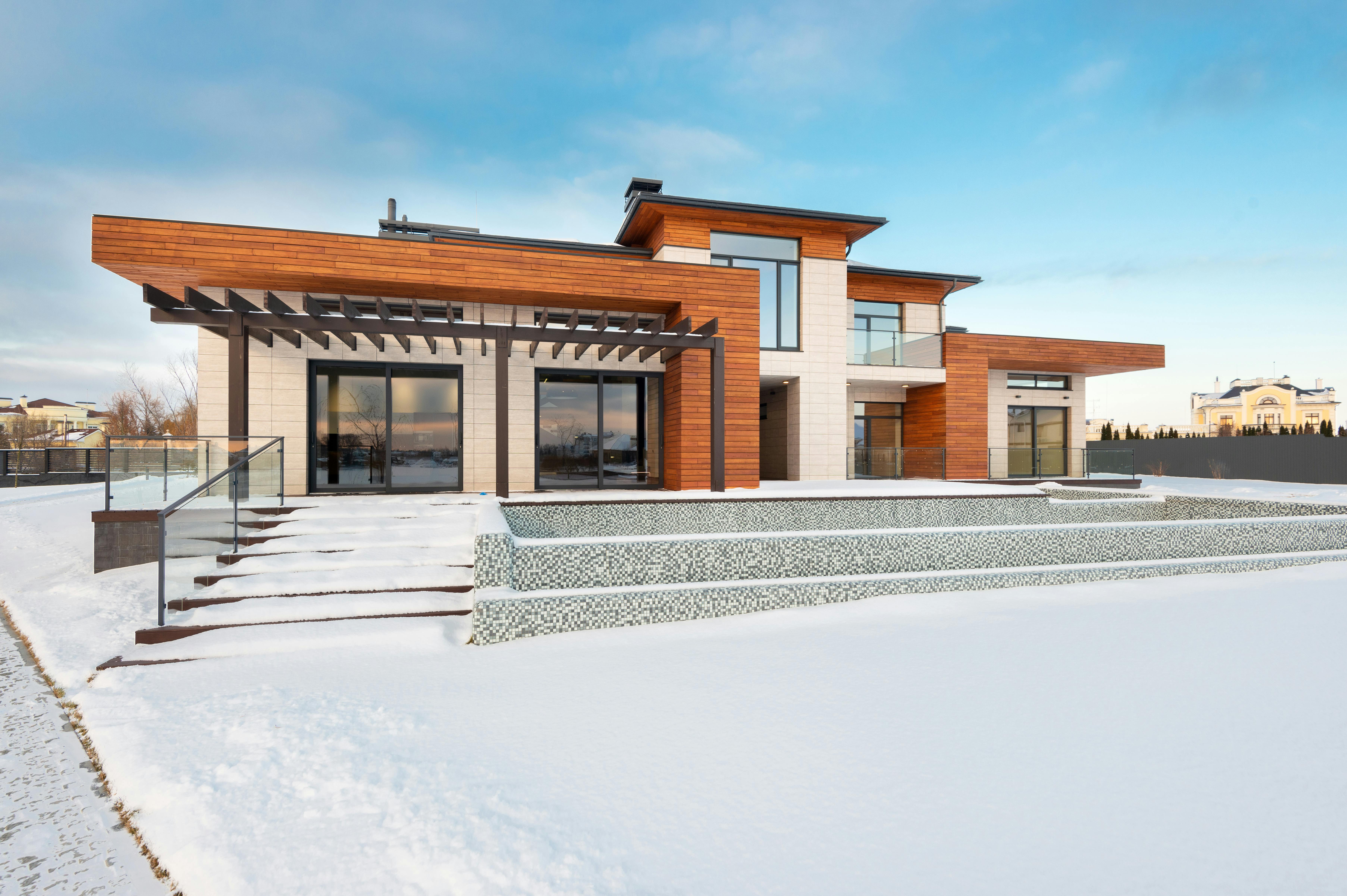
IMAGE: Facade of a modern suburban mansion featuring a blend of stone and wood elements, showcasing contemporary architectural style and natural textures.
When done right, a stone house doesn’t just sit on a lot—it feels like it belongs there. The exterior is where that impact starts. It’s not about decorating with stone. It’s about building with it.
After years of working on stone homes, here’s what I actually look at—and what clients always notice in the end:
Stone House Exteriors: What to Focus On
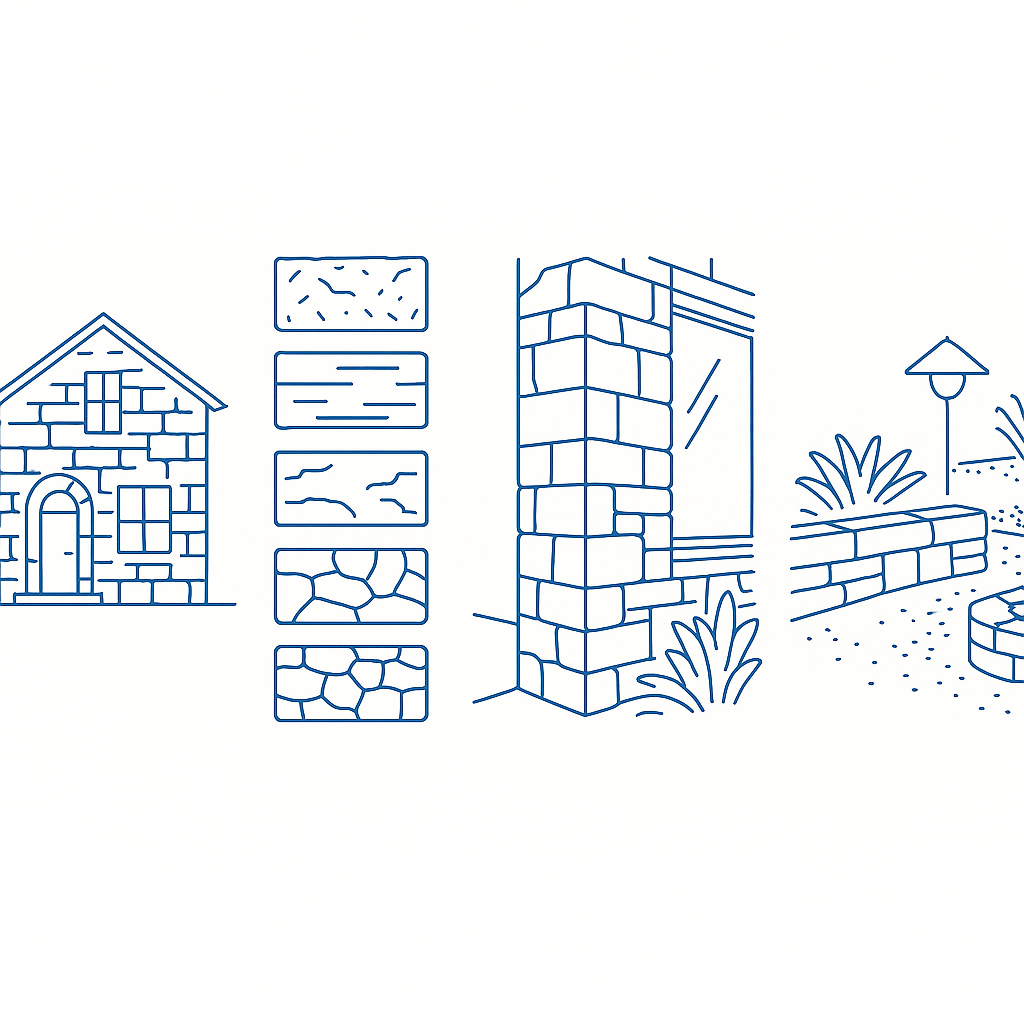
1. Let the Stone Speak for Itself
Don’t over-detail it. Don’t hide it. Stone is the detail.
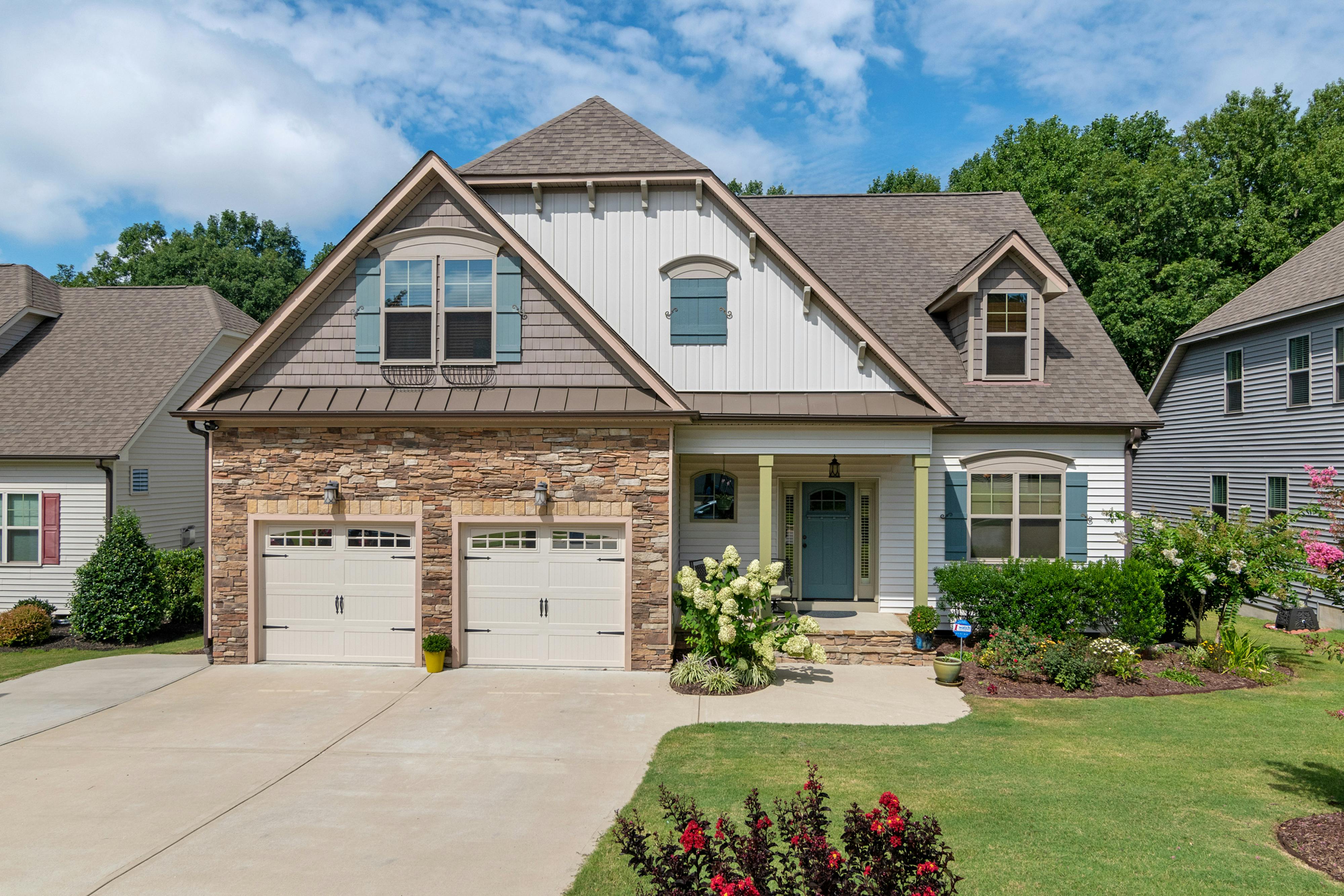
Whether it’s rough-cut fieldstone or precision-laid limestone, the material already has depth, color variation, and story. Highlight that.
In one recent hillside build, we used reclaimed granite blocks with visible chisel marks. No paint. No plaster. The clients said it felt like the house had always been there.
2. Use the Right Stone for the Right Style
Not all stone suits every aesthetic. Match it to the tone of the house:
-
Granite → bold, irregular, historic feel
-
Limestone → soft color palette, classic symmetry
-
Slate or cut bluestone → modern, sleek edges, works great with metal and glass
-
Mixed stone → use sparingly—can feel chaotic fast
Avoid trying to make stone look “perfect.” Uniformity kills the charm.
3. Watch the Transitions
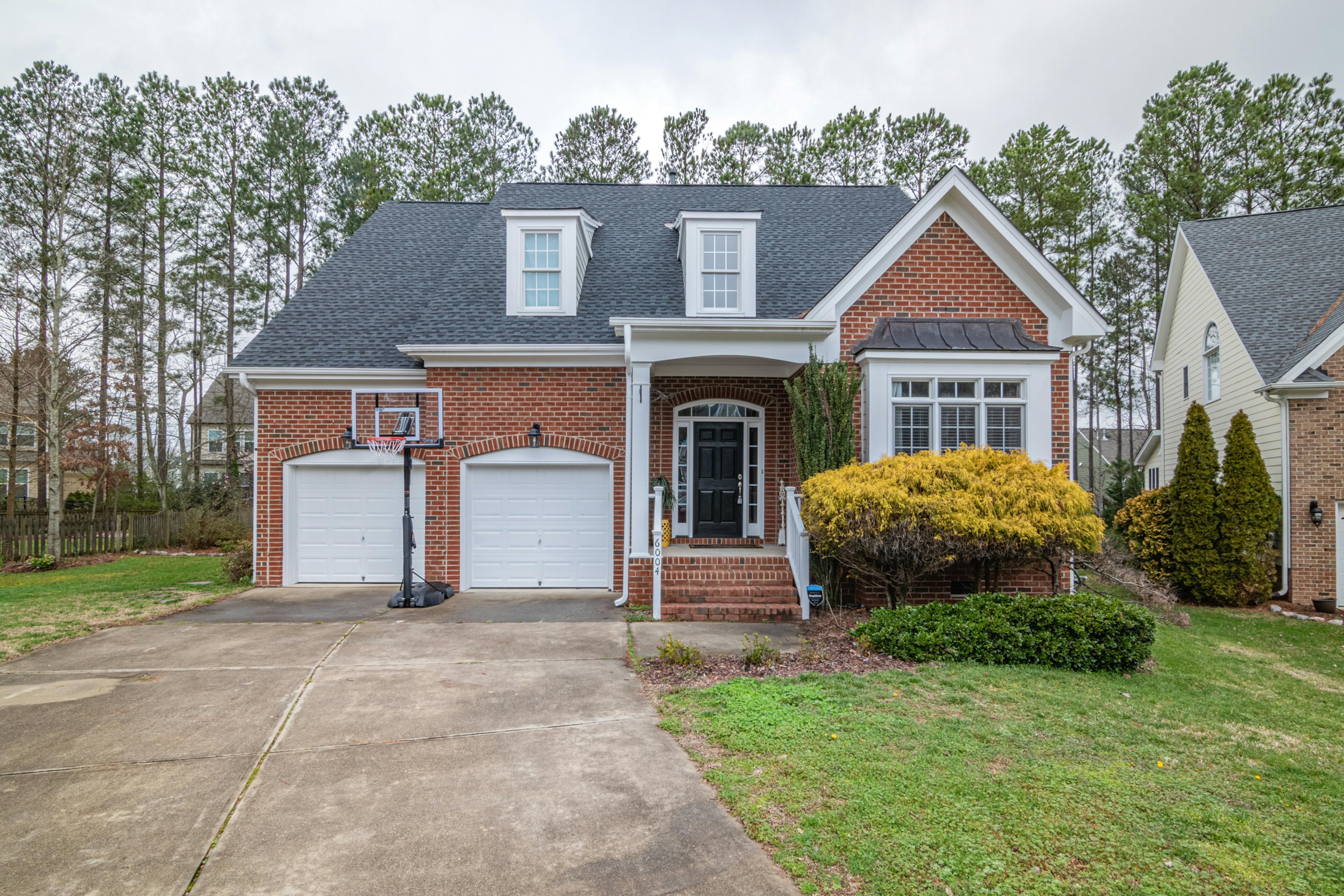
Where stone meets other materials—wood, glass, metal—is where things can fall apart fast if you’re not careful. Don’t wing it.
-
Recess the windows or wrap them cleanly
-
Use deep reveals at corners
-
Never let flashing ruin a good wall
You’ll see the difference from 20 feet away.
4. Landscape Is Not Optional
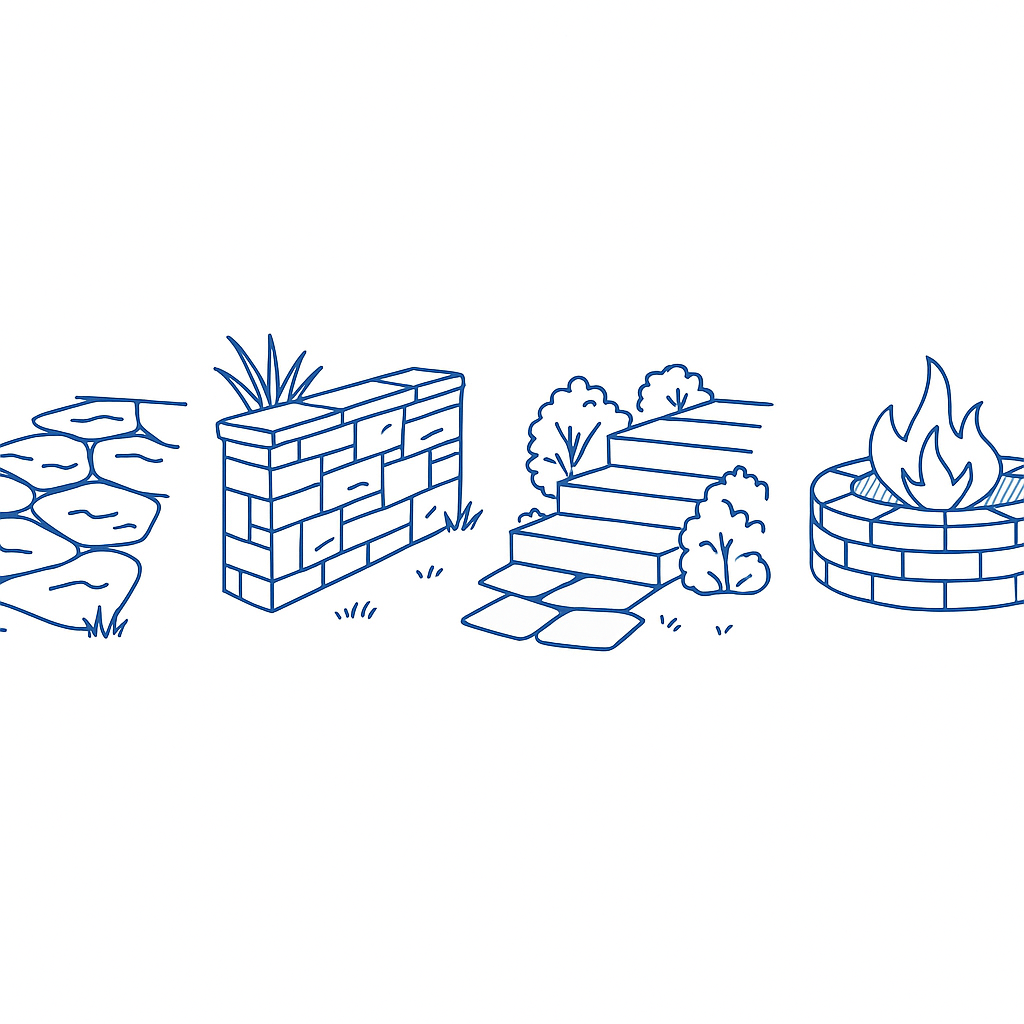
A stone house with bare surroundings looks abandoned. Build it into the land.
-
Add low stone retaining walls
-
Use gravel paths, not poured concrete
-
Let plants grow into the edges
-
Place lighting at ground level to catch shadow and texture
One of our homes had a north-facing facade that looked flat until we installed low warm LEDs in the garden. Total transformation. The light brought out every crevice in the stone.
5. Focus on What Ages Well
Forget trendy trim or overdesigned fences. Focus on:
-
Window depth and proportion
-
Door placement and scale
-
How water drains off the building
-
What the home looks like after 10 years—not just move-in day
Because with stone, you’re not building for next season. You’re building for 50 years from now.
The 7 Details You Can’t Get Wrong
- Flashing where stone meets roof or wood
-
Window sill slope for water runoff
-
Air gap + vented cavity behind cladding
-
Drip edge at base of stone walls
-
Capstones on walls to shed water
-
Weep holes for drainage at base
-
Wide overhangs to protect wall face
“Miss one of these, and your stone won’t last. I’ve seen full facades rot from skipped flashing.”
How to design and build a stone house?
How to Design and Build a Stone House
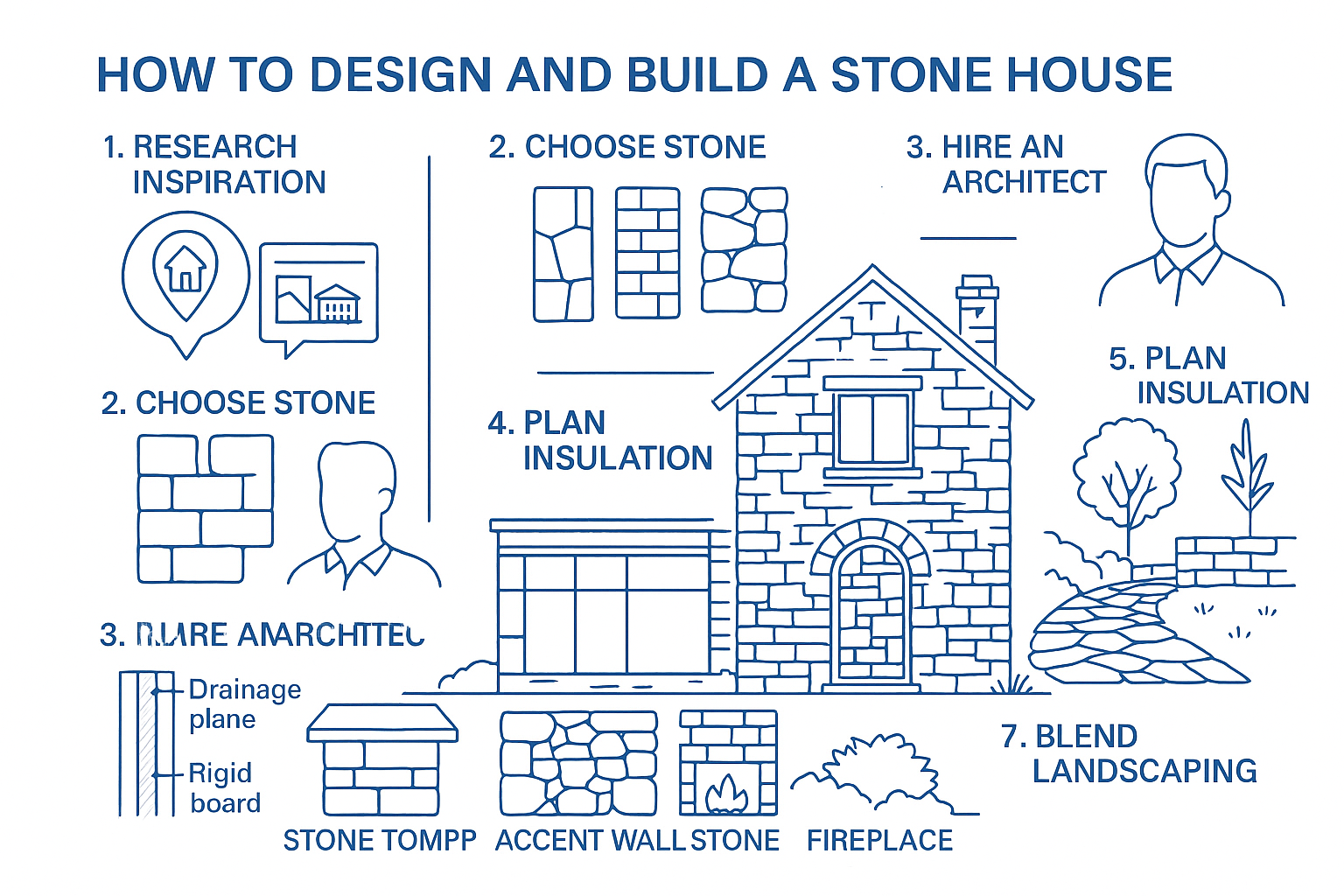
The real, blunt guide from concept to execution—what to focus on, what to avoid, and what it really takes to get it right.
Step 1: Know What You’re Getting Into
Stone houses aren’t just pretty—they’re permanent. Every design decision sticks. That’s why you need to think through structure, budget, insulation, water handling, and skilled labor before you fall in love with an Instagram photo.
Step 2: Find the Right Inspiration

Stop looking at polished catalog images. Instead:
▪ Walk heritage districts in Europe, the Northeast US, Quebec, or Northern California
▪ Study real homes: not resorts, not wineries
▪ Use books like “Stone Houses: Traditional Homes of Pennsylvania” or “The Art of the Stonemason”
Want modern? Look at Peter Zumthor’s Vals House or the work of Rick Joy Architects.
Step 3: Choose Your Stone—and Be Strategic
Not every stone works for every build. It’s about more than color. It's about load, climate, and maintenance.
| Stone Type | Use Case | Why It Works | Avoid If |
|---|---|---|---|
| Granite | Structural or veneer | Bold, natural, long-lasting | You want a refined, modern finish |
| Limestone | Decorative/structural | Classic, soft color | You live in a harsh freeze-thaw climate |
| Slate/Flagstone | Floors & paths | Textured, strong, slip-resistant | Used on vertical walls (hard to seal) |
| Fieldstone | Rural builds | Local, aged, authentic | You want flat, clean lines |
Step 4: Find the Right Architect
Don’t hire someone who’s never built with stone. Vet your architect or designer based on:
-
Past stone projects (ask to see real photos)
-
How they detail transitions (stone to wood, stone to glass)
-
How they talk about craft, drainage, and weight
-
Whether they bring a mason into early planning
Step 5: Know What It Costs (And Why)
A stone house can cost 20% to 60% more than conventional builds. Why?
-
Stone is heavy → you need stronger foundations
-
Skilled labor is rare → masons charge more, and rightly so
-
Detailing is slow → every reveal, corner, and cap takes time
-
Delivery → stone isn't shipped like drywall. It's often local, but heavy
Step 6: Interior Design—Done Right
Stone inside the house? Do it. But do it where it matters.
✓ What Works:
-
Granite countertops (durable, bold)
-
Soapstone in kitchens (warms up beautifully)
-
Accent walls in entries or behind staircases
-
Stone fireplace surrounds (functional + iconic)
✕ What to Avoid:
-
Using stone everywhere (makes interiors cold)
-
Faux-stone veneers that age poorly
-
Trying to "match" exterior and interior stones—use contrast instead
Step 7: Manage the Build Like a Long Game
You’ll need to coordinate:
-
Structural engineer (for load-bearing decisions)
-
Building envelope consultant (for insulation + water control)
-
Masons (not just builders—true craftspeople)
-
Landscapers who understand how to grade and plant around stone
If you're not managing all of this yourself, hire a GC who has worked on high-end custom stone builds. Not a volume builder.
Why It’s Worth It
I’ve built with everything—wood, steel, concrete, SIPs, straw bale. But nothing compares to walking up to a well-built stone house 10 years after it's finished and seeing it look better than the day it was done.
It doesn’t just age well—it ages with meaning. Trust me on this one.
Wall Assembly: How to Build a Stone Wall That Lasts
Stone isn’t enough. A great wall starts behind the stone.
Recommended Wall Layering (from outside to inside):
-
Natural or manufactured stone veneer (or full-depth structural stone)
-
Air gap / drainage cavity
-
Rigid insulation (e.g. XPS or mineral wool)
-
Weather-resistant barrier (WRB)
-
Sheathing (plywood or ZIP panel)
-
Framing or ICF block
-
Optional: Interior finish (plaster, drywall, wood)
“If you skip the drainage gap, water gets trapped and freezes. That’s where 90% of stone damage starts.”
Insulation in Stone Houses: Why It’s Often Done Wrong
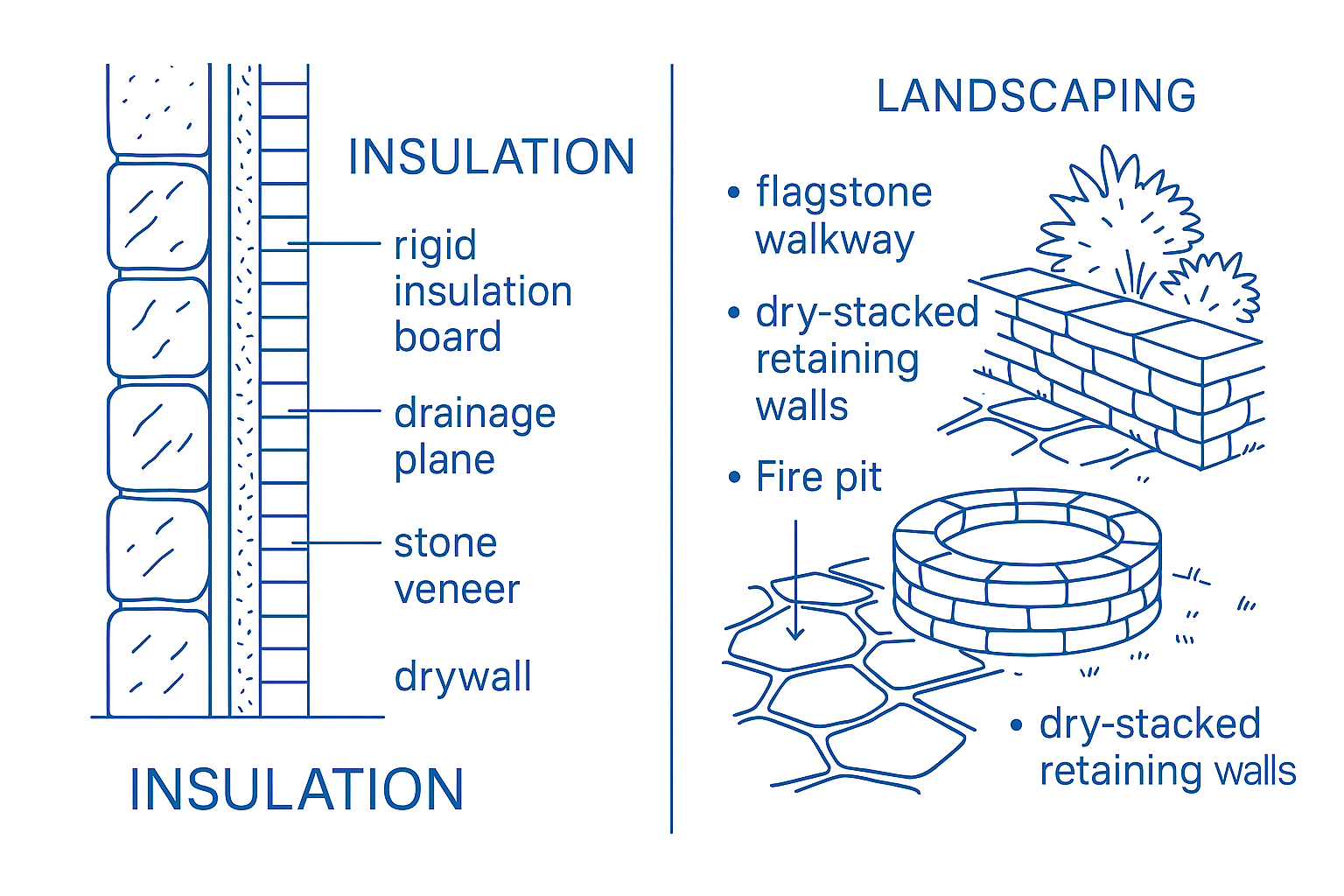
Stone vs. Climate: Choosing the Right Type for Your Region
Building with stone looks timeless—but can cost you if done wrong. Learn the hard lessons from an architect who’s made and fixed the mistakes.
Where Most Builds Go Wrong
Stone looks solid. Heavy. Permanent. So people assume it insulates well. It doesn’t.
Stone stores temperature—it doesn’t block it. In cold climates, that means icy interiors unless you plan ahead. In hot climates, it can trap heat long after the sun goes down.
I learned this the hard way.
One winter build, we skipped modern insulation layers behind the stone, thinking thermal mass would “even out” the heat loss. It didn’t. The homeowners were layering coats inside their living room.
Now, I always do this:
What Works:
▪ Use rigid insulation boards behind stone veneer
▪ Add a drainage plane to prevent trapped moisture
▪ Combine stone with ICF blocks or insulated sheathing on new builds
▪ Never rely on interior drywall alone to do the job
If you want your stone home to actually feel good to live in—insulate first, design second. Otherwise, you’re just heating the outdoors.
When you use locally sourced stone, you lower carbon impact and blend the house into its surroundings. Less concrete. Fewer replacements. No peeling finishes. Just material that works as hard as the house does.
Insulation and Energy Performance in Stone Homes
Stone holds heat, but doesn’t block it. This is where most stone houses fail.
✔️ Best Practices:
-
Use continuous exterior insulation behind stone walls
-
Don’t rely on interior drywall insulation alone
-
Pair stone with passive solar design (south-facing glass, thermal mass floors)
-
Use radiant floor heating—warmer and more efficient in stone interiors
Example:
We built a small mountain retreat using reclaimed granite and ICF walls with 4” EPS. The house needed no furnace, just radiant floor loops and thermal zoning.
Show the Stone. Don’t Hide It.
If you’re going to build with stone, show it off. Too many designs today treat stone like something to cover up with drywall or bury under synthetic finishes. That’s a mistake.
Stone is not a backdrop—it’s the character.
Even old stone—rough, weathered, uneven—has more personality than most modern claddings combined. Leave it exposed. Let it breathe. Let it tell its story.
In one renovation, I worked on a 1940s cottage with crumbling fieldstone walls. The owners wanted to cover it up to “modernize” the interior. I convinced them to do the opposite. We sealed the stone, added lighting, and made it the centerpiece. Today, that wall gets more compliments than any high-end finish we installed.
Why Exposed Stone Works:
-
Texture and depth you can’t fake
-
Natural variation that adds warmth and soul
-
Aged stone tells history—it grounds the space
-
Zero-maintenance beauty when sealed and detailed correctly
You don’t need to over-style it. Pair it with clean wood, matte steel, or glass. Let contrast do the heavy lifting. The stone will hold its own.
Hide the utilities. Not the stone.
Common Features in Stone House Interiors
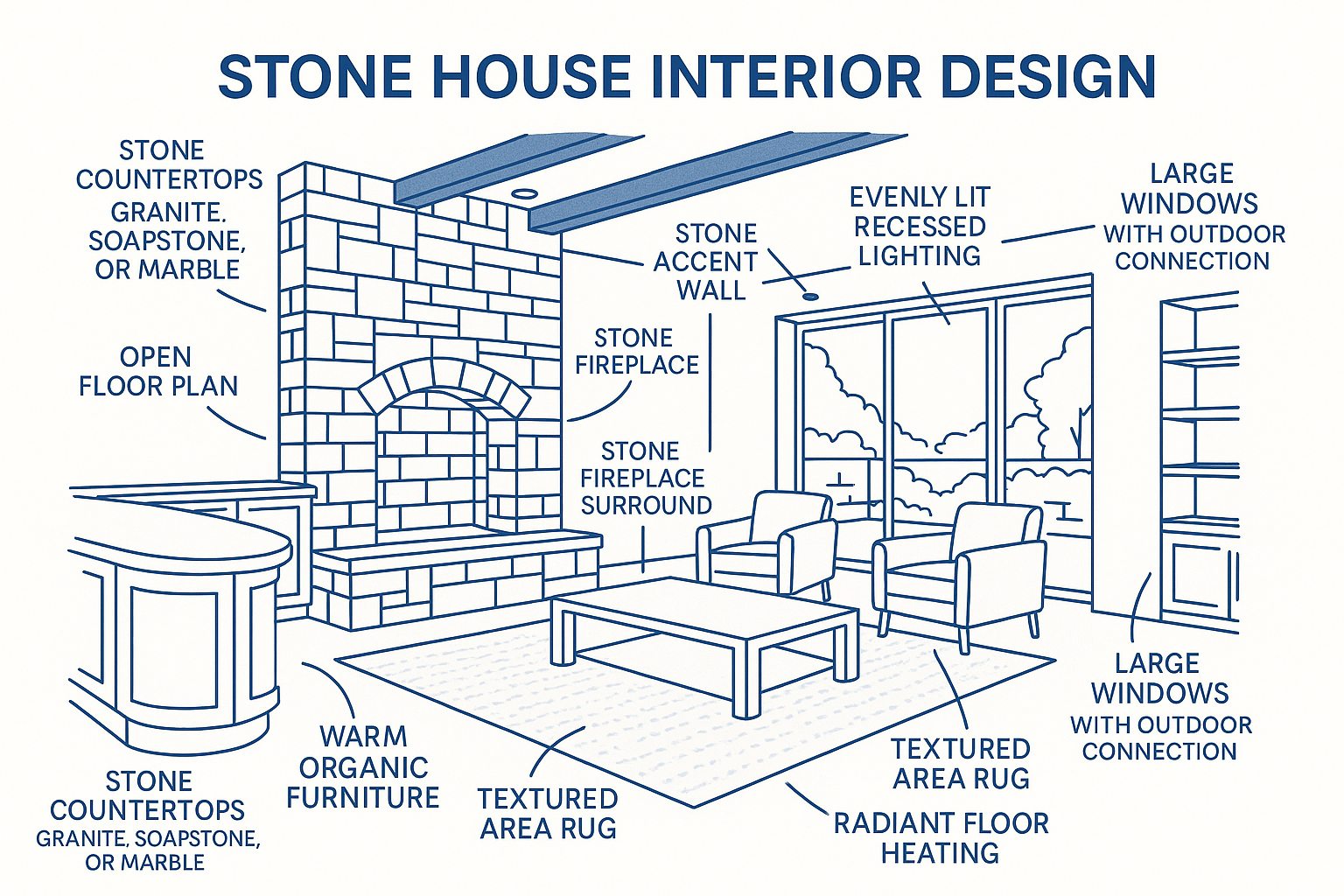
Stone interiors should feel warm, grounded, and built to last—not cold or overly rustic. When done right, they blend structural honesty with modern function.
Here’s what I focus on in every interior stone project, whether it’s a client’s forever home or a high-end mountain retreat:
Designing the Interior of a Stone House: What Actually Works
01. Countertops: Pick Stone that Works Hard
-
Granite → Durable, bold, low-maintenance. Perfect for kitchens.
-
Soapstone → Smooth, matte, and ages beautifully. Great for island tops.
-
Marble → Elegant but soft. Best used away from high-traffic zones.
Architect’s Tip: Edge profile and finish matter. Go honed for less glare, eased edges for comfort. Avoid overly ornate cuts—it fights the stone.
02. Walls and Floors: Use Stone Where It Makes Sense
-
Accent Walls → Limit them to one area (fireplace wall or entry). Too much, and you lose contrast.
-
Flooring → Use stone where you can warm it up: radiant heat under slate or limestone works wonders.
-
Avoid polished stone in kitchens—it’s slippery and hard on dropped plates.
03. Fireplaces and Structure: Make It Count
-
Fireplace Surrounds → Let the stone dominate. Use rough stone with deep joints for texture.
-
Architectural Details → Arches, mantels, and thick sills make the space feel hand-built and solid.
Real Insight: Don’t over-style stone. You’re not decorating it—you’re respecting it.
04. Lighting: Bring the Texture to Life
Stone eats light. You need to layer it:
-
Recessed ceiling lights for general glow
-
Wall washers to graze stone walls
-
Warm color temp (2700K–3000K) to avoid a cold cave feeling
-
Accent fixtures in iron, bronze, or aged brass—no chrome
05. Furniture and Soft Materials: Contrast is Key
Stone is hard. Balance it.
-
Furniture: Use warm woods, leather, and fabric. Mid-tones and natural shapes work best.
-
Textiles: Large area rugs soften acoustics. Go textured, not patterned.
Design Rule: Never use stone and glass together without a soft buffer—wood, linen, or even wool upholstery.
06. Color Palette: Stay Earth-Based
The best interiors pull tones from the stone:
-
Beige, charcoal, clay, olive, ochre
-
Avoid bright whites or anything synthetic-looking. It clashes with natural surfaces.
07. Floor Plan Strategy: Let It Breathe
Stone absorbs and reflects space. So:
-
Open layouts help counter stone’s visual heaviness
-
Large windows (with deep reveals) bring in needed daylight
-
Indoor-outdoor flow—use sliding glass or steel doors into courtyards and patios
Pro Move: Mirror a stone feature outside for visual continuity (e.g. use same stone for fireplace inside + terrace wall outside).
08. Mechanical and Storage: Don’t Forget the Basics
-
Radiant floor heating → Works better than forced air in stone homes
-
Built-ins → Use stone or timber to frame shelving instead of drywall niches
-
Storage walls → Hide utility behind thick interior stone or wood-clad partitions
09. Sustainable & Smart Material Choices
-
Choose locally quarried stone to reduce carbon and match the setting
-
Pair with lime plaster, low-VOC sealants, and reclaimed wood
-
Use natural ventilation + thermal mass for passive cooling
10. What Makes It Timeless (Not Trendy)
-
Keep lines clean.
-
Show craftsmanship in joints and transitions.
-
Highlight natural irregularity.
-
Don’t imitate—you’re building permanence, not fashion.
Final Thought from the Field
“You don’t decorate a stone house. You uncover it, layer it, and let the structure speak.”
Related: Stone in Interior Design: How to Incorporate Stone Throughout Your Home
Architecture, Design Plans, and Inspiration
Modern Stone Houses: What They Really Take to Get Right
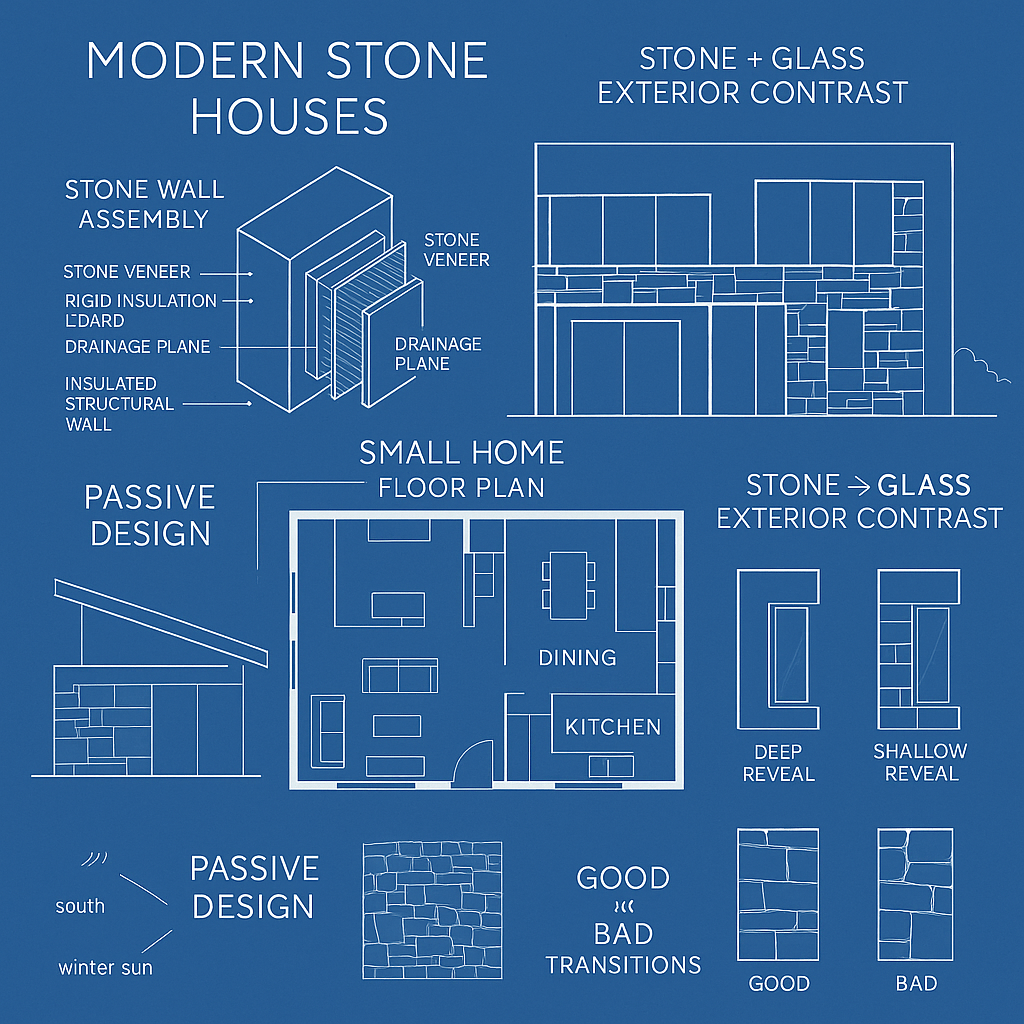
Modern stone homes are about durability, design clarity, and thermal performance.
But to get it right, you’ve got to go deeper than Pinterest inspiration.
Here’s what actually works—and what people get wrong.
What Makes a Modern Stone House Work Today
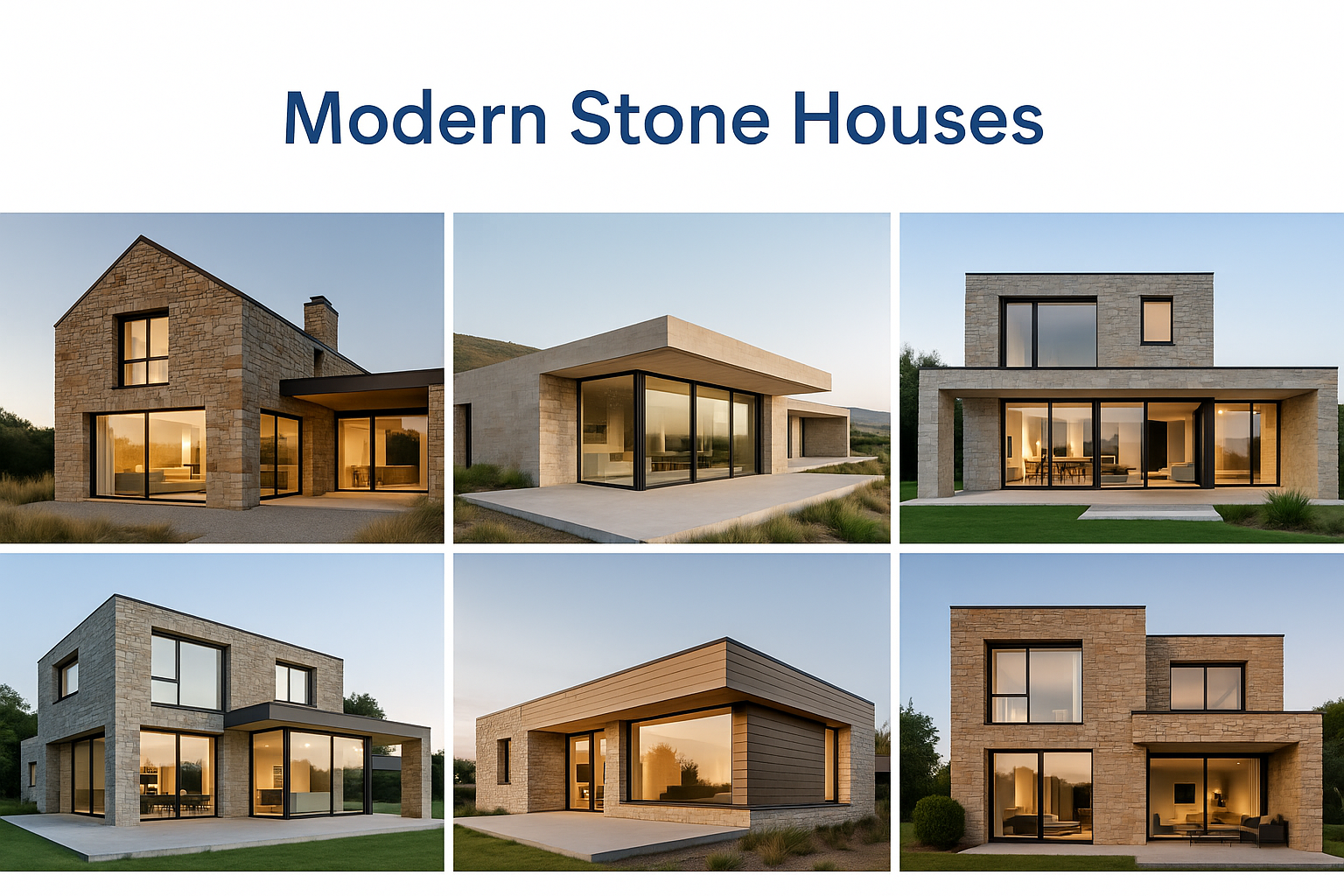
IMAGE: Collage showcasing six modern stone houses, each displaying unique architectural designs that highlight contemporary use of natural stone in residential construction.
1. Minimalism meets Mass
The best modern stone homes don’t hide the stone. They use it as mass—weight, contrast, and presence. Think:
-
Stone walls paired with floor-to-ceiling glass
-
Smooth-cut stone next to black steel
-
Raw fieldstone clashing perfectly with refined oak
Real Example: John Pawson’s countryside homes in the UK use thick stone walls with zero ornament. Just light, shadow, and texture.
2. Large Windows + Deep Reveals
Don’t just punch holes in stone. Design the window opening with purpose. Stone needs thickness. Shallow reveals ruin the effect.
What Works:
-
Triple-glazed aluminum frames recessed deep into the stone
-
Shading from stone overhangs or wood louvers
-
Framing the landscape like art, not just adding light
3. Passive Design Over Pitched Roofs
Instead of relying on rooflines to "look rustic," good modern stone houses use:
-
South-facing glazing for winter heat gain
-
Overhangs to block summer sun
-
Stone’s thermal mass to stabilize indoor temps
Don’t Fake It: Stone is heavy. Use it as structure or use veneer properly—not both poorly.
What to Focus on in Design Plans
Small Modern Stone Homes
✓ Best for single-level builds or sloped sites
✓ Limit the footprint but open the interior: exposed beams, lofts, glass courtyards
✓ Stone feature wall + wood slat interiors = warm, livable minimalism
Larger Plans or Multi-Level Homes
✓ Use stone at the base only—blend with lighter materials above
✓ Split levels are better than sprawling ranches
✓ Outdoor rooms: patios, fire pits, and low retaining walls using matching stone
Cost + Mistakes to Watch
Real Talk:
-
Good stonework isn’t cheap → budget at least 20–40% more than standard builds
-
Avoid cheap stone veneer from big-box suppliers—it looks fake and doesn't last
-
Stone is permanent. Think about drainage, frost lines, and flashing before you lay the first block
Pro Tip: Don’t copy Tuscany in a cold climate. Match your stone type and detailing to your location.
Modern Inspiration Sources (That Aren’t Overdone)
-
Peter Zumthor – Vals House (Switzerland)
-
Glenn Murcutt – layered modernism with raw stone and timber (Australia)
-
Lecaros Arquitectos – Chilean stone-mountain homes
-
Studio KO – Stone + concrete in Morocco and France
-
ArchiWorkshop – Modern Korean countryside stone homes
Sustainability—More Than Just Local Stone
Modern stone homes are part of the green future when you do it right:
-
Use local stone to reduce transport emissions
-
Pair with passive solar design
-
Combine with low-carbon materials like lime mortar and timber cladding
-
Use rainwater runoff systems in the landscape plan
Lesson from the Field: One of our most efficient homes used reclaimed barn stone, ICF walls, and triple glazing. It looked ancient—but operated like a Net-Zero build.
Final Lessons from Real Projects
-
Don’t do stone everywhere. Focus it.
-
Plan insulation first—stone doesn’t insulate.
-
Window placement and proportion matter more in stone than any other material.
-
Never choose stone by color only—look at cut, porosity, and weathering.
-
Always visit a quarry or supplier in person before finalizing the spec.
Related
- Stone in Architecture: Modern Uses and Importance
- Stone Facades: How to Plan the Perfect Stone Facade
Using Stone in Landscaping: Real Beauty, Real Function
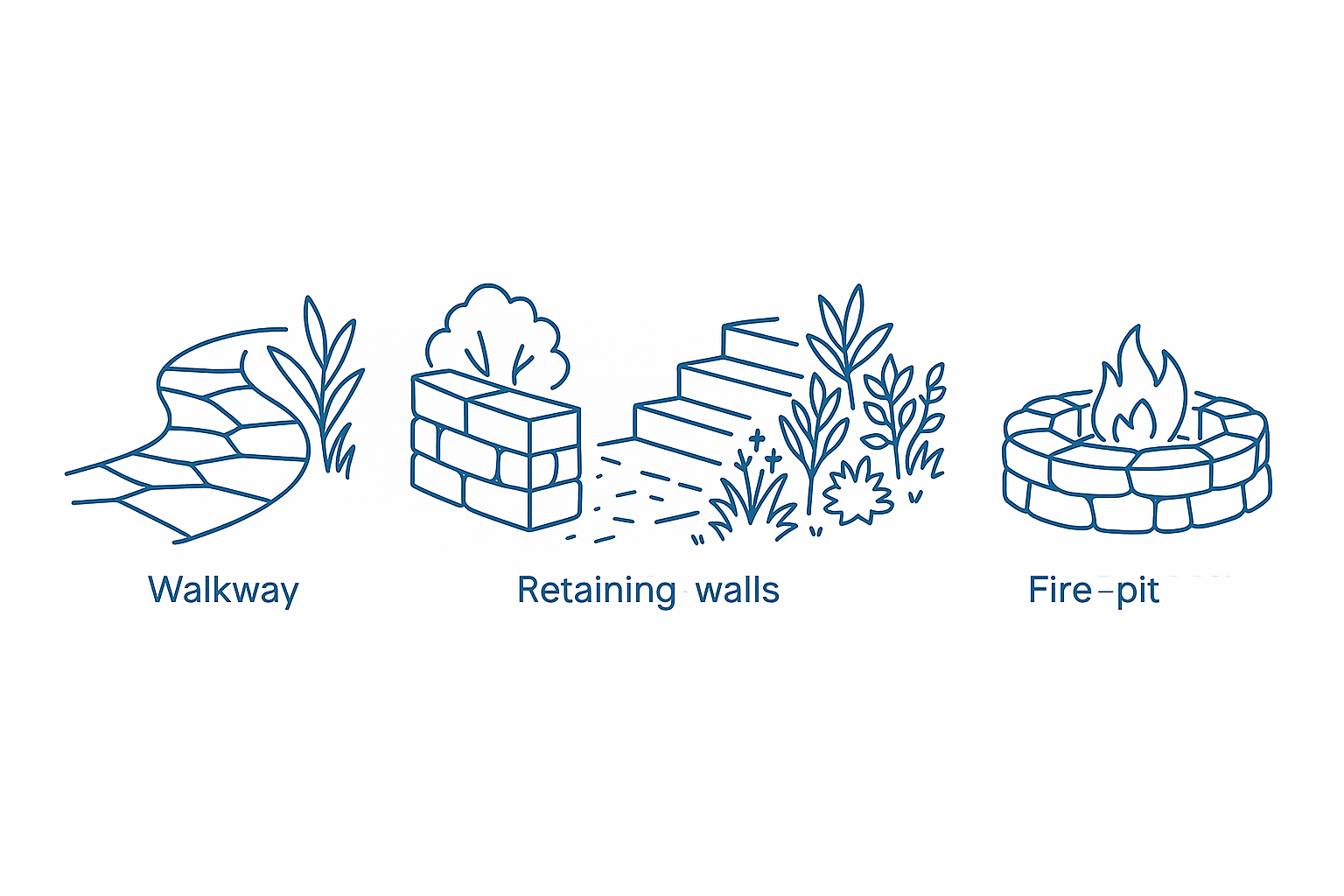
Stone in landscaping isn’t just decorative—it’s structural. When integrated right, it ties the whole site together. When rushed, it becomes a liability.
Forget stamped concrete or prefab pavers. Real stone will outlast your mortgage.
What to Focus On:
▪ Flagstone paths – irregular edges look natural, feel solid
▪ Dry-stacked garden walls – no mortar, better drainage
▪ Retaining walls – stone holds grade better than timber
▪ Seating walls & fire pit rings – beautiful, practical, and low maintenance
Lessons from Site:
On a lakeside home, we used locally quarried stone to build the front entry steps and wrap a retaining wall. It wasn’t cheap—but five years later, not a single crack or shift. Meanwhile, the neighbor’s timber ties were already rotting and leaning.
Why Stone Lasts:
-
Won’t rot, warp, or attract bugs
-
Natural slip resistance on walkways
-
Minimal seasonal movement if installed correctly
-
Ages better than any synthetic material on the market
Sustainable + Smart
When you use locally sourced stone, you lower carbon impact and blend the house into its surroundings. Less concrete. Fewer replacements. No peeling finishes. Just material that works as hard as the house does.
Related: Stone in Architecture: Modern Uses and Importance
Stone vs. Wood vs. Concrete: What You’re Really Getting
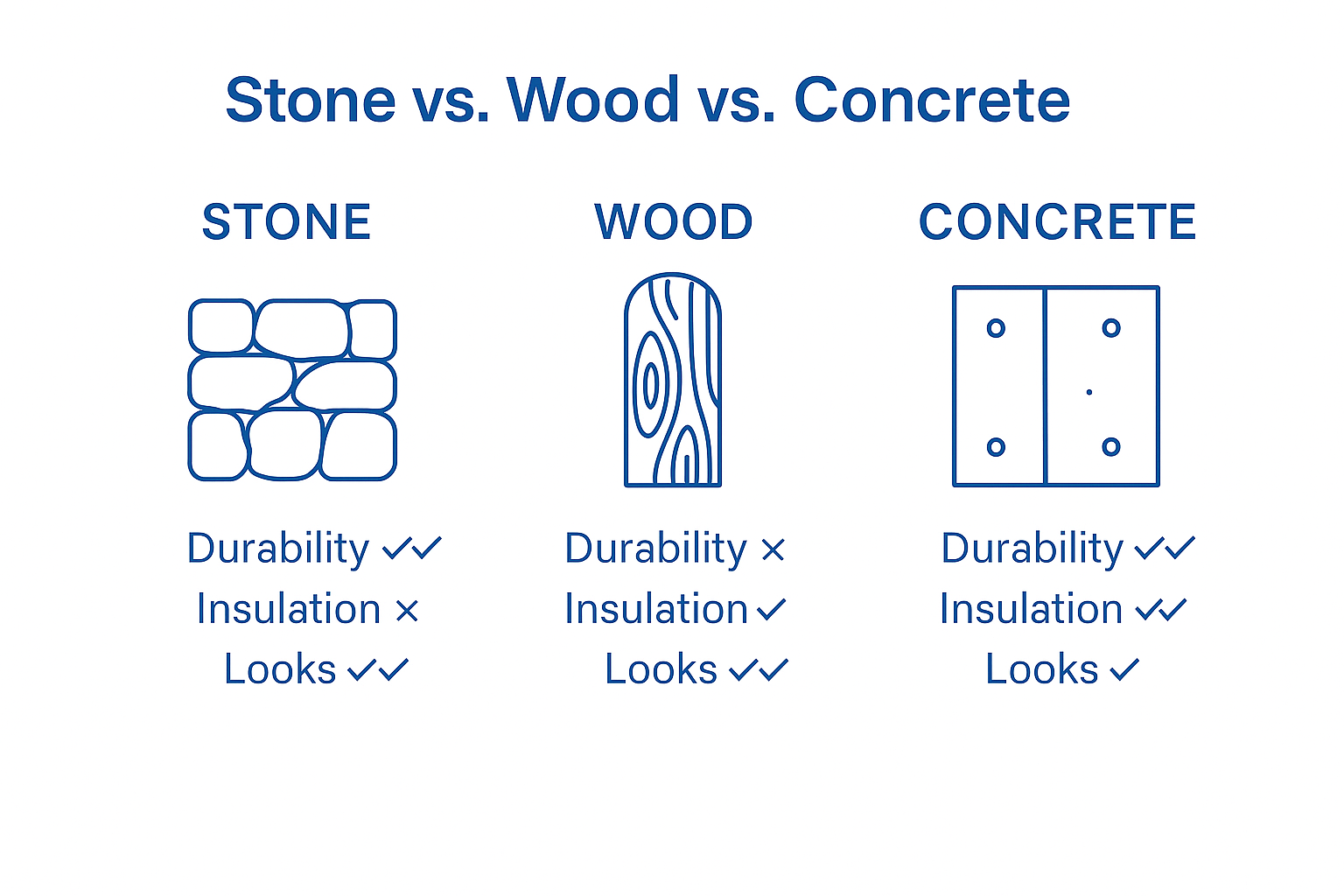
All three are used in residential architecture—but they perform very differently. Here's the real breakdown from someone who’s worked with all of them.
Stone
-
Durability: ✓✓✓
Lasts for generations. Doesn’t burn, rot, or warp. Great for legacy builds. -
Insulation: ✕
Thermal mass helps, but stone by itself is a poor insulator. Needs backup layers. -
Looks: ✓✓✓
Timeless, bold, and full of texture. Feels grounded. Show it, don’t cover it. -
Labor: $$$
Skilled masons are essential. Mistakes are expensive and visible. -
Best Use: Facades, feature walls, hybrid builds
Wood
-
Durability: ✕ to ✓
Needs maintenance. Vulnerable to insects, fire, moisture. Treated wood lasts longer. -
Insulation: ✓✓
Naturally insulates better than stone or concrete. -
Looks: ✓✓✓
Warm, natural, flexible. Works in almost any style. -
Labor: $$
Easier and faster to work with. Framing crews are widely available. -
Best Use: Framing, siding, exposed beams, interiors
Concrete
-
Durability: ✓✓
Extremely strong—but can crack if not detailed right. Needs sealing. -
Insulation: ✕ to ✓
Poor alone, but works well with foam panels or ICF systems. -
Looks: ✓ (with effort)
Can feel cold or sterile. Needs good design to soften it. -
Labor: $$
Fast if poured or precast. Messy to modify once cured. -
Best Use: Slabs, structural cores, brutalist or minimalist designs
Final Take:
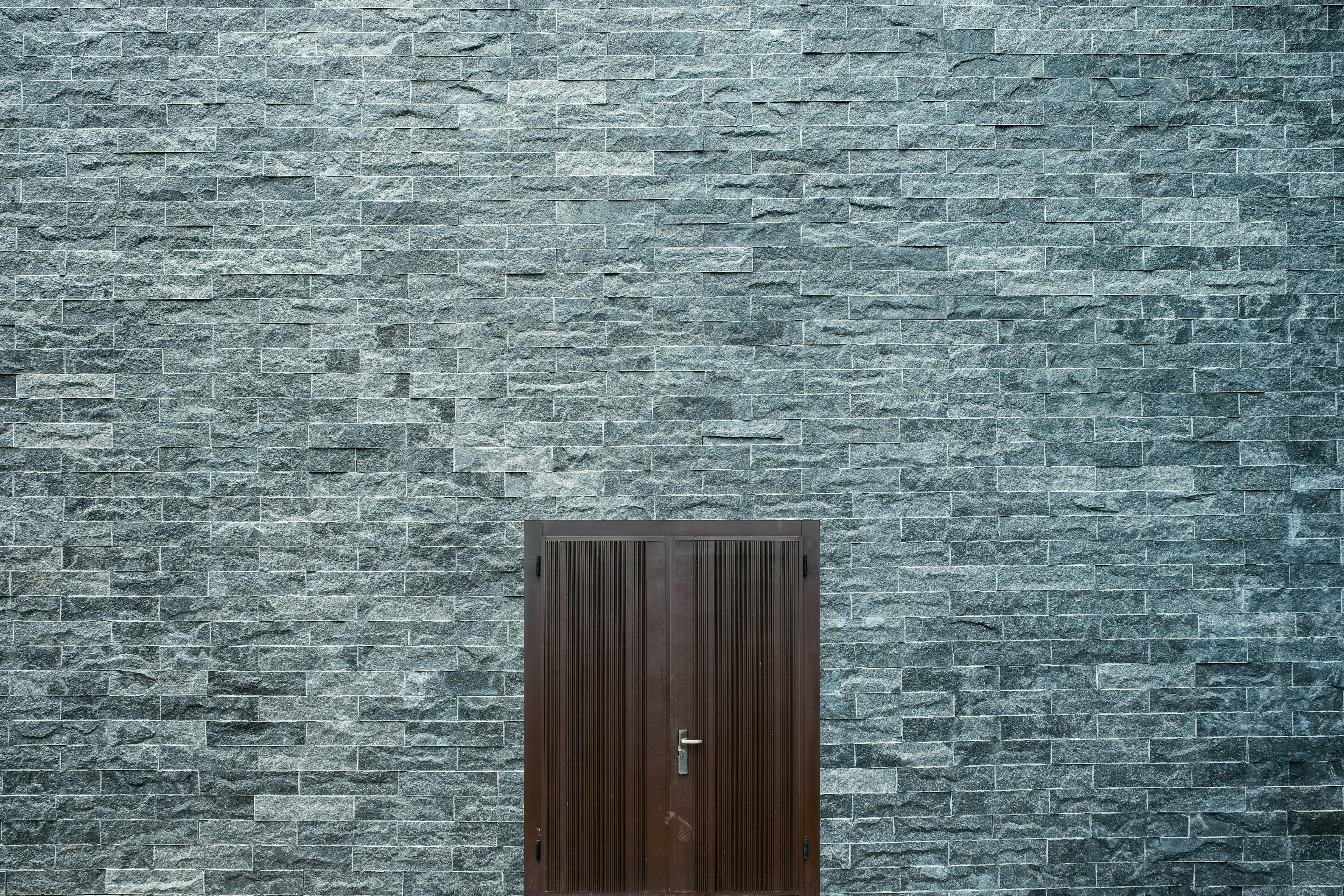
IMAGE: Brown wooden door embedded in a flat, expansive brick wall, emphasizing simplicity and sturdy construction.
-
Use stone when you want permanence and soul
-
Use wood when warmth and flexibility matter
-
Use concrete when you need structural power and clean lines
Mix them smartly, and you’ll get a home that performs—and ages—like it should.
70 Stone House Ideas That Actually Work (And Why)
From timeless classics to modern marvels—what to build, when, and why it matters
Stone homes aren’t about copying castles or pasting together Pinterest ideas. They’re about permanence, performance, and visual clarity.
This list isn't just eye candy—it’s curated for function, location, climate, and buildability.
Use it to plan your project or refine your concept with a real-world mindset.
🔹 1. Historic Styles
Classic forms that have stood for centuries—refined, rooted, and elegant.
-
English Manor → Ivy-covered limestone + formal symmetry
-
French Chateau → Tower forms + stone staircases + dormers
-
Tudor with Stone Base → Timber accents, slate roof, diamond-pane windows
-
Victorian Stone → Ornamental carving + steep rooflines (costly but dramatic)
-
Colonial Revival → Brick + stone mix, balanced façade, solid porch columns
When to build it: Larger rural lots, traditional neighborhoods
Famous reference: Biltmore Estate (Asheville, NC)
🔹 2. Countryside Cottages & Lodges
Warm, small-scale homes built to feel lived in, not staged.
-
Rustic Stone Cottage → Irregular stone walls, low eaves
-
Mossy Garden Cottage → Fieldstone + climbing plants + wood windows
-
Tuscan Farmhouse → Earthy stone, clay roof tiles, olive trees
-
French Farmhouse → Hipped roof, shutters, creamy limestone
-
Adirondack Lodge → Wood beams + granite hearth
-
Mountain Stone Cabin → Timber + stone + wrap-around porch
What to focus on: Material aging, small site use, layered texture
Modern lesson: Keep it tight, use stone sparingly, add warmth through timber or clay
🔹 3. Modern Stone Houses (Sharp + Natural)
Pair mass and minimalism. Contrast is everything.
-
Modern Stone + Glass Villa → Bold volumes, deep reveals
-
Contemporary Farmhouse → Black steel + cut stone walls
-
Stone Tower House → Vertical design on tight lots
-
Stone Barn Conversion → Gable forms, reused structure, glass infill
-
Minimalist Hilltop Home → Monolithic stone walls + full-height glazing
What matters: Drainage detailing, thermal mass, strong transitions
Great example: Vals House by Peter Zumthor
🔹 4. Waterfront & Cliffside Retreats
Built to hold their ground—literally. Stone = stability by water.
-
Lakefront Stone House → Large patio + dock + low-profile roof
-
Riverbank Retreat → Wraparound deck + stone piers
-
Coastal Stone Villa → Salt-resistant limestone + arched verandas
-
Cliffside Bunker → Angular, fortified, built into the terrain
-
Mountain-Lake Getaway → Stone path to water + timber pavilion
Watch for: Salt spray, frost, drainage, wind shear
See: Casa Malaparte, Capri
🔹 5. Mediterranean + Old World Charm
Romantic and warm—but still buildable.
-
Whitewashed Stone Villa → Greek island vibes
-
Spanish Revival → Stone arches, red tile roof
-
Tuscan Hillside Home → Terraced layout with garden walls
-
French Provincial → Balanced windows, earthy tones
-
Moroccan Courtyard Home → Walled stone exterior + shaded inner patio
Where it shines: Dry, hot climates
Visit: Mallorca, southern France, Morocco
🔹 6. Castle, Fort, or Fantasy Builds
For clients (or dreamers) who want to make a statement.
-
Stone Watchtower Home → Small footprint, vertical drama
-
Modern Fortress → Geometric + brutalist + warm interiors
-
Moated Manor → Mostly for fun, but works on rural estates
-
Fairytale Cottage → Round doors, mossy roof, cottage garden
-
Restored Castle Core → Renovate existing ruins with glass + wood
Real advice: Keep fantasy outside. Modernize inside.
🔹 7. Hybrid Material Houses
Combining stone with steel, wood, or plaster for contrast and cost savings.
-
Stone + Wood Modern Ranch
-
Board + Batten + Stone Mix
-
Brick + Stone Tudor
-
Stone + Corten Steel Barn
-
Stone Base + Light Upper Volume (Clad Timber or Stucco)
Why do it: Visual relief, thermal balance, budget control
See: Studio KO projects in France/Morocco
🔹 8. Small but Smart Stone Houses
Low square footage, high impact. Efficient and timeless.
-
Stone Tiny Home (Under 800sf)
-
Stone Guest House or ADU
-
Cabin in the Woods
-
Micro Courtyard Cottage
-
Stone Pavilion with Outdoor Kitchen
Tip: Spend more per square foot. Use the best stone, best windows, real craftsmanship.
🔹 9. Ideas That Add Soul
Not styles—these are tactics that make any stone house better:
-
One deep-set window framed in 12” stone
-
A built-in bench or niche carved into a stone wall
-
Stone fireplace that spans two stories
-
Exterior path made from the same stone as foundation
-
A single curved stone wall to divide public/private zones
Final Thoughts: Build Smart, Not Just Pretty
You don’t need 70 different houses—you need the right one.
Use this list to pinpoint:
-
What suits your climate
-
What suits your lifestyle
-
What suits your site
-
What you can actually build and maintain
Then take that one clear idea, and build it with intention.
Stone House Cost Breakdown: What You’re Really Paying For
Upfront Costs:
-
Stone Material: $25–$80/sq. ft (installed)
-
Labor: Skilled masons are rare—expect premium rates
-
Foundation: Stone is heavy → deeper footings or piers
-
Design Detailing: Transitions, flashing, reveals take time to get right
Long-Term Savings:
-
Zero cladding maintenance
-
No termite/pest damage
-
Lower insurance premiums (stone = fire + wind resistant)
-
Holds resale value longer than vinyl or wood
Climate-Specific Stone Selection
Don’t just pick stone by color—pick it by performance.
| Climate | Best Stones | Why |
|---|---|---|
| Cold, Wet (Canada, NE USA) | Granite, Slate | Low absorption, strong freeze-thaw resistance |
| Dry, Hot (Southwest, Mediterranean) | Limestone, Sandstone | Light color reflects heat, breathable |
| Tropical or Coastal | Coral stone, Engineered stone | Handles humidity, won’t decay |
| Mountain/High Altitude | Basalt, Fieldstone | Withstands temperature swings, snow load |
Famous Stone Homes to Learn From
Learning by example sharpens design instincts. Study these:
-
Peter Zumthor’s Vals House (Switzerland)
→ Stone + light + thermal mass -
Casa Malaparte (Italy)
→ Cliffside resilience + minimalism -
Studio KO’s Villa E (Morocco)
→ Modern luxury meets dry-climate masonry -
Le Corbusier’s La Tourette Monastery
→ Brutal stone + poetic proportions -
Rick Joy’s Tucson Residences
→ Stone walls + steel windows = bold contrast
Each one teaches something different: form, scale, environment, or material aging.
FAQ
Stone House FAQ: What You Really Need to Know
Is building with stone expensive?
Yes. Expect higher upfront costs due to labor and materials.
But long term? You win:
-
✓ Lower maintenance
-
✓ Better resale value
-
✓ Fire, pest, and weather resistance
It’s a capital investment—not a short-term budget build.
How do I maintain a stone house?
Maintenance is simple—but non-negotiable:
-
✔ Keep drainage clean and flowing
-
✔ Seal the stone if it's porous (e.g. limestone)
-
✔ Power wash occasionally—don’t let moss or grime settle
Neglect it, and you’ll deal with staining, erosion, or water intrusion later.
Is stone a good insulator?
✕ Not by itself.
Stone has high thermal mass—it stores heat, not blocks it.
You’ll need to add:
-
Rigid foam or insulated sheathing
-
Drainage layers
-
Airtight wall assembly
Plan this at the design stage—don’t patch it later.
What types of stone are best for houses?
Depends on climate and style:
| Stone Type | Best For | Notes |
|---|---|---|
| Granite | Durability, cold climates | Hard, heavy, low absorption |
| Limestone | Traditional or French-style homes | Softer, elegant, needs sealing |
| Slate | Floors, sleek walls | Great for modern + moisture resistance |
| Fieldstone | Rustic cottages, mountain cabins | Irregular, local, earthy |
Tip: Always source stone locally if possible—saves money and blends better.
Can stone homes be modern?
Yes—and they should be.
Stone paired with glass, black metal, or wood creates powerful contrast.
Use stone:
-
As a base
-
For bold accent walls
-
Framed by minimalist lines
Look at: Studio KO, Peter Zumthor, and John Pawson for clean stone-modern design.
What are the downsides of a stone house?
-
Upfront Cost: 20–60% more than stick builds
-
Insulation: Needs smart detailing
-
Weight: Requires deeper foundations
-
Modifications: Not easy to expand or change later
-
Craftsmanship: Requires skilled masons—not DIY-friendly
Is a stone house cheaper in the long run?
Often, yes.
Why:
-
Less rot, less repainting, less pest damage
-
No vinyl to replace, no siding to warp
-
Better long-term energy efficiency when insulated properly
-
Lower insurance rates in some regions
It’s like buying a cast-iron pan. More now. Lasts forever.
Is a stone house a good idea?
If you want:
-
✦ Long-lasting structure
-
✦ Timeless character
-
✦ Low-maintenance exteriors
→ Then yes, it’s one of the smartest housing choices available.
But you have to build it right. Or it’s just heavy problems.
What styles can stone homes be built in?
Stone is more flexible than you think:
| Style | Look | Notes |
|---|---|---|
| Traditional | Balanced, classic | Suits rural or heritage zones |
| Modern | Minimalist + textured | Needs good materials and detailing |
| Mediterranean | Warm + sunlit | Use with clay, iron, plaster |
| Cottage | Small + storybook | Perfect for gardens and tight lots |
| Victorian | Decorative + bold | High craftsmanship required |
Architect Tip: Don't fake a style. Match the stone and form to the real climate and context.
Real Lesson from the Field:
“I’ve built with stone in snow, rain, and blazing sun. If you don’t get the insulation, drainage, and labor right—stone becomes a liability. But when you do? It’s the last house you’ll ever need.”
I’ve been in the trenches with stone houses—literally and figuratively.
They’re beautiful and strong, but there’s a right and wrong way to approach them.
Trust me, I’ve learned these lessons the hard way, and now I’m here to make sure you don’t make the same mistakes.
Related
- Stone in Architecture: Modern Uses and Importance
- Contemporary Stone Homes: Expert Guide to Facades, Fireplaces, and More
- Contemporary & Modern Stone Homes: Merging Tradition with Innovation in Architecture
- Natural Stone for Architecture: Types, Benefits, and Design Insights
- Stone Inlay in Architecture: From Cultural Heritage to Modern Design
- Natural Stone Benchtops: What You Need to Know
- Stone Facades: How to Plan the Perfect Stone Facade
- Stone in Interior Design: How to Incorporate Stone Throughout Your Home
- Materials Selection: Best Practices for Architectural Design and Sustainability
- Tudor Style Houses: Architectural Features, Examples, and Facts
Contemporary & Modern Stone Homes
- Contemporary Stone Homes: Modern homes incorporating stone in sleek, contemporary designs.
- Modern Stone House Design: Uses stone with minimalist and modern architecture techniques.
- Modern Stone Houses Architecture: Blends modern architectural styles with traditional stone elements.
Small & Cottage Stone Homes
- Small Stone House Designs: Compact designs using stone for charm and efficiency.
- Simple Stone House Design: Practical, straightforward designs with stone as the primary material.
- English Stone Cottage House: Traditional English cottages using stone for a timeless look.
- Small Stone Cottage: Compact stone cottages designed for efficiency and beauty.
- Tiny Stone House: Very small stone homes, ideal for minimalist living.
Stone & Brick Homes
- Stone House: Homes that prominently feature stone as the primary building material.
- Brick And Stone Home: Designs combining the durability of brick with the beauty of stone.
- Brick And Stone House: Integrated designs featuring both brick and stone in the structure.
- Stone Farmhouse: Rural-inspired homes using stone, emphasizing open space and durability.
- Natural Stone House: Homes that use unprocessed or minimally processed stone for a raw aesthetic.
- Stone House Blueprints: Detailed blueprints for constructing stone homes.
Stone Facades & Exterior Design
- Houses With Stone Facades: Homes incorporating stone as a key element in their exterior design.
- Exterior Stone Design Houses: Homes where stone plays a primary role in the exterior layout.
- Exterior Stone House Design: Architectural design focused on using stone for the home’s exterior.
- Exterior Stone Wall House Design: Stone is used to enhance the durability and look of exterior walls.
- Exterior Wall Stone Design: Focuses on applying stone to exterior walls for both style and protection.
- Front Elevation Stone Cladding: Stone cladding for the front facade to boost aesthetic appeal.
- House Exterior Stone Design: General stone design strategies for a home’s exterior.
- House Front Design With Stone: Designs for the front of the house that prominently feature stone.
- House Front Stone Design: Stone-focused designs to enhance the appearance of the home’s front.
- House Front Wall Marble Design: Designs using marble for a sleek, luxurious front wall.
- Stone Design For House Exterior: Comprehensive designs for using stone in home exteriors.
- Wood And Stone House Design: Combines wood and stone for a balanced, natural aesthetic.
Images & Visual References
- Images Of Stone Front Houses: Visual examples of homes featuring stone fronts.
- Stone Front Houses Images: Additional visuals of houses with stone facades.