
Parametric Architecture Concept: How Rules Shape Buildings
Don’t assume parametric architecture is about weird shapes or sci fi blobs. Everything needs rules. Almost nothing works without them.
For a quick primer on the mindset behind this, see our parametric design overview.
So what are the rules for a parametric concept? It might seem like the last thing that needs rules. It looks all about freedom, patterns, and movement. Why restrain it and kill its essence? You’re wrong. It’s the other way around. Rules lead to a clear concept. And clear concepts always win. Remember studio?
For examples that show rules in action, check real parametric case applications.
The idea here is simple. You write the rules and let the computer solve what your pen used to guess. You set the limits. Size, sunlight, wind load, budget. But the most important thing is to have a clear concept yourself before the computer does. If you rely only on the computer, it becomes an endless adventure with little useful outcome. You’ll get plenty of wild shapes. Realistic? Rarely. And that’s fine. We need that too. But right now we’re focusing on what can actually be built. The rest is for you to explore later.
When you want to move from idea to buildable logic, start with the parametric process guide.
The model tests versions faster than you ever could by hand. Good architects still decide. The software just kills the bad ideas early.
See how teams structure choices in these built examples.
The Real Rules Behind Parametric Architecture
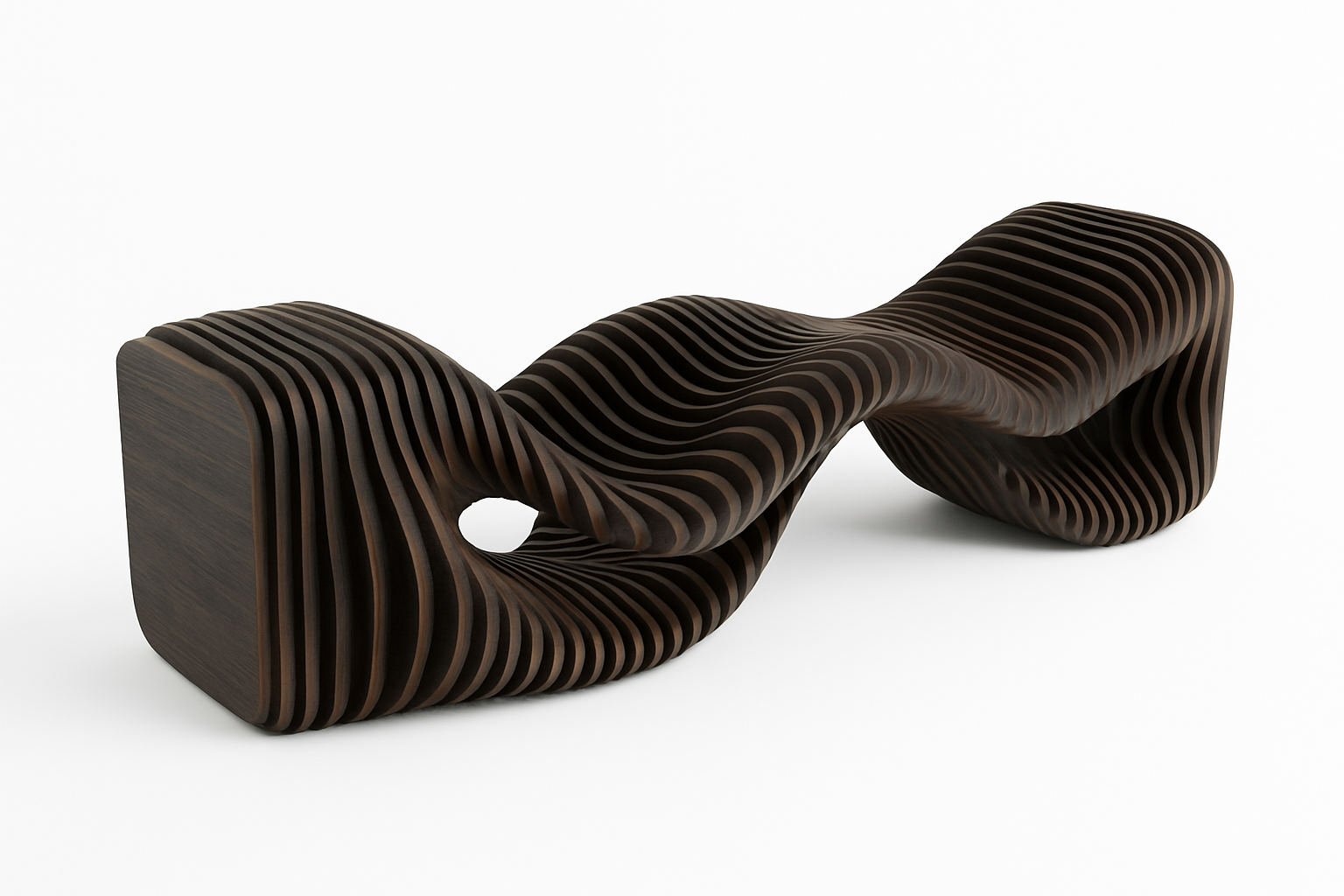
Forget shapes. Start with boundaries. Functional boundaries. Fabrication boundaries. Load boundaries. Parametric architecture is not about infinite geometry. It is controlled geometry. One input change. A whole system update. No broken joins. No broken structure.
If you are framing an exterior skin, pair these rules with smart facade basics or dig into facade materials.
- Buildable geometry. Every curve must be cut, cast, folded, shipped, or printed. If not, it stays a render.
- Performance targets. Daylight minimums. View cones. Airflow. Noise caps. These are not optional. They drive form.
- Material behavior. Concrete creeps. Wood moves. Bricks lift heat. If your model ignores physics, the contractor will not.
- Budget and repetition. Anything can be done once. Repetition is what makes it affordable. Smart patterns. Limited parts.
- Structural sanity. Loads don’t respect your render. Build rules into the graph or chaos follows.
This is the blueprint. You set constraints. Then. And only then. You let the parametric engine run wild — inside the fences you drew.
How a Working Parametric Project Really Flows
Here’s the loop most real teams follow. No hype. Just work.
- Define targets. Light levels. Budget. Shipping size. Panel limits. Real constraints.
- Build the rule graph. Nodes and wired logic. No buttons. No guessing.
- Generate versions. Ten, fifty, two hundred. All tied to the same DNA.
- Test performance. Solar. Structure. Code. Price. Kill weak options fast.
- Lock the kit of parts. Choose a panel catalog or rib set to reuse.
- Document and pass on. Everything tagged. Everything quantified.
Note. “Parametric” does not mean “undefined.” It means pre-defined. Every slider must respect a rule or the whole thing breaks in detail.
Template this loop with our process walkthrough and scan the tool stack.
Examples
The Gherkin and Wind Logic
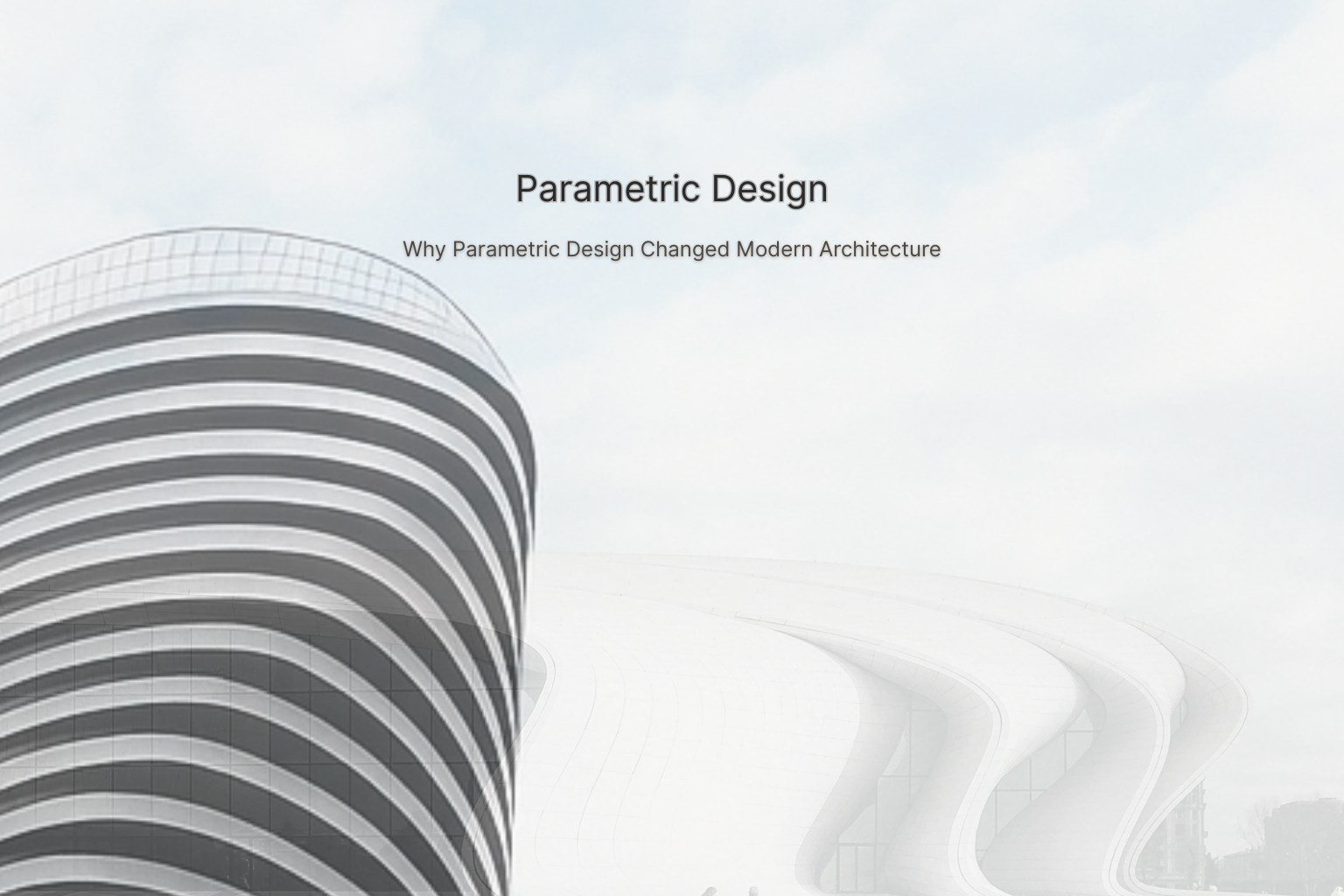
London, Foster + Partners
The famous taper was not a “wild form.” It was a response to wind. The diagrid dealt with twist and gravity at the same time. The spiral light wells cut HVAC loads. Nothing there was random.
- Rule 1: Reduce vortices at street level.
- Rule 2: Build with repeatable glass modules.
- Rule 3: Pull air through the core via stack effect.
Every variation followed those rules. The chosen one was not the prettiest. It was the most logical.
Compare wind and skin strategies across other towers in our examples roundup.
Al Bahar Towers and Sun Logic
Abu Dhabi, Aedas + Arup
Each mashrabiya panel opens and closes based on solar angle. The pattern is not “decorative.” It cuts glare and drops cooling loads.
Rule: 1 panel type. 1 sensor logic. 1 control path. Infinite states. No hand-tweaking.
That is parametric behavior done right.
For more on responsive skins, start with this facade guide.
The Trap: Form Before Rules

Every beginner does this. Open Grasshopper. Drag curves. Random attractor. Pretty ripples. Then they try to turn it into a wall, roof, or floor and watch the whole thing collapse.
Reality check: If you start with geometry instead of targets, you’re done. That is not parametric thinking. That’s digital sketching.
Here’s what pros do instead:
- Define what must never break: head clearance, stair slope, panel size.
- Define what must adapt: spacing, rotation, density.
- Hard-code the first. Parameterize the second.
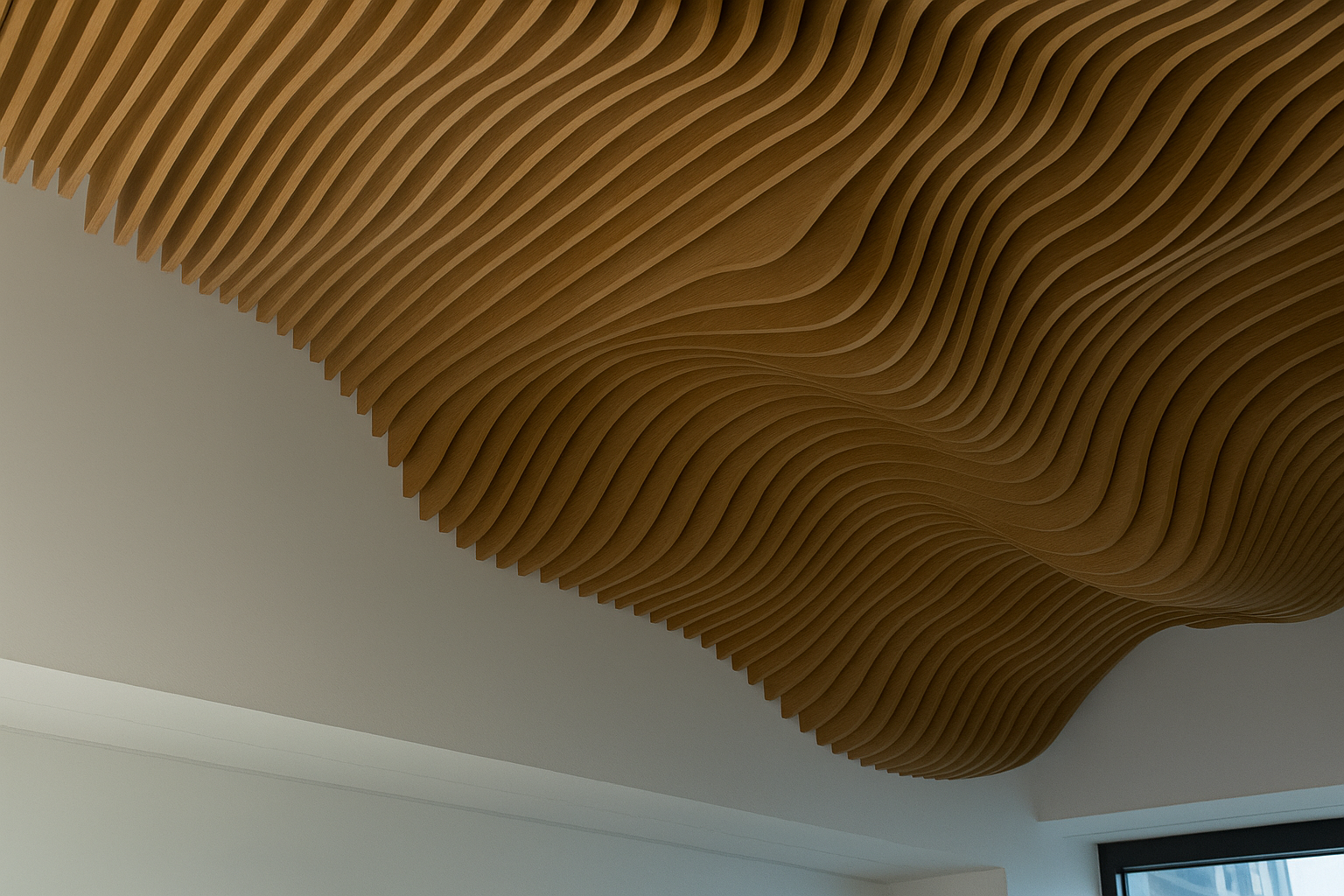
If you need examples of rules that actually change experience, look at parametric ceilings that fix glare and sound.
When the Geometry Finally Talks Back

There’s a moment every designer remembers. When a model starts behaving on its own — but inside the rules you wrote. You move a wall. The panels rotate. The airflow model updates. The budget recalculates. And nothing breaks.
That is the “click moment” in parametric work. It’s not about the pattern. It’s when the system answers you in real time. And you realize architecture is not just lines, it is logic.
Why that moment matters:
- You stop drawing objects. You start shaping behaviors.
- You lose fear of change. Nothing breaks. Everything updates.
- You become faster without becoming sloppy.
Once you feel that, you never go back.
See how interiors benefit from this feedback loop in parametric interior design.
How to
Learn This Without Losing Months
Here is the fastest path most offices follow when training juniors.
- Learn Rhino first. No Grasshopper until you can model cleanly.
- Learn Grasshopper slow. One node at a time. Understand what it does.
- Start with 2 parameters. Not 20. Learn control before variation.
- Document everything. Every input. Every rule. Every source.
- Test on small jobs: shelves, fins, stairs, lighting grids.
FIELD PICK:
Elements of Parametric Design — Robert Woodbury.
The clearest book on how rules behave in modeling. Still used in offices.
When you are ready to build projects, walk through the step-by-step process.
Checklist
Rules Before Rhino
- Define performance first: light, air, flow, code.
- Set fabrication limits: max panel, minimum bend, module count.
- Limit sliders. Five or fewer. Rest should calculate automatically.
- Show cost on screen. Do not wait for a quantity surveyor.
- Output schedules and shop drawings from the same model.
This is how you keep parametric work inside real deadlines.
If your scope includes exteriors, pair this list with facade fundamentals.
Avoid!
Endless Arrays of Nothing
Students get lost in surface patterns, void fields, and perforations. It looks “algorithmic.” But none of it solves a problem. It wastes time.
Fix: If a pattern does nothing for light, cost, structure, or experience, remove it. Design is not a screensaver.
For patterns that earn their keep, skim these field-tested moves.
FAQ
Do I need to code to do parametric architecture?
No. You need logic. Coding comes later. Grasshopper is visual. Start there.
New to it? Begin with the software rundown.
Is this only for big firms?
No. Small shops use it for stairs, canopies, cabinets, even tile patterns.
See compact interior wins in our interiors guide.
What software should I learn first?
Rhino, then Grasshopper. If you work in BIM, learn Dynamo inside Revit.
Can parametric work stay affordable?
Yes, if you reuse parts. Cost dies from too many uniques, not the script itself.
Is this replacing architects?
No. It speeds up testing. Humans still decide and defend the final form.
Does parametric always look curved?
No. Grids can be parametric. So can brick walls, shelves, or trusses.
For masonry logic that actually performs, see parametric brick facades.
Can I still sketch?
Yes. But sketch rules. Not shapes. The shapes come later.
What’s the hardest part?
Stopping yourself from adding more sliders than the job needs.
Final Word
Parametric architecture is not the future. It is the present. The difference between students who drown in curves and architects who control them is simple. One group chases shapes. The other writes rules and lets the system obey.
Master the rules first. Then — and only then — start shaping the future.
When you are ready to apply this on real skins, start here: parametric facades.