
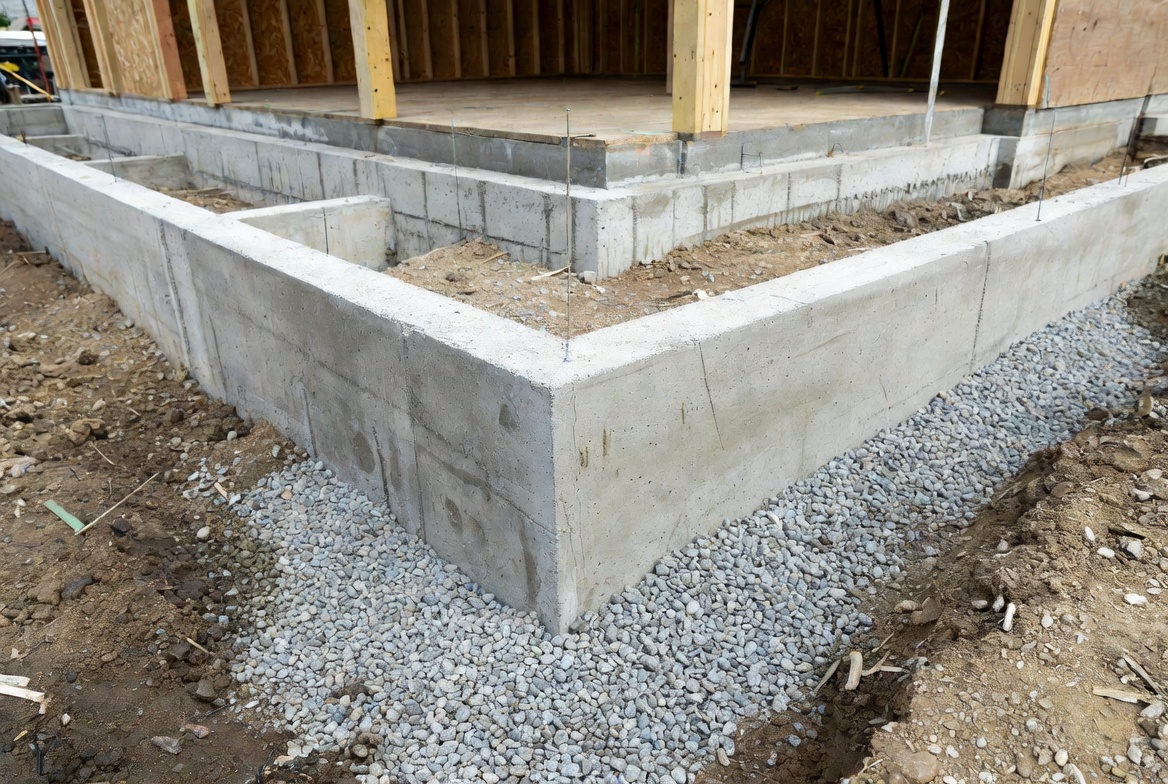
What Gets Used, Where It Works, and Where It Fails
Most foundation-material articles are too broad to help.
They throw concrete, block, stone, wood, and piles into one list and act like you can pick from them the way you pick flooring. That is not how foundation work goes. Some materials are normal on modern house jobs. Some belong mostly to repairs, old houses, or specialty work. Some are not really “materials” in the simple sense at all. They are full support systems.
This page stays with the real question: what foundation materials actually get used today, where each one makes sense, and where jobs start going wrong when the material does not fit the soil, the water, the load, or the crew building it.
If you need the broader foundation map first, start with House Foundations Before Construction. If the site still looks uncertain, go straight to Foundations, Soil Analysis, and Site Investigation.
What Gets Used on Real House Jobs
| Material or System | Where It Usually Shows Up | Main Strength | Main Trouble |
|---|---|---|---|
| Poured concrete | Footings, walls, slabs, piers, grade beams | Strong, familiar, widely accepted | Cracking, curing mistakes, and water problems when details are weak |
| Reinforced concrete | Most serious footings, walls, slabs, stem walls | Handles load and movement better than plain concrete | Needs correct steel placement, not just more concrete |
| CMU block | Basement walls, crawl-space walls, stem walls | Common, buildable, easy to sequence | More joints and more chances for water to get in |
| ICF | Basements, stem walls, full wall systems | Concrete structure plus insulation in one assembly | Higher system complexity and cost |
| Permanent wood foundation systems | Some residential jobs on well-drained sites | Lighter, faster, insulation-friendly | Water management has to stay tight |
| Stone | Older houses, restoration work, specialty builds | Durable when built well | Harder to repair, insulate, and standardize |
| Brick | Older foundations and historic work | Good compressive strength in the right assembly | Water damage, mortar loss, and weaker below-grade tolerance |
| Helical piles and deep pile systems | Weak soils, awkward sites, raised structures, specialty support | Bypasses bad near-surface soil | Engineering, corrosion, and installation matter a lot |
The short version is plain. For most modern houses, the material conversation starts with concrete, reinforced concrete, block, or ICF. Wood, stone, brick, and pile systems are still real, but they are not the default answer on most ordinary house jobs.
Read this next: Types of House Foundations if you are still deciding between slab, crawl space, basement, and pier-and-beam before the material choice is even settled.
Concrete Still Runs Most of the Job
This is still the standard for a reason.
Poured concrete works for slabs, strip footings, thickened slab edges, stem walls, basement walls, piers, and grade beams. Crews know it. Inspectors know it. Engineers know how to size it. Suppliers are everywhere. That matters more than people admit when the project has to get built on time and pass inspection without a fight.
The mistake is talking about concrete like one simple thing. It is not. A well-designed reinforced concrete wall is not the same as a rushed residential pour with bad prep, weak curing, and poor water control outside it.
If the job is slab-based, go to Slab-on-Grade Foundation. If the real question is the wall sequence, use Foundation Wall Construction.
Reinforced Concrete Is the Real Baseline
For actual house foundations, reinforcement is where the real conversation starts.
Concrete handles compression well. It does not handle tension well. That is why rebar, welded wire reinforcement, and other steel details matter. They help the footing, wall, or slab deal with load, shrinkage, and movement in a more controlled way.
This is also where people fool themselves. They think a bigger pour fixes everything. It does not. If the steel is wrong, the cover is wrong, the placement is wrong, or the base below the concrete is bad, more concrete does not make the work smart.
This part matters: Foundation Footings if the real question is bearing, width, depth, and reinforcement at the bottom of the system.
Block Walls Still Matter, But They Give Water More Chances
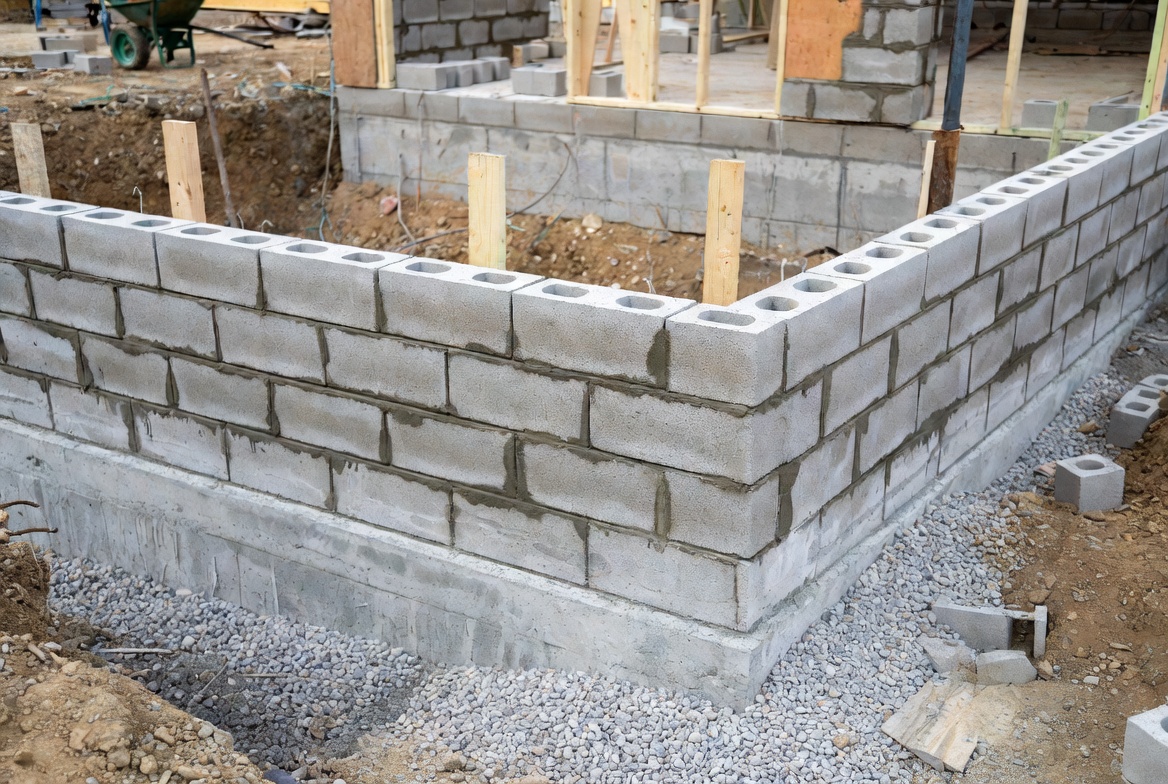
Image by ArchitectureCourses.org. Concrete block foundation wall built on a poured footing during residential construction.
Concrete block still shows up all the time in basement walls, crawl-space walls, and stem walls. It can work well. It just gives you more joints, more mortar, and more chances to leave weak points behind.
That does not make it bad. It makes it less forgiving. Hollow block below grade with weak waterproofing, bad drainage, or sloppy reinforcement can turn into a leak problem fast. Block walls built and detailed properly are a different story.
That is why old “block vs poured concrete” arguments usually go nowhere. The answer depends on load, soil, water, local labor, and how well the wall will be detailed after the masonry is up.
If the moisture side is already driving the job, go to Exterior Foundation Waterproofing next.
ICF Is a System Decision
Insulated concrete forms are not just another way to pour concrete. They are a different assembly strategy.
You still end up with a reinforced concrete core, but the form system stays in place and becomes part of the insulated wall assembly. That can make a lot of sense for basements, stem walls, and higher-performance houses where the thermal side matters almost as much as the structural side.
The upside is obvious: structure and insulation are tied together. The downside shows up once the job gets real: higher coordination load, more system-specific labor, and less tolerance for sloppy sequencing.
ICF is not automatically better. It is a different kind of commitment.
Permanent Wood Foundations Are Real, But They Are Not Casual
This is where weak articles go off the rails.
Wood foundations are not just “use wood instead of concrete.” If you are talking about permanent wood foundations, you are talking about a treated, detailed, below-grade system with drainage, moisture control, and structural logic behind it. This is not the same as burying ordinary framing lumber and hoping for the best.
They can make sense on well-drained sites, in some cold-climate work, and in jobs where lighter handling and insulation integration help. They also demand discipline. If the site is wet and the water management is sloppy, this is not the place to bluff your way through.
One more thing: Alternative Foundation Materials if you want the wider low-concrete and lower-carbon side of this discussion.
Stone and Brick Mostly Belong to Older Houses Now
Stone and brick foundations still matter. They just usually matter in a different way.
For old houses, they are repair, preservation, drainage, and stabilization questions. For new houses, they are much less common as the primary structural foundation material. Stone is durable, but labor-heavy. Brick can work, but it is more vulnerable to water and mortar problems than people like to admit.
So yes, both materials belong in the article. No, they should not be treated like equally common modern choices beside poured concrete or block.
Helical Piles, Piers, and Deep Systems Usually Show Up Because the Site Is Bad
When people search foundation materials, they often mix up materials with support systems.
Helical piles, driven piles, and drilled piers are usually chosen because the soil, access, slope, or load path forces the issue. They are not there because someone wanted a steel-based aesthetic. They are there because the upper soil is weak, the site is awkward, or the building needs a different bearing strategy.
That makes them useful and easy to misuse at the same time. If the job needs deep support, it needs real engineering, real installation control, and real load review. This is not where hopeful guessing belongs.
Do This Instead of This
| Do This | Instead Of This | Why |
|---|---|---|
| Choose the material after soil, water, and load are clear. | Choose the material because it sounds strongest. | Foundation choices are site decisions first. |
| Treat reinforced concrete as the real baseline for many house foundations. | Talk about “concrete” like one generic thing. | Steel placement and detailing change the result a lot. |
| Use block where the crew can build and waterproof it well. | Assume block is automatically cheaper and good enough. | Cheap block work below grade can get expensive later. |
| Use wood foundations only as real permanent wood foundation systems. | Treat wood like a casual substitute for concrete. | Below-grade wood work needs real system discipline. |
| Use piles and deep systems when the site forces a different bearing strategy. | Treat them like a trendy upgrade. | They solve site problems. They are not style moves. |
What Changes the Material Choice First
Soil
Expansive clay, loose sand, fill, rock, and wet soil do not ask the same thing from a foundation. The material decision follows that. It does not lead it.
Water
Below-grade water changes everything. A material that looks fine on paper can turn into a long repair story if the site keeps loading the foundation with water.
Climate
Cold regions change footing depth, frost logic, slab-edge design, and insulation decisions. Hot and humid regions change moisture behavior. Flood zones push more projects toward raised systems or special detailing.
Building Weight
A light wood-frame house and a heavy masonry house are not asking for the same thing. A detached workshop is not a two-story house. Load changes the material conversation quickly.
Labor and Familiarity
This one gets ignored because it sounds unromantic. A good material installed badly is still bad work. A familiar material built well often beats a “better” one handled badly by the crew on site.
Where Problems Usually Start
Most foundation material failures are not caused by the material alone.
- Concrete cracks because the prep, reinforcement, curing, or water management were weak.
- Block walls leak because the drainage and waterproofing were weak, not because block is cursed.
- Wood systems fail because the site stays wet and the detailing was too loose.
- Stone and brick foundations struggle because water, movement, and old mortar were ignored too long.
- Piles and deep systems become expensive because the site problems were underestimated at the start.
The pattern is simple. The material gets blamed. The site or detailing is often where the problem really started.
When Concrete Is Still the Better Move
There is a point where trying too hard to avoid concrete becomes bad judgment.
- when the house needs a basement or a serious below-grade wall system
- when the site has real water pressure or retaining conditions
- when the local code path and labor market strongly favor concrete or block
- when the building loads are heavy enough that lighter alternatives stop making sense
- when the project needs a slab floor and a standard build sequence more than it needs novelty
This is the part that gets skipped in too many “alternative materials” conversations. Sometimes the smarter move is not replacing concrete. It is using it well, placing it carefully, and not overbuilding where you do not need to.
FAQ
What is the best material for a house foundation?
There is no single best one. For many modern houses, the answer starts with reinforced concrete, block, or ICF, depending on the site, water conditions, and build type.
Is poured concrete better than block?
Sometimes. Poured walls have fewer joints. Block can still work well when the wall is reinforced, drained, and waterproofed properly. The site and detailing matter more than internet arguments about one being “always better.”
Can wood be used for a permanent foundation?
Yes, in the form of a real permanent wood foundation system. No, not as ordinary untreated lumber buried in the ground and hoped into service.
Are stone foundations still good?
They can last a very long time, but most modern stone-foundation questions are repair and preservation questions, not new-house material choices.
What material gets used on weak soil?
Sometimes reinforced concrete with a different footing strategy. Sometimes helical piles, drilled piers, or other deep support systems. Weak soil usually changes the whole support plan, not just the material label.
What causes most foundation material failures?
Weak soil prep, water around the foundation, bad detailing, poor curing, sloppy reinforcement, or the wrong material for the site. The material alone is rarely the whole story.
What To Do Next
Read this next: Foundations, Soil Analysis, and Site Investigation if the ground conditions are still unknown.
Also useful: Foundation Footings and Foundation Wall Construction if you are already inside the concrete, block, or wall-sequence part of the job.
Before you move on: Alternative Foundation Materials if you are comparing lower-concrete systems, and Exterior Foundation Waterproofing if the real problem is the water around the material, not the material itself.