
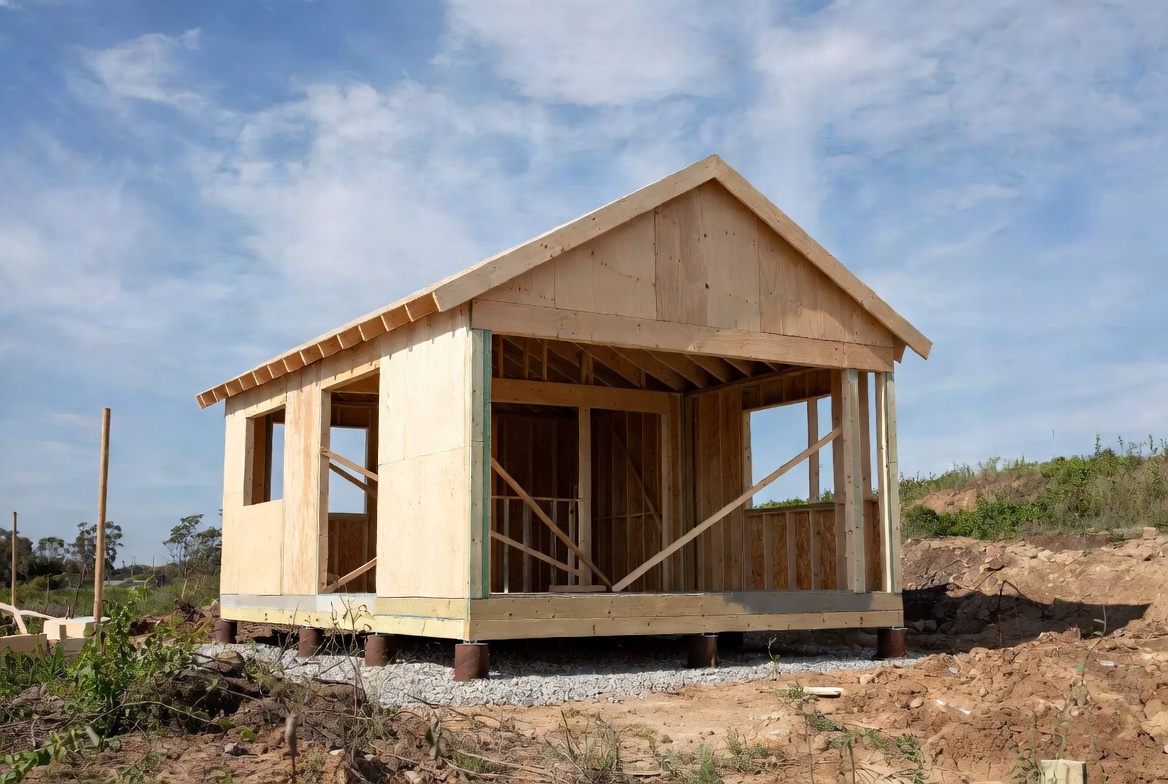
A concrete pad is not the default answer for every small building.
Sometimes it is the right move. Sometimes it means more excavation, more concrete, more cost, and less flexibility than the project needs. That is when alternatives start to make more sense.
This page covers the main options: gravel pads, screw piles, pier-and-beam systems, and a few lower-impact niche methods. Not all of them are concrete-free. That matters. Some replace a full slab or pad. Some just reduce the amount of concrete. Those are different decisions.
If you need the wider foundation map first, start with House Foundations Before Construction. If the site still looks uncertain, go straight to Foundations, Soil Analysis, and Site Investigation.
Why Skip a Full Concrete Pad?
People usually start looking for pad alternatives for one of five reasons:
- the building is light enough that a full slab feels excessive
- the site is sloped, wet, awkward, or hard to access with trucks
- they want less excavation and less site disturbance
- they want the option to remove or change the structure later
- they do not want to lock the whole job into one permanent slab decision too early
That does not mean concrete is bad. It means concrete is not always the best fit for a small workshop, studio, shed, greenhouse, or cabin.
Quick Comparison
| Option | Best Use | Main Advantage | Main Limit |
|---|---|---|---|
| Gravel pad | Sheds, greenhouses, storage buildings, lighter detached structures | Cheap, fast, good drainage | Not a finished floor and not ideal for heavier loads |
| Screw piles | Workshops, studios, cabins, awkward sites, remote builds | Minimal digging, fast install, clean site | Needs real load and soil review |
| Pier and beam | Wet sites, sloped sites, raised floor structures | Good access below, less excavation than a slab | Floor insulation and moisture control matter more |
| Rammed earth or other earth-based systems | Niche low-carbon builds in the right climate | Very low cement use and strong thermal mass | Climate, labor, and code path can shut it down fast |
| Reclaimed beam systems | Raised small buildings using pier-and-beam logic | Lower waste and strong material reuse | Used material still has to be structurally sound |
What Actually Works
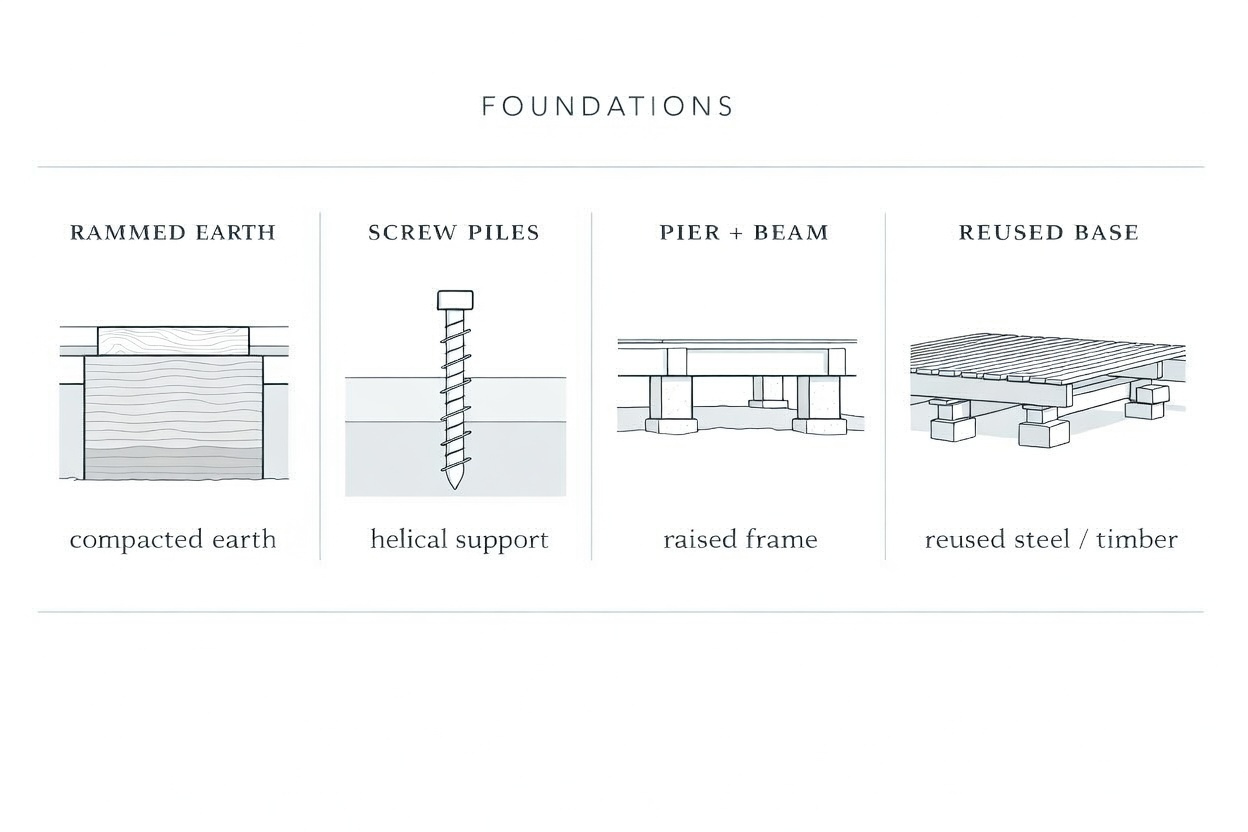
Gravel Pad
This is one of the best alternatives when the building is light, the floor does not need to be a finished slab, and drainage matters more than permanence.
A well-built gravel pad is not just loose stone dumped on dirt. It needs stripped topsoil, proper edge control, compacted layers, and enough depth to stay stable. Done right, it is fast, simple, and hard to beat for sheds, storage buildings, and garden structures.
Done badly, it settles, spreads, and starts leaning at the edges.
Screw Piles
Screw piles are one of the cleanest alternatives to a full concrete pad for small to medium detached buildings. They reduce excavation, avoid curing time, work well on awkward sites, and leave the ground far less disturbed.
They make a lot of sense for workshops, studios, cabins, and additions where you want a raised floor and faster installation. They also help when access is tight and you do not want a concrete truck chewing up the site.
What gets missed first is simple: these are not “just metal posts.” Soil, load, embedment depth, corrosion strategy, and layout all matter. For a real building, this is where guessing gets expensive.
This part matters: Alternative Foundation Materials if you want the wider look at screw piles and other lower-concrete systems.
Pier and Beam
Pier and beam is one of the oldest ways to avoid a full slab, and it still makes sense when the site is wet, sloped, or better suited to a raised floor.
This approach gives you access below the structure for utilities and future changes. It also keeps the building up off the ground, which can help on flood-prone or damp sites. That said, it is not “no concrete” by default. Many pier-and-beam systems still use concrete at the bearing points. The difference is that you are not pouring one full pad across the whole footprint.
Also useful: Pier and Beam Foundation if that is the direction you are leaning.
Earth-Based Systems
Rammed earth and similar systems can work, but this is the niche part of the conversation, not the default answer for a backyard workshop.
These systems make more sense in dry climates, low-carbon builds, and projects where the team already knows what it is doing. They make much less sense when the site is wet, the schedule is tight, or nobody involved has built that way before.
If that is the path you want, read Rammed Earth first. Do not jump into it because it sounds green.
Reclaimed Beams and Reused Materials
Reclaimed timber and reused steel can lower waste and cut material demand, but they are not a foundation by themselves. They are parts of a system.
Used well, reclaimed beams can work in raised floor and pier-and-beam setups. Used badly, they bring in rot, warping, hidden fastener damage, or bad sizing. Reuse only helps if the material is still structurally good enough to trust.
Worth knowing: Foundation Building Materials and Natural Building Materials if the real question is material choice, not just foundation shape.
What Actually Works vs What Sounds Good
| Do This | Instead Of This | Why |
|---|---|---|
| Match the system to the building load and the site. | Pick the greenest-sounding option first. | Foundation choices are site decisions, not slogans. |
| Use gravel pads for light structures that do not need a finished slab floor. | Force gravel to do the job of a workshop slab. | A pad that drains well is not the same thing as a rigid finished floor. |
| Use screw piles when access, speed, and low disturbance matter. | Treat them like a casual DIY shortcut. | They still need proper layout and load planning. |
| Use reclaimed beams only after checking straightness, rot, and load path. | Assume old material is automatically better. | Old wood can be great or useless. You have to check. |
| Use earth-based systems only when climate, code, and labor all line up. | Use them as a vague eco gesture. | The site still decides whether the idea makes sense. |
What Decides the Choice
Soil
Loose sand, expansive clay, fill, rock, and wet ground all push the decision in different directions. This is why the site matters more than the trend.
Water
Some systems handle wet ground better than others. A raised floor on piles or piers may make more sense than fighting groundwater with a slab where water keeps collecting.
Frost
Cold regions change the whole conversation. Shallow support systems that seem fine in one climate can move badly in another if frost depth and insulation are ignored.
Building Weight
A storage shed is one thing. A heavy workshop with equipment, masonry walls, or vehicle loads is another. A lighter foundation system has to match the real load, not the hopeful one.
How Permanent the Structure Is
If the building may move, change, expand, or come off the site later, a removable or lower-disturbance system may be smarter than locking everything into a full slab.
A Simple Build Order That Works Better Than Guesswork
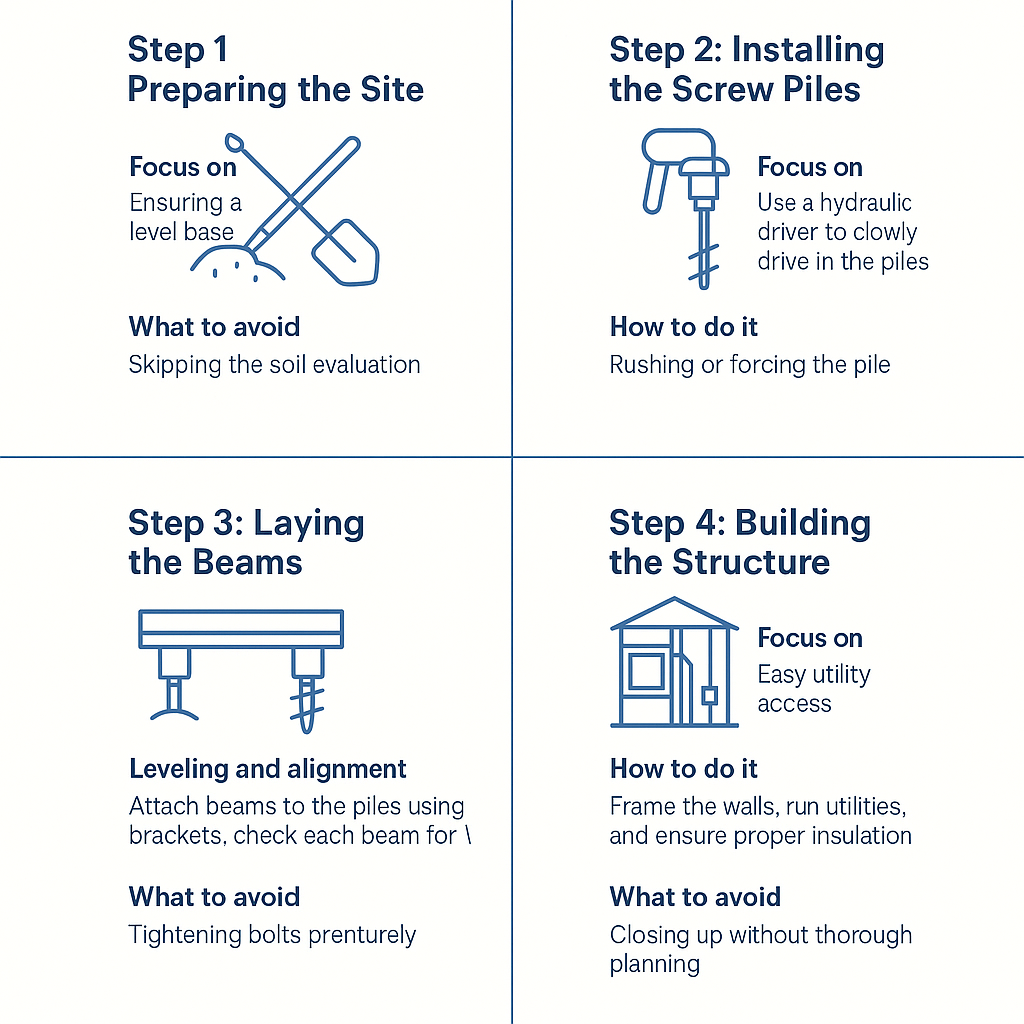
- Strip topsoil and get down to stable ground.
- Check level, square, drainage, and final building layout.
- Choose the support system based on actual soil and load, not habit.
- Install the base, piles, or piers accurately and verify alignment.
- Build the raised floor or support frame without forcing warped material into place.
- Plan utilities, insulation, and future access before the structure closes up.
- Keep water moving away from the building from the start.
That is the boring part. It is also the part that keeps the job from becoming expensive later.
When Concrete Is Still the Right Answer
There are plenty of times when a concrete pad is still the better move.
- when the building needs a hard finished floor
- when vehicle loads or heavy equipment are involved
- when the structure is masonry or unusually heavy
- when the site is flat, access is easy, and the budget supports a proper slab
- when the job needs the mass, rigidity, and simplicity of one well-built floor system
This is where people overcorrect. Trying to avoid concrete at all costs can be as dumb as pouring it where it was never needed.
Read this next: Slab-on-Grade Foundation if the project is starting to look like a slab really is the cleaner answer.
FAQ
What is the cheapest alternative to a concrete pad?
Usually a gravel pad for a light structure on a simple site. But cheap only stays cheap if the base is prepared properly and the building load is light enough for that system.
Are screw piles better than concrete pads?
Sometimes. They can be faster, cleaner, and less disruptive. They are not automatically better on every site or for every load.
Can I build a workshop on a gravel pad?
Sometimes, yes, if it is a lighter building and the floor system is designed for it. If you want a rigid finished slab floor, gravel alone is not doing the same job.
Is pier and beam a true alternative to a pad?
Yes in system terms, yes in practical terms for many small buildings, but not always as a fully concrete-free option. It often uses much less concrete instead of none.
What is the best concrete pad alternative for wet ground?
Often a raised system like screw piles or pier and beam, but wet sites still need drainage thinking. No foundation type gets a free pass on water.
Can I DIY a concrete pad alternative?
Some light structures can be DIY. But once soil, load, frost, or alignment start getting serious, professional input is worth paying for early.
What To Do Next
Before you skip a concrete pad, be clear about what you need the foundation to do. That is the real question.
- Foundations, Soil Analysis, and Site Investigation if the soil and water conditions are still unknown.
- Alternative Foundation Materials if you want the wider low-concrete and lower-carbon foundation options.
- Pier and Beam Foundation and Slab-on-Grade Foundation if the choice is down to a raised floor or a slab.