
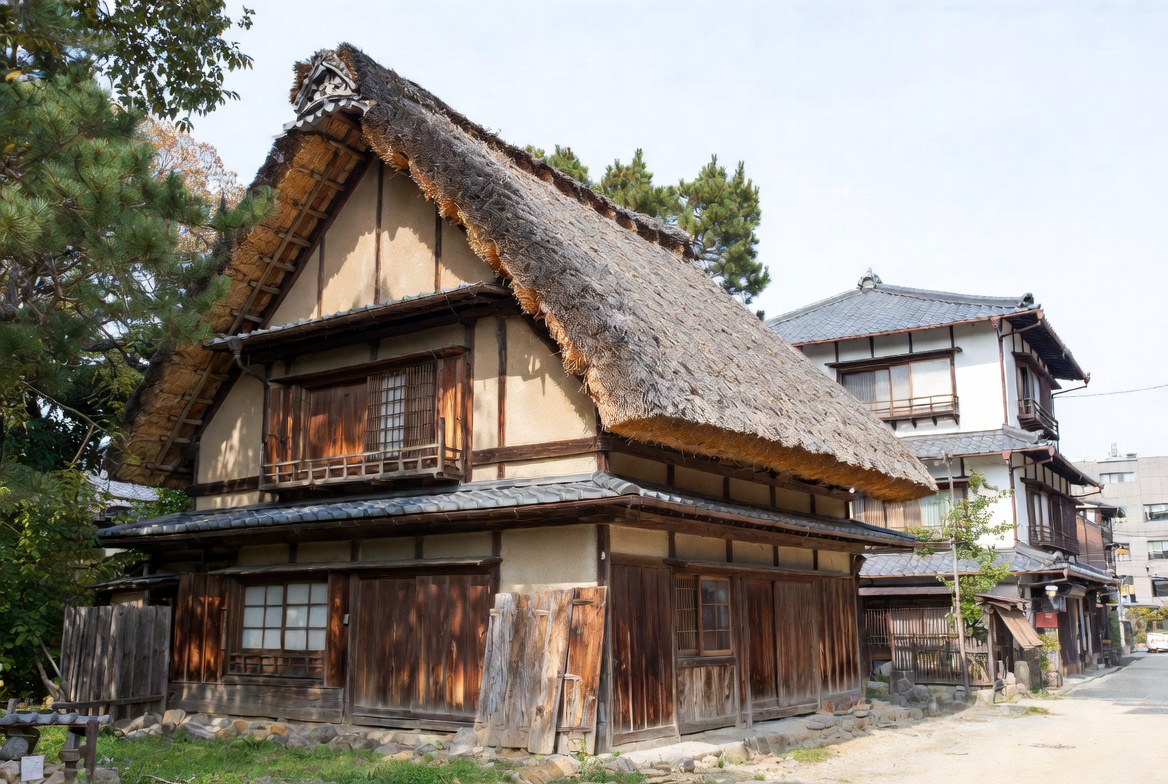
Image by ArchitectureCourses.org. Traditional Japanese house types ranged from steep-roofed rural dwellings to denser urban townhouses shaped by tighter sites.
A traditional Japanese house is not one fixed house type.
Most people are picturing a minka. That is the common image, and for good reason. But it is only one branch of a larger housing tradition that also includes rural farmhouses, urban townhouses, older elite houses, restored vernacular houses, and regional variations that do not all work the same way.
That is the first thing to get clear. The shared logic is there, but the house types split by class, setting, region, and use.
Start with Japanese Traditional Houses for the broader overview, and use History of Traditional Japanese Architecture for the timeline. The focus here is narrower: the main house types, what the names mean, and where they are often confused.
The Main Types at a Glance
| Type | Usual Setting | Who It Was For | What Defines It |
|---|---|---|---|
| Minka | Rural and small-town Japan | Farmers, artisans, merchants | Broad folk-house category built from local materials with flexible rooms and climate-driven design |
| Noka | Countryside | Farm households | Farmhouse subtype of minka, often with work space, earthen floor zones, and larger roof volumes |
| Machiya | Cities such as Kyoto | Merchants and townspeople | Narrow urban townhouse with shop-and-house logic, deep plots, and layered interior zones |
| Nagaya | Urban districts | Workers and lower-income residents | Row-house type with shared walls and compact units |
| Kominka | Mostly used in modern discussion | Usually restored or preserved old houses | Older traditional folk house, often used as a preservation or reuse term rather than a distinct original style |
| Gassho-zukuri | Heavy-snow regions such as Shirakawa-go | Rural households | Steep thatched roof form developed for snow load and attic use |
| Shinden-zukuri | Heian-period elite compounds | Aristocracy | Formal noble residence arranged around a main hall and linked buildings |
| Shoin-zukuri | Warrior and elite residences | Samurai and upper-status households | Reception-centered domestic style associated with tatami, alcoves, and formal room hierarchy |
| Sukiya-style houses | Refined domestic and tea-related settings | Elite patrons and later refined residential clients | Lighter, more intimate domestic expression shaped by tea culture and quiet craftsmanship |
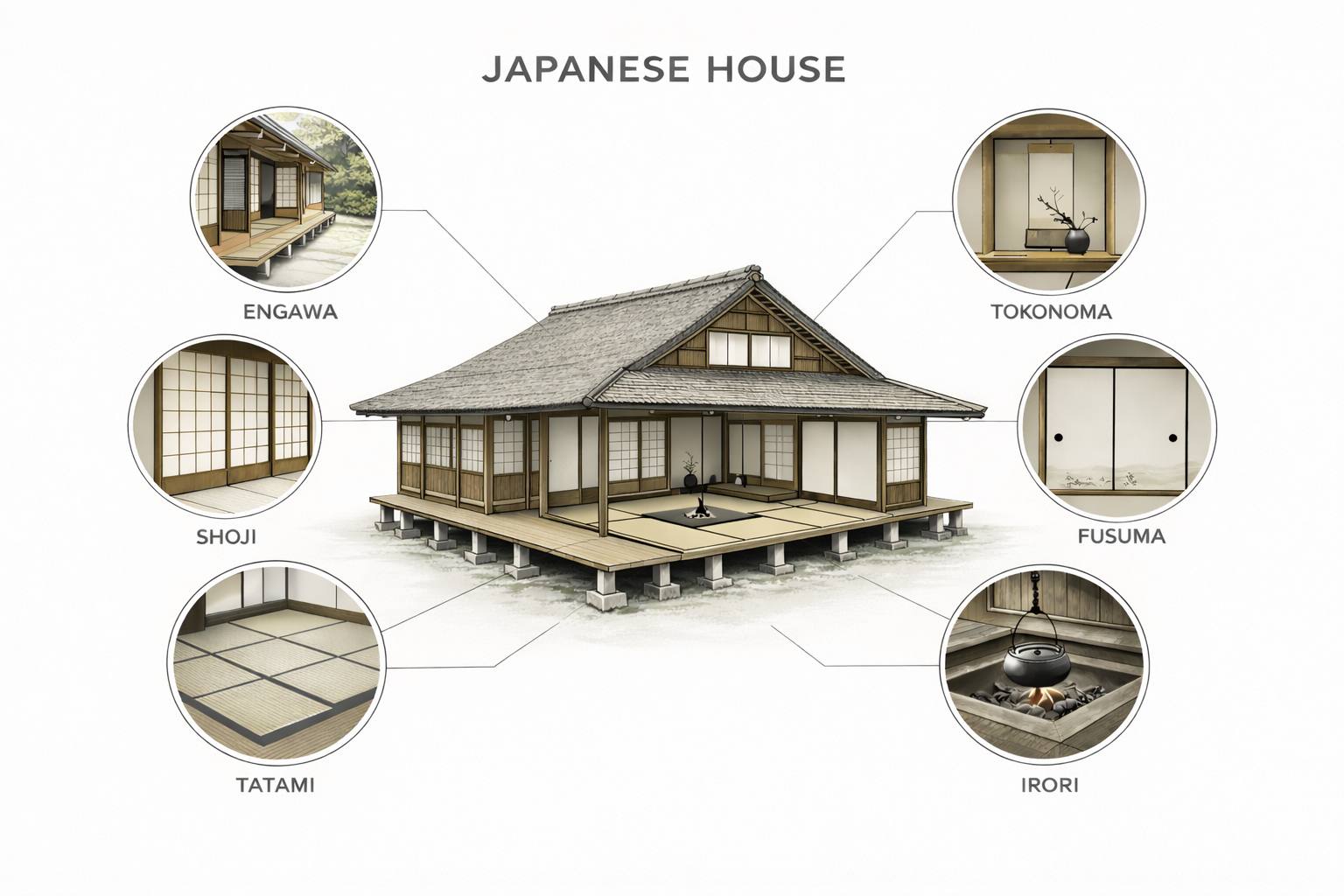
Illustration by ArchitectureCourses.org. Shared parts seen across many traditional Japanese houses include engawa, shoji, tatami, fusuma, tokonoma, and, in some rural types, an irori hearth. The type names change, but many of the working elements repeat.
Start With Minka
If you need one term first, it is minka.
Minka is the broad folk-house category most closely tied to what English speakers usually mean when they say “traditional Japanese house.” These were the houses of ordinary people rather than aristocrats, and they were built from what was available nearby: timber, earth, bamboo, straw, paper, and stone. Their form changed by region, work, and climate, but the bigger logic stayed consistent. They were meant to be workable, repairable, and responsive to weather.
That is why the word matters. It keeps the subject from getting flattened into one postcard image. A minka in a heavy-snow mountain region does not look the same as a minka in a milder agricultural plain. A merchant household and a farm household did not need the same plan. The point is not one fixed shape. The point is a family of houses built around ordinary use and local conditions.
Noka: The Farmhouse Branch
Noka is the farmhouse branch of minka. This is the type many readers picture first: big roof, exposed timber, earthen-floor work zone, flexible rooms, storage in the roof volume, and a plan shaped as much by labor as by domestic life.
These houses were not just for sleeping and eating. They often had to support agricultural work, tool storage, food preparation, drying, and seasonal routines. That is one reason the roof volume could get large. The house had to do more than shelter a family. It had to carry part of the working life of the household.
The low furniture, open rooms, and timber framing are only part of the story. The deeper logic is that the house was built around work, weather, and reuse of space.
Machiya: The Urban Townhouse
Machiya belongs in any serious house-types page because it solves a different problem from the farmhouse.
Machiya are urban townhouses, especially associated with Kyoto. They were built on narrow plots in dense districts, often combining living quarters and business use in one long, deep structure. That is why the facade can look tight and controlled from the street while the house stretches much farther back than first expected.
The plan logic is different from a farmhouse. A machiya often layers public and private zones more carefully, uses light courts or gardens to pull daylight into the depth of the plot, and handles circulation with more compression and sequence. If you are trying to understand why traditional Japanese house layout can feel so controlled without becoming rigid, the machiya is one of the clearest examples.
One thing worth being precise about: in broad classification, machiya can be discussed as part of the minka family. In everyday English, people often separate them because the urban townhouse type is so distinct. That is a useful distinction, not a contradiction.
Nagaya: The Row-House Type
Nagaya is not always mentioned in beginner guides, but it belongs here because it fills a different urban role from machiya.
A nagaya is a row-house type with shared walls and compact units. It is plainer and more compressed than the classic merchant machiya. If machiya often reads as a townhouse with commercial and domestic layers, nagaya reads more as practical urban housing. It matters because not every old Japanese urban house should be called machiya.
Kominka Is Not the Same Kind of Label
Kominka is usually not the best term for an original historic house type in the same way that minka or machiya is. In present-day use, kominka is more often a reuse, preservation, or age-related label for an old traditional folk house, especially one being restored, sold, adapted, or discussed as a heritage property.
That is why people searching for kominka often run into restoration pages, inns, renovation projects, and old-house listings. The word carries a strong “older preserved house” feeling in modern use.
The clean way to think about it is straightforward:
- Minka = the broad traditional folk-house category
- Kominka = usually an older traditional house being identified through age, preservation, or reuse
Sometimes the same building can be described both ways. A restored old farmhouse may be a minka in historical type and a kominka in present-day discussion.
Regional Types Matter Too
Not every type label sits at the same level.
Some labels name a broad family of houses. Others name a regional or structural subtype inside that family. That is where gassho-zukuri comes in.
Gassho-zukuri
Gassho-zukuri is one of the best-known regional house forms in Japan, especially from Shirakawa-go and nearby heavy-snow areas. The steep thatched roof is the obvious part, but the roof is not just visual identity. It is a response to snow load, drainage, storage, and use of the attic volume.
This is a good example of how traditional Japanese house types are often shaped by weather before style. A gassho-zukuri house is not a separate civilization from minka. It is a regional answer inside the larger folk-house tradition.
Formal and Elite Residential Styles
If minka covers the common-house tradition, the formal side of Japanese domestic architecture belongs to a different line.
Shinden-zukuri
Shinden-zukuri is associated with aristocratic residences of the Heian period. These were not compact folk houses. They were formal compounds arranged around a main hall and connected buildings, with controlled approaches, corridors, and gardens. Elite residential architecture in Japan developed along a different track from the ordinary house.
Shoin-zukuri
Shoin-zukuri later became the dominant formal residential style for warrior and elite households. This is the branch more directly tied to features that still matter in discussions of Japanese rooms today: tatami-covered floors, stronger room hierarchy, formal reception spaces, alcoves, and carefully arranged openings and partitions.
If you are wondering where the polished, ordered Japanese room with tatami, fusuma, and a tokonoma gains much of its formal lineage, this is the branch to remember.
Sukiya-Style Houses
Sukiya-style domestic architecture is lighter and more intimate than the heavier formal order of shoin-zukuri. It is closely tied to tea culture and to a quieter, more refined use of timber, proportion, surface, and detail. It helps explain why some traditional Japanese houses feel more formal and ceremonial while others feel more spare and personal.
You do not need to force every elegant old Japanese house into this label. But it belongs in the type map because it shaped a recognizable residential attitude: smaller scale, refined craftsmanship, and restraint without stiffness.
Which Term Fits Which House?
Use this quick rule set:
| If the house is... | Use this term first | Do not jump to... |
|---|---|---|
| A broad traditional folk house for ordinary people | Minka | Kominka, unless age or restoration is the point |
| A farmhouse tied to rural work and agricultural life | Noka | Machiya |
| A narrow urban townhouse, often merchant-related | Machiya | Noka |
| An old restored traditional house in present-day discussion | Kominka | Treating kominka as a completely separate historic style |
| A steep-roof heavy-snow rural subtype | Gassho-zukuri | Using it as the name for every old Japanese house |
| An aristocratic Heian residence | Shinden-zukuri | Minka |
| A formal elite or samurai-period reception-centered residence | Shoin-zukuri | Machiya |
What People Keep Mixing Up
Minka and Kominka
These are not interchangeable in the cleanest sense. Minka is the historical folk-house family. Kominka is often the older-house label used in modern restoration, reuse, and property talk.
Machiya and Nagaya
Not every old urban house is a machiya. Some are row-house types better described as nagaya. If the unit is compact, repetitive, and part of a row rather than a merchant townhouse with a deeper mixed-use logic, nagaya may fit better.
Folk Houses and Elite Residences
A shinden-zukuri or shoin-zukuri residence is not just a fancier minka. It comes from a different social and architectural branch. Mixing those categories blurs the whole page.
Regional Form and Main Type
Gassho-zukuri is a subtype, not the umbrella name for traditional Japanese housing. It belongs under the larger minka world, not above it.
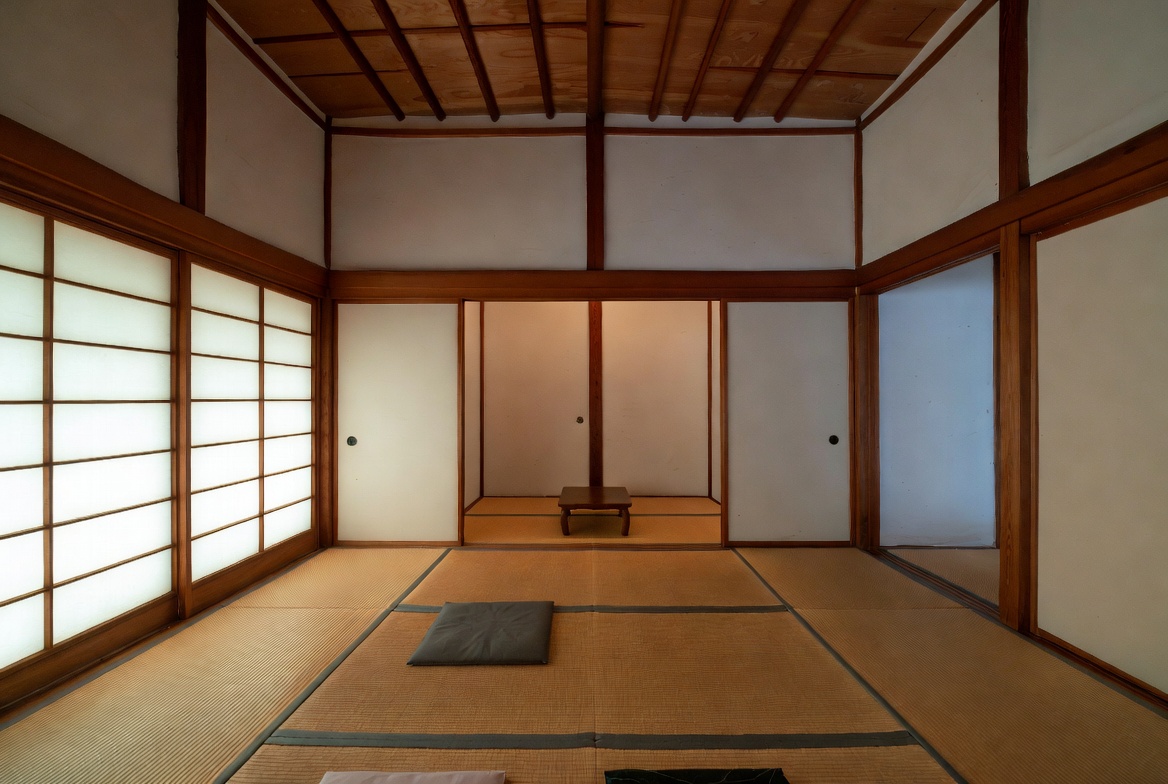
Image by ArchitectureCourses.org. Traditional Japanese interiors used tatami, sliding screens, and flexible room layouts instead of fixed Western-style room functions. Those shared spatial habits help explain why many house types are related even when the exterior form changes.
Why These Distinctions Help
This is not just terminology cleanup. The type names tell you what problem the house was solving.
- Minka tells you you are in the world of ordinary domestic life, local materials, and climate response.
- Machiya tells you the plot is tighter, the street matters more, and the house has to balance living and business.
- Kominka tells you age and preservation are part of the conversation.
- Shinden-zukuri and shoin-zukuri tell you the house belongs to a more formal social order, with stronger ceremonial hierarchy.
Once you sort the names, the plans make more sense too. A Kyoto townhouse should not be read like a farmhouse. A rural work-house should not be judged by aristocratic room order. This is also why the broader Japanese Architecture story needs both domestic and elite branches, not one flattened image of “the Japanese house.”
FAQ
What is the most common traditional Japanese house type?
For broad everyday use, minka is the most useful umbrella term. It covers the folk-house tradition most people mean when they picture a traditional Japanese house.
Is machiya a type of minka?
In broad classification, yes. Machiya can be treated as an urban branch of the minka world. In everyday English, people often discuss machiya separately because the townhouse type is so distinct.
What is a kominka?
Usually an older traditional Japanese folk house, often discussed through restoration, preservation, reuse, or property listing language rather than as a separate original style category.
What is the difference between minka and machiya?
Minka is the broad folk-house family. Machiya is the urban townhouse branch, especially tied to merchant and city life on narrow plots.
Is gassho-zukuri the same as minka?
Not quite. Gassho-zukuri is better understood as a regional subtype within the larger minka tradition.
What is the difference between shinden-zukuri and shoin-zukuri?
Shinden-zukuri is associated with Heian-period aristocratic compounds. Shoin-zukuri is a later formal residential style tied to warrior and elite households, with stronger room hierarchy and elements that shaped later Japanese-style rooms.
Are all old Japanese houses kominka?
No. Kominka is common in modern discussion of old traditional houses, especially restored ones, but it is not the best label for every historic house in Japan.
Read This Next
House types make more sense once you connect them back to the bigger system.
- Japanese Traditional Houses for the broader overview of structure, materials, and domestic life.
- History of Traditional Japanese Architecture for the timeline behind these house types.
- Traditional Japanese House Layout for room sequence, plan logic, and how these houses were organized from front to back.
- Engawa Architecture for one of the most important threshold elements shared across many traditional houses.
- Japanese Style House Exterior for roofs, screens, base conditions, and the outer reading of the house.