
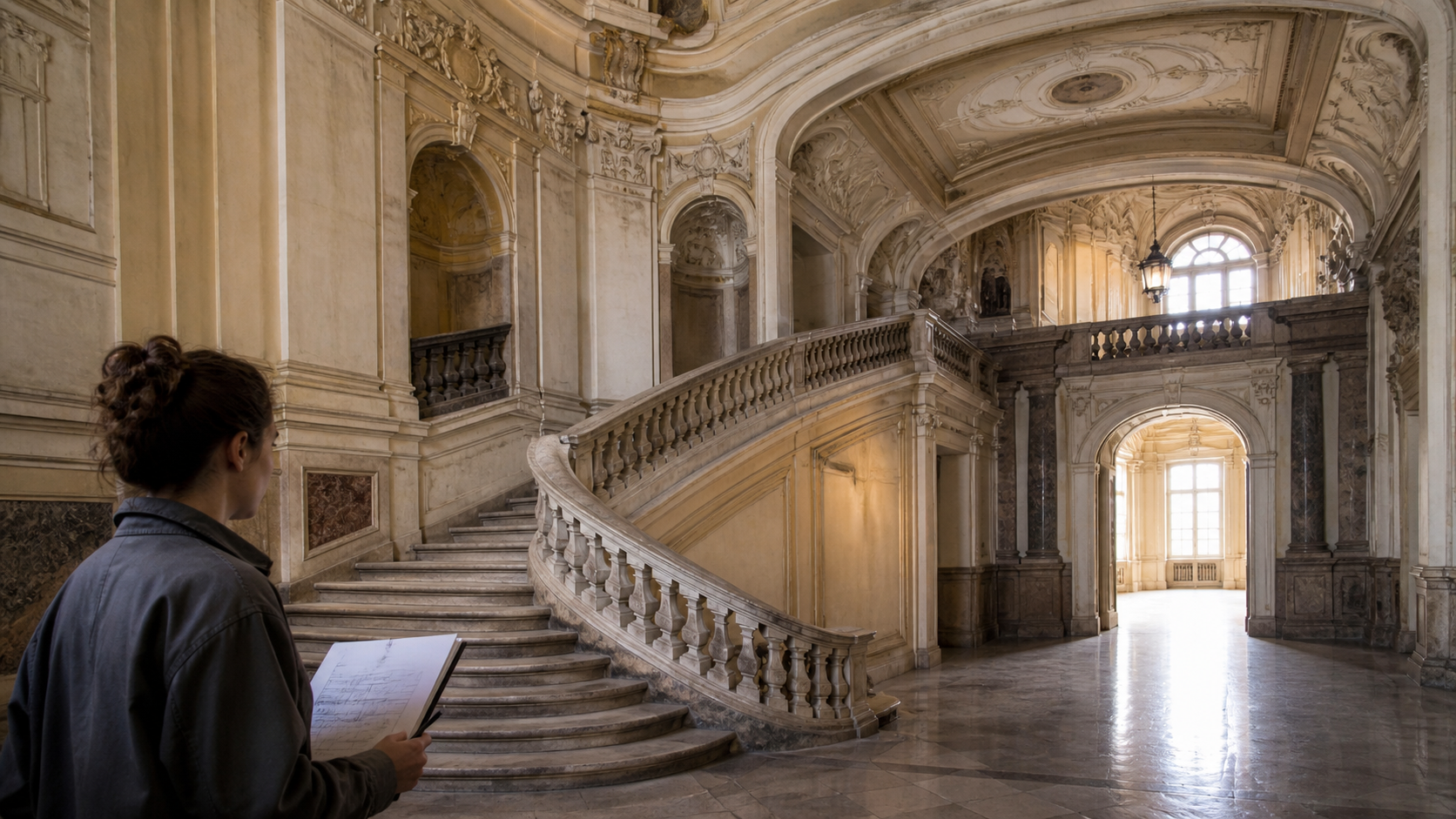
Baroque buildings are made to move you through space.
They time your view. They use light like a tool. They make stairs, halls, courts, facades, ceilings, and gardens work together so the body feels guided before the mind explains why.
The fastest mistake is calling Baroque “ornate” and stopping there. Ornament is only one clue. The stronger clues are movement, light, geometry, scale, shadow, sound, and sequence.
For the broader history and main overview, use Baroque architecture. This page stays narrower: how to recognize Baroque characteristics when you are looking at a building, drawing, interior, or city space.
Baroque Characteristics at a Glance
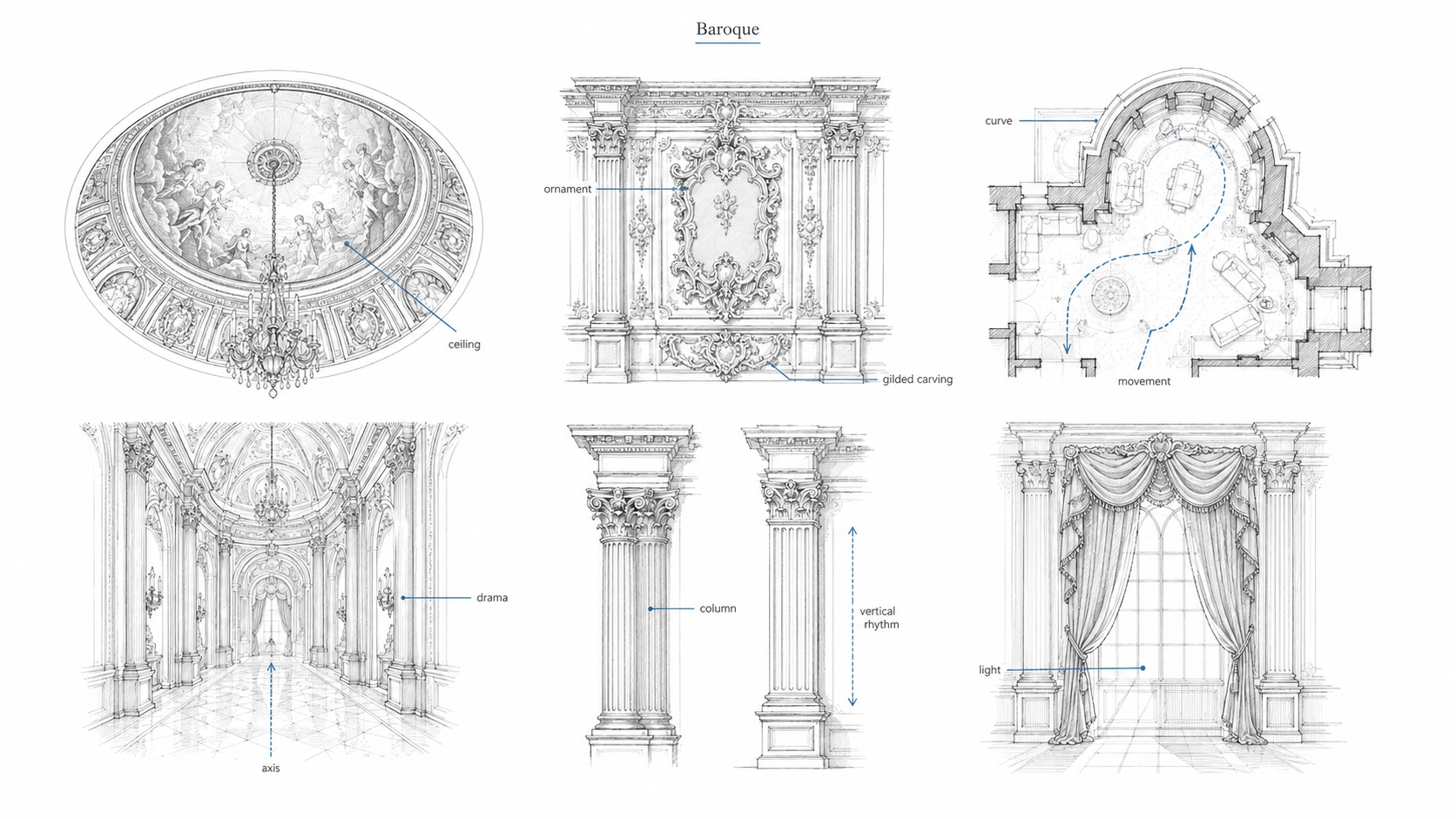
A Baroque building usually gives itself away through a few repeated moves. Look for curved geometry, strong axes, staged light, rich but controlled ornament, deep profiles, and a sequence that changes your pace.
| Characteristic | What to look for | What it does |
|---|---|---|
| Movement | Curved stairs, turning halls, angled approaches, framed views | Guides the body through a planned sequence |
| Light control | Hidden windows, deep reveals, bright focal surfaces, heavy shadows | Directs attention and gives surfaces depth |
| Strict geometry | Ovals, ellipses, repeated radii, curved walls, disciplined profiles | Makes complex rooms feel controlled instead of random |
| Orders and scale | Pilasters, giant orders, deep bases, strong cornices | Organizes large facades and interiors into readable parts |
| Texture and finish | Lime plaster, stone, stucco, gilding, timber, metal, mineral color | Catches light, softens glare, and makes details legible |
| Sound and room shape | Coves, vaults, plaster panels, timber floors, thick walls | Changes how speech, music, and footfall behave |
What Baroque Tries To Do
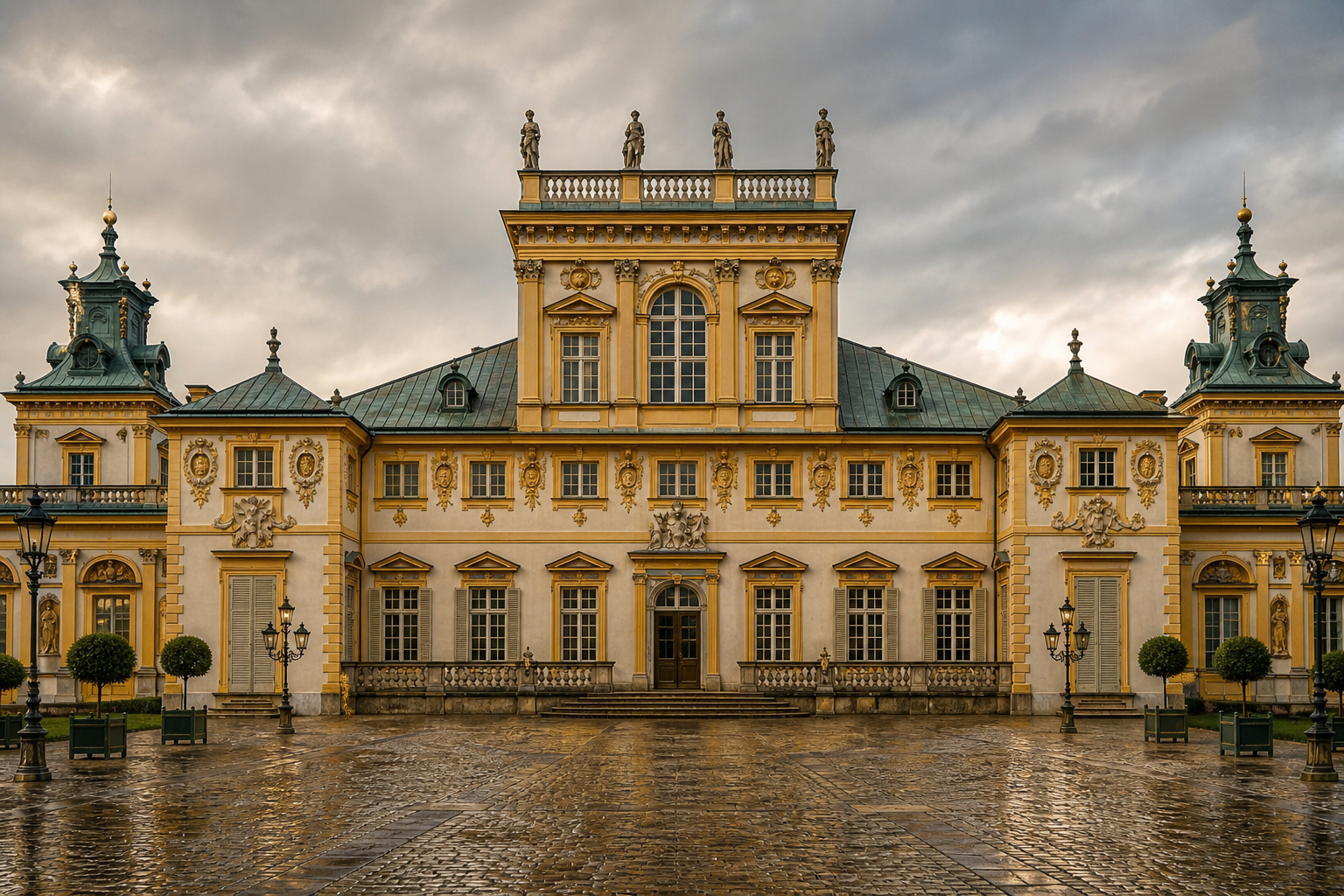
Baroque design sets up movement, frames light, and stages a reveal.
The plan is rarely just a box. It bends on purpose. Corridors pinch, then open. Stair landings catch a view. A gallery may narrow near the ends so the room feels longer and the eye stays alert.
You feel the intent in the first few steps. A door may line up with an axis, then shift slightly to add depth. A wall may curve just enough to make you turn. A ceiling may lift at the exact point where the room needs to release.
Movement Comes First
Walk a Baroque stair and your gait changes.
The first flight may be tighter and slower. The next flight may open and widen. At the top, the room may break wide and the balustrade may drop low enough for the eye to clear the floor line. That sequence is planned. Every turn is doing work.
In large houses, public halls, courts, and theaters, rooms often build in steps: smaller room, larger room, taller room, brighter room. The body reads the hierarchy without a sign.
The rule is simple: curves need jobs. If a curve does not guide movement, shape light, hold structure, frame a view, or change pace, it probably does not belong.
Light Is a Building Material
Baroque architecture treats light as part of the design, not as something added after the room is finished.
Look for hidden windows above entablatures, slots tucked behind cornices, deep side openings, and thick reveals that trim glare. A side court may bounce cool light into a warm interior. A deep sill may throw soft light up into the ceiling. A bright patch may land exactly where the designer wants the eye to pause.
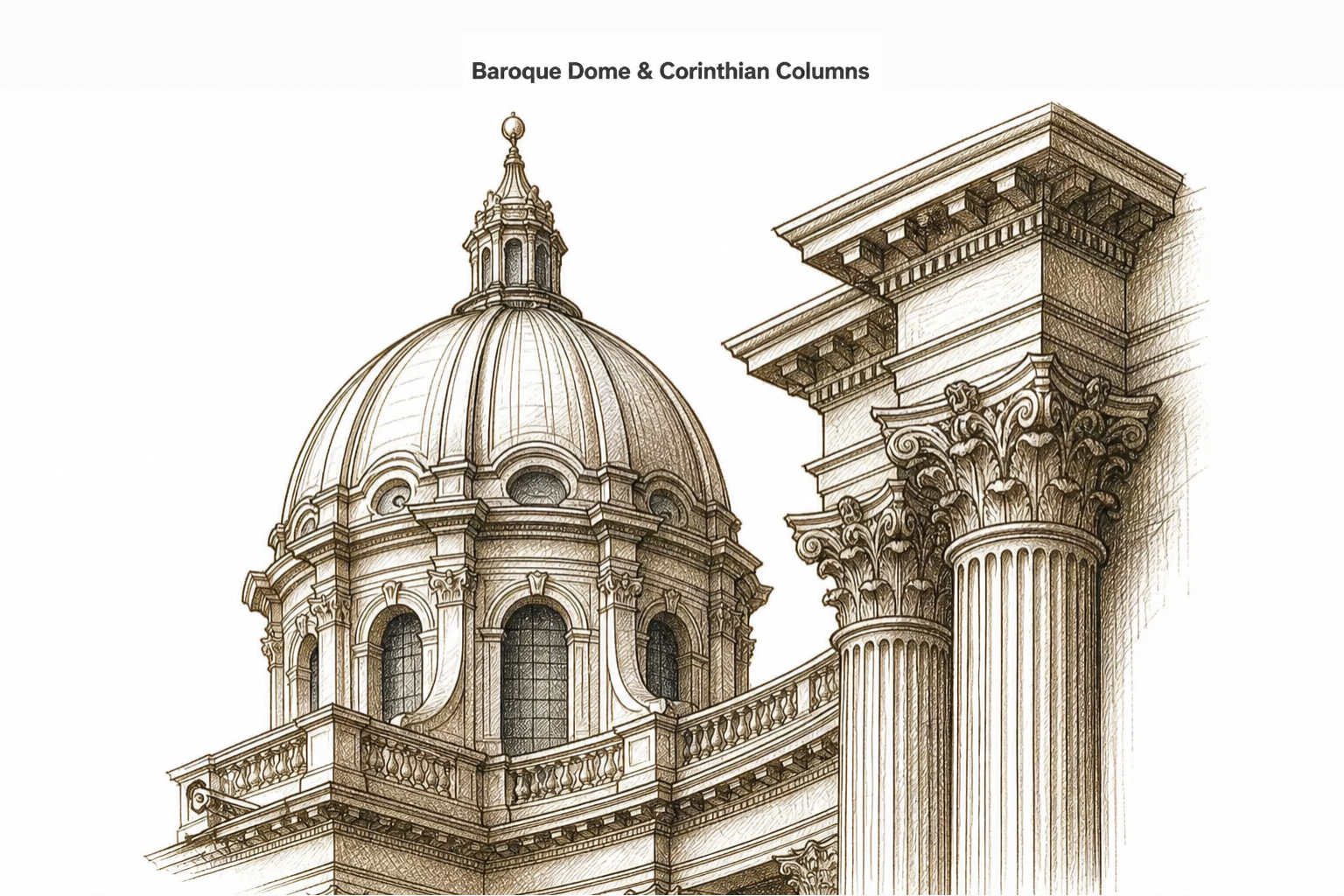
When you stand in a stair hall or gallery, track where the light lands first. Then look for the profile that shapes it. Sometimes it is a cove. Sometimes it is a stack of moldings that gathers a crisp shadow. Sometimes it is a wall left plain so one bright edge can matter.
Geometry Is Strict, Not Soft
People call Baroque “curvy.” That is true, but incomplete.
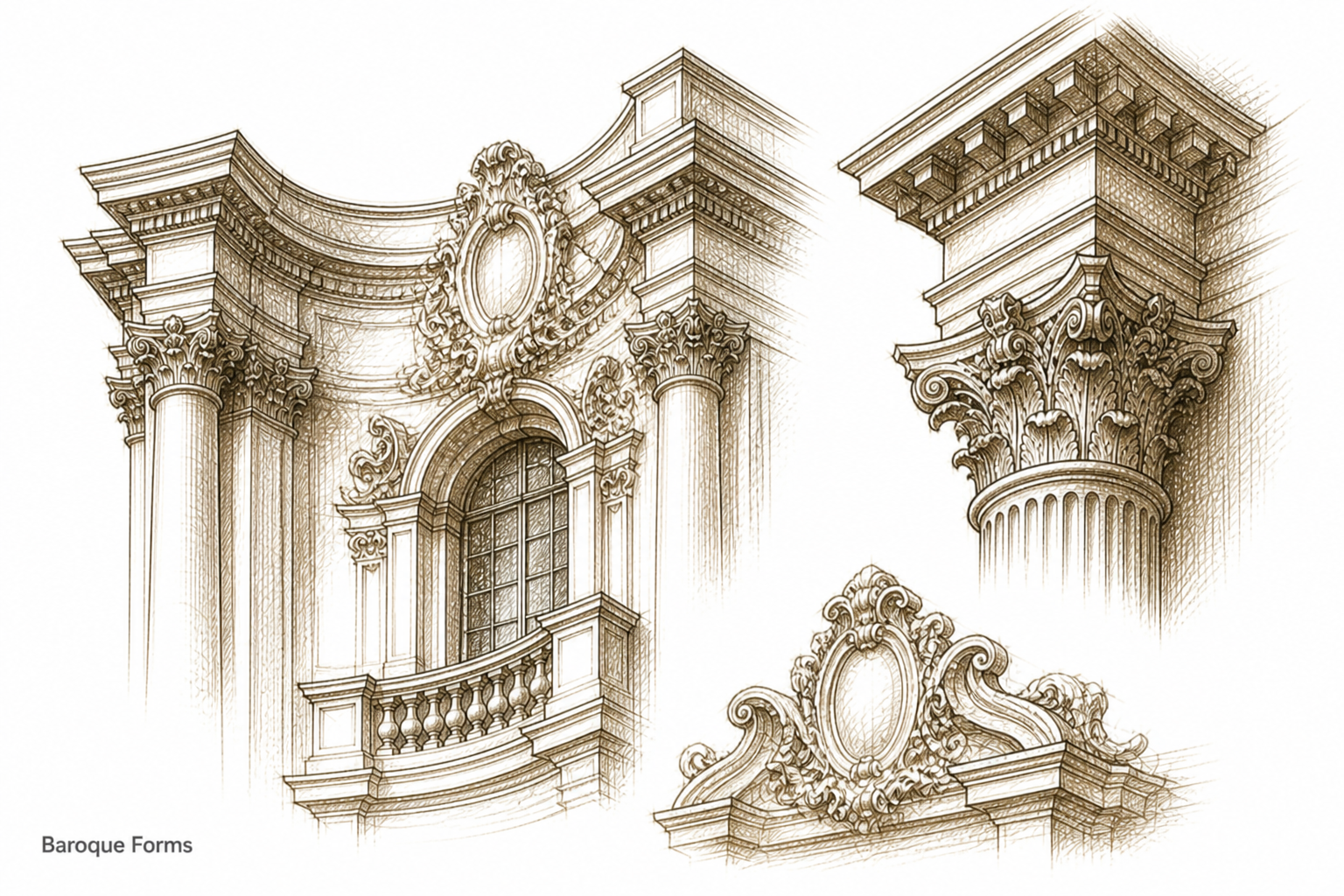
The curves are usually disciplined. Ovals may be built from a few radii that repeat. Cornice profiles may be made from short arcs that catch light in clear steps. A curved wall may push movement, while a curved niche may hold the eye.
Watch the joint lines in stone, plaster, or brick. If a wall bulges and the joints follow, the curve is part of the build. If the joints stay level while the face waves, the curve may be a thinner applied mask over a straighter core.
Both methods appear in real work. The difference matters because each changes cost, labor, repair, and performance. A structural curve behaves differently from a decorative skin.
Orders Work Like Actors
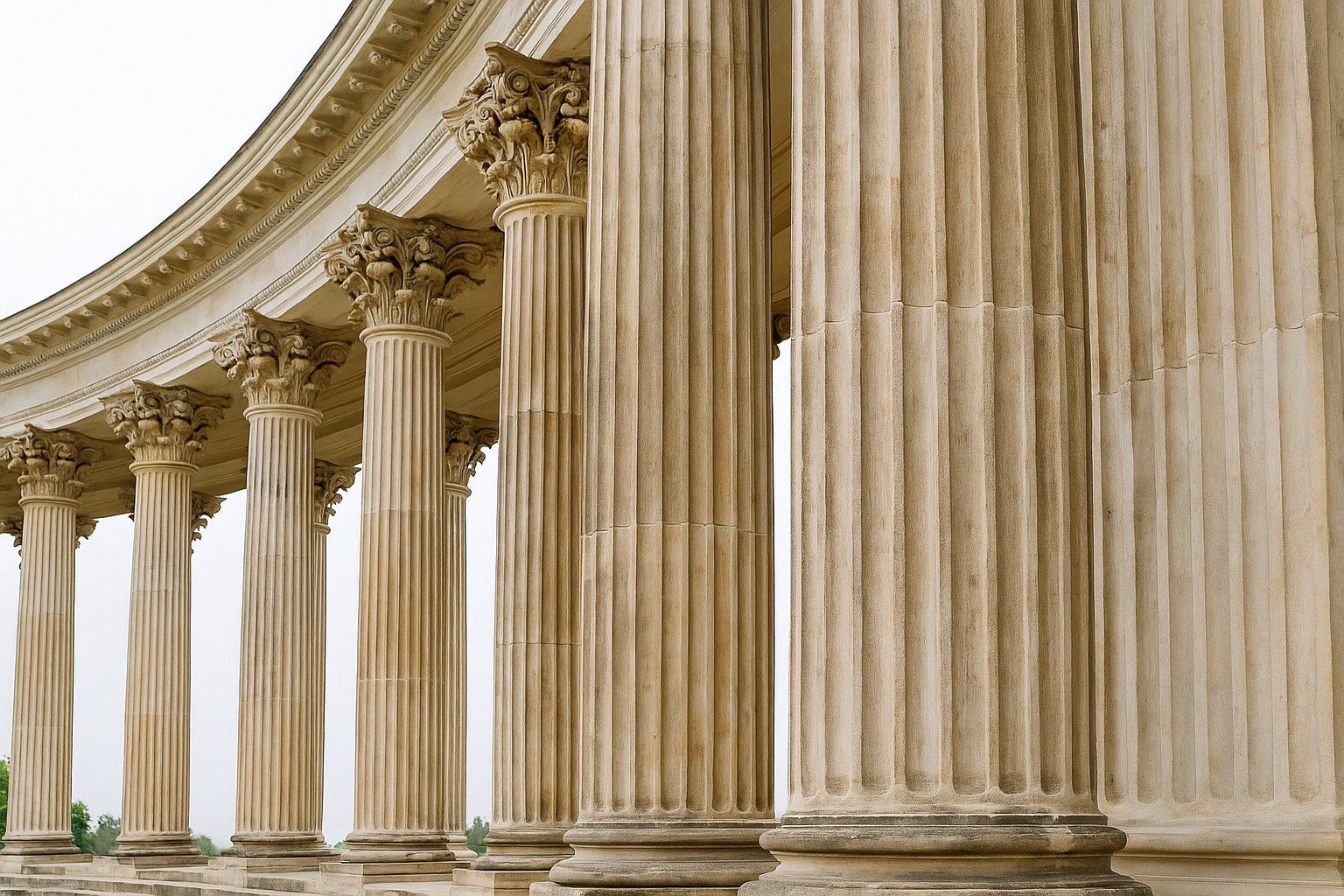
Doric, Ionic, Corinthian, giant orders, pilasters, bases, capitals, and pediments are not just classical decoration in Baroque work.
They organize mass and direct attention. A giant order can tie several floors into one calm frame. Pilasters can step forward and back to keep pace across a long facade. A broken pediment can make space for a clock, crest, window, or sculptural focus.
The order can point, hold, scale, or frame. It is there to organize the body’s reading of the building.
How to check scale
Match the profile to the viewing distance. If a capital turns to mush from the court, the carving is too fine. If a base reads heavy up close but disappears from the street, the plinth is too weak. Profile first. Ornament second.
Texture and Color Do Quiet Work
Baroque is not only bright gilding.
Many interiors depend on lime plaster, mineral wash, stone, stucco, timber, marble dust, and carefully placed sheen. Travertine scatters light and stays cool to the touch. Fine limestone holds a crisp shadow. Stucco with marble dust can read soft and white on gray days.
The useful clue is balance. Rich materials appear where the eye needs focus. Field surfaces often stay calmer so the room remains readable.
Stand close and look for tool marks near base courses, small rakes in plaster fields, stone grain, timber handrail wear, and softer rubbed edges. Those micro textures break glare and make the building age better than flat glossy surfaces.
Acoustics Without Tech
Baroque rooms were shaped before electronic amplification existed.
Coves can soften slap echo. Deep cornices can return sound with a short delay. Wood floors add warmth. Plaster panels can make a room sound bright. Thick walls block street noise better than thin partitions.
You can test a room with one clap and one short sentence. A good hall gives clarity at low volume. A bad one makes people raise their voices even when the room looks expensive.
Urban Staging: Buildings as Moves, Not Boxes

Baroque buildings often play the city.
A palace wing may step back to create a forecourt. A stair may meet the street at an angle that slows the climb. A facade may turn slightly near the end to open a view. A tower, lantern, fountain, or garden axis may mark a crossing or square.
These moves order crowds, shape views, handle light, and make movement feel deliberate.
This is where Baroque characteristics become urban, not just decorative. The building is not an isolated object. It is part of a staged route.
Regional Accents Without Losing the Main Language
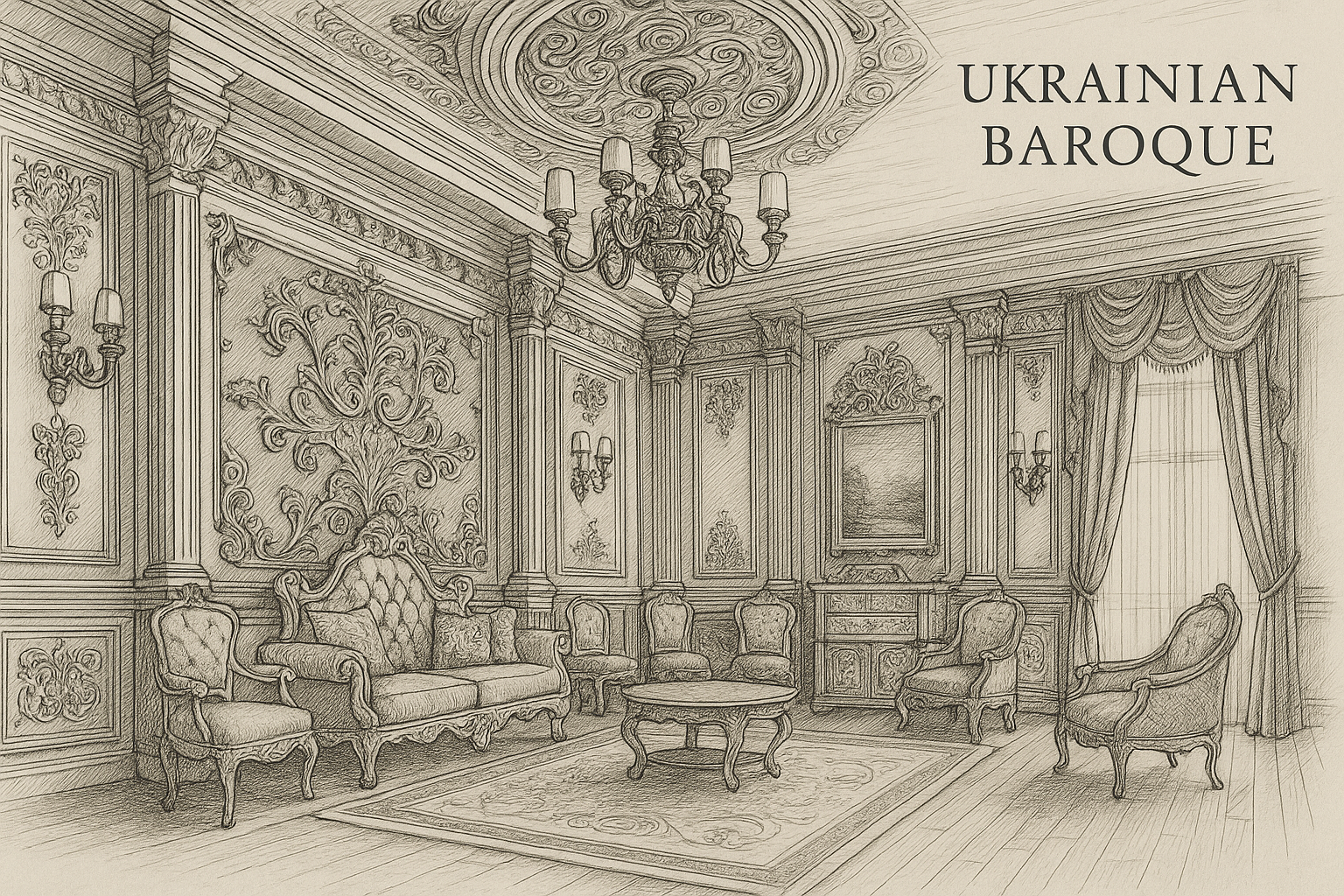
Baroque did not look the same everywhere. Each region bent the language toward local climate, materials, craft, politics, and building traditions.
| Region | Common traits | What to notice |
|---|---|---|
| Italy | Elastic plans, curved facades, strong light-shadow contrast | How geometry creates pressure and release |
| France | Clear axes, controlled facades, formal gardens, restrained order | How planning and landscape extend the building |
| Spain and Portugal | Deep relief, bold portals, tile, strong sun control | How projection and recess manage glare and shade |
| Central Europe | Bright interiors, stucco craft, pale surfaces, refined profiles | How lightness can still feel spatially controlled |
| Britain | Measured ornament, strong massing, classical restraint | How dignity can come from profile and proportion |
| Ukraine | Local craft, changed silhouettes, regional color and material logic | How imported language changes through local building culture |
For a deeper regional example, use Ukrainian Baroque. For major building case studies, use Baroque architecture examples.
Traits You Can Spot in Five Minutes
- Plans with ovals, ellipses, or curved transitions paired with straighter rooms.
- Facades with deep cornices, stacked orders, strong shadow bands, or forward-and-back movement.
- Hidden or high windows feeding daylight to ceilings, stair heads, or focal walls.
- Giant orders tying several floors into one large composition.
- Profiles sized for street distance, not only close viewing.
- Stairs that stage the climb with a tight start, broader finish, and view set at the landing.
- Quiet wall fields placed beside richer detail so the ornament can breathe.
- Gardens, courts, and forecourts that extend the building’s sequence outward.
How to Read a Baroque Building on Site
- Walk the approach twice: once looking up at mass and light, once looking down at joints, gutters, thresholds, and paving.
- Stand at the entry and count the moves the facade asks of you: step, turn, pause, enter.
- Check light at different times of day. Note where the eye lands each time and why.
- Talk in a normal voice in a stair hall, gallery, or large room. Listen for clarity or echo.
- Pick one repeating detail, such as a cove radius, base profile, or pilaster rhythm, and track it through the plan.
- Sketch a quick section at a stair, pier, dome, or window reveal and mark every shadow.
This kind of reading is more useful than memorizing names. Baroque characteristics become clear when you connect what you see to what the building makes you do.
Craft, Sequencing, and Risk
Baroque looks effortless from a distance. Up close, you see the workload.
Vaults needed centering. Stairs needed accurate setting-out. Lime finishes needed curing time. Carving, plaster, stone cutting, metalwork, and painting moved in sequence. If the schedule slipped or the trades were rushed, cracks, stains, weak joints, and mismatched profiles told the story.
The tools were simple but exact: plumb bob, rule, compass, templates, full-size layout, and repeatable radii. That is why strong Baroque profiles still read clearly after centuries of wear.
What it means today
If you design Baroque-inspired profiles today, do not trust the screen alone. Build one detail at full size in softwood, gypsum, foam, or cardboard. Light it from the side. What works in a rendering may die under real light.
Mistakes Students Make
- Using curves as decoration: a curve should guide movement, shape light, carry load, frame a view, or mark a transition.
- Copying profiles at the wrong scale: a cornice sized for a grand hall will look silly in a small lobby.
- Putting heavy ornament in flat light: deep carving needs side light or shadow. Flat light kills relief.
- Pasting a facade onto a neutral plan: the plan and section should explain every projection and recess.
- Using long axes with equal rooms: Baroque needs pace changes: tight, then wide; low, then high; quiet, then rich.
- Forgetting sound: hard curves and smooth plaster can bounce noise if texture, fabric, timber, or absorption is ignored.
How to Apply Baroque Ideas Without Costumes
You do not need a palace line item to use Baroque logic.
- Pick one curve with a job, such as an oval ceiling over a reception desk that spreads light.
- Choose one deep profile in a public room, such as a cove that also calms echo.
- Hide a light source above a cornice to wash a wall instead of creating spot glare.
- Set one reveal move in a plan, such as a narrow hall opening to a taller lounge with a view.
- Use a simple order or repeated vertical rhythm to pace a long corridor without heavy carving.
- Keep one quiet wall field near each rich detail so the room does not become visual noise.
If you need a quick compare to later interior taste, use Baroque vs Rococo. That helps keep Baroque mass and movement separate from Rococo surface lightness.
Baroque Logic in Civic and Public Buildings
Grand stairs in state offices often use a double-return plan. The lower flight is tighter. The landing opens. The upper view clears across the hall. Daylight enters from above or the side and drops soft light through the stair well. That is Baroque control with a public building brief.
Courts and council rooms can use stacked orders to hold tall walls without noise. A large order sets the main scale. A thinner band at door height keeps human scale alive. A simple cove meets the ceiling and can reduce harsh echo.
Galleries built for tapestries or art often use narrow window bays and deep reveals to control direct sun. The same logic works in museums and offices today. Let the wall wash. Keep glare off work surfaces. Put the bright patch on the floor or wall, not in the eyes.
Study Path for This Page
Start with the broad overview at Baroque architecture. Then use this characteristics page as a checklist while studying drawings and photos. After that, compare real buildings through Baroque architecture examples.
For geometry and light, study Francesco Borromini. For a residential angle, use Baroque style houses. Read the pages in that order if you want the clearest path: overview first, characteristics second, examples third, then case studies and housing applications.
Studio Checklist
- State the job of every curve in one line. No job, no curve.
- Draw the section before you draw the facade. Light and sound drive profiles.
- Choose one shadow band as a base unit and repeat it to tie spaces together.
- Test three times of day: morning, noon, and late day.
- Prototype one detail at full size. Light it from the side and adjust until the shadow reads clean.
- Mark where the visitor slows, turns, pauses, looks up, or enters a brighter zone.
FAQ
What are the main characteristics of Baroque architecture?
The main characteristics are movement, dramatic light, curved geometry, strong axes, deep profiles, rich but controlled ornament, integrated art, and spatial sequencing.
Is Baroque architecture just heavy ornament?
No. Ornament is visible, but the deeper structure is movement, light, hierarchy, and control. A plain Baroque room can still feel Baroque if the sequence, light, and geometry work.
How can I spot Baroque architecture quickly?
Look for curved walls or stairs, strong entry sequences, deep cornices, dramatic light, ovals, rich focal points, and rooms that shift from tight to open.
How is Baroque different from Rococo?
Baroque usually builds mass, movement, and drama first. Rococo usually works closer to the surface with lighter panels, mirrors, curves, and delicate interior detail.
Can Baroque characteristics work in modern buildings?
Yes, if you borrow the logic instead of copying the costume. Use one strong curve, one controlled reveal, one deep profile, or one hidden light source rather than covering everything in ornament.
If You Only Remember Five Things
- Movement first: Baroque plans are built around paced walking and timed reveals.
- Light as material: hidden sources, deep reveals, and shadow bands matter as much as decoration.
- Strict geometry: good Baroque curves are controlled, repeated, and purposeful.
- Orders as actors: columns, pilasters, bases, and cornices organize scale and direct the eye.
- Texture and sound: small surfaces break glare, tune echo, and make large rooms feel usable.
The Useful Way to Read Baroque Characteristics
Baroque is not a pile of decorative parts.
It is a system for movement, light, sound, scale, and attention. Start with the plan. Read the section. Watch the shadows. Check the stair. Notice where the room asks you to slow down. Once you see those moves, the characteristics stop feeling like a style list and start reading like architectural decisions.