

Structural repair is not the place to hire by charm, lowest price, or the nicest before-and-after photos. A cracked wall, sagging beam, bowed foundation, rotted sill plate, or moving floor has to be diagnosed before it is priced.
The better contractor does not start with a product. They start with the failure: what moved, what got wet, what is carrying load, what needs temporary support, what needs a permit, and when a structural engineer should be involved.
If a contractor cannot explain those things in plain language, the bid is not ready.
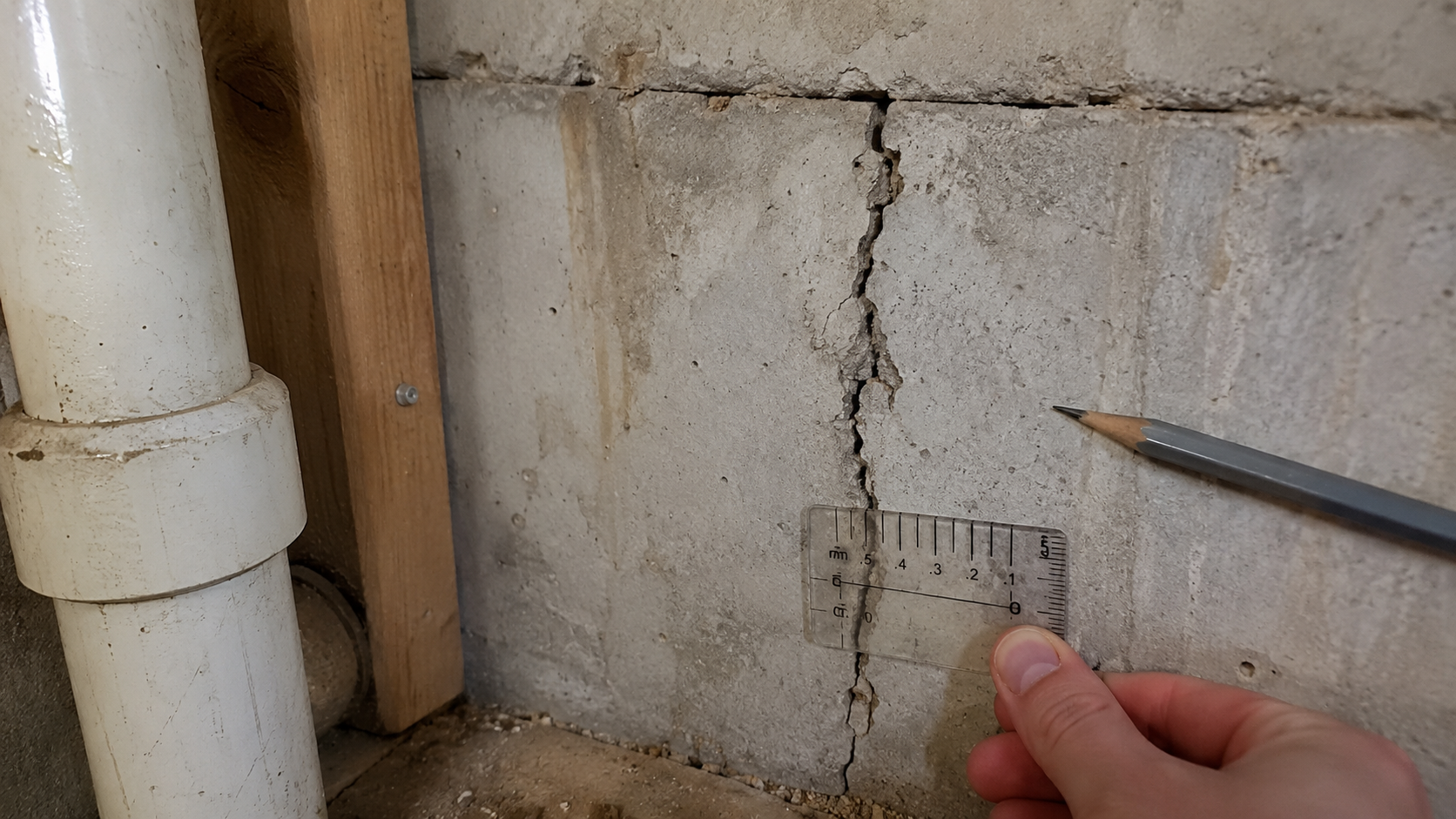
Who to Call First
The right first call depends on the symptom. A contractor can price work. A structural engineer can diagnose load, movement, and repair requirements. Sometimes you need both, but not always in the same order.
| Problem you see | Better first call | Why |
|---|---|---|
| Horizontal crack, stair-step masonry crack, bowing wall, or wall movement | Structural engineer, then repair contractor | You need a diagnosis before someone sells you anchors, straps, piers, or injection. |
| Wet basement crack with no clear movement | Waterproofing or foundation contractor, with engineer if movement appears | Some cracks are mainly water-entry problems, but water pressure can also be part of structural movement. |
| Sagging beam, rotted sill plate, soft rim joist, or damaged floor edge | Structural repair/framing contractor; engineer if load-bearing scope is unclear | Wood repairs may need shoring, jacking, pest treatment, moisture correction, and permits. |
| Sloping floors over a crawl space | Crawl-space foundation contractor or engineer | The issue may be weak piers, poor posts, moisture-damaged beams, soil movement, or undersized framing. |
| Load-bearing wall change, cut joist, altered truss, or beam replacement | Structural engineer before contractor pricing | The repair needs a load path, not a guess. |
| Sunken patio, sidewalk, or non-structural slab | Concrete leveling contractor | This may be slab lifting, grinding, drainage correction, or replacement rather than structural repair. |
For the basic idea behind load paths, see structural support in buildings. If the problem is mostly about a house foundation, this page should be read with foundation underpinning and strengthening.
Structural vs. Cosmetic Repair
A structural repair affects the way the building carries weight or resists movement. A cosmetic repair hides damage without changing support.
Crack filler, mortar, paint, caulk, self-leveling compound, and trim repairs can be useful in the right place. They become dangerous when they hide movement, rot, water pressure, or a failed support condition.
Ask one simple question: Will this repair change the cause, or only cover the symptom?
If the answer is “only cover the symptom,” slow down.
What a Good Structural Repair Contractor Does During the Visit
A serious contractor does not walk in, glance at the crack, and quote a system in ten minutes.
They should look for the pattern behind the damage. That may include measuring crack width, checking whether the crack is active, looking at exterior grade and drainage, checking access under the floor, asking when the symptom appeared, looking for water staining, checking whether nearby doors or windows bind, and identifying what part of the structure is carrying load.
They may not perform an engineer-level inspection, but they should know when the job is outside a sales estimate.
Good signs during the first visit
- They ask when the problem started and whether it changes after rain, freeze-thaw cycles, or seasonal dry periods.
- They look outside the house, not only at the crack or interior symptom.
- They discuss drainage, soil, roof runoff, gutters, grading, and waterproofing where relevant.
- They separate water-control work from structural stabilization.
- They explain whether temporary shoring, jacking, excavation, or wall opening may be needed.
- They tell you when a structural engineer should review the condition.
- They do not promise a permanent fix from photos alone.
Weak signs during the first visit
- They sell one repair system for every problem.
- They say “all old houses settle” without checking whether movement is active.
- They quote piers, anchors, straps, injection, or beams without explaining the cause.
- They avoid permit questions.
- They ask you to pull the permit yourself for work they are controlling.
- They do not mention dust, lead paint, asbestos risk, utility conflicts, or jobsite protection on older houses.
The Proposal Matters More Than the Sales Pitch
The proposal is where the good contractor separates from the smooth contractor. The document should let you compare scope, not just price.
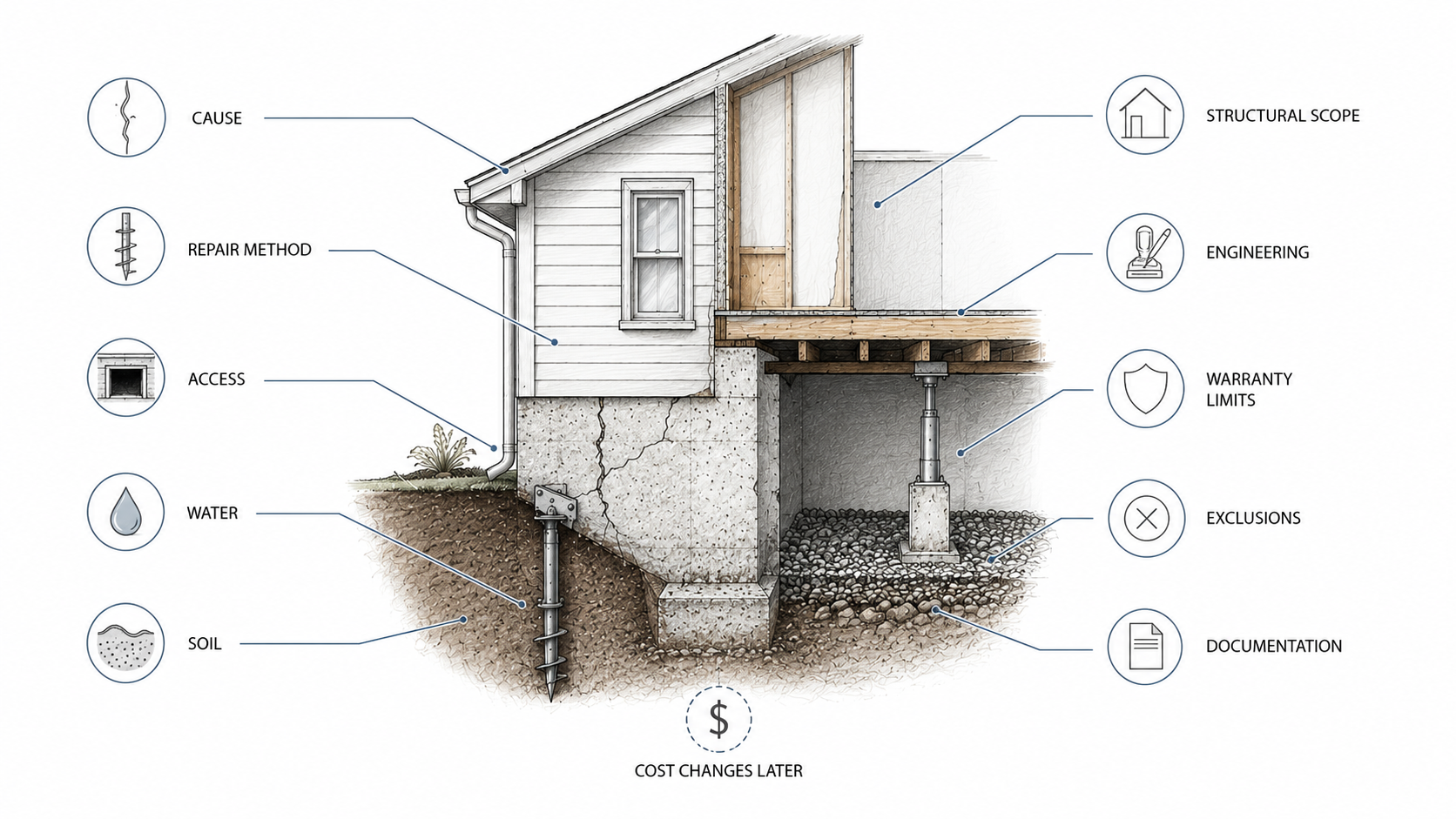
What should be in writing
- Observed problem: what the contractor saw, measured, photographed, or tested.
- Likely cause: settlement, water pressure, rotted wood, poor drainage, weak supports, previous bad work, insect damage, overload, or a mix of issues.
- Repair method: not just “foundation repair,” but the actual method and where it will be installed.
- Engineering: whether a stamped drawing, letter, or inspection is needed before work starts.
- Permits: who pulls them, who attends inspections, and who handles corrections.
- Temporary support: shoring, jacking, bracing, or load transfer needed during the repair.
- Access and protection: excavation, interior demolition, crawl-space access, dust control, floor protection, and utility protection.
- Water management: grading, gutters, footing drains, sump discharge, waterproofing, vapor control, or other moisture work tied to the repair.
- Change-order rules: how hidden rot, deeper footing problems, utilities, bad soil, or extra wall opening will be priced.
- Warranty limits: exactly what is covered and what is excluded.
- Payment schedule: deposits and draws tied to visible milestones, not vague calendar dates.
- Lien waivers: especially when subcontractors, suppliers, excavation crews, or specialty installers are involved.
A vague one-page quote can be more expensive than a higher bid with a clear scope. The missing line item is often the expensive one.
Repair Methods Are Not Interchangeable
Many bad structural repair decisions happen because the homeowner is comparing prices for different repairs as if they are the same thing.
| Repair method | Where it may fit | What it does not solve by itself |
|---|---|---|
| Epoxy or polyurethane crack injection | Some stable cracks, leaking cracks, or concrete repair conditions | Active movement, bowed walls, poor drainage, settlement, or soil pressure |
| Carbon fiber straps | Some basement wall reinforcement conditions when movement is limited and properly specified | Severe displacement, failed footing, water pressure source, or wall movement beyond the system limit |
| Wall anchors or steel beams | Bowed foundation walls or lateral pressure conditions | Exterior drainage, saturated soil, bad grading, or footing failure unless included |
| Helical piers, push piers, or underpinning | Settlement where the foundation needs deeper support | Interior finish repair, drainage correction, plumbing leaks, or soil swelling unless addressed separately |
| Sill plate, rim joist, or beam repair | Rotted or damaged structural wood at the wall/floor edge | Moisture source, pest source, exterior flashing failure, or crawl-space humidity unless corrected |
| Concrete leveling or slab lifting | Some sunken slabs, garages, patios, walks, and non-structural flatwork | Foundation movement, weak footing, house settlement, or continued erosion below the slab |
| Exterior waterproofing and drainage | Water pressure and wet foundation conditions | Existing structural movement unless stabilization is included |
For concrete that is out of level, do not confuse surface leveling with structural movement. See concrete foundation leveling. If water is part of the problem, read exterior foundation waterproofing before accepting a patch-only repair.
When You Should Get an Independent Structural Engineer
A contractor’s estimate can be useful, but it is not independent if the same company profits from the repair method it recommends.
Get an independent structural engineer when the repair involves foundation movement across more than one area, a bowing wall, load-bearing framing, a beam or post replacement, a major sill plate or rim joist repair, house lifting, underpinning, truss damage, repeated repairs that failed, or a high-dollar proposal you do not understand.
The engineer does not have to design every small repair. The point is to avoid buying the wrong repair before the problem is understood.
Permits, Inspections, and Liability
Permit rules are local, but structural work is exactly the kind of work you should verify with the building department before it starts. Do not rely on “we never need permits” as an answer.
Clarify who pulls the permit. In many homeowner disputes, the permit question reveals the contractor’s seriousness. If the contractor controls the work but wants you to pull the permit, ask why.
A better contract states:
- who applies for the permit;
- whose license number appears on the permit;
- which inspections are expected;
- who schedules those inspections;
- who pays for corrections if the work fails inspection;
- whether engineering documents are required before permit approval;
- what work cannot be covered before inspection.
Keep copies of permits, inspection results, photos, engineer letters, change orders, invoices, and final sign-off. Those documents matter later during resale, refinancing, insurance questions, or warranty disputes.
Insurance, License, Bond, and Workers’ Comp
Do not accept “licensed and insured” as a slogan. Verify it.
Use the official contractor licensing database for your state, province, or municipality. Check that the license is active, the classification matches the work, the business name matches the contract, and any complaint or disciplinary history is visible. If an engineer is involved, verify the engineer through the state engineering board or provincial regulator.
Ask for insurance certificates directly from the agent or carrier when the project is large enough to justify it. General liability and workers’ compensation are different. A contractor can have one and not the other. If workers get hurt on your property and coverage is wrong, the “cheap” bid can become the risky bid.
Payment Schedule That Gives You Leverage
Structural repair payment should follow control points in the work. Do not pay the whole job up front. Do not let the payment schedule run far ahead of the actual repair.
| Milestone | What should be true before payment |
|---|---|
| Deposit | Signed contract, defined scope, insurance verified, permit path clear, major materials scheduled. |
| After opening/access | Hidden conditions documented with photos, change orders priced before extra work continues. |
| After structural installation | Piers, beams, anchors, supports, or replacement members installed as specified and visible before cover-up. |
| After inspection or engineer review | Required inspection passed, or engineer/inspector corrections completed. |
| After water/moisture work | Drainage, waterproofing, vapor control, sump discharge, grading, or moisture source work completed if included. |
| Final payment | Punch list complete, permits closed where applicable, warranty and lien waivers provided. |
Payment should track proof. A contractor who cannot work with milestone payments may be undercapitalized, disorganized, or asking you to carry more risk than you should.
Where Structural Repair Bids Blow Up
The price changes when the visible problem is only the front edge of the real scope.
- Water is still active. A wall crack, soft sill plate, or low slab may come from water that has not been controlled.
- Access is worse than expected. Finished walls, tight crawl spaces, utilities, decks, porches, landscaping, and neighboring property lines can all change labor.
- Rot travels farther than expected. Sill plate damage often reaches rim joists, joist ends, sheathing, subfloor, or nearby framing.
- The soil or footing condition is worse. Underpinning and pier work depend on what can actually carry load below the house.
- The repair needs temporary support. Shoring and jacking are not decorative line items. They keep the house stable while damaged parts are removed.
- Code corrections appear. Electrical, plumbing, stairs, egress, drainage, or occupancy issues can show up once work opens.
- Old-house hazards appear. Lead paint, asbestos-containing materials, silica dust, mold, pests, and contaminated debris can change work practices and cost.
If your house has crawl-space damage, crawl-space foundation repair is usually the closer topic. If the repair involves lifting or raising the structure, read house lifting and foundation raising before you sign anything.
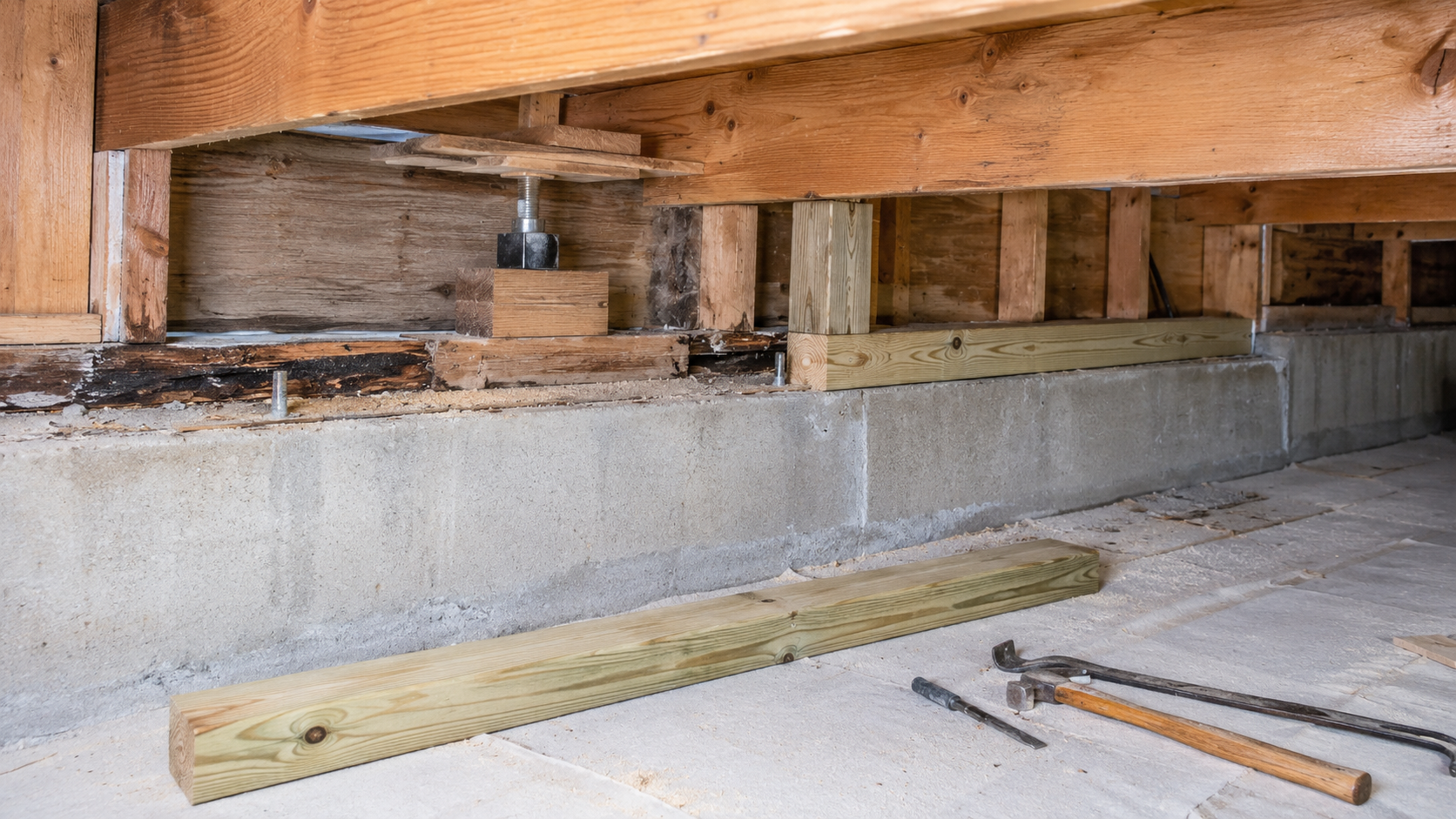
Cost Ranges Without the Fantasy
Structural repair costs vary too much for a single honest number. A crack injection, a drainage correction, a bowed-wall stabilization, a beam replacement, and a full underpinning job are not versions of the same repair.
Use ranges only to decide whether a proposal feels small, medium, or major. Do not use them to choose a contractor.
| Scope type | Planning range | What changes the number |
|---|---|---|
| Independent structural engineer visit/report | Often several hundred dollars to $1,500+ for residential problems | Complexity, drawings, calculations, site visits, urgency, and local market. |
| Minor crack repair or injection | Often hundreds to a few thousand dollars | Leak status, access, crack length, finish removal, and whether movement is active. |
| Bowed wall stabilization | Often several thousand to tens of thousands | Wall length, deflection, system type, excavation, drainage, engineering, and interior finishes. |
| Sill plate, rim joist, or beam repair | Often several thousand and up | Load-bearing scope, shoring, rot spread, pest damage, siding/floor access, and moisture correction. |
| Piers, underpinning, or foundation stabilization | Often high four figures to tens of thousands; severe projects can go much higher | Number of supports, depth, soil, access, engineering, utilities, finishes, and drainage. |
The most useful cost question is not “What is the average?” It is: what exactly is included, what is excluded, and what could change after opening?
Red Flags Worth Walking Away From
- “You do not need an engineer.” Sometimes true. Sometimes dangerous. Ask why.
- “We do not pull permits.” Verify with the building department before believing it.
- “This system fixes everything.” No repair system fixes every structural condition.
- “The price is only good today.” Pressure is not a structural diagnosis.
- Large cash deposit. That is a financing request, not proof of competence.
- No license number on the contract. Not acceptable where licensing applies.
- No written exclusions. The missing exclusions become arguments later.
- No change-order process. Hidden damage is common; the contract has to say how it will be handled.
- No dust or debris plan. Cutting concrete, masonry, tile, plaster, or old paint is not clean work.
- No photos or documentation. You need proof of what was opened, installed, inspected, and closed.
Questions to Ask Before You Sign
- What do you think caused the damage?
- What evidence supports that diagnosis?
- What repair method are you proposing, and why this method instead of another?
- Is any part of this repair structural, load-bearing, or safety-related?
- Do we need a structural engineer before work begins?
- Who pulls the permit?
- What inspections are expected?
- What hidden conditions could change the cost?
- How will you support the structure while damaged material is removed?
- How will you control water, soil, drainage, or moisture so the repair does not fail again?
- What exactly is excluded?
- What does the warranty cover, and what voids it?
- Will I receive photos, permit records, inspection results, lien waivers, and warranty documents at the end?
What to Document Before Calling Contractors
You do not need to become an engineer. You do need to stop the conversation from becoming a sales visit with no facts.
- Take clear photos from the same position every few weeks if the condition is not urgent.
- Measure crack width with a ruler or crack gauge and write the date beside the photo.
- Note whether the problem gets worse after rain, snowmelt, drought, or freeze-thaw cycles.
- Photograph exterior grading, downspouts, patios, porches, soil height, and wet areas near the damage.
- Keep notes on sticking doors, new drywall cracks, floor slope, musty smells, leaks, and pest evidence.
- Ask each contractor to respond to the same facts so bids are easier to compare.
Do not delay if movement is rapid, a wall is bowing badly, a beam is cracked, a column is failing, a floor is dropping, or any part of the structure feels unsafe. In those cases, stop using the area and call a qualified professional immediately.
How to Compare Two Bids
Do not compare structural repair bids by total price first. Compare what each contractor is actually solving.
| Compare this | Better bid | Weaker bid |
|---|---|---|
| Diagnosis | Names cause and evidence | Names only the product being sold |
| Engineering | States when engineer review is included or not needed | Avoids the subject |
| Permit path | Clear responsibility and inspection plan | “Owner to handle permits” with no reason |
| Water/moisture | Addresses cause where relevant | Patches damage only |
| Access | Explains demolition, excavation, crawl-space limits, and restoration | Leaves access vague |
| Hidden conditions | Clear change-order rules | “We will figure it out” |
| Warranty | Specific coverage and exclusions | Big promise with no detail |
FAQ
Do I always need a structural engineer?
No. Small, stable, non-structural repairs may not need one. You should consider an engineer when there is movement, load-bearing work, bowing walls, foundation settlement, major wood rot, beam or post replacement, truss damage, underpinning, house lifting, or a large repair proposal you cannot evaluate.
Is a foundation repair company the same as a structural engineer?
No. A foundation repair company sells and installs repairs. A structural engineer evaluates structural behavior and may design or review repairs. Some companies work closely with engineers, but the roles are different.
Should the contractor pull the permit?
For contractor-controlled structural work, the contractor should usually be willing to handle the permit process where a permit is required. Rules vary by place, so verify with the local building department.
Are free inspections enough?
A free estimate can be a useful first screen, but it is still a sales process. If the proposed repair is expensive, structural, or unclear, an independent engineer can protect you from buying the wrong fix.
Can I DIY structural repair?
Do not DIY work that changes load paths, foundations, beams, posts, trusses, sill plates, bearing walls, shoring, jacking, or underpinning. Documentation, support, sequencing, and inspections matter as much as the material.
Why are the bids so far apart?
They may not be bidding the same job. One may include drainage, engineering, permits, access, shoring, and restoration. Another may only include a visible patch or proprietary system. Break the bids into scope before judging price.
What is the biggest hiring mistake?
Hiring the contractor who sounds confident before anyone has explained the cause. Structural repair should start with diagnosis, not a product pitch.
Read This Next
- Foundation Underpinning and Strengthening
- Stem Wall Foundation Repair
- Crawl-Space Foundation Repair
- Concrete Foundation Leveling
- Exterior Foundation Waterproofing
- House Lifting and Foundation Raising
Sources and reference checks
- Federal Trade Commission: How to Avoid a Home Improvement Scam
- International Code Council: Consumer Safety and Building Permits
- OSHA: Crystalline Silica in Construction
- EPA: Renovation, Repair and Painting Program for Contractors
- NCEES: Engineering Licensing Board Directory
- NASCLA: Contractor State Licensing Information Directory
- California CSLB: Contractor License Check Example
- Massachusetts: Avoiding Home Improvement and Contractor Scams