
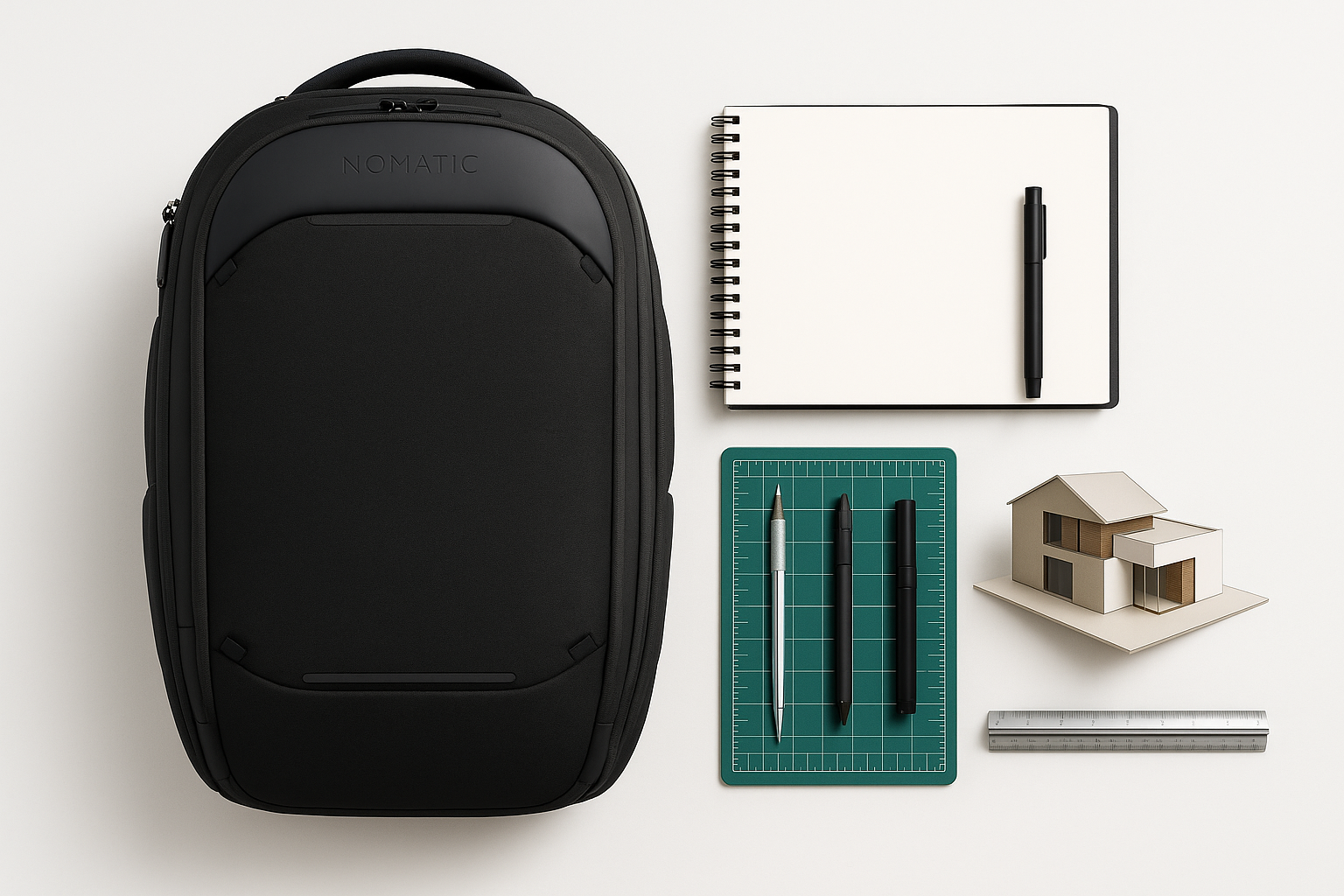
Nomatic Navigator 32L Review: What You Should Know Before Buying
Who This Bag Is For
The Nomatic Navigator 32L is for people who carry more than just a laptop and a phone charger. Architecture students. Design pros. Anyone hauling sketch pads, model pieces, and tech that can’t get wet or bent. This isn’t a style piece. It’s a work tool built to protect gear and keep it organized.
First Impressions and Build
The bag feels overbuilt in a good way. Heavy-duty nylon shell. Water-resistant zippers that don’t snag. Molded front panel that won’t cave in if you bump it. Every seam feels tight and reinforced. The look is clean and minimal — no dangling straps or busy panels. Even when empty, it holds its shape.
Capacity and Layout
Out of the box, it holds 21 liters. Unzip the expansion panel and you get 32 liters. That’s the difference between carrying just tech and carrying tech plus half your studio kit.
Inside:
-
Padded laptop sleeve fits up to a 17" laptop.
-
Separate tablet pocket.
-
Deep main compartment that swallows A3 sketchbooks or a cutting mat.
-
Multiple zippered pockets for pens, chargers, and tools.
-
RFID-blocking pocket for cards or a passport.
-
Side pockets for water bottles or tripods.
It opens wide, so you’re not digging around blindly for a pencil or cable.
Real-World Use for Architecture Students
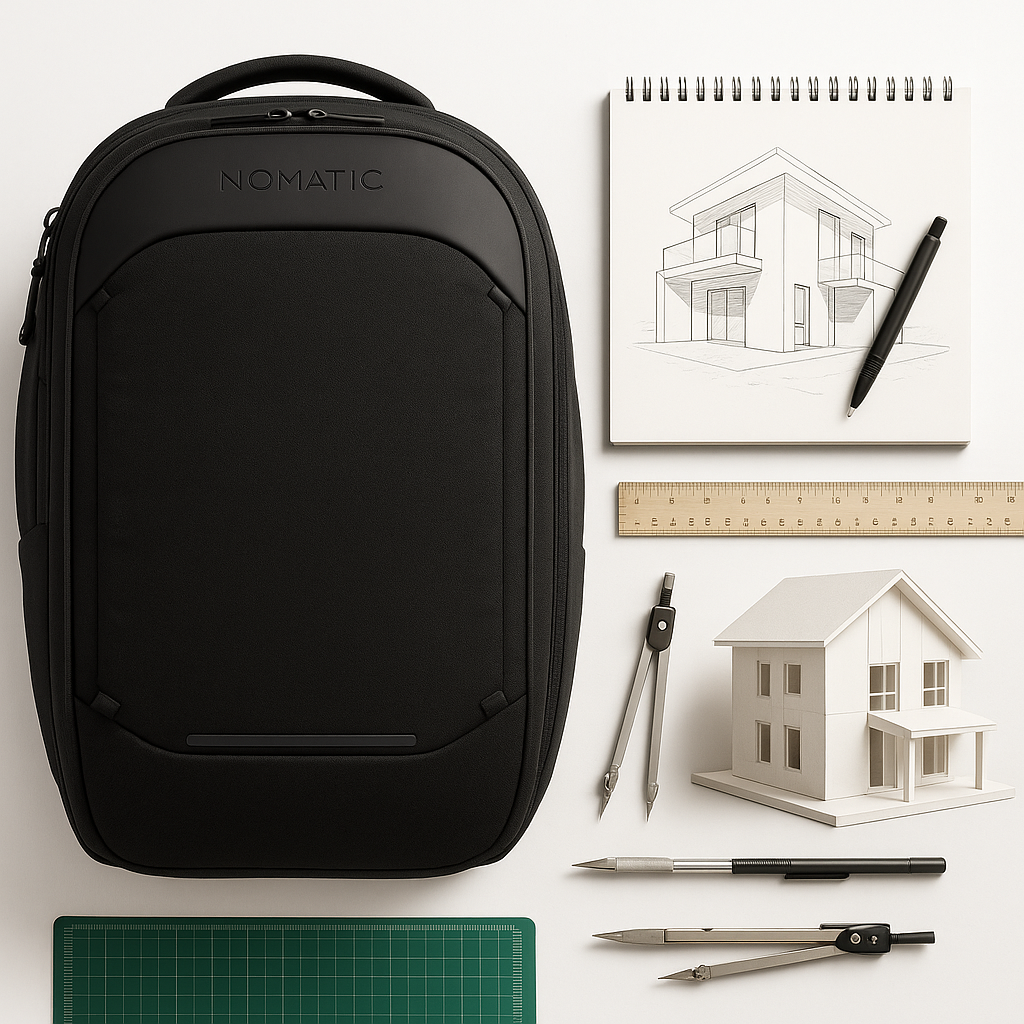
I loaded it with a 17" laptop, iPad, two A3 sketch pads, a set of markers, a roll of trace paper, a 12" scale, and a small foam model. It fit without crushing anything. The front panel kept the model from getting dinged, and the laptop compartment stayed rigid even with the bag expanded.
If you carry fragile work between studio, class, and home, the structure of this bag is the difference between getting there intact or having to rebuild.
Comfort and Ergonomics
The straps are padded and shaped to spread weight evenly. The back panel is stiff enough to keep the load stable but has enough airflow channels to stop you from overheating on a walk across campus. Fully loaded at 32 liters, you feel the weight, but it doesn’t dig into your shoulders.
Durability and Weather Protection
The nylon shell sheds rain, and the zippers are sealed tight. I walked 15 minutes in steady rain — nothing inside got wet. It also resists stains from studio dust and the occasional coffee spill. After a few weeks of daily use, the structure hasn’t sagged.
See also: Best Bags for Architecture Students: Sketchbooks, Laptops, and More
Weak Points
-
At 4.5 lbs empty, it’s heavier than a typical backpack.
-
Fully expanded, it’s bulky in tight buses or lecture halls.
-
Price is high for students who won’t use it daily.
Related: Architecture School Supply List: First-Year Essentials and Pro Tools
Competitor Check
How it Stacks Up
Against Herschel Little America
The Little America looks good—classic design, lightweight, backpack-style simplicity. It’s easy to use and hangs well over your shoulder. But if you’re hauling sketchbooks, model pieces, or A3 pads, it falls short. No structure, no protection. It’s just a nylon sack with a laptop sleeve. Nice for campus, weak for studio gear.
Against Samsonite Tectonic Crossfire
Samsonite brings the durability and business look. Water-resistant, organized for documents and laptops, and backed by a 10-year warranty. It handles daily grind well. Still, it’s not expandable and feels hollow when carrying thicker sketchbooks or fragile builds. It’s sturdy, but not smart-storage friendly.
Why the Nomatic Wins for Studio Life
Nomatic blends structure with flexibility. Its molded front panel protects fragile gear. Expands from 21L to 32L when you need space. Holds a 17-inch laptop plus sketch tools, models, and all the tiny bits you actually need. Tough enough for rain, organized enough for chaos. It’s heavier and more expensive—but it’s the only one built for architecture gear.
Why the Nomatic Navigator 32L Stands Out

Most backpacks claim they can “do it all.” This one actually comes close. It’s rare to find a bag that protects fragile models, holds A3 sketchbooks flat, keeps tech safe in the rain, and still fits as carry-on luggage. The molded shell isn’t just a design feature — it’s the difference between arriving with a clean project or a pile of bent foam board.
The expandability is equally practical. One day you’re carrying a laptop, tablet, and a few markers. The next, you’re hauling half your studio desk home. The zip expansion saves you from juggling an extra tote bag. And unlike softer backpacks, this one keeps its shape whether it’s full or half-empty.
If you care about how your work arrives, and you’re tired of replacing cheap backpacks every year, the Nomatic makes a strong case for being the last one you’ll need for a long time.
Verdict
If all you carry is a laptop and lunch, this isn’t your bag. If you move models, sketch pads, and tech every day, the Nomatic Navigator 32L is worth the cost. It will last years, protect your work, and keep your tools in order.
MUST CARRY
Nomatic Navigator 32L – Tough, expandable, and built to last.
→ Buy on Amazon
FAQs
Is the Nomatic Navigator 32L worth it for architecture students?
Yes, if you carry large sketch pads, models, and tech daily. The structure protects fragile items, and the organization keeps gear accessible. If you only carry a laptop and notebook, it’s overkill.
Can it fit an A3 cutting mat or sketchbook?
Yes. The main compartment swallows A3 size without bending. It’s one of the few backpacks that does this while still closing easily.
Is it too heavy for daily use?
Empty, it’s heavier than most backpacks at about 4.5 lbs. Fully loaded, you’ll feel it — but the straps and back panel make the weight manageable.
How does it handle rain?
The fabric and zippers are water-resistant. Light to moderate rain won’t get through. In heavy rain, use a rain cover if you’re outside for long.
Is the 32L too big for flights?
No. Even expanded, it qualifies as a carry-on for most airlines. It fits under the seat when not overstuffed.
What’s the biggest downside?
Bulk. In tight lecture halls or crowded trains, the size can be awkward. Also, the price is high — but it’s built to last.