
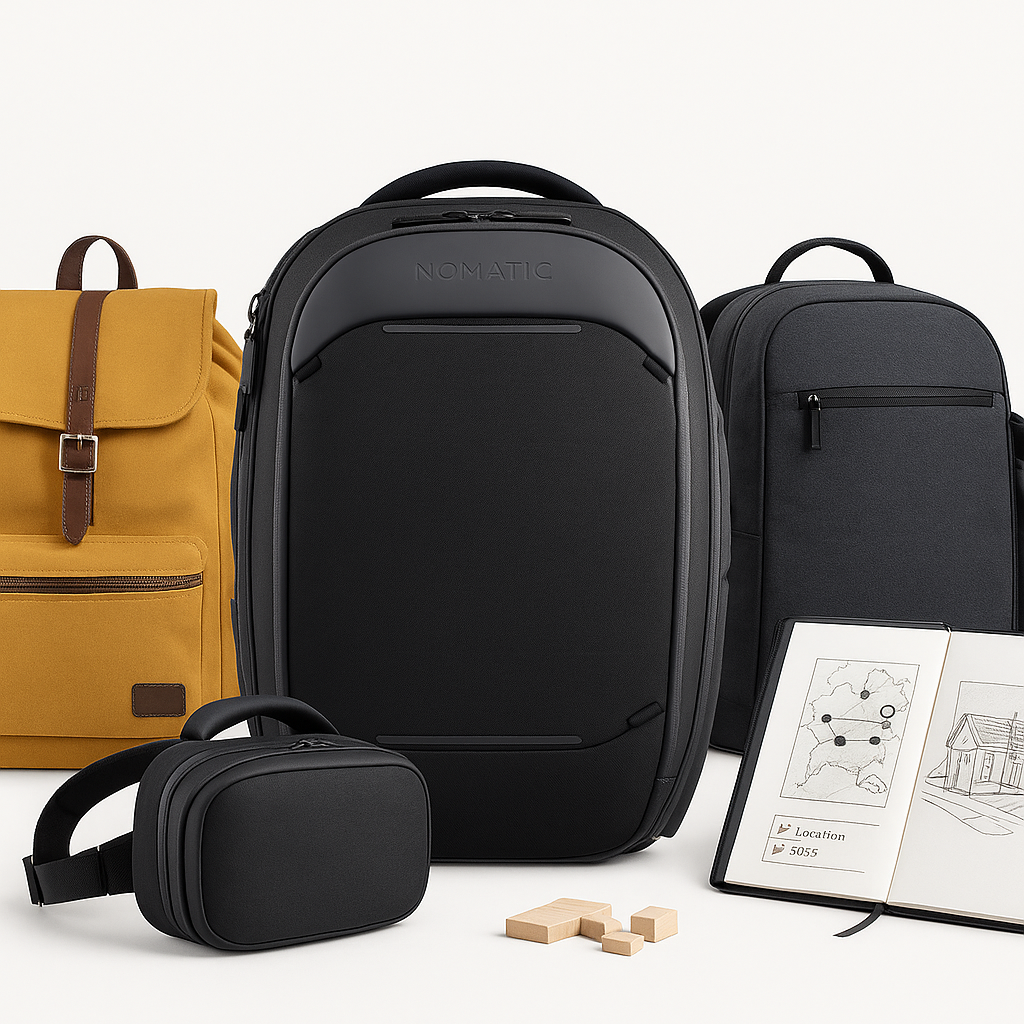
Architecture Bags Are Part of the Work
Architecture student bags need to handle heavy loads, tools, and daily chaos.
You don’t just carry stuff. You carry your entire workflow.
Laptop. Sketchbook. T-square. Scale ruler. Portable charger. Presentation prints. Coffee. Architecture students don’t travel light, and the wrong bag wrecks your back, your materials, and your pace.
Most store-bought backpacks aren’t designed for this kind of load. You need something that can take the weight, organize gear fast, and survive crowded studios and public transit. Looks are secondary. Build quality comes first.
Here’s what actually works and what to avoid.
What Makes a Good Architecture Student Backpack?
Most students buy the wrong bag. They look for style, price, or brand. None of that matters if your laptop gets crushed or your pens leak across a model.
Here’s what actually makes a good backpack for architecture school:
● Flat, wide interior – Needs to fit A3 folders or sketchbooks without bending
● Structured support – Soft bags sag, shift, and ruin your materials
● Separate laptop zone – So sketchbooks don’t press on your screen
● Access speed – Front or side zips help when you need gear fast
● Weight balance – Padded shoulder straps + chest strap = no back damage
● Reinforced bottom – Foamcore and tool rolls get heavy
● Weather protection – You’re going to get caught in rain
Test it in-store if you can:
Load it. Drop it. Open and close it with one hand. If it annoys you now, it’ll break you by mid-semester.
Architecture School Essentials: Your Bag Is Your Workflow
What Do Architecture Students Actually Carry?
Before picking a bag, know your load.
Most architecture students carry:
▪ 15–17" laptop or tablet with charger
▪ A4/A3 sketchbooks and trace paper
▪ Drawing tools: pens, markers, scales
▪ Foldable cutting mat or model parts
▪ Headphones, water bottle, snacks
▪ External drive or USB stick
▪ Portable mouse or stylus
▪ Presentation sheets (sometimes rolled)
This isn’t a casual setup. You need a bag that handles mass, protects your tools, and keeps everything fast to reach.
The Right Bag for Architecture School: Function Over Fashion

Bag Types: What Works, What Doesn’t
● Backpack (Most Common)
✓ Best for weight, balance, and long walks
✓ Fits laptops and folders
✓ Easy to organize with compartments
✕ Can feel bulky in tight spaces
✕ Some cheap ones can’t handle weight
FIELD PICK: Most architecture students use a solid backpack with structured support and water-resistant shell.
● Messenger Bag
✓ Fast access
✓ Good for small gear + sketchbooks
✕ Terrible for heavy loads
✕ Shoulder strain builds fast
Good for short days or critiques. Not a daily workhorse.
● Hybrid Bag (Backpack + Messenger)
✓ Adjustable straps
✓ Fits a range of gear
✓ Flexible for urban or bike commutes
✕ Often overdesigned and overpriced
Great if you need flexibility without sacrificing support.
● Tote + Tube Combo
✓ Popular for critiques or models
✓ Clean, minimal look
✕ No support, zero back protection
✕ Easy to drop tools
Only use for short trips or presentations—not daily hauling.
Features That Actually Matter
Forget hype. Look for these:
✓ Padded laptop sleeve (must fit 15–17")
✓ Weather-resistant material (nylon, coated canvas, or waxed fabric)
✓ Reinforced bottom panel
✓ Side water bottle holder
✓ Front/side zipper for fast tool access
✓ Weight distribution—wide, padded straps
✓ Flat interior for books and A3 sketchbooks
✓ Separate pocket for sharp tools (to avoid damaging sketch pages)
The Best Bags for Architecture Students
1. Nomatic Navigator Backpack 32L

★ Heavy-duty, expandable, and smart layout
This bag feels custom-built for architecture students. Expandable to 32L for model parts and thick sketchbooks. Laptop section fits 17". Magnetic water bottle pocket. Hidden RFID storage. Durable shell.
See full review: Nomatic Navigator 32L Backpack Review: Is It Worth It?
2. The North Face Surge Backpack
★ Classic structure with real back support
If you walk or bike a lot, this is a good call. FlexVent suspension. Good weight balance. Lots of compartments. Fits tech and drawing gear without warping under load.
3. Bellroy Transit Workpack
★ Sleek enough for critiques, built for function
This one's smaller (20L) but perfect for students who travel light or split load between bag + tube. Minimalist look, premium feel. Laptop sits tight against your back. Great for interviews, critiques, or city commuting.
4. Thule Subterra Backpack 34L
★ Smart interior layout for organizing tools
Laptop compartment is shock-protected. Top loading and side zips make it easy to grab tools without unloading everything. Clean silhouette.
5. Nomad Lane Bento Bag (for flying or presentations)
★ For students who travel or need compact pro-style
Structured interior with cable, pen, mouse, and device sections. Slides under seat on planes. Not for daily load but perfect for competitions or studio finals.
Top Bags for Carrying Studio Gear
Not all architecture gear fits in a laptop bag. When you’re moving models, sketch rolls, foam, or tools across campus—or across cities—you need bags built for hauling real material. Most backpacks fail at this.
This isn’t about aesthetic. It’s about load, layout, and survival.
Here are the bags that actually handle the studio grind:
✓ Hard-Shell Art Portfolio Case (A3–A1 Size)
What it’s for: Boards, drawings, loose sheets, and lightweight models.
Why it works: Rigid, protective, doesn’t fold under pressure. Keeps drawings flat. Easy to clean.
● Use when presenting or transporting final prints
● Looks clean, professional, and no warping like cheap tubes
● Some come with shoulder straps, some with handles only
Don’t: Shove wet glue models in here. It’ll ruin everything.
✓ Expandable Poster Tube with Shoulder Strap
What it’s for: Trace rolls, A1/A2 drawings, site plans, competition prints
Why it works: Telescopes to size, protects rolled material, weather-safe
● Shoulder strap helps when you’re carrying multiple things
● Lightweight and strong enough to travel
● Keep one pre-packed in your studio corner
Pro tip: Label it with tape and name. Everyone’s tube looks the same.
✓ Tool Roll Pouch (Waxed Canvas or Nylon)
What it’s for: Pens, knives, compass, fine liners, random crap
Why it works: Keeps sharp stuff organized and stops them from punching through your bag
● Unroll it on the desk and everything’s ready
● No more digging for markers at the bottom
● Fold it, clip it, toss it in any bag
Must have if: You keep losing pens every week. Or bleed ink onto a sketchbook once.
✓ Flat-Load Equipment Tote (With Interior Slots)
What it’s for: Small cutting boards, model bases, zip folders
Why it works: Horizontal load = no bending, better balance
● Some brands make these stiff enough to carry foamcore and basswood
● Works well as a second bag when backpacks are maxed out
● Watch for interior padding and strong base panel
Field hack: Stack A4 sketchbooks, models, and layout boards upright so nothing crushes anything.
✓ Rolling Crate or Collapsible Trolley (Studio Finals Only)
What it’s for: Everything at once. Model. Prints. Supplies.
Why it works: When your final presentation needs 3 trips, this saves your back
● Not a daily-use item—but a savior during crit week
● Folds flat when not in use
● Can carry food, supplies, even a laptop in emergencies
Looks nerdy, but: Nobody cares when it’s 11pm and you’re hauling 10kg of foamboard.
Final Thought
If you’re serious about architecture school, get serious about how you move your gear.
You don’t need the most expensive bag. But you do need bags that match the job. Carrying a laptop is different from carrying foamcore and glue. Don’t mix it up.
Build a system:
Backpack + Tube + Tool Roll + Crate (when needed).
That’s how pros roll through reviews without falling apart.
Best Architecture Bags and Tools Under $50
Smart picks when you’re broke but need gear that holds up
Architecture school already drains money. You don’t need a $200 backpack to get through studio. But you do need a setup that won’t fall apart under weight, weather, or week-9 stress.
These are the budget bags and tools that actually work—under $50, tested and used by real students.
✓ KAKA Travel Backpack 35L
Price: ~$45
● Solid laptop compartment
● Water-resistant
● Side access and USB port
Looks like a premium tech bag. Carries heavy. Works for laptops, sketchbooks, charger, and lunch.
→ Buy on Amazon
✓ BAGSMART 17" Laptop Backpack
Price: ~$38
● Wide opening
● A4 fit
● Light padding + water bottle pocket
Minimal design, fits most 15.6–17" laptops. Interior is flat enough for sketchbooks and trace rolls.
→ Buy on Amazon
✓ Artist Portfolio Case A2/A3
Price: ~$28
● Fits flat boards and prints
● Water-resistant nylon
● Zipper closure and handles
Great for studio presentations or carrying competition boards. Cheaper than a tube, but more protective.
→ Buy on Amazon
✓ Derwent Canvas Pencil Wrap (Tool Roll)
Price: ~$15
● Holds 30+ pens/pencils
● Rolls tight
● Stops marker leaks
Keeps your gear clean and accessible. If you lose pens a lot, this fixes it.
→ Buy on Amazon
✓ U.S. Art Supply Telescoping Poster Tube
Price: ~$19-$59
● Expandable
● Adjustable strap
● Rain-safe
Fits A1 rolls, trace paper, and printed boards. Absolute essential for final reviews.
→ Buy on Amazon
✓ IRIS Collapsible Storage Crate
Price: ~$22
● 45L capacity
● Stackable
● Wheels optional
Use it during finals to carry foam, chipboard, tools, and snacks. Folds flat when not in use.
→ Buy on Amazon
Final Call:
If you’re under budget, build your bag system in stages:
-
Get a basic backpack that fits a laptop and sketchbook.
-
Add a poster tube and tool roll.
-
Later, upgrade to a premium backpack if needed.
Architecture school is about what works, not what looks expensive.
Backpacks That Can Handle Laptops and Models
Built to survive heavy loads, delicate parts, and long days
Some bags can hold a laptop. Some can hold models. Very few can handle both at once—without crushing one or ripping under the other.
Here’s what to look for if you carry both digital and physical gear:
● Padded, separate laptop compartment (not shared with sketchbooks)
● Deep vertical space (at least 30L) for foam, tools, chipboard
● Semi-rigid sides to avoid crushing
● Internal straps or dividers (so model parts don’t shift and break)
● Reinforced base—cheap bags tear under weight
Top Picks for Dual-Use Bags:
✓ Nomatic Navigator Backpack 32L – Structured, expandable, laptop-safe
✓ Thule Subterra Backpack 30L – Balanced interior, laptop sits tight
✓ KAKA Travel Backpack (Budget Pick) – Wide base, solid laptop support
Backpacks That Fit Drawings and Tools
Laptop sleeves are everywhere. A bag that handles prints, tools, foam blocks, and trace rolls? Much harder to find.
Here’s what separates a real architecture backpack from a school one:
● Minimum internal height: 17" – To fit A3 sketch pads standing up
● No tapering – Bags that narrow toward the top crush your work
● Side clip-on for tubes – Some bags let you strap a poster tube outside
● Internal loops or tool pouches – Keeps knives, pens, and compasses in place
● Firm vertical shell – So rulers don’t snap or slide
Recommended setups:
-
Main backpack (laptop, sketchbooks, tools)
-
External tube (drawings, trace paper)
-
Flat zip pouch (for A3-A4 boards)
Don’t shove everything into one pocket. That’s how pages get folded and leads get snapped.
Backpacks for Site Visits and Classes
You won’t always carry a full studio load. For walk-throughs, field sketching, or site documentation days, you need a smaller, sharper setup.
Key features:
● Slim, comfortable structure
● Quick-access sketch pad or tablet pocket
● Interior pouch for laser measure or scale
● Front pocket for notebook + pencils
● Weather-resistant shell (site visits aren’t clean)
Good options:
✓ Bellroy Classic Backpack
✓ Timbuk2 Division Laptop Backpack
✓ Nomad Lane Bento Bag (for compact pro gear)
Add-ons:
● Clip-on tube (if carrying site plans)
● Fold-up clipboard or mini sketch board
● Camera or phone tripod clip
Don’t use your full 32L studio bag for site days. It slows you down and makes you look unprepared.
Lightweight Architect Backpacks That Last
Sometimes you just want to carry the essentials. Laptop. Sketchbook. Charger. Done.
These bags don’t carry everything—but they carry what matters, fast, flat, and protected.
What to look for:
● Clean internal layout
● Flat panel support
● Tight laptop sleeve (15–17")
● Solid zipper quality (weak point on cheap bags)
Best for:
▪ Commuting
▪ Digital-only days
▪ Office internships
▪ Studio critiques where models stay behind
Top picks:
✓ Aer Slim Pack
✓ Bellroy Transit Workpack
✓ Matein Slim Business Backpack (Budget Pick)
✓ Incase Icon Slim Backpack
These bags won’t hold foamcore—but they’ll protect your files, laptop, and brain when you don’t need to carry half your desk.
What to Avoid
✕ Flimsy daypacks
✕ Narrow laptop sleeves (doesn’t fit architecture gear)
✕ Cheap straps = shoulder damage
✕ Bags with too many gimmicky pockets
✕ Cotton canvas without reinforcement—tears too easily
Common Mistakes Architecture Students Make
● Buying for looks, not structure
● Ignoring weatherproofing (rain kills models and sketchbooks)
● Not checking if their laptop actually fits
● Assuming all bags are built to last—they’re not
● Overloading one shoulder bag = long-term back issues
Tips from Architects Who’ve Been There
● Always keep an extra USB stick in a zipped side pocket
● Use clear pencil pouches inside your bag—not loose pens
● Clip your keys outside the main pocket—don't dig every time
● Store sharp tools away from sketchbooks
● Use a mini tool roll for markers, leads, and scale
Bonus: What Students Add to Their Bags
✓ Cutting knife (with guard)
✓ A6 notepad or pocket sketchbook
✓ Foldable umbrella
✓ Spare phone charger
✓ Tube for A1 sheets or poster roll
✓ Model glue or tack
✓ Fold-up tote for overflow days
FAQ
How big should an architecture student backpack be?
At least 25–30L. Enough for laptop, sketchbooks, charger, tools, and lunch.
Is it okay to use a normal school backpack?
Not really. Most school bags aren’t built for weight, weather, or gear layout.
What if I carry rolls or models?
Use a side clip or add a tube strap. Don't shove it inside your main compartment.
Should I get a waterproof bag?
Yes—or at least water-resistant. One rainstorm can ruin everything.
Is it better to use a tote or a backpack?
Backpack for daily use. Tote only for short critiques or clean prints.
Can I use the same bag in architecture school and internships?
If it’s well-designed, yes. Some bags like Bellroy or Nomatic double well as professional bags too.
Final Take
Your bag isn’t an accessory. It’s a design tool.
You carry your process in it. Every sketch. Every file. Every failed model. Get one that works as hard as you do.
If you cheap out now, you’ll end up replacing it mid-semester—or worse, showing up soaked, scratched, or unprepared.
Pick smart. Load once. Go build.