
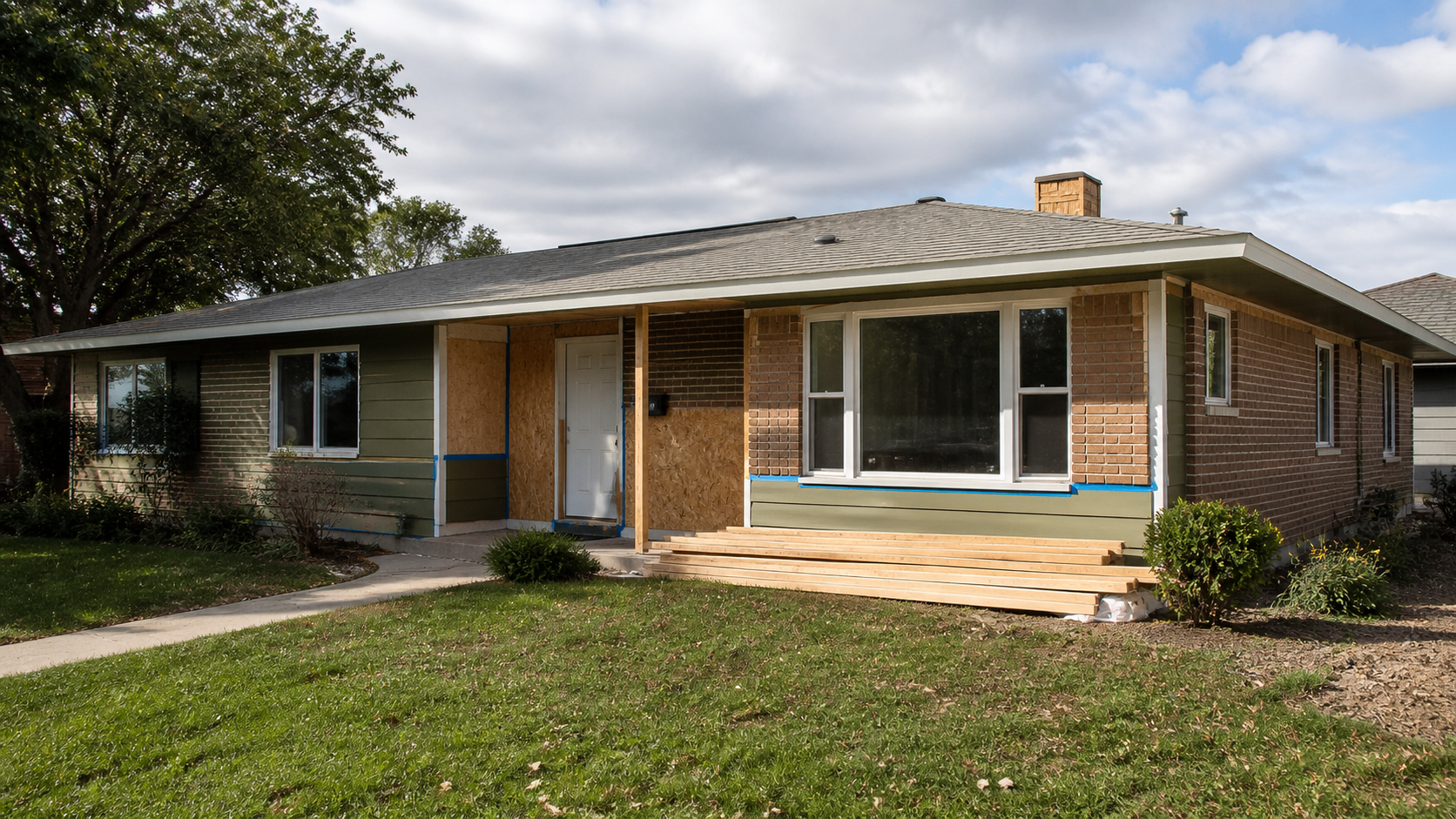
Raised ranch houses can improve dramatically.
They can also get worse very fast.
The problem is that many remodels focus on surfaces before fixing the actual structure of the house: the split entry, the heavy garage front, the dark stair zone, the awkward roofline, and the disconnected layout.
That is why some expensive raised ranch remodels still feel awkward after the work is finished.
Why Raised Ranches Are Harder Than Regular Ranch Houses
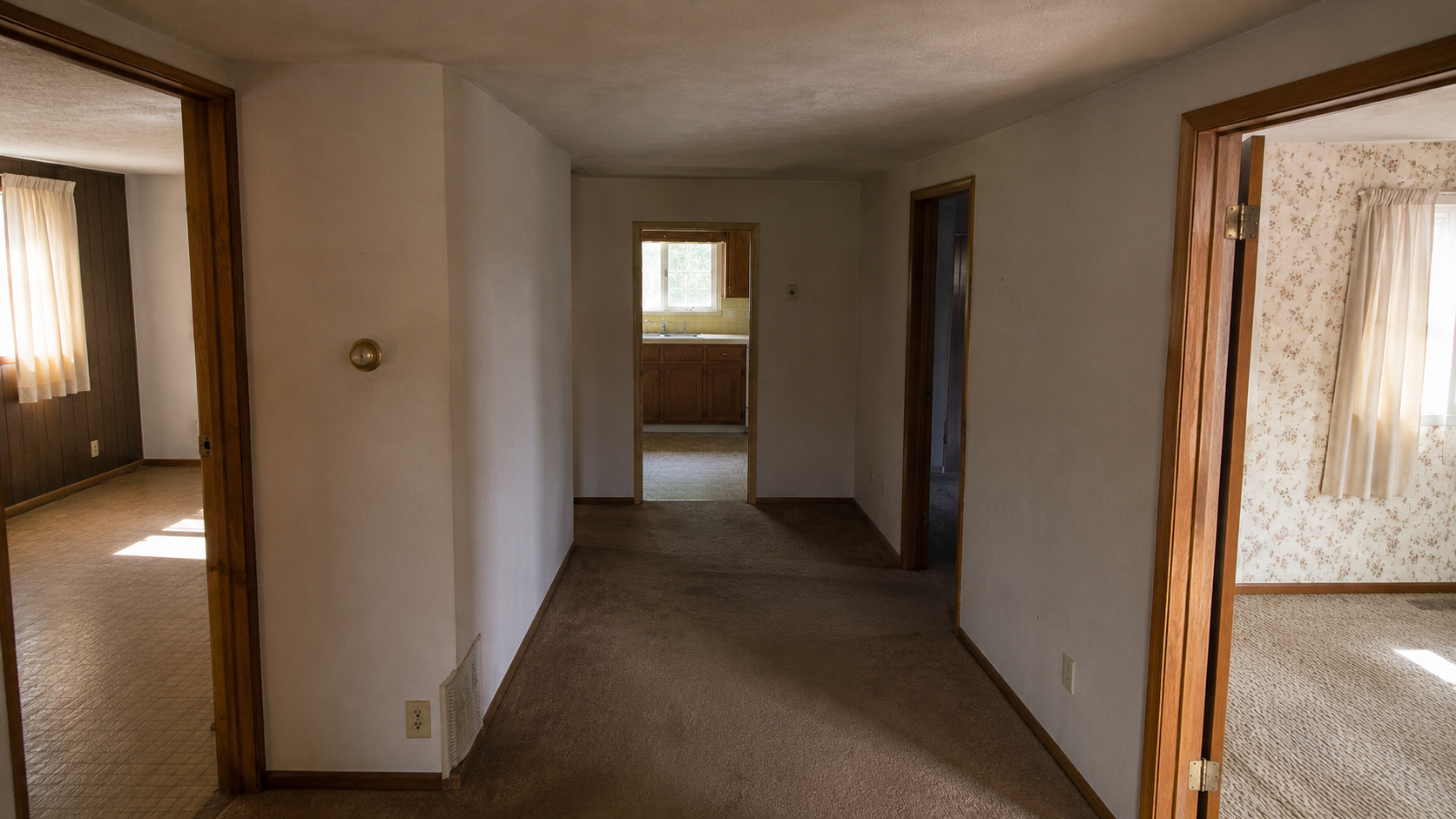
Image by ArchitectureCourses.org. Many raised ranch houses feel awkward because the entry, garage, lower level, and upper floor all compete visually instead of working together.
A standard ranch usually stays low and horizontal.
A raised ranch introduces:
- a split entry
- a taller front elevation
- a partially exposed lower level
- garage dominance
- compressed stair circulation
- heavier facade proportions
That changes the entire balance of the house.
The biggest mistake is treating a raised ranch like a normal one-story remodel. The problems are different.
Many raised ranches already start with awkward hierarchy. The lower level looks too tall, the garage dominates the front, and the entry disappears between them. If the remodel adds more visual noise without reorganizing those elements, the house usually gets heavier instead of better.
The Split Entry Is Usually the Real Problem
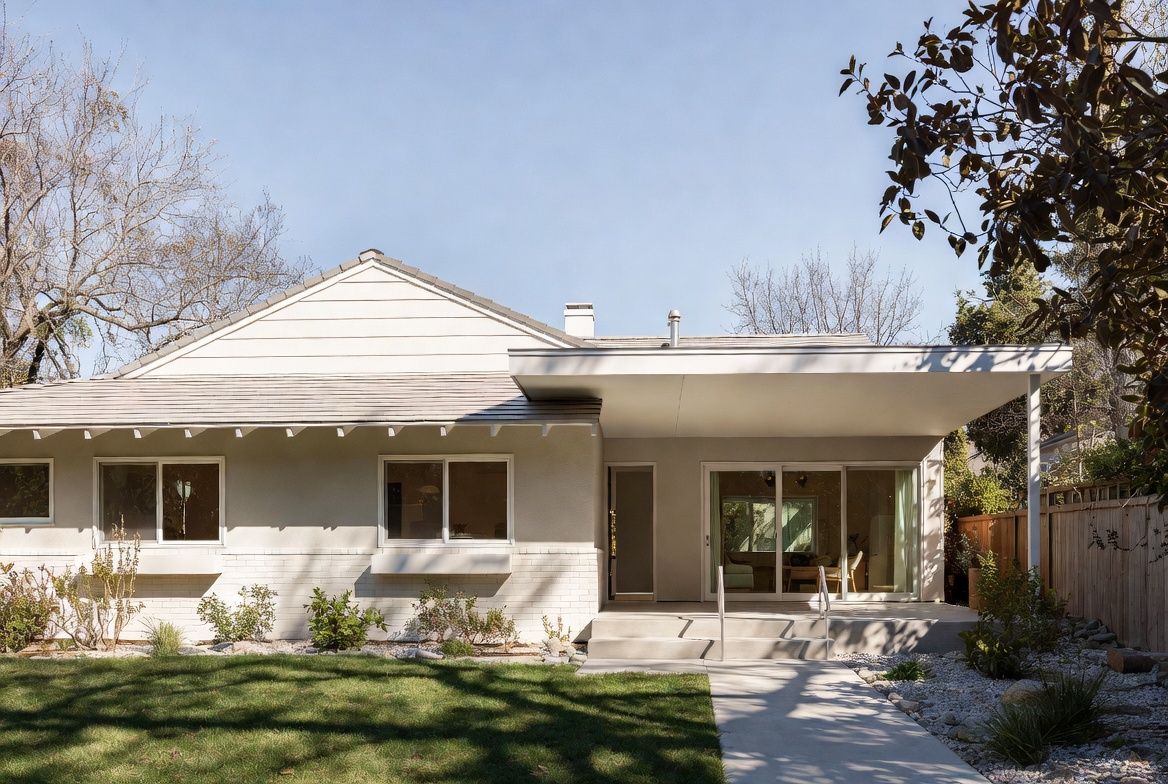
Image by ArchitectureCourses.org. A better entry sequence can improve a raised ranch more than expensive finishes alone.
Most raised ranches fail at the first thirty seconds.
You walk into:
- a cramped landing
- tight stairs
- poor daylight
- visual confusion between levels
- no strong focal point
This is why the house feels awkward immediately, even before reaching the main rooms.
Many remodels ignore this completely and spend money on siding, stone veneer, or decorative trim instead.
The strongest remodels usually improve:
- entry light
- stair openness
- front-door visibility
- arrival sequence
- visual orientation between levels
Sometimes a small canopy, better glazing, cleaner stairs, or a more controlled front path improves the house more than a huge facade rebuild.
Garage Dominance Makes the Front Feel Heavy
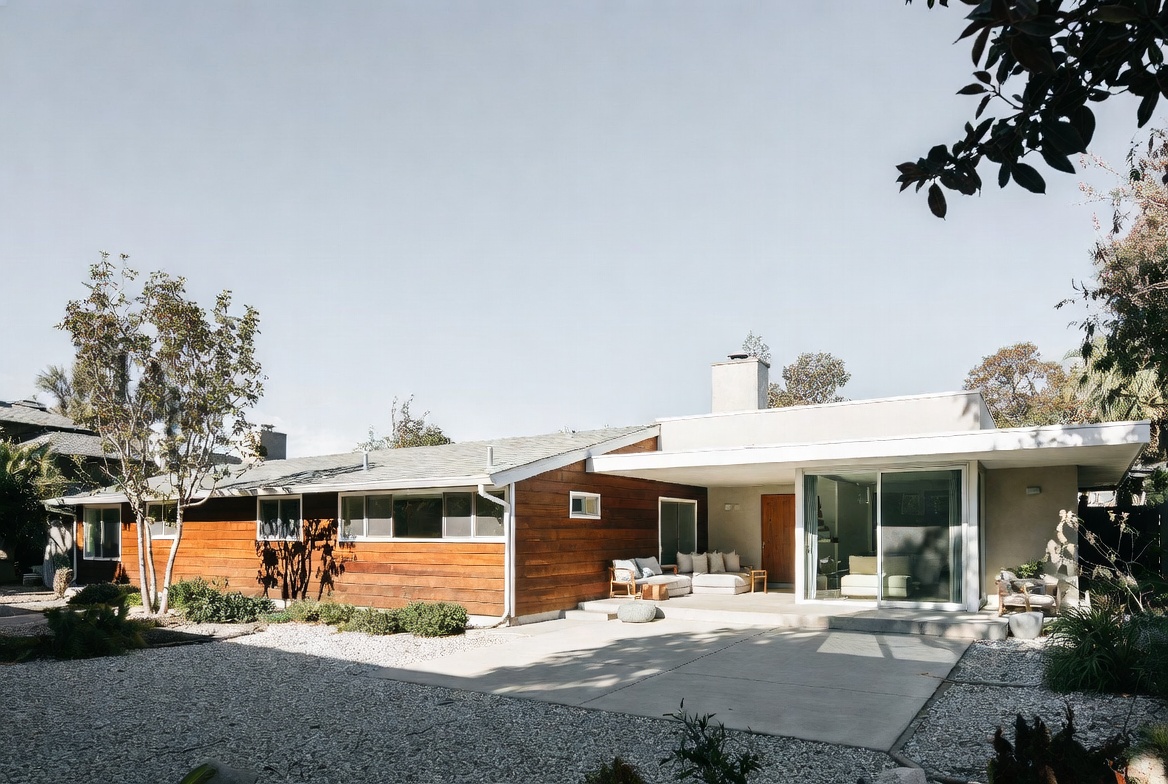
Image by ArchitectureCourses.org. Raised ranches improve when the garage stops overpowering the entire front elevation.
One reason many raised ranches feel awkward is that the garage becomes the main visual event.
Then:
- the front door disappears
- the lower level feels too tall
- the upper floor feels compressed
- the facade loses hierarchy
The fix is usually not adding more decoration.
It is creating better balance:
- stronger entry visibility
- cleaner roof geometry
- better window alignment
- more controlled facade proportions
- less visual weight at the garage level
A quieter garage door, cleaner lighting, and stronger entry definition often help more than fake rustic detailing.
Rooflines Usually Decide Whether the Remodel Works
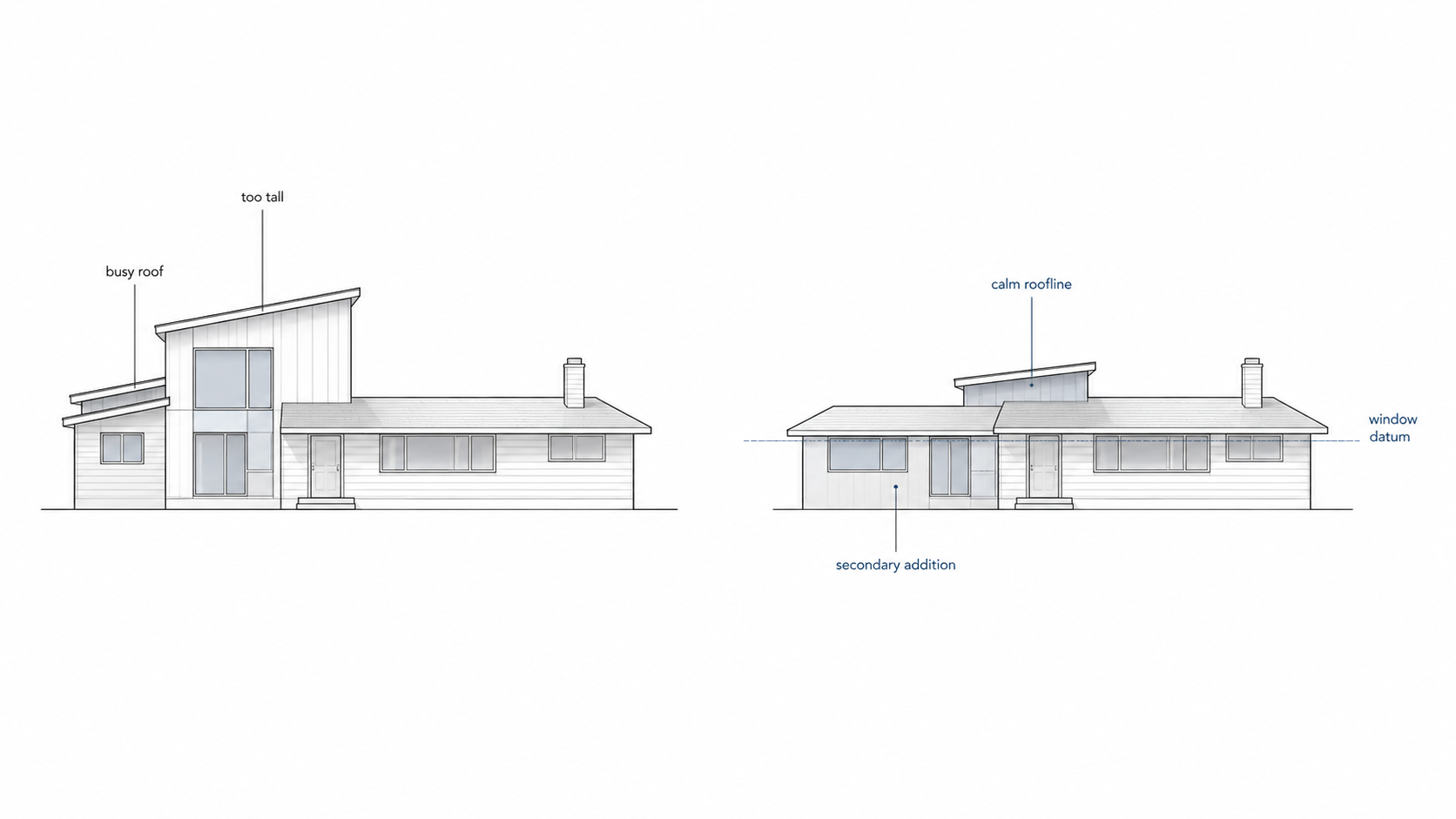
Illustration by ArchitectureCourses.org. Raised ranch remodels usually fail when the roofline becomes too busy, too tall, or disconnected from the original house.
Many remodels try to fix raised ranches with:
- fake gables
- oversized porches
- decorative timber
- multiple roof jumps
- heavy front projections
Usually that makes the house heavier.
A calmer roofline almost always works better.
The strongest raised ranch remodels keep:
- one dominant roof idea
- controlled heights
- simple transitions
- clean roof-to-wall relationships
- restrained facade depth
Once the roofline starts competing with itself, the remodel usually loses clarity fast.
Dark Split Entries Need Better Light, Not Just More Paint
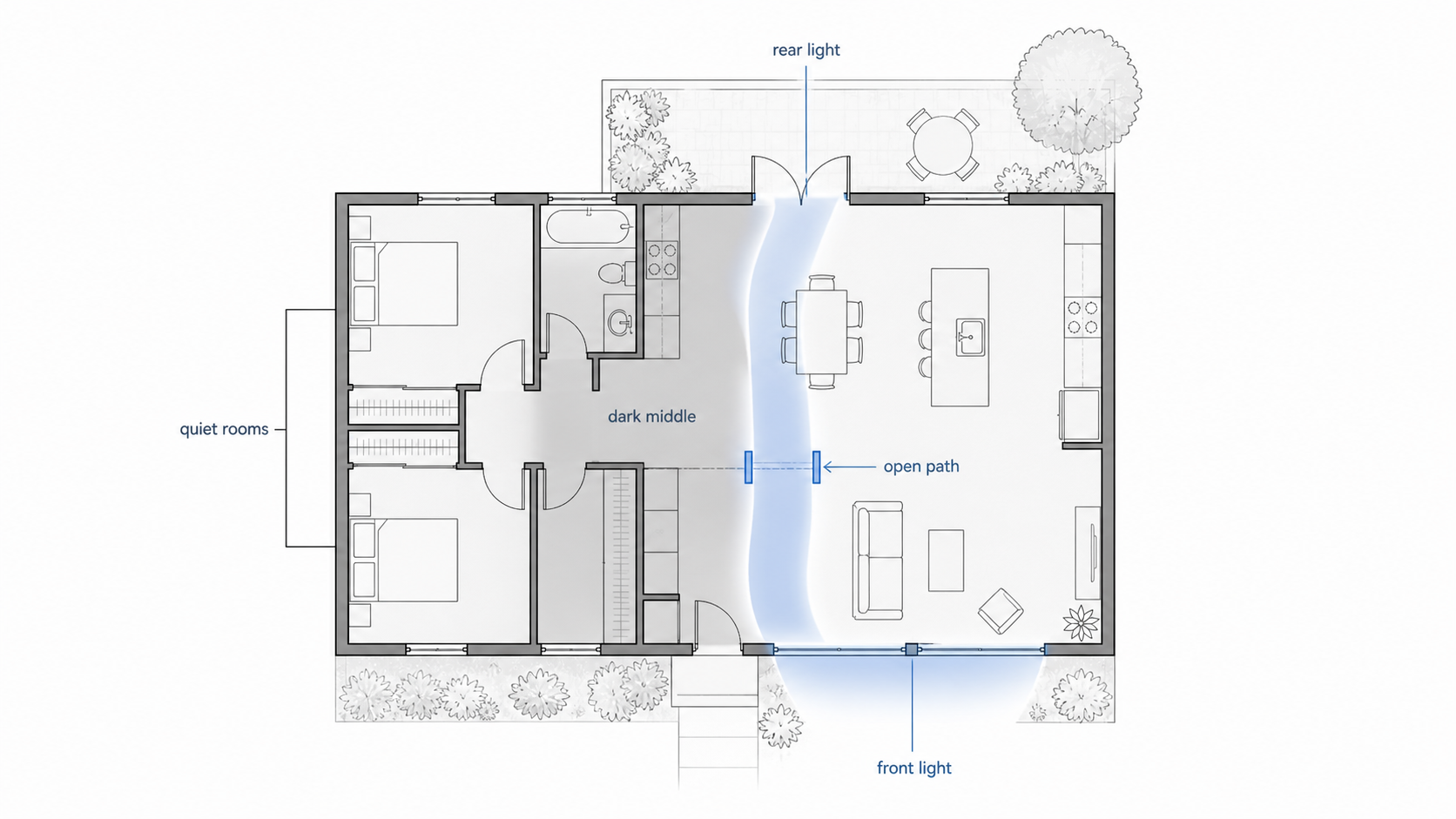
Illustration by ArchitectureCourses.org. Raised ranch interiors improve when daylight can move through the entry, stair, and living core instead of stopping at the split landing.
Many raised ranch interiors feel darker than they should because the stair landing blocks the flow of light.
That often creates:
- dark middle zones
- heavy ceilings
- narrow circulation
- awkward transitions between levels
Before changing finishes, improve:
- window placement
- sightlines
- stair openness
- connections between kitchen and living areas
For the larger daylight issue, see how to brighten a dark ranch house without opening every wall.
Lower-Level Windows Usually Need More Attention
One reason raised ranches feel basement-heavy is poor lower-level glazing.
Many lower floors have:
- small windows
- high sill heights
- deep shadows
- poor exterior grading around openings
That makes the lower level feel darker and more compressed than it needs to.
Larger lower-level windows can help significantly when:
- grading allows proper drainage
- the facade proportions stay controlled
- window alignment relates to the upper level
Randomly enlarging windows without considering the whole facade often makes the house look unstable instead of modern.
Raised Ranch Kitchens Often Sit in the Wrong Place
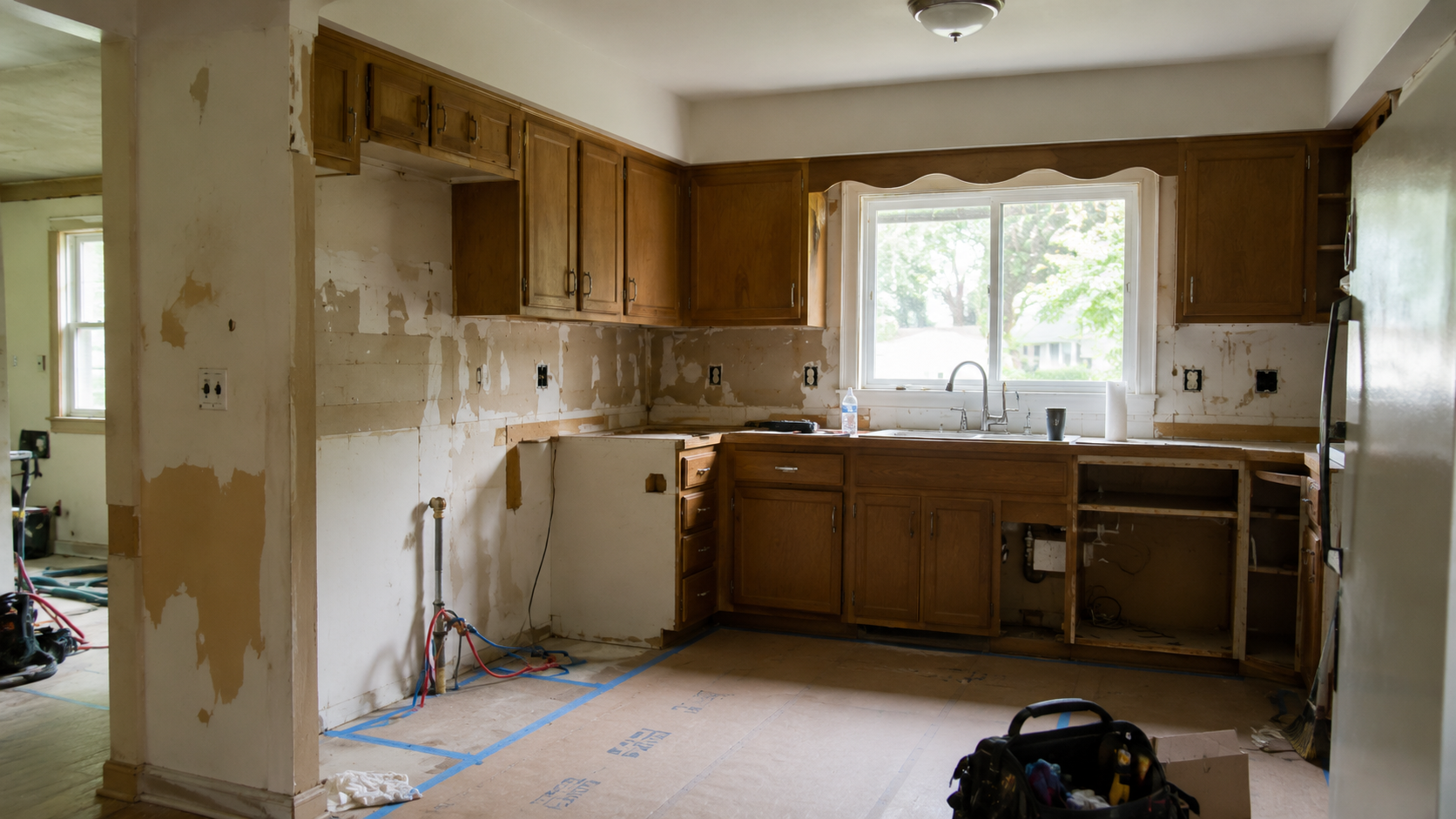
Image by ArchitectureCourses.org. Many raised ranch kitchens improve more from layout and light changes than from expensive finishes alone.
A common raised ranch problem is that the kitchen gets trapped between:
- the stair zone
- the dining area
- the dark middle of the house
- awkward circulation paths
This is why some kitchens still feel disconnected even after remodeling.
Usually the better move is:
- improve the kitchen-to-living connection
- bring more daylight toward the middle
- open one useful wall instead of everything
- improve the relationship to the backyard
For deeper kitchen planning, see ranch house kitchen layout problems and better fixes.
Do Not Open Every Wall
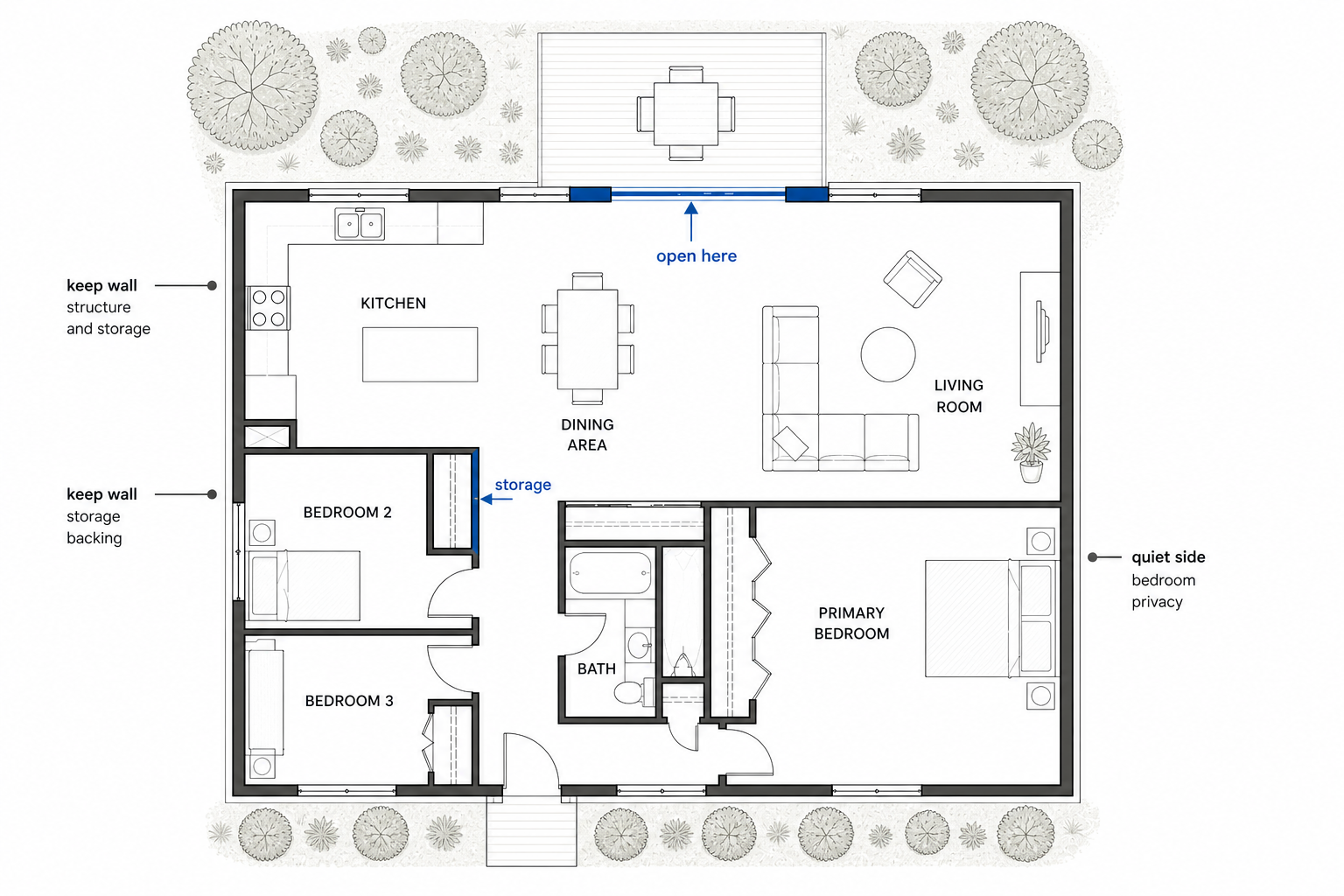
Illustration by ArchitectureCourses.org. Raised ranch layouts usually improve from selective openings, not total demolition.
People often assume a raised ranch needs a complete open floor plan.
Sometimes that removes the only things controlling the layout:
- storage
- privacy
- furniture placement
- structure
- sound separation
A better remodel usually opens:
- kitchen to dining
- kitchen to living
- living toward the backyard
while keeping enough wall structure to control the plan.
For the larger layout strategy, see open floor plan ranch house.
Low Ceilings Make Raised Ranches Feel Heavier
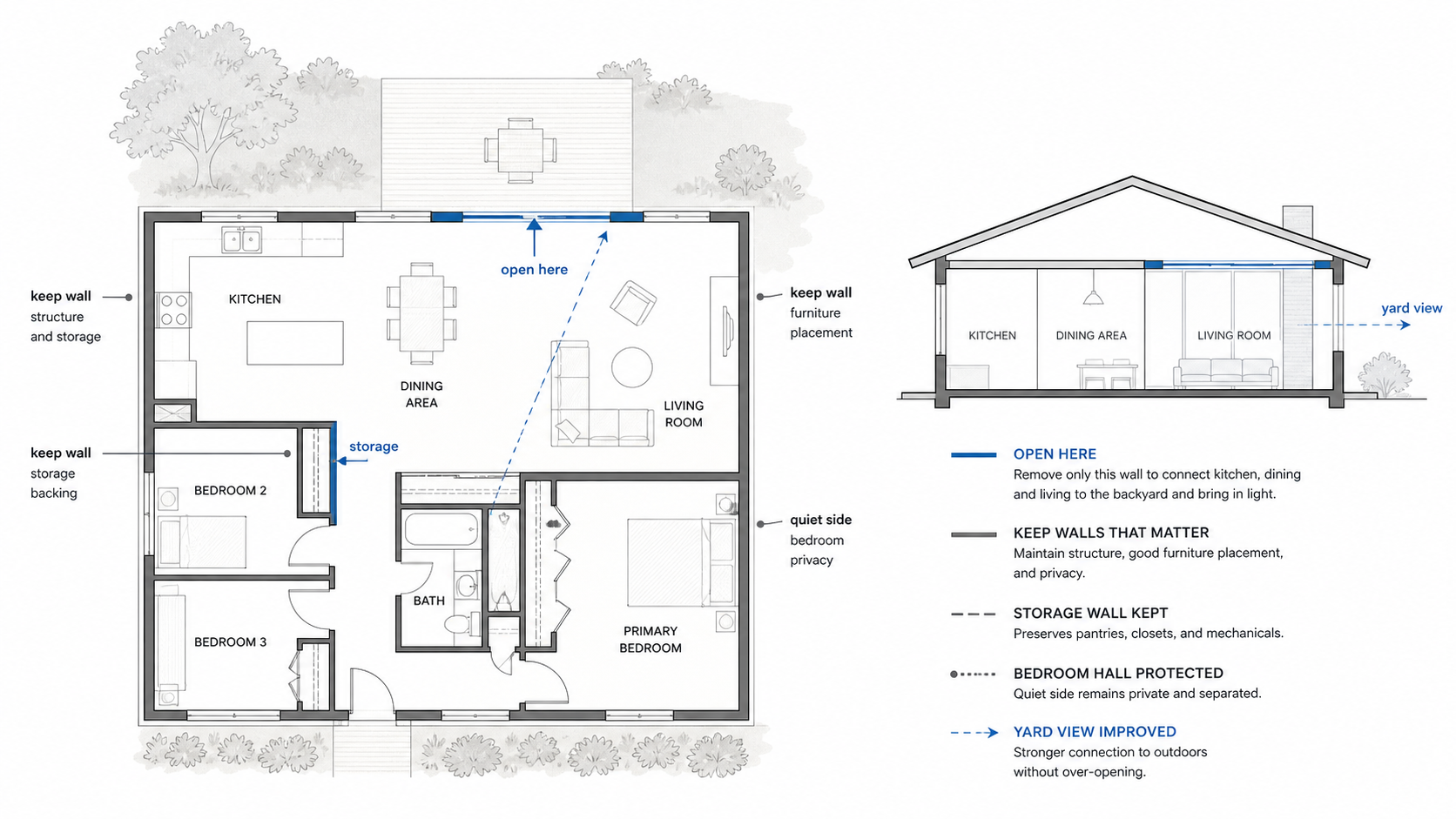
Illustration by ArchitectureCourses.org. Cleaner ceilings and better light paths often improve a raised ranch more than dramatic structural moves.
Many raised ranches already struggle with:
- compressed entries
- low basement ceilings
- heavy soffits
- oversized fixtures
- awkward stair bulkheads
That combination makes the house feel lower and darker than it really is.
Removing unnecessary ceiling clutter often helps more than dramatic ceiling reconstruction.
For deeper ceiling strategies, see how to make a low ceiling ranch house feel taller.
When a Porch or Canopy Actually Helps
A front porch can improve a raised ranch.
It can also destroy the proportions completely.
A porch usually helps when:
- the entry currently disappears
- the facade lacks hierarchy
- the stair landing feels exposed
- the front needs more human scale
But oversized porches often create new problems:
- too much visual weight
- heavier rooflines
- cluttered facade layers
- confused entry geometry
Many raised ranches improve more from a restrained canopy than from a massive decorative porch structure.
Additions Need More Control on Raised Ranches
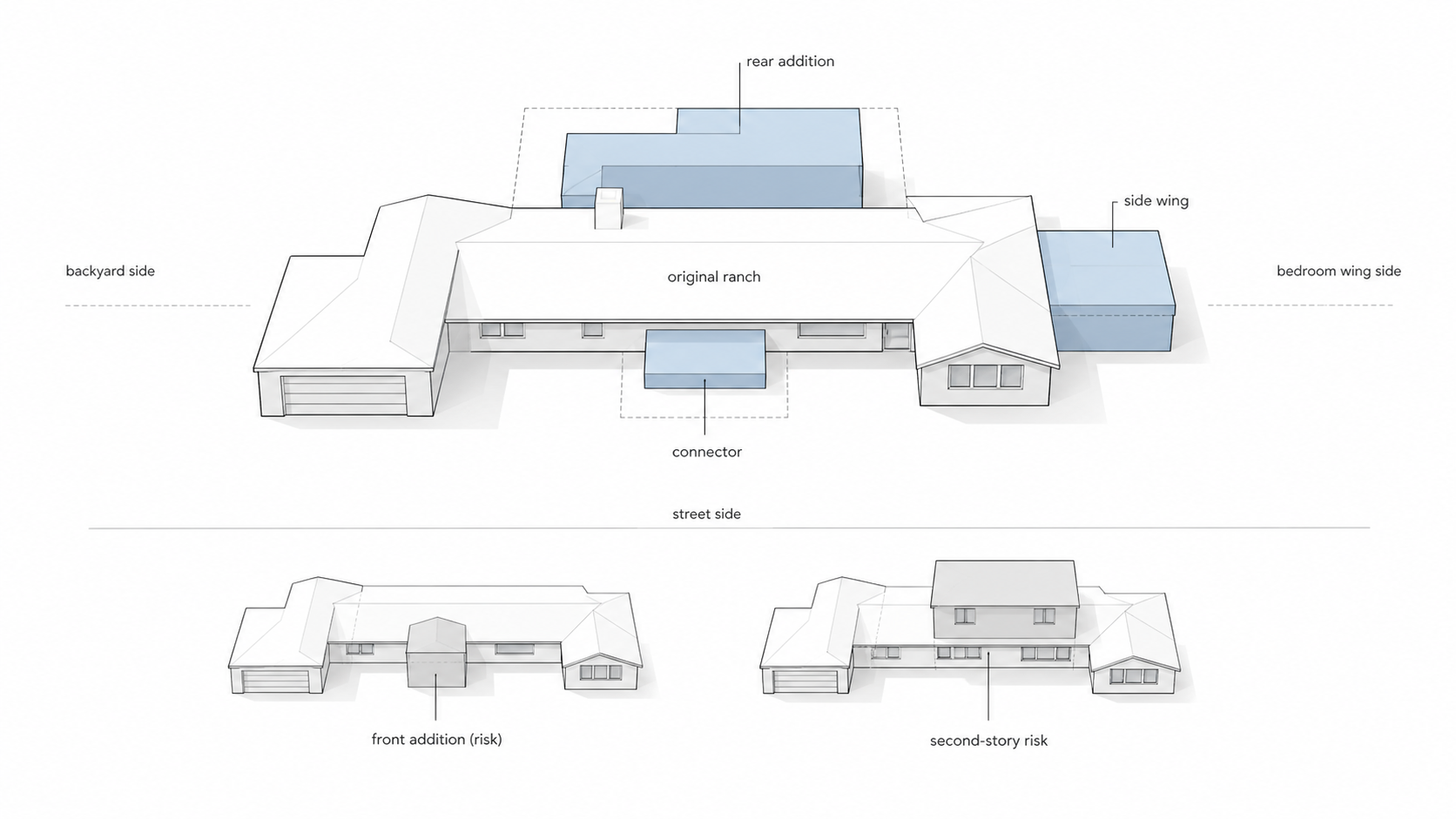
Illustration by ArchitectureCourses.org. Raised ranch additions work best when they stay visually secondary and improve the original layout instead of overpowering it.
Raised ranch additions can become visually heavy very quickly.
Especially dangerous:
- full-height front additions
- massive porches
- oversized second stories
- too many roof changes
- deep front projections
Rear additions usually remain safer because they:
- protect the front proportions
- improve yard connection
- expand living space more naturally
- keep the original roof hierarchy clearer
For deeper addition planning, see modern addition to a ranch house.
Exterior Materials Usually Get Overcomplicated
Many raised ranch remodels fail because too many materials start competing at once.
Common combinations that quickly become messy:
- stone veneer plus vertical siding plus board-and-batten plus fake timber
- three or four siding colors
- different window styles fighting each other
- random accent materials with no hierarchy
Raised ranches usually improve from restraint.
Often the strongest exterior palette is:
- one dominant siding material
- one restrained accent
- calm trim strategy
- consistent window logic
The remodel should simplify the house, not increase the noise level.
Budget Traps That Hurt Raised Ranch Remodels
| Budget Trap | Why It Goes Wrong |
|---|---|
| Oversized front porch | Adds visual weight without fixing layout problems |
| Too many facade materials | Makes the house feel busy and fragmented |
| Opening every wall | Removes layout control and storage |
| Random roofline changes | Destroys the original proportions |
| Luxury finishes before layout fixes | The house still functions poorly afterward |
| Massive second-story additions | Makes the house top-heavy and awkward |
Before-and-After Thinking Works Better Than Style Thinking
The strongest raised ranch remodels usually solve visible problems one by one.
Not:
- “make it modern”
- “make it farmhouse”
- “make it luxury”
Better questions:
- Does the entry make sense now?
- Can light move deeper into the house?
- Does the garage still overpower the front?
- Does the roof feel calmer?
- Is the kitchen connected better?
- Does the lower level still feel basement-heavy?
That diagnostic approach usually creates better remodels than trend-based styling.
What Usually Improves a Raised Ranch Most
| Improvement | Why It Helps |
|---|---|
| Better entry sequence | Makes the house feel clearer immediately |
| Cleaner roofline | Reduces visual heaviness |
| Improved stair lighting | Brightens the middle of the plan |
| Controlled wall openings | Improves flow without chaos |
| Better kitchen connection | Makes daily movement easier |
| Calmer facade composition | Stops the front from fighting itself |
| Better lower-level windows | Reduces basement-heavy feeling |
What Usually Makes the Remodel Worse
- fake decorative rooflines
- too many facade materials
- oversized porches
- opening every wall
- massive second stories
- garage-heavy fronts with no entry hierarchy
- vaulted ceilings that ignore the original proportions
- busy window patterns
This is where raised ranch remodels stop feeling architectural and start feeling assembled from random ideas.
Before You Remodel a Raised Ranch
- Is the entry sequence working?
- Does the stair zone get daylight?
- Is the garage overpowering the facade?
- Will the remodel improve the living core?
- Are you solving layout problems or only changing finishes?
- Will the roofline stay controlled?
- Will the lower level still feel too heavy afterward?
- Are the facade materials becoming too busy?