



When New Vents Help and When They Waste Money
Sometimes the vent really is the job.
The frame is cracked. The screen is gone. Rust has eaten the metal. Something has been using the opening as a side door. In that case, replace it and move on.
But a lot of vent jobs are not really vent jobs. The vent is just the broken piece people can see from outside. They replace it, stand back, and the crawl stays wet because the real problem was grade, runoff, soil moisture, or a crawl that should have been sealed years ago.
A new vent can fix a damaged opening. It can keep pests out. It can make the foundation look less neglected. It will not fix a bad crawl by itself.
Start with the crawl, not the broken faceplate
If the crawl gets wet after rain, smells damp all summer, or stays muddy at one end, the vent is rarely the first thing I would spend money on.
I would treat the vent as one piece of the wall, not the reason the crawl behaves badly.
That matters because people waste money on visible repairs first. A broken vent feels concrete. It is right there. You can point at it. Water loading from bad exterior grade is harder to look at, so it gets ignored longer. That is backward.
If the crawl still takes on water after storms, go first to water in a crawl space after rain, crawl space drainage system, or crawl space waterproofing.
If the crawl is more damp and stale than visibly wet, the better next pages are crawl space humidity and crawl space ventilation.
When replacement actually makes sense
Some vent openings plainly need replacement.
- the vent frame is cracked or loose
- the screen is torn and animals keep getting in
- the old metal has rusted through
- the existing cover no longer fits or closes properly
- the opening was patched badly and now leaks around the edges
- the crawl is still meant to stay vented and the old vent is simply worn out
That is a normal repair. The mistake is expecting it to do more than repair the opening.
FIELD PICK: If the opening size is right and the crawl is still staying vented, a purpose-built replacement vent such as the EZRvent replacement vent makes more sense than forcing a cheap generic grille into a bad fit.
What a new vent will never fix
This is the section that matters.
A new vent will not fix runoff dumping at the wall. It will not fix groundwater. It will not stop a crawl from loading moisture off bare soil. It will not turn a humid vented crawl into a clean sealed one. It will not solve a stale smell coming from wet insulation and moldy framing under the floor.
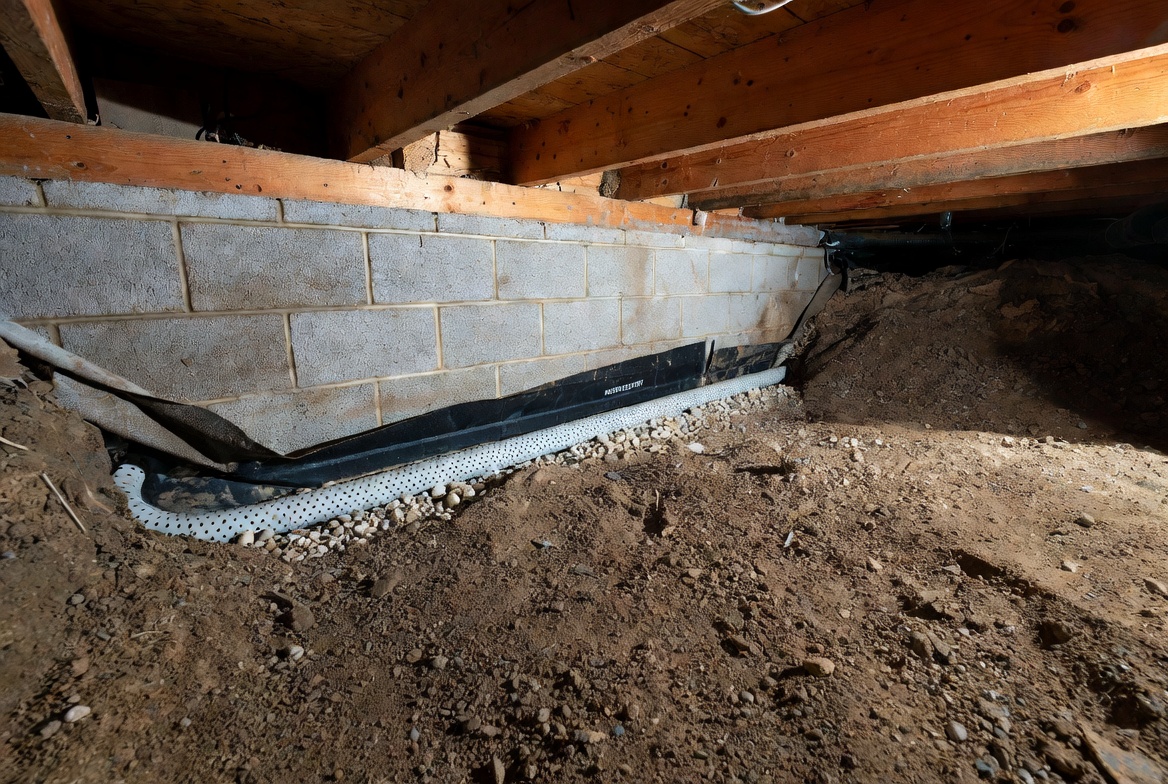
Image by ArchitectureCourses.org. If water is still loading the foundation from outside, replacing the vent just gives the wall a cleaner-looking weak point.
This is where people get annoyed with contractors for the wrong reason. They asked for a vent replacement. The contractor starts talking about drainage, slope, splashback, and crawl conditions. That can sound like upselling if you do not already understand the sequence.
But the crawl does not care what line item you had in mind. If the water path is still wrong, the vent repair stays small and the moisture problem stays large.
Replace it, cover it, or close it?
These are different decisions. People run them together constantly.
| What You Actually Have | Better Move | Why |
|---|---|---|
| Broken vent in a crawl that is still meant to stay vented | Replace the vent | You are repairing a failed part of the current system |
| Good frame, bad screen, pests are the main problem | Repair the screen or cover | You may not need a full vent replacement |
| Winter draft control or seasonal closure is the real issue | Use a proper removable cover | This is a control problem, not necessarily a failed vent problem |
| Crawl is moving toward encapsulation | Seal the opening as part of the system | A new open vent may just preserve the wrong crawl logic |
| Crawl is wet for bigger reasons | Fix the crawl first | The vent is not the first failure point |
Bad grade ruins vent work fast
A vent installed too low against bad exterior grade starts losing almost immediately.
So does a vent sitting below roof runoff splash, mulch piled against the wall, or a flower bed that holds moisture at the foundation all summer. The vent itself may be fine. The placement in the wall may still be wrong because the ground around it is wrong.
This is why a vent replacement should never be looked at in isolation from the soil around it. A perfectly decent vent sitting in a bad water path is still part of a bad setup.
Cheap replacements often fail twice
The small repair that gets done cheaply has a way of coming back.
The wrong size goes in. Gaps get buried in sealant. The screen is flimsy. The cover flexes. The trim edge looks bent and temporary. It technically closes the opening, but it does not really fit the wall.
Then the same crawl gets pests again, or the frame loosens, or the opening starts looking rough within a season or two. Now the owner pays twice for a repair that should have stayed boring.
A crawl-space vent replacement should be one of the dullest jobs on the house. When it starts looking improvised, that usually means the wrong unit, the wrong opening, or the wrong assumption about what the job was trying to fix.
The fit matters more than the material sales pitch
Plastic vents are common because they are cheap, easy to replace, and usually good enough in ordinary vented crawls. Metal can feel sturdier, but rust catches up with bad metal fast. Stainless or heavier mesh options make more sense where pests are aggressive or the exposure is rougher.
Still, I would not over-romanticize the material choice. The fit matters more.
A badly fitted “better” vent is worse than a simpler vent that actually suits the opening. If the frame does not sit right, if the flange hides problems instead of solving them, or if the new piece clearly was not meant for the wall, the repair will keep looking cheap no matter what the product page promised.
Measure the rough opening before you buy anything
This sounds obvious. It gets missed constantly.
People measure the old vent face. Or they guess based on what looks standard. Then the new unit arrives and turns into a trim-and-caulk project because the rough opening was never checked properly.
A lot of bad vent replacements start right there.
If the opening is irregular, patched, or damaged around the edges, that matters too. The question is not just “what size vent did I have before?” The question is “what is this opening really going to accept cleanly?”
If the crawl is staying vented, then replace it like you mean it
Some houses are still staying vented. Fine. Then do the vent job properly.
The opening should stay usable. The screen should keep pests out. The fit should be clean. The vent should not be half buried behind mulch or blocked by a downspout that should never have ended there in the first place. The new unit should not wobble, bow, or look like it was added in a hurry.
This is a small exterior detail, but it affects how trustworthy the foundation looks. Sloppy vent repairs make the whole wall read as neglected.
If the crawl is heading toward sealing, stop buying new open vents
This is where money gets wasted.
The damaged vent looks like the obvious problem, so people buy a fresh open vent by habit. But if the crawl is already moving toward encapsulation, or should be, then replacing a failed open vent may just keep the wrong system alive another few years.
That is the part that should be said more bluntly: replacing a damaged vent on a crawl that should be sealed is sometimes just preserving the wrong setup.
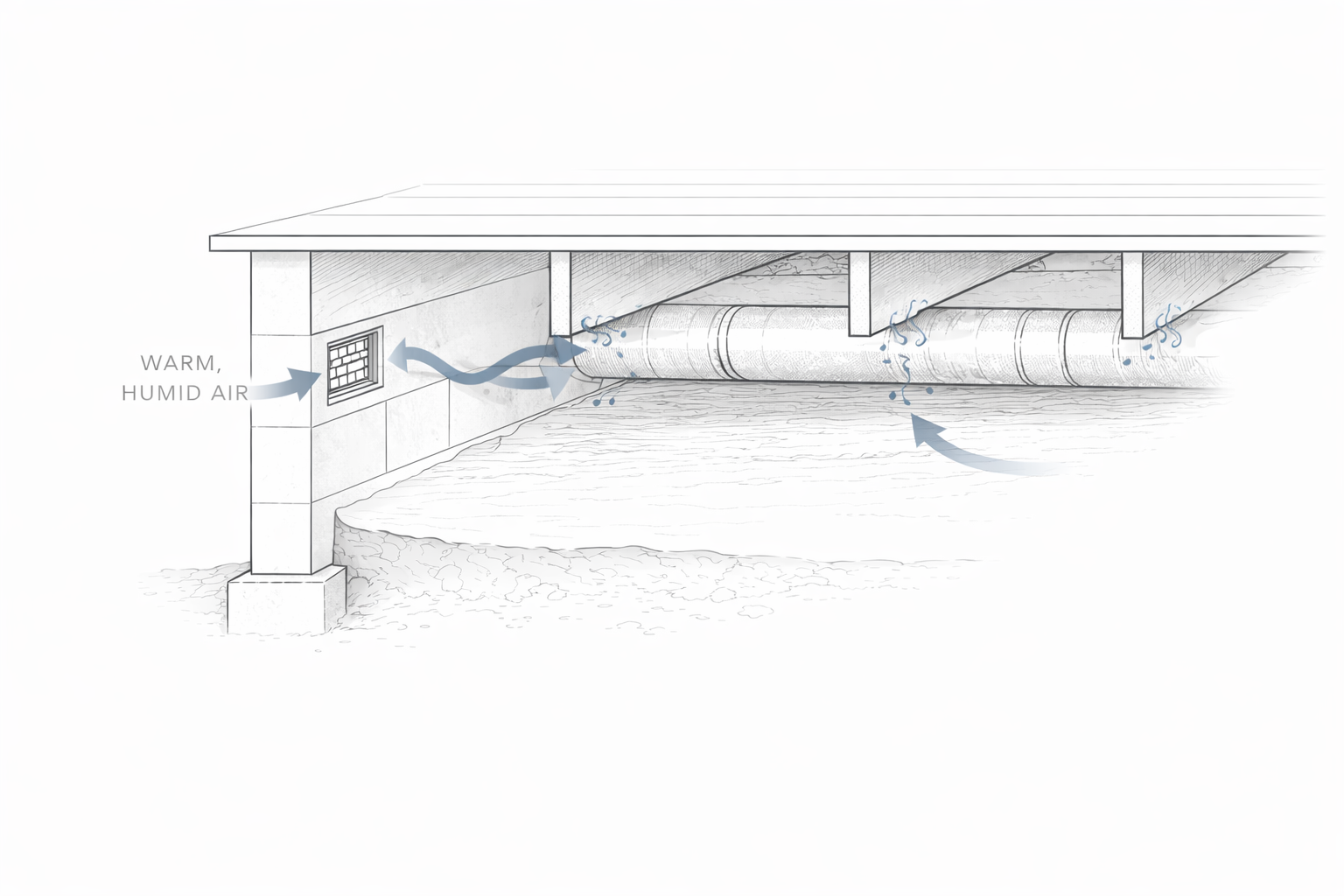
Illustration by ArchitectureCourses.org. In humid weather, the more important vent question is often whether outside air should still be coming through the wall at all.
If the crawl is already drifting toward sealed control, go next to crawl space encapsulation vs vapor barrier only and conditioned crawl space vs encapsulated crawl space.
Vent covers are a different job
A lot of people say “replace the vent” when what they really want is a better cover.
The frame may be fine. The screen may be fine. The real issue may be winter air, rain splash, seasonal closure, or wanting the option to shut the opening down cleanly without rebuilding the wall detail each year.
That is a different decision and usually a smaller one.
RECOMMENDED TOOL: If the opening is sound and the real need is seasonal control, something like this manual crawl-space vent with a removable cover fits that job better than pretending every problem calls for a full replacement.
A vent cover is not magic either. It still will not fix drainage or bulk water. But it can be the right answer when the old conversation got too broad and the real issue is just control.
One ugly opening does not always mean the whole crawl is wrong
Sometimes the vent really is the only part that failed.
One side of the house gets the worst weather. One vent rusts out early. One screen gets chewed up. One opening was patched badly by the previous owner and never sat right after that. Not every bad vent means the entire crawl strategy is wrong.
But do not assume the opposite either. One broken vent on a crawl that smells damp, stays humid, and takes on water after rain is usually just the first visible symptom.
The pattern matters more than the single damaged piece.
What a decent replacement job includes
A good vent replacement does more than snap a new face over an old hole.
- check that the opening itself is sound
- remove the failed vent cleanly
- fit the new unit to the opening instead of forcing it
- keep the screen and frame secure enough that pests do not get the same easy entry again
- leave the wall looking clean instead of hidden under sealant and patchwork
- check the grade, splash zone, and nearby obstructions before calling the repair finished
That last step is where the better work usually separates itself from the lazy version.
Where this job usually goes wrong
Usually in one of these places.
- the vent gets replaced without fixing the runoff hitting it
- the new unit is the wrong size and the gap gets hidden instead of solved
- the crawl should be sealed, but a new open vent gets installed anyway
- the grade at the wall still leaves the vent vulnerable
- the cheapest unit gets used in a location that takes weather, pests, and abuse
That is why the little vent job can turn into a fake repair so easily. The piece gets replaced. The setup does not.
Why some vent jobs stay cheap and some do not
If the opening is straightforward, the old unit comes out cleanly, and the crawl strategy is obvious, vent replacement stays a small job.
The cost climbs when the opening is damaged, the wall surface is rough, the fit is awkward, the grade is wrong, or the repair keeps sliding into a bigger crawl-space conversation that should have happened first.
That does not mean every higher quote is padded. Sometimes the vent job got more expensive because the wall and the crawl finally told the truth.
What I would check before ordering anything
- whether the crawl is truly staying vented or really needs to move toward sealing
- whether the vent itself is the failure or just the visible damaged piece
- whether runoff, splashback, or bad grade are already working against the opening
- whether the opening size is being measured correctly
- whether a cover, screen repair, or sealing decision would solve the real problem better
If those answers are still fuzzy, ordering a replacement vent is early.
FAQ
When should a crawl-space vent be replaced?
When the frame, screen, or cover is clearly damaged and the crawl still depends on a vented setup.
Will a new crawl-space vent dry out the crawl?
Sometimes a little. It will not fix runoff, standing water, groundwater, or a crawl that should not still be open to humid outside air.
Should I replace crawl-space vents or seal them?
That depends on the crawl strategy. If the crawl is staying vented, replacement can make sense. If the crawl is moving toward encapsulation, sealing the openings is usually the better move.
Are vent covers different from vent replacement?
Yes. A lot of the time the real need is seasonal control, not a full rebuild of the vent opening.
Why did the new vent not fix the crawl-space smell?
Because the smell was probably coming from broader crawl humidity, wet materials, mold, or water entry, not the vent face itself.