
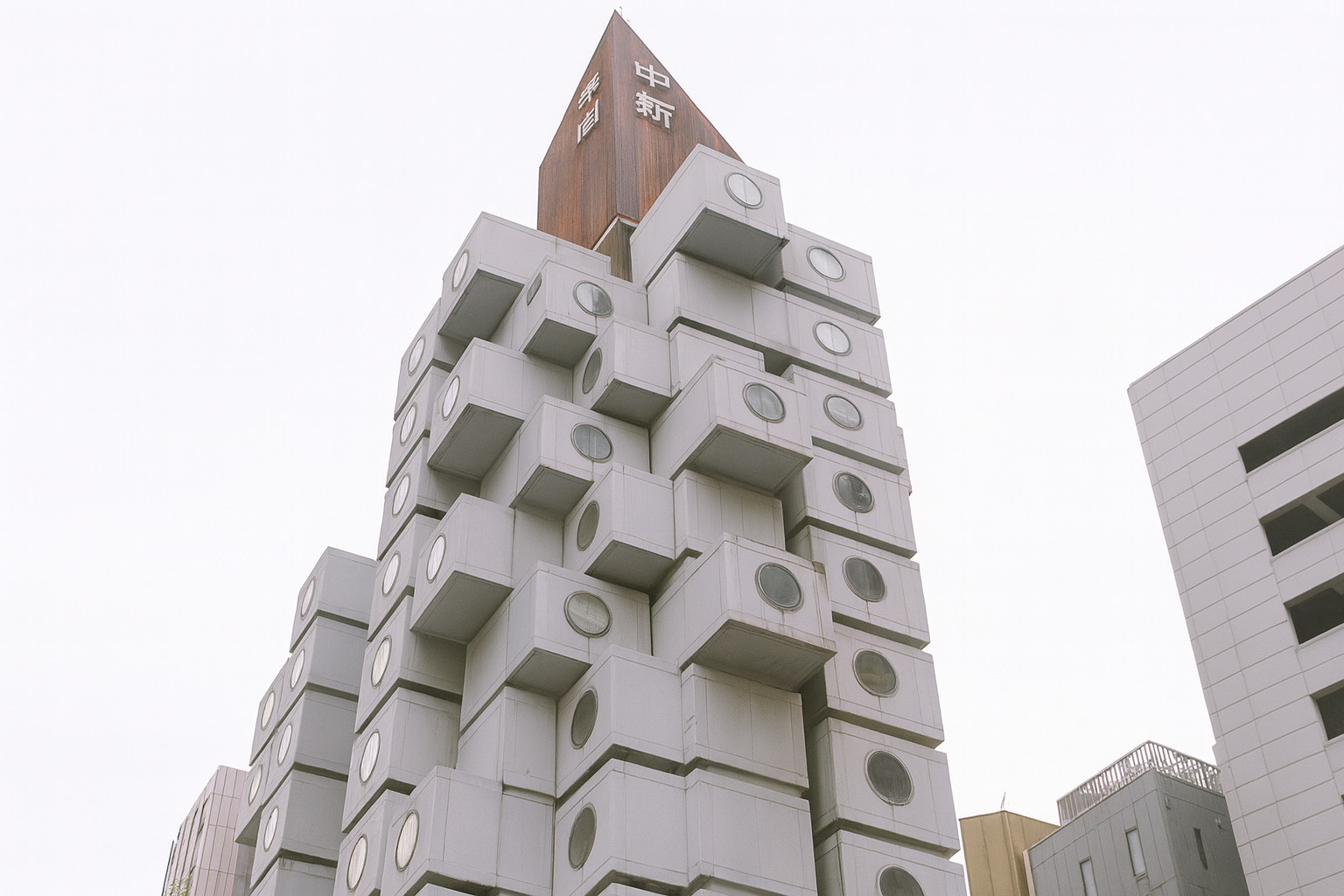
Brutalist Tokyo, Seen Up Close
I walked Tokyo with a sketchbook and a cheap moisture meter in my bag. The city shines with glass and LED, but every few blocks you hit a wall of concrete that changes the air. It is cooler by a few degrees. It smells faintly of rain even on clear days. This is the Tokyo of rough concrete, deep shadows, and buildings that tell you what they are made of instead of hiding it. People call it Brutalism. In French the phrase was béton brut, raw concrete. In Japan it turned into something quieter and more disciplined, closer to craft than to shock. From street level you learn things that never show in photos. The hand lines of the formwork. The way sound slows on a ribbed soffit. The way a stair feels when the riser is thick enough to read as structure and not just finish.
This is not a museum tour. It is a field report from sidewalks, plazas, campus edges, and the backs of service alleys where the real details live. I will sketch how Tokyo got here after the war, how Brutalism intertwined with Metabolism, what to notice in the concrete itself, why some buildings aged well and others did not, and how this language still shapes the city. I will also be honest about the mistakes, including my own early ones, like misreading a Metabolist tower as Brutalism because it was grey and heroic. Names matter, but materials and joints matter more.
What Brutalism Feels Like in Tokyo
Walking Through Tokyo’s Concrete Buildings
How Tokyo Adopted Raw Concrete
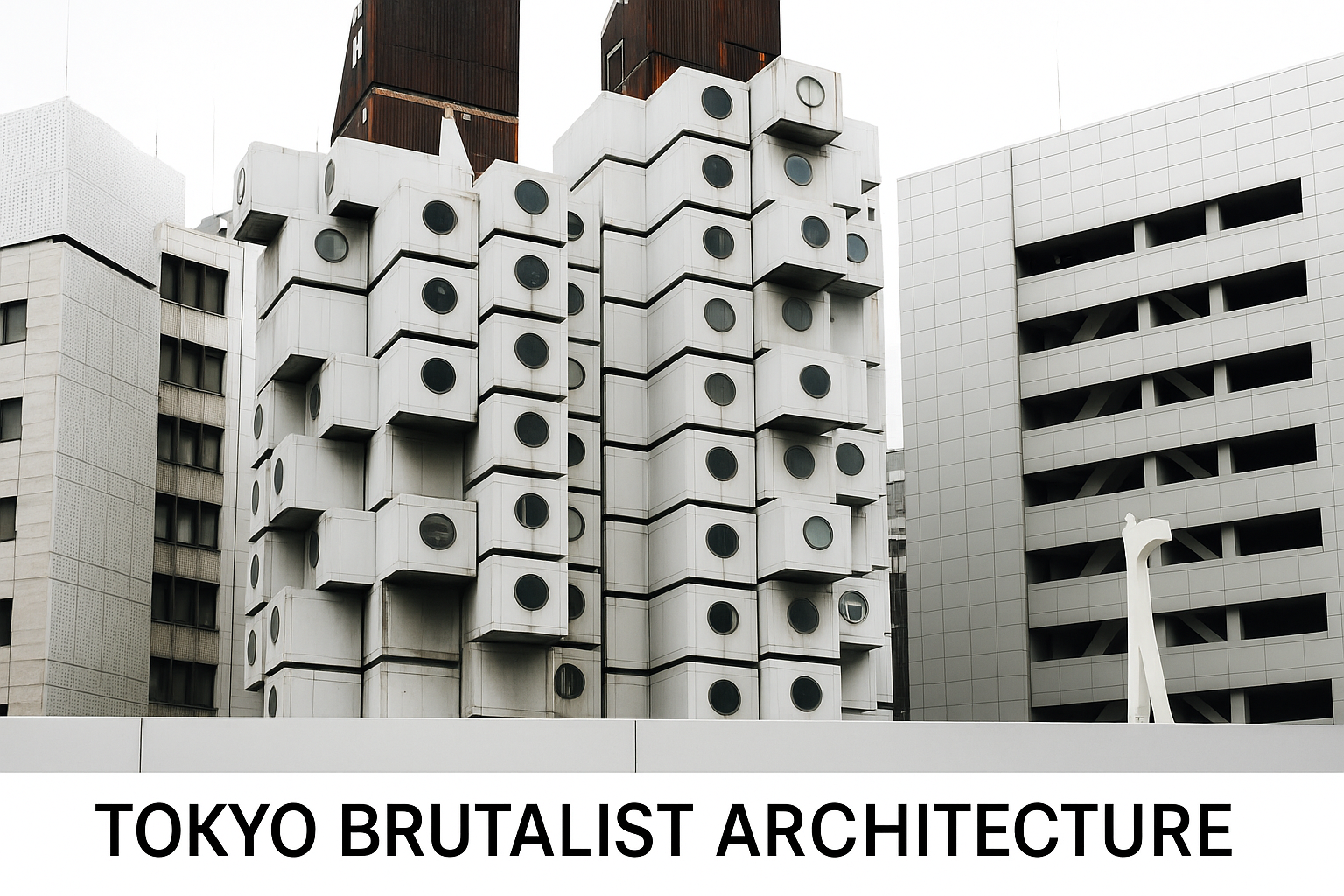
After the war the first job was to house people and restart civic life. Budgets were thin and time was short. Engineers and architects leaned on concrete because it could be poured fast, shaped into almost anything, and produced locally. The early modern buildings were pragmatic, but a second wave brought intention: let the structure speak, let the plan be legible, cut out the decoration, spend money on daylight and ventilation instead of frills. This was the climate in which Japanese architects absorbed and reinterpreted the modern canon.
Le Corbusier’s small but pivotal work in Ueno seeded ideas about ramps, pilotis, and the expressive slab. His Japanese collaborators carried those ideas forward with their own discipline. If you are new to the broader story of Japanese space and sequence, it helps to see how older ideas of threshold and garden informed these concrete buildings; the outdoor room along the edge, the controlled view, the pause before entry. For a primer on that cultural backdrop, see a short overview of Japanese architecture principles. It will make what follows feel less foreign.
In the sixties another current rose beside Brutalism. It imagined cities as living systems, able to grow, plug in, and swap parts. That movement is discussed in depth in our note on Metabolism in Japan. On the ground you can feel the overlap. Some Tokyo buildings read as Brutalist in their mass and concrete honesty yet carry the Metabolist appetite for change. The families are related, even when the labels differ.
What Brutalism Means Here
In Tokyo, Brutalism is less about shock and more about clarity. The buildings tell you three things at once: what holds them up, how you move, and where the services live. The concrete is not just a skin. It is the frame, the stair, the shell. The joints are visible. The pattern of the formwork becomes a kind of grain. When the architect got the shuttering right you can read the building like wood, except the fibers are 900 millimeters wide and held together with tie holes.
The best examples keep a tight plan. Corridors are straight. Cores are simple. The facade is not trying to be a poster. Instead it is a relief map of forces, floors, and spans. Light comes as a blade or a wash along a deep reveal. Railings are almost always a study in restraint: steel flat bar or pipe, painted, welded clean. If the budget allowed, handrails are warm wood that tells your hand you are meant to be here and not just pass through.
Field Notes From Specific Places
Tokyo’s concrete landmarks come in different temperaments. Some sit back from the street behind trees, almost monastic. Others meet the sidewalk with weight and make you step into shadow before you can see the space open up. A few notes from places where I stood long enough to notice the smaller truths:
Ueno’s cultural buildings reward slow looking. You see board marks running perfectly level for three stories. You notice the way soffits are dropped just enough to hold sound, so school groups do not echo. Maintenance crews have repainted steel doors a slightly different grey than the concrete, which is right. You never want the patch color to fight the base material.
On university campuses the concrete is tougher and more didactic. Stairs project clearly. Guts are easy to reach. A good test is the equipment room. If the door is human sized and you can see a rational chase behind it, the architect cared. If the door is tiny and leads to a maze of ductwork, nobody was thinking ahead.
At civic buildings the pattern of windows matters as much as the concrete. Small openings give dignity to public thresholds but starve upper floors of light. The better buildings fix this by carving deep vertical slots to pull light without glare. When you stand inside, the reveal becomes a bench or a ledge. That small generosity keeps concrete from feeling punishing.
How to Read the Concrete
Start with the formwork. If you see tight, consistent board lines, the team used good timber or well kept plywood and placed it with care. Irregular seams tell you there was a rush or a patch. Look at the tie holes. Even spacing means the pour schedule and the tie layout matched. Random spacing means someone solved problems on the fly. There is virtue in both, but only one will age elegantly.
Next check the edges. Crisp edges mean the mix had the right fines and the form oil was right. Rounded edges can be a design choice, but often mean the formwork leaked or was stripped too early. Find a column base. If there is a clean reveal above the slab, water will not stain the face as fast. If the column dives straight into the floor without a break, expect a dirty ring in a few years. These are not aesthetic quibbles. They are about longevity and respect for future maintenance crews.
Finally, watch how the building takes rain. Good Brutalism sheds water with tiny moves: a drip at a balcony, a recessed joint, a slope you barely notice. Bad Brutalism gets tiger stripes down every facade. Tokyo’s wet seasons punish laziness. The successful buildings know the climate and divert the water before it makes a mess.
Brutalism and People
There is a social story here. These buildings were built to be used hard. Libraries filled with students. Concert halls full of school bands. Offices that housed whole departments on open floors. The concrete can feel stern from across the street, then strangely kind up close because it is not fragile. You can lean a bicycle on it. You can tape a poster to it. After a week of fieldwork you realize why Brutalism still attracts young architects. The lessons are not theoretical. They are tactile, human, useful.
There is also the question of furniture and staging. Photographs of empty concrete halls look severe. Put a well made bench in the right place, with a warm finish and honest joinery, and the whole scene shifts. Real estate agents know this when they furnish model units. Architects know it the first time a client asks why the lobby feels cold. Furniture is not a prop in Brutalism. It is a partner. If you want a deeper dive into why architects design furniture to complete their spaces, see this quick read on architects designing chairs. It will change how you look at empty rooms.
How Brutalism and Metabolism Meet on Tokyo Streets
Labels aside, the lived city shows a braid. A concrete frame with plug-in services. A heavy stair beside a light catwalk. A permanent shell with changeable interior pods. You can call one thread Brutalist and the other Metabolist, but the point is the hybrid. If you want a refresher on the Metabolist mindset that shaped parts of Tokyo, this short explainer on Metabolism’s big ideas is a good bookmark to keep.
What Aged Well and What Did Not
The concrete that survives best has three simple things. One, a mix designed for durability, not just strength. Two, details that keep water off the face. Three, a maintenance plan that respects the original texture. The failures usually involve coatings that trap moisture or fixes that fight the gravity of the original design. If you see glossy sealers on a rough wall, that wall will likely peel. If you see caulk smeared over a shadow joint, a stain will follow the caulk line down the facade in the first rainy season.
Interiors tell their own age. Where the concrete is paired with soft materials the rooms still feel good decades later. Wood treads and handrails darken nicely. Linoleum and cork floors take scratches in stride. Where every surface is hard the reverb tires people out and the place empties at lunch. The rule is not about style. It is about acoustics and touch.
What To Look For When You Visit
Bring a notebook and draw the stair in plan and section. Count the tie holes on one bay and see if they match the rhythm of the facade. Find the service entry. If the back is as carefully handled as the front, you are in a building by someone who loved the craft. Sit for a while and watch how people use the thresholds and landings. Most of what matters cannot be measured easily, but you will feel it in how long people linger.
If you are mapping a day, pair a concrete hall with a traditional garden nearby. The contrast teaches you more than either one alone. The deep eaves and layered edges of older houses echo in the reveals and galleries of the newer work. If you want a gentle primer on those older spatial moves, read this short guide to the engawa concept and then look for its modern echo in a concrete colonnade.
For Students and Young Architects
Design a small public stair in concrete as a studio exercise. Make the landing generous enough for a conversation. Give the handrail a profile that fits a hand in winter gloves. Draw the formwork sheets and their joints. Place the tie holes. Model the drip at the underside of the landing. Then ask yourself what one piece of wood or leather or textile could soften the space without erasing the honesty of the concrete. You will learn more from that one exercise than from a stack of theory PDFs.
If you want a clear visual survey that puts Tokyo’s concrete into the larger arc of modern building, this is a useful desk book:
📘 MUST READ
Architecture: A Visual History — Jonathan Glancey
A wide sweep with diagrams that actually help you read structure and detail. Handy before you travel or sketch.
Lighting, The Third Partner
In these buildings light is not decoration. It is a structural element in its own right. A narrow slot can feel like a beam that holds the room together. A high window washes a ribbed wall and makes the texture read like fabric. At night a warm strip under a thick slab is enough to turn a heavy balcony into a lantern.
Tokyo’s latitude and weather make the light softer than in many concrete capitals. Good projects cut light from two directions so the roughness does not turn into glare. If you are photographing, aim for cloudy days or early and late sun. If you are designing, study how a single deep reveal can do more than a dozen fixtures. In the field I keep a small light meter not for numbers but to notice how my eye adapts. It sounds fussy. It is not. It teaches you why one lobby is calm and another feels like an underpass.
Common Misreadings, And How To Avoid Them
Not every grey building is Brutalist, and not every concrete building is severe. Some of Tokyo’s most famous towers belong to the Metabolist family despite their concrete cores. Some civic icons are clad in stone or composite and only pretend to be concrete. The fix is to ask three questions. Is the concrete the structure you can see. Do the details let water go where it wants to go. Does the plan read as a series of honest spans and supports. If you can answer yes to those three, you are likely standing in front of real Brutalist DNA, whether or not the guidebook says so.
What Brutalism Teaches Beyond Architecture
It teaches patience. Pours take time. Scaffolds go up and come down. Stripping too early ruins months of care. It teaches responsibility. Every joint you draw becomes someone’s maintenance task in twenty years. It teaches humility. Concrete remembers every mistake and shows it for decades. It also teaches joy. Nothing beats the moment when you stand under a newly stripped slab and the light hits the boards just right and the space feels inevitable.
For a short, grounded history of the last century that will give you context for what you see in Tokyo and beyond, this is still one of the clearest texts:
📘 FOUNDATION PICK
Modern Architecture Since 1900 — William J. R. Curtis
Use it to place Japanese work against global shifts without drowning in jargon.
Planning Your Own Small Brutalist Project
If you want to build a studio, a garden stair, or a small gallery in this language, begin with site and water. Draw the fall lines, set the drips, and choose a mix that suits the local climate. Keep spans short enough that the slab never feels thin. Make the handrail something you would touch in winter without flinching. Let your conduit run exposed and straight rather than hiding it in tortured chases. Choose one warm material to touch, usually wood. If the budget allows, add a small window you cannot photograph easily but will love every day. This is not about style. It is about honesty and care.
When you furnish, think like an architect who also builds chairs. Wear on edges should look better over time, not worse. Stable proportions matter more than show. If you need a quick primer on why so many architects design furniture as part of their architecture education and practice, this piece on architects and furniture gives the background without fluff.
Why Some People Dislike It And Why That Is Fine
Public opinion splits. From far away concrete can look heavy and even unfriendly. Up close it can be one of the most humane materials because it accepts use without complaint. I have heard the word ugly at the curb and watched the same person soften inside when the light revealed the texture and a bench welcomed them. Brutalism does not chase charisma. It earns trust in small ways over time. Cities need that kind of character as much as they need spectacle.
Where To Go Next
Match a day of concrete with a day of timber to see how Japanese design moves across materials. Read a short explainer on traditional house flow and then walk a concrete museum with those ideas in your head. Notice how the thresholds are cousins. Notice how the path turns and pauses. Once you see the shared logic, Tokyo makes a different kind of sense.
Closing
I came to Tokyo expecting a catalogue of heavy forms. I left with a notebook full of small mercies. A reveal that kept a wall clean. A stair wide enough for two people to stop and speak. A window set deep so rain would draw a soft line down its edge instead of a stain down the middle of the wall. This is the city’s quiet lesson. Raw materials can be kind when the drawing respects water, light, and hands. If you want to see architecture as a craft rather than a posture, walk Tokyo’s concrete in the rain and listen to how it slows the city down just enough to notice what matters.
FAQ
Is Brutalism still being built in Tokyo
Not much in the pure mid century sense. You will find contemporary concrete that is precise and quiet, with beautiful formwork and careful light. The blunt civic megastructures of the sixties and seventies are now mostly landmarks rather than new commissions.
How do I tell Brutalism from Metabolism on the street
If the story is about mass, span, and the legibility of structure, you are probably reading Brutalism. If the story is about parts that can plug in or be swapped out, you are in Metabolist territory. Many Tokyo buildings borrow from both families.
Why do some concrete buildings in Tokyo look dirty
Usually water management. No drip edges, flat copings, or sealers that trap moisture. The climate is unforgiving. The best projects cut neat shadow lines and carry water away from the face.
What is one detail to copy at small scale
A clean reveal at the base of a wall or column. It keeps water and dirt from smearing the face and gives a shadow that makes edges read crisp without paint.
Does furniture really change how Brutalism feels
Yes. A single warm bench or handrail can reframe an entire lobby. Material contrast is not an afterthought in concrete buildings. It is a comfort strategy.