
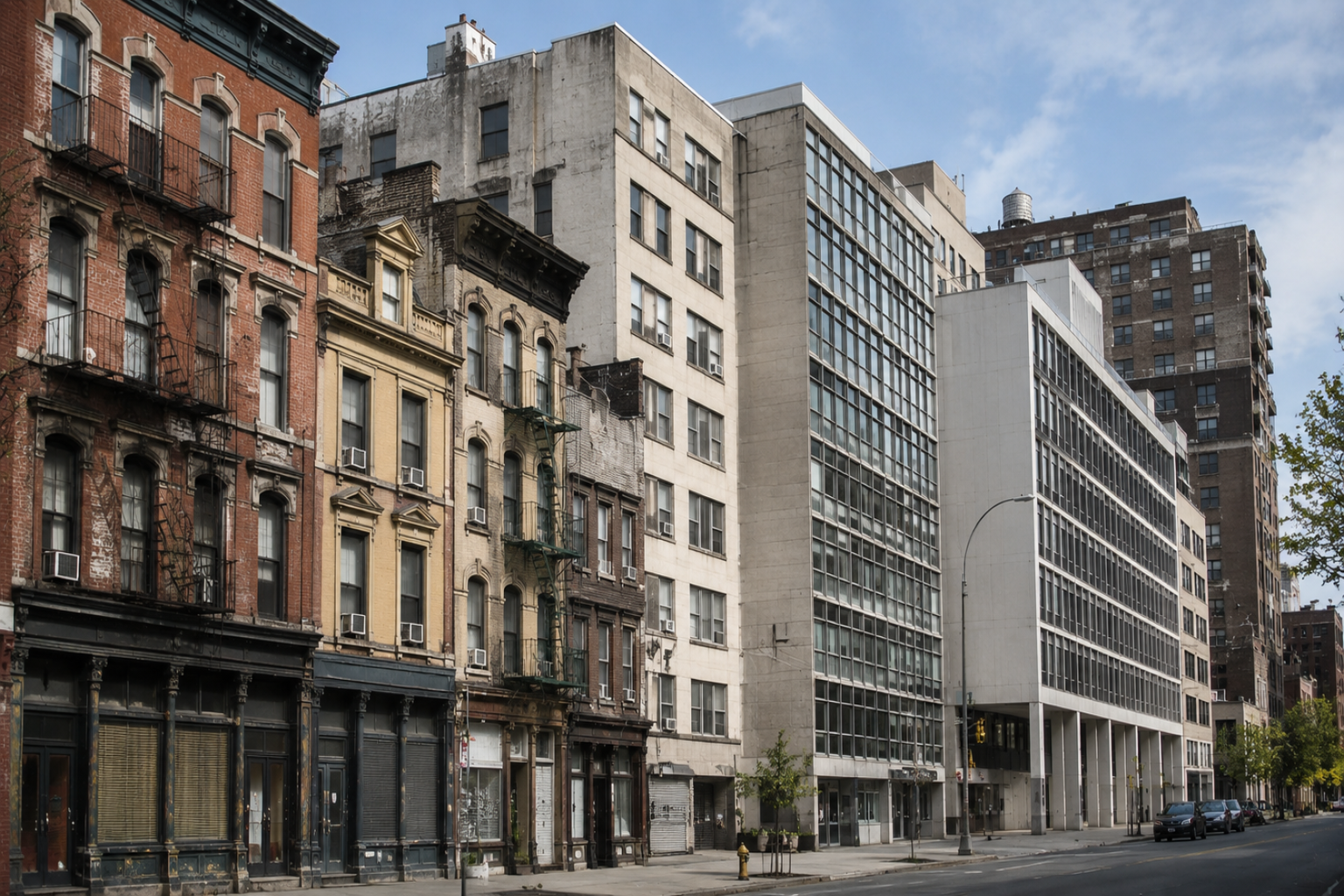
Modern architecture began when older building habits stopped matching the job.
Cities were growing. Housing was short. Factories changed how materials were made. War damaged whole districts. Steel, reinforced concrete, large glass, elevators, and mechanical systems changed what buildings could do.
Architects did not all answer that change the same way. Some chased cheaper housing. Some wanted open plans, honest structure, new cities, more light, or less heavy wall.
The good work solved real problems. The bad work gave us cold plazas, leaking roofs, dead streets, and concrete that aged badly.
That is the history worth reading: what modern buildings tried to fix, and what they broke along the way. For the wider shift before and after modernism, see 19th and 20th Century Architecture.
Where modern architecture really begins
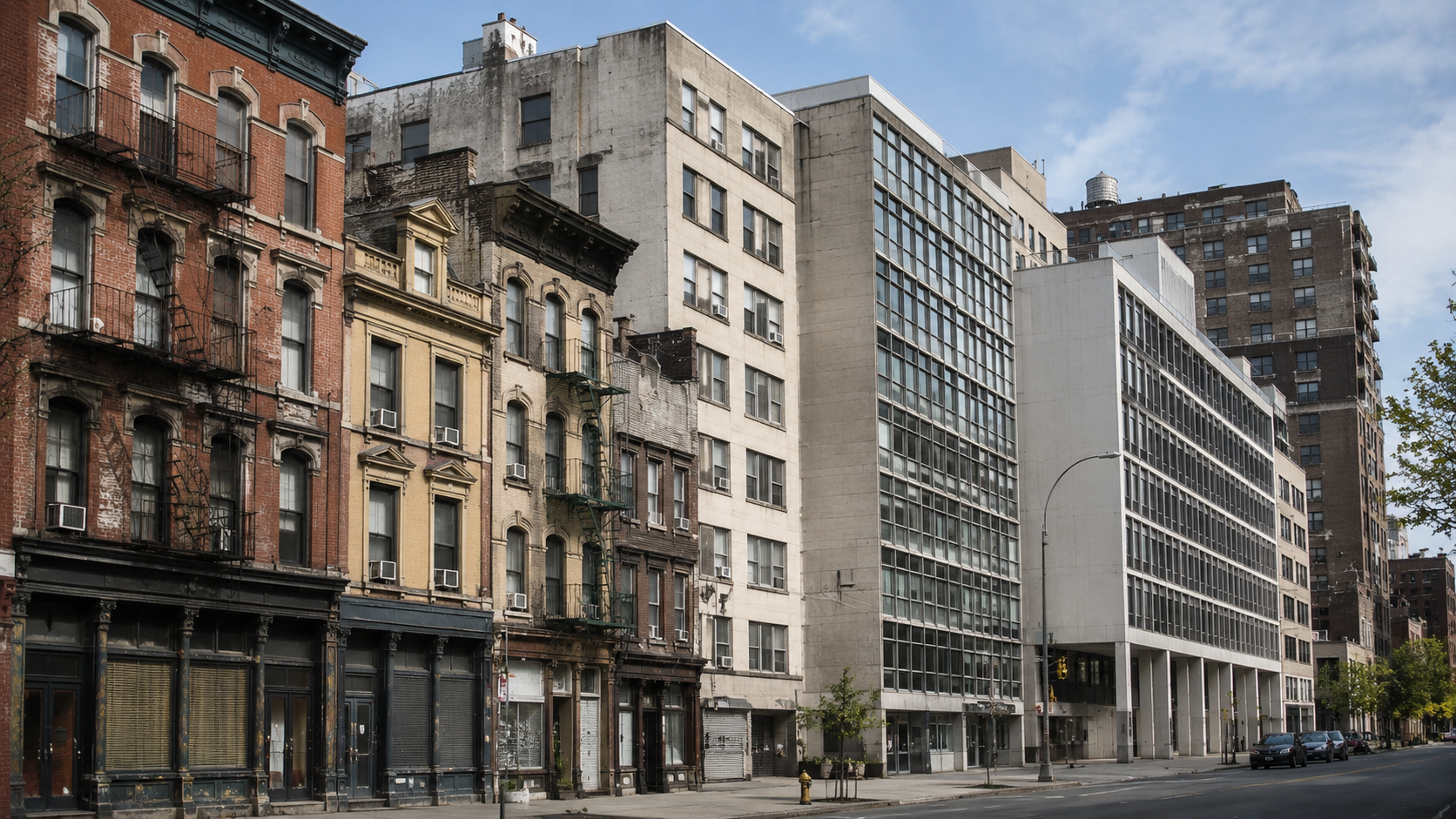
Modern architecture grew out of the late 19th and early 20th centuries, when technology, industry, and social pressure started changing buildings faster than style books could explain. That larger period matters because modernism was one answer to the bigger break covered in 19th and 20th Century Architecture.
The biggest shift was material. Iron, steel, reinforced concrete, plate glass, elevators, and mechanical systems made it possible to build taller, lighter, wider, and more open than traditional masonry construction allowed. A wall no longer had to carry every load. A window no longer had to be a small hole punched through thick masonry. A roof could become a terrace. A facade could become a skin.
At the same time, cities needed schools, factories, hospitals, apartments, stations, offices, and social housing at a scale older architectural traditions had not been designed to handle. Copying historic ornament onto every new structure felt increasingly false. It was expensive, slow, and often disconnected from the way people now lived and worked.
Modern architecture began when architects stopped asking, “Which historic style should this building wear?” and started asking, “What does this building need to do?”
What made modernist architecture different?
Modernist architecture is easiest to understand through the decisions it made again and again.
It reduced ornament. It exposed or clarified structure. It favored flat roofs, open plans, horizontal lines, large glass areas, repeated modules, industrial materials, and cleaner geometry. But those traits were not the point by themselves. They came from a larger belief close to form follows function: a building should be shaped by use, construction, light, air, hygiene, speed, and social need.
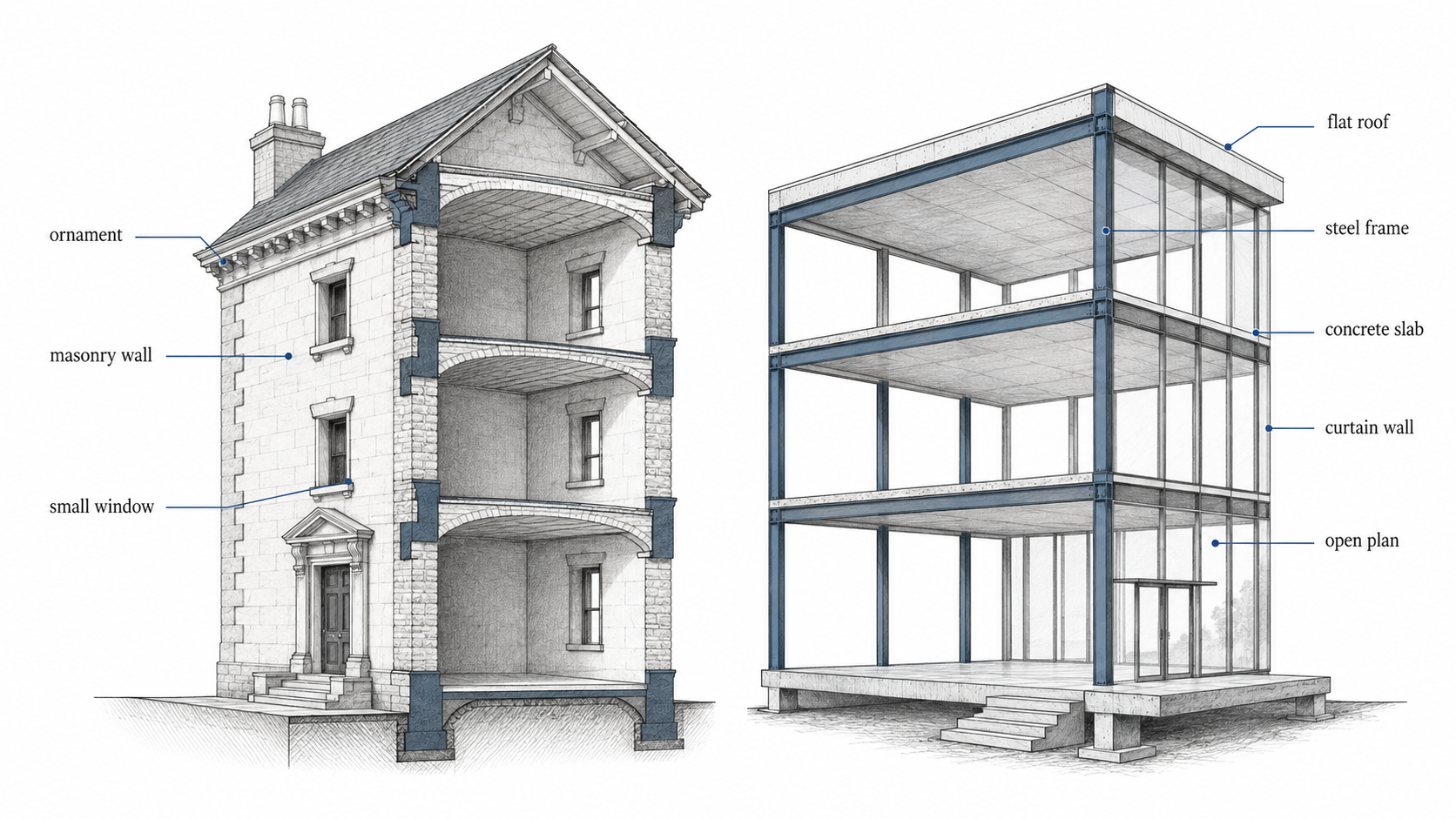
That belief changed the basic parts of architecture. It also explains why people still confuse modernism with today’s current design work, which is why the difference between modern and contemporary architecture matters.
- Structure became clearer. Columns, frames, slabs, beams, and walls were treated as real design elements, not hidden bones.
- The plan became freer. Steel and concrete frames allowed interior walls to move, shrink, disappear, or stop carrying loads.
- The facade became lighter. Glass and curtain-wall thinking replaced the heavy face of older masonry buildings.
- The roof changed role. Flat roofs could hold gardens, terraces, mechanical systems, or solar equipment in later buildings.
- Materials were allowed to look modern. Concrete, steel, glass, brick, plywood, aluminum, and industrial finishes did not need to pretend to be carved stone.
The result was a new architectural language. Sometimes it was elegant. Sometimes it was brutal. Sometimes it was cheap and repetitive. But it was rarely accidental.
The Bauhaus made modernism teachable
The Bauhaus did not invent every modern idea, but it made modern design teachable, repeatable, and exportable.
Founded in Germany in 1919, the school brought art, craft, industrial production, furniture, graphics, interiors, and architecture into one system. That mattered because modern architecture was never only about buildings. It was about the whole environment: chairs, lamps, lettering, kitchens, housing blocks, workshops, offices, and schools.
Walter Gropius gave the movement an educational structure. The Bauhaus building at Dessau made that structure visible: glass walls, workshop logic, simple volumes, industrial materials, and a plan that looked more like a working machine than a decorated institution.
This is one reason Bauhaus became so influential. It gave modernism a method. Students could learn the grammar: reduce the unnecessary, understand materials, respect function, think about production, and connect design to everyday use.
The danger came later, when the grammar became a look. Flat roof, white wall, glass corner, tubular chair. Once modernism became a surface style, it lost some of the pressure that made it powerful in the first place.
The architects who pushed modernism forward
Modern architecture was shaped by many people, not one hero. Still, a few architects helped define the questions that kept returning through the 20th century. To understand the broader history before these figures, start with Introduction to History of Architecture.
Le Corbusier
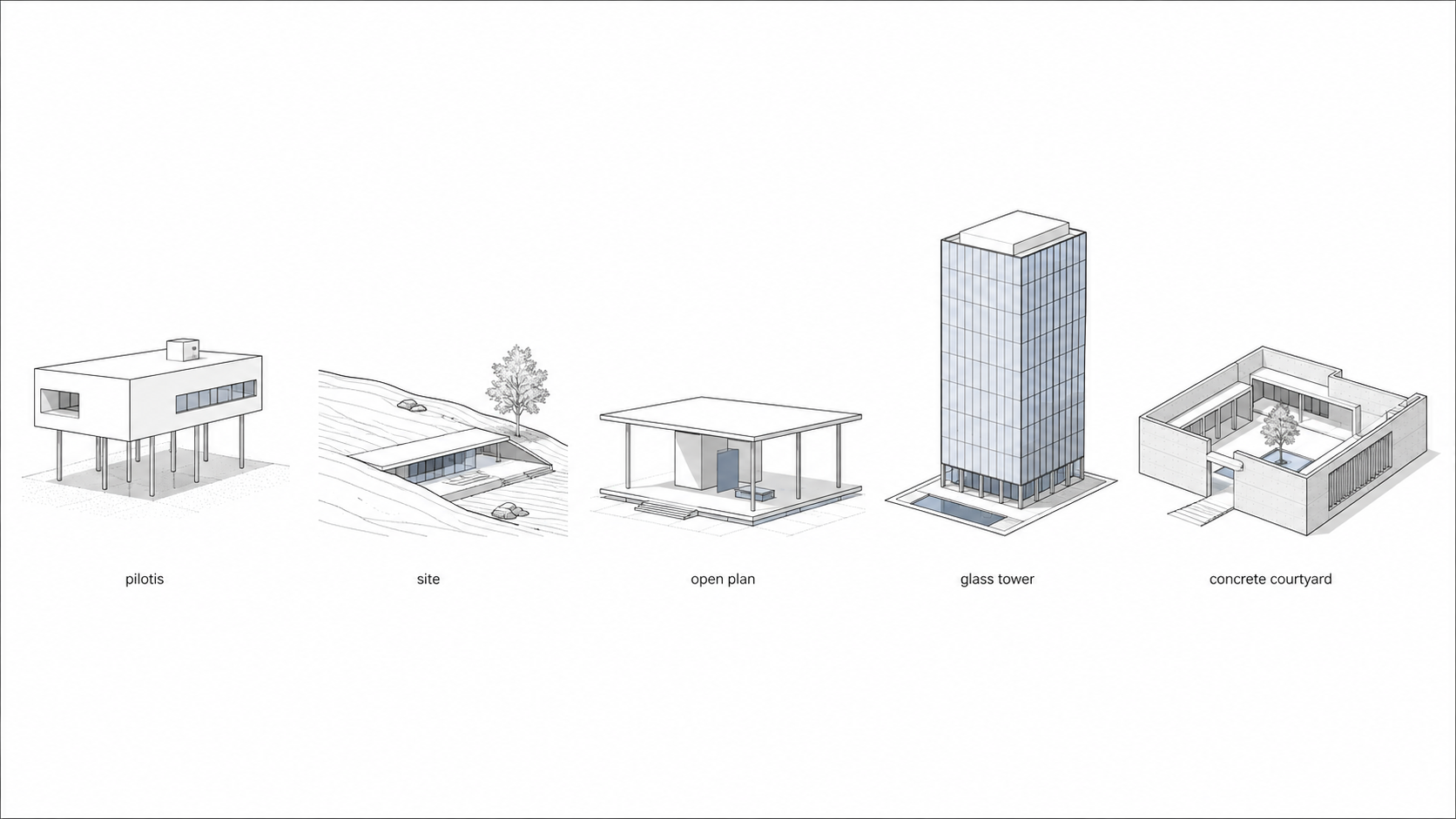
Le Corbusier wanted architecture to match the machine age. His ideas about pilotis, roof gardens, free plans, horizontal windows, and free facades became a shorthand for early modernist architecture. Villa Savoye remains one of the clearest built examples because it turns those ideas into a single house.
His strength was clarity. His weakness was also clarity. When his urban ideas became too abstract, people could disappear behind diagrams, towers, and traffic systems.
Frank Lloyd Wright
Frank Lloyd Wright followed a different path. He was modern, but not in the cold glass-box sense. His work pushed horizontal space, open interiors, site connection, built-in furniture, and what he called organic architecture.
Fallingwater matters because it shows modernism can be tied to landscape and emotion. It is not only a structural trick over a waterfall. It is a reminder that modern architecture did not have to reject nature to be new.
Walter Gropius
Gropius mattered because he turned modern design into a school, a workshop culture, and a public mission. The Bauhaus helped spread the idea that good design should not be reserved for palaces, monuments, or wealthy patrons. It could shape housing, furniture, factories, classrooms, and everyday objects.
Ludwig Mies van der Rohe
Mies made modernism precise. Thin columns, open plans, glass walls, disciplined proportions, and carefully controlled materials became central to his work. His buildings often feel quiet because almost nothing is allowed to be casual.
That restraint became hugely influential, especially in office towers. It also became easy to copy badly. Many dull glass boxes owe more to cheap imitation than to Mies himself.
Louis Kahn
Kahn arrived later with a heavier, more thoughtful version of modernism. He used concrete, brick, light, silence, and monumental geometry with unusual care. His work showed that modern architecture could be serious without being thin, and emotional without returning to historic decoration.
Modernism was also political
Modern architecture often presented itself as rational and neutral. Clean lines. Efficient plans. Honest materials. Better housing. Better cities.
But buildings are paid for by someone. They sit on land. They organize movement. They show power. They decide who gets light, privacy, dignity, and access.
After World War I and World War II, governments used modern forms for very different reasons. Some used them to build housing quickly. Some used them to project order. Some used monumentality to make the state look permanent. Some used glass towers and new civic buildings to signal progress.
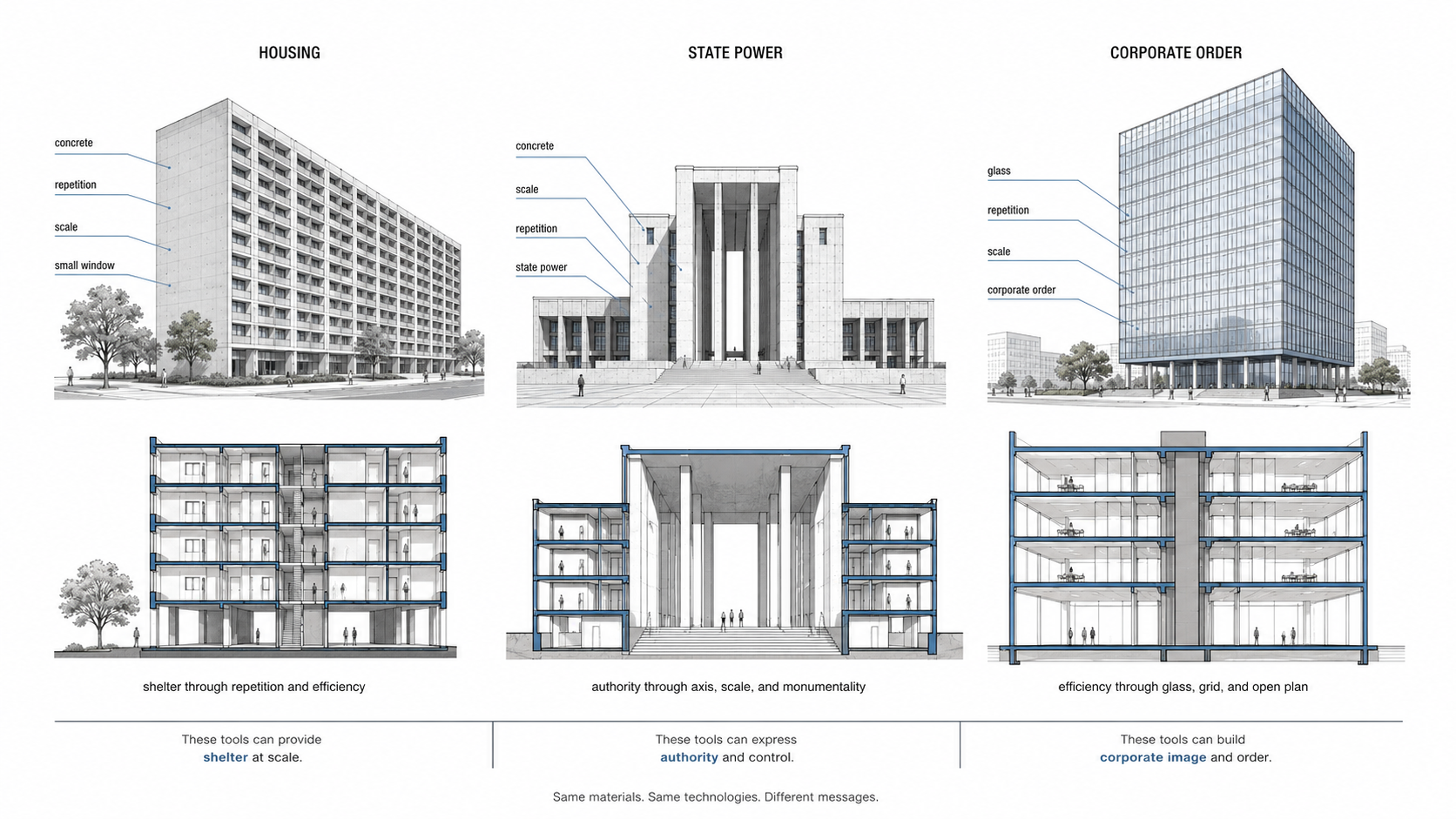
This is where modern architecture becomes more complicated. The same tools could serve different messages.
- Repetition could mean efficient housing, or it could mean control.
- Monumental scale could mean public ambition, or it could crush the person on the street.
- Glass could mean openness, or it could become corporate smoothness with no real public life.
- Concrete could mean honesty and economy, or it could become neglected bulk.
Modernism was never only an aesthetic choice. It was a way of organizing society in built form. That is one reason later Brutalist architecture became so controversial: it made public power, concrete, and scale impossible to ignore.
Functional architecture for a damaged Europe
Postwar Europe did not need architecture as a luxury object. It needed roofs, schools, factories, transport, clinics, and housing.
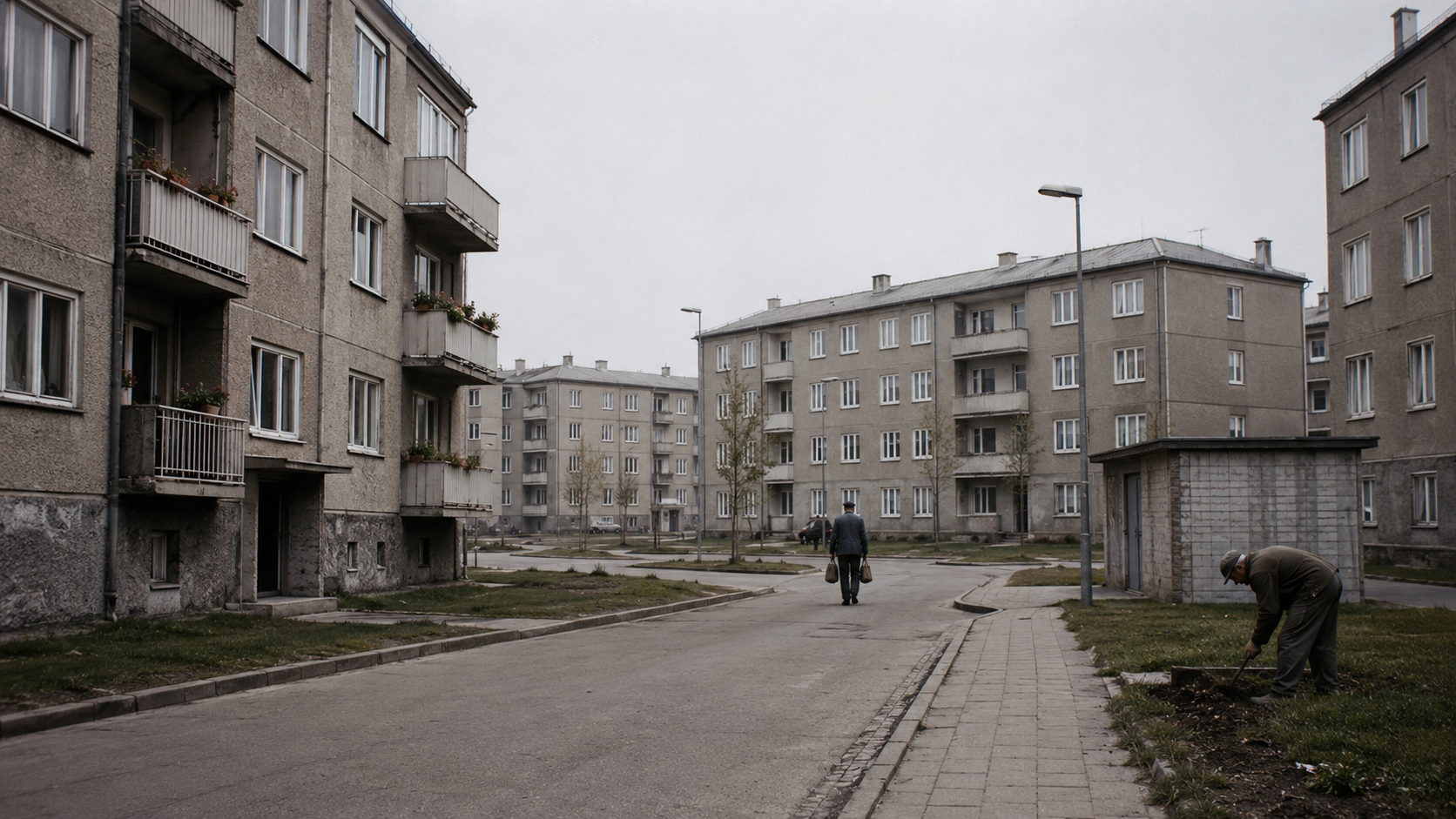
That pressure pushed modernism toward standardization. Repeated units, prefabricated panels, concrete frames, modular planning, and simplified details could help rebuild faster. In the best cases, this gave ordinary people better light, plumbing, ventilation, and access to green space than older overcrowded housing had provided.
In the worst cases, speed and budget stripped the ideas down too far. Buildings became isolated blocks. Public spaces were left vague. Maintenance was underestimated. Streets lost shops, porches, stoops, and small social edges. The plan looked clean from above but felt empty on the ground.
This is the part of modern architecture history that should not be skipped. A drawing can make repetition look rational. A resident has to live with it in winter, at night, when the elevator fails, when the concrete stains, when the plaza has nowhere to sit, and when the nearest shop is too far away.
Modernist masterpieces that still teach the movement
The famous buildings matter because each one pushed a different idea. They are useful only if you study what problem they were trying to solve.
Villa Savoye
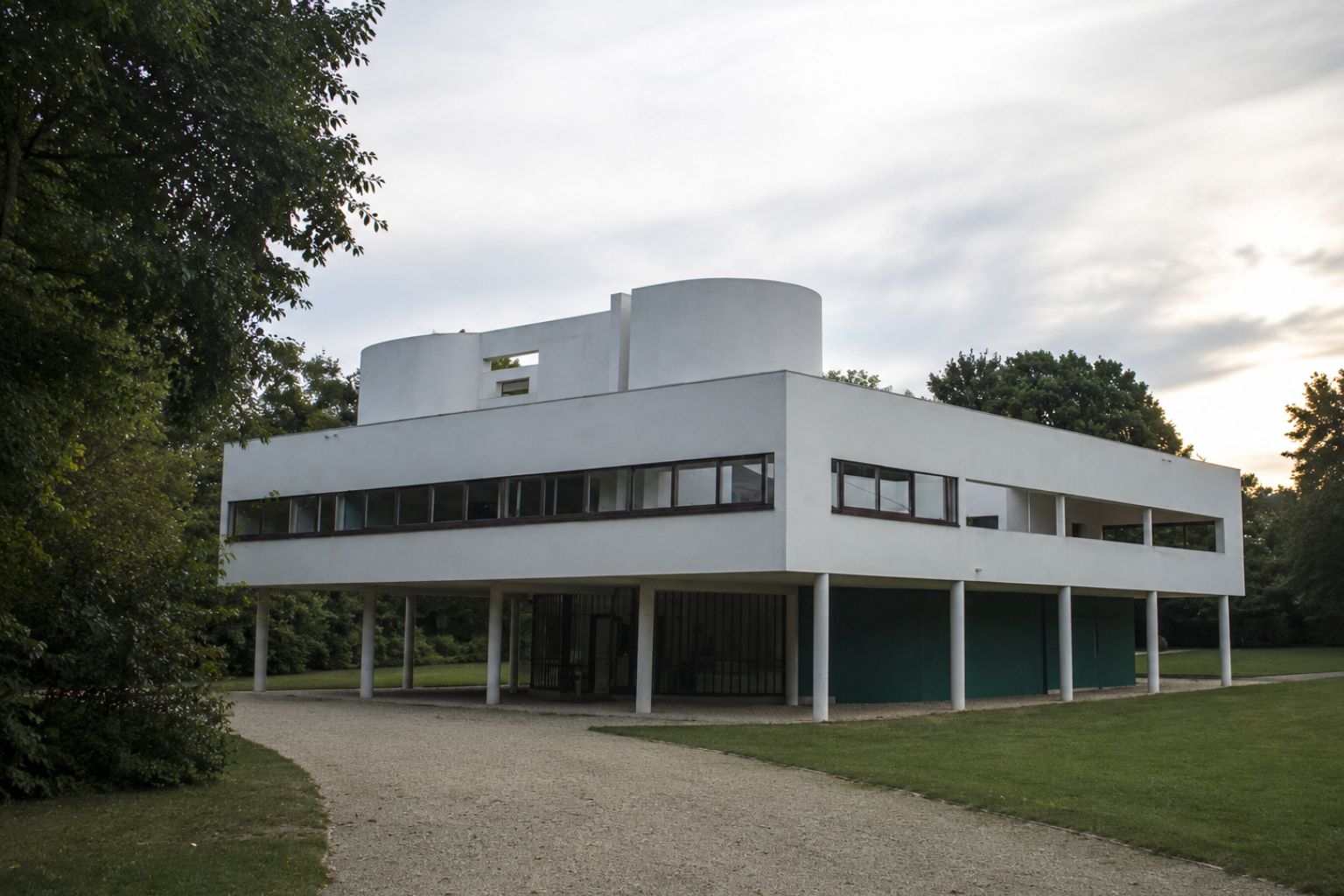
Villa Savoye is important because it reads like a manifesto in built form. The house is lifted on pilotis. The plan is freed from traditional load-bearing walls. The windows run horizontally. The roof becomes usable space. The facade is treated as a surface rather than a heavy masonry face.
It also reminds us that modernist icons were not perfect machines. Some early modern buildings had serious practical problems with waterproofing, comfort, and maintenance. Their historical importance does not erase those failures. It makes them more useful to study.
Fallingwater
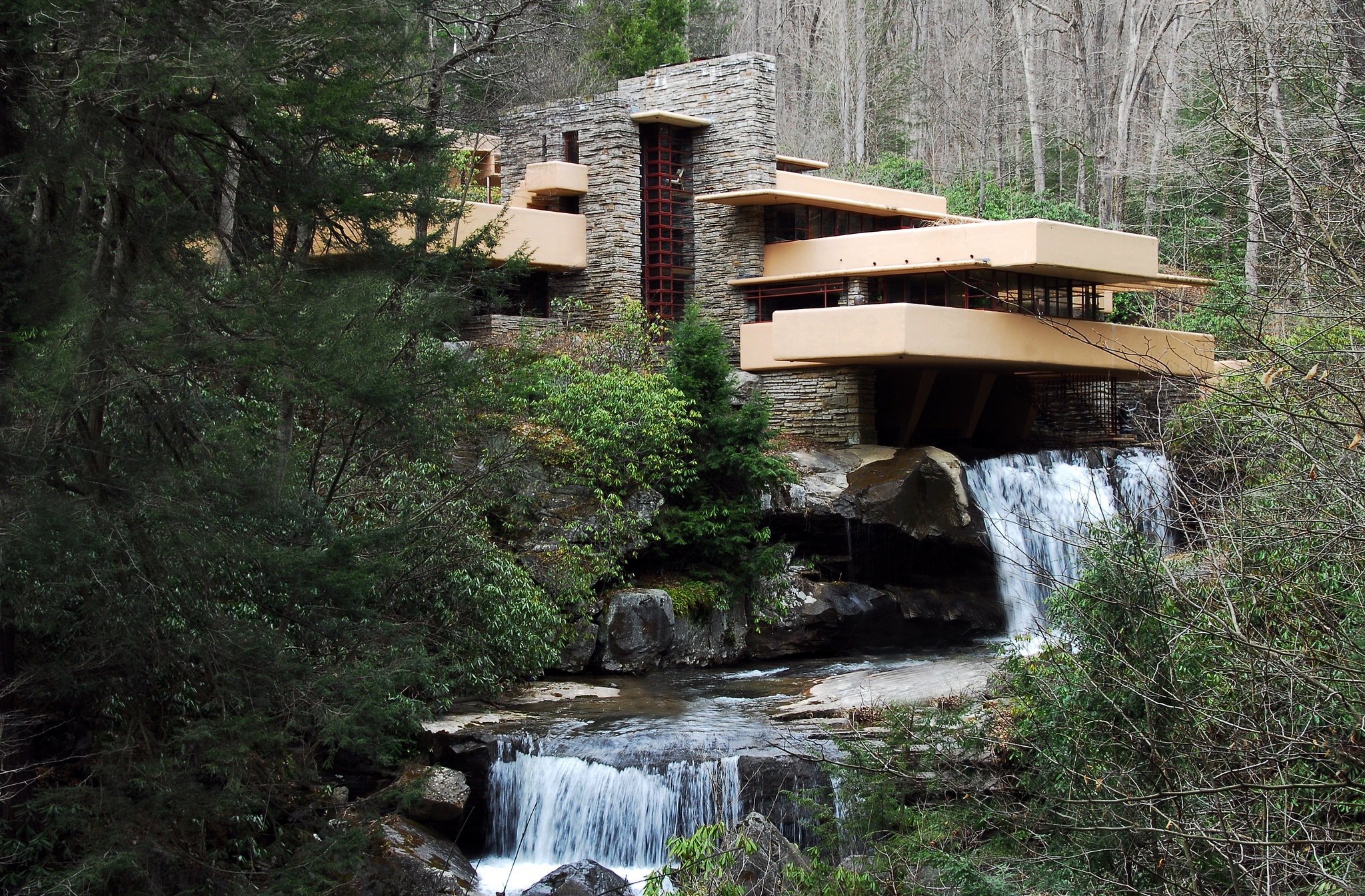
Fallingwater is often treated as a beautiful house first, but its real lesson is more specific. Wright used cantilevered concrete, local stone, horizontal lines, and deep connection to the site to make the house feel grown into the landscape.
It is modern, but not sterile. That matters because many people still confuse modern architecture with blank white rooms and cold glass. Fallingwater proves the movement had more than one emotional temperature.
Barcelona Pavilion
The Barcelona Pavilion showed how little a building could contain while still feeling complete. Thin columns, open space, rich material, glass, stone, and water were arranged with extreme discipline. It was temporary, but its influence lasted because it showed modern space as something fluid rather than boxed in.
United Nations Headquarters
The United Nations Headquarters turned modern architecture into an international public image. Glass, slabs, towers, and collaborative design became a language of postwar diplomacy. The building helped make modernism look global, official, and forward-facing.
Salk Institute
Louis Kahn’s Salk Institute pushed modernism into a more mature phase. The concrete is not casual. The courtyard is not filler. The laboratories, service spaces, light, and open void work together. It is a scientific building, but it has the weight and silence of a civic place.
Modernist architecture timeline
Modern architecture did not move in a straight line. It changed as the pressures changed. For a broader century-by-century view, use the main 19th and 20th century architecture timeline.
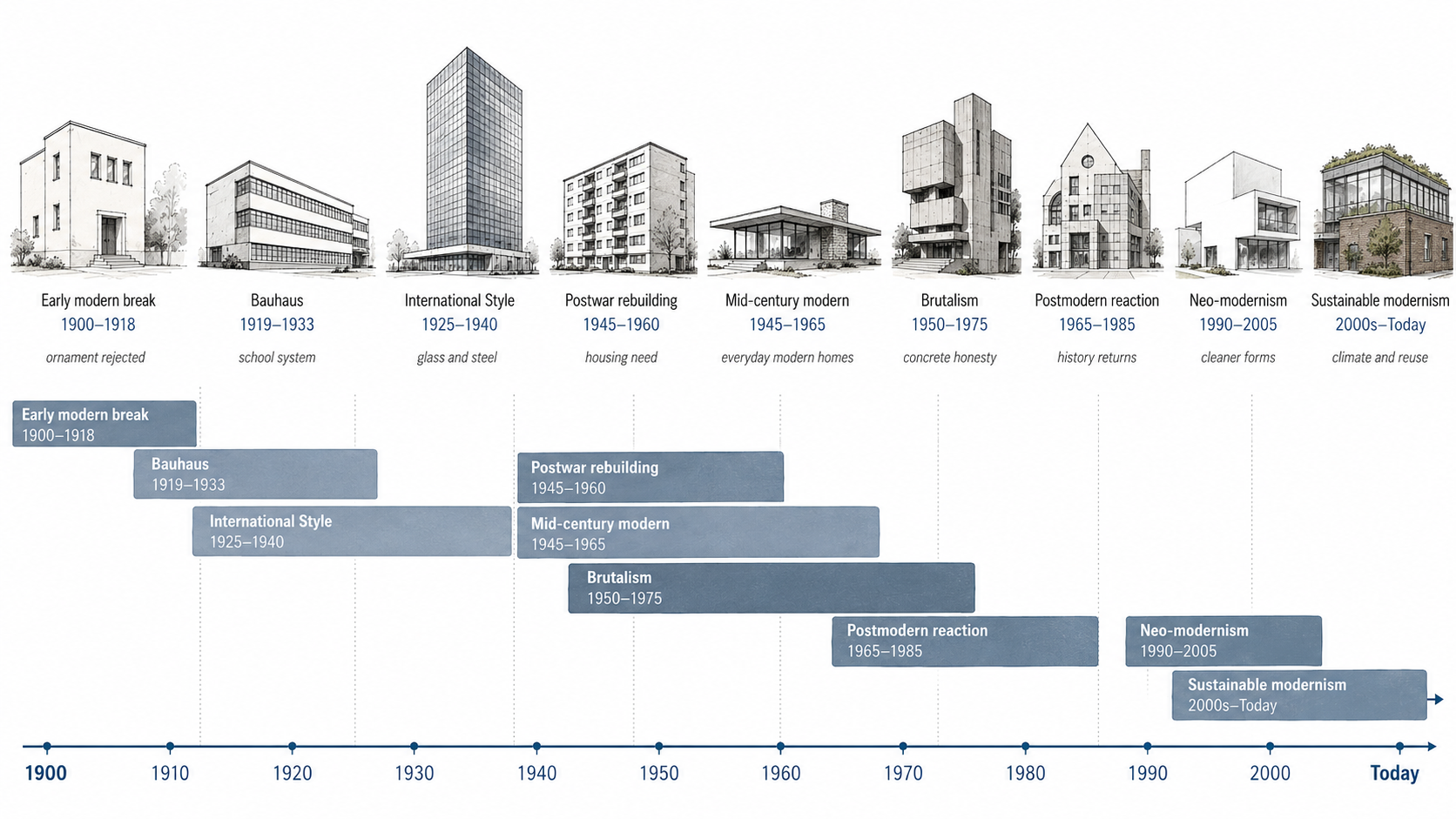
| Period | What changed | Why it mattered |
|---|---|---|
| Late 1800s to early 1900s | Iron, steel, glass, elevators, and reinforced concrete changed building capacity. | Architects could build taller, lighter, and more open structures. |
| 1910s to 1920s | Avant-garde movements rejected inherited ornament and historic imitation. | Architecture began searching for a new language of speed, machines, and modern life. |
| 1919 to 1933 | The Bauhaus connected art, craft, industry, furniture, graphics, and architecture. | Modern design became teachable and exportable. |
| 1920s to 1930s | The International Style spread glass, steel, flat surfaces, open plans, and minimal ornament. | Modernism became a recognizable global architectural language. |
| 1940s to 1960s | Postwar rebuilding, public housing, corporate towers, and civic projects expanded modernism. | The movement moved from experiment to mainstream construction. |
| 1950s to 1970s | Brutalism used heavy concrete, visible structure, and bold public forms. | Modern architecture became heavier, more civic, and more controversial. |
| 1970s onward | Postmodernism reacted against blankness, monotony, and loss of historical memory. | Architects questioned whether modernism had made cities too abstract. |
| Today | Modernist ideas return through adaptive reuse, high-performance envelopes, low-carbon design, and flexible plans. | The useful parts of modernism survive, but they now face climate, maintenance, and human comfort tests. |
Mid-century modern brought modernism home
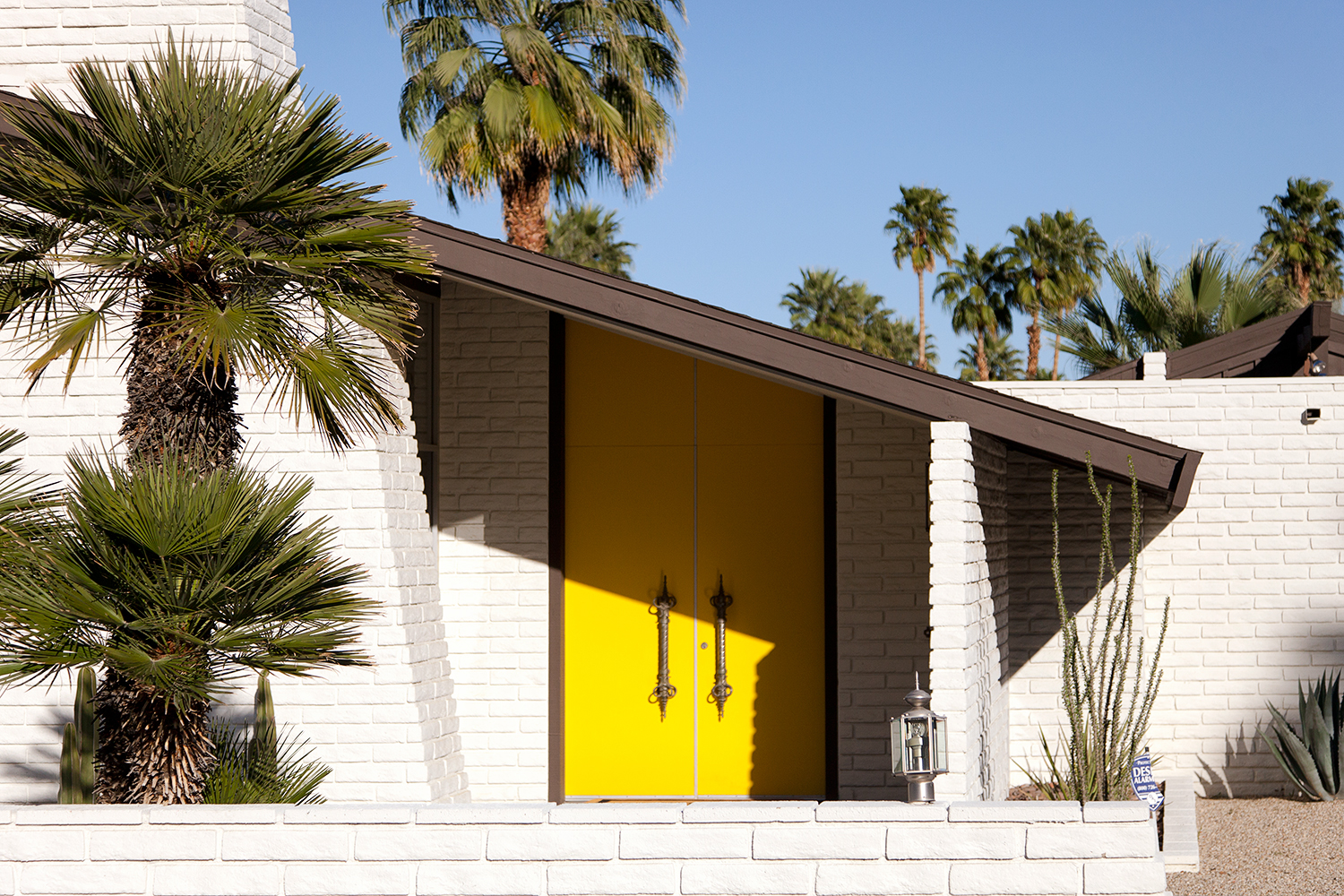
Mid-century modern architecture made modernism feel domestic. Instead of only factories, schools, civic buildings, and glass towers, modern ideas entered ordinary houses.
Low rooflines, open living areas, sliding glass doors, wood ceilings, built-in storage, carports, patios, and indoor-outdoor planning made modern architecture easier to live with. The house did not need to look monumental. It could be casual, horizontal, sunlit, and connected to the yard.
That is why mid-century modern still attracts homeowners. It offers a softer version of modernism: less heroic, more livable. It also explains why many people searching for “modern architecture” are really thinking about modern design versus contemporary design, not strict historical modernism.
The global spread of modernist thinking
Modern architecture spread quickly because its tools were portable. Steel, concrete, glass, planning diagrams, schools, journals, exhibitions, and migrated architects carried modernist ideas across borders.

But modernism did not stay the same everywhere.
- Brazil used concrete, curves, civic space, and climate in a more expressive way.
- India used modern planning and civic architecture to express a new national future after independence.
- Japan developed postwar modern work that often balanced precision, lightness, and spatial restraint.
- Africa saw modern architecture tied to education, independence, climate, infrastructure, and civic identity in different countries.
- North America absorbed European modernism into corporate towers, campuses, houses, museums, and universities.
This global spread is one reason modern architecture history should not be told as a simple European export story. The ideas traveled, but local climate, labor, politics, money, and materials changed them.
What modernism got wrong after it left the drawing board
Modernism looks clean in photographs. Real buildings age.
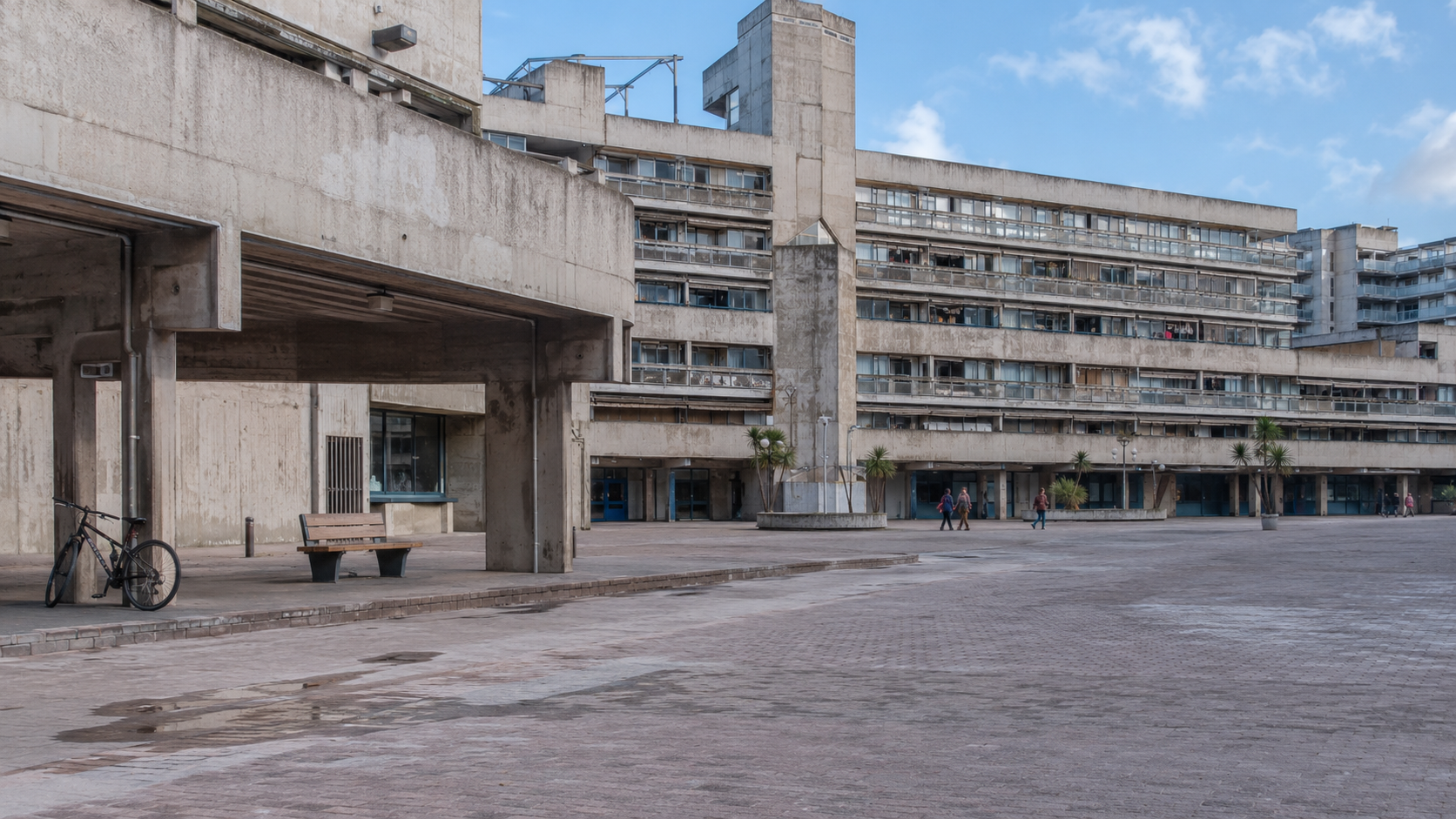
Flat roofs leak when detailing and maintenance fail. Concrete stains, cracks, spalls, and traps water when it is badly specified or neglected. Glass boxes overheat, glare, or waste energy when climate is ignored. Open plazas become dead space when there is no shade, seating, storefront rhythm, or reason to stay. Housing blocks fail socially when they separate people from streets, services, ownership, and small daily choices.
The mistake was not simplicity. The mistake was believing simplicity could replace care.
A good modern building still needs drainage, insulation, service access, repairable details, durable materials, human-scaled edges, and a plan that works on an ordinary Tuesday. A beautiful diagram does not stop condensation. A perfect facade does not help if the lobby feels hostile. A pure plaza does not become public life by being empty.
This is the hard lesson of modern architecture history: buildings are not judged only on opening day. They are judged after weather, budgets, tenants, repairs, politics, and time get involved. The same critique appears again in Brutalist architecture, where bold concrete ideals often met real maintenance problems.
Sustainable modernism: why old ideas came back
Some modernist ideas now look useful again, but for different reasons.
Open plans can support reuse. Simple structural grids can make buildings easier to adapt. Large windows can help daylight when shading and glazing are handled properly. Flat roofs can hold solar panels or roof gardens. Existing modern buildings can sometimes be upgraded instead of demolished, which saves embodied carbon compared with starting over.
The difference is that today’s better work has to answer questions early modernists often underplayed: energy use, thermal comfort, maintenance, moisture, carbon, local climate, and long-term repair.
Modern architecture survives when it stops pretending that newness is enough. That is also where modernism connects to today’s broader sustainable architecture conversation.
How to read a modernist building
Do not start with whether you like the look. Start with the problem.
- What was the building trying to solve: housing, work, education, health, speed, flexibility, image, or power?
- What carries the load: walls, columns, frames, slabs, or a hybrid system?
- How does light enter the building?
- Does the open plan help people, or does it only look clean?
- Does the public space invite use, or does it photograph better than it functions?
- How has the building aged: gracefully, expensively, awkwardly, or badly?
- Is the material honest, or just cheap?
Those questions make modern architecture easier to understand. Modernism was never only about white walls, flat roofs, or glass. It was about changing the relationship between structure, use, material, and modern life. The same method helps when reading other movements in architectural history.
Books worth keeping on the desk
For a serious history of the movement, Modern Architecture: A Critical History by Kenneth Frampton is still one of the strongest starting points. It does not treat modernism as a parade of famous buildings. It explains the forces behind them.
For visual reference, Modern Architecture A–Z is useful when you want a broad visual map of architects, buildings, and movements without turning the article into a giant school directory.
Read This Next
Read 19th and 20th Century Architecture next if you want the wider shift from industrial change to modern cities.
Read Modern vs. Contemporary Architecture if you need the clean difference between a historical movement and today’s current design work.
Read Brutalist Architecture if you want the concrete-heavy branch of modernism and why people still fight about it.
References
Sources used for this article
- Encyclopaedia Britannica: Western architecture, 20th-century architecture
- Encyclopaedia Britannica: International Style architecture
- Stiftung Bauhaus Dessau: Bauhaus Building
- UNESCO World Heritage Centre: The Architectural Work of Le Corbusier
- Villa Savoye official site: History of the Villa Savoye
- Fallingwater official site: Timeline
- Salk Institute: About Salk Architecture