
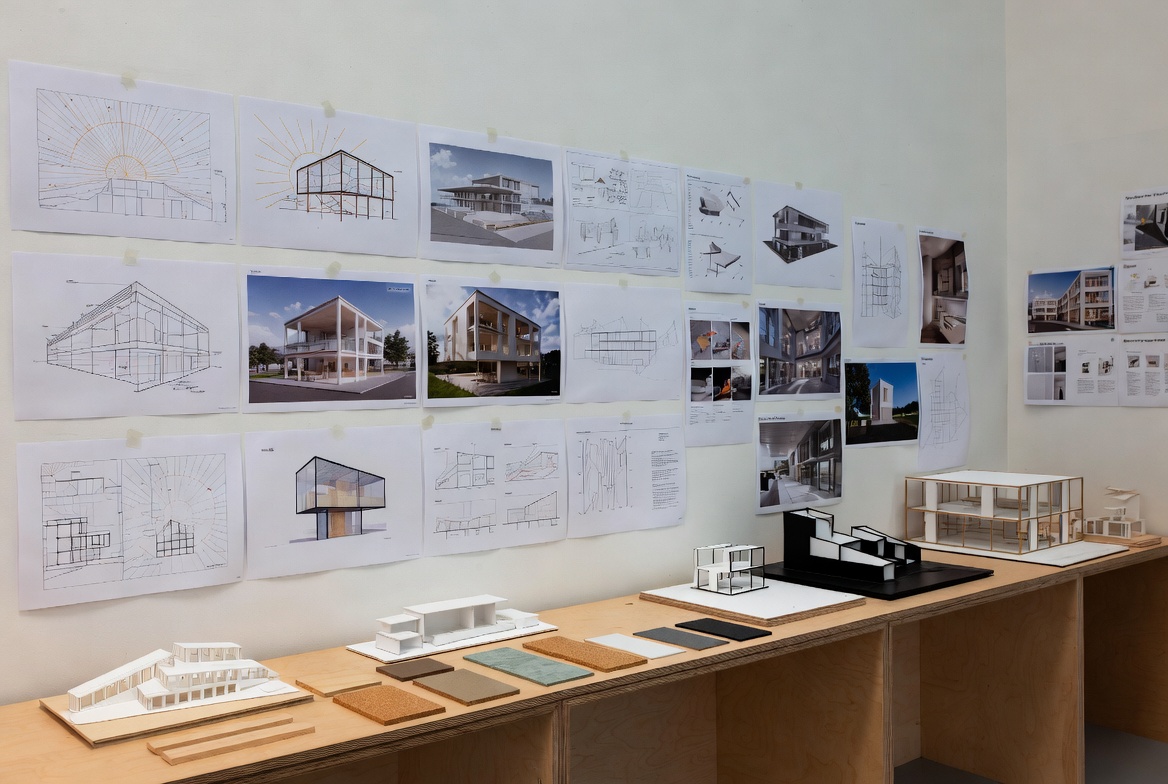
Sustainable design usually gets studied in the wrong order.
Students jump to net-zero targets, green materials, and high-tech systems before they have a solid grip on site, orientation, layout, envelope, and basic building energy behavior. When that happens, the sustainability work stays thin.
Start earlier. Climate. Sun. Shade. Air movement. Plan depth. Window placement. Envelope logic. Then move into systems, materials, and performance targets.
What This Covers
- The right study order
- Core topics vs later topics
- What to focus on first
- Useful next reads
Most Students Build This Backward
The common mistake is easy to spot. A student wants to “focus on sustainability,” so they jump straight into high-performance buzzwords, simulation software, futuristic materials, or urban theory. Meanwhile the basics are still loose: bad orientation, shallow section thinking, weak circulation, too much glazing on the wrong side, no real envelope logic, and site response that feels like an afterthought.
The better sequence is duller at first. It is also stronger. Learn how a building sits, how people move through it, how sun and wind affect it, how heat and moisture behave, and how materials hold up over time. Then add the advanced layer.
If you need the broad starting point first, begin with Sustainable Architecture 101: The Basics You Need. If your foundation still feels shaky, go even earlier with Introduction to Architecture: A Beginner’s Guide to Building Design and Basic Design and Architecture.
Start With These Subjects First
| Study Area | Take It When | What It Fixes | Why It Matters |
|---|---|---|---|
| Design fundamentals | First | Weak form, messy plans, bad spatial decisions | A sustainable building still fails if the design is clumsy. |
| Climate and site response | Early | Bad orientation, poor daylight, weak massing | This is where energy logic starts before systems get involved. |
| Envelope and energy | Early to middle | Overheating, glare, comfort problems, inefficient façades | The envelope usually does more work than expensive add-ons. |
| Materials and durability | Middle | Naive material choices, short service life, maintenance blind spots | Low-impact claims mean very little if the assembly fails early. |
| Water, landscape, and resilience | Middle | Site runoff problems, weak outdoor strategy, bad adaptation thinking | This is where sustainability stops being cosmetic. |
| Digital analysis and advanced systems | Later | Guesswork, untested assumptions, poor coordination | Useful tools, but they work best after the building logic is solid. |
The Core Subjects Worth Your Time
Climate-Responsive Design
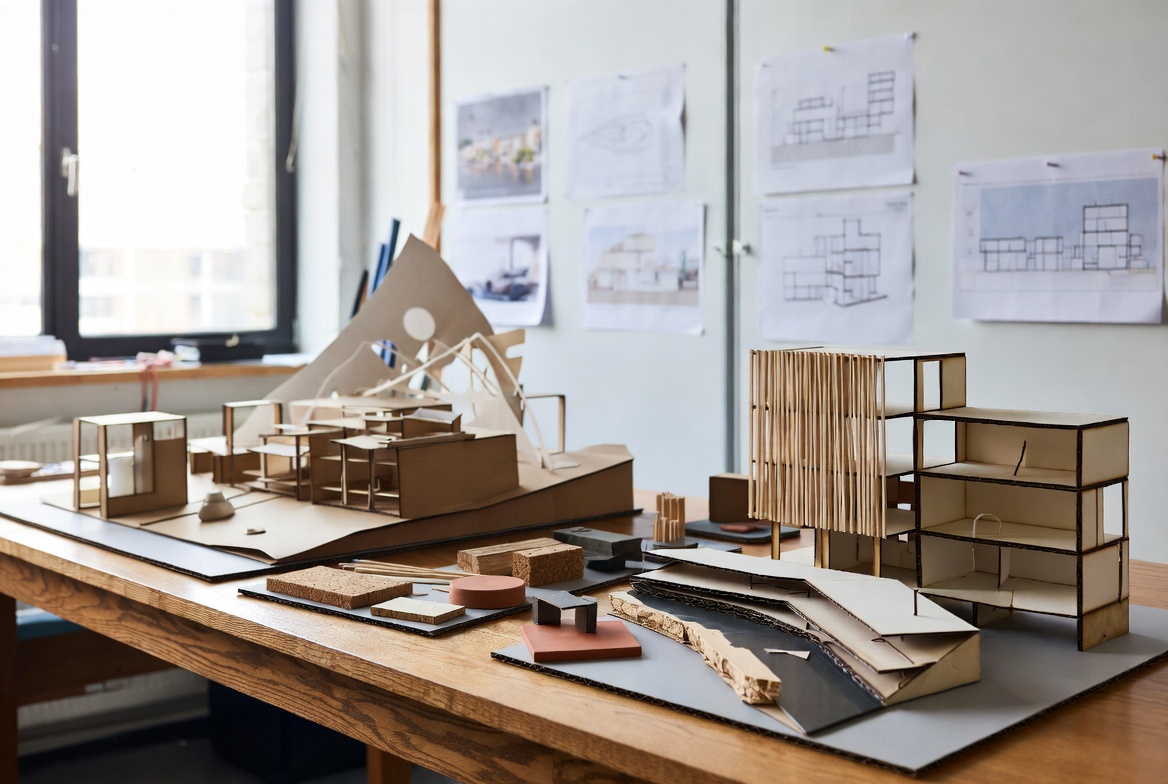
Image by ArchitectureCourses.org. Climate-responsive design studies using models, boards, and early environmental design work in an architecture studio.
This is where students should start getting serious. Orientation, daylight, shade, wind, massing, and local climate conditions all belong here. None of that is decorative. These decisions shape heating and cooling demand, room comfort, façade design, and even whether the plan feels believable.
The supporting skill is design judgment, not just software. Design Basics in Architecture and Building and Architectural Design Basics: From Concept to Construction help because they tighten the thinking underneath the environmental decisions.
Envelope and Energy Performance
Students should know what walls, roofs, openings, shading, and ventilation are doing. This is where sustainable design starts to stop sounding vague. Bad glazing ratios, poor solar control, and weak envelope decisions can ruin a project long before anyone starts talking about certifications.
A good course here should force you to think about heat gain, insulation, comfort, airflow, and how the envelope supports the whole building. It should also make you less impressed by expensive gadgets being used to patch over bad design.
Materials, Embodied Impact, and Service Life
This part gets oversimplified all the time. Students hear “natural,” “recycled,” or “low carbon” and stop there. That is not enough. Ask what the material needs from the wall or roof assembly around it, how long it lasts, how often it needs repair, and whether it still makes sense in the local climate, budget, and labor market.
Sustainable design gets stronger when materials are judged as building components, not mood-board objects.
Water, Site, and Landscape Systems
A lot of student work stays trapped inside the building line. That is a mistake. Stormwater, grading, landscape performance, planted shading, runoff, and heat-island conditions all change how sustainable a project really is. The building does not get to ignore the site and still claim to be smart.
This is also where sustainability starts feeling less like a label and more like a systems problem. Good. That is where it should be.
Resilience, Adaptation, and Larger-Scale Thinking
Later in school, it makes sense to move past one-building performance and into flood risk, heat stress, density, mobility, public space, and climate adaptation. Those subjects matter more once the basic building work is under control. Before that, they can turn into big abstract language sitting on top of thin design.
Digital Tools Come Later
BIM, simulation, environmental modeling, and performance analysis all help. They just should not be your first move. Too many students use tools to make weak work look advanced. The model gets more sophisticated while the section still makes no sense.
For the software side, AutoCAD Basics for Architects & Engineers: A Smarter Way to Learn is a practical place to start. Revit Introduction-Modeling in 3D makes more sense once you are coordinating real building systems instead of just drawing clean lines.
What Students Usually Get Wrong
| Common Move | Do This Instead | Why |
|---|---|---|
| Pick sustainability electives first | Fix design fundamentals first | Green language does not rescue weak planning. |
| Treat software skill as sustainability skill | Use software after you understand the building | The tool is not the thinking. |
| Talk about materials like branding choices | Judge them by assembly, durability, and maintenance | A “good” material can still perform badly in the wrong system. |
| Add green features late in the project | Build environmental logic into orientation, form, and section early | Late add-ons usually look forced because they are forced. |
| Keep site strategy too shallow | Study grading, water, shade, and outdoor systems seriously | A building cannot be sustainable while the site work is careless. |
Use These Guides in This Order
| Stage | Guide | Use It When |
|---|---|---|
| Start | Sustainable Architecture 101: The Basics You Need | You want the sustainability side explained clearly without getting lost in jargon. |
| Base Layer | Basic Design and Architecture | You still need stronger control over the core design principles. |
| Base Layer | Design Basics in Architecture and Building | Your sustainability ideas are fine, but the layout logic underneath them is not there yet. |
| Design Clarity | Drawing for Architects: Complete Guide to Sketching, Plans, and Details | Your diagrams, plans, or sections are too weak to communicate the idea well. |
| Design Clarity | Hierarchy in Architecture: How Buildings Tell You What Matters | Your presentations feel flat and nothing reads as important. |
| Support Skill | Architectural Drawing Basics Every Architect Must Know | You need cleaner drawing discipline before moving into more technical work. |
| Software Support | AutoCAD Basics for Architects & Engineers: A Smarter Way to Learn | You are ready to document ideas more cleanly. |
| Software Support | Revit Introduction-Modeling in 3D | You are moving into coordinated 3D building work. |
The Part Students Miss
Sustainable design courses only matter if they start changing your ordinary studio decisions. Not the final board. The ordinary decisions.
That means plan depth, glazing placement, shading, ventilation paths, section logic, material service life, runoff, and how the building meets the site. If sustainability appears only at the end under a heading like “green features,” the course probably stayed too abstract, or you kept it too separate from the actual design work.
This is also why communication matters. Weak drawings make good environmental thinking look half-formed. If your work is hard to read, critics and reviewers will often assume the thinking is thin even when it is not. That is where Drawing for Architects and Hierarchy in Architecture pull more weight than another random elective with a fashionable title.
What To Do Next
If you are new to the subject, start with Sustainable Architecture 101, then go back and tighten your fundamentals with Basic Design and Architecture and Design Basics in Architecture and Building.
If the ideas are there but your presentations still feel muddy, work next on Drawing for Architects and Hierarchy in Architecture. That will usually help more than piling on one more sustainability keyword and hoping it makes the work look deeper.