
How to Start Sketching Buildings Without Making a Mess
Most beginner architectural drawings fail before the windows go in.
The first mistake is starting with details instead of the big shape. A house sketch needs a ground line, a clean box, a roof form, and clear proportions before it needs texture, trees, shadows, or color.
Start simple. Draw the mass first. Make the drawing readable before you try to make it pretty.
| Beginner Drawing Type | What It Teaches | Start With This |
|---|---|---|
| Simple elevation | Proportion, roof shape, window placement, and front-facing linework. | A one-story house with one door, two windows, and a simple roof. |
| Basic floor plan | Room layout, wall thickness, circulation, and how spaces connect. | A single-room cabin or small apartment layout. |
| Section sketch | Height, floors, roof structure, and how the building is cut through. | A simple wall, floor, and roof cut with very few labels. |
| Simple perspective | Depth, scale, and how a building feels in space. | A boxy building in two-point perspective. |
What to Know First
- You do not need to be an artist to start.
- Use pencil, grid paper, and a ruler at first.
- Focus on line, shape, scale, and proportion before shading.
- Draw several rough ideas before cleaning up one version.
A clean beginner drawing is usually boring in a good way. Straight lines. A clear roof shape. Windows that line up. A door that looks like someone could actually walk through it.
What Architectural Drawing Means
Architectural drawing is how you test a building before it exists.
A sketch can show the size of a room, the shape of a roof, the position of a door, or how people move through a space. It does not need to be beautiful. It needs to be clear enough that someone else can understand the idea.
- It helps you see space before building or modeling it.
- It forces you to simplify the idea.
- It shows problems early, while they are still easy to fix.
How Architects Usually Start

Architects usually start rough.
They use boxes, circles, arrows, quick plans, and simple elevation sketches before anything becomes polished. The first sketch is not there to impress anyone. It is there to find the basic move.
- Boxes help test building mass.
- Bubble diagrams help test room flow.
- Quick elevations help check roof shape, openings, and proportion.
Draw five fast ideas before you spend an hour cleaning up one weak one.
Recommended reading:
Drawing for Architects: How to Explore Concepts, Define Elements, and Create Effective Built Design through Illustration
The First Things to Draw
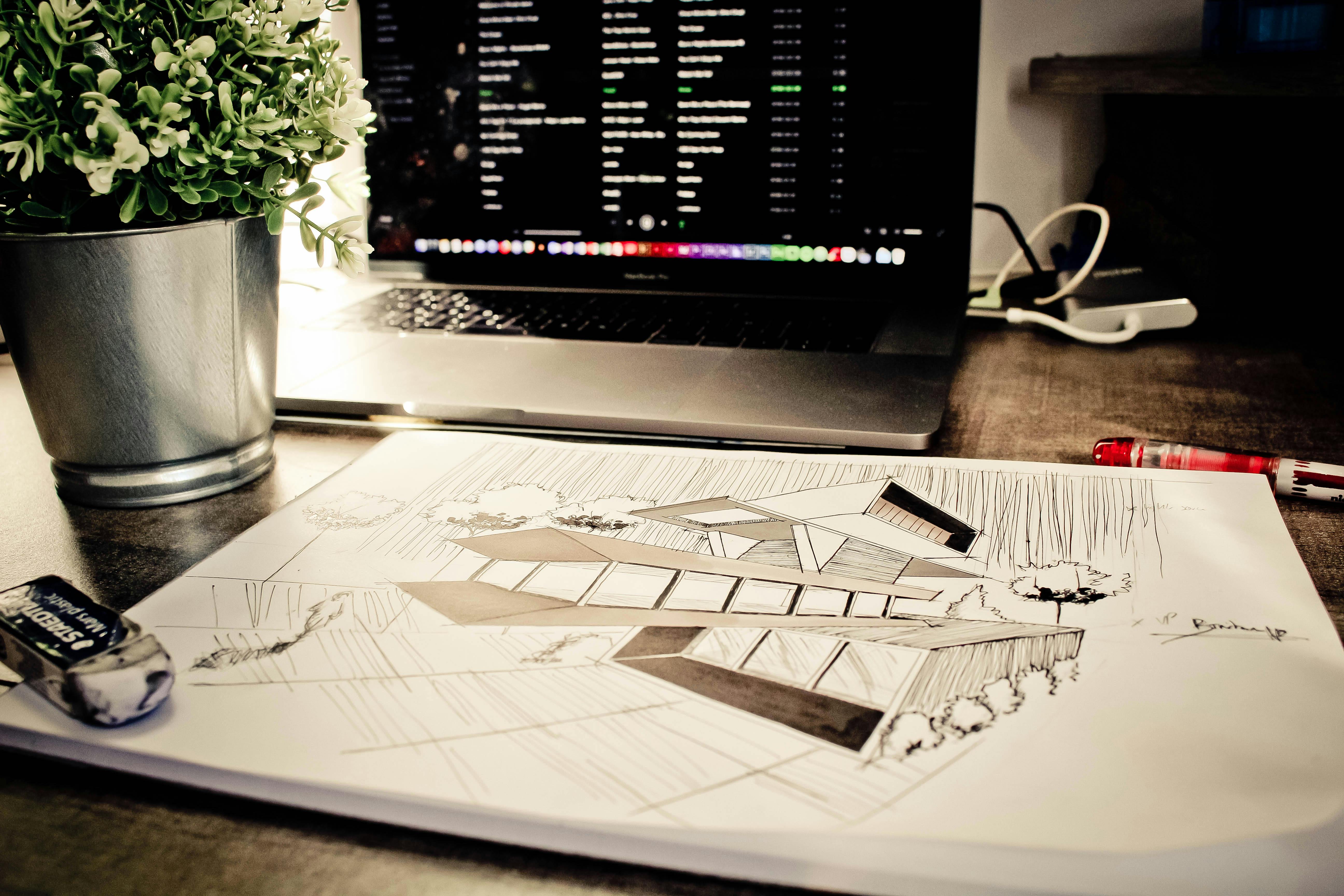
Start with drawings that teach shape and proportion without too many parts.
- A single-room house with one door and one window.
- A boxy building in simple two-point perspective.
- A bird’s-eye layout of a small apartment.
These teach wall shape, opening size, roof position, and how spaces sit beside each other.
Simple Tools That Work
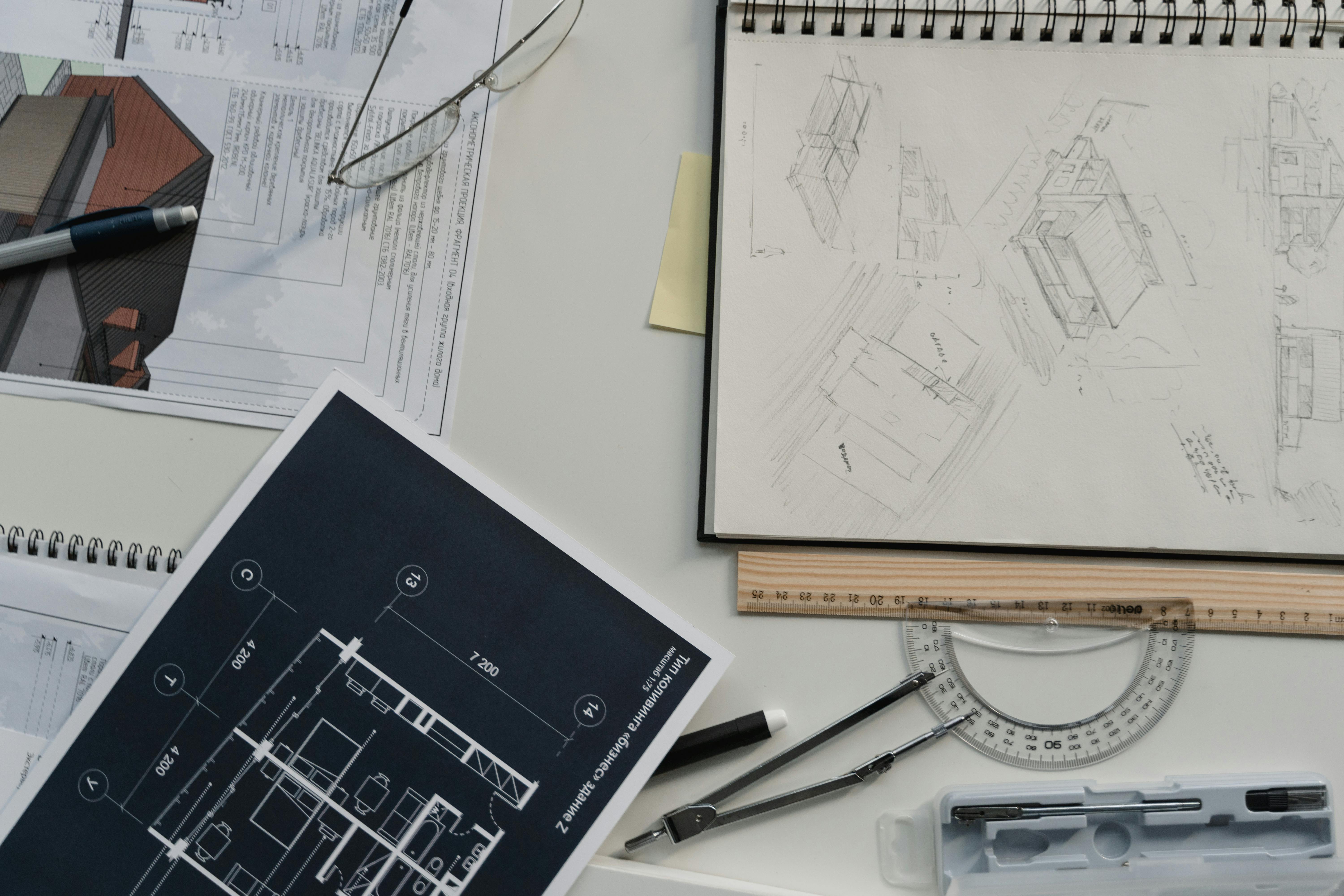
Do not buy a pile of tools before you can draw a clean box.
- HB pencil or mechanical pencil
- Soft eraser or kneaded eraser
- Grid paper or dot paper
- Ruler or triangle
- Fine-tip pen for final linework
Digital tools can help later. Concepts, Morpholio Trace, and SketchUp Free are useful, but they will not fix weak proportion or messy thinking.
Drawing Types Beginners Should Know

Architectural drawing is not one kind of drawing.
- Bubble plans: circles and labels used to test room relationships.
- Floor plans: top-down drawings that show layout, walls, doors, and movement.
- Elevations: straight-on views of the outside faces of a building.
- Sections: cut-through drawings that show height, floors, walls, and roof structure.
- Perspectives: views that help show depth, scale, and how the building might feel.
Start with plans and simple elevations. Sections and perspectives make more sense once the basic house shape is working.
Basic Skills That Matter Most
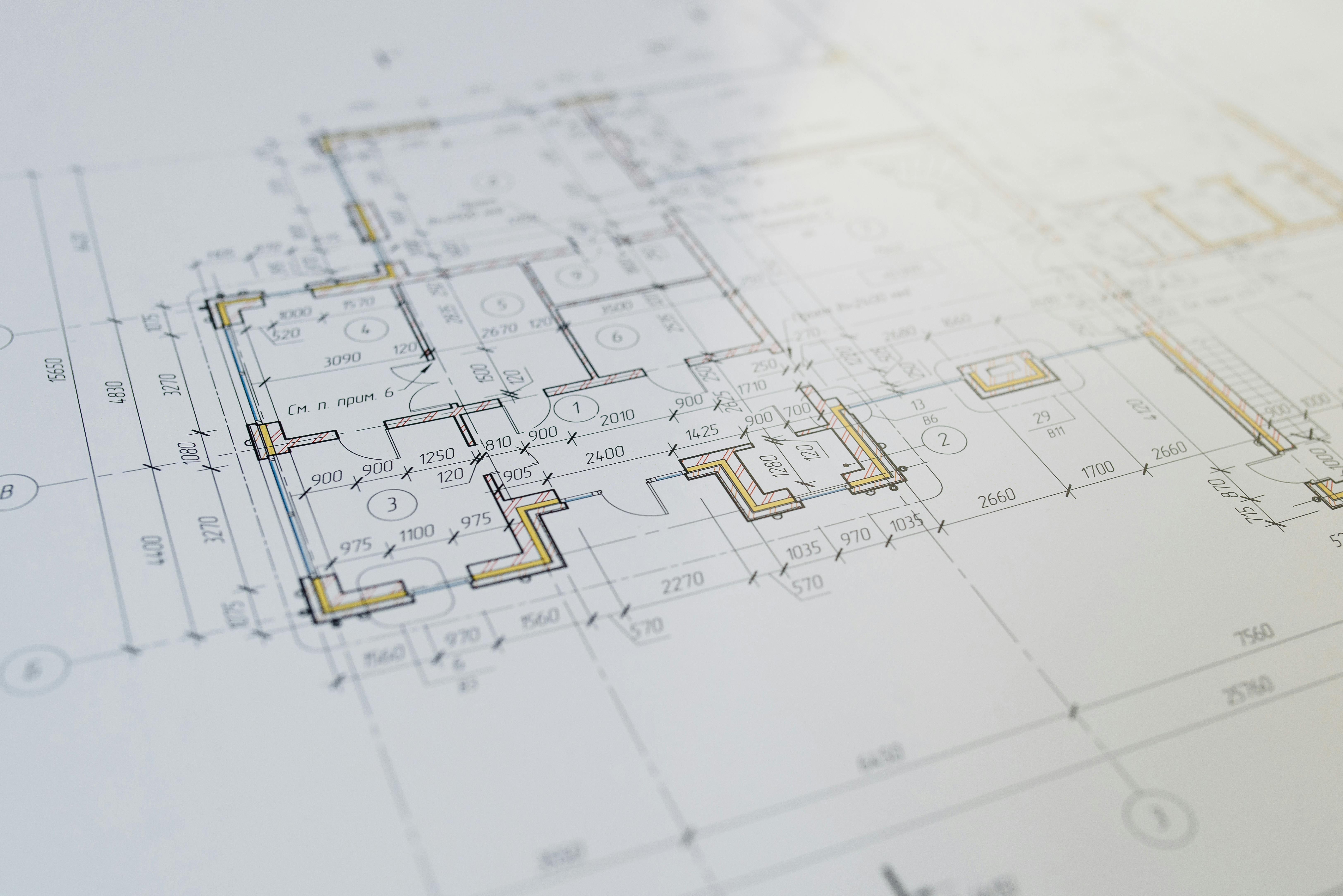
The useful skills are plain.
- Line quality: clean, steady lines that do not look nervous.
- Scale: doors, windows, walls, and rooms should relate to each other.
- Proportion: openings should fit the wall, not float randomly in it.
- Notes: short labels can explain what the drawing is trying to show.
A door wider than a room, a tiny window in a huge blank wall, or a roof that sits like an afterthought will make the drawing feel wrong immediately.
Sketching a Simple House Step by Step
A beginner house sketch should be built in order.
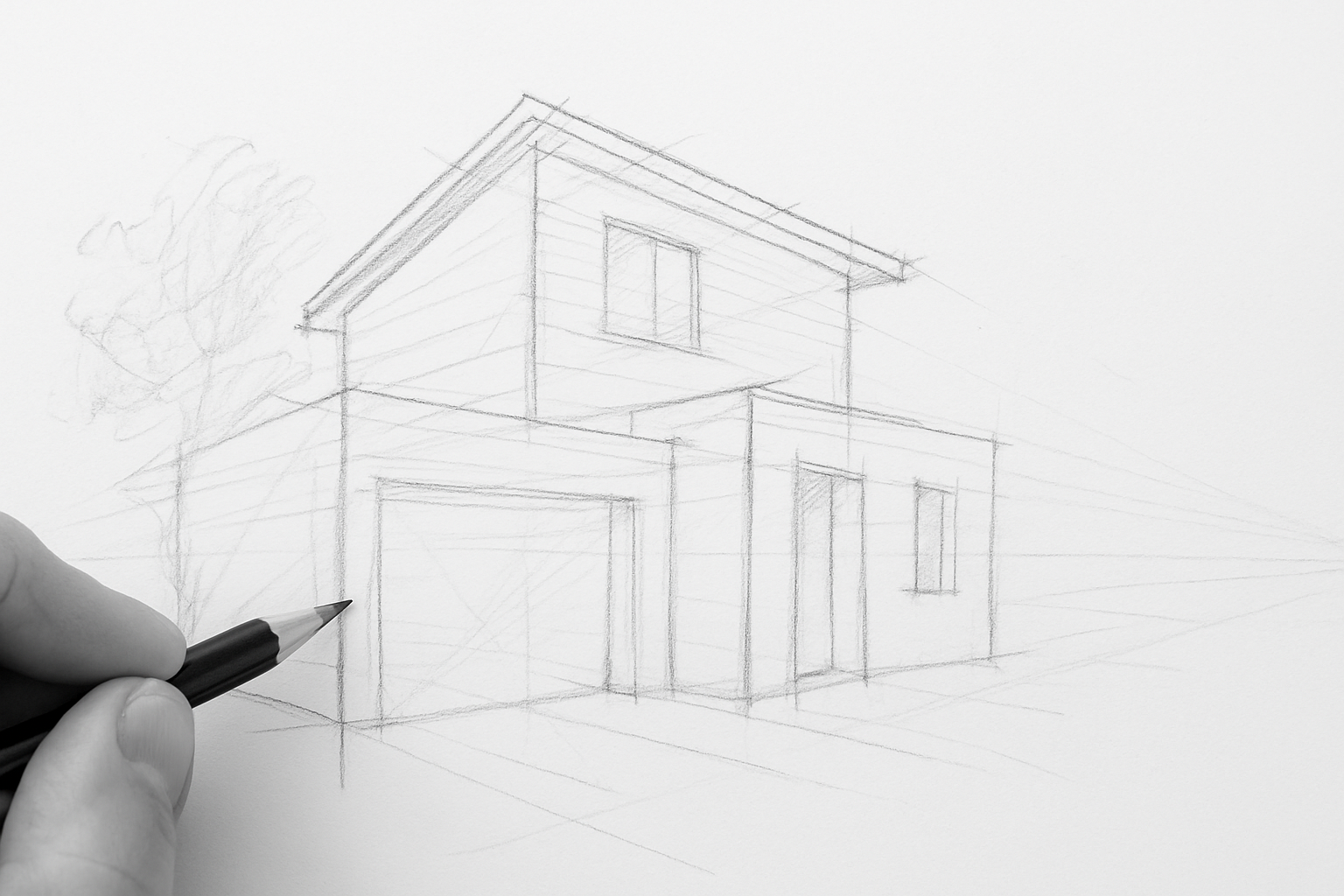
Ground first. Box second. Roof third. Openings after that. Texture last.
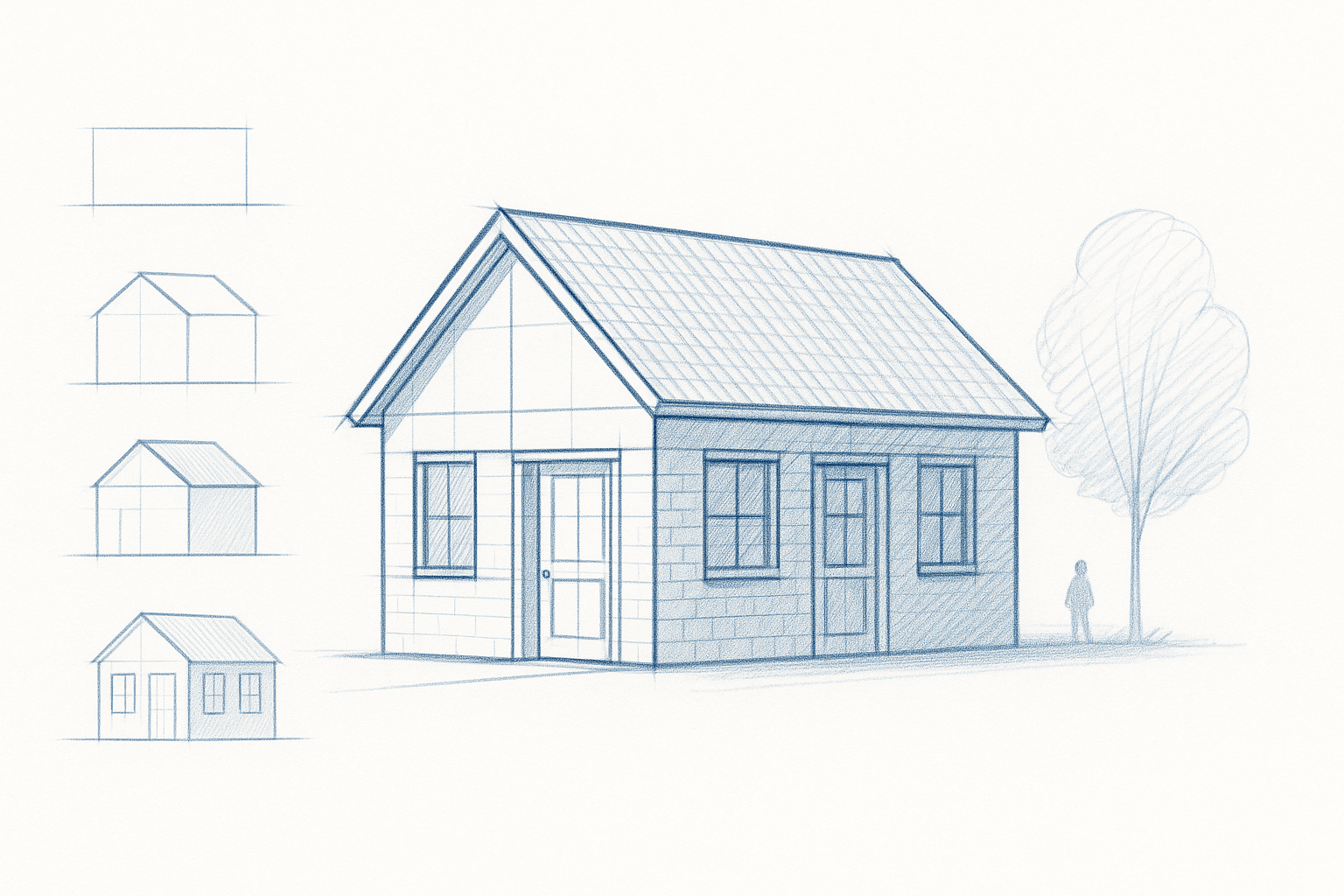
Step 1: Draw the Ground Line
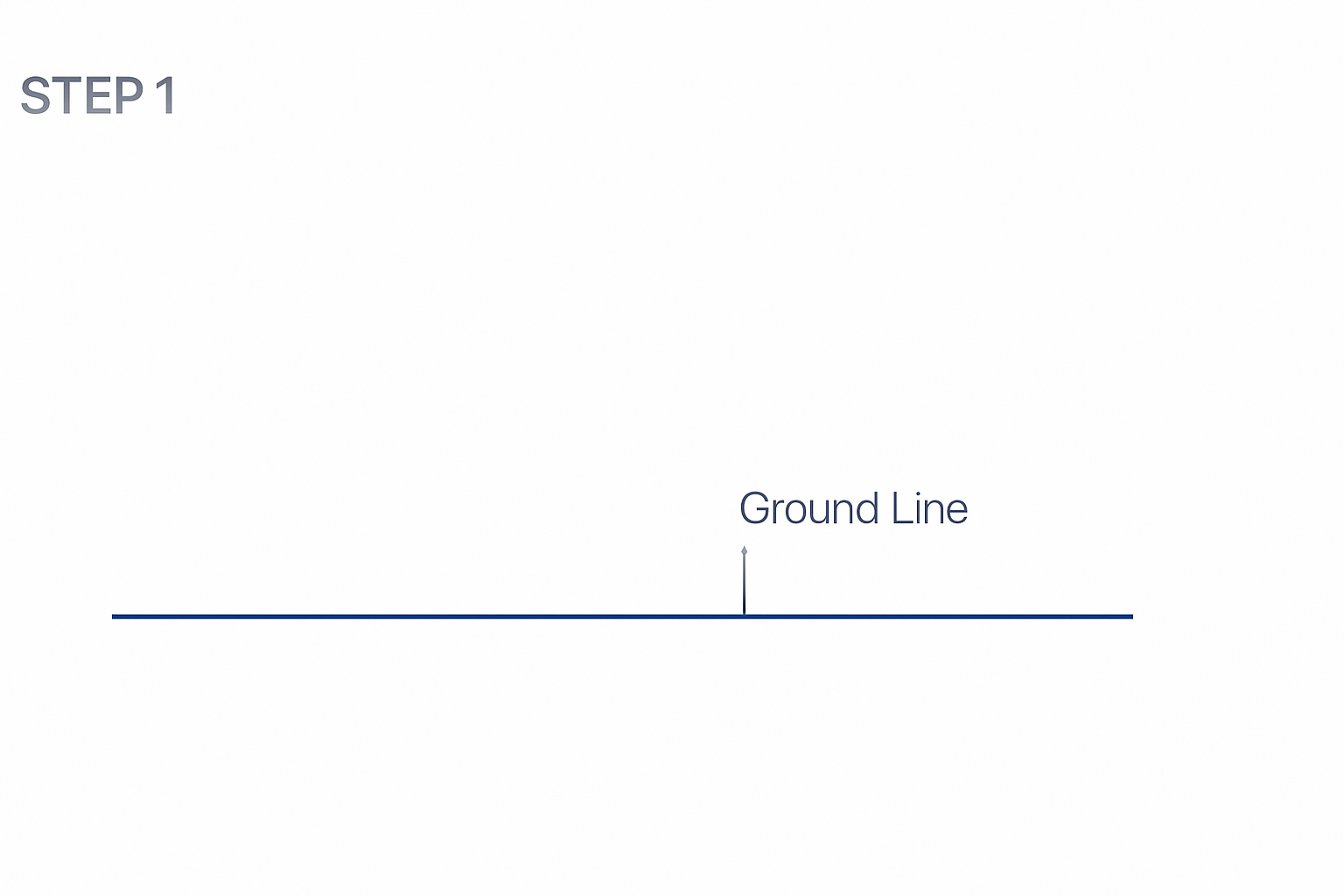
Step 1: A light ground line gives the house a stable base.
Draw a light horizontal line about one-third up from the bottom of the page. Keep it straight. This line anchors the drawing, so do not rush it.
- Use a ruler or T-square if you have one.
- Keep the line light enough to adjust later.
- Leave room below for grade, steps, or a simple foundation line.
If this line tilts, the whole house will feel off.
Step 2: Draw the Building Box
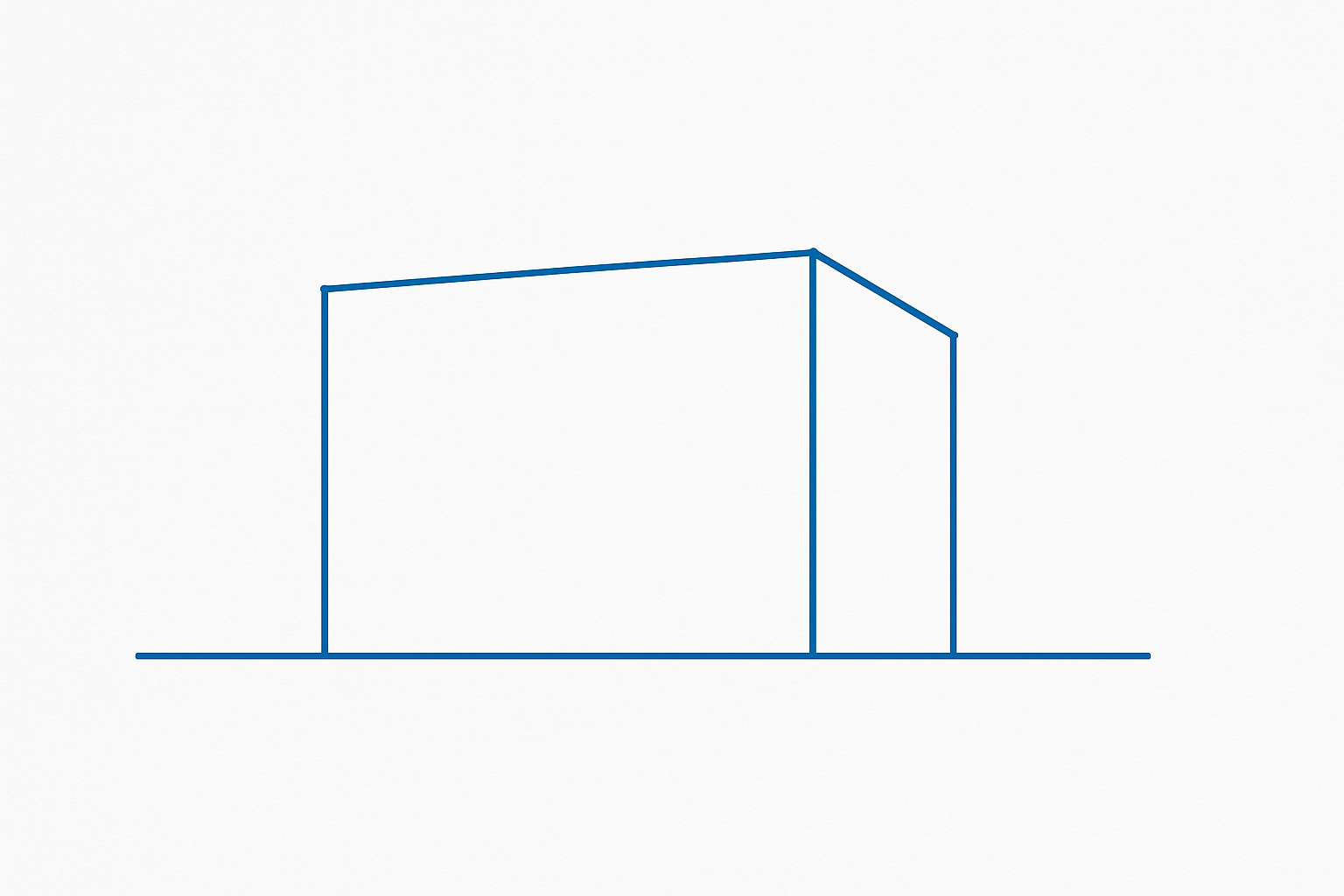
Draw the main building mass as a simple rectangle or box. Do not add windows yet.
Check width, height, and overall proportion. A beginner sketch usually gets better when the main box is calm and simple.
Step 3: Add the Roof Form
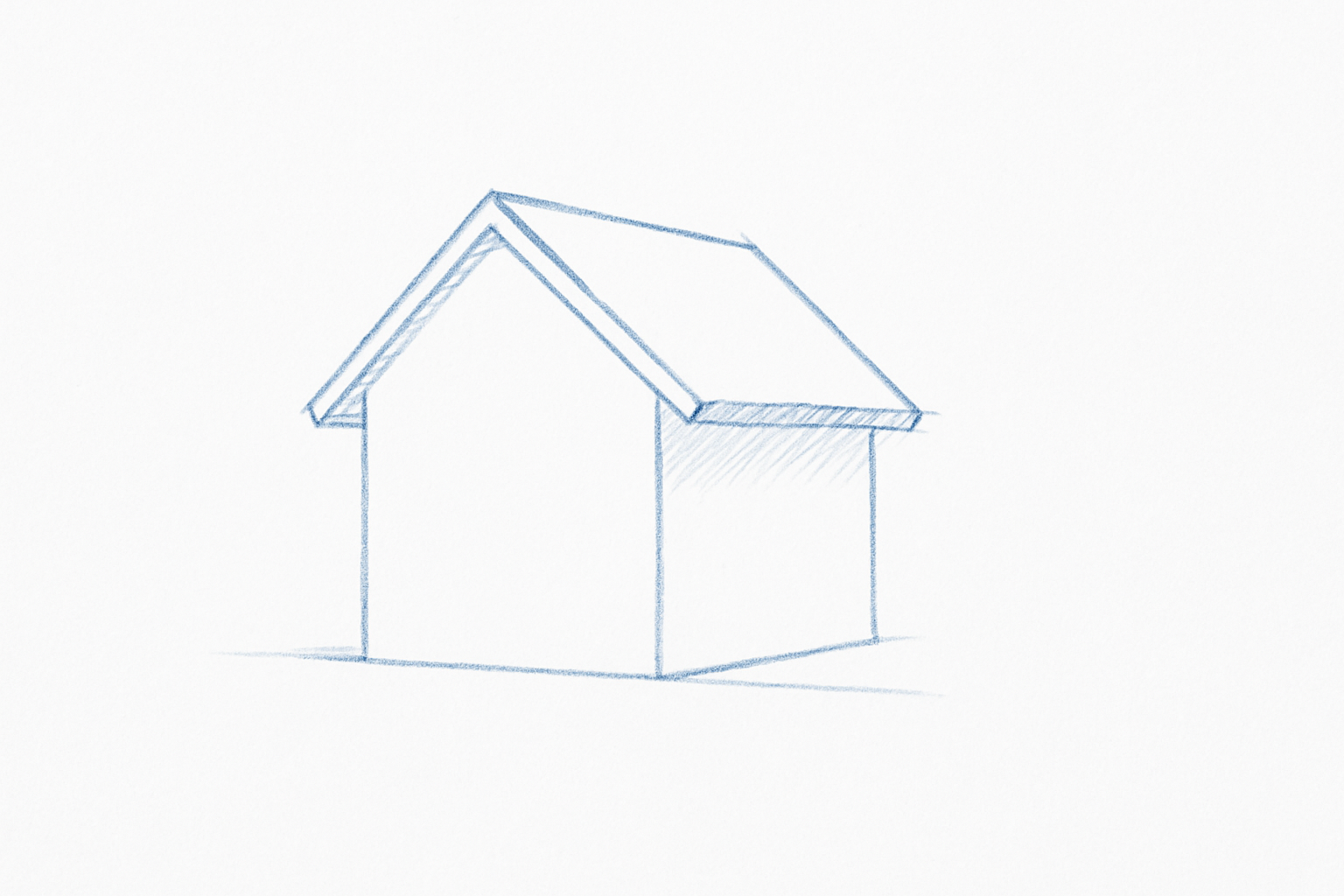
Add a simple gable or hip roof. Keep the roof centered and make sure the pitch is not extreme unless that is the point of the drawing.
The roof is where the box starts to read as a house.
Step 4: Add Centerlines and Divisions
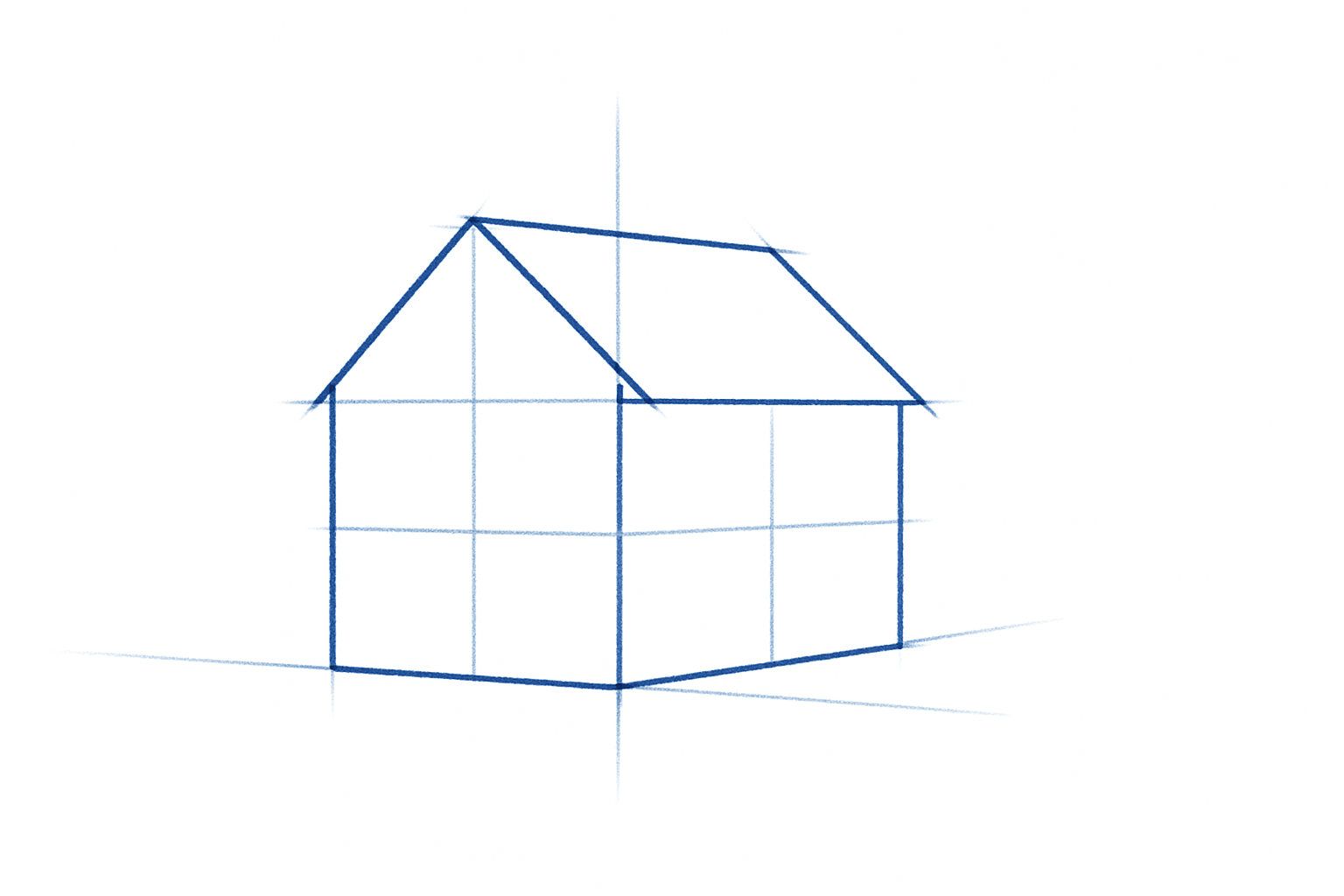
Light centerlines help you place the door, windows, and wall divisions without guessing.
Use them quietly. They are guide lines, not the final drawing.
Step 5: Place Doors and Windows
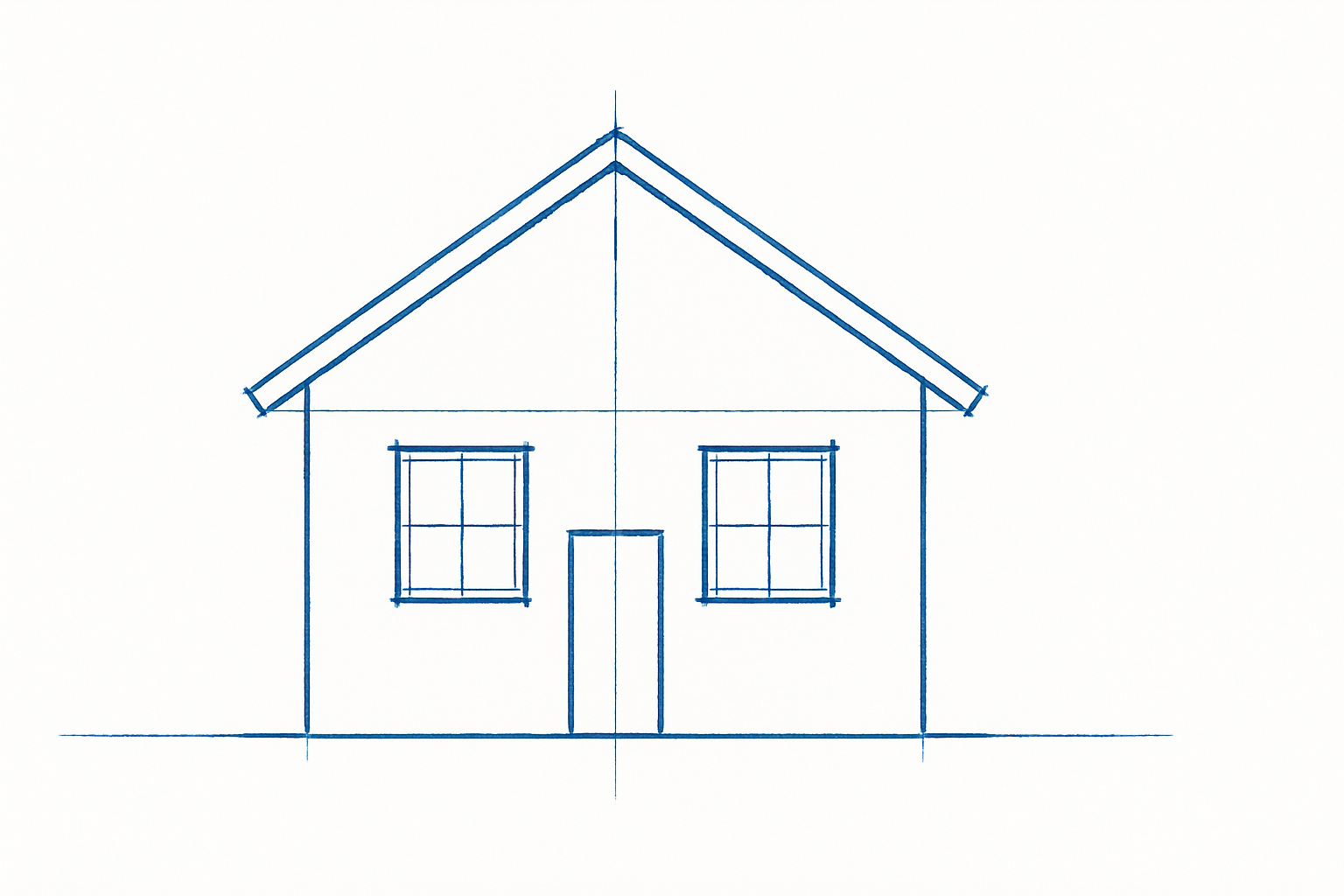
This is where many beginner drawings start to fall apart.
Doors and windows need rhythm, size, and alignment. A typical front door is about 3 feet wide and 7 feet tall. Window heads often line up with the door head. If openings drift randomly, the whole elevation starts to look weak.
Place fewer openings and make them line up better.
Step 6: Add Light Texture or Material
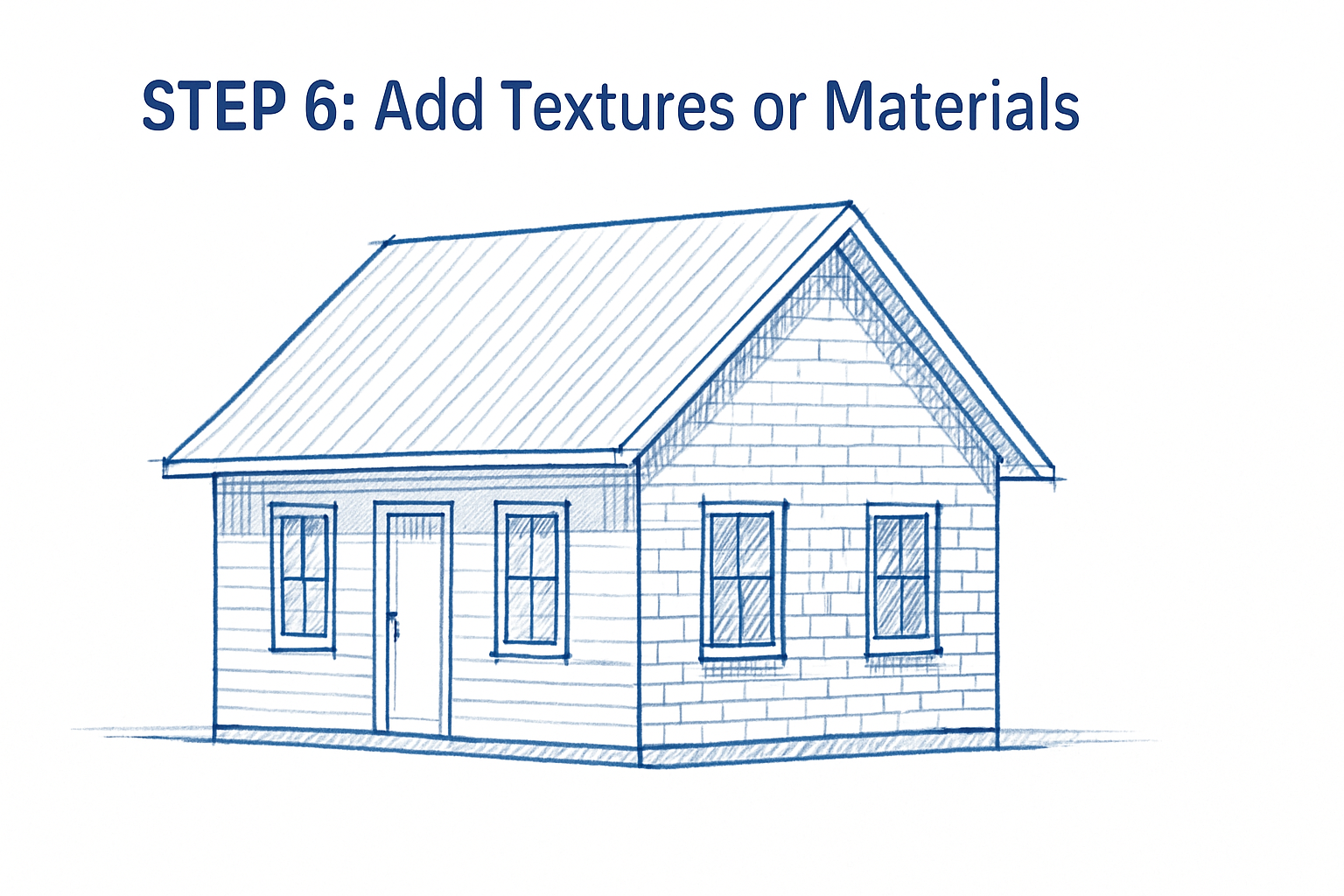
Texture should explain the material, not take over the drawing.
- Use a few horizontal lines for siding.
- Use light hatching for shadow.
- Keep brick, wood, or stone patterns simple.
If the texture is louder than the house shape, pull it back.
Step 7: Add Context for Scale
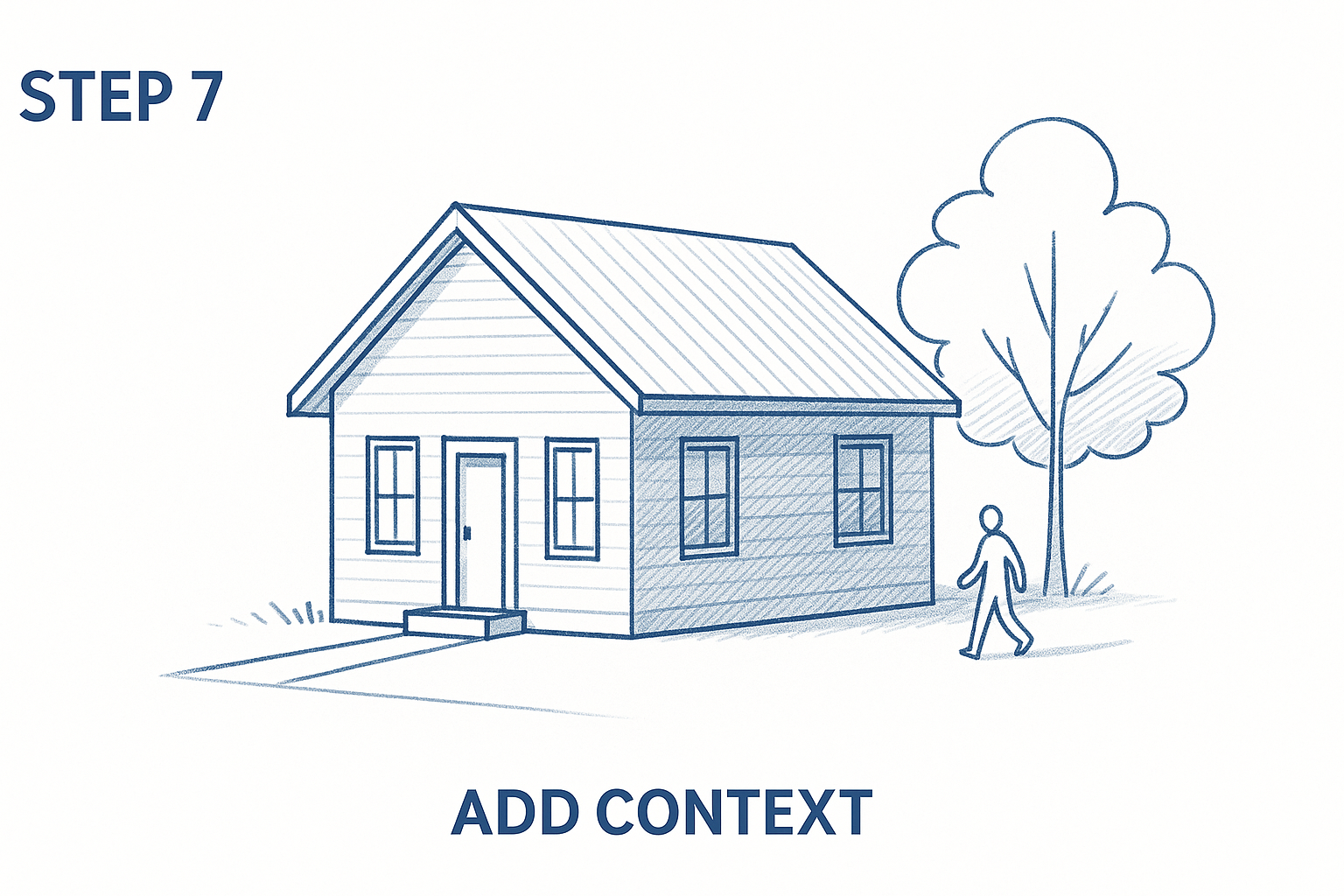
Add only enough context to explain scale.
A simple ground edge, a small tree shape, a path, or one human silhouette is enough. Do not decorate the page until the house itself reads clearly.
Where Beginners Usually Mess It Up
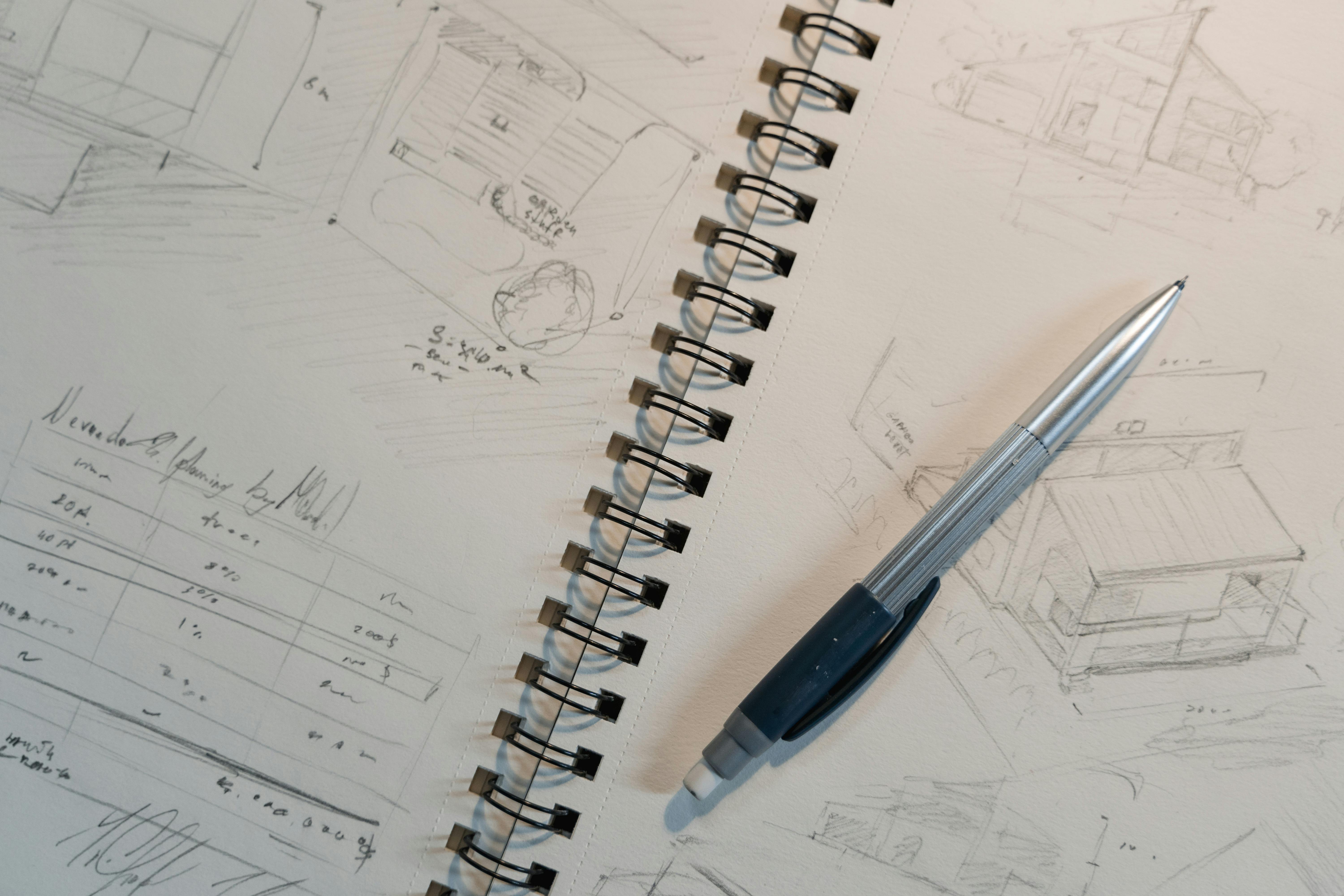
- Details too soon: the roof, mass, and openings should come first.
- One overworked idea: quick options teach more than a single polished sketch.
- Bad scale: doors, windows, and walls need believable sizes.
- Color too early: it hides weak linework instead of fixing it.
- Too much texture: brick, siding, trees, and shadows can turn into clutter fast.
The better move is simple: rough first, check the big shape, then clean the drawing.
FAQ
Do I need math to draw architecture?
Not much at the start. Basic proportion, simple units, and clean measuring are enough for beginner sketches.
Can I learn architectural drawing if I cannot draw well?
Yes. Architectural drawing is more about clarity and logic than art talent.
What is the fastest way to improve?
Copy real buildings. Trace over simple photos. Redraw the same house from the front, side, plan view, and basic perspective. The repetition matters more than making one pretty drawing.
Should I start by hand or digital?
Start by hand.
A pencil is faster for thinking. Digital tools are better once you understand the basic drawing logic, because then the software is helping you draw instead of hiding the parts you do not understand yet.
What should I draw first?
Draw a simple one-room house: ground line, box, roof, door, two windows, and light context. Keep it plain.
Keep Practicing the Simple Parts
You do not need talent first. You need clean repetition.
Draw boxes. Draw rooms. Draw one roof shape ten times. Fix the line that tilts. Check the window that feels too small. That is how the drawing starts to work.
Pretty can come later.
Read This Next
Learning and techniques
- Blind Contour Drawing: From Basics to Advanced Techniques
- Basic Techniques and Principles of Architectural Drawing
- The Art of Drawing a Simple Line in Architectural Sketches
Tools and drawing types
House drawing and blueprints