

Architecture schools in Canada are easy to compare badly.
The school names look familiar. The studio photos look serious. The program pages all use the word “architecture.” Then the student discovers the important part: in Canada, the professional route is not just about choosing a famous university. It is about understanding the M.Arch path, CACB accreditation, provincial registration, cost, studio culture, and where the school connects students to practice.
That is why a simple list of Canadian architecture schools is not enough.
The better question is:
Which Canadian architecture school path fits the way you want to study, where you can afford to live, and where you may want to practice later?
Start With CACB
Canada’s architecture school system is different from the United States.
In the United States, students often compare B.Arch and M.Arch routes. In Canada, the accredited professional architecture programs are Master of Architecture degrees. That one fact changes the whole school decision.
A student may start with an undergraduate architecture-related degree, environmental design degree, architectural studies degree, or another design foundation. But that undergraduate step is usually not the final professional credential.
The professional degree question comes later:
Does this path lead into a CACB-accredited M.Arch?
Before applying, check the official CACB accredited programs page, not only the university’s marketing page.
Useful starting point: CACB accredited programs in Canada.
How the Canadian Path Works
The Canadian path does not stop when the student gets into an architecture-related undergraduate program.
For the usual university route, the professional step is the CACB-accredited M.Arch. After the professional education step, the graduate still has to move through academic certification, internship or experience requirements, examination, and provincial or territorial registration.
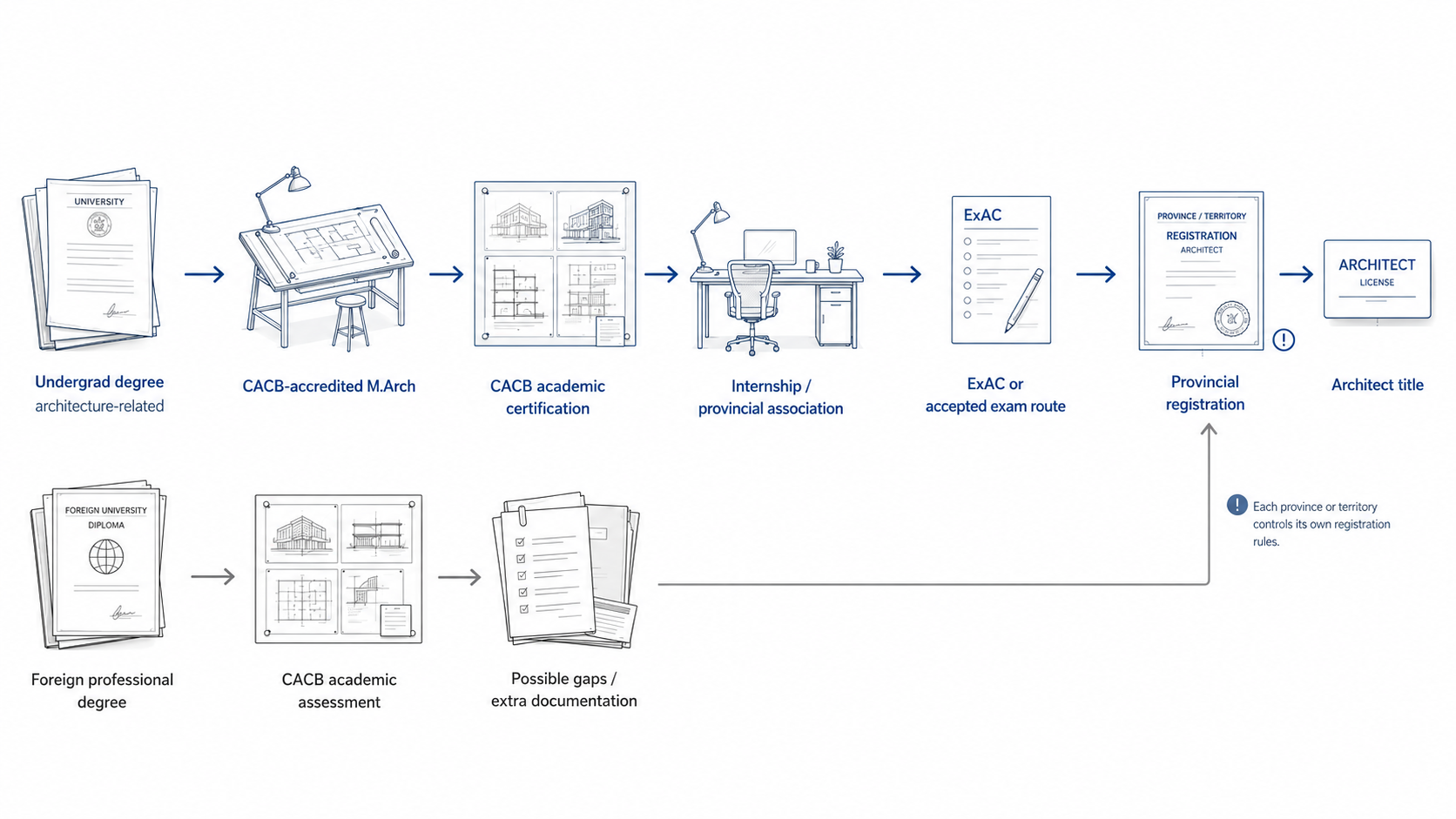
That means students should not treat admission to an undergraduate architecture program as the whole professional plan. The real question is what the program leads to next.
Foreign-trained architects have a different risk. Their degree or professional background may need CACB assessment before they can move through the Canadian registration path. That does not mean the foreign degree is weak. It means the paperwork and review path may be different.
The M.Arch Question Matters Most
The biggest mistake is assuming that any Canadian undergraduate architecture program makes you professionally ready to become an architect.
That is not how the Canadian route usually works.
An undergraduate program can be useful. It can teach design thinking, drawing, model making, history, urban issues, environmental design, building systems, and portfolio development. It can also prepare you for a professional M.Arch.
But if the student wants the architect title later, the M.Arch question has to be answered early.
| Path | What it usually means in Canada | What to check |
|---|---|---|
| Undergraduate architecture-related degree | A design foundation or preparation for graduate study. | Does it prepare students for a CACB-accredited M.Arch, or is it mainly a broader design degree? |
| CACB-accredited M.Arch | The main Canadian professional architecture degree route. | Is the program currently accredited, and what does the school say about certification and next steps? |
| Foreign professional degree | A possible route for students educated outside Canada. | Will CACB academic certification or assessment be required before provincial registration? |
| Architectural technology or drafting path | A technical route into BIM, drafting, construction documents, or coordination work. | Does the credential lead to technician work, transfer options, or a separate professional route? |
Canadian Schools to Research First
A useful school list should not pretend every Canadian architecture program does the same job.
Use the names below as starting points for research, not as a ranking. The right school depends on studio culture, cost, city, language, co-op or internship access, portfolio expectations, and how the program fits your professional route.
| School | Province | What to check before applying |
|---|---|---|
| University of Toronto | Ontario | Graduate professional path, Toronto cost, portfolio expectations, and access to a large urban design and practice network. |
| University of Waterloo | Ontario | Co-op structure, Cambridge campus life, studio workload, and how the undergraduate-to-M.Arch sequence works. |
| Toronto Metropolitan University | Ontario | Professional M.Arch route, downtown Toronto cost, applied studio culture, and practice connections. |
| Carleton University | Ontario | Ottawa context, public-sector and cultural-institution access, studio structure, and graduate route. |
| Laurentian University / McEwen School of Architecture | Ontario | Smaller-school setting, northern context, community design, cost, and professional M.Arch path. |
| McGill University | Quebec | Montreal setting, language context, undergraduate preparation, professional M.Arch structure, and cost of living. |
| Université de Montréal | Quebec | French-language study, Montreal design culture, provincial registration context, and portfolio expectations. |
| Université Laval | Quebec | French-language route, Quebec City setting, cost, studio culture, and professional degree path. |
| University of British Columbia | British Columbia | Vancouver cost, climate and sustainability context, graduate professional path, and West Coast practice access. |
| University of Calgary | Alberta | Prairie and mountain-region context, urban growth, energy-region design questions, and professional M.Arch structure. |
| University of Manitoba | Manitoba | Winnipeg cost, regional climate, building culture, and professional degree sequence. |
| Dalhousie University | Nova Scotia | Halifax setting, Atlantic Canada practice context, studio culture, and professional M.Arch route. |
Do not use this table as a final decision. Use it to build a shortlist, then check the official school page and CACB listing before applying.
Ontario Has More Choice, But Also More Confusion
Ontario gets a lot of attention because it has several architecture schools and a large job market.
That can help students. It can also confuse them.
A student comparing Toronto, Waterloo, Carleton, Toronto Metropolitan University, and Laurentian is not only comparing school names. They are comparing city cost, campus setting, studio culture, commute, professional networks, co-op or internship structure, and how each program handles the path toward the professional M.Arch.
Toronto may offer more exposure to major firms, lectures, development pressure, public transit, housing debates, adaptive reuse, and cultural institutions. It also brings higher housing costs and more competition.
Waterloo’s architecture setting is different. Carleton’s Ottawa context is different. Laurentian’s northern and smaller-school setting is different. Those differences are not side details. They shape the student’s daily life and early professional network.
A good Ontario shortlist should compare more than reputation.
Canada Is Not One Architecture Market
Canada is large, and architecture school location changes what students see.
A student in Vancouver studies in a different climate and cost context than a student in Winnipeg, Halifax, Montreal, Calgary, Ottawa, or Toronto. The projects, materials, housing pressures, winter realities, cultural issues, and job networks are not the same.
That matters because architecture is local before it is global.
A student interested in dense urban housing may want a different setting from a student interested in northern communities, coastal design, public infrastructure, climate adaptation, heritage buildings, or regional practice.
The school does not have to be in the city where you will work forever. But it often shapes the offices you meet first.
Studio Culture Still Decides the Experience
Architecture school in Canada still lives through studio.
Studio is where students learn to test ideas, draw clearly, revise, explain decisions, build models, take criticism, and turn rough concepts into stronger work.

A demanding studio is not automatically bad. A soft studio is not automatically good. The real question is whether the difficulty teaches.
Ask to see current student work. Look for process, not only final images. A strong studio should show site thinking, plans, sections, models, structure, revision, and clear design decisions. A weak studio may show dramatic boards without much evidence of how the work improved.
Talk to students if possible. Ask how often they receive feedback, whether critiques are useful, and whether the program teaches students how to revise or only how to defend.
The Cost Problem Nobody Puts Beside the Ranking
Canadian tuition may look more controlled than some U.S. private-school prices, but architecture school still has hidden costs.
The expensive part is not only tuition.
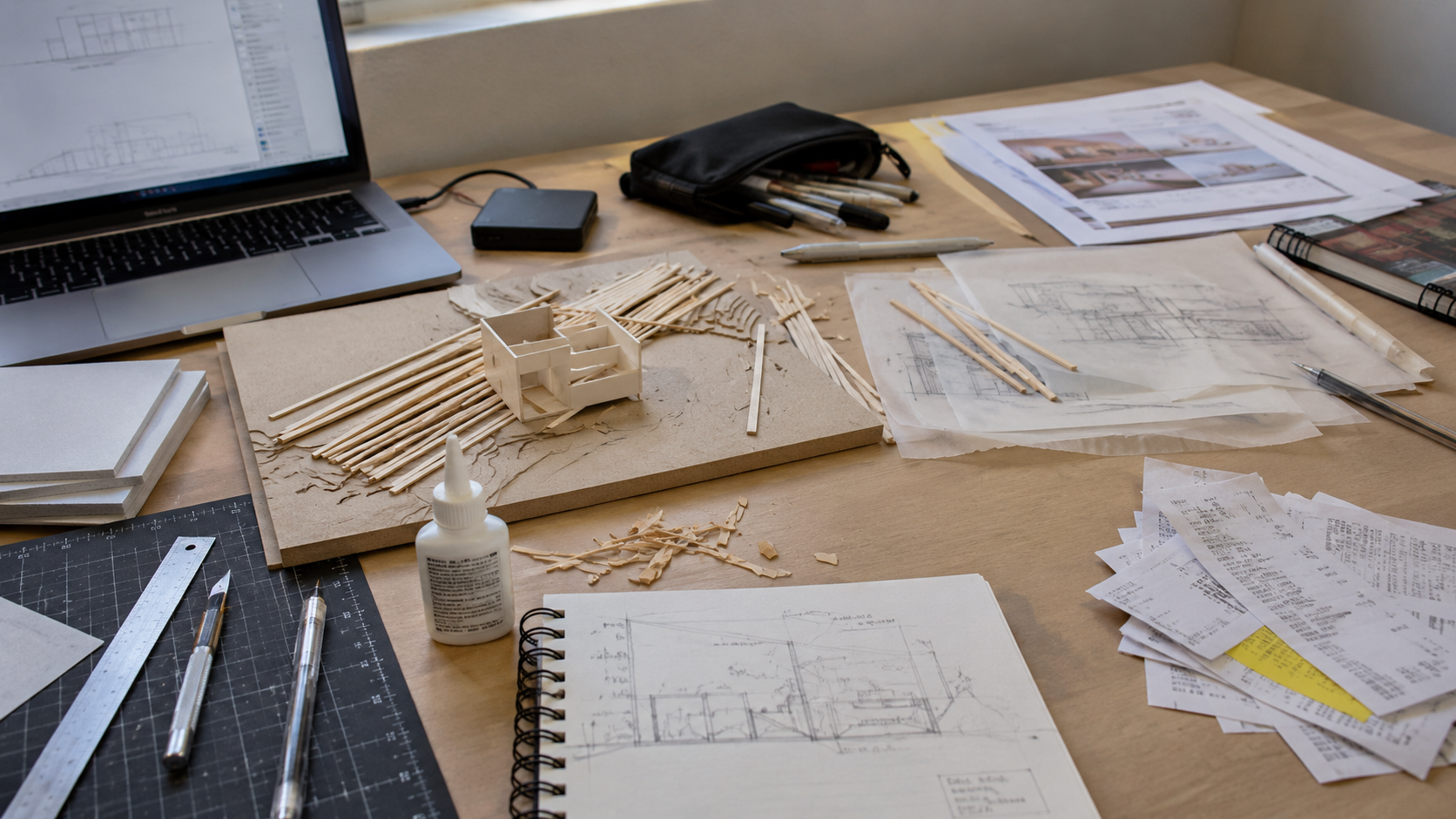
Students also pay for models, printing, software, hardware, blades, boards, transit, rent, food, storage, and the time studio takes away from paid work.
This is where city choice matters. Vancouver and Toronto can change the math quickly. Montreal, Winnipeg, Halifax, Ottawa, Calgary, or smaller-school settings may feel different, but the total cost still depends on housing, transit, materials, scholarships, and the number of years in the route.
| Cost to compare | What students forget | Why it matters |
|---|---|---|
| Tuition | Domestic and international tuition can be very different. | The same school can be affordable for one student and risky for another. |
| Housing | Rent near campus, commute time, and late studio access. | A school in a costly city may become expensive even with reasonable tuition. |
| Studio materials | Models, prints, tools, boards, paper, and replacements. | Small purchases repeat all semester. |
| Technology | Laptop power, software, storage, and repairs. | Weak equipment slows studio work and can cost more later. |
| Extra years | Undergraduate preparation plus M.Arch can stretch the path. | More years usually means more rent, more materials, and delayed full-time income. |
The Co-op and Internship Difference
Some Canadian architecture students get useful office exposure during school. Others have to fight harder for it.
That difference matters.
Architecture offices teach things studio cannot fully teach: client changes, consultant coordination, building codes, documentation, deadlines, site problems, and the gap between a studio idea and a project that can be built.
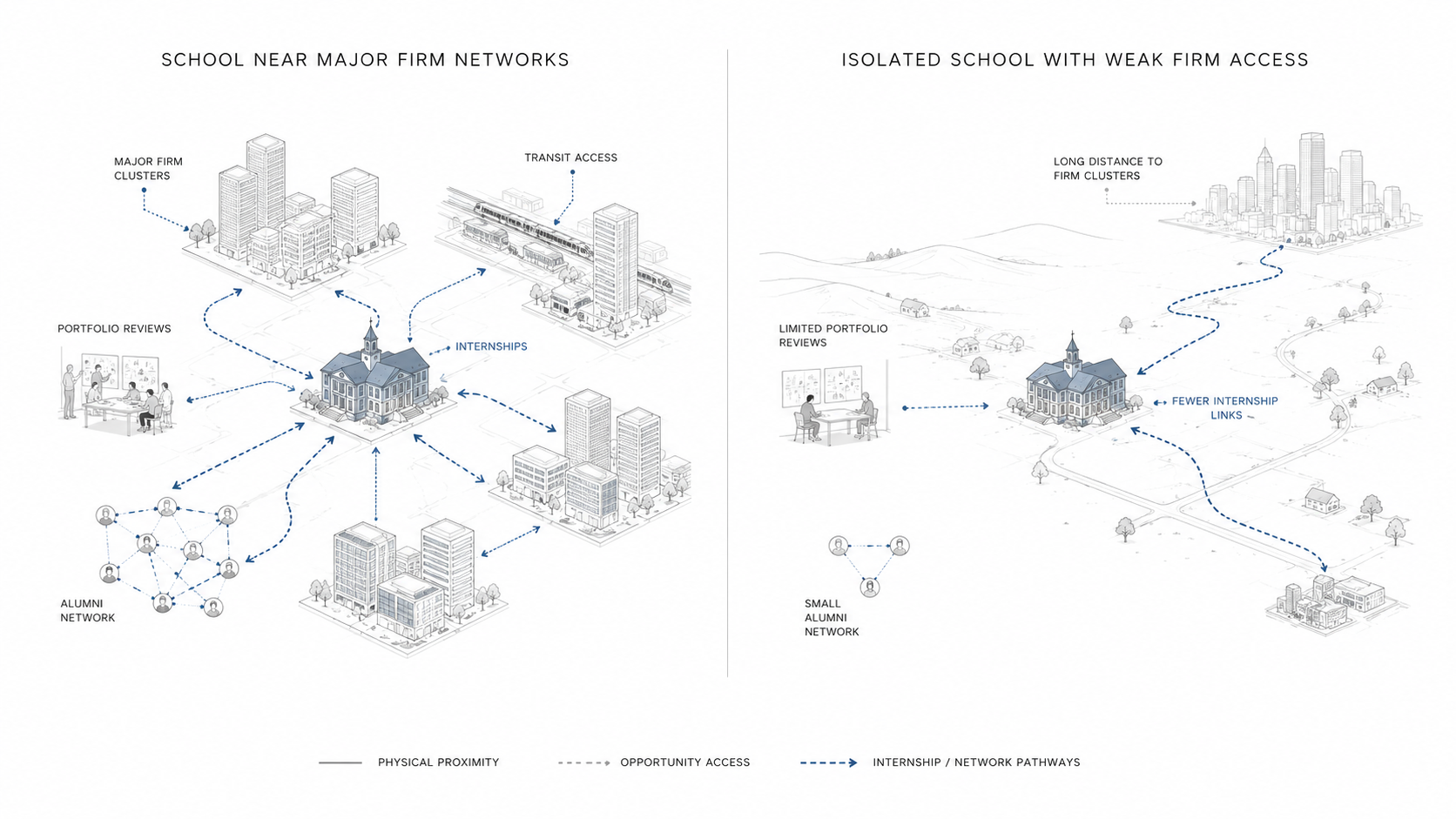
A school near active firms, alumni networks, public agencies, and design reviews may give students more chances to meet people who hire. A school outside a major market may still be excellent, but students should ask how internships actually happen.
Ask this before applying:
Where did recent students intern, and how did they get those positions?
If the answer is vague, the school may be selling design culture without proving professional access.
The Bachelor’s Trap
This is the section many school pages do not make plain enough.
A student can finish an undergraduate architecture-related degree in Canada and still not be at the professional credential step.
That does not mean the degree was useless. It may have built a strong portfolio, helped the student mature, and prepared them for graduate school. But it can still surprise families who thought “architecture degree” meant “professional architecture degree.”
The trap is not the bachelor’s degree itself. The trap is misunderstanding what it does.
The painful version happens when a student treats the undergraduate program like a guaranteed doorway. It may help, but it may not reserve a seat in the professional M.Arch. Admission can still depend on portfolio quality, grades, space, references, and the school’s own review process. If that next step does not happen right away, the student may need a gap year, another application cycle, or a different school.
Before choosing an undergraduate path, ask:
- Does this program lead directly into a professional M.Arch?
- Are admission spots into the M.Arch competitive?
- Do graduates from this undergraduate program usually continue to the same school or apply elsewhere?
- What portfolio is needed for the next step?
- What happens if I do not get into the M.Arch right away?
That last question matters because the real cost of architecture school is often the extra year nobody planned.
International Students Need a Separate Checklist
Canada can be a strong place to study architecture, but international students should check more than the school’s reputation.
They need to compare tuition, housing, visa rules, work permission, internship access, professional recognition, and whether the Canadian credential helps in the country where they may work later.
A Canadian M.Arch can be valuable. It is still not magic. The student’s future may depend on where they want to practice, whether they stay in Canada, and whether another country recognizes the degree or asks for extra review.
International students should ask:
- What is the total cost for international tuition and housing?
- Can students work during the program?
- Are internships realistic for international students?
- Does the school support immigration and career questions clearly?
- Will the degree be recognized if the student returns home?
When a Smaller Canadian School Makes More Sense
The best Canadian architecture school is not always the most famous one.
A smaller program may offer closer faculty access, lower living costs, a tighter studio culture, or a better fit for a student’s interests. A larger or more famous school may offer a stronger network, more events, more urban exposure, or more recognizable name value.
Neither is automatically better.
The right school is the one where the route is clear, the cost is survivable, the studio teaches well, and the student can build a portfolio that leads somewhere.
How to Build a Better Canada Shortlist
Do not build one dream list. Build three.
First, make a professional-path list. These are schools where the CACB-accredited M.Arch route is clear and matches your plan.
Second, make a cost-safe list. These are schools where tuition, rent, commute, materials, and the number of years will not trap you.
Third, make a practice-access list. These are schools with co-op, internships, alumni, firm connections, or strong regional networks.
Then look for overlap.
The strongest choice is not the school that sounds best in a list. It is the school where the degree path, money, studio culture, and professional access line up.
Questions to Ask Before You Apply
- Is the program a CACB-accredited professional M.Arch or an undergraduate preparation route?
- If I start in the undergraduate program, what are my chances of reaching the professional M.Arch?
- What does the current CACB accreditation page say?
- How much does housing cost near the school?
- How much do students spend on models, printing, software, and tools?
- Does the school have co-op, internship support, or strong local office connections?
- What does ordinary student work look like, not only prize-winning work?
- Do students get regular desk critiques and useful feedback?
- What provincial association path do graduates usually follow?
- Would current students choose the same program again?
FAQ
What are the best architecture schools in Canada?
There is no single best Canadian architecture school for every student. University of Toronto, Waterloo, McGill, UBC, Carleton, Toronto Metropolitan University, Dalhousie, Manitoba, Calgary, Laval, Montréal, and Laurentian/McEwen are all programs students may research. The right choice depends on CACB status, cost, city, studio culture, language, internships, and professional goals.
Are Canadian architecture programs accredited by CACB?
Professional architecture programs in Canada should be checked through the official CACB accredited programs page. CACB-accredited professional programs in Canada are Master of Architecture degrees, so students should not assume an undergraduate architecture-related degree is the final professional credential.
Do I need an M.Arch to become an architect in Canada?
For the standard Canadian university route, the professional degree is usually a CACB-accredited M.Arch. Students with foreign degrees or alternate backgrounds may need CACB academic certification or assessment before moving through provincial registration.
Is Waterloo better than University of Toronto for architecture?
They are different choices. Waterloo is often researched for its co-op structure and Cambridge setting. University of Toronto is often researched for its graduate professional path and Toronto urban network. The better choice depends on cost, studio fit, portfolio goals, and where the student wants professional access.
Is architecture school in Canada cheaper than in the United States?
Sometimes, but not always in a way that solves the problem. Domestic tuition may be different from international tuition, and housing in cities like Toronto or Vancouver can change the total cost quickly. Compare full cost, not only tuition.
Can international students study architecture in Canada?
Yes, but they need a separate checklist. International students should compare tuition, visa and work rules, internship access, housing, recognition of the degree, and whether they plan to stay in Canada or return home after graduation.
What is the biggest mistake students make when choosing an architecture school in Canada?
The biggest mistake is choosing by school name before understanding the route. Students should check whether the path leads to a CACB-accredited M.Arch, how much it costs, what studio culture is like, and how graduates move into practice.
Read Next
If you need the wider country-by-country decision framework, read Architecture Schools by Country: What to Check Before You Apply.
If you are comparing U.S. school routes, read Architecture Education in the United States.
If you want a broader school-choice filter, read Best Architecture Schools: What Rankings Miss.
If you are looking at Canadian careers after school, read Architecture Career in Canada.