
Sustainable Offices | Green Office Design, Benefits, and Trends
Workplaces That Breathe
A sustainable office means less waste and fewer headaches. Natural light instead of buzzing tubes. Air you can actually breathe. Materials that don’t reek for months.
The best examples feel obvious once you step inside. Amsterdam’s Edge with its glazing that tracks sun and saves power. Seattle’s Bullitt Center generating its own electricity while quietly cutting operating costs. These aren’t showrooms. They’re places where companies keep bills down and staff don’t drag themselves through the week.
It isn’t about slapping plants in the lobby. Real sustainable offices work through the bones of the building—ventilation, daylight, structure, systems. Get it right, and you end up with healthier people, steadier focus, and a bottom line that makes the finance team pay attention.
That’s why the shift sticks. It saves money and keeps people sharper.
Sustainable Offices and Why Businesses Keep Building Them
From the 1970s energy panic to today’s biophilic design, sustainable offices show how buildings evolve with people and costs.
How Sustainable Office Design Evolved
From Oil Crises to Green Walls
The story didn’t start with plants on desks. It started with panic. In the 1970s, oil prices spiked and suddenly everyone cared about energy. Offices swapped out wasteful lighting and clunky HVAC just to keep the bills from wrecking them. Nothing fancy. Just survival.
Checklists and Standards Take Over
By the 1980s, the conversation shifted. Architects started talking about frameworks and certifications. LEED showed up. Not perfect, but it gave firms a checklist. At least now “green” meant more than turning off the lights.
The 2000s and the Smart Tech Rush
Solar panels on roofs, sensors in ceilings, smart systems that promised to run buildings better than humans ever could. Some worked. Some turned into maintenance nightmares. I’ve seen firms curse at software more than once before going back to manual overrides.
2020s: Wellness and Biophilia
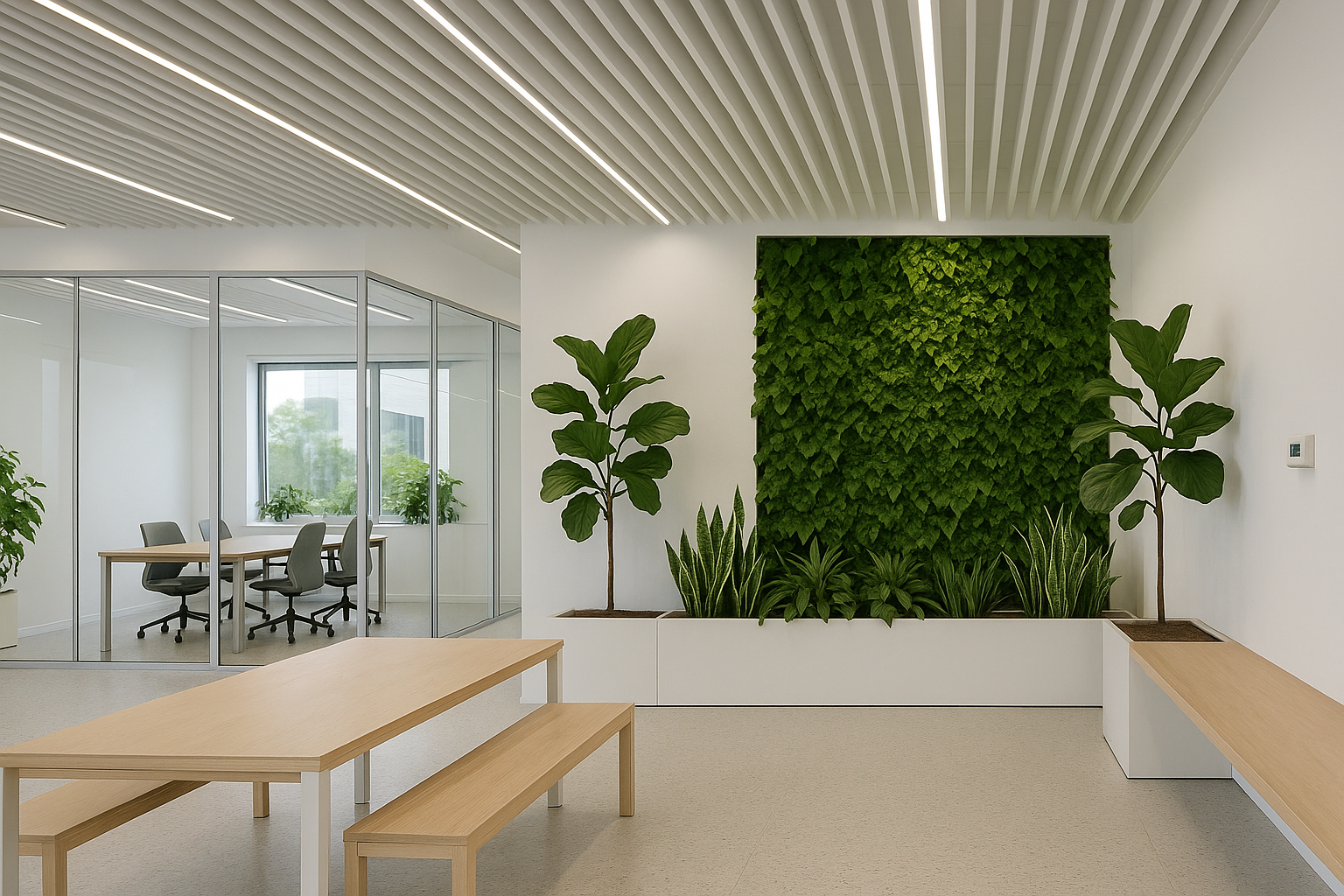
Now the focus is people. Wellness, daylight, indoor air. Companies finally admitted that sick staff cost more than expensive glass. So you see moss walls in lobbies, circadian lighting, water systems built around hydration stations. It’s half sustainability, half keeping talent from quitting.
Timeline Snapshot
1970s → Energy panic. Fluorescents, tighter HVAC.
1980s → Standards like LEED. Checklists enter the game.
2000s → Solar, sensors, “smart” tech (with mixed results).
2020s → Wellness and biophilia. Offices designed to keep people alive and working.
Not a smooth arc. More like a series of jolts every decade.
What Makes a Sustainable Office
Keep Energy Low
You see it first in the bills. A solid sustainable office doesn’t waste heat in winter or leak cool air in summer. LEDs that don’t buzz, HVAC that runs quiet, and controls that don’t fight you every morning. On one Toronto retrofit, new glazing cut heating loads so much the boilers sat idle half the season. That’s where the money goes back in your pocket.
Stop Wasting Water
Bathrooms and kitchens chew through gallons. Low-flow taps and dual-flush toilets are the baseline now. Some offices go further: rainwater tanks feed irrigation, greywater loops flush toilets. I toured one office in Vancouver where the planters were watered by sink runoff. Smart, simple, and nobody noticed until it was pointed out.
Air That Works for You
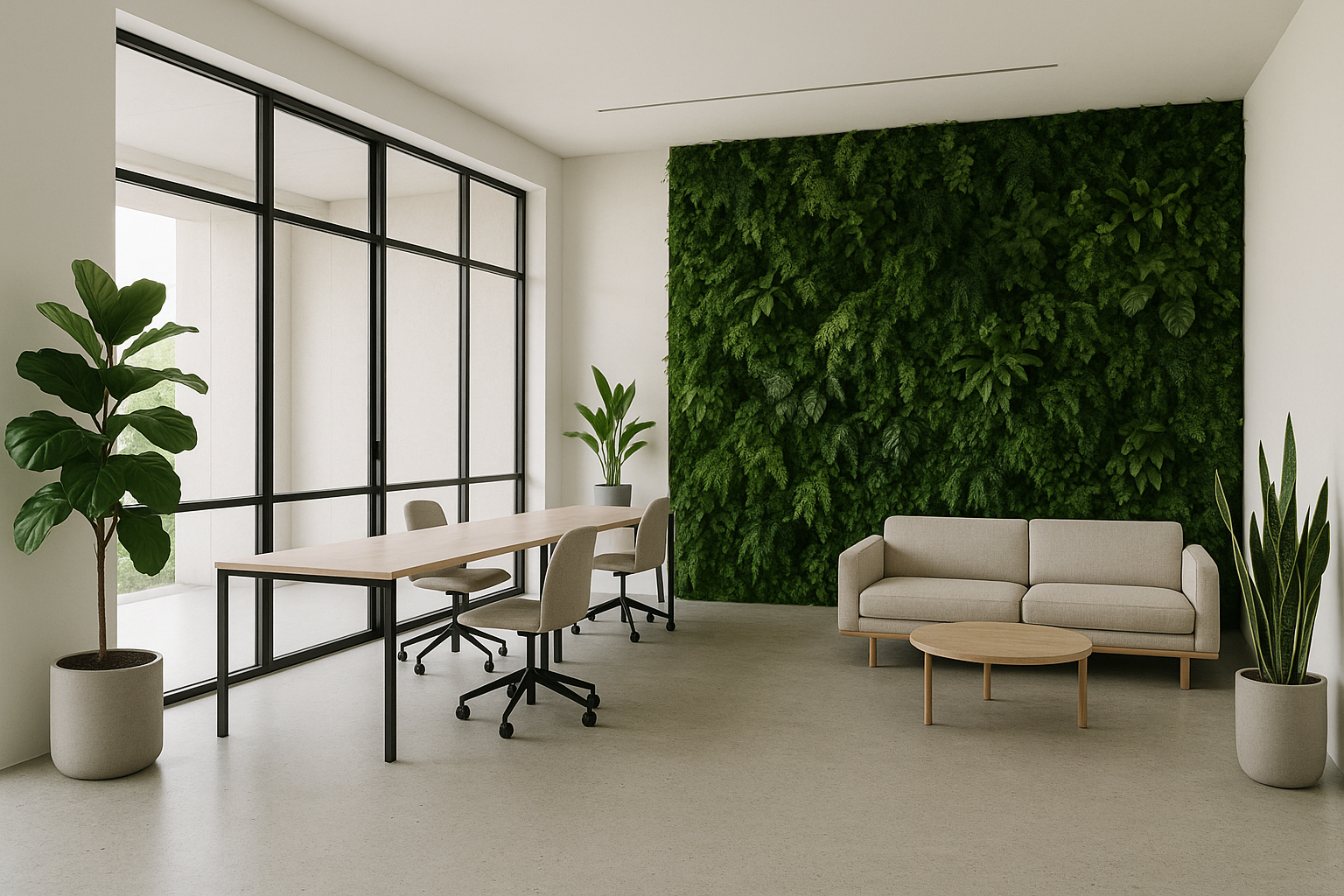
Bad air drags people down. You know the feeling—3 p.m., heavy head, slow brain. Good design fixes that with proper ventilation, low-VOC finishes, and sometimes a wall of plants. Harvard research even linked clean indoor air to better decision-making. Not a surprise. Ask anyone who’s worked in a sealed tower versus a studio with operable windows.
Build with Better Stuff
Skip the plastic laminate. Use reclaimed wood, recycled steel, bamboo, or local stone. It shrinks the carbon hit and makes spaces feel better. One firm swapped imported marble for local limestone. Cost dropped, durability stayed, and the client got to brag about cutting trucks off the road. That’s design meeting reality.
-
For more on bringing nature directly into the workplace, see Biophilic Office Design | Enhancing Workspaces with Nature.
Designing a Sustainable Office

Site and Orientation
Where the building sits matters. Face it wrong and you’ll be paying for lights forever. South-facing glass can keep a space bright most of the day. Keep the existing trees if you can. Green around the site helps more than people think.
Energy Systems
Put solar on the roof if the budget allows. Geothermal if the site fits. Even basic upgrades—efficient HVAC, LED fixtures, decent insulation—make a big cut. Smart controls are worth it, but only if they’re tuned. I’ve seen “intelligent” lighting shut off mid-meeting. Test before you brag.
Biophilic Design
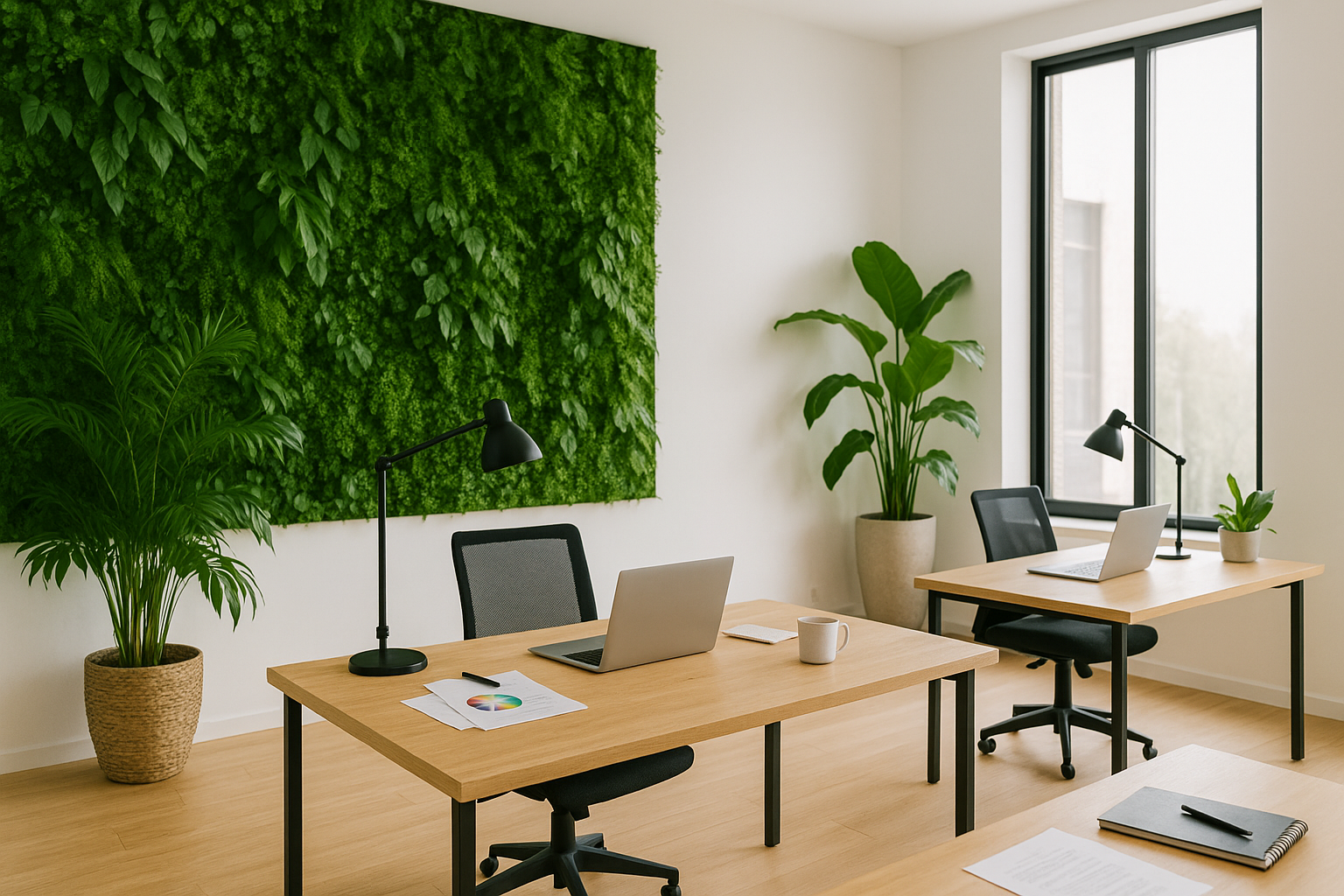
Plants, daylight, stone, wood. Not decoration, but part of how people focus. A window view of trees is better than drywall. Offices that add green walls or natural finishes usually feel calmer. Staff notice.
Related
For more on nature in different spaces, see Nature-Inspired Architecture: Real Examples and Lessons for Designers
How Firms Are Doing It for Real
Buildings That Prove the Point
The Edge in Amsterdam
PLP Architecture built The Edge into a lab of efficiency. Twenty-eight thousand sensors track everything from heat to humidity. The system shifts lights and ventilation as people move. Rainwater runs the toilets and irrigation. Green roofs cut loads. It shows how data and sustainability can work when the tech is set up right. I have also seen “smart” systems in other offices fail because nobody tested them properly. Here it clicks.
Google Bay View Campus
In California, Google built Bay View around energy and daylight. The roof carries massive solar panels shaped like scales. Buildings catch breezes to cut cooling. Water is recycled across the site. Bike paths and charging stations are everywhere. David Radcliffe from Google said the campus had to be both sustainable and healthy. Staff confirm the difference. They notice it in light, air, and comfort.
The Bullitt Center in Seattle
Often called the greenest commercial building in the United States. It runs fully on solar power, captures rainwater, and uses composting toilets. The design forces people to take stairs. It proves that a net positive office is not a sketch or dream. It is possible. It also shows the work needed to keep these systems running.
Where Sustainable Offices Are Heading
Wellness First
The new push is health. Adjustable desks, proper light, clean air. Firms add meditation rooms or fitness areas. The World Green Building Council points out that healthier offices cut sick days and sharpen focus. You can feel the shift when you step into these spaces.
Smarter Buildings
Sensors and management systems now run most big offices. The best setups are invisible. They trim loads quietly. The bad ones leave staff waving arms to get the lights back on. Good design keeps the user in mind.
Net Zero Goals
More offices are aiming for net zero. That means producing as much energy as they use. Solar panels and better building envelopes do most of the heavy lifting. The Living Building Challenge set a high bar, but even smaller projects now reach it by cutting loads first and then adding renewables.
Pro Notes
Cut the biggest loads first. HVAC and lighting always dominate.
Bring nature inside. Plants and wood finishes keep people steady through the day.
Test smart systems like a user, not an engineer.
Local materials usually age better than imports.
MUST READ
Cradle to Cradle: Remaking the Way We Make Things by William McDonough and Michael Braungart. A book that changed how architects think about waste and cycles.
The Upcycle: Beyond Sustainability, Designing for Abundance by the same authors. Pushes the idea from “less harm” to “more benefit.”
What Most Guides Leave Out
Sustainable office design sounds clean on paper. But in practice, it is messy. Costs jump, systems fail, staff push back. That’s the reality nobody likes to admit.
On one retrofit I sat through, the “efficient” HVAC system was so complex the facilities team spent weeks just learning the interface. The result: lights stayed on overnight, and air handlers ran at full tilt. The energy model promised 30 percent savings. The bills barely moved. Lesson learned—simplicity beats complexity every time.
Another project showed the flip side. A mid-size firm in Toronto swapped their sealed windows for operable ones, added ceiling fans, and cut cooling loads by half. No sensors. No dashboards. Just basic design logic. Staff loved it because they had control. Focus went up. Sick days went down.
This is where sustainable offices succeed or fail: not in glossy diagrams, but in daily use. The architect can specify a green roof or rainwater system, but if maintenance can’t handle it, the whole idea collapses. If staff feel trapped in a “smart” building that shuts off lights mid-meeting, the project becomes a joke.
The wow factor is not the tech or the plants. It is when the design holds up five years later. When the bills stay low, the air stays clean, and people want to come in on Monday morning. That is the measure.
See also: Nature-Inspired Architecture: Real Examples and Lessons for Designers
FAQs
General Questions
What is a sustainable office?
A workplace designed to cut waste, use less energy and water, and keep staff healthy with better light, air, and materials.
Are sustainable offices more expensive to build?
Yes, usually up front. Better insulation, glazing, and systems cost more. But they often pay back in lower bills within 5 to 10 years.
Do sustainable offices actually save money long-term?
Most do. The big savings come from energy and water. The hidden savings come from fewer sick days and higher staff retention.
What makes an office “green” instead of just efficient?
Efficiency alone cuts bills. A green office also improves indoor air, uses healthier materials, and lowers environmental impact.
Do small offices benefit or only big ones?
Even a 5,000 sq ft space benefits. Good daylight and efficient HVAC help no matter the size.
Energy and Systems
How much energy can a sustainable office save?
Well-designed offices often use 25 to 40 percent less energy than standard ones.
What is the easiest energy upgrade?
Switching to LED lighting and upgrading controls. Cheap, fast, and the payback is quick.
Are solar panels worth it for offices?
Yes if the roof is right and the utility rates are high. They work best when paired with efficiency upgrades.
What is a net-zero office?
A building that produces as much energy as it uses, usually through a mix of efficiency and renewables.
Do smart building systems always work?
Not always. When tuned right, they save loads. When tuned wrong, they waste power and annoy users.
Water and Waste
How do sustainable offices save water?
Low-flow fixtures, dual-flush toilets, rainwater harvesting, and sometimes greywater recycling.
Is greywater safe for offices?
Yes if filtered and used for toilets or irrigation. It is not used for drinking.
What about waste in construction?
Reclaimed wood, recycled steel, and careful sorting reduce the footprint. Demolition recycling is often overlooked but saves tons of material.
Can offices recycle rainwater for drinking?
Rarely. Most codes limit it to flushing or irrigation unless the water is treated to high standards.
Indoor Air and Health
Why does air quality matter so much?
Bad air lowers focus and increases sick days. Good air boosts productivity.
What are VOCs and why avoid them?
Volatile organic compounds come from paints, carpets, and glues. They release chemicals into the air and make people sick.
Do plants really help air quality?
On their own, not much. In combination with ventilation, they help create a fresher environment.
What’s the link between daylight and productivity?
Natural light resets circadian rhythms. Staff stay more alert and less fatigued.
Do biophilic offices really work?
Yes. Even simple moves like adding wood finishes and outdoor views reduce stress.
Design Choices
Is orientation important?
Yes. South-facing glass can save on lighting. Poor orientation locks you into high energy use forever.
What materials are considered sustainable?
Recycled steel, reclaimed wood, bamboo, cork, low-VOC paints, and locally sourced stone.
Can existing buildings be retrofitted to be sustainable?
Yes. Insulation, glazing, and HVAC upgrades are usually the first steps.
Do sustainable offices look different?
Sometimes. Green roofs, plant walls, and solar panels stand out. Other changes like better insulation are invisible.
Is open plan good or bad for sustainability?
Neutral. The bigger question is whether air and light reach everyone equally.
Business and People
Why do companies invest in sustainable offices?
Lower bills, stronger recruitment, healthier staff. It also improves brand image.
Do staff notice the difference?
Yes. Cleaner air, daylight, and quieter systems are felt immediately.
Does it help with retention?
Many companies report higher retention after moving to healthier offices.
Can landlords charge higher rents for sustainable offices?
Often yes. Tenants pay more for lower operating costs and healthier environments.
Do certifications like LEED really matter?
They matter for marketing and benchmarks, but performance on the ground depends on execution.
Trends and Future
What is the biggest trend right now?
Wellness. Companies see health as part of sustainability.
Are net-zero offices becoming common?
They are growing, especially in new builds. Retrofits take longer.
What role does technology play?
Sensors and controls can trim loads, but only when maintained.
Are green roofs worth it?
Yes for stormwater control and insulation. Maintenance is a factor.
What’s next after net-zero?
Net-positive. Buildings that generate more energy than they use and give back to the grid.