

The One Idea That Holds a Project Together
A parti is the main idea behind the design.
It is the thing that keeps the project from drifting. Once that idea is clear, the plan, form, circulation, and openings start working together.
If your design base still feels loose, read Design Basics in Architecture and Building, Introduction to Architecture: A Beginner’s Guide to Building Design, and Architectural Drawing Basics Every Architect Must Know first.
What Parti Means
Parti is the central organizing idea of a design.
It might be a line. A court. A spiral path. A lifted bar. A thick wall. A cluster of rooms around a shared void. It does not need to be complicated. Most strong partis are blunt.
Good parti answers a simple question:
What is the project really doing?
Not what style it is. Not what materials you like. Not what software image you want at the end. What is the project doing?
- pulling people along an axis
- wrapping space around a court
- stacking rooms around one stair
- lifting the building to free the ground
- cutting light through a deep plan
If you can say the move clearly, you probably have the start of a parti. If you need a paragraph, the idea is still muddy.
Parti Is a Filter

This is the part people do not say clearly enough. Parti is not only the first sketch. It is the filter you use the whole way through the project.
Every time you add something, you should be able to ask:
- Does this strengthen the main idea?
- Does this help the plan read better?
- Does this support the way people move through the building?
- Does this make the section stronger?
If the answer is no, cut it.
That is why parti matters. It does not only help you begin. It helps you edit.
| Question | Strong Parti | Weak Parti |
|---|---|---|
| Can you explain it fast? | One sentence | A long speech |
| Does it guide the plan? | Rooms and circulation align with it | Plan feels patched together |
| Does it survive section? | Light, height, and structure support the idea | The section feels unrelated |
| Does it survive changes? | It stays legible even when details shift | It collapses after the first revision |
The Five-Minute Parti Test
Before you keep drawing, test the parti quickly.
- Write it in one line. If you cannot, it is still blurry.
- Sketch it in plan. The idea should show up without heavy explanation.
- Cut one section. If the section says something different, the parti is weak.
- Trace circulation. If movement fights the idea, fix it now.
- Mark the strongest void. If there is no main void, pause, or spatial center, the project may still be too loose.
This is the useful test. Not whether the diagram looks cool. Whether the project starts reading clearly in plan, section, and movement.
The Moment Most Students Miss
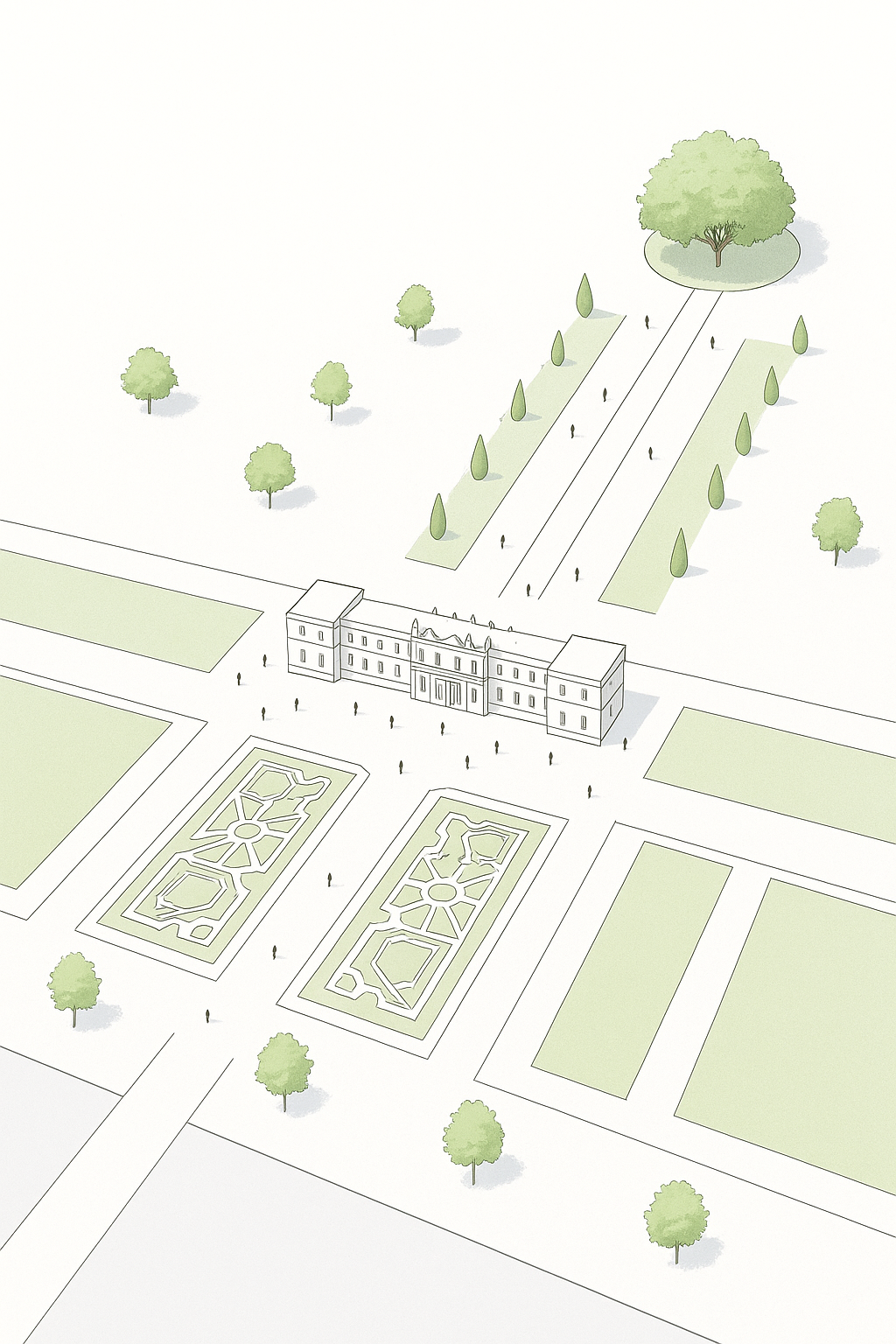
A parti does not matter because it looks clean on trace paper. It matters when the building starts feeling clear in space.
That moment can happen when:
- the axis finally lines up and the view lands
- the court starts pulling light into the plan
- the stair locks the floors together
- the roof cut makes the section make sense
That is the real test. The idea should survive contact with real rooms, real light, real structure, and real movement.
If the parti only works as a diagram, it is still half-baked.
MUST READ: Architecture: Form, Space, and Order by Francis D.K. Ching
Common Parti Types
These are not the only partis, but they are the common ones students can understand and use fast.
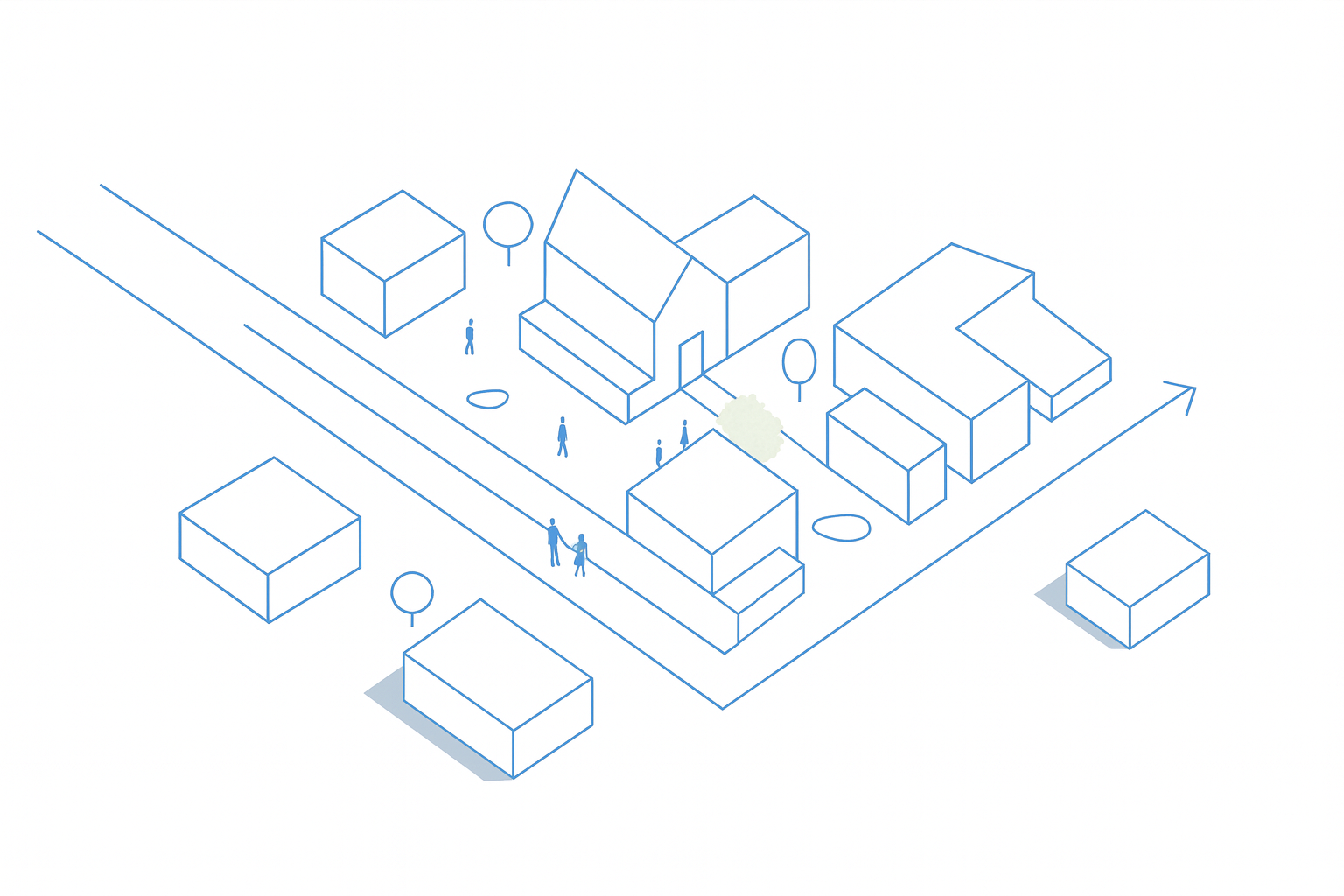
Axis
One strong line organizes the plan and the movement. Good for formal sites, long buildings, and projects built around approach or procession.
Watch for: an axis with no clear end point.
Courtyard
Rooms wrap around a void. The court handles light, air, orientation, and social life. Good for deep plans and projects that need an inward center.
Watch for: a courtyard that looks nice in plan but overheats or stays dead.
Radial
Spaces work outward from a strong center. Good for halls, gathering spaces, and buildings where hierarchy matters.
Watch for: forcing a perfect circle onto a site that wants something else.
Cluster
Several parts group around connectors or shared outdoor space. Good for schools, housing, pavilions, and phased projects.
Watch for: too many parts and no clear spine.
Spiral
Movement becomes the main organizer. Good for galleries, ramps, and narrative spaces.
Watch for: a route that looks dramatic but becomes tiring or confusing.
Real Examples
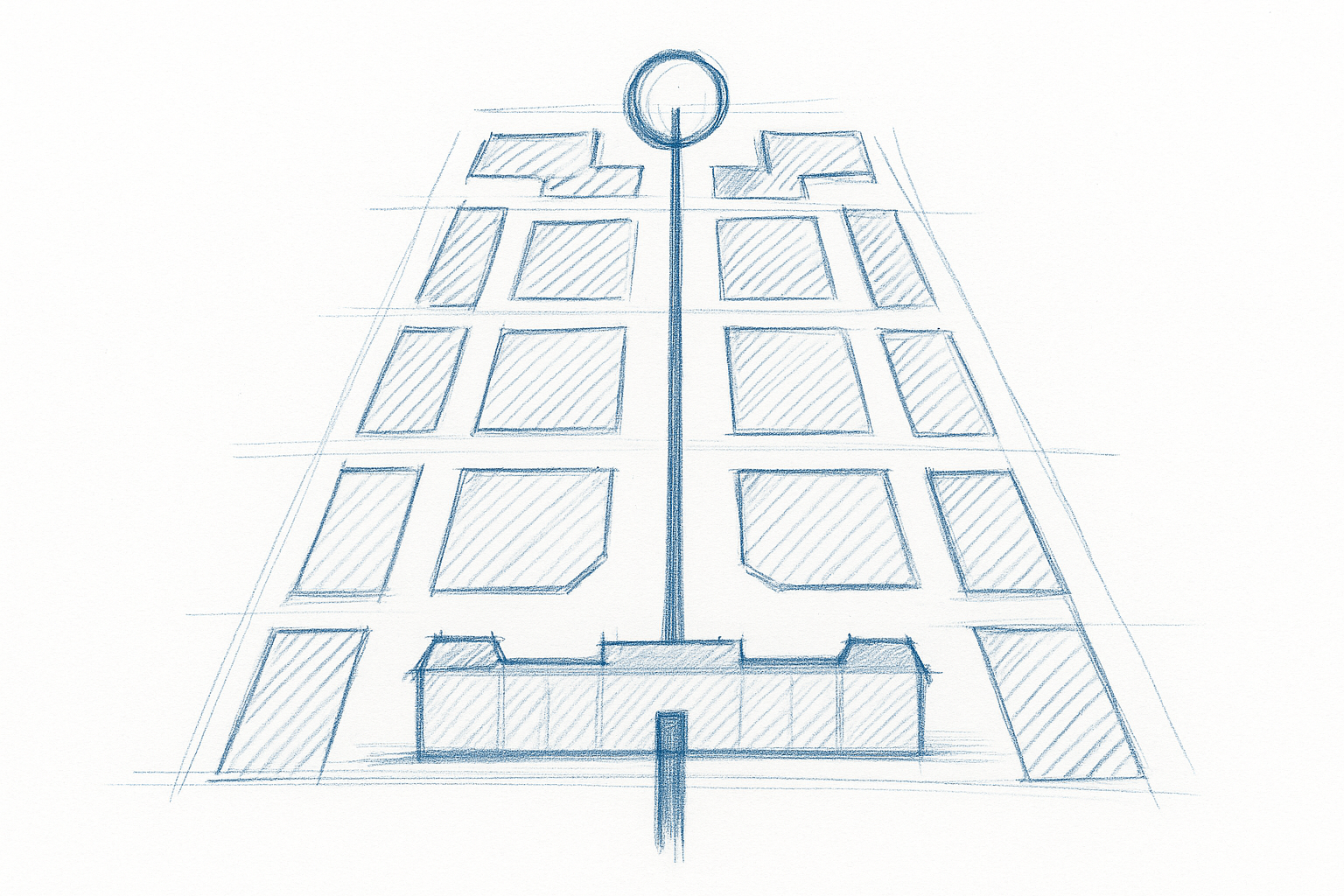
| Project | Parti | Why It Reads Clearly |
|---|---|---|
| Versailles | Axis | The line controls movement, view, and garden order. |
| Alhambra | Courtyard | The void carries light, air, water, and spatial order. |
| Pantheon | Radial | The centered room and oculus organize the whole experience. |
| Habitat 67 | Cluster | The project reads as grouped units with connected outdoor space. |
| Guggenheim Museum | Spiral | Circulation and form are the same move. |
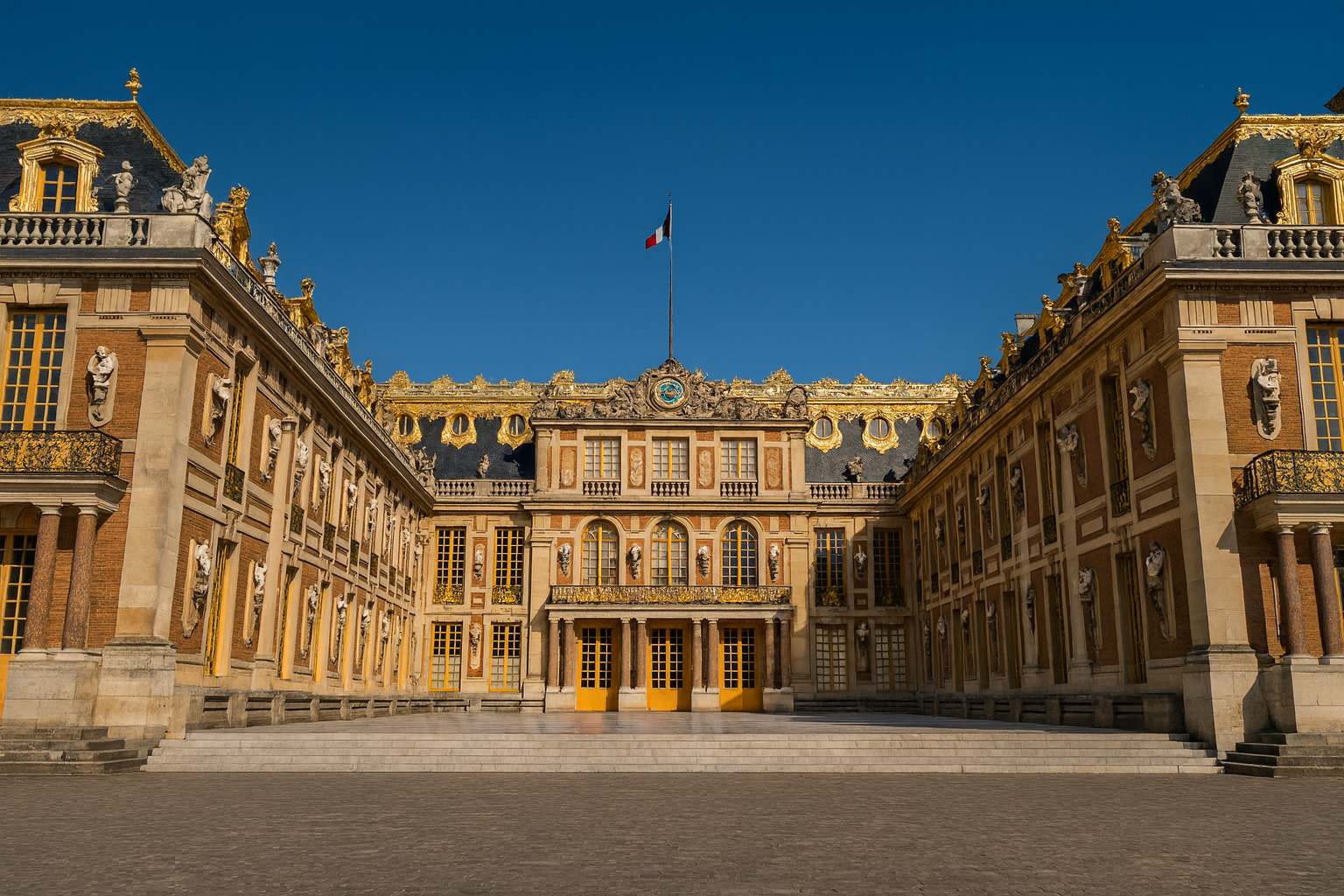
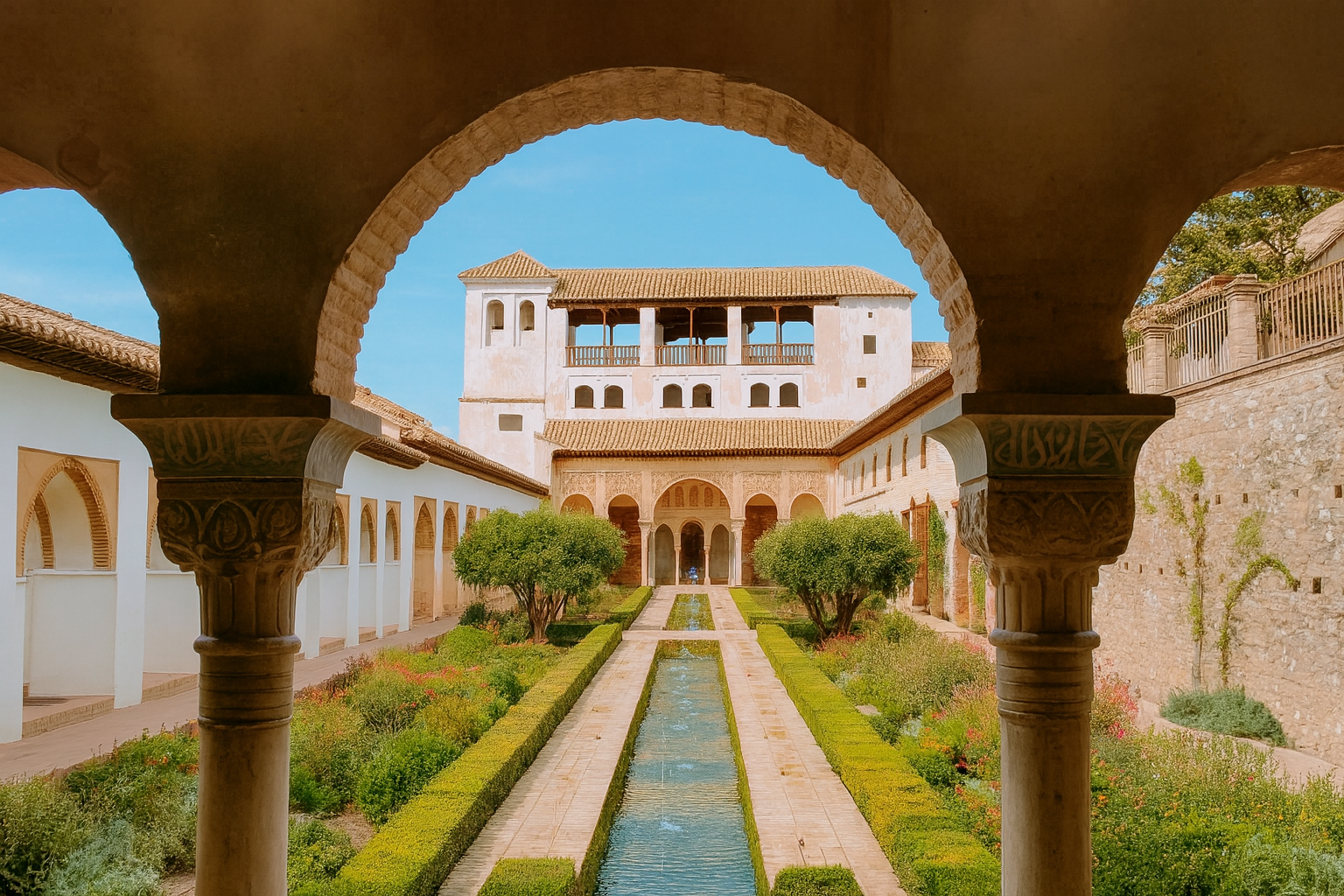
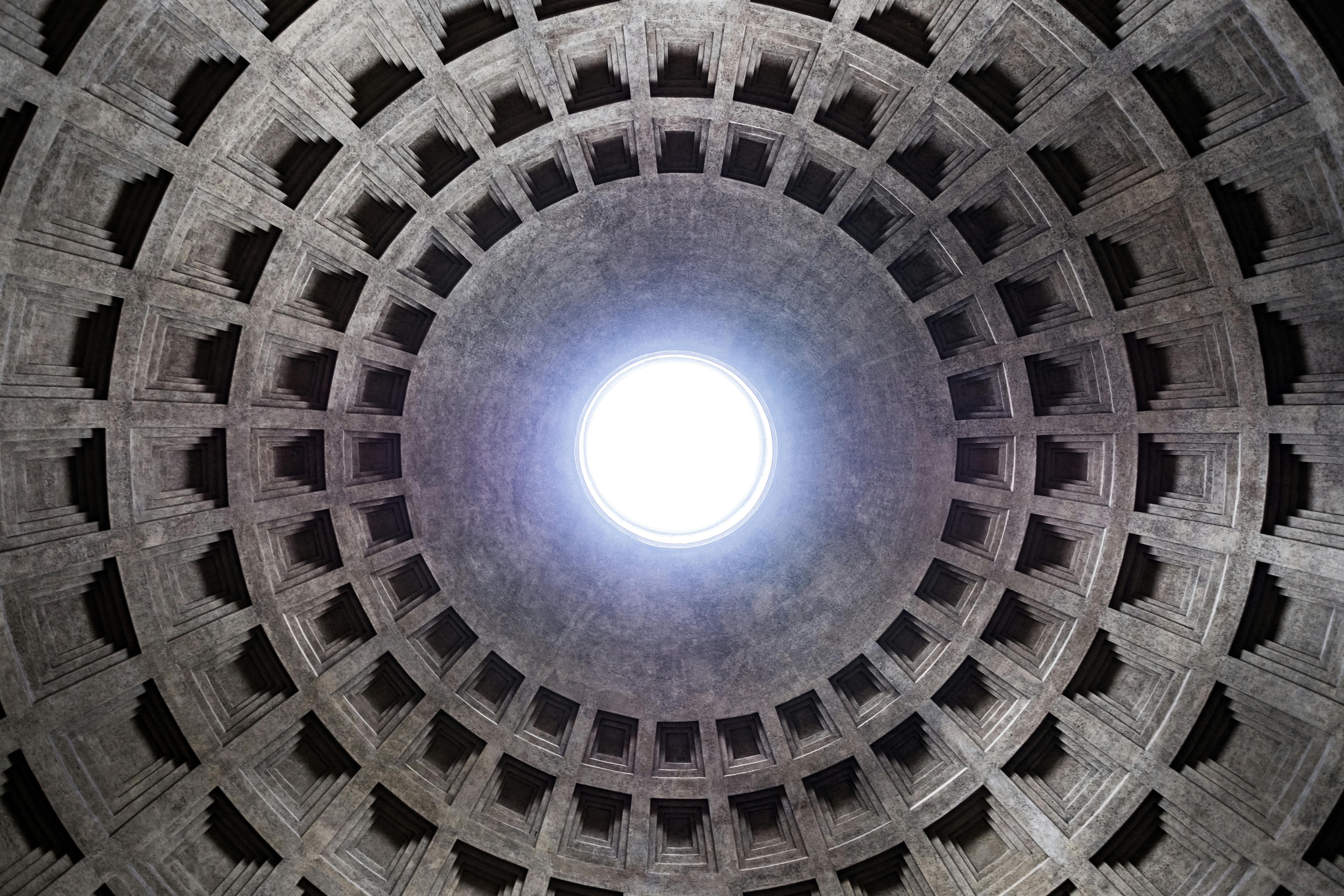
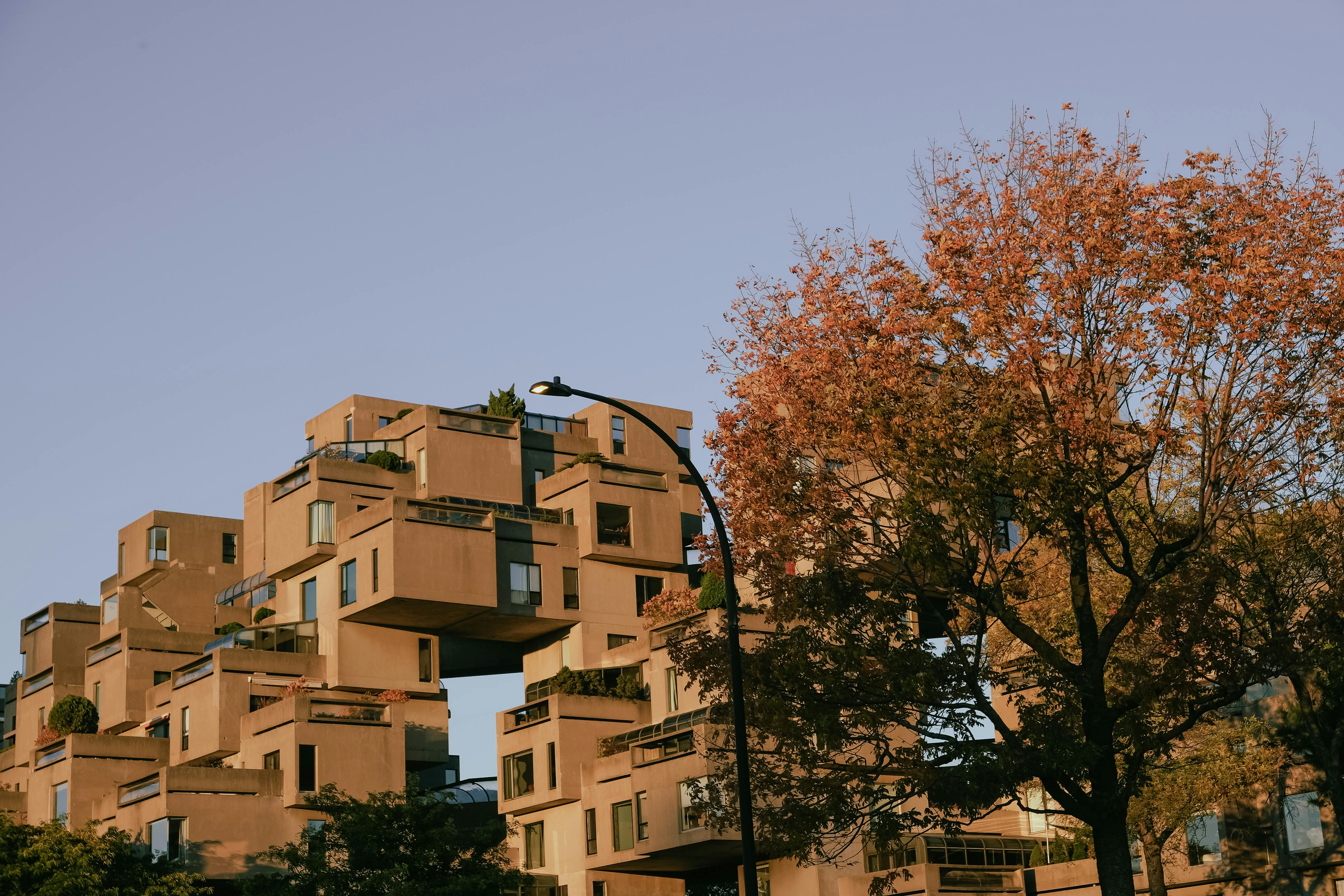
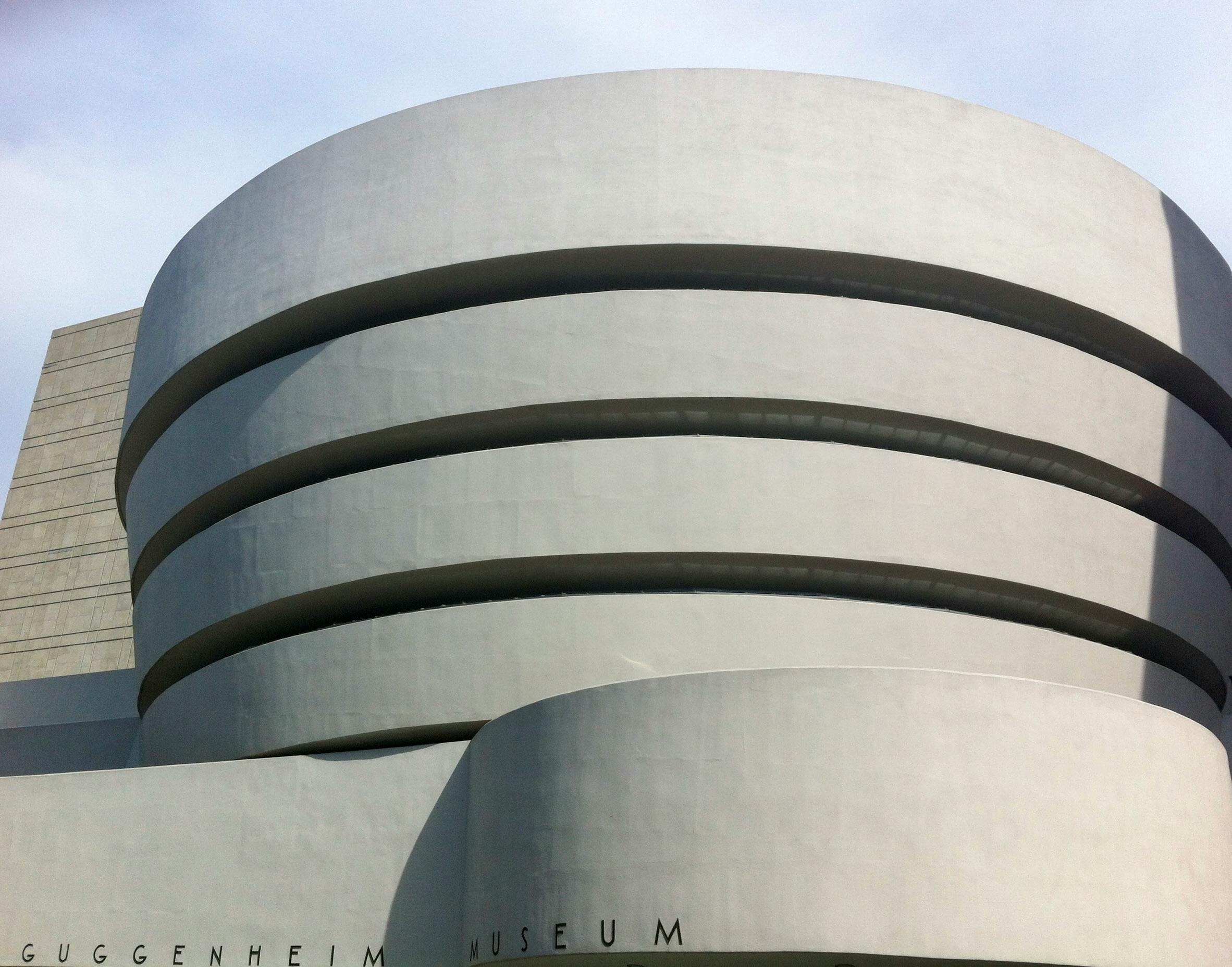
These examples matter because you can explain each one fast. That is part of the point. A strong parti is usually legible quickly.
How to Work With Parti
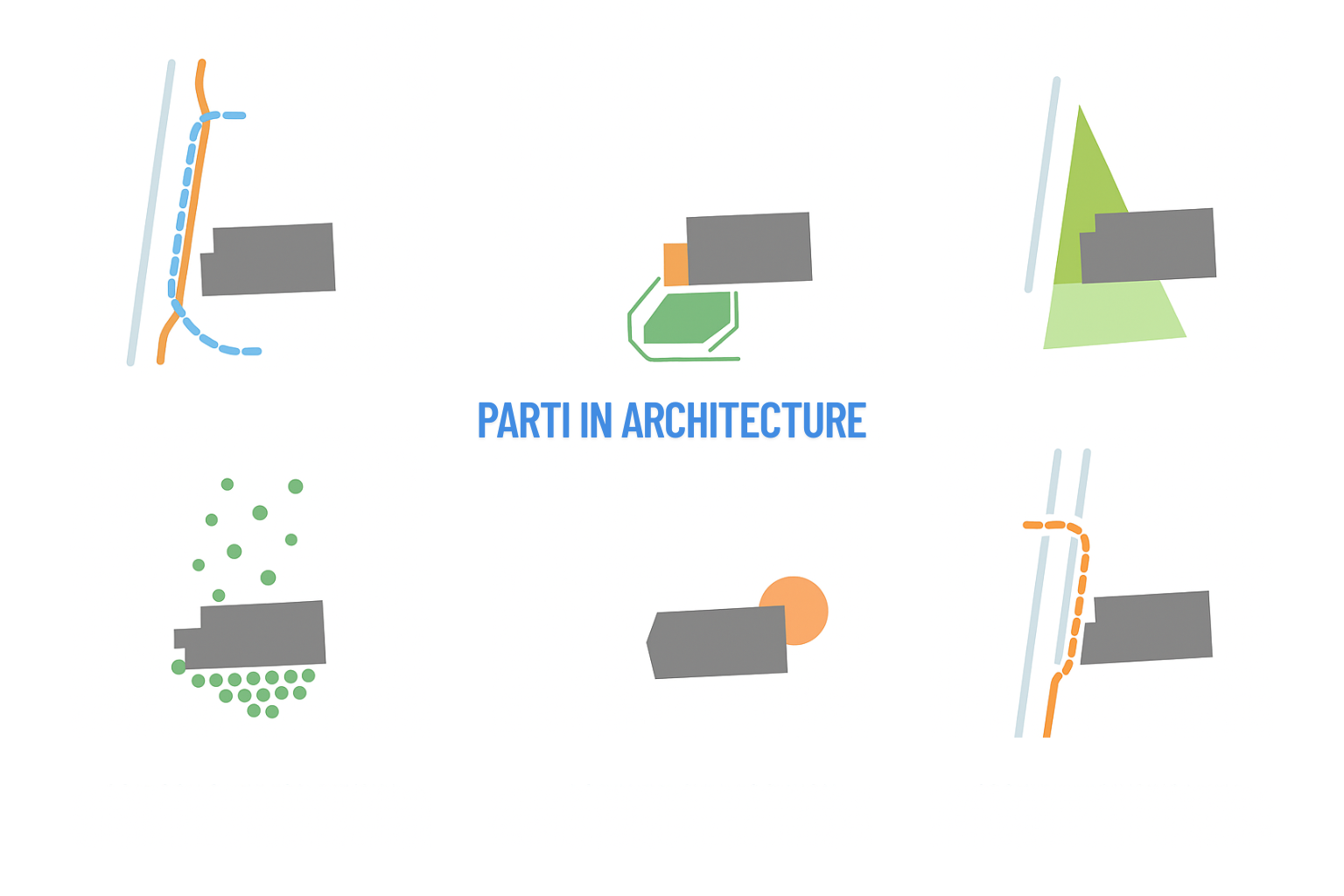
Start blunt
Begin with a line, a void, a bar, a ring, a court, or a cluster. Do not try to be clever too early.
Diagram early
A parti diagram is still useful because it keeps you from losing the idea once the drawings get busy.
Check section early
A lot of partis look fine in plan and die in section. Cut early. Do not wait.
Let use shape the idea
Good parti is not decoration. It has to help the building work. If the idea makes the building harder to use, the idea needs fixing.
Come back to it
Every round of drawings pulls projects toward noise. Come back and ask what the main move still is.
Parti and the Void
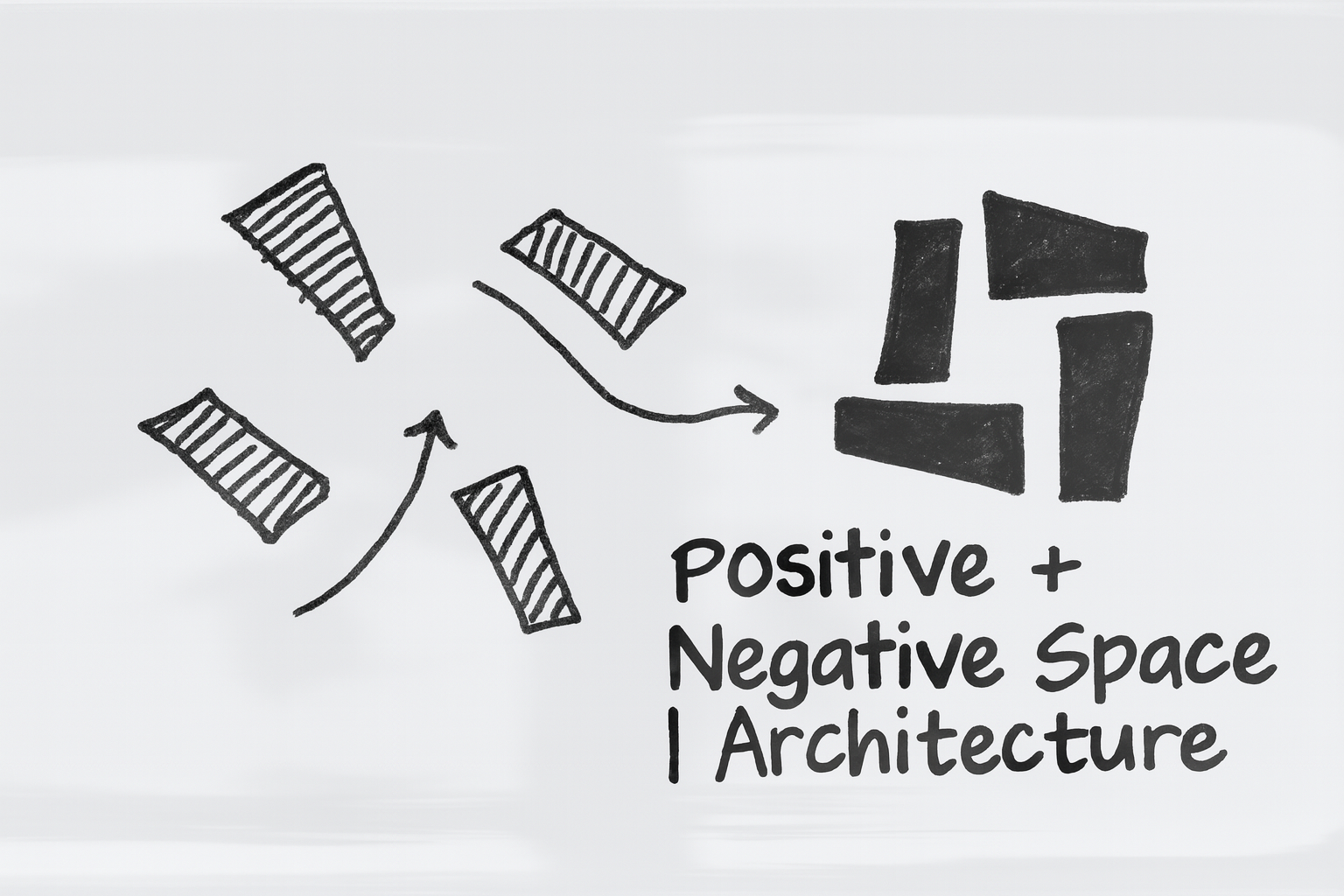
This was the most useful part of your draft, but it needed cutting down.
Strong partis often depend on what is left open, not only on what is built solid.
The court, the forecourt, the stair hall, the cut in the roof, the quiet gap between two wings, the pause before a room opens up. Those are not leftover spaces. Often they are the part of the project that makes the main idea legible.
That is why the void matters. It gives the parti room to read.
- Axis parti often needs a strong open approach or a clear destination.
- Courtyard parti depends on the void doing real work with light, air, and gathering.
- Cluster parti depends on the spaces between the parts, not only the parts themselves.
- Spiral parti needs calm at the center or the whole route turns into noise.
If the solid and the void are saying different things, the project starts to blur.
For the fuller companion idea, see Negative Space in Architecture: The Load-Bearing Void.

What Goes Wrong

Most parti mistakes are not mysterious.
| Problem | What it looks like | Better move |
|---|---|---|
| Too many ideas | The plan feels busy and the story keeps changing | Cut back to one main move |
| Pretty diagram, bad circulation | The parti looks clean but movement feels awkward | Trace paths early and fix the flow |
| Rigid parti | The idea cannot adapt when the site or program shifts | Keep the core idea, loosen the exact shape |
| No strong void | The project has solids but no spatial center | Find the main pause, cut, court, or hall |
| Section ignored | The concept only reads in plan | Test height, light, and structure earlier |
A strong parti should make later decisions easier. If every new decision feels harder, the main idea may still be weak.
A Better Studio Habit
Here is a more useful studio habit than making endless concept boards:
- Write the parti in one sentence.
- Draw the plan in the simplest form possible.
- Cut one section through the most important space.
- Mark the main void.
- Trace how a person moves through it.
- Ask what can be removed without hurting the idea.
That workflow gets you closer to a real project faster than polishing a vague concept for days.
This also connects naturally to Parti in Architecture: The Foundation of Great Design if you want the broader beginner version, and to Introduction to Drafting: What It Really Takes to Learn the Craft if your problem is turning the idea into readable drawings.
FAQ
What is parti in architecture?
It is the core idea that organizes the design.
How do you create a parti?
Start with the project’s real problem, then reduce the solution to one clear move or diagram.
Why is parti important?
It keeps the project coherent as plans, sections, materials, and circulation develop.
Can a parti change?
Yes. Good partis adapt. The shape can shift while the main idea stays legible.
What is a famous example of parti?
The Guggenheim is a classic one because the spiral idea drives both circulation and form.
What To Read Next
- Architectural Drawing Basics Every Architect Must Know if the problem is explaining the idea clearly.
- Design Basics in Architecture and Building if the whole design base still feels loose.
- Introduction to Architecture: A Beginner’s Guide to Building Design if you want the broader foundation first.
- Negative Space in Architecture: The Load-Bearing Void if you want to go deeper into the void side of the idea.
- Basic Drawing Tools for Architects: Top Picks and Personal Favorites if you are still building the physical sketching setup.