
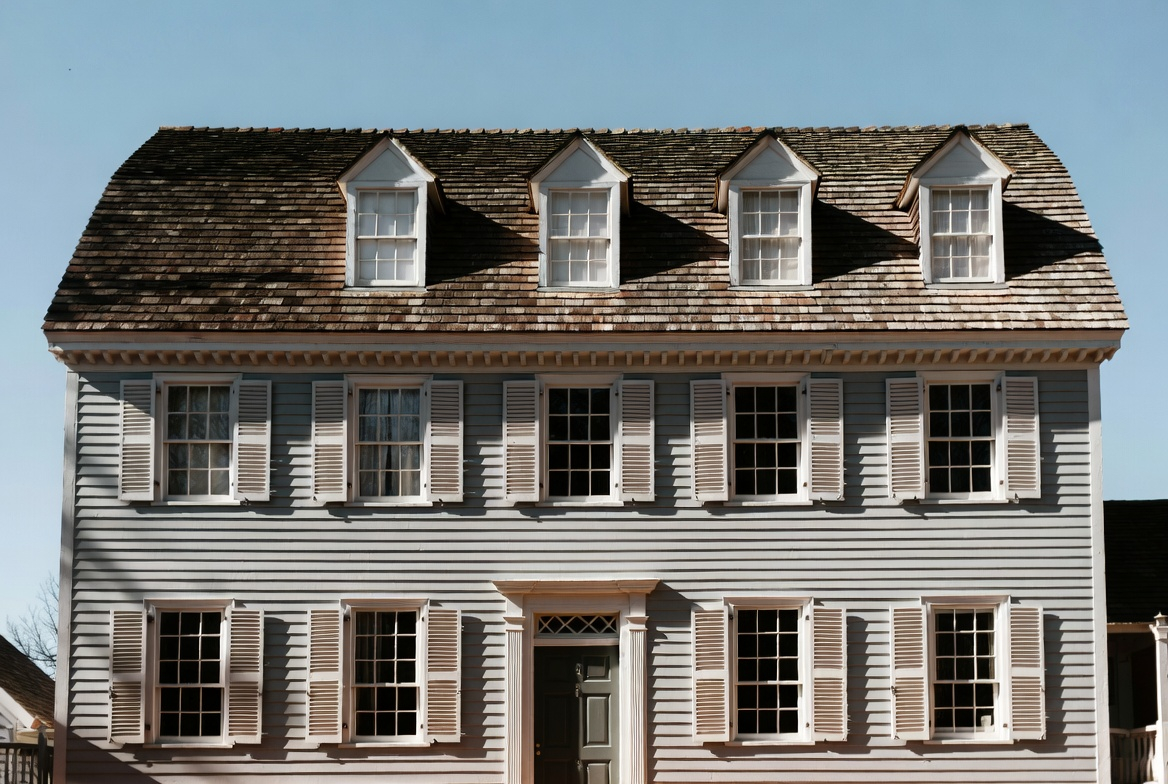
One reason Colonial architecture still reads so clearly is that the buildings usually follow a disciplined set of rules. Not one exact formula. More like a repeatable kit of decisions: balanced facades, practical materials, steep-enough roofs for the climate, and interior plans built around order rather than surprise.
Common Architectural Features
The mistake is treating Colonial architecture like one fixed house type. It is broader than that. New England timber houses, Southern brick homes, Dutch Colonial roofs, and Georgian facades all shift by region and period. Still, a few features show up often enough that they give the style its backbone.
Symmetry and Proportion
Symmetry is the clearest tell. Front doors are often centered. Windows line up in even rows. Roofs, chimneys, and facade elements usually balance left to right. That was partly aesthetic, but not only aesthetic. Repeated room bays and predictable framing made these houses easier to lay out and easier to build.
In higher-style examples, especially Georgian and later Federal work, that symmetry gets tighter and more deliberate. If you want to trace that shift, our piece on Federal style architecture is the next logical step.
Building Materials: Wood, Brick, and Stone
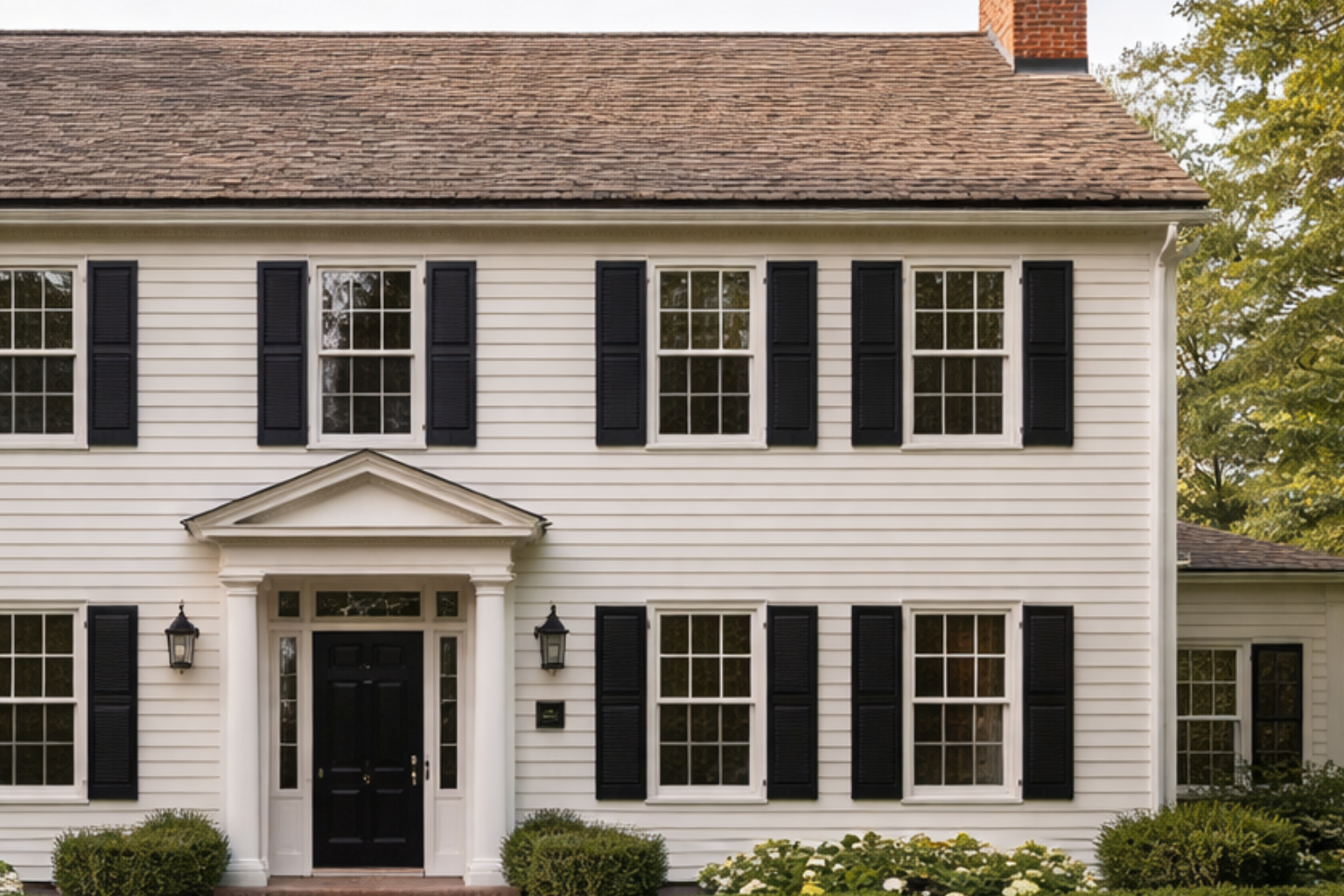
Colonial buildings were shaped by what builders could get locally, haul cheaply, and repair without much drama.
In New England, abundant forests made wood the obvious choice. Clapboard siding, shingles, and timber framing became common because the material was there and crews knew how to work with it. In the Southern colonies, brick shows up more often, especially on wealthier houses, because it handled heat, humidity, and fire risk better than all-wood construction. In Pennsylvania and nearby areas, stone appears more often where local quarries made it practical.
That is why “Colonial material palette” is really a regional question. Same overall tradition. Different local answers.
Roof Shapes: Gable, Gambrel, and Hip
Roof form is another fast read. The standard gable roof is the workhorse: simple to frame, easy to shed water, and familiar across many Colonial subtypes. The gambrel roof, strongly associated with Dutch Colonial houses, gives more usable upper-floor space without making the walls excessively tall. Hip roofs appear in some Georgian and Southern examples, where the more formal massing suits the style.
These were not random aesthetic moves. Roof pitch and shape had to answer climate, framing skill, and the size of the house below.
Windows and Doors
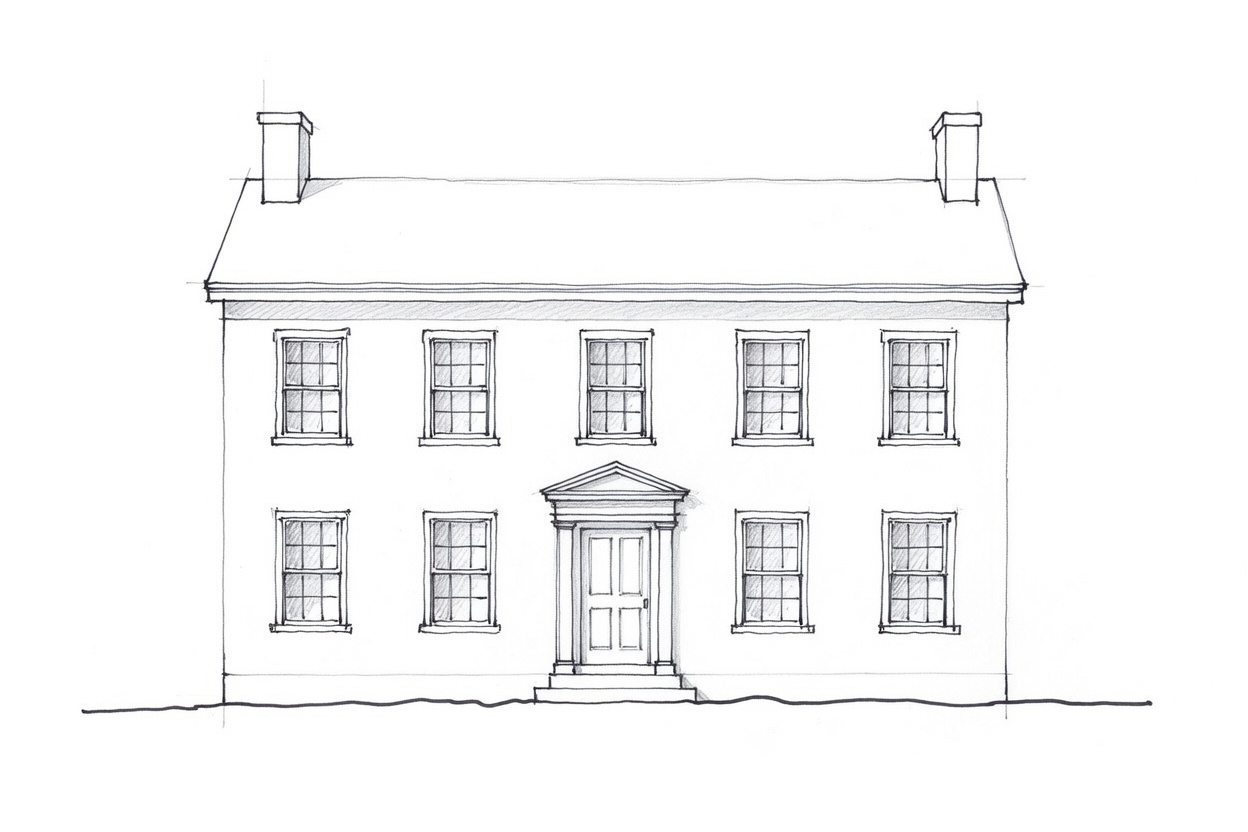
Colonial facades usually depend on repetition. Multi-pane windows arranged in a disciplined grid do most of the visual work. The central front door often acts as the anchor point, especially on more formal houses. In plain versions, the door is simple. In richer versions, it may be framed with a pediment, pilasters, fanlight, or sidelights.
The key is restraint. Even when details get fancier, the facade usually stays controlled rather than showy.
Trim, Shutters, Columns, and Other Exterior Details
Colonial ornament is usually lighter than people remember. Shutters had a real job before they became a style signal. Trim helped finish openings cleanly. Columns and pilasters appear most often at entries, porches, or more formal facade compositions, especially when classical influence gets stronger.
This is where the style can drift toward later interpretations and revival work, so it helps to separate original Colonial houses from later Colonial Revival versions that exaggerate the trim package.
Interior Design Elements
Inside, the same logic continues. Colonial interiors are usually organized, practical, and easy to read. Rooms are shaped by daily use, heating needs, and the limits of early framing, not by open-plan drama.
Layout and Floor Plan
Many Colonial houses use a center-hall or side-hall arrangement, depending on region, size, and period. In the more formal center-hall version, the entry runs into a hallway with rooms arranged on either side. Public rooms sit toward the front. Service spaces and more private rooms fall deeper into the plan or on upper floors.
That layout was not just about etiquette. It made circulation legible and separated household functions in a way that fit the social life of the time.
Interior Materials
Wood was the dominant interior finish in many Colonial homes. Floorboards, wall paneling, ceiling boards, stair parts, and trim were all chances to show workmanship without wasting material. Plaster also appears, especially in better-finished rooms.
Fireplaces mattered because heating mattered. In early houses, large hearths were not decorative extras. They were the thermal center of the room. Mantels could stay plain or become more refined depending on the house and the owner's means.
Furniture and Imported Goods
Furniture was expected to work hard. Tables, chests, chairs, and case pieces were durable first. Decorative value came second. In wealthier homes, imported goods from Britain and Europe raised the level of finish and style, especially in parlors and dining rooms. That is one place where later British design influence starts to show up more clearly, including work associated with Queen Anne and other period styles.
What Actually Holds the Style Together
Colonial architecture lasts because the core decisions are still readable: symmetry, useful materials, climate-aware roof forms, orderly windows, and plans that make sense the moment you enter. The houses vary by region, wealth, and era, but the discipline stays.
For the broader background, see our introduction to Colonial architecture. If you want the larger historical overview, go back to the main Colonial architecture guide.
FAQ
What are the main features of Colonial architecture?
The main features are symmetry, simple massing, repeated window patterns, climate-driven roof shapes, and materials chosen from what was locally available.
Why is symmetry so common in Colonial houses?
Because it made both visual and practical sense. Symmetrical layouts were easier to organize, easier to frame, and gave the house a stable, orderly appearance.
What materials were most common in Colonial homes?
Wood was common in forested regions such as New England, brick appeared more often in the South and in wealthier areas, and stone was used where it was easy to source locally.
What roof type is most associated with Colonial architecture?
The gable roof is the most widespread, but gambrel roofs are strongly tied to Dutch Colonial houses, and hip roofs appear in more formal Georgian and Southern examples.
What did Colonial interiors usually look like?
They were typically straightforward and room-based, often organized around a center hall or similarly clear circulation pattern, with wood finishes and fireplaces doing much of the practical and visual work.