
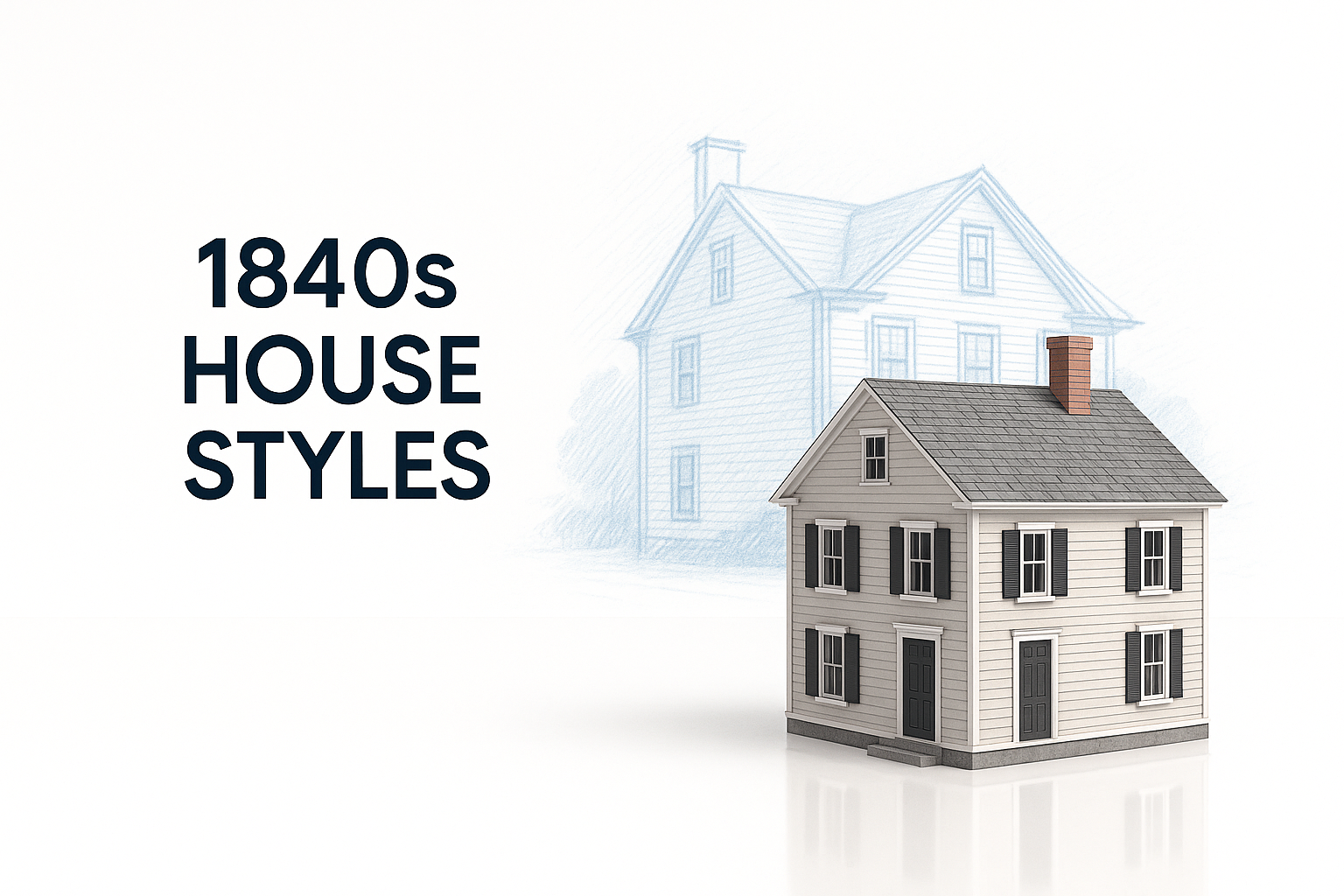
1840 House Styles: What These Homes Still Teach Us
What These Homes Looked Like Inside and Out
The 1840s marked a turning point in American housing. Colonial simplicity was fading, and bold styles like Greek Revival, Gothic Revival, and early Victorian influence were spreading fast. These homes could be simple timber farmhouses or grand mansions with columns, but all carried a new sense of proportion, detail, and permanence.
Exterior Characteristics of 1840 Houses
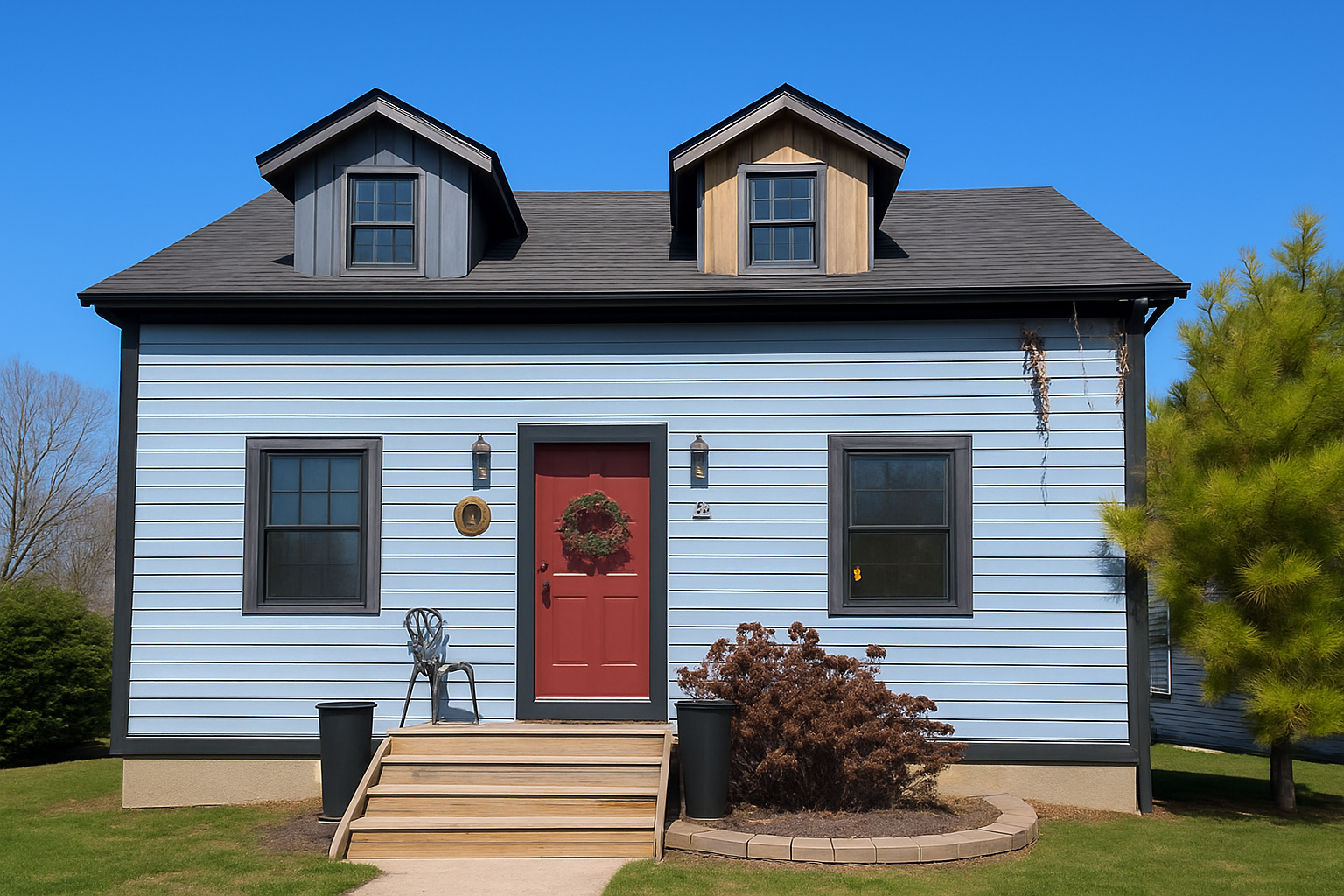
IMAGE: William Morrison House, also known as Cobblers Cottage, a historic 1840-built home located at 12 Buttonville Crescent West, Markham, Ontario.
1840s House Styles: How They Look From the Street
Walk up to an 1840s house and you can place it right away. The details changed with fashion, but the craftsmanship held steady.
Greek Revival Influence
Builders borrowed straight from ancient temples. Columned porches framed the front. Pedimented gables pointed at the street. Bold cornices and trim gave these homes a weight that felt civic, not just domestic.
Gothic Revival Rising
Some houses pushed higher and sharper. Steep front gables, pointed arch windows, and carved bargeboards gave façades a dramatic, almost church-like feel.
What They Were Made Of
Brick dominated towns. Timber carried rural houses. True stone was rare, usually saved for courthouses or wealthy estates.
Order With Ornament
Even with new flourishes, symmetry lingered. Central doors, tall chimneys, and balanced façades still echoed Georgian traditions. The twist was ornament. Builders were starting to layer it on instead of holding back.
Room by Room Inside an 1840 House
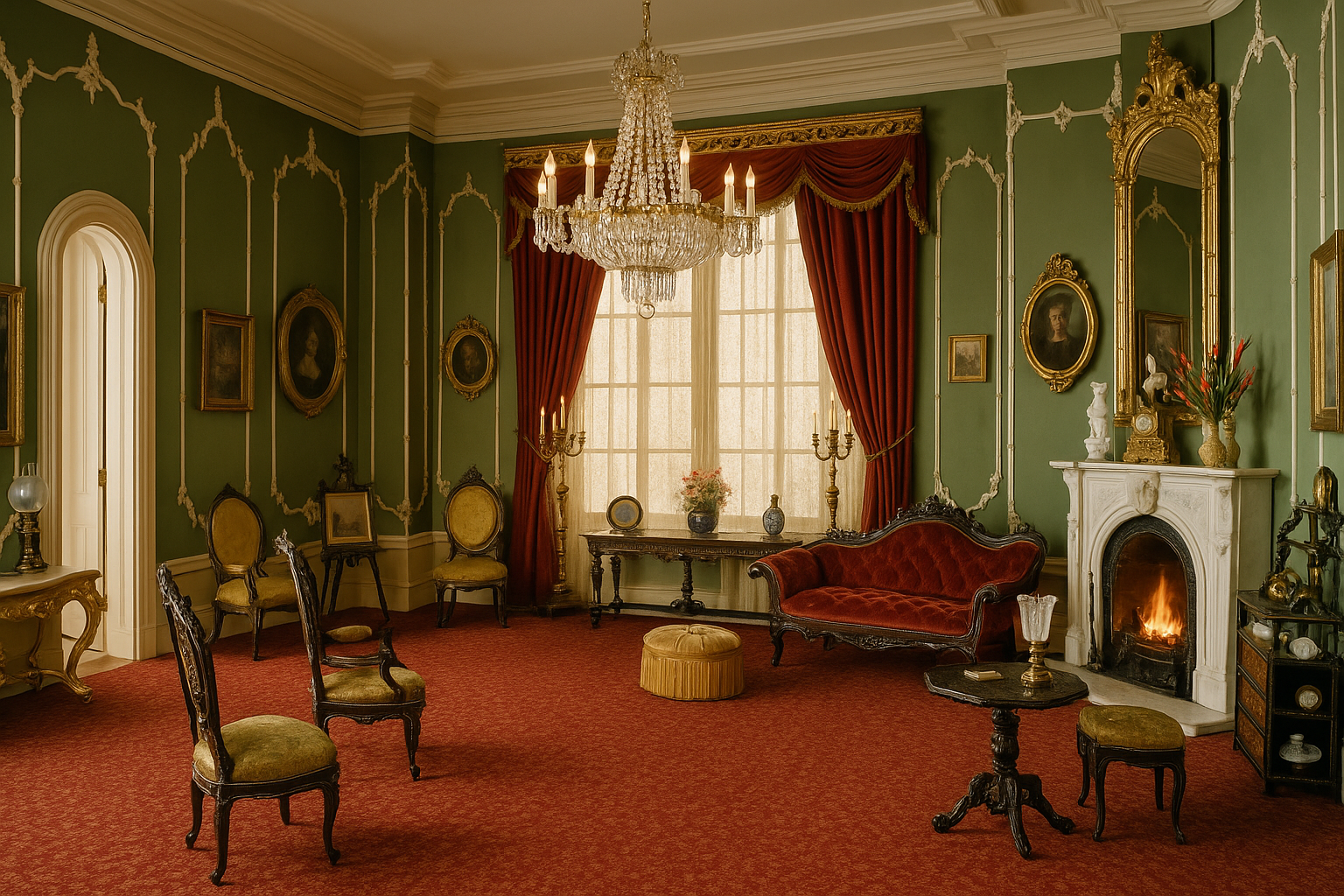
IMAGE: English Victorian drawing room from 1840–70, designed by Narcissa Niblack Thorne, featuring ornate décor, fine furnishings, and period detail.
Kitchens
Kitchens in the 1840s were hard-working spaces. A big hearth or early iron stove was the center. Floors were often brick or stone, which held up under heavy use. Storage wasn’t hidden in modern cabinetry but came from large cupboards or freestanding pine cabinets.
Lesson today: durability first. Stone or wood floors that can take decades of wear still beat disposable finishes.
Living Rooms and Parlors
The parlor was the “show room.” In wealthier houses you’d see carved mantels, plaster cornices, and tall windows hung with thick drapery. Farmhouses stripped that down to bare floors, plain walls, and a central fireplace.
Story from the field: I once toured an 1840s parlor in Ohio where the plaster medallion had survived, blackened by coal smoke but still intact. The trim was ruined, but that medallion showed how long decorative craft can outlast fashion.
Lesson: details matter more than size.
Dining Rooms
Formal dining rooms appeared mostly in mansions. They were built for show—big sideboards, chandeliers, and tables that could host dozens. In most homes, meals still happened in the kitchen.
Lesson: know your scale. If you live in a smaller house today, a giant dining set can swallow a room. Copy the farmhouse approach—eat where life actually happens.
Bedrooms
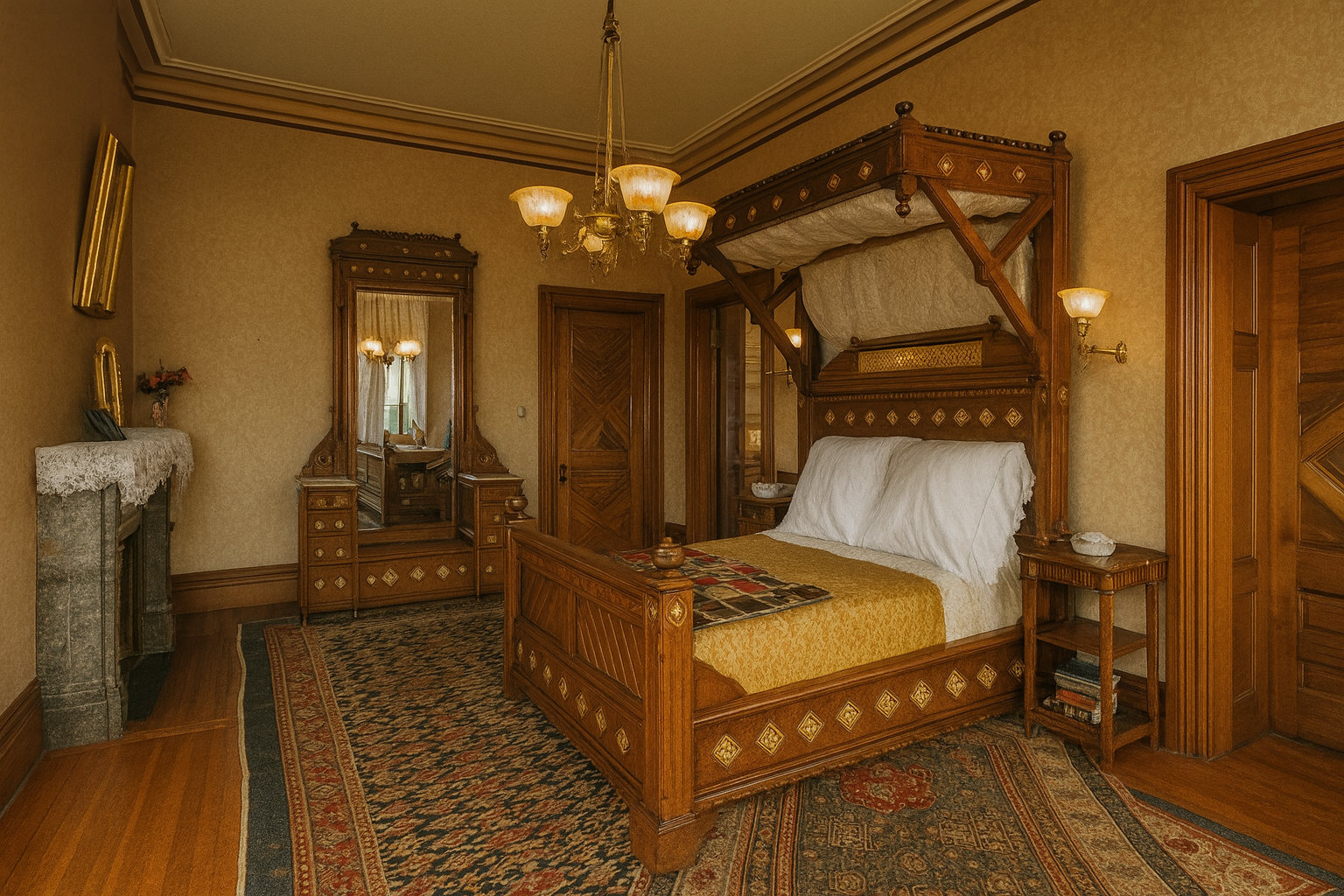
These rooms were plain but tall, often with a fireplace for heat. Closets were tiny or nonexistent. In larger homes, master bedrooms connected to dressing rooms or even private sitting areas.
Lesson: scale ceilings, not furniture. Tall proportions made even simple bedrooms feel airy.
Libraries and Studies
If the family had wealth, a study or small library made an appearance. Dark walnut shelves, heavy desks, and tall windows gave them gravitas. In rural houses, you rarely saw one.
Lesson: designate one quiet corner. Even a small built-in desk by a window can give modern homes that sense of focus.
Hallways and Staircases
Grand houses used central halls with sweeping staircases and carved banisters. Farmhouses tucked narrow wooden stairs into compact halls. Both were built to last.
Lesson: circulation matters. Even modest stairs, when proportioned well, feel inviting and natural to climb.
You might like: 1880s House Styles: How These Homes Still Beat Most New Builds
Famous Surviving 1840 Houses

Linden Place, Rhode Island
Originally built in 1810, Linden Place was remodeled in the 1840s when Greek Revival was at its peak. White-painted columns, a bold portico, and classical details were added to give it the look of a private temple. It’s a reminder that wealthy families often updated older homes to keep up with fashion, and that Greek Revival was as much about status as structure.
Lesson: Bold façades can redefine a house. Even today, a strong entry with columns or a portico can elevate curb appeal.
Morse-Libby House (Victoria Mansion), Maine
Built in the 1840s in Portland, this mansion is now better known as the Victoria Mansion. What makes it exceptional is the interior. The wallpapers, gilded mirrors, plasterwork, and draperies are still intact, showing how early Victorian homes used interiors as much as exteriors to display wealth. It feels like walking straight into 1860.
Lesson: Interiors matter. Good craftsmanship inside can preserve the soul of a house long after the exterior weathers.
Everyday Farmhouses Across New England and the Midwest
Not every 1840 house was a mansion. Thousands of timber-framed farmhouses went up during the decade, built with simple central hall layouts and practical proportions. Many of these still stand, now restored as heritage homes or lived in quietly by families. They show how modest design, good joinery, and local materials outlast trend-driven architecture.
Lesson: Proportion and practicality survive. A house that works well in its climate and scale will often last longer than one built just for show.
What These Houses Teach Us Today
-
Greek Revival mansions show how architectural style can signal identity and status.
-
Victorian interiors prove that detail and craft inside are just as important as the shell.
-
Plain farmhouses highlight durability, climate response, and proportions that still feel livable.
Even across different budgets and ambitions, the 1840s left homes that still stand because they were built with intent.
Case Study: Inside Newstead House, Brisbane
Image: Interior of Newstead House showing the 19th-century parlor with period furniture, striped walls, and marble fireplace.
Newstead House began as a modest brick cottage in 1846. By the 1860s it had grown into one of Brisbane’s finest river mansions. Walking through it today gives a real sense of how 1840s domestic spaces were built and lived in.
The Parlor (Living Room)
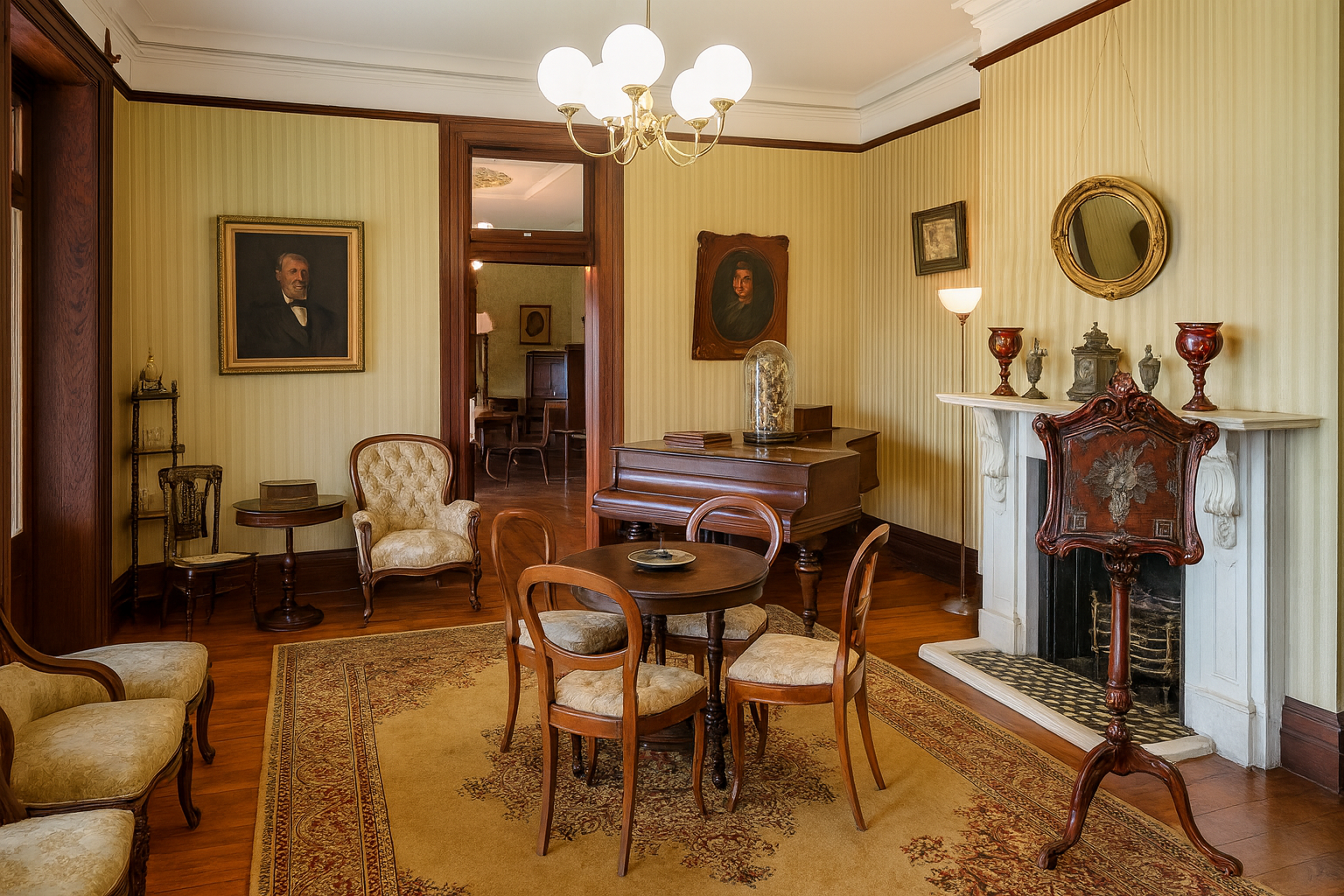
IMAGE: Living room of Newstead House in Brisbane, Queensland, showcasing a Victorian-era parlor with high ceilings, fireplaces, period furniture, and decorative details from the 1840s.
This was the showpiece. High ceilings, patterned rugs, carved mantels, and portrait walls made it the most formal space in the house. Guests were welcomed here, not in the kitchen.
Image: Inside Newstead House, Brisbane, showing a Victorian-era parlor with tall ceilings, ornate trim, and period furniture.
Step inside Newstead House and you’re in the middle of how 1840s living rooms really worked. Patrick Leslie built the original cottage in 1846, and later expansions turned it into one of Queensland’s grandest riverfront homes. What we see today is part of that evolution.
A Parlor Built to Impress
The parlor was never casual. In houses of this era, it was the stage for visitors. Tall ceilings lifted the space, fireplaces anchored the walls, and heavy rugs defined sitting areas. The striped wallpaper, portraits, and carved mantels weren’t just decoration. They were signals of wealth and refinement.
What to learn: If you restore or design today, give the living room hierarchy. High ceilings, focal fireplaces, and framed art still create presence, even without gilded trim.
Furniture That Framed Conversation
Unlike today’s sofas aimed at TVs, parlors were about face-to-face talk. Chairs, card tables, and even music stands were arranged in circles. It encouraged interaction and displayed the family’s culture.
What to learn: Arrange modern living rooms with people in mind. Center the layout around conversation, not just a screen.
Light and Decoration
Notice the tall sash windows and chandeliers. They maximized daylight but could shift to candle or lamp light at night. Heavy curtains and patterned rugs controlled warmth and acoustics.
What to learn: Don’t underestimate textiles and lighting. The mix of big windows, layered fabrics, and statement lighting still defines a room’s mood.
The Dining Room
By the 1840s, formal dining had become its own event. Newstead’s dining room held a long table, chandeliers, and sideboards for silverware. It was as much about display as eating.
Lesson today: Even if your meals are casual, scale matters. A strong central table and well-lit space still set the tone for gathering.
The Study or Library
Wealthier homes added a study. At Newstead, shelves of books, walnut desks, and tall sash windows made it both practical and impressive.
Lesson today: Libraries aren’t dead. A single wall of built-ins or a corner desk by a tall window brings back that intimacy without turning it into a museum piece.
Bedrooms
Simple but tall, often with fireplaces and high windows. At Newstead, the larger rooms sometimes connected to dressing spaces.
Lesson today: Height is underrated. If you can’t raise ceilings, mimic the feel with vertical trim, tall headboards, or floor-to-ceiling curtains.
The Veranda
The 1867 expansion wrapped the house in wide verandas. These shaded the rooms, cooled the house, and opened it to river breezes.
Lesson today: Passive cooling works. Covered outdoor rooms, deep overhangs, and shaded windows cut energy use and make summer living more bearable.
From Mansion to Museum
Newstead shows how houses of the 1840s were not static. They started small, then layered on dining rooms, libraries, and verandas as families and fortunes grew. Each room had a purpose. Each carried lessons that still apply: design for people, for climate, and for longevity.
Newstead House later became a civic landmark and now a museum, showing how adaptable these 1840s houses were. Even after extensions, fires, and ownership changes, the parlor still reads as the heart of the house.
Lesson today: Anchor your living room around a focal point like a fireplace or window. Arrange furniture for conversation, not just screens.
Mansions of the 1840s
In the 1840s, America’s wealthiest families wanted houses that looked like landmarks. Greek Revival was their style of choice. Think columned facades that resembled temples, tall ceilings that gave rooms grandeur, and porticos that made entrances feel ceremonial.
Inside, these houses weren’t just homes—they were stages for social life. Ballrooms hosted dances and political meetings. Dining rooms showed off silver and china to guests. Libraries signaled education and refinement. The mansion was a tool of status as much as shelter.
What to learn today: Even without columns, you can borrow the proportions. Tall windows and high ceilings still make small spaces feel important.
Farmhouses of the 1840s
In contrast, rural families built farmhouses that had to work as hard as the land they stood on. Most were timber-framed, with wide porches for shade and simple gable roofs that kept construction practical.
Still, fashion crept in. Transom windows above doors borrowed from Greek Revival design. Some porches had simple columns, not carved from marble but from local wood. Practicality ruled, but homeowners wanted a touch of dignity.
Life in these houses revolved around the hearth. Kitchens and living rooms were centered around fireplaces, which provided both heat and cooking space. Bedrooms were small and plain, but porches offered breathing room in summer evenings.
What to learn today: Farmhouse design teaches restraint. Borrow the wide porches, practical layouts, and durable materials. Leave the excess behind.
Renovation Tips for 1840 Homes
Challenges You Will Face
Working on an 1840 house always comes with surprises.
Plaster walls often sag or crack, and fixing them takes skill if you want to keep the original finish.
Wiring is usually knob-and-tube. It all needs to be stripped out and replaced for safety.
Stone and brick foundations demand repointing with the right lime mortar—use the wrong mix and the wall starts crumbling.
Windows are drafty but they’re historically significant. Ripping them out loses half the soul of the façade.
Smart Restoration Moves
The key is to save what you can. Replicas rarely capture the weight and detail of originals.
● Keep and restore wood trims, mantels, and casings. They carry the craftsmanship you can’t buy today.
● Old-growth pine and oak floors are gold—refinish instead of replacing.
● Add insulation but do it with breathable materials like lime plaster or cellulose so the walls don’t rot from trapped moisture.
● Fireplaces are worth keeping even if they’re no longer functional. They shape the room and keep the history visible.
Tricks That Save Money
Restoration eats budgets quickly. Prioritize structure first: roofs, chimneys, and foundations. Cosmetics can wait.
Architectural salvage yards are lifesavers—matching old brick, stone, or trim costs far less than new custom work.
Take detailed photos before you start demo. You’ll need them when replicating plaster patterns, trim profiles, or window casings.
Why 1840 Houses Still Matter
These houses prove durability. Even modest farmhouses had balance, proportion, and honest use of materials. Mansions stretched those same rules with grandeur, but the core logic was the same: build solid, build human-scaled, and make it last.
Modern architects still borrow from 1840 houses:
-
Tall, narrow windows that flood interiors with light
-
Front porches that create both function and welcome
-
Central halls that keep layouts clean and practical
-
Proportions that feel grounded, not oversized
An 1840 house teaches restraint, detail, and craft all at once.
Why 1840 Houses Still Matter Today
They stand as proof of durability and design logic. Proportions were human-scaled. Materials were honest. Even small farmhouses carried balance and craft. Modern designers borrow from them constantly: tall windows, front porches, central halls, and practical layouts.
FAQ
1. What styles were common in 1840 houses?
Mostly Greek Revival, Gothic Revival, and the tail end of Georgian. Farmhouses kept it simpler with timber frames and central halls.
2. How can you tell a house was built in the 1840s?
Look for tall chimneys, symmetrical fronts, wide porches with columns, steep gables, and heavy wood trim.
3. What were 1840 houses made from?
Brick in towns, timber in rural areas. Stone only if the owner was wealthy or it was a civic building.
4. Do many 1840 houses still exist?
Yes. Thousands survive across the U.S., especially in the Northeast and Midwest. Many are now heritage-listed.
5. What’s the biggest structural problem in 1840 homes?
Foundations. Stone and brick footings often need repointing or full reinforcement.
6. Are 1840 houses expensive to restore?
Yes. Expect costs higher than modern homes. Old plaster, trim, and windows take specialized work.
7. What are the ceilings like in 1840 houses?
Often tall, giving narrow rooms a sense of space. That’s why even modest farmhouses feel bigger than they are.
8. What did kitchens look like in 1840 homes?
Functional, not fancy. Large hearths or early stoves, stone floors, big work tables, and storage cupboards.
9. Were bathrooms common in 1840 homes?
No. Most had outhouses. Indoor plumbing started appearing in wealthier homes later in the century.
10. How were 1840 houses heated?
Fireplaces in every major room. Some larger homes had early coal or wood-burning stoves.
11. Do 1840 houses have insulation?
Not by modern standards. Thick brick or plaster walls did most of the work. Modern retrofits add insulation.
12. What makes Greek Revival houses from 1840 special?
They copied temples. Think wide porches, big columns, and pedimented gables that faced the street.
13. How do you modernize an 1840 house without ruining it?
Upgrade wiring, plumbing, and heating. Keep original floors, trims, and windows where possible.
14. Can you open up walls in an 1840 house?
Yes, but carefully. Many are load-bearing. Better to use arches or keep beams visible.
15. Why do many 1840 houses have so many chimneys?
Each major room had its own fireplace for heating. Multiple chimneys meant multiple hearths.
16. Are original windows worth saving?
Yes. Old-growth wood frames last forever if maintained. Upgrade glazing rather than replacing.
17. How much does it cost to restore an 1840 window?
Anywhere from $800 to $2,500 each, depending on size, rot, and glass replacement.
18. What should you never remove in an 1840 house?
Mantels, plaster moldings, and carved wood trim. Once gone, they can’t be replaced with the same detail.
19. What’s the difference between an 1840 mansion and farmhouse?
Mansions had ballrooms, libraries, and high ornamentation. Farmhouses stayed practical, with central hearths and simpler layouts.
20. Are 1840 houses good for families today?
Yes, if renovated. They often have large rooms, tall ceilings, and practical layouts.
21. Do 1840 houses meet modern building codes?
Not without upgrades. Wiring, stairs, exits, and energy performance need to be brought up to code.
22. Can you finance a renovation of an 1840 house?
Yes. Banks often require inspections. Grants or tax credits may be available for heritage properties.
23. What’s the most common hidden problem?
Rot hidden behind plaster or under floors. Also knob-and-tube wiring and crumbling chimneys.
24. Do 1840 houses have basements?
Many do, but they’re often damp with stone walls. Waterproofing is usually needed.
25. Were 1840 houses energy efficient?
Not by today’s standards, but thick brick and high windows helped with natural insulation and airflow.
26. What’s the best way to renovate walls?
Use breathable materials like lime plaster or cellulose insulation. Don’t trap moisture with foam or vinyl.
27. Why are 1840 houses still admired today?
Balance, proportion, and craft. Even small homes feel considered, not rushed.
28. Can 1840 houses work with modern open layouts?
Yes, but keep original features like beams, arches, and trims to avoid a sterile look.
29. What lessons do modern architects learn from 1840 homes?
Use of scale, durable materials, natural ventilation, and porches that blend indoor and outdoor space.
30. Are 1840 houses worth buying?
If you value history and craftsmanship, yes. But be ready for high renovation costs and ongoing upkeep.