
People mix these up constantly.
Sometimes that does not matter. Sometimes it creates the wrong project entirely.
A person wants shade and installs a rigid canopy that blocks winter daylight. Someone else needs real rain protection but buys a light fabric awning that struggles in wind and snow. Other times the problem is appearance. A cheap plastic canopy gets installed where the building really needed a softer retractable awning or a properly detailed metal canopy.
The words overlap in normal conversation, but the systems behave differently once weather, structure, drainage, and maintenance get involved.
An Awning Is Usually About Shade
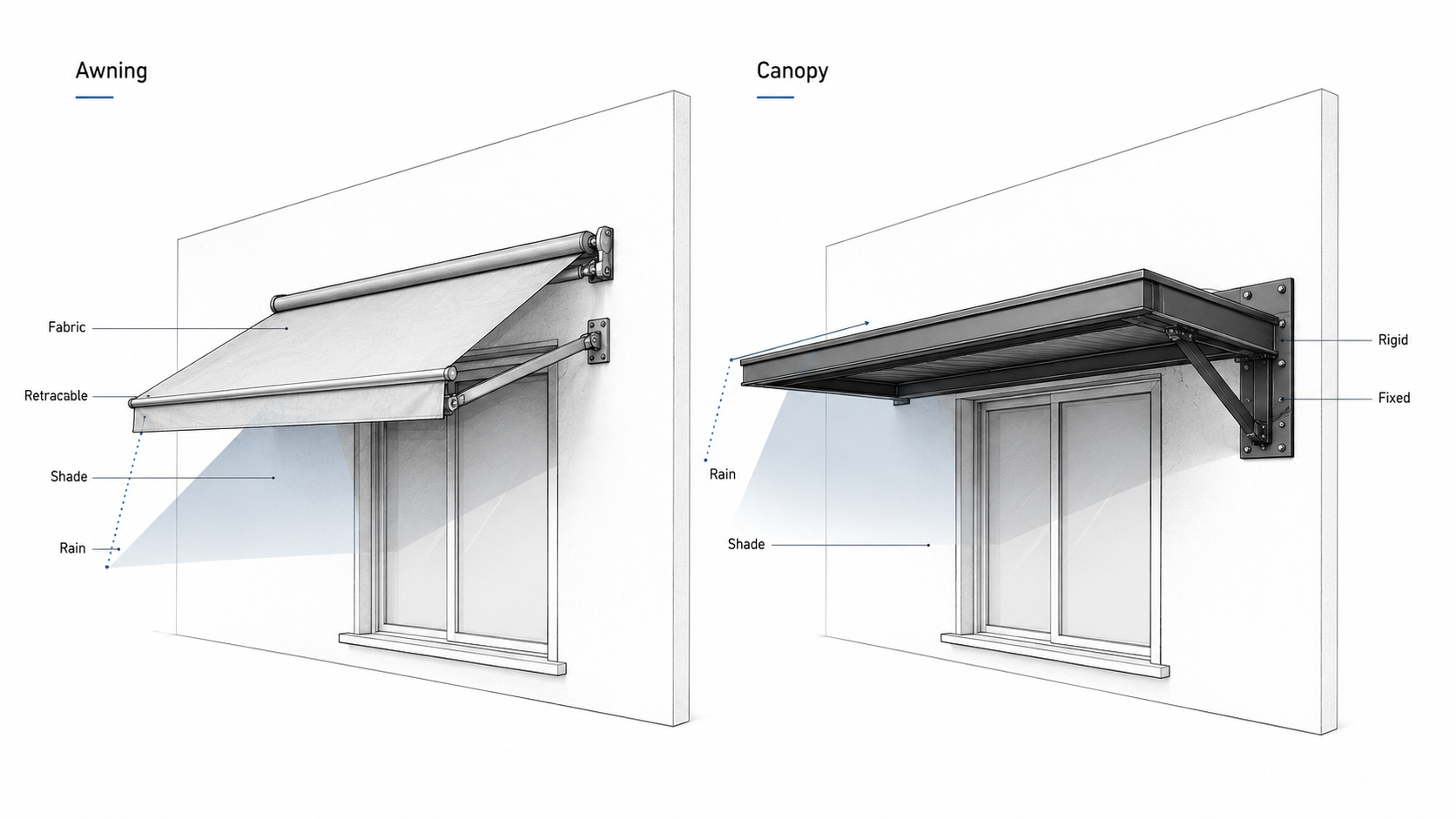
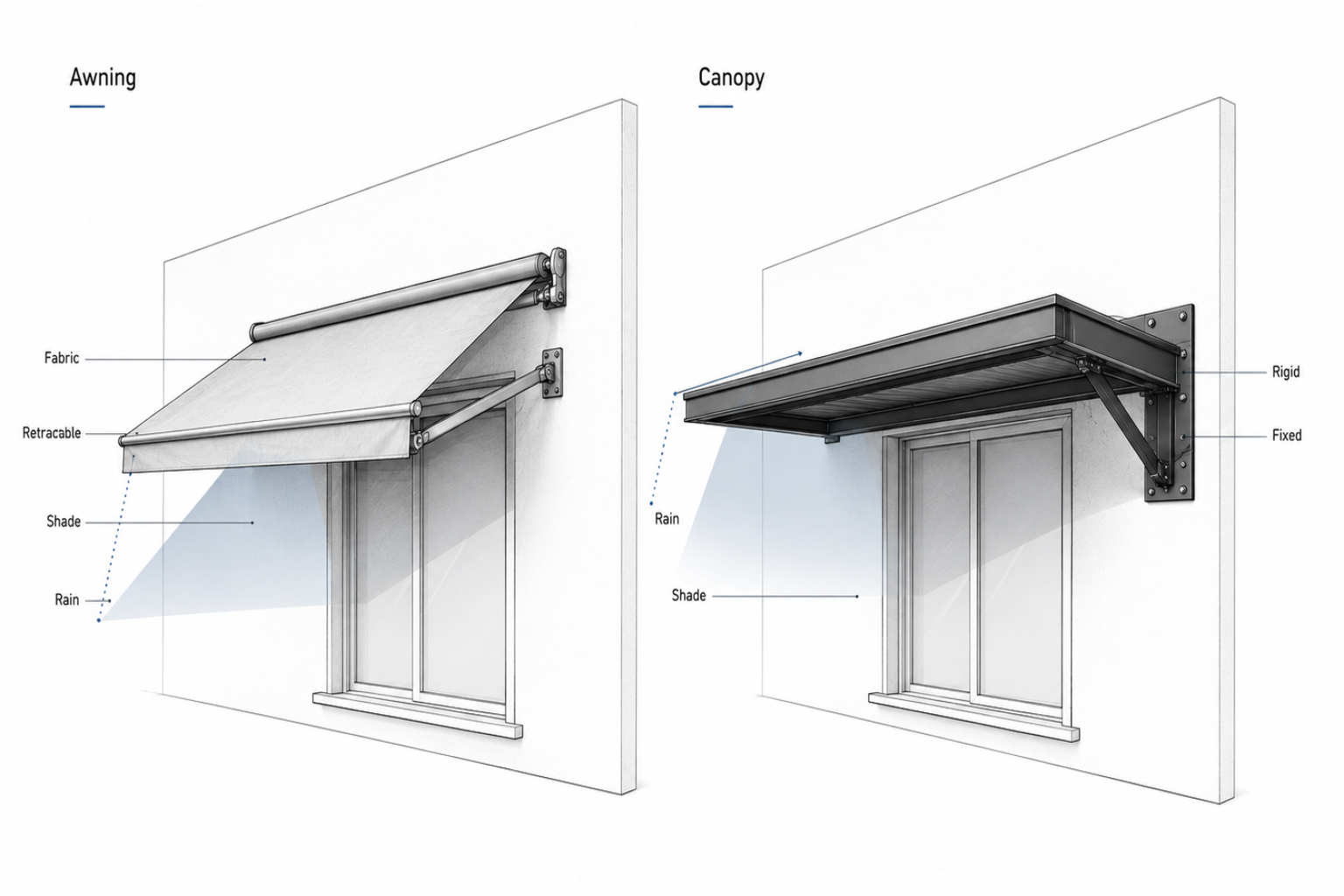
Illustration by ArchitectureCourses.org. An awning is usually lighter, fabric-based, and retractable, while a canopy is a more permanent fixed structure with a rigid frame and roof plane.
An awning is normally lighter, softer, and more flexible.
Most use fabric stretched over a light frame. Some retract. Some stay fixed. Many are designed primarily for sun control rather than heavy weather protection.
This is why awnings show up so often on:
- storefronts
- cafés
- south-facing windows
- patios
- older urban facades
Awnings can reduce heat gain surprisingly well because they stop sunlight before it reaches the glass.
That part matters. Exterior shade works better than interior blinds once the heat is already inside the room.
But awnings also come with limits:
- fabric fades
- wind movement becomes a problem
- snow loads are risky
- frames loosen over time
- water control is less precise
Awnings are usually better at shade than they are at acting like a small roof.
A Canopy Behaves More Like Architecture
A canopy is usually fixed and rigid.
Instead of fabric tension, the system depends on structure:
- steel
- aluminum
- glass
- polycarbonate
- wood framing
A canopy behaves more like a small roof extension than a fabric shade device.
That changes everything:
- drainage matters more
- wall connections matter more
- load paths matter more
- snow and wind matter more
A good canopy usually feels more permanent because it is tied into the structure more seriously.
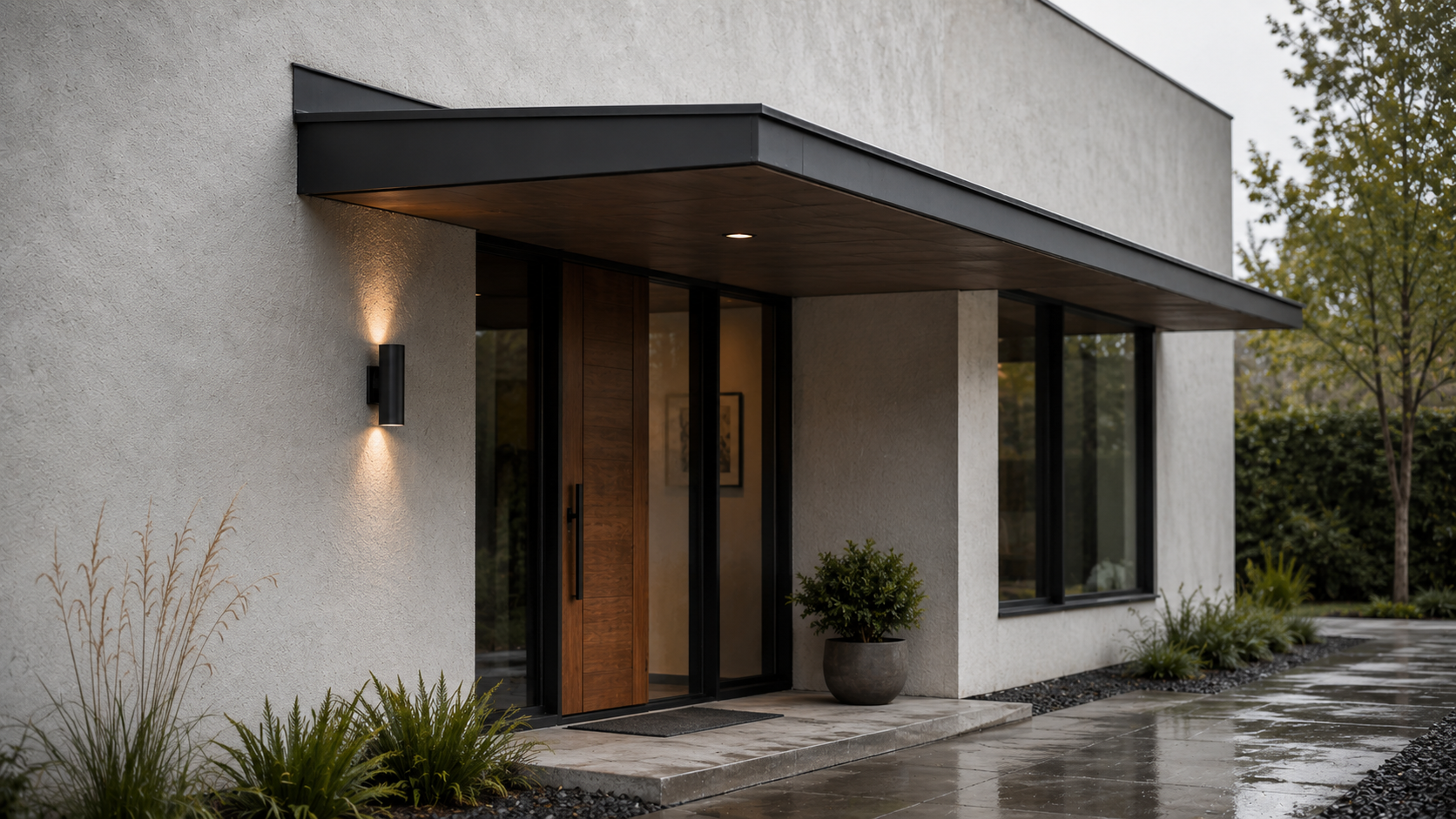
Image by ArchitectureCourses.org. A well-detailed canopy uses structure, slope, wall connection, and a controlled drip edge to protect the entry and move water away from the facade.
This is why canopies often make more sense over:
- entries
- walkways
- storefront doors
- modern facades
- weather-exposed openings
The Wrong Choice Usually Comes From Solving the Wrong Problem
A lot of projects start with the wrong question.
People ask:
- Which one looks better?
- Which one costs less?
- Which one is more modern?
The better question is:
What problem is the structure solving?
| If You Mainly Need... | Usually Better |
|---|---|
| summer shade | awning |
| year-round rain protection | canopy |
| light seasonal flexibility | retractable awning |
| modern architectural presence | canopy |
| deep weather shelter | canopy |
| soft storefront character | awning |
The mistake usually happens when people want a canopy to behave like fabric or expect a fabric awning to behave like a roof.
Rain Changes the Conversation Fast
Awnings and canopies handle water differently.
A fabric awning can shed light rain well enough, but water control is usually less disciplined. Wind can move the fabric. Water can pool if the pitch is weak. Fabric edges can drip unpredictably.
A canopy should behave more like a proper roof edge.
That means:
- slope
- drip edge
- flashing
- controlled runoff
- clear water path
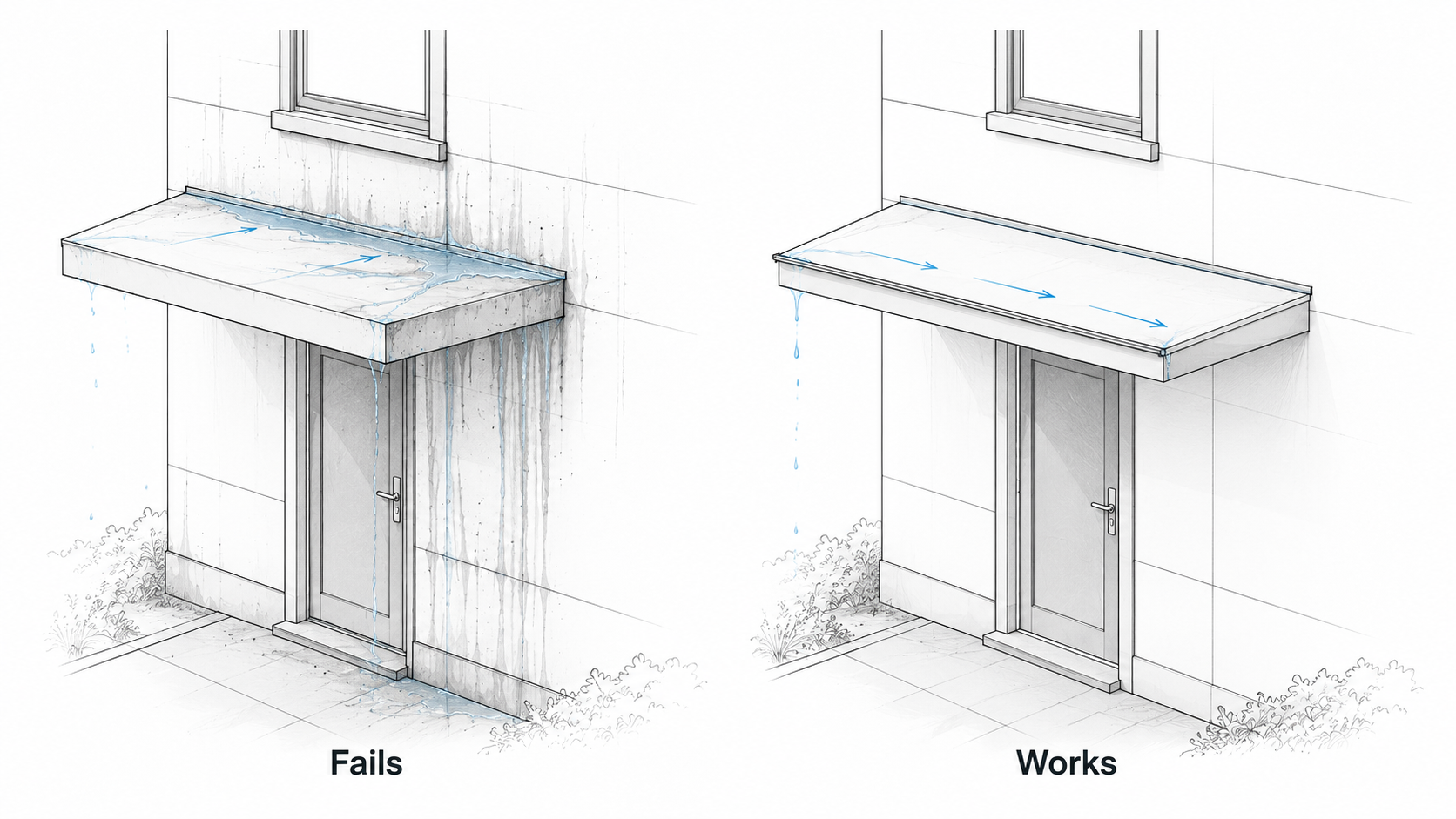
Illustration by ArchitectureCourses.org. A canopy needs slope, edge control, and a drip line so water moves away from the wall instead of staining the entry.
Once the slope disappears, problems start appearing slowly:
- wall staining
- sealant failure
- dirty runoff marks
- water tracking backward
- ice buildup at the edge
A lot of failed canopy details begin with water sitting where the structure assumed water would never stay.
Retractable Sounds Better Until Wind Shows Up
Retractable awnings solve one problem extremely well: flexible shade.
That is their strength.
But retractable systems also introduce:
- moving arms
- motors
- fabric tension systems
- wind sensitivity
- maintenance issues
This is why large retractable awnings sometimes age poorly in exposed windy locations.
The mechanism may still work, but the fabric stretches, the arms drift slightly out of alignment, or the whole system starts looking tired long before the wall behind it does.
A rigid canopy has fewer moving parts because it is not trying to disappear when the weather changes.
Thin Modern Canopies Are Often Underbuilt
Minimal canopies became popular because the rendering looked clean.
Then the real structure arrived.
A lot of thin-looking canopies work only because hidden steel, deeper backing plates, or reinforced connections are doing more work than the final image suggests.
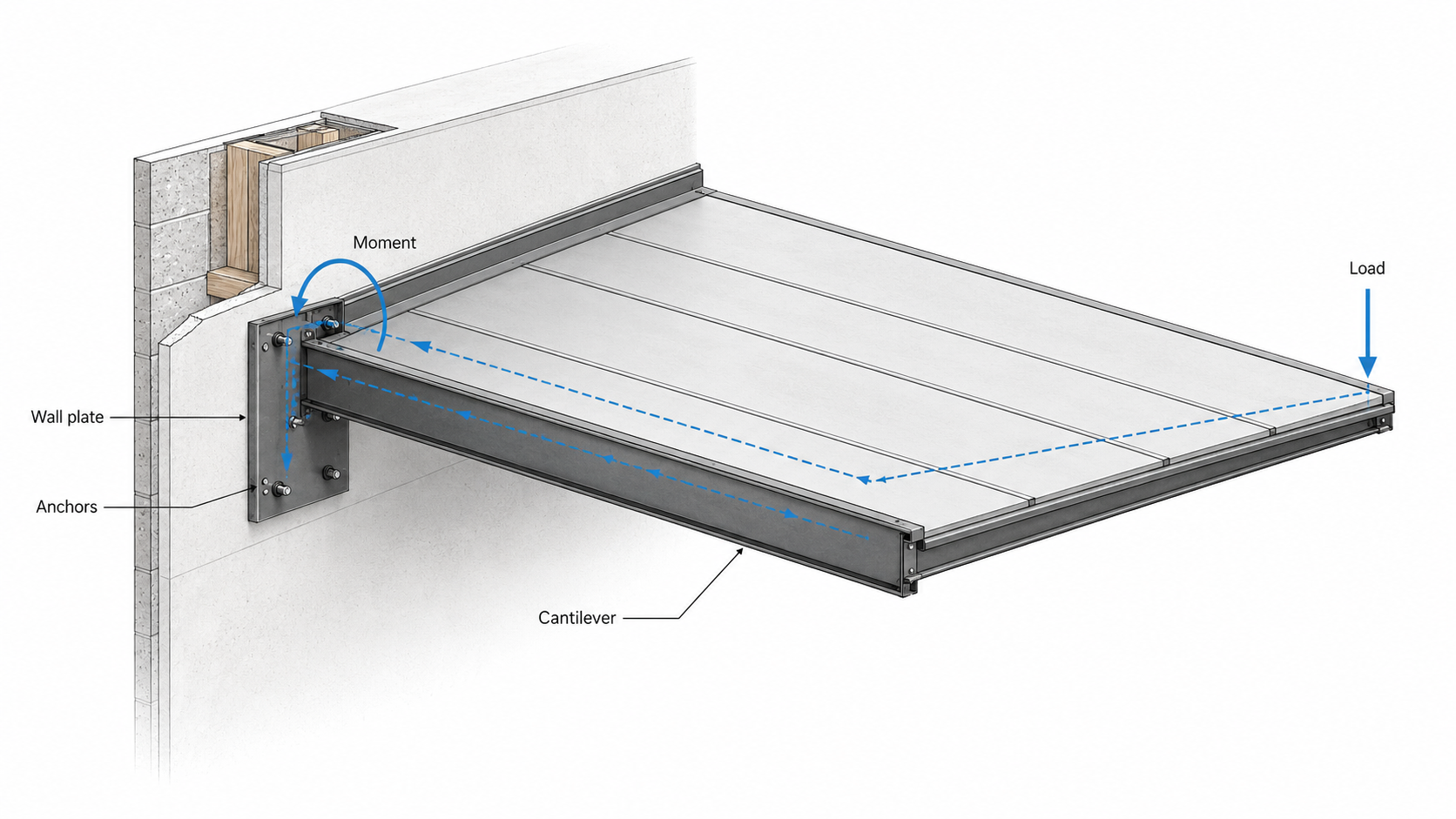
Illustration by ArchitectureCourses.org. A cantilever canopy pushes critical force back into the wall plate, anchors, and structural backing rather than down into front posts.
People sometimes confuse “minimal” with “thin.”
Those are not the same thing.
A canopy can look visually light while still needing serious structure behind the wall finish.
That becomes more important once:
- snow loads increase
- projection depth increases
- glass gets involved
- lighting gets integrated
- the canopy becomes wider
Installation Problems Usually Start Behind the Finish
The visible canopy or awning is only part of the system.
The hidden wall condition matters just as much:
- blocking
- anchor spacing
- wall backing
- flashing
- waterproofing
- cladding thickness
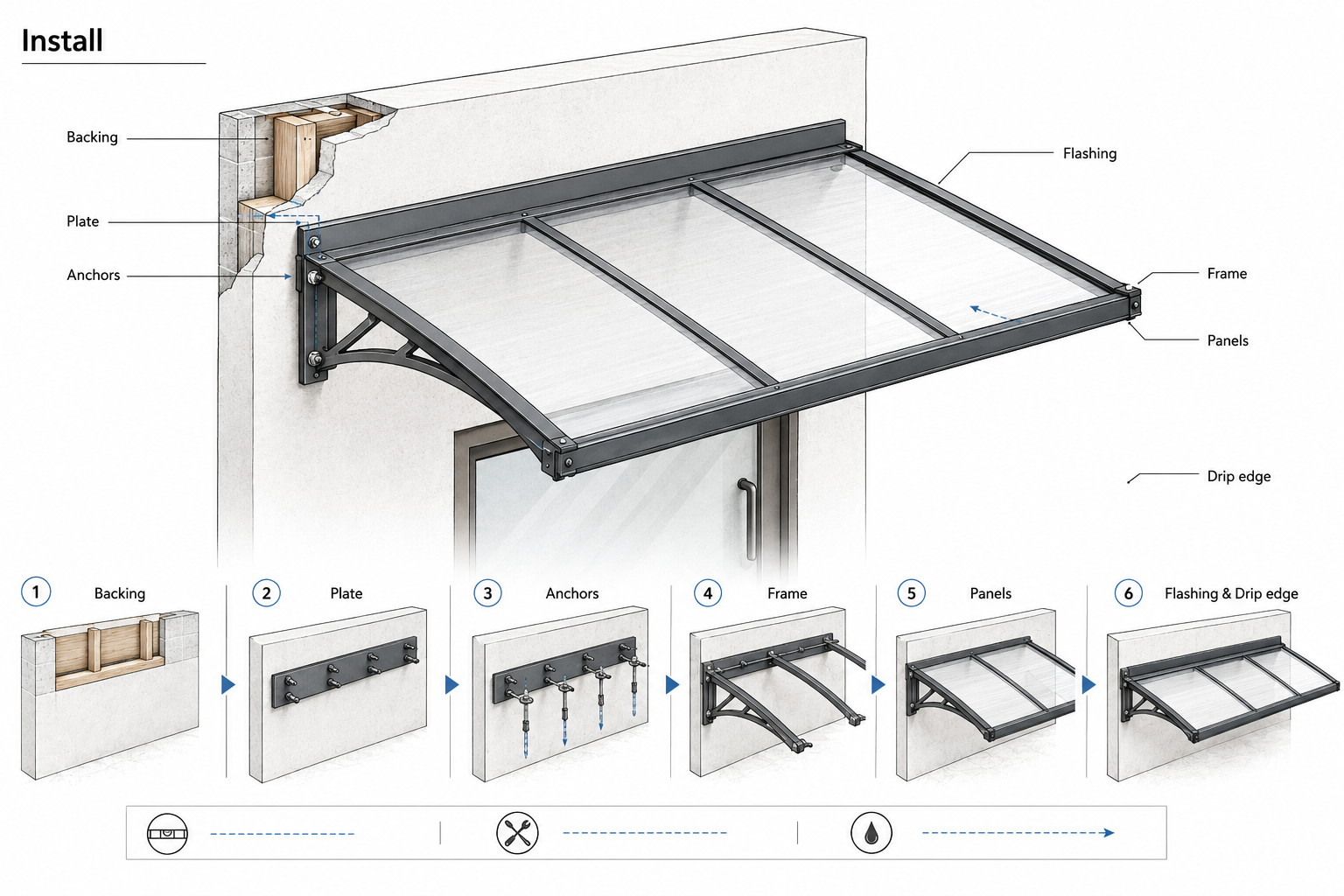
Illustration by ArchitectureCourses.org. A canopy installation works best when the backing, plate, anchors, frame, panels, flashing, and drip edge are planned as one sequence.
A lot of failures begin because the installer treated the wall finish as structure.
That works for a while. Then one winter later the sealant cracks, the fastener loosens slightly, or water starts staining below the plate.
Small movement becomes a larger problem once water gets involved.
Canopies Usually Last Longer
In general, a properly built canopy lasts longer than a fabric awning.
That does not mean every canopy is better. Cheap polycarbonate kits with weak brackets can age badly too.
But rigid canopies usually handle:
- snow
- wind
- rain
- UV exposure
- daily use
better than stretched fabric systems over long periods.
The trade-off is permanence. A canopy becomes part of the building visually. You cannot simply retract it when the season changes.
Some Buildings Want Fabric
Not every project wants a rigid modern canopy.
Fabric awnings still work extremely well on:
- historic storefronts
- cafés
- Mediterranean-style buildings
- traditional urban facades
- soft commercial streetscapes
Sometimes a rigid canopy makes the facade feel too hard or overbuilt.
Other times fabric is exactly the wrong move because the climate, exposure, or maintenance reality will destroy it faster than expected.
The building usually tells you which direction makes more sense.
What Usually Ages Better
| Condition | Usually Better Long-Term |
|---|---|
| strong snow and rain exposure | rigid canopy |
| seasonal sun control | awning |
| minimal modern facade | canopy |
| soft traditional storefront | awning |
| high wind location | rigid canopy |
| lightweight removable shade | awning |
Cheap Kits Usually Reveal Themselves Fast
The weakest systems usually reveal themselves within a few seasons.
On awnings:
- faded fabric
- sagging edges
- misaligned arms
- water pooling
On canopies:
- weak wall plates
- yellowing plastic
- water stains
- undersized anchors
- visible sag
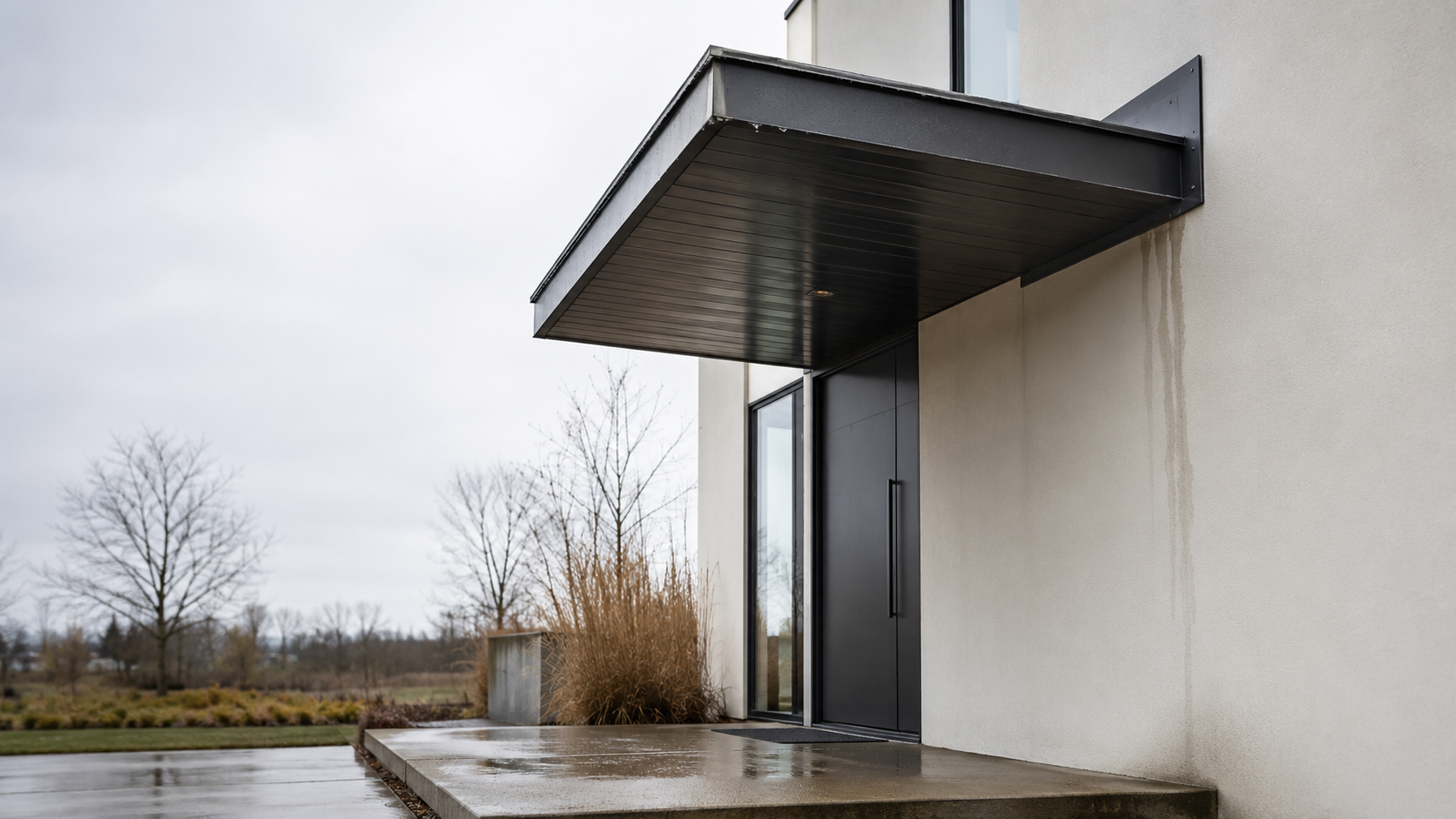
Image by ArchitectureCourses.org. A canopy can look clean at first but still fail slowly once water reaches the wall connection and drainage edge.
A lot of failures do not happen dramatically. They simply age badly a little at a time.
Which One Makes More Sense?
If the main goal is flexible shade, softer appearance, and seasonal control, an awning usually makes more sense.
If the main goal is structure, weather protection, permanence, and architectural presence, a canopy usually makes more sense.
The mistake is expecting them to behave the same way.
Small Product Note: A simple polycarbonate canopy kit can work for modest side-door or backyard conditions, but rigid canopies still depend heavily on proper wall backing, slope, and drainage detailing.
Field Pick: Why Buildings Stand Up by Mario Salvadori is still one of the clearest books for understanding load paths, leverage, structure, and why canopy connections fail long before the roof plane does.
Problems People Usually Ask About
Is an awning the same as a canopy?
No. An awning is usually lighter, fabric-based, and sometimes retractable. A canopy is usually more rigid and permanent.
Which lasts longer?
A properly built rigid canopy usually lasts longer than a fabric awning, especially in snow and strong weather exposure.
Which is better for rain?
Canopies are usually better for long-term rain protection because they behave more like roof structures with controlled drainage.
Which is better for shade?
Awnings often perform better for adjustable shade, especially retractable systems that respond to changing seasons.
Do canopies need stronger wall support?
Yes. Rigid canopies usually place more structural demand on the wall connection, anchors, and hidden backing.
Are retractable awnings worth it?
They can work very well for flexible shade, but the moving parts, fabric, and wind sensitivity usually mean more maintenance over time.