
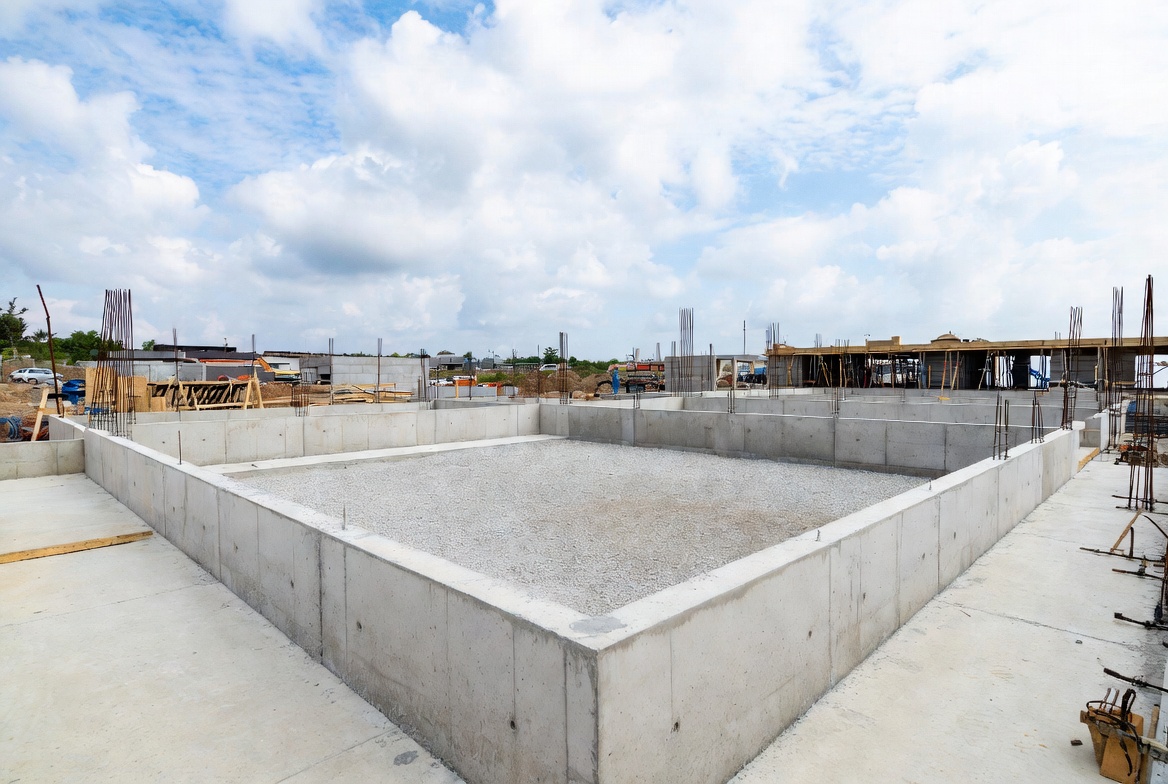
Reinforced concrete foundations get flattened into one lazy image online: trench, concrete, rebar, done.
That is not how foundation work behaves once loads, soil, water, frost, wall height, openings, and settlement start pushing on the same system. A reinforced concrete foundation is not just concrete with steel dropped into it. It is a structural assembly using concrete for compression and durability, with reinforcement placed where tension, bending, crack control, and continuity have to be handled on purpose.
That is why these jobs go wrong in familiar ways. The site gets treated like a detail problem instead of a ground problem. Footing bars get copied from a generic sketch. Basement walls get poured like drainage will rescue them later. A slab gets called “reinforced,” and suddenly nobody asks whether the steel is in the right zone, tied properly, covered properly, and working with the foundation below it.
This page stays with the main thing: what reinforced concrete foundations are, where reinforcement matters most, how the common reinforced elements differ, and where the expensive mistakes start. If the ground conditions are still unsettled, start with soil analysis and site investigation before the reinforcement detail starts pretending it already knows the answer.
What a Reinforced Concrete Foundation Is
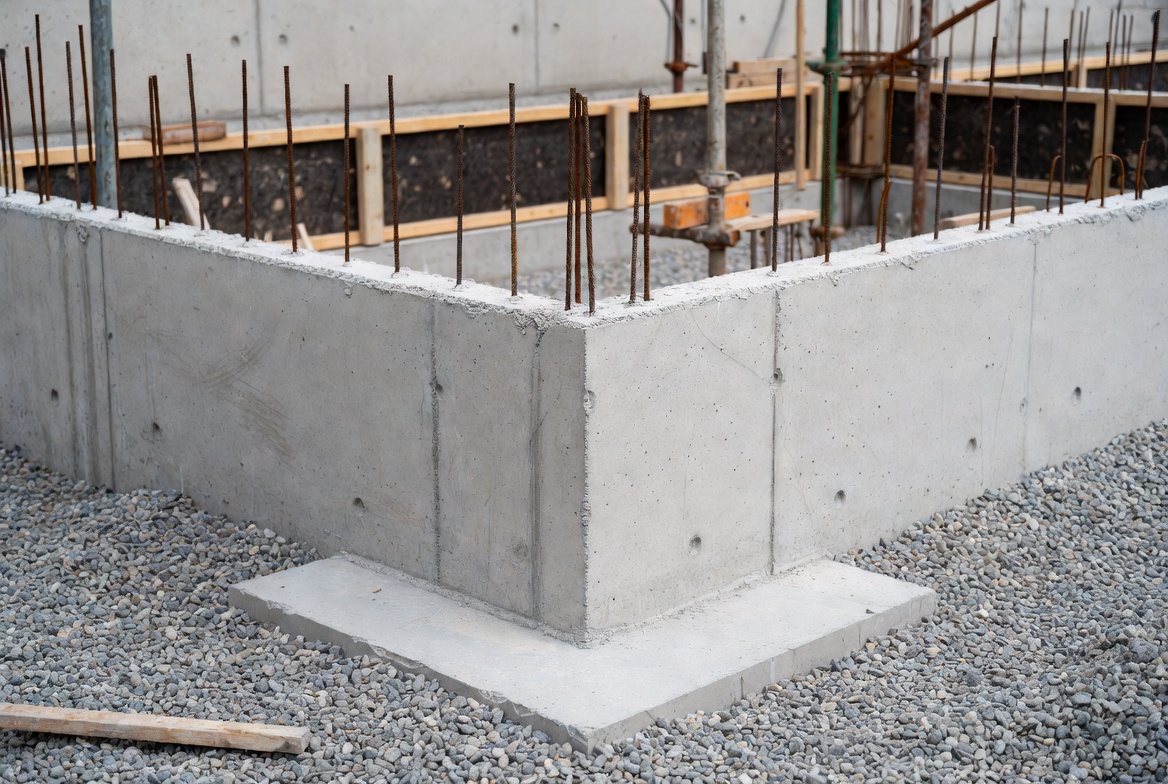
A reinforced concrete foundation is a foundation system in which concrete and steel work together to carry building loads into the ground while controlling bending, limiting crack width, and tying the system through corners, wall lines, openings, concentrated loads, and changes in support.
That can include strip footings, wall footings, pad footings, grade beams, slab foundations, raft foundations, basement walls, piers, pile caps, and some deep foundation elements such as reinforced concrete piles.
Not every project uses the same family of foundation, and not every reinforced element is doing the same job. A house on a clean, predictable site might use reinforced strip footings and a basement wall. A heavier building with concentrated column loads may move toward pad footings, a mat, or a pile-supported system. A weaker site can change the whole foundation choice quickly. For the wider picture around shallow and deep systems, house foundations before construction is the broader starting point.
Where the Steel Is Doing the Work
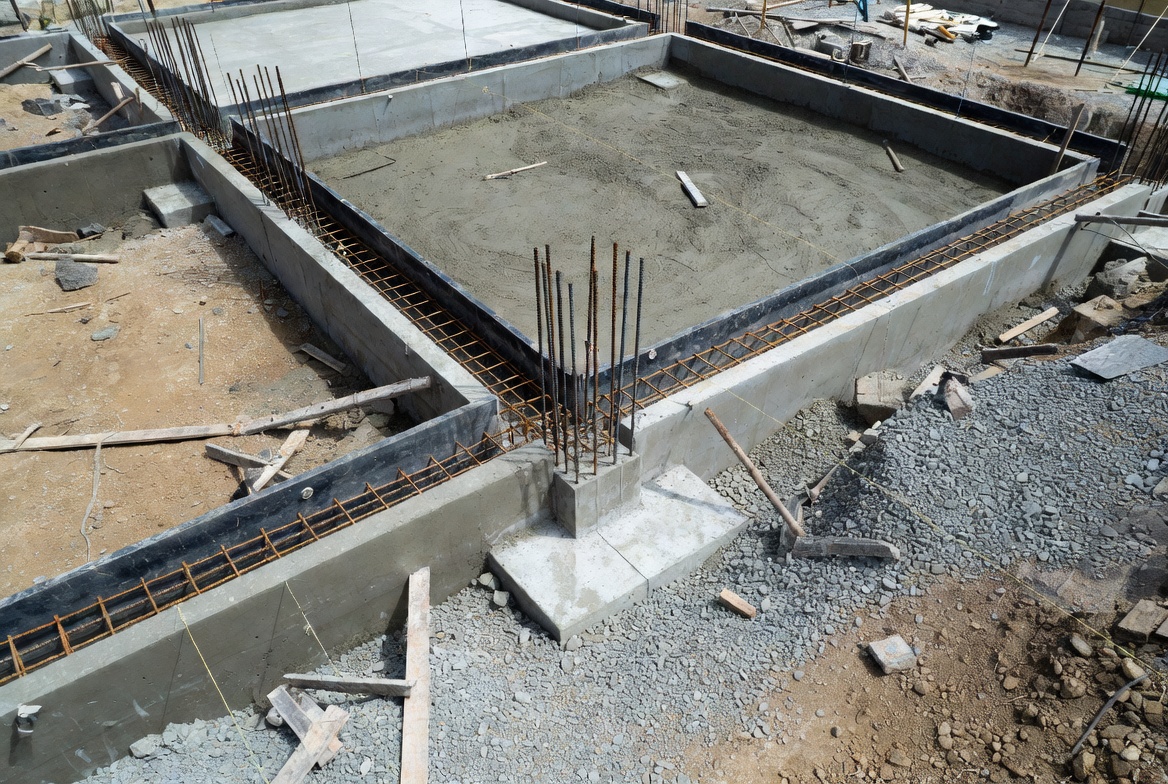
Concrete carries compression well. Reinforcement is there because foundations see bending, tension, crack opening, and force transfer in more places than people expect.
| Element | Main Demand | What the Steel Is Handling |
|---|---|---|
| Strip or wall footing | Continuous wall load on soil | Flexure, continuity at corners and steps, local changes in support |
| Pad or isolated footing | Concentrated column or pier load | Load spread, bending, local shear demand, anchorage |
| Foundation wall | Gravity load plus lateral earth and water pressure | Wall bending, crack control, continuity around openings, unbalanced backfill demand |
| Slab or raft | Distributed support with soft spots or concentrated loads | Crack control, bending, continuity, load redistribution |
| Grade beam or pier system | Point supports tied into a continuous path | Bending between supports, tying the system together, load transfer |
| Pile cap | Column or wall load delivered into deep supports | Force collection, shear transfer, concentrated load delivery into piles |
The bar layout is only useful if it matches the force path. Steel is not there to make the drawing look engineered. It is there because a specific part of the foundation would behave badly without it.
Footings: Where Generic Details Mislead People
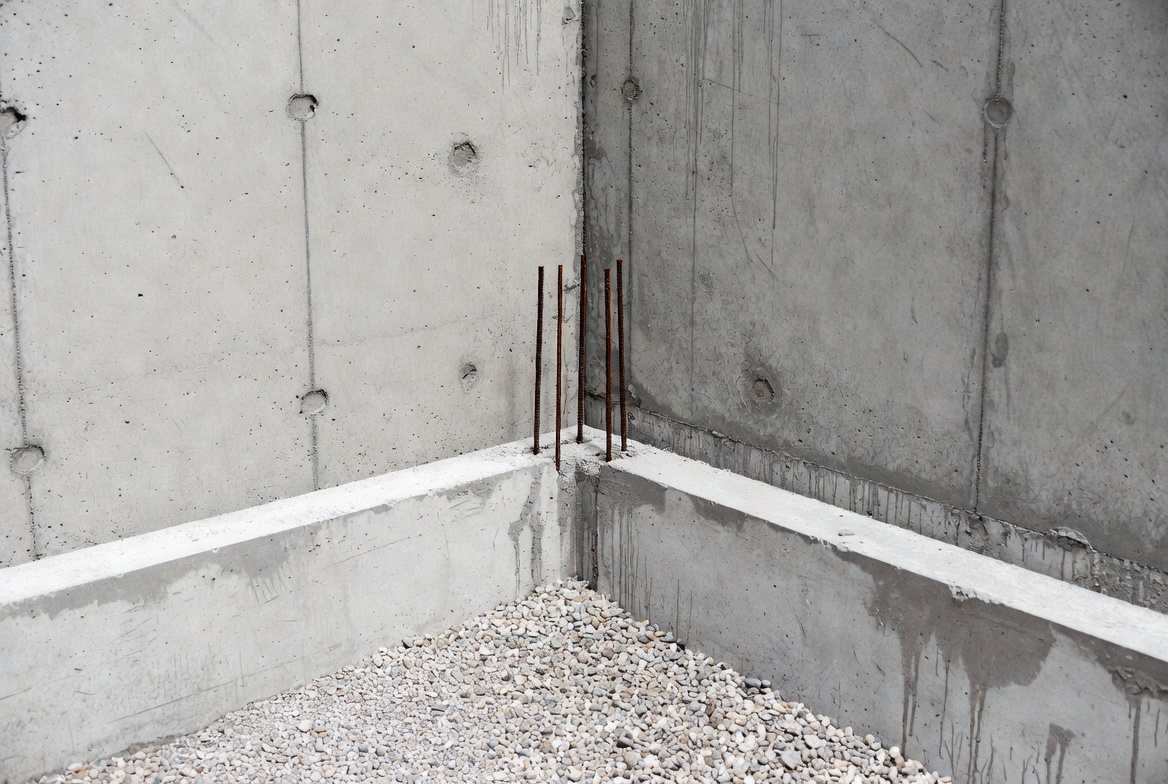
Footing reinforcement is where a lot of internet advice turns sloppy.
People search for minimum reinforcement in footing, top and bottom reinforcement in footing, double reinforcement footing, strip footing reinforcement, pad footing reinforcement, or column footing reinforcement as if one universal sketch solves the category. It does not.
In many footing conditions, the main bars go where the designer expects the flexural tension demand to develop. But that does not mean every footing wants the same top steel, bottom steel, hooks, cover, spacing, corner detail, or lap condition.
Once the footing is stepped, eccentrically loaded, supporting an offset wall, carrying a concentrated column, or sitting on support that is uneven across the trench, the detail stops being generic. That is where copied sketches start causing trouble.
Read This Next. If you want the footing-only branch, footing reinforcement is the cleaner next page.
Foundation Walls and Basement Wall Reinforcement
Foundation wall reinforcement is not an accessory note. In many projects it is the whole fight.
A reinforced foundation wall carries gravity load from above while resisting lateral soil pressure from outside. Basement wall reinforcement gets more demanding as wall height rises, openings interrupt the wall, backfill becomes unbalanced, surcharge increases, or drainage confidence drops.
This is also where different problems get mixed together under one label. Basement wall reinforcement, reinforcing block basement walls, stem wall reinforcement, and carbon fiber wall reinforcement do not belong in the same bucket.
Cast-in-place reinforced concrete wall design is one thing. Reinforced block wall work is another. Carbon fiber strips, wall beams, and similar retrofit products belong to repair work on an existing wall, not to the original design logic of a new reinforced concrete foundation.
The bad mistake here is simple: assuming water management is secondary because the wall has steel in it. It is not. A reinforced wall still needs drainage, waterproofing, backfill discipline, and sane sequencing in the field.
Also Useful. If the issue is a new below-grade wall, basement wall reinforcement is the more useful branch page.
Slabs, Rafts, and What People Call a “Reinforced Slab Foundation”
“Reinforced slab foundation” gets used loosely online.
A slab-on-grade foundation is not the same thing as a reinforced raft foundation, and basement slab reinforcement is not the same conversation as the main structural work being done by the footing-and-wall system around it.
Slabs usually need their reinforcement tied to subgrade quality, jointing, thickened edges, service penetrations, concentrated loads, and expected cracking. Raft foundations go further. They are wide load-spreading systems used where near-surface support is weaker, column spacing is tighter, or settlement control matters more.
The rough rule is this: once the ground stops behaving evenly, the slab stops being a simple floor story and starts becoming a load-distribution story.
On simpler residential work, many of these projects still begin with slab-on-grade foundations. Once support conditions become less reliable, the logic starts moving toward reinforced concrete raft foundations.
Piers, Piles, and Pile Caps
Once shallow support stops making sense, reinforced concrete foundation work changes character.
Reinforced concrete pier design, bored pile reinforcement, precast reinforced concrete piles, and pile-cap detailing belong to a tighter geotechnical-structural conversation than ordinary residential footing work does. The reinforcement cage, cover, splice conditions, inspection demands, and construction sequence all become less forgiving.
At that point the project is no longer living inside the simple footing-wall-slab conversation. It has moved into a different lane. The bars are not just strengthening concrete. They are helping carry force from the structure above into support that may be several feet, or many feet, below the upper soils.
Worth Knowing. If that is where the job is heading, reinforced concrete piles is the better outward branch.
What Reinforced Foundation Design Is Checking
The design of reinforced concrete foundations is not a bar schedule exercise. It is a behavior exercise.
- Loads. Dead, live, lateral, uplift, concentrated reactions, and continuity of the load path.
- Soil behavior. Bearing, settlement, variability, groundwater, shrink-swell risk, frost, and excavation stability.
- Strength. Flexure, one-way shear, local bearing, wall bending, and two-way or punching-related checks where they apply.
- Serviceability. Crack control, stiffness, movement, and deflection under ordinary use.
- Durability. Cover, moisture exposure, sulfate risk where relevant, and how the system will age in contact with soil and water.
- Constructability. Whether the bars can be placed, tied, chaired, consolidated around, and inspected without turning the detail into a site mess.
That is why rc footing design, reinforced raft foundation design, and pile-cap reinforcement design are engineering tasks, not keyword lookups.
Where Reinforcement Changes the Answer
Reinforcement starts to matter more sharply once the foundation is no longer dealing with simple, uniform bearing under a light load.
Basement Wall on a Wet Site
Once the wall is retaining wet soil, carrying house load, and interrupted by openings, reinforcement stops being a background detail. Bar size, spacing, lap zones, and boundary conditions start moving with wall height, surcharge, and how trustworthy the drainage system is.
Pad Footing Under a Concentrated Load
A column footing does not behave like a long wall footing. The reinforcement has to collect a concentrated reaction, spread it through the footing depth, and deal with bending and local shear demand instead of relying on the load being distributed along a long line.
Raft Foundation on Variable Bearing
When near-surface support is weaker or less consistent, a reinforced raft can become the cleaner answer. The job is not just holding the building up. It is distributing load broadly enough that local soft zones do less damage to the whole system.
Pile Cap Over Poor Upper Soils
Once shallow support stops being dependable, the pile cap becomes a transfer element, not a block of concrete with bars in it. Its reinforcement has to take force from the wall or column above and deliver it into the deep supports below without breaking the load path across the cap.
Where Jobs Usually Go Badly
The trouble usually starts in the same places.
The ground was understood too late. The reinforcement detail gets more attention than the bearing and water conditions underneath it.
The bars were present but not doing the intended work. Wrong position. Wrong cover. No chairs. Poor laps. Congested intersections that never got consolidated properly. Steel lying where it could be seen but not where it needed to be.
The wall was expected to solve a drainage problem. It will not. Reinforcement is not a replacement for waterproofing, drainage, or grading.
The slab was mistaken for the whole foundation story. On many houses the slab is part of the system, but the main structural answer still lives in the footings, walls, or beams below and around it.
Repair products were sold as substitute design. Carbon fiber, braces, and patch systems can have a place in repair. They do not turn a weak original foundation concept into a sound one.
Water keeps forcing its way back into this discussion because it keeps forcing the issue. If moisture control is already suspect, read exterior foundation waterproofing before anyone starts pretending the reinforcement detail alone will rescue the basement.
FAQ
Is every concrete foundation reinforced?
No. Some residential elements may be plain concrete if the geometry, loads, code path, and site conditions allow it. But once the foundation has to deal with meaningful bending, crack control, lateral wall pressure, continuity, or concentrated loads, reinforcement becomes central.
Do all footings need top and bottom reinforcement?
No. Some footings mainly need steel where the main flexural tension is expected. Others need more complicated layouts because of eccentric loading, geometry changes, columns, wall offsets, or other structural demands. Top-and-bottom reinforcement is not a universal default.
What is the difference between a pad footing and a raft foundation?
A pad footing carries a concentrated point load such as a column or pier. A raft foundation spreads load across a much larger slab area under much or all of the structure.
Is a basement slab part of the reinforced concrete foundation?
Yes, but not always in the way people assume. The slab is part of the foundation system, yet in many houses the main structural load path still runs through footings and walls rather than through the slab by itself.
Can carbon fiber replace proper basement wall reinforcement?
No. Carbon fiber reinforcement is usually part of repair or retrofit work on an existing wall. It does not replace proper original design, drainage planning, or wall reinforcement where a new foundation is being designed from the start.
What is plinth beam reinforcement?
That term is used more often outside North America. In North American practice, the closest comparison is usually a grade beam or foundation tie beam, depending on the system. The role still depends on how the loads and wall lines are being carried.
Bottom Line
Reinforced concrete foundation work is not about adding steel until the drawing looks serious. It is about putting reinforcement exactly where the system needs help carrying tension, controlling cracks, tying elements together, and surviving the site conditions underneath it.
On a strong project, the concrete, steel, soil, water management, and construction sequence agree with each other. On a weak one, the bars are there, the concrete is there, and the foundation still starts arguing with the ground because the system was never resolved as a system.