
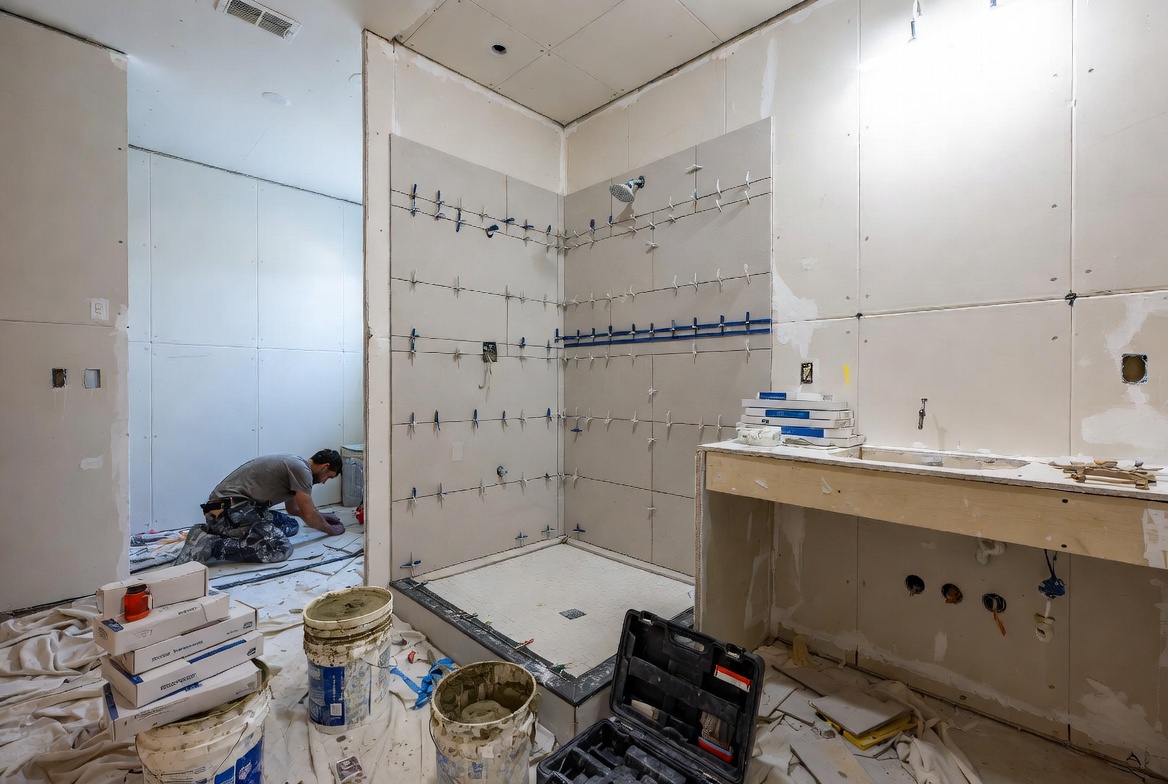
Most “best contractor” lists are useless. They recycle review scores, repeat marketing language, and never get into the details that actually decide whether a bathroom holds up: waterproofing, venting, sequencing, paperwork, and how the contractor handles problems once the walls are open.
A good bathroom remodel is not won by charm
A good bathroom remodel is won by scope control, clean trade coordination, real waterproofing, and a proposal that says exactly what is included. That is the stuff that keeps you out of leak repairs, schedule drift, and expensive “surprises.”
What Separates a Good Bathroom Contractor
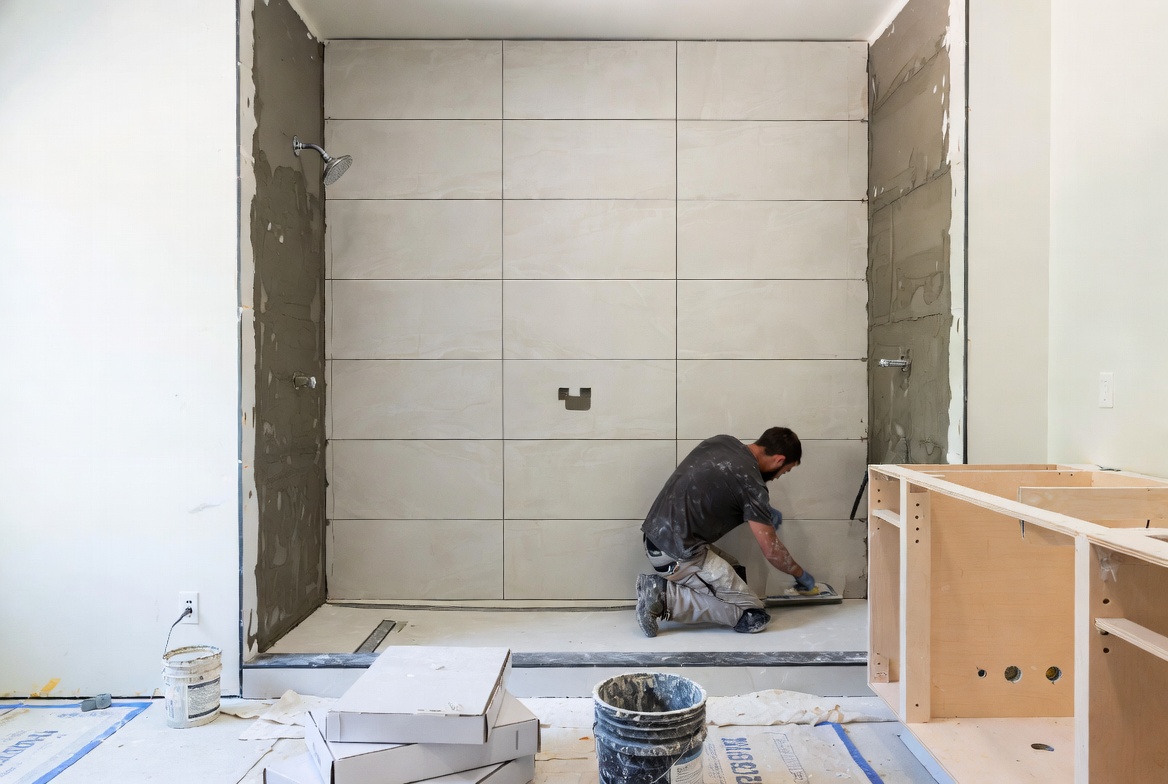
Contractor installing shower tile during a residential bathroom remodel.
- They explain the job clearly. Not just finishes. Scope, sequence, lead times, inspections, and what can go wrong.
- They give you a line-item proposal. Demo, disposal, framing repair, plumbing, electrical, waterproofing, tile prep, finish install, and allowances should all be visible.
- They know bathrooms specifically. Bathrooms fail at details. Shower slope, membrane transitions, fan ducting, valve placement, and tile substrate matter more than general remodeling confidence.
- They can show older work. A bathroom that still looks good after 12 to 24 months tells you far more than fresh photos.
- They can be verified. License, insurance, references, and permit history should all check out.
If you want a broader planning primer before you start calling contractors, our guide to running your own project like a GC is the better place to start.
How to Vet Bathroom Contractors Without Wasting Weeks
Start with two or three, not eight.
Too many bids usually creates noise, not clarity. What you want is a small group of plausible contractors, then a serious comparison of scope, exclusions, and process.
Ask to see work that is not brand new.
A shower can look beautiful the week it is grouted. A one-year-old shower tells the truth. Look for cracked corners, swollen trim, bad caulk lines, musty odor, and uneven tile that did not show up in the photos.
Ask technical questions, not generic ones.
A contractor who really does bathrooms should be able to answer these without dancing around them:
- Which waterproofing system do you use here, and why?
- How do you handle inside corners, curbs, and valve penetrations?
- How do you verify shower slope before tile goes in?
- What happens if the subfloor is out of plane or damaged after demo?
- Who is on site daily, and who owns quality control?
Vague answers usually mean future problems.
Watch what they do during the visit.
The better contractors usually measure, check floor conditions, ask about fan ducting, look at access points, and talk about what may be hiding behind the walls. The weaker ones usually talk finishes first and risk last.
Check license and insurance yourself.
Do not treat a PDF as proof. Look up the license on your state portal and ask for current insurance directly from the agent if needed. Permit and licensing rules vary by jurisdiction, so the safest place to start is your city or county building department. If you do not know where to find it, USA.gov’s local government finder is the cleanest starting point. Safety expectations on dust control, PPE, and jobsite practices are also spelled out by OSHA.
For a related screening approach on more technical trades, see how we screen structural and repair contractors.
Red Flags Worth Walking Away From
- “We do not need permits.” If plumbing, electrical, or layout changes are involved, that answer needs to be verified with the local building department.
- No waterproofing brand or method named. “We waterproof everything” is not a spec.
- A very low bid with vague scope. That usually means something expensive is missing.
- Heavy front-loaded deposits. Payment should follow real milestones, not optimism.
- “We will figure finishes later.” That is how allowances turn into budget creep.
- Cash-only pressure and weak paperwork. That usually means weak leverage later.
How to Read the Proposal Before You Sign
This is where a lot of homeowners lose control of the job. The number matters, but the scope matters more.
- Demo and disposal: What is coming out, how debris leaves, and who handles haul-away.
- Substrate repair: What happens if the floor is soft, sloped, or damaged.
- Plumbing: Valve upgrades, drain work, shutoff assumptions, and fixture installation.
- Electrical: GFCI, AFCI where required, lighting changes, fan wiring, heated floor work if any.
- Ventilation: Fan size, duct route, and termination point.
- Waterproofing: Exact system, where it goes, and whether flood testing is included.
- Tile prep and layout: Leveling, pattern, trim type, and what happens at changes of plane.
- Allowances: Tile, vanity, plumbing fixtures, glass, and lighting should be clear in writing.
- Change orders: Written, priced, and approved before the extra work starts.
- Warranty: Labor term and manufacturer warranties passed through.
If lien waivers are part of the draw schedule, that is generally a healthier sign than “trust us, it is handled.”
Where Bathroom Budgets Blow Up
Bathroom remodels usually go sideways in the same places:
- Plumbing reality. Old drains, corroded valves, or undersized lines show up once walls open.
- Subfloor and framing repair. Rot around toilets, tubs, and shower curbs is common.
- Tile prep. Flat tile requires flat surfaces. That correction costs money.
- Code corrections. Venting, outlet spacing, fan ducting, and electrical protection often need upgrading.
- Custom details. Niches, slab benches, curbless entries, miters, and oversized tile all add labor fast.
This is why the cheapest proposal can become the most expensive one. The hidden line items are usually the ones that keep the room dry and code-compliant.
Water-saving fixtures can also affect the math. EPA’s WaterSense program and its bathroom guidance are worth checking when you are selecting toilets, faucets, and showerheads, especially if local rebates are in play.
For a broader overview of scope and line items, see our bathroom contractor overview.
Permits, Inspections, and the Boring Stuff That Saves You
Put in writing who pulls permits, who attends inspections, and who handles corrections if something fails. Do not leave that blurry.
If the remodel involves dust-heavy demolition, tile cutting, or concrete work, the contractor should also be handling silica dust responsibly with the right controls and cleanup practices. OSHA’s construction guidance on crystalline silica exists for a reason.
Payment Schedule That Makes More Sense
Exact numbers vary by state, contractor, and scope, but the structure matters:
- Initial deposit after contract and permit submission
- Draw after demolition and rough layout verification
- Draw after rough-in work and required inspections
- Draw after waterproofing and shower pan testing, if applicable
- Draw after tile and major fixture installation
- Final payment after punch list is complete
The main point is simple: payments should follow visible progress, not promises about future progress.
If financing is part of the project, the Consumer Financial Protection Bureau is the better starting point than a contractor’s lender flyer.
Interview Questions That Separate Pros From Pretenders
- Walk me through your shower waterproofing system step by step.
- Who is on site daily, and who checks the tile and waterproofing work?
- Can I see two bathrooms you finished at least a year ago?
- What is excluded from this bid?
- How do you handle change orders and schedule slips?
If you are trying to understand how small contractor mistakes turn into expensive rework, this piece on learning from real contractor failures is worth the read.
FAQ
Do I always need a permit?
Not for every cosmetic change, but plumbing, electrical, layout, and ventilation changes often trigger permit requirements. Confirm locally.
How many bids should I get?
Two or three serious bids are usually enough. More than that often makes comparison harder, not better.
How long should a standard 5' x 8' bathroom take?
For a full remodel, three to six weeks is common once permits, inspections, and material lead times are considered. Custom details or hidden repairs can stretch that.
Is curbless worth it?
It can be, but it is not a casual upgrade. It changes waterproofing, slope, and sometimes framing or floor height.
What is the biggest hiring mistake?
Choosing from photos and personality alone. Bathrooms fail in the hidden details.
One Last Thing
The better contractors are usually not the smoothest talkers. They are the ones who ask sharp questions, write clear scopes, name systems and products, and do not get vague when you press on waterproofing, scheduling, or inspections.
If you remember only three moves, make them these: visit older work, get the waterproofing method in writing, and verify the paperwork yourself. That alone filters out a surprising amount of future trouble.