
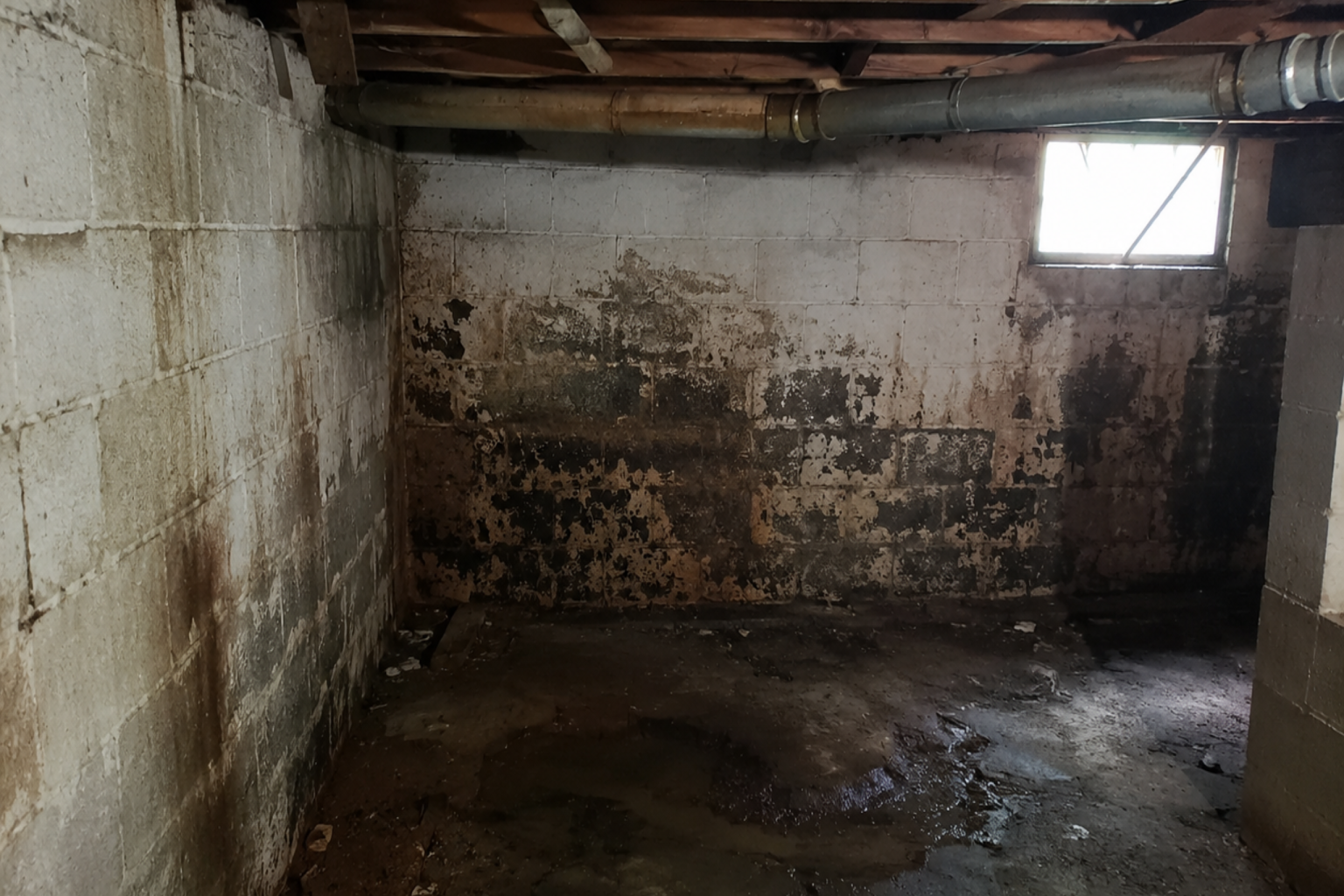


A musty smell means moisture, not a cleaning problem.
Something in or around the house is damp — a basement wall, a crawl space, wet carpet padding, a bathroom fan that dead-ends in the attic, or a duct system pulling in bad air. Until you find which one it is, sprays, purifiers, duct cleaning, and dehumidifiers are mostly guesses.
Start With the Smell Pattern
The timing of the smell tells you more than the smell itself, so write down when it gets stronger before you buy anything. The pattern narrows the source without always confirming it — sometimes you can't be sure until a wall cavity is opened or someone gets under the house — but it's still what keeps you from spending on the wrong fix first.
| When the smell gets worse | Check here first | What it can mean |
|---|---|---|
| After rain | Basement walls, crawl space, gutters, grading | Water is entering or sitting against the foundation. |
| When the AC or heat runs | Filter, coil, condensate pan, ducts, return cavity | The air system may be spreading damp odor. |
| In summer | Basement, crawl space, closets, exterior walls | Humidity is high enough for damp materials to smell. |
| After renovation | New drywall, covered leaks, sealed rooms, hidden cavities | The work may have trapped moisture instead of drying it. |
| Only in one room | Carpet, closet, window, exterior wall, bathroom wall | The source may be local, not whole-house mold. |
A cheap hygrometer is worth more than it costs here. EPA mold guidance puts indoor relative humidity below 60 percent, and ideally between 30 and 50 percent when the climate allows, so if one room, basement, or crawl space stays above that range, the smell will keep coming back no matter how much you clean. If you'd rather track the pattern than guess at it, an air quality and mold risk monitor can show when humidity climbs, which rooms stay damp, and whether the odor lines up with the weather or the HVAC cycle.
Where Musty Smells Usually Start
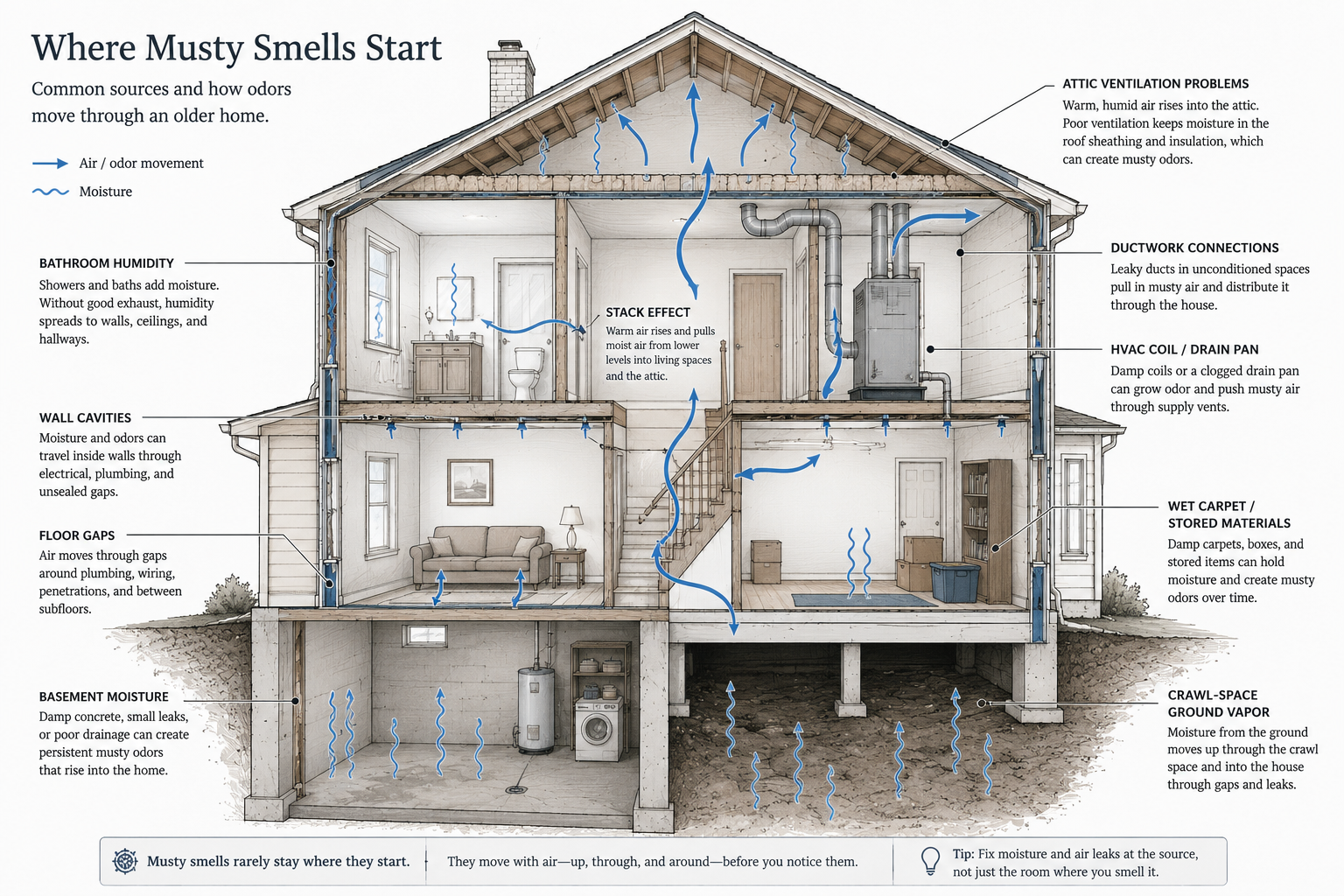
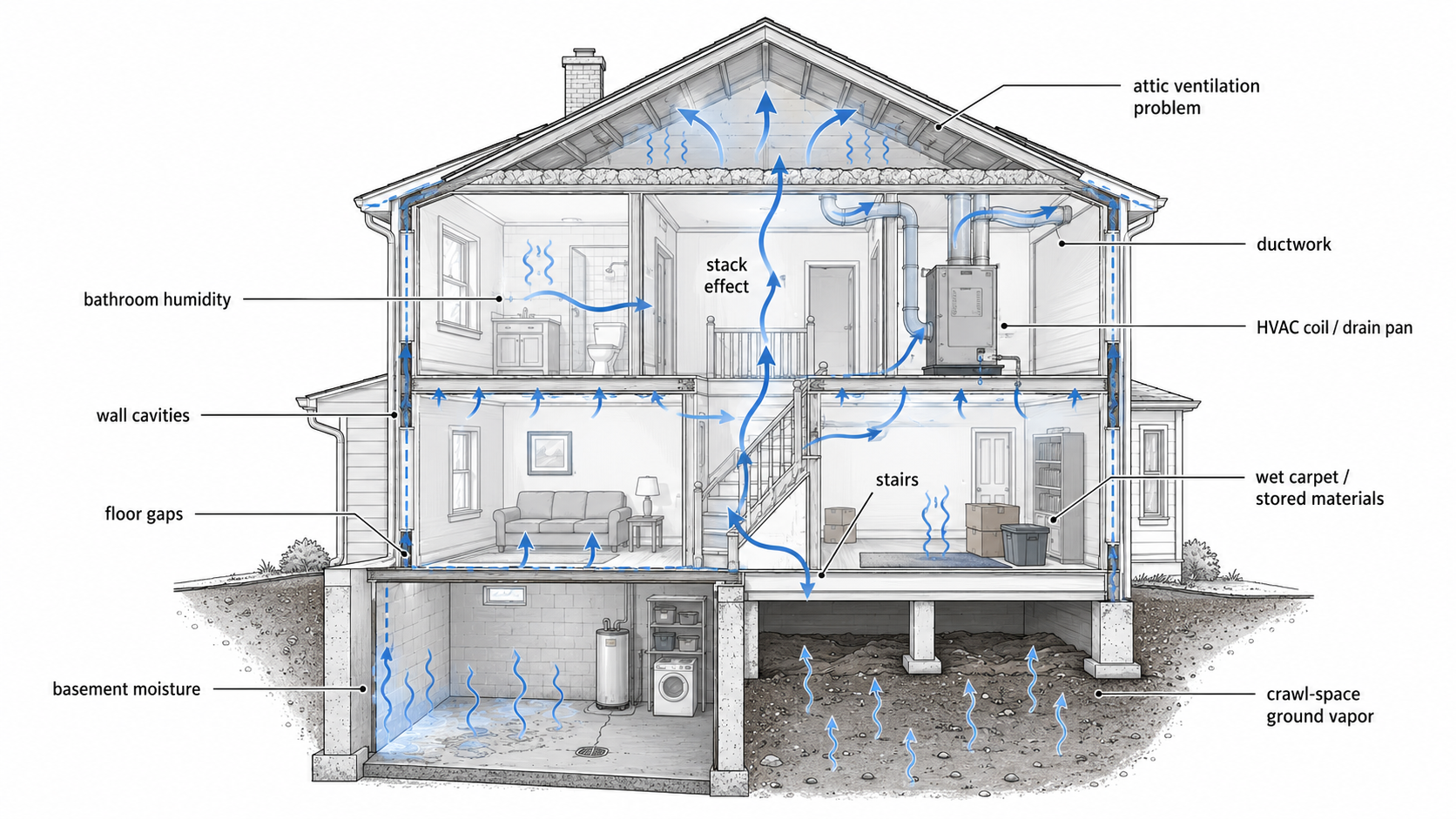
Old houses smell musty when moisture has somewhere to sit — concrete, old wood, insulation, carpet padding, cardboard, plaster, drywall paper, or the dust packed inside an air return. The house can look bone-dry upstairs while the source sits below it, because basement and crawl-space air leaks up through rim joists, pipe openings, floor gaps, stair openings, and wall cavities, and warm air rising through the house pulls that damp air along with it.
A few places are worth checking before anything else. The basement's usual suspects are foundation seepage, cold concrete, old carpet, paneling, the sump area, and stored boxes. A crawl space points more toward exposed soil, a torn vapor barrier, standing water, damp joists, and sagging insulation. In a bathroom, the culprit is often a weak fan, bad grout, a leaking toilet seal, a wet vanity bottom, or a fan duct that dead-ends in the attic instead of outside. For the HVAC system, check the filter first, then a wet coil, a blocked condensate drain, moldy duct liner, or a dusty return cavity. If the smell shifts with weather, humidity, or the mechanical system, treat it as a building diagnosis rather than a housekeeping problem.
The Basement May Be the First Place to Check
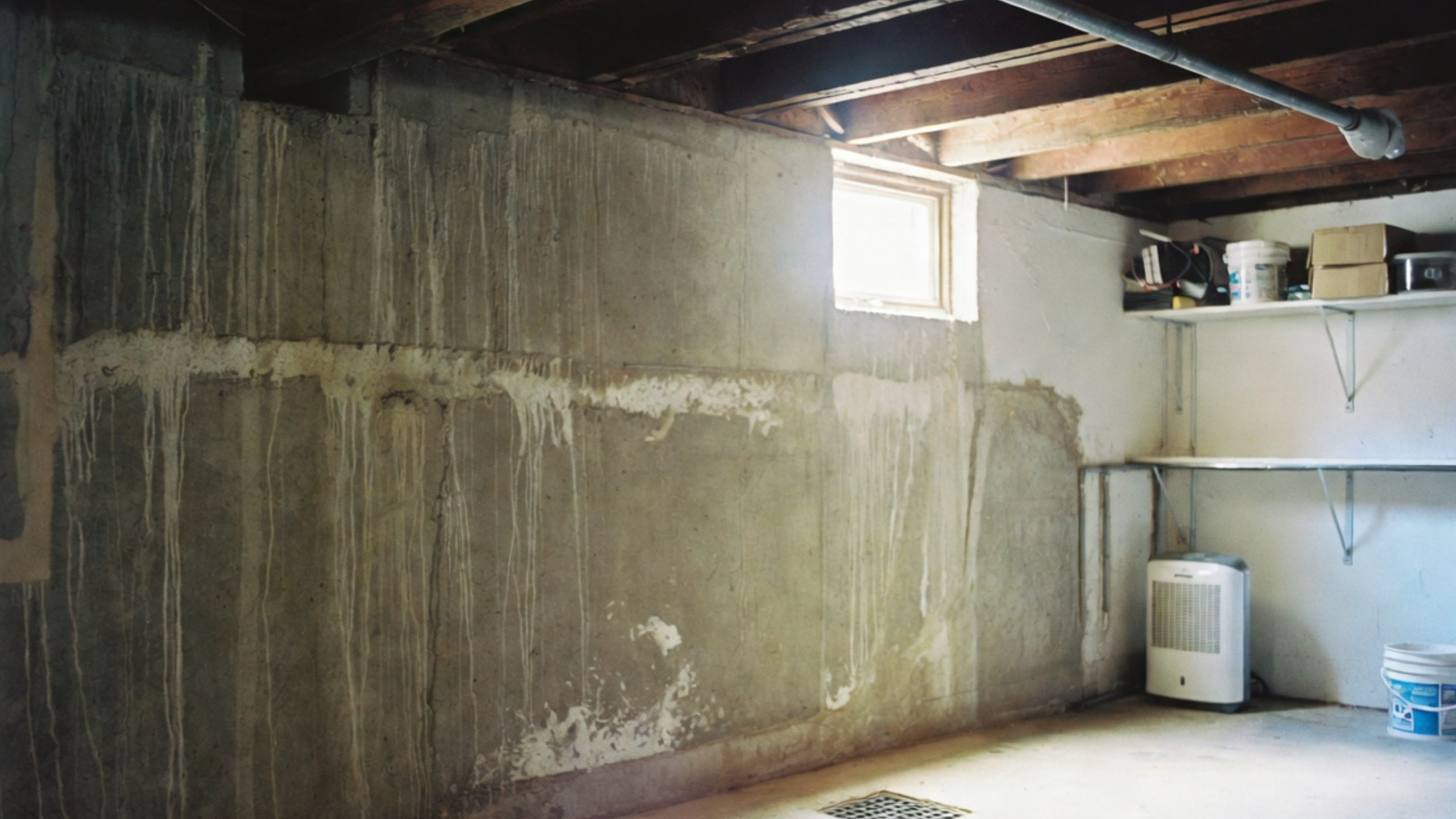
A basement doesn't need standing water to make odor. Concrete holds moisture, block walls show white mineral deposits, and old shelves, cardboard boxes, rugs, and wood paneling keep a damp smell long after the wall itself looks dry. Look for staining along the bottom of the walls, powdery white deposits, peeling paint, wet carpet edges, rusting metal shelving, swollen base trim, or a smell that sharpens near the stairwell.
If the smell gets worse after rain, start outside before buying any odor product — walk the perimeter and check the gutters, downspouts, soil slope, window wells, and any hardscape that traps water against the house. Then come back inside and look at the lower foot of the basement walls, the floor-wall joint, the pipe penetrations, the sump pit, and any wall that lines up with a wet spot outdoors. I've watched someone run a dehumidifier against one wall for a full year because the room smelled wrong, and the smell never moved until they found the downspout dumping two feet from the foundation and rerouted it. If the pattern is tied to storms, work through basement walls that leak when it rains before paying for odor cleanup.
Interior waterproofing, sealers, and dehumidifiers all have their place, but if roof water or surface water is being dumped beside the foundation, the first fix is usually gutters, downspouts, grading, window wells, or exterior drainage. For the heavier repair path, exterior foundation waterproofing walks through it.
The Smell May Be Coming From the Crawl Space
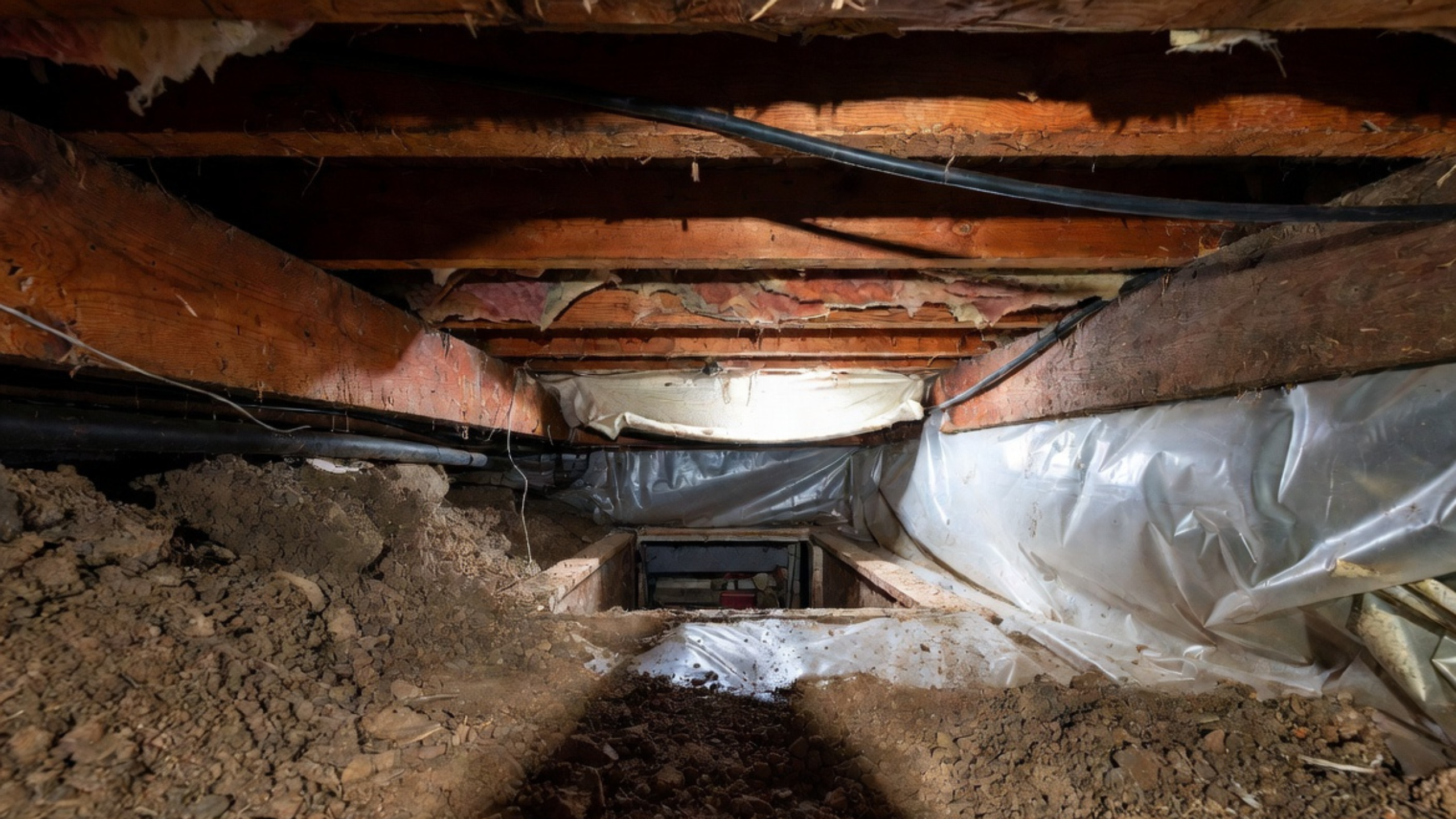
In a crawl space, the ground is the first thing to check, because exposed dirt, torn plastic, open foundation vents in a humid climate, and sagging insulation all feed odor straight up into the house. I've stood in a crawl space that smelled like a wet towel and then climbed up to a living room with spotless carpet that smelled exactly the same. Air doesn't stay politely under the floor — it moves through gaps, chases, plumbing openings, floor cracks, and the rim joist. If you already know the crawl space runs humid, start with crawl space humidity before jumping to full encapsulation, and if water shows up after storms, read water in the crawl space after rain before buying a bigger dehumidifier. Encapsulation can absolutely be the right repair, but it's not the first move while bulk water is still getting in — drainage, grading, ground vapor control, air sealing, and drying all have to happen in the right order.
Bathroom Fans and Attic Moisture Can Feed the Smell Back Down
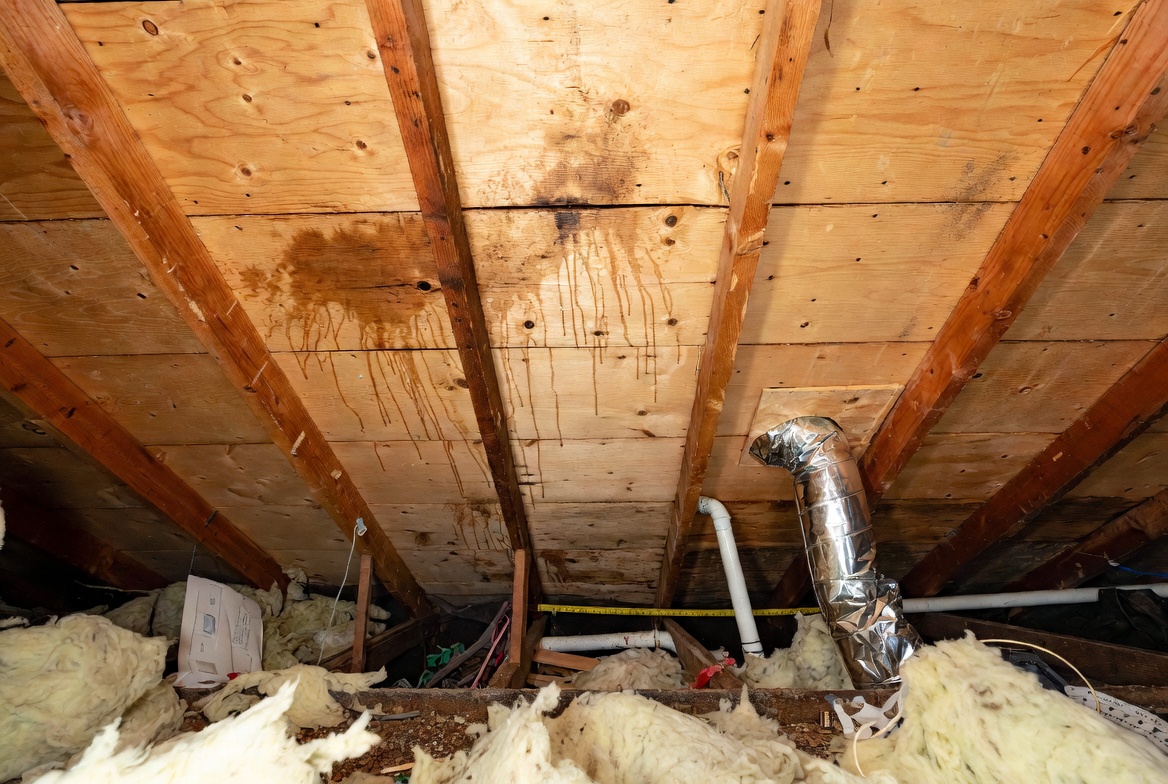
An upstairs musty smell doesn't always come from the room where you smell it. In older houses the bathroom fans are often weak, disconnected, blocked, or vented into the attic instead of outdoors, which dumps warm wet air into a cold space and shows up later as dark roof-sheathing stains, damp insulation, rusted nails, or a smell that hangs in the upstairs hallway. I've traced a musty hallway to a bath fan that vented straight into the attic and had been soaking the sheathing for years before anyone noticed. Run the fans and confirm the air actually exits the house, then follow the duct path — a fan that ends in the attic can wet framing and insulation for a long time before it ever looks like a leak.
When the AC or Heat Makes It Worse
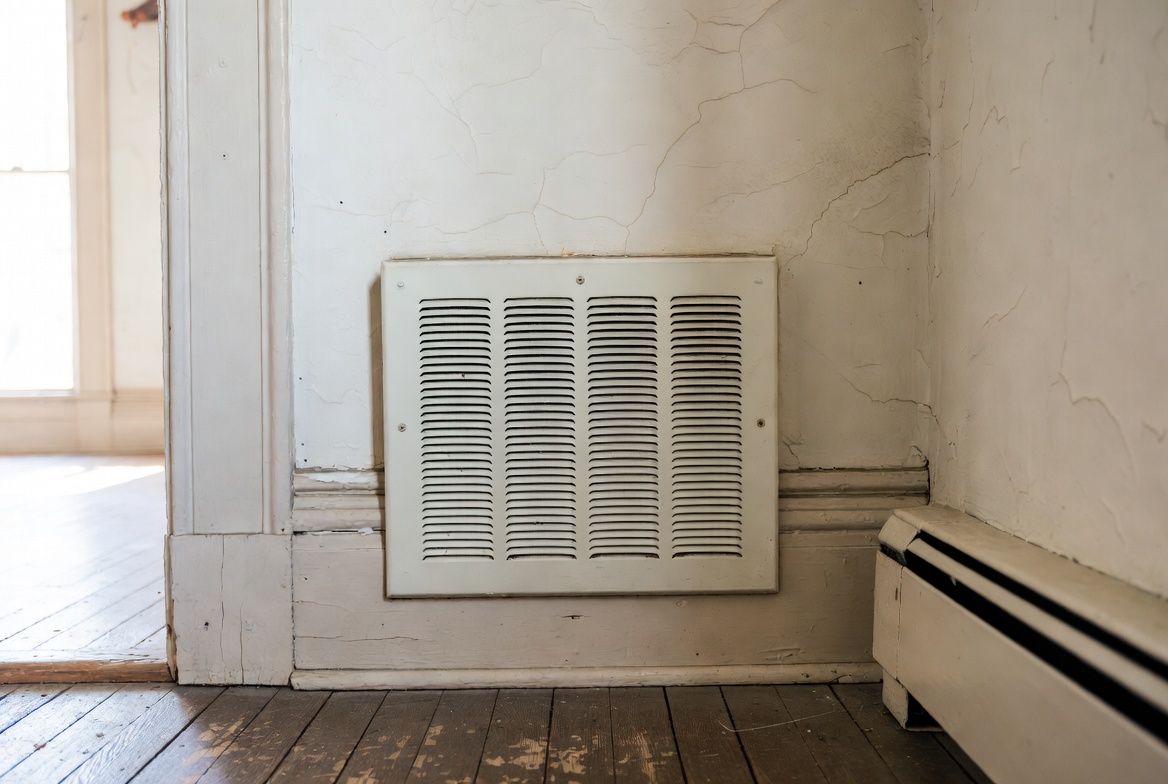
If the smell gets stronger the moment the air turns on, the problem is probably the system, not the whole house. Check the filter first, then the return grille, condensate drain, drain pan, coil area, and the room where the air handler lives. A clogged condensate line keeps the system wet, a dirty coil holds moisture and dust, and a leaky return cavity pulls damp basement or crawl-space air right into the ductwork. Be wary of duct-cleaning pitches that arrive before any of that is checked: EPA guidance is that duct cleaning has not been shown to prevent health problems in general, though ducts may need attention when there is visible mold, heavy debris, pests, or wet contaminated material. If fibrous duct liner is wet or moldy, cleaning may not be enough, and if you know or strongly suspect the system itself is contaminated with mold, EPA guidance says not to run it until it has been evaluated or remediated.
When It Is Mold, Mildew, or Just Damp Materials
A musty smell doesn't prove there's a major mold problem. It proves something is damp, stale, or holding old moisture. Mildew is usually a surface issue on damp grout, fabric, window tracks, or bath caulk, while mold can grow deeper into drywall paper, wood, insulation, carpet backing, and duct liner once moisture sits long enough. EPA guidance gives two limits worth holding onto: dry water-damaged materials within 24 to 48 hours when you can, and treat visible mold under about 10 square feet as potentially manageable for a homeowner, while larger areas, hidden growth, HVAC contamination, sewage water, or recurring leaks call for more care. Don't read health promises into a smell either way — some people, especially those with asthma, allergies, or immune concerns, react strongly to damp indoor conditions while others notice nothing, and the building problem still needs correcting regardless.
What Not to Pay For First
Musty-smell repairs go wrong when the first purchase hides the very clue you need. An air purifier is the wrong opening move if the smell worsens after rain, because the job there is to find the water path. Duct cleaning treats a symptom and leaves the cause if the basement or crawl space is damp and the return is drawing air from it. Painting basement walls that are still taking on moisture just gives the coating something to peel and blister off of. And encapsulating a crawl space while bulk water is still entering seals the problem in rather than out — drainage and grading come before plastic and insulation. Dehumidifiers earn their keep when the problem is humidity, but they are not a drainage repair, and a moisture meter, a hygrometer, and a patient inspection will save more money than one more odor product. If the crawl space is the source, line your diagnosis up against crawl space inspection before pricing full work, and if mold is already growing below the house, crawl space mold remediation is a different job than simple odor control.
If You're Buying a House That Smells Musty
A musty smell during a showing is leverage, and the inspection window is when it matters most. A seller's quick fix is almost always deodorizing: an air freshener, a fresh coat of basement paint, new carpet over an old problem, windows open the morning of the walkthrough. Those moves buy a clean-smelling week, which is why a house that shows fine in the morning can smell wrong again by evening once it's closed up. Treat the smell as a condition to diagnose before closing, not a detail to overlook. Get a home inspector on it, and bring in a waterproofing, crawl-space, or mold specialist if the pattern points that way, because the difference between "damp basement smell" and "active water entry with rotted framing" is the difference between a cosmetic note and a five-figure repair. Once you know the source, the smell becomes negotiable — a repair credit, a price adjustment, a contingency tied to fixing the moisture, or, if the water problem is bad enough and the seller won't address it, a reason to walk. The mistake is accepting a freshly painted, freshly scented basement as proof the problem is solved. Ask what was done to the smell, and then ask what was done to the water.
When to Call the Right Person
The right contractor depends on the pattern, because a mold inspector, an HVAC tech, a waterproofing contractor, and a duct cleaner are not interchangeable.
| Problem clue | Call first | Why |
|---|---|---|
| Musty smell after rain, wet wall, floor seepage | Waterproofing or drainage contractor | The water source has to be found before cleanup. |
| Smell only when AC or heat runs | HVAC technician | The coil, drain pan, filter, or duct system may be involved. |
| Visible mold larger than a small patch | Mold remediation or qualified inspector | Containment, removal method, and moisture source matter. |
| Crawl-space odor, damp joists, torn vapor barrier | Crawl-space or foundation contractor | Ground moisture and air leakage may be feeding the house. |
| Buying a house with musty smell | Home inspector plus specialist if needed | The smell can become a repair credit, contingency issue, or deal breaker. |
If a contractor names a price before checking where the moisture starts, slow down — the cheapest bid turns into the most expensive repair when it treats the smell and misses the water.
How to Keep the Smell From Coming Back
The lasting fix is unglamorous: keep water out, hold indoor humidity in range, pull out materials that stayed wet too long, and stop damp air from moving through the house. In practice that means keeping humidity below 60 percent and aiming for 30 to 50 percent when the house and climate allow, drying any water-damaged material within 24 to 48 hours, extending downspouts and correcting grading before spending a dollar indoors, and throwing out wet carpet padding, moldy cardboard, and swollen particleboard instead of trying to deodorize them. In a basement that often adds up to drainage, crack repair, better dehumidification, and removing old carpet or paneling; in a crawl space it can mean ground vapor control, air sealing, insulation changes, and sometimes encapsulation. If you're weighing that path, start with crawl space encapsulation cost and price the moisture source, not just the plastic.
Worth Knowing
A house can smell better for a week after a cleaning and still have the exact same moisture problem, and that short delay is what fools people into thinking it's solved. Odor products work on odor and nothing else — they won't dry framing, move roof water off a foundation, reconnect a bath fan, or replace wet insulation. Use them after the moisture source is handled, not before.
FAQ
Why does my house smell musty but I do not see mold?
The source may be hidden. Check basement walls, crawl spaces, carpet padding, closets on exterior walls, attic sheathing, bathroom vanities, and HVAC returns.
Does a musty smell always mean mold?
No. It means moisture or damp materials are present. Mold is one possible cause, but wet concrete, old carpet, damp cardboard, dirty HVAC parts, and poor ventilation can also smell musty.
Why does the smell get worse after rain?
Rain points to a water-entry problem. Check gutters, downspouts, grading, window wells, basement walls, crawl-space low spots, and the floor-wall joint.
Can a dehumidifier fix a musty smell?
It can help if high humidity is the problem. It will not fix foundation seepage, plumbing leaks, wet insulation, or poor drainage outside the house.
When should I call a mold inspector?
Call when you see recurring mold, smell odor from a hidden area, are buying the house, have had water damage, or need documentation before paying for remediation.
Should I clean the ducts if the house smells musty?
Not automatically. If the smell starts only when the system runs, have the HVAC system checked first. The issue may be a wet coil, clogged drain, dirty filter, return leak, or contaminated duct material.
Is a musty-smelling basement dangerous?
It depends on the source. A damp basement can be a comfort issue, a mold issue, a drainage issue, or a sign of hidden water damage. Treat it as a moisture problem until proven otherwise.
What should I remove first if a room smells musty?
Start with wet or porous items: carpet padding, cardboard boxes, old curtains, damp furniture, swollen particleboard, and anything that stayed wet for more than a day or two.