

Architecture school looks exciting from far away. Up close, it is a pressure test.
The work is part design, part coordination, part endurance. If you choose the wrong degree path, the wrong school, or the wrong habits early, you can spend years cleaning it up.
This page is for students who want a clearer start, not a speech about passion.
What School Is Really Asking From You
Studio is the center of the education. You draw, model, pin work up, explain it, get challenged, revise, and do it again. That cycle matters more than any single rendering.
The hard part is not making something look interesting. The hard part is making decisions before you feel ready, then defending them without hiding behind vague language.
Crits are where this gets exposed. If you cannot explain why the stair sits there, why the wall turns there, or why the section changes there, the drawing will not save you.

Older students and people coming back after working for a few years usually figure this out fast: the all-nighter is usually a planning problem. Architecture school is hard enough without turning sleep loss into a personality.
This part matters: Architecture Coursework: Tips for Success is the better next page if your immediate problem is workload, deadlines, and staying upright during studio season.
Start Before Day One
You do not need a perfect portfolio or advanced software before school starts. You do need better habits than most incoming students have.
- Measure places you use. Doors, tables, stairs, counters, hall widths. Architecture gets easier once dimensions stop feeling abstract.
- Keep a sketchbook. Not for pretty drawings. For observation, proportions, shadows, and quick layout thinking.
- Learn one digital tool first. One. A shaky beginner in five programs is slower than someone competent in one.
- Read one good architecture book before classes start. You need a foundation for form, space, sequence, and basic design language.
One good starting book is Architecture: Form, Space, and Order. It is still one of the clearest places to begin if you want to understand how plans, sections, proportion, and form work together.
Also useful: Free Architecture Courses with a Certificate if you want a low-cost way to test your interest before the semester starts, and Types of Architecture Courses if you are still sorting out what schools even teach.
Choose the Degree First
Too many students pick a school by reputation or building photos before they understand the path.
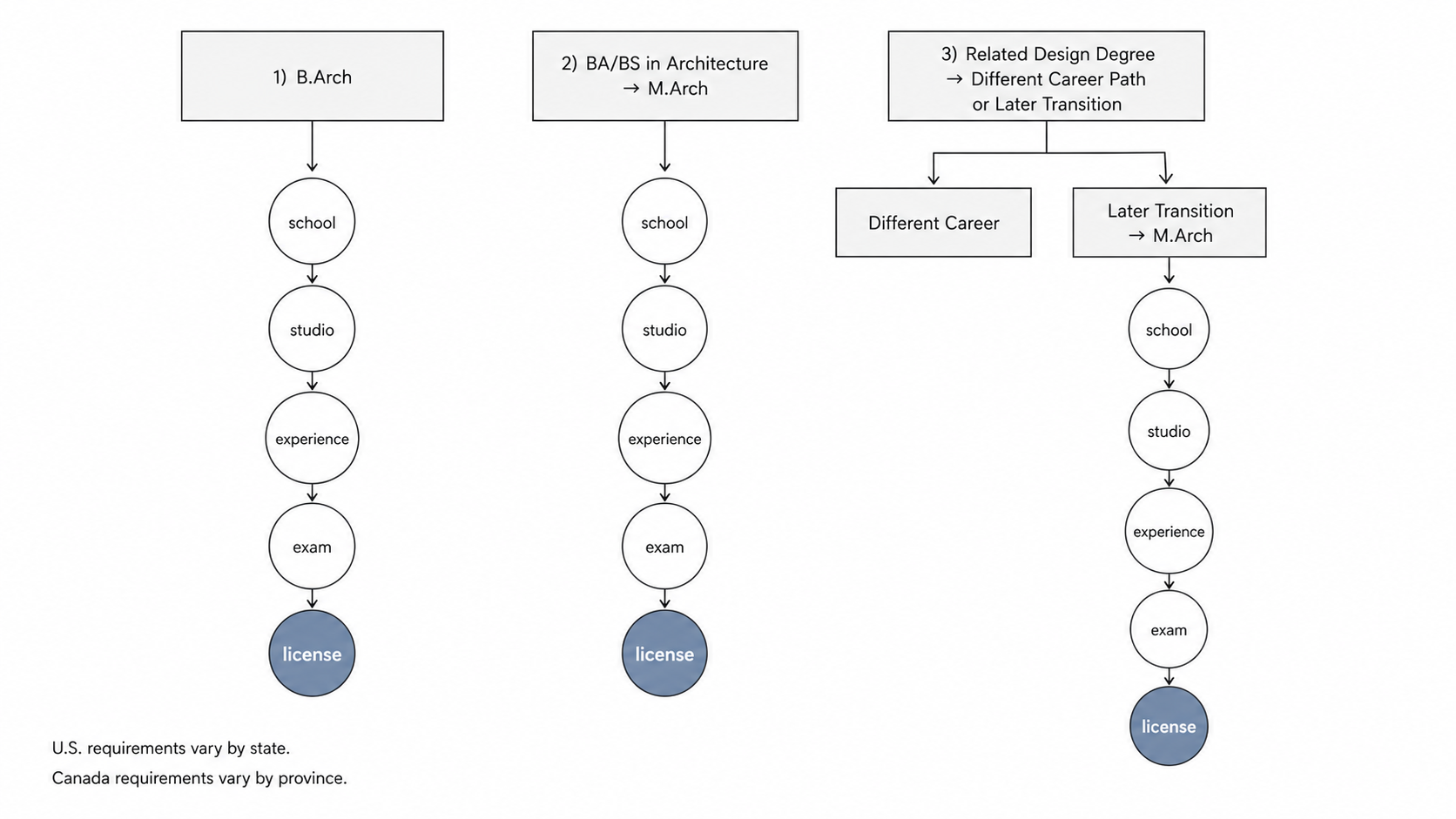
The first split is simple. A professional degree is built to support licensure. A pre-professional degree usually is not enough on its own. A related design degree can still lead to strong work, but it often leads to a different endpoint unless you change path later.
The degree name changes what comes next.
| Path | What It Usually Means | What To Check First |
|---|---|---|
| B.Arch | Professional undergraduate route aimed at licensure. | Whether the program is professionally accredited and what jurisdiction it supports. |
| BA/BS in Architecture | Pre-professional foundation in design, history, and basic technical work. | Whether you will need an M.Arch later to stay on the licensure path you want. |
| M.Arch | Professional graduate route for students coming from pre-professional or unrelated degrees. | Entry background, program length, studio culture, and total cost in time and money. |
| Related design degree | Interior, landscape, environmental, urban, or adjacent design path. | Whether you want architect licensure or a related career with a different endpoint. |
If you want the longer breakdown, go next to Types of Architecture Degrees. If you already know you are comparing the professional routes, Bachelor of Architecture (B.Arch) and Master of Architecture and Urban Design are the clearer follow-ups.
This part matters in Canada too. Many students assume an undergraduate architecture degree is the final professional step when it often is not.
How to Judge a School
Architecture schools can look similar from the outside and still give you very different experiences and outcomes.
Look past ranking pages and glossy studio photos. Ask harder questions.
- What does the degree lead to? Do not assume the name answers this.
- What is the studio culture like? Competitive and intense is one thing. Disorganized and destructive is another.
- How much support exists around portfolio reviews, software, shop access, and internships?
- What do current students say off the record? Ask what the program is like in week nine, not open-house week.
- What happens after graduation? Licensure support, internship connections, and alumni outcomes matter more than a dramatic building.
Choosing the Right Architecture School is the deeper decision page when you are comparing programs side by side. If the U.S. route is the part you are trying to understand, keep Studying Architecture in the United States open too.
Where School Gets Expensive Fast
Most students plan for tuition. That is not the whole hit.
The money leak usually starts in the second month. Printing. Chipboard. Basswood. Foam core. Model parts you buy twice because the first attempt failed. A laptop that was “good enough” until large files and render queues showed up. Food bought because the studio schedule ate the week. Travel for reviews, site visits, or commuting between home, shop, and campus.
The bigger surprise is how fast bad timing multiplies all of it. A late model costs more than an early model because it also creates rush printing, missed sleep, and last-minute fixes. Ask current students what they spent on printing and model materials last term. Ask how long the shop queue gets before major reviews. Schools rarely lead with this because it makes the education sound less romantic. It is still one of the first things that starts hurting people.
| Expense | Why It Sneaks Up | What Helps |
|---|---|---|
| Printing | Review weeks turn small print jobs into repeated rush costs. | Batch output early and leave room for one correction, not five. |
| Model materials | Bad first attempts are normal, and redo costs stack quickly. | Prototype small before you build the final version. |
| Laptop and storage | Big files expose weak hardware at the worst time. | Prioritize reliability, backup, and enough storage over flashy specs. |
| Time | Late design changes trigger more spending everywhere else. | Stop redesigning when production time has started. |
Portfolio Means Process
A portfolio full of polished images can still be weak.
Schools and firms are not only looking for finish. They are looking for judgment. They want to see what you noticed, what you tested, what you changed, and how you explain your decisions.
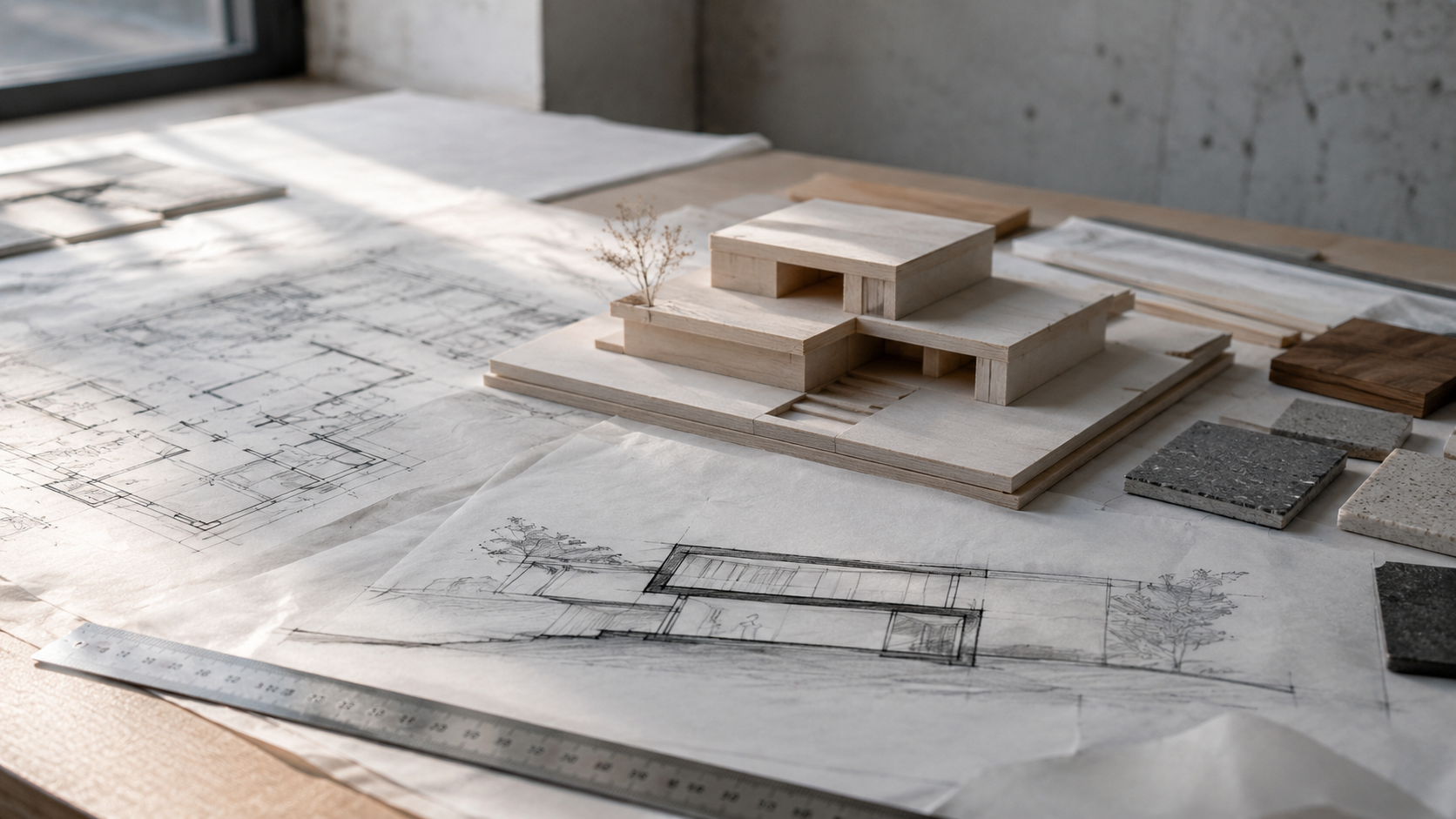
Strong portfolios usually do four things well:
- Show process. Sketches, study models, plan revisions, section thinking.
- Cut hard. Ten strong projects beat thirty soft ones.
- Use captions well. A short note can explain a decision better than a louder board.
- Match the purpose. School applications, internships, and job hunting are not the same audience.
A good studio-side follow-up is 101 Things I Learned in Architecture School. It is still useful when your work is getting muddy and studio language starts floating away from the drawing.
For the next step, use Preparing an Impressive Architecture Portfolio for Architecture School Admission. If graduate school is the goal, pair it with Preparing a Strong Graduate School Application for Architecture Students.
Your First Job Will Not Look Like Studio
This is the part schools rarely explain clearly enough.
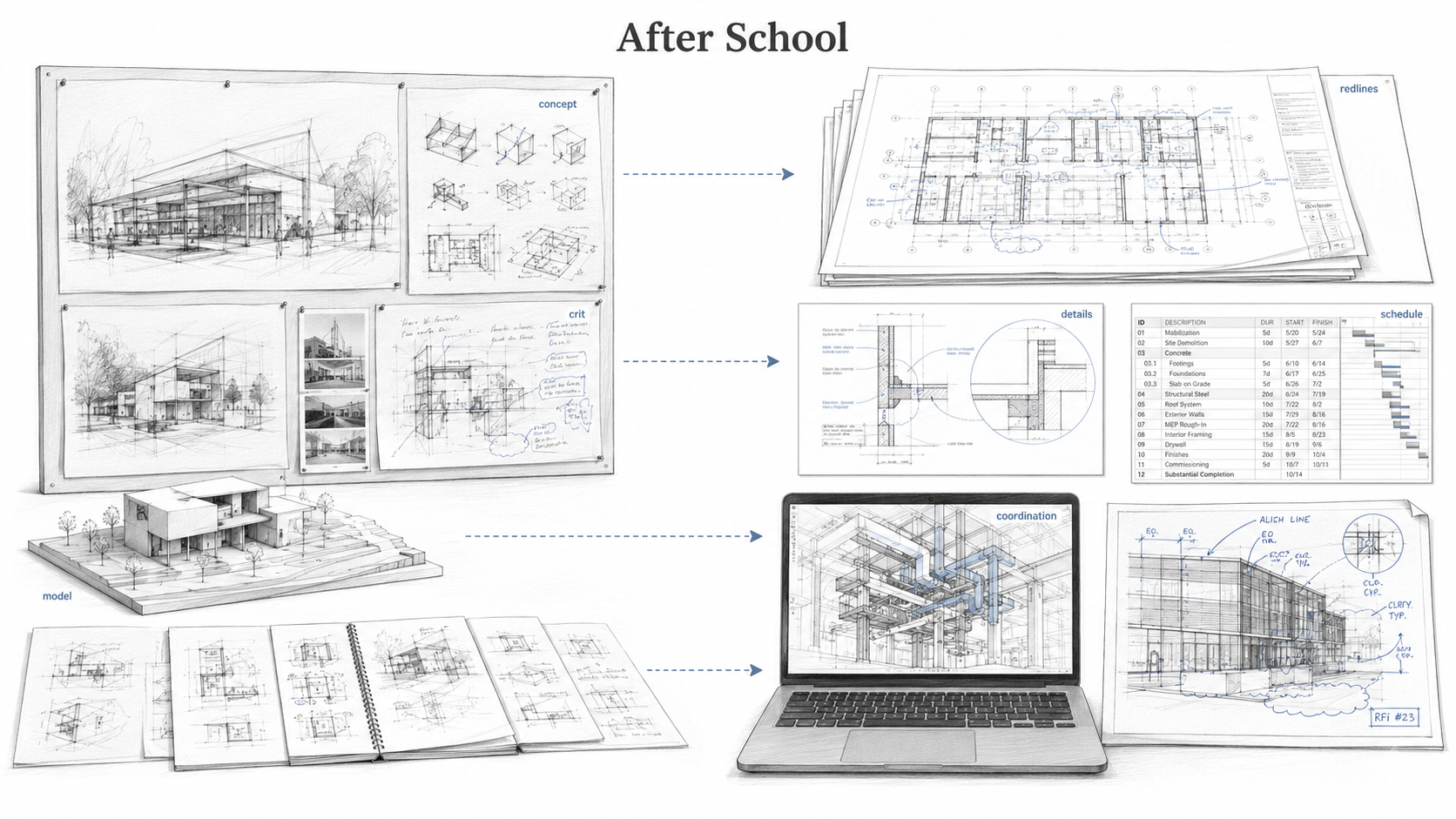
Your first office job will not pay you to be the genius in the room. It will pay you to be useful.
| School Rewards | First Office Rewards |
|---|---|
| Big formal idea | Reliable coordination |
| Hero board and polished presentation | Clear redlines, cleaner sheets, fewer mistakes |
| Last-minute design drama | Predictable deadlines and organized files |
| Personal authorship | Teamwork, revision, and asking better questions |
| Concept language | Dimensions, details, schedules, and follow-through |
This does not mean school is fake. It means the job changes. The students who adjust fastest are the ones who can draw clearly, take correction without collapsing, and understand that coordination is design work too.
If that gap is already bothering you, Why Good Architecture Diagrams Fail at Review is the sharper reality check. It shows where clean student work starts breaking once thickness, span, daylight, circulation, and document logic show up.
Graduation Is Not Licensure
Finishing school and becoming licensed are different events.
In the U.S., the path depends on your jurisdiction, your degree, documented experience, and exams. In Canada, education, certification, internship, and examination are separate parts of the route too. Do not wait until final year to learn this. The degree name does not do the whole job for you.
How to Become a Licensed Architect is the better next page once you stop asking “what should I study?” and start asking “what does this path lead to?” If you are still deciding whether the profession fits you, read Why Become an Architect before you start designing your whole life around the title.
Read This Next
Types of Architecture Degrees is the next stop if you are still sorting out B.Arch, pre-professional degrees, and graduate paths.
Go to Free Architecture Courses with a Certificate if you want a low-cost way to test the work before paying full tuition.
101 Things I Learned in Architecture School is a good follow-up when studio language still feels fuzzy and you want shorter, sharper lessons.
Thriving in Graduate School for Architecture Students only makes sense once you already know graduate study is the route you want.
FAQ
Do I need to be great at drawing before architecture school?
No. You need to be observant, willing to practice, and willing to let rough work stay rough while you learn.
Should I learn every software program before school starts?
No. Learn one tool well enough to think clearly in it, then add the next program when the work demands it.
What matters more in a student portfolio: polish or process?
Process. Polish helps, but schools and firms both need evidence that you can think, edit, and improve.
When should I start thinking about licensure?
Early. Not because you need every rule right away, but because the degree path makes more sense once you know what professional endpoint you want.
Is architecture school mostly about talent?
No. Talent helps. Time management, resilience, curiosity, and clear communication carry more students farther.