
Architecture school gets confusing fast.
Degree names sound close, but they do different jobs. A B.Arch is not the same thing as a B.S. in Architecture. An M.Arch is not the same thing as a research master’s. A short BIM certificate can help your career, but it does not replace a professional degree.
So this page does one job: it shows which course path teaches what, who each path fits, and where each one leads.
In the U.S., the cleanest licensure path still starts with a NAAB-accredited professional degree, then logged experience and the licensing exam. That matters because some architecture degrees build toward licensure and some do not.
Start With the Goal, Not the Degree Name
| Path | What it teaches | Best for | Licensure value |
|---|---|---|---|
| B.Arch | Full professional base: studio, structures, systems, construction, practice | Students who want the direct architect path | Strongest undergraduate route |
| B.S. or B.A. in Architecture | Pre-professional design, history, theory, technical basics | Students who want flexibility or graduate study later | Often needs an M.Arch after |
| M.Arch | Professional graduate path with deeper studio and practice focus | Students heading toward licensure after a pre-professional degree | Strong professional route |
| M.S. / M.A.S. / research master’s | Research, systems, theory, technology, computation, policy | Students who want depth in one area | Not the same as a professional degree |
| MLA / MUP / Interior Architecture | Landscape, cities, interiors, spatial systems, public realm | Students shifting into a related design field | Separate path, different profession or specialty |
| Short courses and certificates | Software, BIM, rendering, fabrication, sustainability, preservation | Upskilling, career pivots, technical gaps | Useful support, not a full replacement |
That table does more work than most long degree lists.
B.Arch: The Full Professional Base
The Bachelor of Architecture is the heavy undergraduate route.
It is built for students who already know they want to push toward licensure and practice. In the U.S., this is a professional degree path, and it carries more studio, systems, and practice weight than a pre-professional bachelor’s.
What You Learn
- design studio every year
- architectural history and theory
- structures and building systems
- materials and construction methods
- environmental systems and climate response
- digital tools and documentation
- professional practice
Who It Fits
Students who want the direct route and can handle a long, design-heavy program without much room to drift.
Related: Bachelor of Architecture (B.Arch)
B.S. or B.A. in Architecture: The Flexible Start
These degrees build the base without trying to do the whole professional path in one move.
The B.S. side leans more technical. The B.A. side leans more cultural, visual, and interdisciplinary. Both can be strong paths. The mistake is thinking they do the same job as a B.Arch.
What You Learn
- intro studio and design thinking
- history and theory
- drawing, model making, and digital tools
- basic structures and systems
- urbanism, sustainability, or electives depending on the school
Who It Fits
Students who want room to grow, explore related fields, or build toward a professional master’s later.
This path can also make sense for students who are still deciding between architecture, urban design, interiors, preservation, planning, or research.
M.Arch: The Graduate Route to Professional Practice
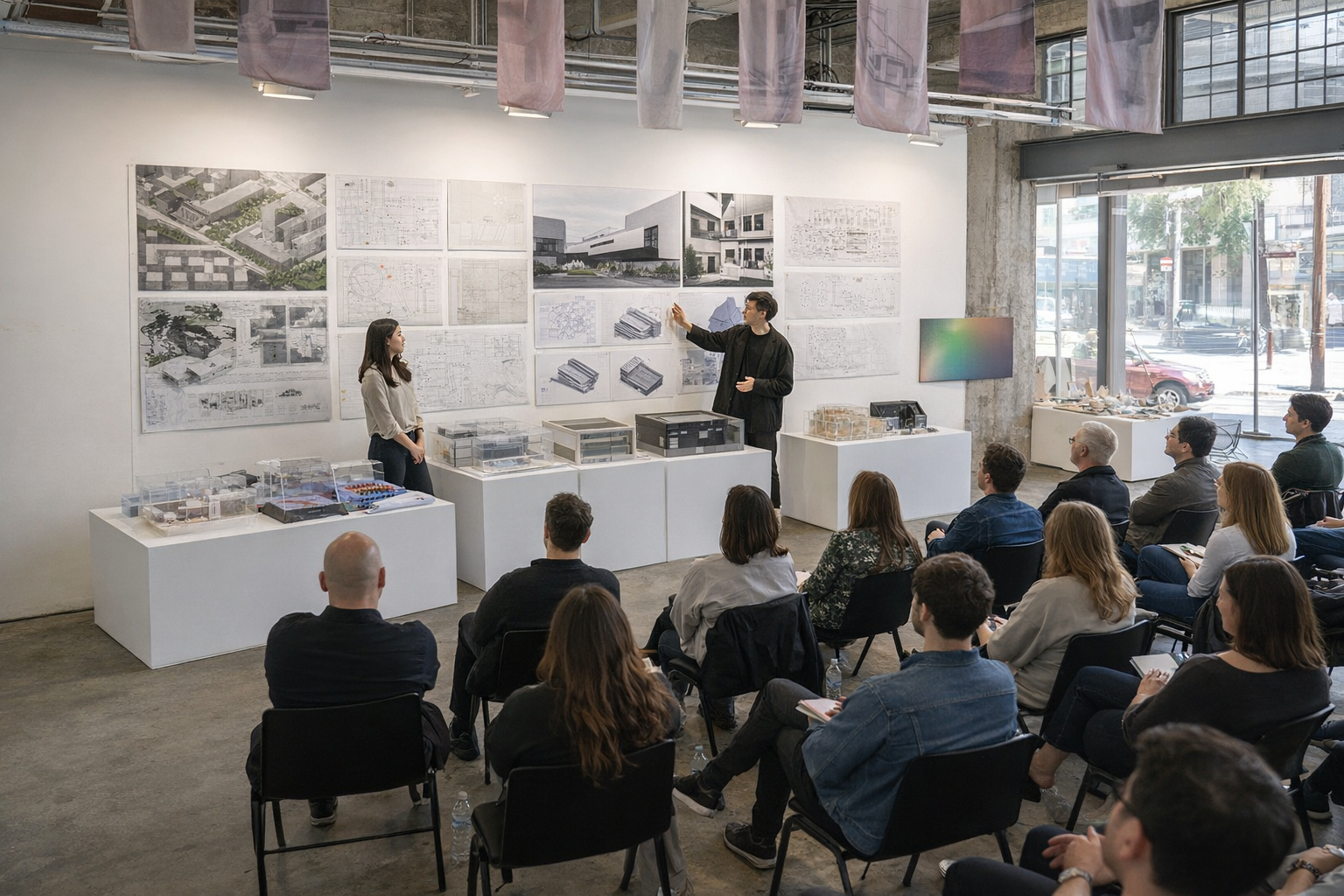
The Master of Architecture is the main graduate professional route.
This is the degree many students take after a B.S. or B.A. in Architecture when they want to move toward licensure. It can also take students from other backgrounds, though that path often takes longer.
What You Learn
- advanced studio work
- building systems and technical integration
- professional practice and code pressure
- research, thesis, or capstone work
- more complex project thinking across site, section, and detail
What Changes Here
Undergraduate work teaches the language. The M.Arch is where many students start learning how to hold a project together under more pressure.
Research Master’s: Good for Depth, Not the Same as Licensure
This is where a lot of people get confused.
An M.S. in Architecture, M.A.S., or similar research degree can be strong, but it is doing a different job. These degrees often focus on one slice of the field.
| Degree type | Main focus | Good fit for |
|---|---|---|
| M.S. in Architecture | technology, systems, sustainability, computation, research | students who want technical or research depth |
| Master of Architectural Studies | history, theory, criticism, urban questions, culture | writers, researchers, curators, academics |
| Post-professional master’s | specialized design or advanced methods | architects or graduates sharpening one focus |
These programs can be excellent. They just should not be confused with the professional degree path.
Related Design Degrees: Landscape, Cities, Interiors
Not every architecture student should stay inside the core architect track.
Master of Landscape Architecture
Best for students pulled toward land, ecology, planting, grading, public space, and climate response at site scale.
Master of Urban Planning
Best for students who care more about transit, housing, zoning, land use, and city systems than one building at a time.
Interior Architecture
Best for students focused on interior space, atmosphere, layout, material finish, lighting, acoustics, and how rooms are lived in every day.
These are not fallback paths. They are different paths.
What You Really Learn Course by Course
This is the part many pages skip.
The most useful way to understand architecture courses is not by degree title. It is by what each course family trains you to do.
Design Studio
You learn how to test ideas, revise fast, and make design decisions under pressure. Studio is where the field stops being abstract.
History and Theory
You learn where forms, styles, spatial ideas, and design arguments came from. More important, you learn how to read buildings instead of only looking at them.
Structures
You learn spans, loads, support, and what keeps the building standing when the concept board is long gone.
Materials and Construction
You learn what walls, floors, roofs, joints, openings, and finishes are doing. This is where ideas meet cost, labor, and weather.
Environmental Systems
You learn how buildings deal with light, heat, ventilation, comfort, and climate.
Digital Tools and BIM
You learn how to draw, model, coordinate, document, and present with the software the field now expects.
Professional Practice
You learn how architecture works once money, clients, liability, and deadlines enter the room.
That mix is why architecture feels so broad. It is not one subject. It is a stack of subjects forced to work together.
MUST READ: Architecture: Form, Space, and Order
Short Courses and Certificates: Use Them for Gaps
Short courses matter most when you use them to fix a gap.
- weak drafting
- weak BIM or Revit workflow
- weak rendering
- weak knowledge of materials or detailing
- new interest in fabrication, preservation, or sustainability
A short course is strong when it ends with work you can show. It is weak when it ends with a certificate and nothing else.
Related: Specializations in Architecture
Online Courses: Useful, but Know Their Limit
Online architecture courses can help a lot with software, theory, history, sustainability, and targeted skills.
They are weaker as a full replacement for the whole studio-and-licensure path. So use them for what they do well: building range, saving money, and fixing skill gaps without stopping your life.
What Fits Which Student
| If you want... | Best fit | Why |
|---|---|---|
| The fastest clean route toward licensure | B.Arch | It is built as the professional undergraduate path |
| A broader base first, then licensure later | B.S. or B.A. in Architecture, then M.Arch | You get flexibility before the professional degree |
| Technical or research depth | M.S. in Architecture | It lets you go deep into systems, tech, or research |
| Landscape, city, or interior focus | MLA, MUP, or Interior Architecture | The work is different enough to deserve its own path |
| One targeted skill fast | Short course or certificate | Best for BIM, rendering, fabrication, or preservation gaps |
Three Mistakes That Waste the Most Time
- Picking a degree because the name sounds good, not because the path fits your goal.
- Thinking every architecture degree leads to licensure in the same way.
- Collecting short courses with no drawings, models, or portfolio work to show from them.
Architecture education gets clearer once you stop asking, “Which title sounds best?” and start asking, “What kind of work am I trying to move toward?”
FAQ
What is the difference between a B.Arch and an M.Arch?
A B.Arch is a professional undergraduate degree. An M.Arch is the professional graduate route many students take after a pre-professional bachelor’s.
Can I become an architect with a B.S. in Architecture?
It can be part of the path, but in the U.S. many students still need a professional M.Arch after it if licensure is the goal.
Are short architecture certificates worth it?
Yes, when they fix a clear skill gap and end with work you can show. No one cares much about the certificate by itself.
Which architecture courses matter most in school?
Studio, structures, materials and construction, environmental systems, digital tools, and professional practice. Those are the courses that keep showing up later in the field.
Do online architecture courses count for licensure?
They can help your skills, but the core licensure path still depends on the recognized education route in your jurisdiction.