

Architecture gets stuck when the drawing ignores the job.
A good plan can still fail on cost. A strong form can fail on code. A low-carbon idea can fail if the material is not available, the contractor cannot price it, or the client will not carry the risk.
That is the daily problem.
Architecture is still about form. But form is not enough. Buildings have to pass review, meet code, manage heat, use less energy, handle water, stay buildable, fit a budget, serve people, and age without becoming a repair bill.
The work is less about one big design move. It is about holding several hard things together without letting the project fall apart.
For the design side of this question, read how architectural form shapes function. Form still matters. It just has to answer more pressure than it used to.
The Problem Is Not One Thing
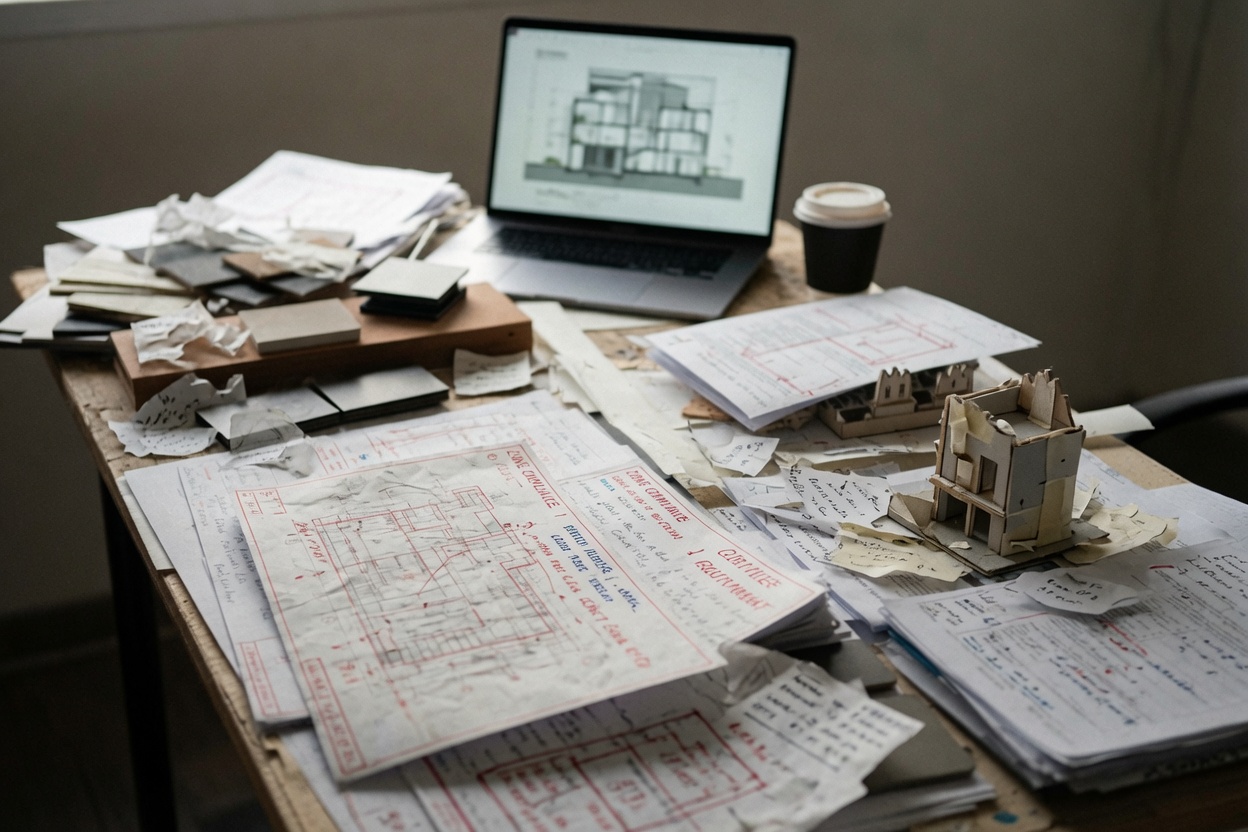
Architecture is held back by stacked constraints.
Cost. Climate. Zoning. Energy codes. Fire safety. Accessibility. Labor. Materials. Client changes. Financing. Long approvals. Poor coordination. Software that helps in one phase and creates confusion in another.
None of these problems is new by itself. What changed is how often they hit the same project at the same time.
| Pressure | Where it hits the project | What happens when it is ignored |
|---|---|---|
| Cost | Scope, materials, structure, labor, schedule. | Redesign, cheap substitutions, delays, or a project that never starts. |
| Code | Egress, fire rating, accessibility, structure, energy, occupancy. | Failed review, permit delays, unsafe design, expensive corrections. |
| Climate | Energy, carbon, heat, water, resilience, material choice. | Overheated spaces, high bills, weak performance, early repair. |
| Technology | Modeling, coordination, drawings, visualization, documentation. | Clean output with weak thinking, bad coordination, or tool-driven design. |
| People | Clients, users, neighbors, reviewers, contractors, consultants. | Conflict, redesign, mistrust, poor fit, or buildings that people avoid. |
A project does not fail only because the architect lacked creativity. More often, it fails because hard limits were treated as late details.
Climate Work Has To Move Earlier
Sustainability is weak when it arrives after the plan is fixed.
A building cannot be rescued by adding a few green materials at the end. Orientation, massing, windows, structure, envelope, shade, mechanical systems, water strategy, and material choices all lock in early.
That is where many projects lose ground.
The architect draws a clean concept. The client approves the look. Then the energy model, budget, mechanical system, or material supply starts pushing back. By then, changing the shape is expensive.
Better projects ask climate questions before the image hardens:
- Can the building use less energy before adding equipment?
- Can the site manage heat, shade, stormwater, and wind better?
- Can the structure use fewer high-carbon materials?
- Can an existing building be reused instead of replaced?
- Can the envelope be simple enough to build and maintain well?
The building and construction sector still carries a major share of global energy use, emissions, and material demand. That puts architecture inside the problem, not outside it.
The useful response is not slogans. It is early energy thinking, lower-carbon structure, durable envelopes, reuse where possible, and details that contractors can actually build.
For a study path around this issue, read Sustainable Architecture Degrees.
Cost Is A Design Constraint
Cost does not wait politely until the end.
It sits inside every decision: span, structure, facade, window size, finish, labor, equipment, envelope, parking, site work, phasing, and schedule.
A design can be beautiful and still be financially dead.
The common mistake is treating value engineering as damage done later by someone else. That is too late. Cost control has to start while the idea is still loose.
Useful cost thinking is plain:
- Keep the structural grid simple unless the project has a good reason not to.
- Avoid custom details where standard assemblies would do the job.
- Check long-term maintenance, not only first price.
- Let the contractor price risky parts early.
- Protect the few design moves that matter most instead of spreading money everywhere.
The cheapest option is not always the smart option. A cheap assembly that leaks, cracks, overheats, or needs constant repair is not cheap for long.
Code Work Is Part Of Design
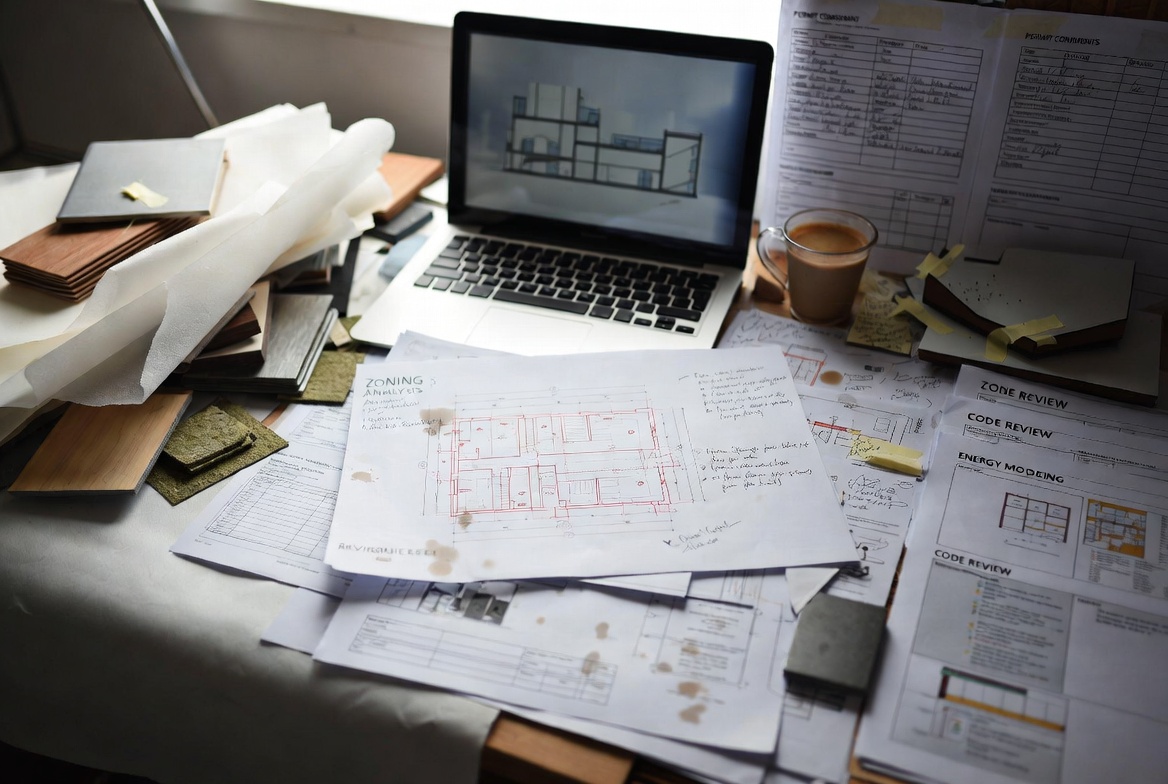
Code is not paperwork after design.
It shapes the building from the start. Occupancy, fire separation, exits, stairs, ramps, accessibility, energy performance, structure, plumbing, ventilation, parking, site drainage, and life safety can all change the plan.
A code issue found early is a design constraint. A code issue found late is a redesign bill.
This is where weak projects lose weeks:
- A stair is in the wrong place.
- Travel distance is too long.
- Accessibility clearance is squeezed after the layout is fixed.
- Fire ratings cut through the clean concept.
- Energy rules force envelope changes after elevations are approved.
- Occupancy assumptions change the exits, toilets, parking, or fire separation.
The better habit is to run a code pass while the plan is still rough. It is not glamorous. It saves the project.
Accessibility Cannot Be Treated As A Patch
Accessibility is often handled too late.
That is why it starts to look like a patch: a ramp squeezed into a bad entry, a restroom that barely works, a route that technically passes but feels awkward.
Access should shape the plan, not decorate it.
A building should be readable, reachable, usable, and safe for more than one kind of body. That affects door clearances, slopes, turning space, signage, lighting, acoustics, seating, entries, bathrooms, counters, elevators, and paths through the site.
Accessibility rules are minimums. Good design still has to ask whether the route feels clear, dignified, and usable.
Technology Helps, But It Does Not Think For You
Tools changed the office.
BIM, parametric modeling, rendering engines, cloud coordination, scanning, energy modeling, AI image tools, and digital fabrication can all help. They can also hide weak thinking behind clean output.
A model is not coordination by itself. A render is not a design argument. An AI image is not a wall section. A clash report is not a construction decision.
The useful architect knows what each tool is for.
| Tool use | Good use | Bad use |
|---|---|---|
| BIM | Coordinating drawings, systems, structure, and revisions. | Modeling fast while no one checks buildability. |
| Rendering | Testing light, material mood, and client understanding. | Selling a look before the plan works. |
| AI tools | Early options, visual prompts, workflow support, reference sorting. | Replacing site analysis, code checks, or design judgment. |
| Energy modeling | Testing orientation, envelope, glazing, shade, and systems. | Running numbers after the design is already locked. |
The issue is not whether architects should use technology. They should. The issue is whether the tool improves decisions or only makes weak decisions look finished.
For students comparing training paths, start with Types of Architecture Degrees.
The Approval Process Can Break Good Design
A building has to pass through people who do not see the project the same way.
Planning staff may care about setbacks and use. Building officials may care about safety and compliance. Neighbors may care about shadow, parking, noise, or scale. The client may care about cost and speed. The contractor may care about sequence and risk.
The architect has to translate between all of them.
This is one reason strong drawings are not enough. A project also needs a clear approval strategy.
- Know which approvals can stop the project.
- Find zoning problems before design development.
- Explain the project in plain language.
- Keep a record of decisions, revisions, and review comments.
- Do not promise approval before the risk is understood.
The best design argument is often boring: here is the rule, here is our response, here is the drawing that proves it.
Community Work Is Not Public Relations

A building lands somewhere.
It changes light, sound, movement, views, parking, drainage, access, rent, safety, and the way people use the street. That is why community work cannot be a last-minute meeting with boards on the wall.
Listening does not mean the architect loses control. It means the project gets better information.
The hard part is sorting useful local knowledge from fear, politics, and noise. Not every objection is right. Not every design defense is honest either.
The architect’s job is to turn that messy input into clear decisions:
- which concerns change the design
- which concerns need explanation
- which trade-offs cannot be avoided
- which promises should not be made
For a wider planning view, read Urban Planning Essentials.
Maintenance Is Where Design Gets Judged
A building is not finished when the photo is taken.
It still has to be cleaned, repaired, heated, cooled, drained, insured, accessed, and managed. Many design decisions look good at opening and become a problem after one winter, one heat wave, one roof leak, or one maintenance cycle.
This is where weak architecture gets exposed.
Oversized glass can create glare and heat gain. Flat roofs with poor drainage can pond. Cheap cladding can fail early. Custom details can become hard to repair. Hidden gutters can leak into walls. Public spaces can feel unsafe if lighting, sightlines, and maintenance are ignored.
Maintenance should not be an afterthought. It should change details, material choices, access panels, roof drainage, facade systems, planting, lighting, and mechanical placement.
The question is simple: who has to live with this decision after the architect leaves?
Education Teaches Pieces. Practice Needs Coordination.
Architecture school teaches design thinking, history, studio work, drawing, models, critique, and theory.
Practice asks for more at once.
A working architect has to read a site, speak with engineers, manage clients, understand code, control documents, respond to budgets, revise under pressure, and explain choices clearly.
The gap is not that school is useless. The gap is that school often isolates problems that practice throws together.
A student may finish school knowing how to make strong images but not how to handle a permit comment, consultant conflict, cost cut, code issue, or client who changes direction after schematic design.
Early-career architects need the slow skills:
- clean drawings
- plain explanations
- code reading
- meeting notes
- detail logic
- coordination habits
For graduate training paths, read Master of Architecture Degree. For remote study limits, read Online Architecture Degree.
What Architects Can Do Differently
The answer is not to make architecture smaller.
It is to make the early work sharper.
- Start with site, code, cost, climate, and users before locking the form.
- Bring consultants in early enough to affect the design.
- Test energy, structure, and envelope choices before the client falls in love with the image.
- Make accessibility and maintenance part of the first layout.
- Use technology to check decisions, not hide weak ones.
- Explain trade-offs clearly before they become conflict.
Architecture gets better when constraints are not treated as enemies. They are the job.
Common Mistakes That Keep Projects Stuck
| Mistake | Why it hurts | Better move |
|---|---|---|
| Designing the image before checking the rules. | Code, zoning, structure, or energy issues force redesign. | Run a rough rule check before the concept is fixed. |
| Treating sustainability as a finish layer. | Energy and carbon problems are locked in early. | Test orientation, massing, envelope, and material impact early. |
| Using software without checking the logic. | Clean output can hide bad coordination. | Use drawings, sections, and details to verify the model. |
| Waiting too long to talk cost. | The project gets cut apart late. | Price risk areas early and protect the parts that matter. |
| Ignoring maintenance. | The building becomes expensive to own and hard to repair. | Design access, drainage, durability, and replacement into the details. |
FAQ
What is the biggest challenge in architecture?
The biggest challenge is balancing design quality with cost, code, climate performance, buildability, approval pressure, and user needs. One good idea is not enough if the project cannot pass those tests.
Is architecture still about form?
Yes. Form still matters. But it has to support comfort, structure, energy use, access, cost, maintenance, and the way people actually use the building.
Why do architecture projects get delayed?
Delays often come from zoning problems, permit comments, missing information, budget changes, consultant conflicts, unclear client decisions, or late discovery of code and site constraints.
How does climate change affect architecture?
It affects energy use, cooling loads, flood risk, heat, material choice, water management, insurance, durability, and resilience. Climate work has to start before the design is fixed.
Are digital tools making architects better?
They can, but only when used with judgment. BIM, rendering, AI, and energy tools help when they test decisions. They hurt when they replace thinking.
Why is accessibility still a problem in design?
Accessibility is often added too late. It works better when routes, entries, bathrooms, clearances, lighting, signs, and site movement shape the plan from the start.
What skill helps architects most in practice?
Clear coordination. Architects need to explain problems, organize decisions, read codes, work with consultants, and keep the design moving under pressure.
Can good architecture fix bad planning?
Not by itself. A good building can help a street or neighborhood, but zoning, transit, housing policy, infrastructure, cost, and public space all shape the result.
Before You Move On
Architecture is not held back by a lack of ideas.
It is held back when ideas do not survive cost, code, climate, construction, maintenance, and use.
The better architect is not the one with the loudest concept. It is the one who can keep the project clear when the constraints start pushing back.
Read This Next
Read Architectural Form Examples if you want to understand how shape still affects function.
Use Sustainable Architecture Degrees if climate and building performance are the main interest.
Read Types of Architecture Degrees if you are choosing a school path.
For city-scale design problems, read Urban Planning Essentials.
Sources & Reference
- International Energy Agency: Buildings
- UNEP: Global Status Report for Buildings and Construction 2025/2026
- IPCC AR6: Buildings
- AIA Framework for Design Excellence
- Whole Building Design Guide: Integrated Design Process
- U.S. Access Board: ADA Accessibility Standards
- ADA.gov: ADA Standards for Accessible Design
- NIST: Understanding Building Codes