

The Rise of Scandinavian Industrial Minimalist Design
How this design trend harmonizes industrial rawness with Scandinavian warmth, creating spaces that are both practical and inviting.
Scandinavian Industrial Minimalism: A Marriage of Cozy and Raw

A living room with industrial Scandinavian minimalist design, blending clean lines with natural materials.
Neutral walls, exposed brick, light wood floors, and no-frills furniture. That’s the essence of Scandinavian industrial minimalism—a style that’s equal parts functional and cozy, with just the right touch of rugged charm.
This aesthetic takes cues from Nordic simplicity and industrial design’s utilitarian roots, creating spaces that feel both purposeful and welcoming.
Below, we’ll break down the key characteristics of Scandinavian industrial minimalism, explore its history, and show you how to bring this look into your home with ease.
Scandinavian Industrial Minimalist Interiors: A Style Guide
How to achieve the perfect blend of Scandinavian coziness and industrial edge, with tips for materials, color schemes, and decor.
The Roots of Scandinavian Industrial Minimalism
Scandinavian industrial minimalism didn’t appear out of nowhere—it’s a thoughtful blend of two distinct design philosophies. To appreciate its essence, let’s look at where each originated and how they came together to create a style that’s as functional as it is visually striking.
Scandinavian Design: The Foundation of Comfort and Simplicity

Scandinavian design gained prominence in the mid-20th century, thriving on principles of simplicity, practicality, and a deep connection to nature. These values were shaped by the long, dark winters and a cultural focus on creating cozy, inviting spaces.
Key features of Scandinavian design include neutral color schemes, light wood tones, and uncluttered layouts. The emphasis on natural light is especially notable, with large windows and minimal window coverings allowing every possible ray to filter in. Artificial lighting—often warm and strategically placed—complements this, creating spaces that feel bright even in the gloomiest months.
Materials like wool, cotton, and untreated wood dominate, ensuring the style feels grounded and tied to the earth. Every element is carefully chosen to serve a purpose, both in function and aesthetics, making Scandinavian design timelessly appealing.
Industrial Design: Celebrating Raw and Unpolished Aesthetics
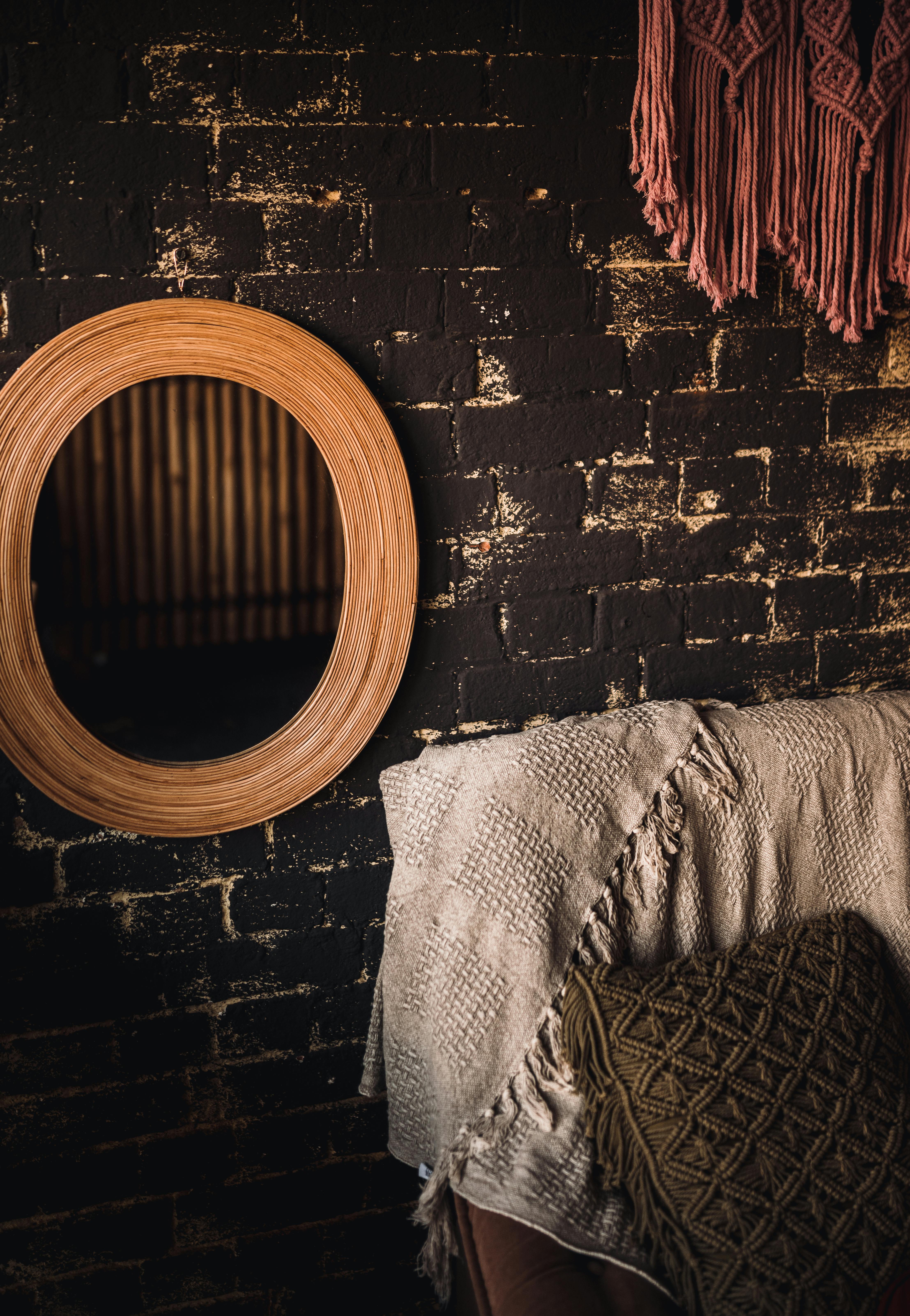
Rustic wooden wall mirror placed on a brick wall, featuring dark tones and a distinctive aesthetic.
Industrial design takes its cues from factories, warehouses, and the utilitarian architecture of the Industrial Revolution. While its origins were entirely functional, it has since evolved into an aesthetic that embraces raw materials and an unpolished finish.
Exposed brick, concrete floors, visible steel beams, and pipes are hallmarks of industrial design. It’s a style that highlights what’s usually hidden, celebrating imperfections and the beauty of utility. These spaces often feature open layouts and minimal ornamentation, letting the materials themselves take center stage.
However, this rugged aesthetic can sometimes feel cold or overly mechanical. That’s where the Scandinavian touch works its magic.
The Fusion: Where Warm Meets Raw
Scandinavian industrial minimalism is the perfect marriage of opposites. The rawness of industrial design—brick, metal, concrete—is softened by the warmth and comfort of Scandinavian elements. Light wood furniture, soft textiles, and natural accents add life to spaces that could otherwise feel too stark.
The Scandinavian concept of hygge, or cozy contentment, plays a key role here. It ensures the spaces feel lived-in and inviting, balancing the utilitarian focus of industrial design with the soothing simplicity of Nordic decor. Together, these styles create a harmonious aesthetic that feels both edgy and welcoming, making it a favorite for modern interiors.
Key Principles of Scandinavian Industrial Minimalist Design

A Scandinavian industrial minimalist interior featuring sleek furniture, exposed materials, and an open-plan layout for a balanced and modern aesthetic.
If you’re aiming for that perfect mix of cozy and edgy, nailing the key principles of Scandinavian industrial minimalism is a must. Here’s what works, what doesn’t, and a few tips to keep your space looking polished yet comfortable.
1. Neutral Color Palettes
Muted tones like white, gray, black, and beige are your best friends. These colors form the foundation of the style, creating a clean, airy backdrop. But don’t make the rookie mistake of going too monochromatic—your space will end up looking more like a lab than a home.
Do This:
- Add warmth with light wood tones like oak or birch.
- Bring life into the room with natural greenery—snake plants, monstera, or even a small olive tree work beautifully.
Don’t Do This:
- Avoid loud or bright colors like neon or primary shades. They clash with the minimalist aesthetic.
Example Tip: Pair white walls with a beige linen sofa, a black steel coffee table, and a single olive-green throw pillow for a balanced yet striking look.
2. Natural Light
Natural light isn’t just important—it’s essential. Scandinavian design thrives on maximizing the daylight, especially in regions where winters are long and dark. Industrial spaces, with their large, factory-inspired windows, naturally complement this idea.
Do This:
- Use sheer curtains or no curtains at all to let light flood the space.
- Strategically place mirrors to reflect and amplify natural light.
Don’t Do This:
- Heavy drapes or dark window treatments will kill the airy vibe you’re going for.
Example Tip: Place a large mirror with a black steel frame opposite your biggest window. Not only will it reflect light, but it’ll also reinforce the industrial aesthetic.
3. Raw Materials
This is where the industrial side shines. Exposed brick walls, polished concrete floors, and visible steel beams add texture and character to your space. But be careful—too much raw material can feel cold and uninviting.
Do This:
- Balance raw materials with soft furnishings like wool rugs, linen throws, and velvet cushions.
- Mix in natural wood furniture to add warmth.
Don’t Do This:
- Don’t overdo it with industrial elements like pipes or metal surfaces—it can feel more like a workshop than a living room.
Example Tip: Pair a polished concrete floor with a warm oak dining table and upholstered chairs. Add a woven jute rug to soften the look.
4. Functional Furniture
Forget overly decorative furniture—everything in Scandinavian industrial minimalism is about function and form. Think sleek, practical pieces that make your life easier while still looking great.
Do This:
- Invest in multifunctional furniture like a coffee table with storage or a daybed that doubles as a sofa.
- Choose furniture with clean lines and a timeless design.
Don’t Do This:
- Avoid bulky, overly ornate furniture—it’ll disrupt the minimalist vibe.
Example Tip: Opt for a modular sofa in a neutral tone that can be rearranged for different uses. Pair it with a sleek metal-and-wood shelving unit for a functional yet stylish touch.
5. Minimal Decor
Scandinavian industrial minimalism is all about quality over quantity. A few well-chosen pieces will do more for your space than a cluttered collection of knick-knacks.
Do This:
- Stick to a few statement pieces like an oversized black-and-white art print or a sculptural vase.
- Incorporate texture through decor, like a chunky knit throw or a leather pouf.
Don’t Do This:
- Resist the urge to overdecorate. Too many items, even if they’re beautiful, will make the space feel chaotic.
Example Tip: Place a single ceramic vase with dried pampas grass on a reclaimed wood console table. Add a black industrial-style lamp for contrast.
Pro Tips for Pulling It All Together
- Layer Textures: Combine raw materials like brick and concrete with soft textiles like wool and velvet to keep things cozy.
- Mind the Lighting: Use industrial-style pendant lights or sconces with exposed bulbs to add personality while keeping things functional.
- Keep It Practical: Every item in your space should serve a purpose. Even decor should feel intentional and not like an afterthought.
- Add Life with Greenery: Plants are an easy way to warm up the space without disrupting the minimalist aesthetic.
- Start Small: If you’re new to the style, start with one room and gradually expand. A living room or kitchen is a great place to begin.
Final Thoughts
Scandinavian industrial minimalism is all about balance—keeping things simple without losing the cozy vibe. Use what works for you: raw textures like brick or concrete paired with soft throws, warm wood, and a splash of greenery.
Don’t stress over perfection. This style is more about creating a space that feels functional, inviting, and a little edgy. Start small, experiment with textures and light, and let your personality shape the space. Done right, it’s a look that feels effortless and genuinely livable.
Materials That Define the Style
Scandinavian industrial minimalism thrives on contrast—balancing rough, industrial materials with softer, cozier elements. Here’s how each material plays its part and how to use them effectively without overdoing it.
1. Concrete
Concrete isn’t just for warehouses anymore. It’s perfect for floors, countertops, or even statement walls in this style. Its cool, smooth surface acts as a blank canvas, letting other elements shine. But here’s the thing—it can feel cold and sterile if left unchecked.
My Experience: I used polished concrete for my living room floor. It looked stunning but felt a bit too harsh until I layered it with a soft wool rug and added a wooden coffee table. The difference was immediate—suddenly, the space felt more like a home than a showroom.
Pro Tip: If you’re worried about cold feet, combine concrete floors with underfloor heating. It’s practical and keeps the chill away.
2. Wood
Wood is the antidote to concrete’s coolness. Light-toned woods like oak, ash, and pine bring warmth, texture, and a connection to nature. Whether it’s furniture, flooring, or even wall cladding, wood softens the industrial edge beautifully.
Do This: Use reclaimed wood for a dining table or shelving—it adds character without feeling out of place.
Don’t Do This: Overdo the wood. Mixing too many types (like pine with walnut) can make the space feel disjointed. Stick to one or two tones for a cohesive look.
Pro Tip: My dining area features a solid oak table paired with black steel chairs. It’s simple, functional, and looks timeless.
3. Steel
Steel is the backbone of industrial design. Black steel frames for furniture, shelving, or even lighting give the space structure and a modern edge.
Do This: Use steel sparingly to avoid a cold, industrial overload. A few well-placed steel accents—like a shelving unit or a lamp—go a long way.
My Experience: When I added a steel-framed glass door to divide my living room and kitchen, it completely transformed the space. It kept the open feel while subtly separating the areas, all without blocking light.
Pro Tip: Pair steel elements with wood or textiles to keep the look balanced.
4. Textiles
Textiles are the secret weapon in this style. Wool throws, linen cushions, and cotton rugs soften the rawness of concrete and steel, making the space feel warm and inviting.
Do This: Layer different textures. A chunky knit blanket draped over a sleek leather chair can instantly add dimension.
My Experience: I once underestimated the power of textiles until I added a simple linen curtain to a steel-framed window. It made the room feel less like a factory and more like a cozy retreat.
Pro Tip: Neutral tones like beige, gray, or white work best. They tie the industrial and Scandinavian elements together seamlessly.
5. Glass
Glass adds lightness to the style, creating an open, airy vibe without sacrificing functionality. Transparent or frosted panels are perfect for separating spaces without blocking light.
Do This: Use glass for partitions, coffee tables, or even shelving. It’s clean, modern, and unobtrusive.
Don’t Do This: Avoid cluttering glass surfaces. Keep them clear and minimal to maintain the airy feel.
Pro Tip: In my home office, I installed a frosted glass partition to divide the workspace from the living area. It added privacy without making the room feel closed off.
Final Thoughts: Choosing the right materials is where Scandinavian industrial minimalism really comes to life. Concrete gives you that sleek industrial edge, wood adds warmth, and steel pulls it all together with modern flair. Layering textiles and using glass smartly ensures the space doesn’t lose its cozy, livable vibe.
Here’s the thing: balance is everything. Go too heavy on concrete and steel, and the room feels cold. Add too much wood or texture, and you risk losing the industrial touch. The magic happens when these materials work together, each playing its part.
Start simple—a concrete floor, a wooden dining table, and steel-framed chairs. Then, layer in textiles and glass to fine-tune the mood. It’s a style that feels polished yet welcoming, modern but grounded. And when done right, it’s a space you’ll never want to leave.
Scandinavian Industrial Minimalist Design in Practice
Bringing Scandinavian industrial minimalism into your home is all about thoughtful choices—every piece should have a purpose and enhance the overall vibe of the space. Here’s how you can apply this style in each room, with practical tips to make it feel just right.
Living Room
Your living room is where cozy and sleek need to coexist. It’s about creating a space that’s welcoming but still retains that edgy, minimalist charm.
Furniture: Go for a low-profile sofa in neutral tones like gray, beige, or white. Pair it with a raw wood coffee table that shows off natural grain—bonus points if it’s made from reclaimed wood.
Lighting: Pendant lights with exposed bulbs and black metal accents are perfect for adding an industrial touch. Wall-mounted lights with adjustable arms can also bring in functionality without taking up floor space.
Decor: Keep it simple—a single large abstract art piece, a monochromatic framed print, or a vibrant green houseplant can act as the room’s focal point.
My Tip: I added a leather butterfly chair in my living room, and it ties the industrial and Scandinavian vibes together perfectly without overwhelming the space.
Kitchen
The kitchen is where functionality meets style, and Scandinavian industrial minimalism shines in open layouts and uncluttered spaces.
Cabinets: Matte black or white cabinets with sleek, handleless fronts are a classic choice. The clean lines create a streamlined look that feels modern and practical.
Countertops: Polished concrete is the go-to for an industrial vibe, but marble works just as well if you want to lean slightly more Scandinavian. Pair with industrial-inspired bar stools in black or steel for a cohesive look.
Accents: Open shelving is key—keep it minimal by displaying ceramic bowls, glass jars, or even a few cookbooks. Too much clutter will ruin the minimalist aesthetic.
My Tip: I swapped out my old kitchen backsplash for white subway tiles with dark grout. It’s a subtle industrial touch that doesn’t overpower the room.
Bedroom
Your bedroom should be a calming retreat, with just enough industrial edge to keep it interesting.
Bed Frame: A simple wooden or metal bed frame is all you need. Pair it with crisp white bedding and layer on a wool throw for texture and warmth.
Lighting: Wall-mounted sconces with black steel or brass finishes save space while adding industrial charm. Opt for dimmable lights to keep things cozy.
Decor: Keep it minimal—a single oversized mirror leaning against the wall can make the space feel larger, while a few soft textiles like linen curtains or a chunky knit blanket add warmth.
My Tip: I added a small, industrial-style bench at the foot of the bed for practicality and style. It’s great for tossing clothes or sitting while putting on shoes.
Bathroom
Bathrooms are where Scandinavian simplicity meets industrial functionality. Focus on clean lines and subtle contrasts.
Tiles: Large-format tiles in neutral tones like gray, white, or beige create a seamless, modern look.
Fixtures: Black faucets, towel rails, and showerheads instantly bring an industrial edge to the space.
Accessories: Minimal is key. A stone soap dish, a sleek dispenser, and a small eucalyptus plant can add personality without cluttering the space.
My Tip: I installed a frameless glass shower enclosure with matte black trim—it’s functional, modern, and fits the minimalist aesthetic perfectly.
Final Thoughts: Scandinavian industrial minimalism is all about balance—combining raw, industrial materials with soft, inviting touches to create a home that feels both functional and personal. Each room offers opportunities to experiment with textures, light, and color in a way that suits your lifestyle.
Start simple: a cozy wool throw on your sofa, matte black fixtures in the bathroom, or a reclaimed wood table in your kitchen. Small changes like these can completely transform a space without feeling overwhelming.
The best part? This style isn’t about chasing trends. It’s timeless, adaptable, and lets your personality shine through. Whether it’s a statement pendant light in your living room or a single oversized mirror in your bedroom, these thoughtful touches make all the difference. Your home will feel modern, cozy, and uniquely yours.
Sustainability and Scandinavian Industrial Minimalism
Scandinavian industrial minimalism isn’t just about creating beautiful spaces—it’s about making choices that are kind to the planet. The style naturally leans into eco-friendly principles by prioritizing durability, upcycling, and thoughtful material choices. Let’s break it down with some practical examples and tips.
Raw Materials for Longevity
One of the key pillars of sustainability is choosing materials that stand the test of time, and this design style does exactly that. Concrete and steel, often used for floors, countertops, or shelving, are incredibly durable. They might seem like industrial workhorses, but they’re also eco-friendly when used wisely.
Pro Tip: If you’re planning a renovation, opt for polished concrete floors. They’re low-maintenance, last for decades, and reduce the need for constant replacements, which means less waste in the long run.
Personal Experience: When I updated my kitchen, I chose steel shelving over traditional cabinets. It’s not only sleek and practical but also incredibly tough. I know it’ll last longer than cheaper alternatives, which makes the investment worthwhile.
Natural Materials for a Sustainable Touch
Natural wood is another cornerstone of this style, and when sourced responsibly, it’s a sustainable choice. Look for certified, reclaimed, or locally sourced wood for furniture and flooring. Paired with natural textiles like wool, linen, or cotton, these materials make your home both cozy and eco-conscious.
Pro Tip: Reclaimed wood furniture doesn’t just reduce waste—it also adds character. A dining table made from salvaged wood tells a story and fits seamlessly into this aesthetic.
Example: My oak coffee table was crafted from leftover wood from a local workshop. It’s a unique piece, and knowing it was made sustainably makes me appreciate it even more.
Upcycling and Repurposing
Upcycling is a perfect match for Scandinavian industrial minimalism. The style’s love for raw, unpolished materials makes repurposed furniture and decor feel intentional rather than out of place. Old factory carts, steel lockers, or even scrap wood can be transformed into standout pieces.
Pro Tip: Visit local thrift stores, flea markets, or online marketplaces for secondhand furniture with an industrial vibe. A coat of paint or some minor repairs can breathe new life into old pieces.
Personal Experience: I found a vintage steel cabinet at a garage sale and repurposed it into a bathroom storage unit. It’s practical, stylish, and cost me a fraction of buying new furniture.
Waste Reduction Through Minimalism
The minimalist ethos of Scandinavian design naturally encourages sustainability by discouraging unnecessary consumption. Instead of buying disposable decor, invest in fewer, high-quality pieces that are timeless and durable.
Pro Tip: Avoid fast furniture trends that wear out quickly. A well-made sofa or dining table may cost more upfront, but it’s a long-term investment that reduces landfill waste.
Example: Instead of buying a trendy new lighting fixture every few years, I invested in a timeless black pendant light with exposed bulbs. It complements my space perfectly and won’t need replacing anytime soon.
Sustainability and Scandinavian industrial minimalism go hand in hand. From choosing long-lasting materials like concrete and steel to incorporating natural wood and upcycled pieces, this design style helps you create a home that’s both beautiful and eco-friendly.
It’s not about making drastic changes—it’s about thoughtful decisions. A reclaimed wood table, steel shelving, or a cozy wool throw not only elevates your space but also reduces your environmental footprint. When you focus on quality, longevity, and creativity, you’re not just designing a home—you’re contributing to a more sustainable future. And that feels just as good as it looks.
Challenges and How to Overcome Them
- Balancing Warmth and Rawness
Lean too heavily on raw materials like concrete and steel, and suddenly your living room might feel like a trendy storage unit. The trick is to layer in softness. Use warm lighting—industrial-style pendant lights with dimmers are a game-changer—and textiles like wool rugs, linen throws, and plush cushions. Even a simple addition, like a wooden side table or a fabric armchair, can completely change the mood.
Tip: If your concrete floor feels too stark, try adding a woven jute or wool rug. It softens the look and keeps your feet warm, which is a win-win unless you’re secretly into chilly toes.
- Avoiding Clutter
Minimalism doesn’t mean shoving everything into a drawer and hoping for the best. It’s about being selective. Invest in multifunctional furniture, like a coffee table with hidden storage or wall-mounted shelving that doubles as decor. Stick to a “one in, one out” rule for decor—if you buy a new piece, something old has to go.
Example: I once saw a dining table with built-in storage underneath. Genius! Not only did it save space, but it also kept clutter out of sight. It’s small changes like this that make minimalist living practical without feeling stark.
Tip: Keep surfaces clean and display only a few intentional items. A steel-framed shelf with neatly arranged ceramics or books can double as storage and decor without overwhelming the space.
- Maintaining Cohesion
When mixing materials like wood, concrete, and steel, it’s easy to get carried away and end up with a patchwork of styles. The key? Consistency. Stick to a neutral palette and limit yourself to two or three dominant materials. For instance, pairing concrete with light wood and black steel creates harmony without feeling monotonous.
Tip: If you’re ever unsure, let your palette guide you. Keep all woods in similar tones (like light oak or ash) and match your metals (brushed steel or black). That way, the space looks cohesive instead of chaotic.
Think of Scandinavian industrial minimalism like making the perfect cup of coffee. You need the right balance—too much rawness, and it’s bitter; too much warmth, and it’s syrupy sweet. Get it just right, and you’ve got a space that’s both functional and inviting. And unlike coffee, your minimalist masterpiece won’t disappear in five minutes.
Inspirational Examples of Scandinavian Industrial Minimalism
Exploring real-world applications of Scandinavian industrial minimalist design can provide valuable insights and inspiration for your own space. Here are a couple of standout examples:
1. A Cozy Apartment in Stockholm
This Stockholm apartment masterfully combines polished concrete floors with whitewashed brick walls, creating a harmonious blend of industrial and Scandinavian aesthetics. Warm oak furniture introduces natural elements, while oversized woolen throws add texture and coziness, balancing the sleekness of the industrial materials.
Key Takeaways:
- Material Contrast: The juxtaposition of polished concrete and warm oak exemplifies how contrasting materials can coexist to create a balanced environment.
- Textural Layers: Incorporating soft textiles like woolen throws softens the industrial elements, adding warmth and comfort to the space.
2. A Loft in Copenhagen
This Copenhagen loft features exposed beams and expansive windows, emphasizing natural light—a cornerstone of Scandinavian design. Steel-framed glass partitions are used to delineate spaces without compromising the open, airy atmosphere. The inclusion of Scandinavian furniture, known for its functionality and simplicity, completes the minimalist yet inviting look.
Key Takeaways:
- Open Space Utilization: Large windows and open layouts enhance natural light, making the area feel more spacious and welcoming.
- Functional Furnishings: Selecting furniture that is both practical and aesthetically pleasing ensures the space remains uncluttered and purposeful.
Applying These Concepts:
- Embrace Natural Light: Maximize the use of natural light by opting for large, unobstructed windows and choosing light-colored finishes that reflect sunlight.
- Select Contrasting Materials: Combine industrial materials like steel and concrete with natural elements such as wood and textiles to achieve a harmonious balance.
- Prioritize Functionality: Choose furniture and decor that serve a purpose, adhering to the minimalist principle of form following function.
Don’t be afraid to mix textures, experiment with materials, and let natural light take center stage. Add a wool throw here, a steel frame there, and keep the clutter at bay. Done right, this style gives you a home that’s modern, functional, and effortlessly inviting. It’s a look you’ll never get tired of—and one that always feels like home.
Tips to Achieve the Look at Home
Scandinavian industrial minimalism might sound fancy, but it’s surprisingly easy to pull off if you follow a few smart tips. Here’s how to get started without turning your home into a furniture showroom or an abandoned factory.
1. Start Small
Jumping in headfirst can be overwhelming, so pick one room to transform. Start with your living room or bedroom, spaces where the style’s cozy-meets-sleek vibe really shines.
Tip: Focus on a single statement piece, like a steel-framed glass partition or a raw wood coffee table. It sets the tone without overloading your to-do list.
Trust me, you don’t want to tackle your whole house at once unless chaos and half-assembled furniture are your thing.
2. Invest in Quality
This style isn’t about having a ton of stuff—it’s about choosing fewer, high-quality pieces that will last. A solid oak dining table or a sleek leather chair might cost more upfront, but you’ll thank yourself when it still looks great in 10 years.
Tip: Look for timeless designs, not trends. That neon-green sofa might seem fun now, but in two years, it’ll haunt you like a bad haircut.
3. Play with Textures
The magic of Scandinavian industrial minimalism is in its contrasts. Pair rough materials like concrete or steel with soft elements like wool or linen. It’s the difference between "stylish home" and "warehouse vibes."
Tip: If your room feels too cold, add a chunky knit throw or a jute rug. If it’s too cozy, bring in a polished concrete planter or a black steel lamp to balance it out.
Think of textures like toppings on a pizza—too much of one thing ruins the vibe, but just the right mix? Chef’s kiss.
4. Keep It Functional
Minimalism means every piece has to pull its weight. Choose furniture that’s practical and stylish. A coffee table with hidden storage? Yes. A giant ceramic chicken sculpture? Maybe not.
Tip: Look for multifunctional pieces like ottomans with storage or foldable tables. They save space and keep clutter out of sight.
If something doesn’t serve a purpose, it’s just a dust collector in disguise. Nobody wants to be dusting useless decor every weekend.
5. Personalize the Space
Minimalism doesn’t mean boring. Add a few meaningful items like a vintage lamp, a handcrafted vase, or even a quirky piece of art you love. These touches keep your home from looking like a catalog.
Tip: Rotate personal decor to keep the space fresh. One month, it’s that vintage clock; the next, a handmade pottery piece from your favorite local artist.
But remember, “quirky” doesn’t mean throwing in your high school trophies. Let’s keep it classy, folks.
Scandinavian industrial minimalism isn’t about perfection—it’s about creating a space that feels both stylish and practical. Start small, choose quality over quantity, and let textures and personal touches bring the look to life. Balance is key: too much steel, and it’s a workshop; too many throws, and it’s a knitting studio.
With a little effort and some thoughtful choices, you can create a home that’s modern, cozy, and uniquely yours. And hey, when your friends compliment your effortlessly chic space, you can just shrug and say, “Oh, this old thing? It’s just Scandinavian industrial minimalism.” You’re welcome.
Final Thoughts
Scandinavian industrial minimalism works because it’s straightforward, functional, and honest. It’s about creating a space that feels comfortable without losing its edge—where raw materials like concrete and steel meet soft throws, warm wood, and natural light.
Start small: a single room, a few key changes, or even just a statement piece like a reclaimed wood table or a steel-framed partition. The beauty of this style is its flexibility—it doesn’t need to be perfect, just balanced.
At the end of the day, it’s your space. Add what you love, strip back what you don’t, and let the design reflect who you are. No frills, no fuss—just a home that feels as good as it looks.
FAQs
Q: Can I use Scandinavian industrial minimalist design in a small space?
A: Absolutely! The clean lines and functional furniture make it perfect for maximizing small spaces.
Q: Is this style expensive to achieve?
A: Not necessarily. Focus on quality over quantity, and consider upcycling or sourcing materials like wood and steel locally.
Q: How do I keep the space from feeling cold?
A: Incorporate warm textiles, natural wood, and plants to soften the industrial elements.
Related
- Industrial Architecture Style: The Past, Present, and Design Ideas for Today
- Industrial Interior Design: Styles, Features, and Practical Tips
- Scandinavian Industrial Minimalism: Where Function Meets Form
- Industrial Coastal Style: Design Principles and Inspiration
- HDB Modern Industrial Interior Design: Balancing Raw and Refined
- Creating the Perfect Industrial Look for Your Office Space
Books to Learn More
- "Scandinavian Modern" by Magnus Englund
A deep dive into the evolution of Scandinavian design. - "The Kinfolk Home: Interiors for Slow Living" by Nathan Williams
Explores minimalist homes with a focus on Scandinavian and industrial influences.
Sources
- Scandinavian Design History: The Nationalmuseum in Sweden offers insights into the relationship between Scandinavian and American design in the 20th century.National Museum
- Industrial Interior Design Guide: The Whole Building Design Guide (WBDG), managed by the National Institute of Building Sciences, comprehensive resources on various design principles, including industrial interiors.WBDG
- Sustainable Design Practices: The U.S. General Services Administration (GSA) outlines sustainable design principles aimed at optimizing site potential, minimizing non-renewable energy consumption, and improving indoor air quality.GSA
These resources offer valuable information for understanding and implementing Scandinavian industrial minimalist design with a focus on sustainability.