

Case Study: How the Heydar Aliyev Center Was Built with Code
Parametric Architecture Explained Through Real Case Studies
Parametric architecture uses rules, data, and algorithms to generate complex forms that would be impossible to draw by hand. But it’s not just about looks—this method shapes how a building behaves, responds to its site, and gets built.
Below, we’ll show you how parametric design actually works—using one of Zaha Hadid’s most iconic projects, built entirely through parametric logic.
Parametric Architecture: How Designers Use Algorithms to Shape Real Buildings
What Is Parametric Architecture?
Building with Algorithms: Parametric Architecture in the Real World
Parametric architecture is the process of designing buildings using rules, inputs, and algorithms instead of just sketches and hand-drawn forms. Instead of drawing each part manually, the architect sets parameters—like height, orientation, sunlight response, or structural behavior—and lets the software generate and adjust the form.
You’re not designing the building. You’re designing the logic behind the building.
This approach lets you:
-
✓ Explore dozens of iterations fast
-
✓ Create curved or irregular forms with precision
-
✓ Test structural and environmental performance early
-
✓ Align complex design decisions with site and data conditions
Tools like Rhino, Grasshopper, and Revit (with Dynamo) are core to parametric workflows.
Parametric Design vs Traditional Design: What’s the Difference?
Parametric Architecture Examples You Can Actually Learn From
How It Works
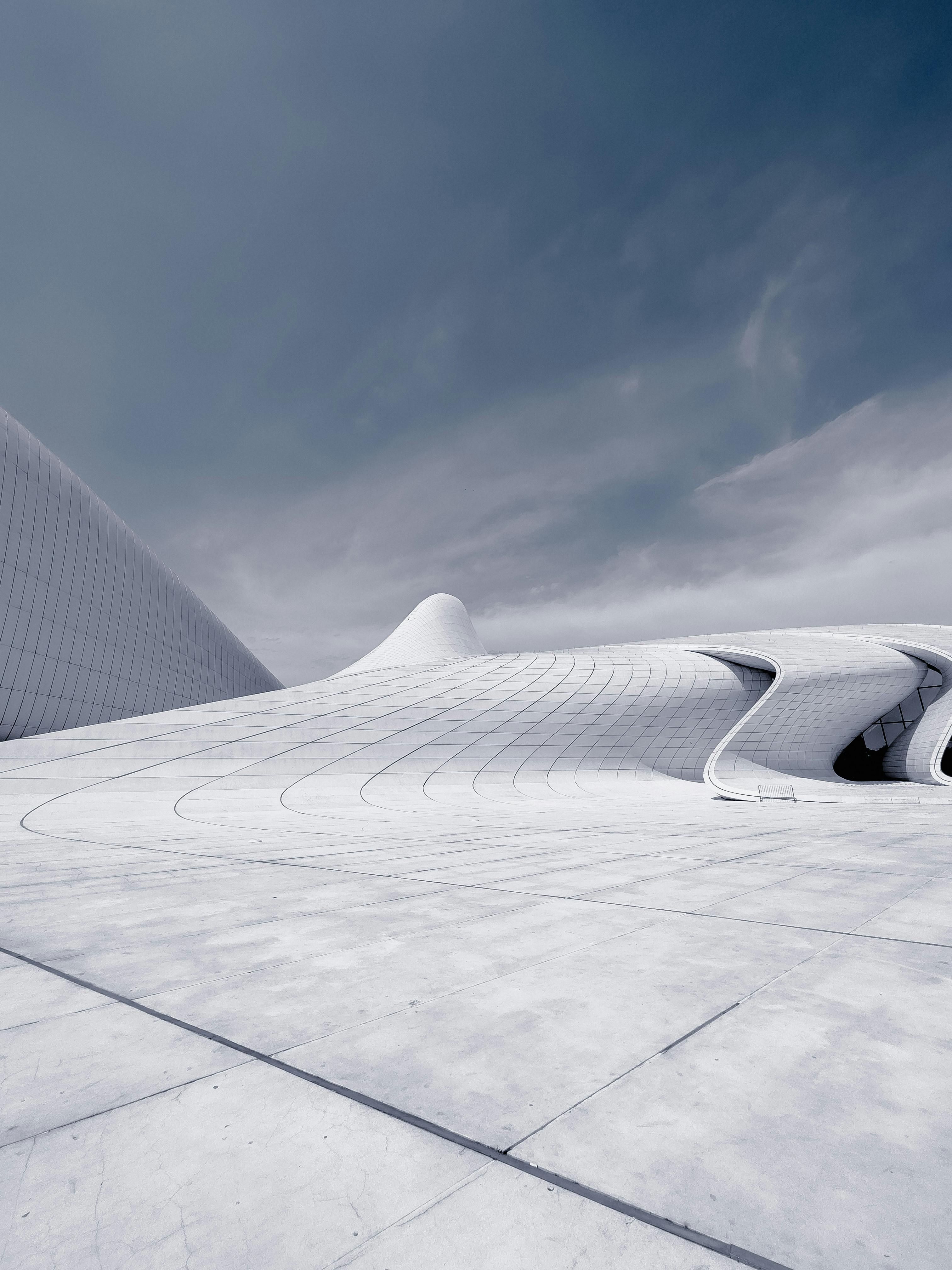
IMAGE: Exterior of the Heydar Aliyev Centre in Baku, Azerbaijan, highlighting its extreme (fluid) form with seamless curves and bold architectural expression.
Here’s how a parametric project usually unfolds:
-
Set the Rules
Instead of drawing walls, you define rules: “Every floor must rotate 5° more than the one below,” or “Openings adjust based on sunlight.” -
Build the System
You use visual coding tools like Grasshopper to connect these rules into a functioning model. -
Generate Options
You tweak sliders or change values to generate multiple variations instantly. -
Analyze and Choose
Use simulations to test things like daylight, airflow, or material cost. -
Document for Construction
Once locked, you extract real geometry to document and fabricate.
CASE STUDY
Heydar Aliyev Center – Built by Logic, Not Just Sketches
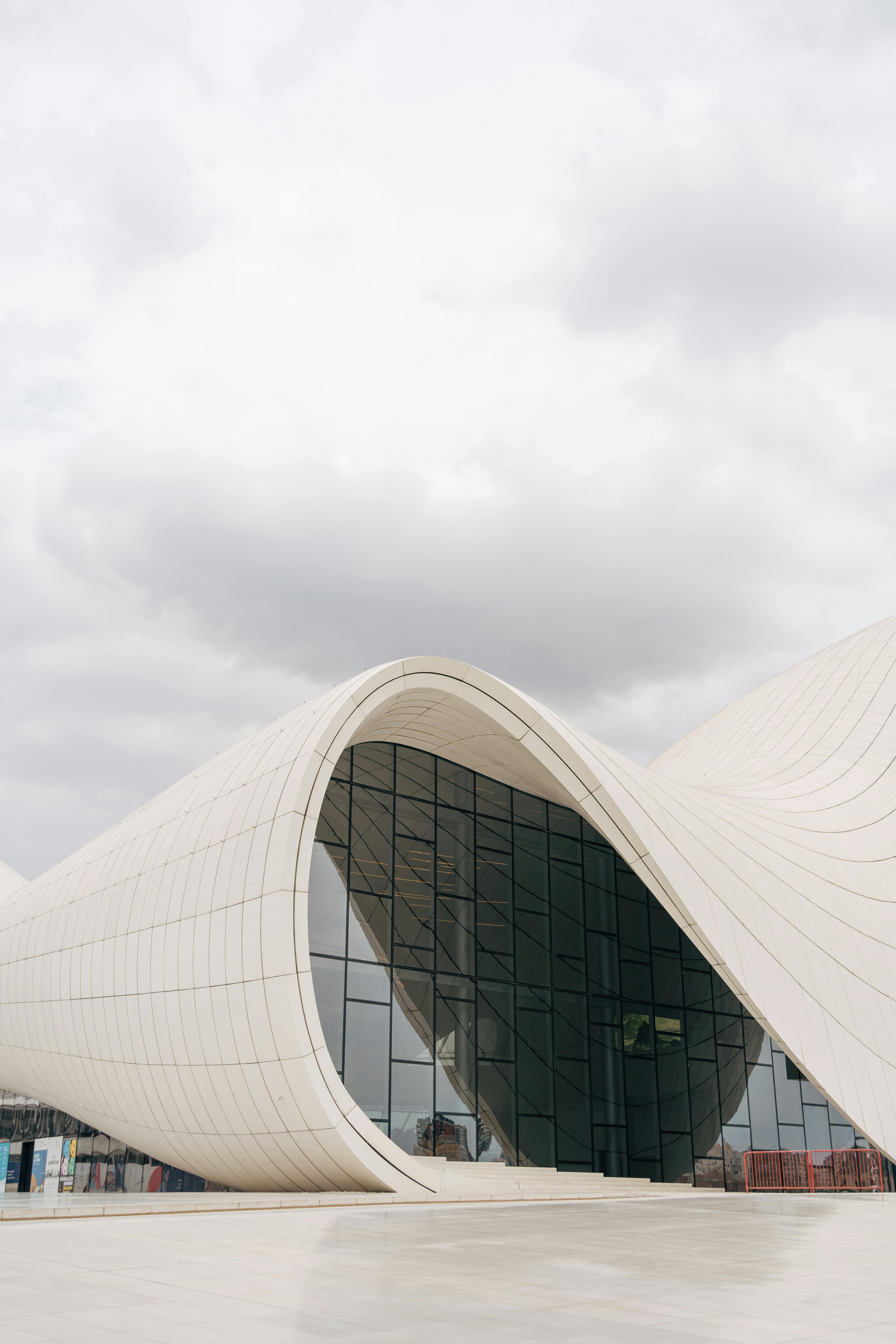
Location: Baku, Azerbaijan
Architect: Zaha Hadid Architects
Completed: 2012
Toolset Used: Rhino, Grasshopper, Maya
Program: Cultural center with auditorium, museum, exhibition spaces
Why This Building Matters

IMAGE: Aerial view of the Heydar Aliyev Center in Baku, showing the full site plan, landscaping, and its surrounding urban context for better spatial understanding of the landmark.
Forget corners. The Heydar Aliyev Center looks like it was poured from a single fluid shape. But that complexity wasn’t just artistic—it was algorithmic. This building became the global poster child for parametric architecture because of how tightly its form was tied to data, function, and structure.
Step 1: Design Concept
The brief was clear: build a national cultural icon that breaks away from rigid Soviet architecture.
Hadid’s team proposed a continuous surface—roof, wall, and ground all merging. But to make it real, they needed more than drawings.
They needed rules.
Step 2: Parameters That Shaped the Form
Using Rhino + Grasshopper, the design team coded the building’s logic. Examples of parameters:
-
Sunlight angle → dictated orientation of roof curves
-
Slope max limits → guided safe walkable surfaces
-
Structural panel limits → determined façade segmentation
-
Interior volume needs → shaped curves to contain galleries/auditorium
-
Acoustics → influenced wall angle transitions inside
This wasn’t freeform modeling. Each design move responded to real needs. Want a more dramatic roofline? It had to pass a structural test first.
Step 3: Iteration and Feedback Loop
They didn’t build a single model. They built hundreds.
Each time a new value was entered—say, a wider hall or gentler ramp—the system regenerated the form in seconds. Then it was analyzed:
-
Too much glare?
-
Too complex to fabricate?
-
Needs better flow between spaces?
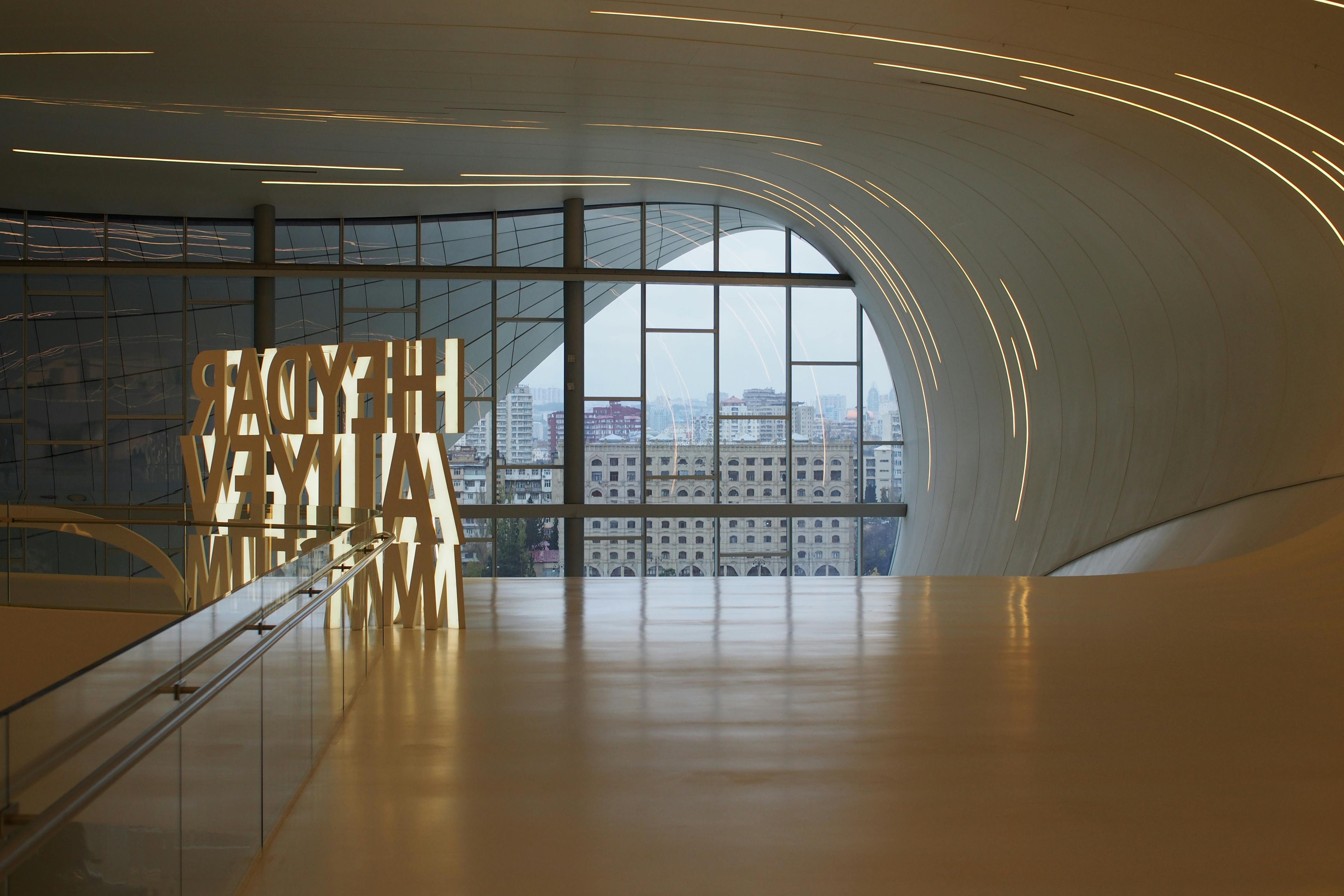
IMAGE: Interior view of the Heydar Aliyev Centre in Baku, Azerbaijan, showcasing its flowing architectural forms, curved surfaces, and seamless spatial experience.
Edit the code. Rerun the model. Repeat.
This “live feedback loop” cut weeks off the typical design timeline.
Step 4: Real-World Fabrication
The team partnered with advanced engineers and fabricators who used the same parametric data to:
-
CNC-cut steel supports
-
Mold custom curved façade panels
-
Plan accurate joints for on-site assembly
Nothing was built by guesswork. Each piece had a code-generated ID, position, and fit tolerance.
Without parametric tools, this project would’ve taken 3x longer—or failed entirely.
What You Can Learn From It
✔ Think in systems, not objects
If you're an architect or designer, don't just draw. Build a logic model: What happens if the site changes? If the sun angle shifts?
✔ Build flexibility in from day one
Parametric design lets you test 20 versions, not just 2. Use that to your advantage. Don’t lock yourself into early shapes.
✔ Understand your tools deeply
Rhino and Grasshopper aren’t magic. But when used with intent, they’ll help you bridge concept and construction like nothing else.
✔ Work with fabricators early
Parametric buildings often require custom parts. You can’t do that in isolation. Get manufacturers and builders involved from the start.
How the Heydar Aliyev Center Changed the Game for Parametric Design
Most buildings follow geometry. This one bent the rules—literally.
When Zaha Hadid’s team pulled off the Heydar Aliyev Center, it wasn’t just another futuristic form. It proved something bigger: parametric design wasn’t just experimental anymore—it was buildable. Before this, many architects hesitated. They saw parametric forms as nice on screen, but risky and expensive to execute.
This building flipped that mindset.
What It Took
Behind the curves and seamless transitions was a brutal design reality:
● Over 8,000 custom-made panels—each one unique
● No straight lines in major structural areas
● Digital fabrication at an architectural scale
● Full dependency on computational modeling from sketch to construction
Everything had to be planned down to the millimeter. The software didn’t just model—it dictated how contractors cut, bent, and placed every part.
What Architects Can Learn from It
1. Don’t just design shapes—design systems.
Hadid’s team didn’t draw lines. They built a rule-based system where shapes emerged from parameters—sunlight, movement, structure.
2. Build with the fabricator in mind.
Every digital form created was tested against real-world materials and fabrication tools. The model wasn’t a fantasy—it was a guide for production.
3. Know when to stop.
Parametric tools offer infinite possibilities. The Heydar Aliyev team set constraints early to avoid drowning in complexity. They focused on clarity, not chaos.
The Impact: Architecture After Heydar
Since its completion, firms worldwide have pointed to this building as the moment parametric design got “real.” It pushed governments, universities, and even conservative firms to:
✓ Adopt Rhino + Grasshopper as standard tools
✓ Collaborate with engineers earlier in the design phase
✓ Re-think form as a performance-driven process, not just style
Bottom Line:
The Heydar Aliyev Center proved that parametric architecture is about working smarter. It blurred the lines between sculpture and structure, but it also made studios everywhere ask better questions about form, logic, and construction.
Other Famous Parametric Buildings (And What to Steal From Them)
1. The Louvre Abu Dhabi Dome
-
By: Jean Nouvel
-
Why it matters: Uses layered geometric domes to filter light like palm trees
-
Steal this idea: Parametric patterns can shape daylight and heat gain, not just looks
2. The Metropol Parasol (Seville, Spain)
-
By: Jürgen Mayer H.
-
Why it matters: Giant timber structure created entirely from parametric scripts
-
Steal this idea: Parametric design is not just for steel and concrete—works with wood too
3. Morpheus Hotel (Macau)
-
By: Zaha Hadid Architects
-
Why it matters: Structural exoskeleton doubles as ornament
-
Steal this idea: Use structural logic as the basis for form—let the support system drive the aesthetics
How Parametric Design Tools Like Grasshopper Changed Architecture
Parametric architecture turns code into curves. This expert guide breaks down how it's done with real case studies and clear design lessons.
How Grasshopper Changed Architecture
Parametric tools like Grasshopper didn’t just add features—they changed the way buildings are imagined.
Before, architects drew.
Now, they build rules. Instead of sketching one form, they design a system that can generate hundreds—each one responding to real data like sun angles, wind patterns, or structural stress.
What Grasshopper Really Does
It’s not about flashy 3D shapes. Grasshopper links logic to form.
You set parameters—like wall thickness, material limits, or daylight angles—and the software does the heavy lifting. It lets you:
● Model forms that would be impossible by hand
● Test structures before they’re built
● Make changes instantly without redoing everything
● Iterate at scale (fast)
Real-World Shift
Before Grasshopper:
An architect draws. An engineer corrects. A fabricator struggles.
After Grasshopper:
All three work from the same system. A tweak in the model updates everything—from design curves to fabrication files.
Why It Matters Now
Parametric tools let you design smarter—not just fancier. Architects who learn Grasshopper don’t just impress clients. They solve problems faster, build more sustainably, and stand out in firms doing serious innovation.
Grasshopper isn’t a style—it’s a skill. And it’s shaping the future of architecture.
Final Takeaway
Parametric architecture isn’t a style—it’s a method.
It’s not about looking fancy. It’s about working smarter. You build systems that let you test ideas faster, shape better-performing buildings, and actually build the things you draw—even the wild ones.
It’s not easy. It takes time to learn. But if you’re serious about pushing your craft forward, parametric design is the toolset that gets you there.
FAQ
Parametric Architecture — Straight Answers
Q: What makes the Heydar Aliyev Center “parametric”?
It wasn’t drawn by hand. The curves, waves, and geometry were generated using rule-based design. Zaha Hadid’s team used Rhino + Grasshopper to build a digital logic system. Every line responded to a set of parameters—site, function, light, and structure.
Q: Why does the building have no visible columns or edges?
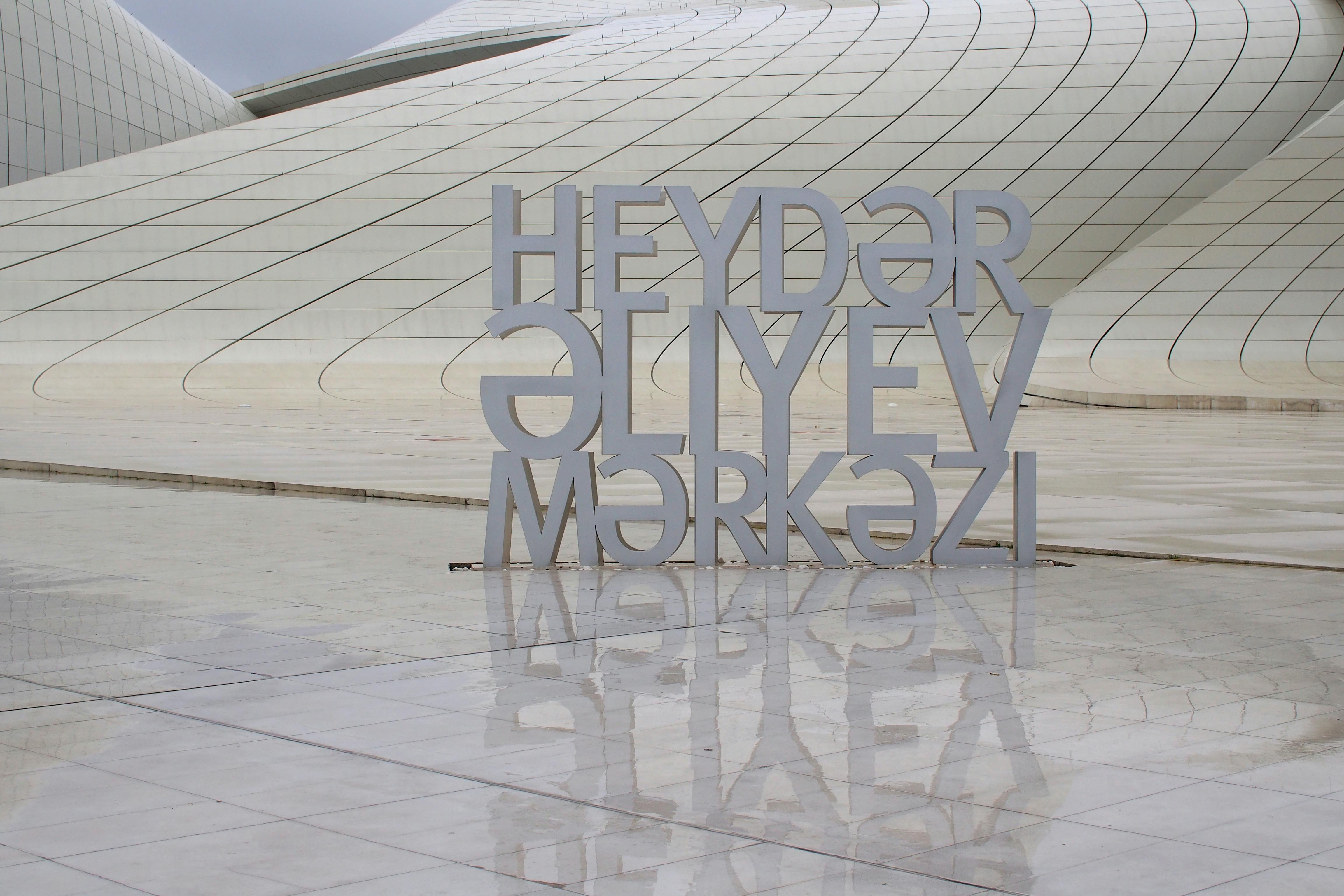
That’s part of the point. It was designed to look like one continuous surface—fluid, organic, almost alive. The structural shell was engineered with a hidden steel space frame and ultra-precise paneling to make it look seamless. No vertical lines interrupt the form.
Q: Was this just a sculptural exercise?
No. It’s not just form for form’s sake. Every curve is tied to how the building moves people: guiding them, lifting ceilings, opening up spaces. It blends circulation, structure, and visual experience into one system.
Q: How long did it take to design and build?
Roughly 2007–2012. The parametric design itself took over a year to iterate properly. Construction was complex because nothing was standard. Nearly everything was custom-fabricated, including the façade panels and steel structure.
Q: How did they fabricate such complex shapes?
They used 3D digital fabrication—laser-cut frames, CNC-milled molds, and pre-cast GFRP (glass fiber–reinforced polymer) panels. The parametric model generated the specs for every component, which was then manufactured offsite with robotic precision.
Q: Who was the structural engineer behind it?
ARUP, one of the most advanced firms globally. Their team translated Zaha’s radical vision into buildable logic, using parametric modeling to simulate stresses, flex points, and material tolerances.
Q: How was sunlight handled inside that flowing form?
They ran sunlight simulations early in the parametric process. Skylights, curved windows, and overhangs were placed based on real solar angles—minimizing heat gain while maximizing natural light.
Q: What materials were used on the exterior?
The outer shell is made of reinforced concrete + GFRP panels. These were painted white to emphasize the smooth, sculptural form and hide panel seams under lighting conditions.
Q: Was the building controversial?
Yes. Some critics said it was “starchitecture” disconnected from Baku’s culture. Others saw it as a powerful symbol of national identity and progress. Either way, it turned global attention toward parametric design—and Azerbaijan.
Q: What should architects take from this project?
-
Learn to design with systems, not just shapes.
-
Push digital tools to their limit—but respect buildability.
-
Use curves with intention—not as decoration.
-
Let form follow flow, not just function.
-
Never underestimate how far tech + vision can go when aligned.
Q: Is parametric architecture just for fancy curves?
No. It’s about using rules and data to generate design—not just to make things curvy. You can use parametric methods to shape simple, efficient buildings, optimize energy, reduce cost, or solve structural issues.
Q: What software do architects use for parametric design?
-
Rhino + Grasshopper (most popular)
-
Revit + Dynamo (for BIM workflows)
-
Houdini (for more experimental stuff)
-
Maya, CATIA, or Blender (in special cases)
These tools let you build parametric systems without writing raw code.
Q: Do I need to learn to code?
Not full programming. Visual scripting (like Grasshopper) is enough for 90% of architectural parametric work. You drag blocks and connect them. But if you want more power? Learn Python.
Q: Isn’t this just overcomplicating things?
Only if you don’t know what you’re doing. Good parametric design simplifies complex tasks. If you spend 3 hours tweaking a window manually, a parametric setup lets you change it once and update 300 windows instantly.
Q: Can small firms or students use parametric design?
Yes—and they should. Rhino and Grasshopper are cheap or free for students. You don’t need a massive budget. What you need is time to learn and test. Start small, but start early.
Q: How is parametric different from BIM?
BIM is about information: quantities, schedules, construction docs. Parametric design is about generation: creating and testing form, structure, behavior. They can overlap, but they solve different problems.
Q: Isn’t this just a trend?
No. It’s been used since the early 2000s and is now embedded in serious architecture workflows worldwide. Buildings like the Beijing National Stadium, The Shed in NYC, or even modular housing systems use it. It’s here to stay.
Q: Can parametric buildings be sustainable?
Absolutely. You can optimize for sunlight, airflow, thermal mass, materials—all using real data. Parametric design helps align form with performance from the beginning.
Q: What should I learn first?
-
Rhino basics
-
Grasshopper logic (start with shape control)
-
Understand parameters: sliders, ranges, and data trees
-
Try real exercises: sun angle studies, pattern façades, tower massing
Keep it practical. Don’t chase pretty forms without purpose.