

Architectural shapes aren’t just for looks—they shape how buildings work, feel, and function. Below, we break down why form matters and how to use it smartly.
The Art and Science of Architectural Shapes
Shape and form are the first things you notice in any building—whether it’s an ancient pyramid or a modern skyscraper. But they’re more than just visual details. They shape how buildings function, how they feel to walk through, and how they fit into the world around them.
Below, we’ll look at why architectural shapes matter—and how they help create spaces that actually work.

Architectural shapes define how buildings feel and function. Below, we break down key form types—from geometric to free-form—and why they matter.
What Are Architectural Shapes and Forms?

Shapes and forms aren’t just about how buildings look—they shape how they work. From clean lines to bold curves, the way a building is formed says a lot about its purpose and personality.
At its core, architectural form refers to the physical shape and structure of a building. That includes the volume, massing, proportions, and how different parts come together as a whole.
Let’s break down the main types—and what each one brings to a design.
Types of Architectural Shapes
▪ Geometric Forms
These are basic, clear-cut shapes: squares, triangles, rectangles, and circles. They’re often used in modernist designs where order, symmetry, and logic matter.
→ Real Example: The Louvre Pyramid by I. M. Pei uses a bold triangular form to contrast the classical backdrop of the Louvre Museum.
▪ Organic Forms
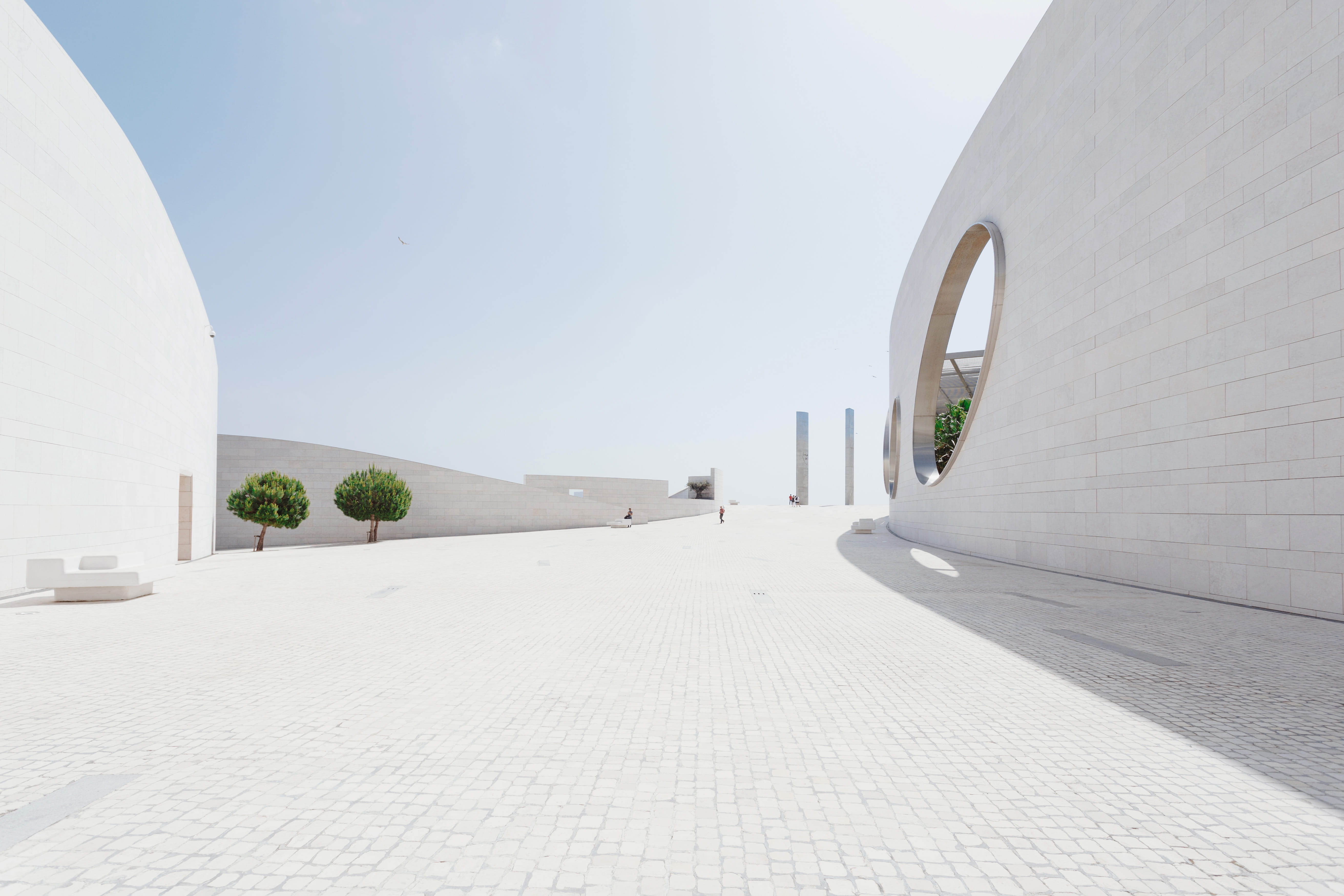
Inspired by nature, these shapes are curved, flowing, and irregular. They feel softer and more fluid, often helping a building blend into its surroundings.
→ Real Example: The Guggenheim Museum Bilbao by Frank Gehry curves like a ship on water—no straight lines, just motion and movement.
▪ Free-Form Architecture
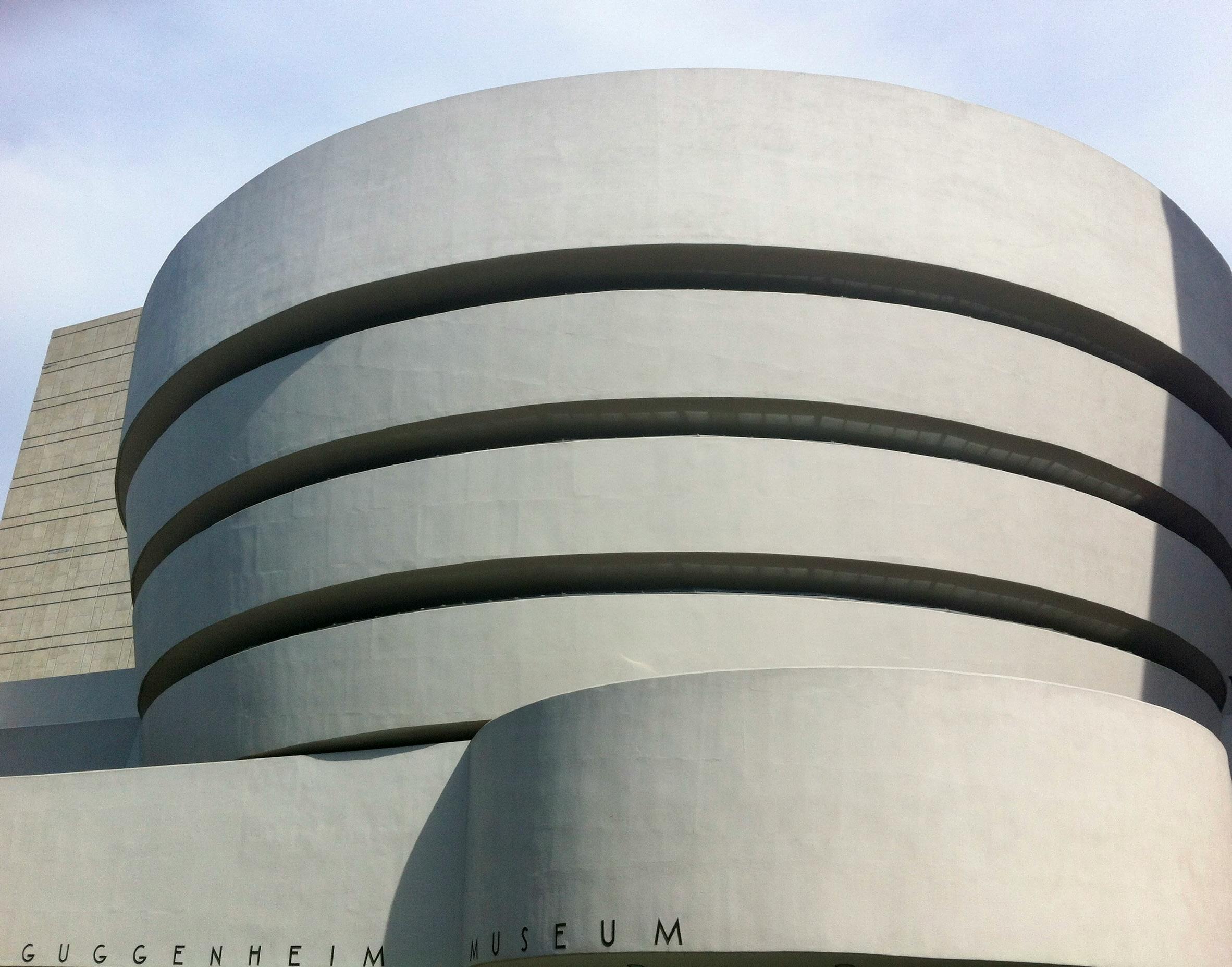
These shapes break all the rules. They use new materials and tech to go beyond geometry or nature—wild, expressive, and often futuristic.
→ Real Example: The Heydar Aliyev Center by Zaha Hadid flows like a wave. No hard angles—just pure, sculptural form.
▪ Clustered Forms

These group separate volumes into one composition—modular, complex, and unified. Each piece serves a role but still fits the big picture.
→ Real Example: Habitat 67 in Montreal (Moshe Safdie) stacks cube-like apartments into a striking, livable monument.
▪ Linear Forms
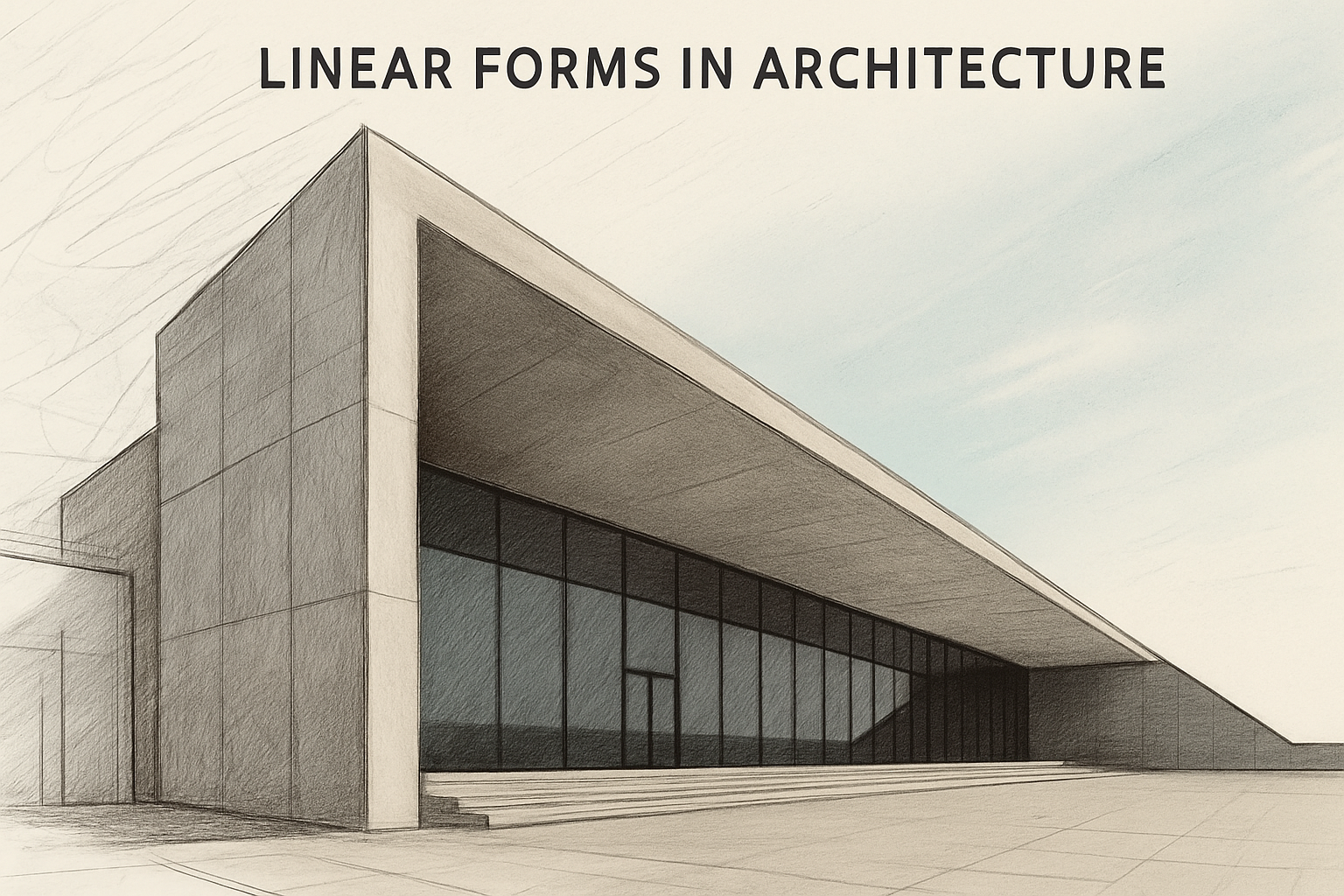
Long, clean lines define these forms—horizontal, vertical, or both. Often seen in minimalist or modernist buildings where simplicity = strength.
→ Real Example: Villa Savoye by Le Corbusier stretches out with horizontal bands and ribbon windows—sleek, sharp, and connected to nature.
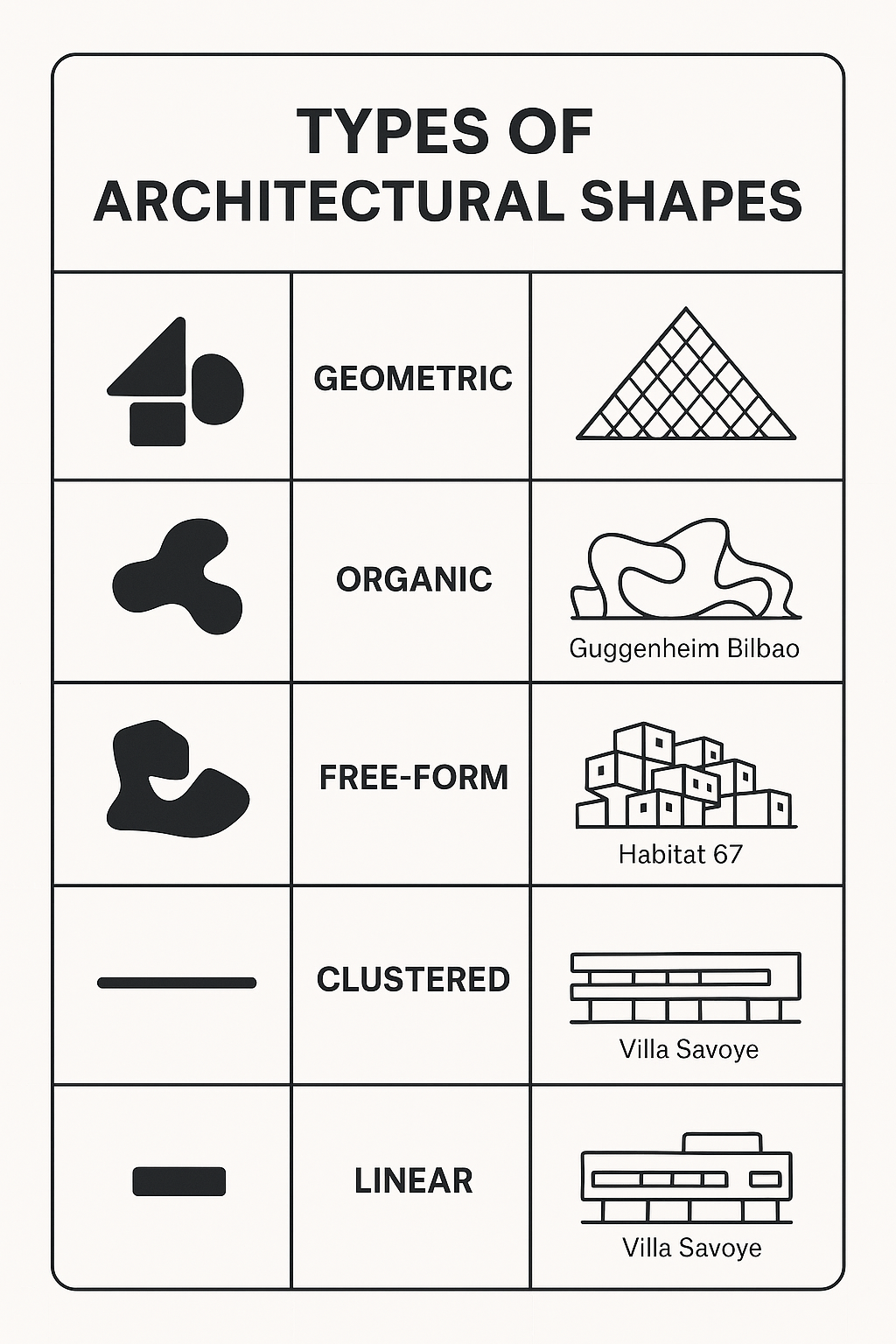
Summary Table: Types of Architectural Shapes
| Form Type | Key Features | Famous Example | What It Conveys |
|---|---|---|---|
| Geometric | Straight lines, basic shapes (circle, square, triangle) | Louvre Pyramid – I. M. Pei | Precision, clarity, balance |
| Organic | Natural curves, flowing forms, asymmetry | Guggenheim Bilbao – Frank Gehry | Movement, harmony with nature |
| Free-Form | No defined rules, futuristic shapes, new materials/tech | Heydar Aliyev Center – Zaha Hadid | Innovation, boldness, fluidity |
| Clustered | Grouped units forming a larger whole, often modular | Habitat 67 – Moshe Safdie | Complexity, individuality + unity |
| Linear | Long lines, horizontal or vertical emphasis, simplicity | Villa Savoye – Le Corbusier | Minimalism, modern order, openness |
The Relationship Between Form and Function
Form and function aren’t separate—they shape each other. Below, we break down how architecture balances purpose, beauty, and meaning through smart design.
How Form and Function Work Together in Architecture

Side-by-side comparison of form vs. function in architecture, showing Burj Khalifa, Sydney Opera House, Seattle Central Library, and a 3D-printed bridge.
You’ve probably heard it before: form follows function. But what does that really mean when you’re sketching, building, or just walking through a space?
Form is the shape of a building.
Function is what that building is supposed to do.
A smart design doesn’t pick one over the other—it makes both work at the same time.
What Comes First: Form or Function?
When designing, don’t start by drawing a cool shape and forcing rooms to fit inside it.
Start with purpose. Let that guide your design decisions.
● A home might need warmth, privacy, and cozy rooms.
● A museum needs open space, clear circulation, and light control.
● A school benefits from modular, flexible layouts.
Think function first. Let form follow.
🔹 Real-Life Lesson: Why Skyscrapers Taper
Skyscrapers aren’t tall just to impress—they solve a space problem. Cities grow up when they can’t grow out.
Example: The Burj Khalifa
▪ Tapers upward to reduce wind resistance
▪ Spiral design helps redirect desert winds
▪ Maximizes floor space at the base, keeps the top stable
Looks beautiful. Works better.
Form Can Speak Louder Than Words
Buildings don’t just work—they also say something. Some forms are designed to symbolize an idea, culture, or feeling.
Example: The Sydney Opera House
→ Shell-like shapes that look like sails
→ Reflects the harbor, ocean, and identity of Sydney
→ Not just pretty—it tells a story
Ask yourself: What message is your design sending?
Mini-Challenge for Design Students
Next time you sketch, stop and ask:
→ What feeling should the form give off?
→ What story is the shape trying to tell?
Every good design says something—even without words.
Example from Everyday Use: Library Design
Let’s say you’re designing a library in a noisy downtown area.
Here’s what you'd need:
● Quiet, private study zones
● Natural light without glare
● Layout that helps people navigate easily
● Thick walls or strategic shape to block outside noise
Real Example: Seattle Central Library, Rem Koolhaas
▪ Stacked, staggered form = flexible spaces
▪ Designed for reading, tech, meetings, events
▪ The form responds to the building’s many uses
Form supports function + community at once.
Modern Tech = New Forms That Actually Work
Today’s tools give architects more freedom—but also more responsibility to design smarter.
Examples:
● BIM (Building Information Modeling): Shows how shape affects heat, airflow, energy use
● 3D Printing: Creates custom forms fast, without old constraints
Example: MX3D Bridge, Amsterdam
▪ 3D-printed from metal
▪ Organic, flowing shape
▪ Lightweight and strong
→ Not just art—it's smart structure
Let Purpose Shape the Form
Good architecture doesn’t start with style. It starts with need—then solves it beautifully.
Want your building to matter? Don’t just ask how it will look.
Ask:
What’s it for? Who’s it for? What should it feel like?
Then let that shape everything else.
Related:
- Understanding Additive Form in Architecture: Key Concepts and Examples
- Form Follows Function in Architecture and Design
Smart Ways to Apply Form and Function in Real Design

Getting form and function to work together takes more than instinct. Here's how to get it right from the start:
Tips for Applying Form and Function in Design
● Start with Function, Not Form
Before sketching shapes, ask:
What does this building need to do?
● A concert hall needs sound control, sightlines, and flow
● An apartment building needs privacy, light, and efficient layout
Let use define the shape—not the other way around.
● Leverage Technology Early
Use tools like BIM, 3D modeling, and performance simulation to catch problems before they’re built.
● Test airflow, daylight, and structural behavior
● Avoid waste and expensive corrections later
→ Good design is tested, not guessed.
● Let the Form Say Something
Your building isn’t silent. Its shape sends a message—whether you mean it or not.
● A curved roof might suggest calm, freedom, or openness
● Sharp, rigid lines could reflect strength, order, or even tension
→ Ask yourself: What does this shape make people feel?
● Respect the Environment Around It
A great building fits in and stands out—by knowing the space it occupies.
● Does it blend with nature or push it away?
● Are the shapes welcoming or closed off?
● How does the sun, wind, and weather play across it?
→ Your building doesn’t sit in a vacuum. Design like it’s part of something bigger.
Buildings That Were Changed Due to Form Issues
When Form Backfires: Buildings That Had to Be Fixed
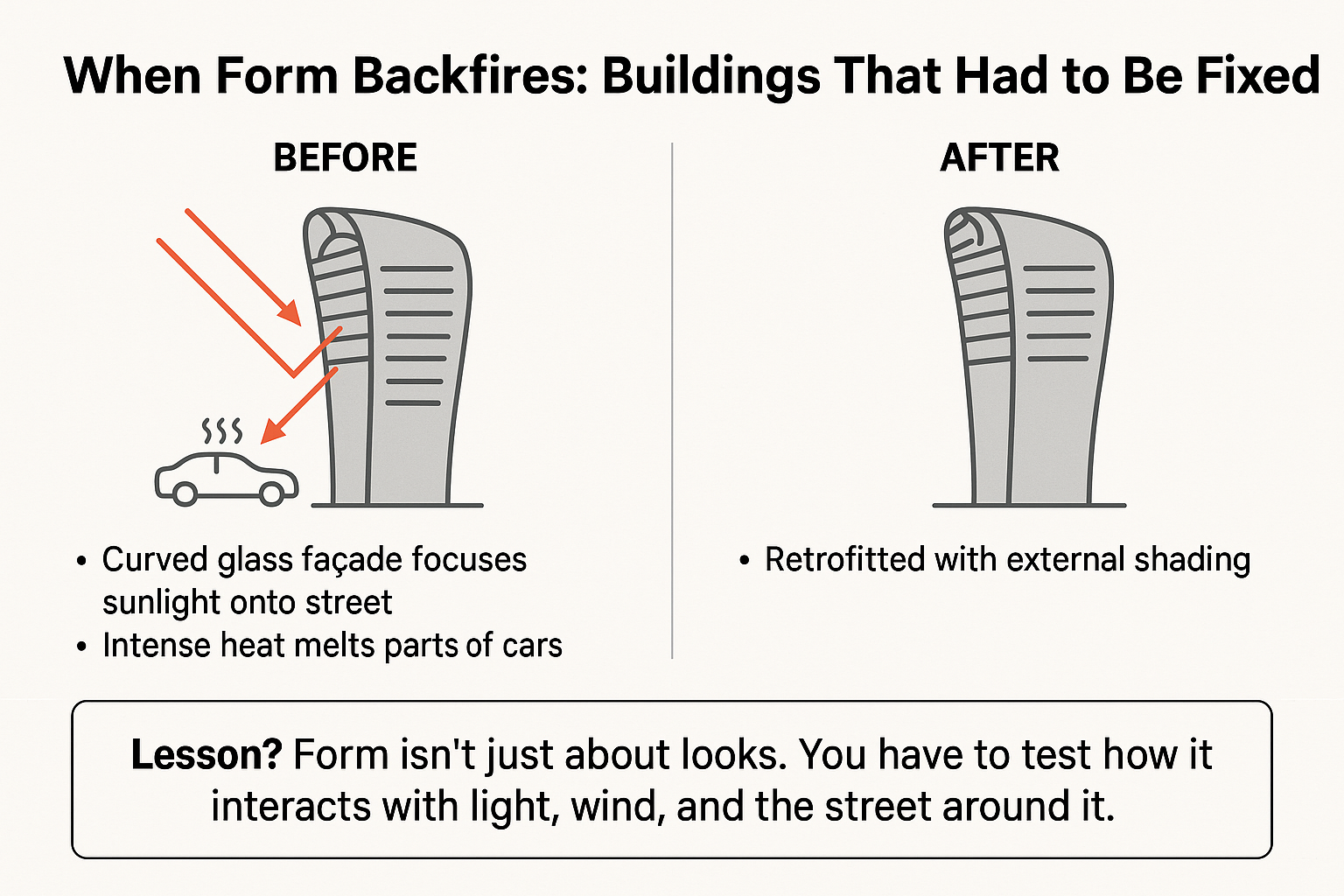
IMAGE: Diagram showing how the Walkie-Talkie Building's curved form caused heat damage and was later corrected with external shading.
Sometimes, form gets ahead of function—and it backfires.
One of the most famous cases? The Walkie-Talkie Building in London (20 Fenchurch Street).
▪ Its curved glass façade looked bold and modern
▪ But it unintentionally focused sunlight onto the street
▪ The reflected heat got so intense, it melted parts of cars
They had to retrofit the building with external shading—an expensive fix that could’ve been avoided with better early analysis.
Lesson? Form isn’t just about looks. You have to test how it interacts with light, wind, people, and the street around it.
Finding the Right Balance: Form and Function Together
Architecture isn’t a beauty contest. It’s a balance.
Good buildings do both:
● They serve a real purpose
● They say something meaningful
● And they feel right to be in
Whether you’re designing a quiet community library or a soaring skyscraper, the goal is the same: let form support function—and give the building its identity.
“The best designs don’t choose between beauty and utility. They make them depend on each other.”
Want to Learn This Deeper?
Book Recommendation
Introduction to Architecture by Francis D.K. Ching
→ Covers real-world uses of form and function
→ Great for students, designers, and anyone serious about architecture
→ Available here: View on Amazon
Related: Clustered Form Architecture: Function, Space, and Design
How Technology Is Changing the Way We Shape Buildings
Technology hasn’t just sped up how we design—it’s completely reshaped what’s possible.
Today, tools like BIM, parametric design, and 3D printing are giving architects the freedom to create forms that once seemed impossible—or unaffordable.
Real Shift: From Drafting Tables to Data-Driven Shapes
Architects used to be limited by what they could draw and build by hand. Now?
● BIM (Building Information Modeling) helps test how a form performs—before it’s built
● Parametric tools let you design with data and rules, not guesswork
● 3D printing means forms can be built directly from code—fast, cheap, and complex
Real Example: The MX3D Bridge, Amsterdam
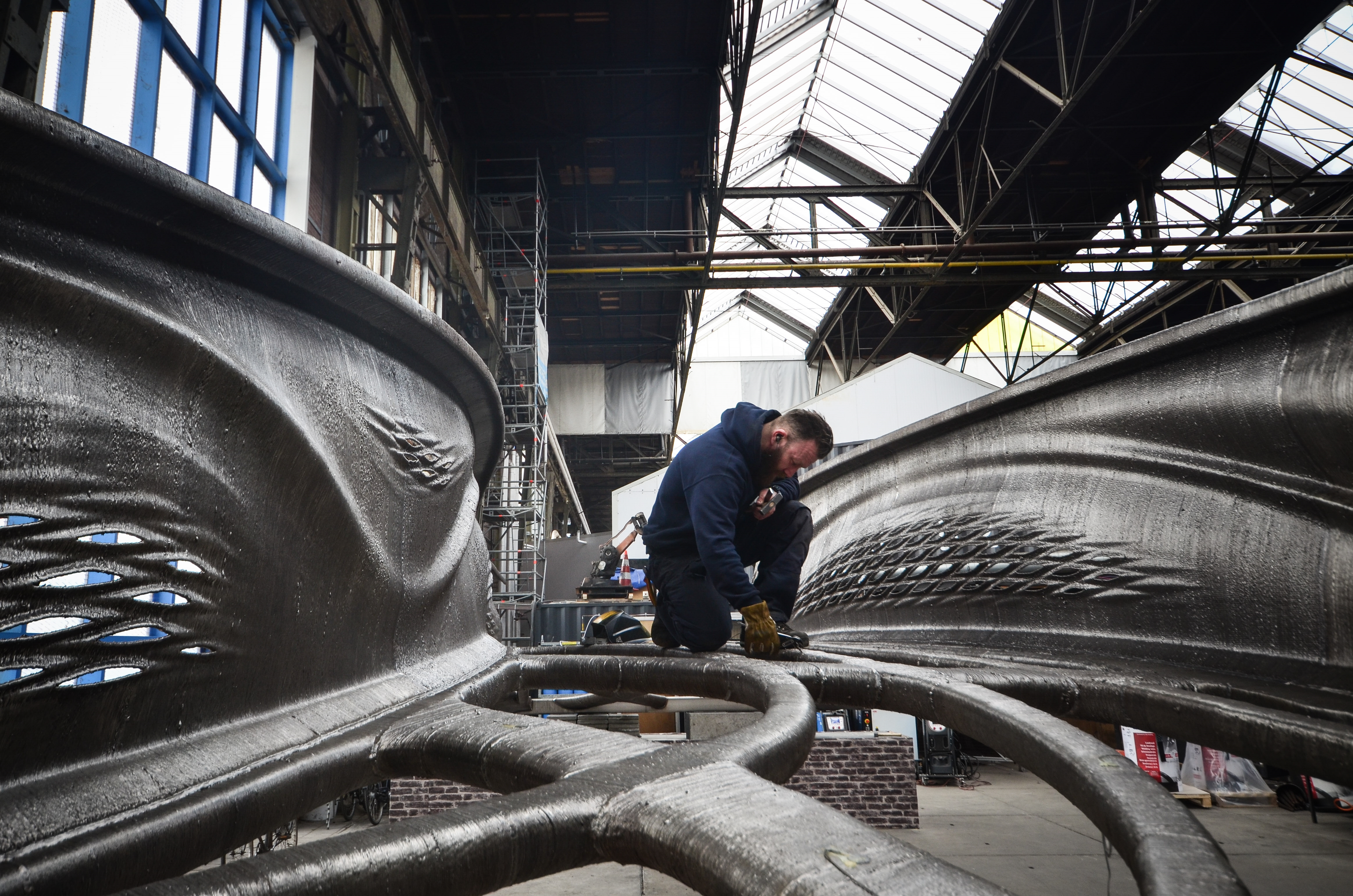
● World’s first 3D-printed metal bridge
● Organic, curved shape—looks like it grew rather than was built
● Strong, lightweight, and designed with real-time structural feedback
This isn’t just about flashy design. It’s form + performance, made possible by tech.
What’s Driving This?
Parametric architecture is leading the way. Here, algorithms generate the form—not just the architect’s sketch.
Result?
→ Shapes that adapt to sunlight, wind, usage, or budget
→ No two buildings need to look alike
→ Each one responds to its exact site and function
What Most People Miss: How Form Affects Maintenance
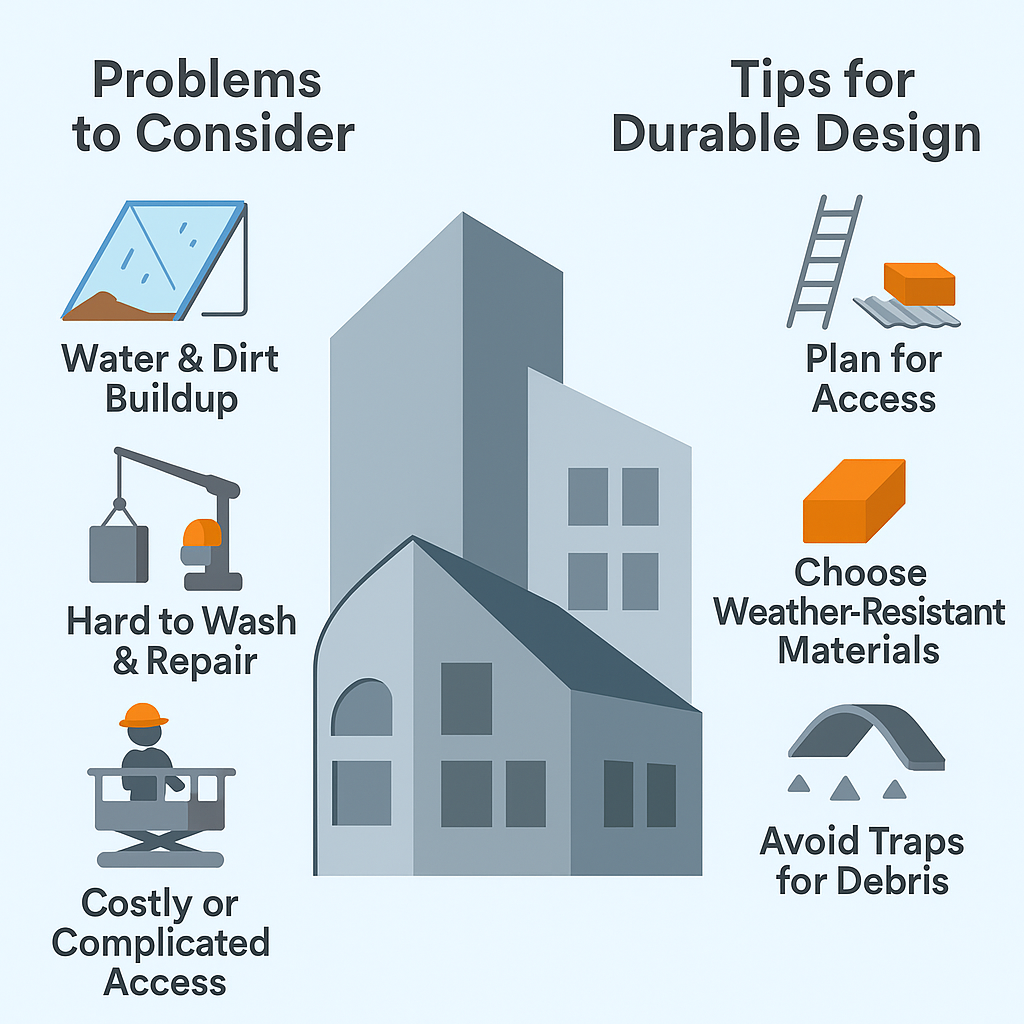
Most designers focus on how a shape looks or performs—but they forget how it ages.
Certain forms are harder to maintain, clean, or repair over time. That has real consequences for cost, safety, and user experience.
▪ Why This Matters
Some architectural forms collect water, dirt, or snow simply because of how they’re shaped. Others require special equipment or techniques to access and fix.
→ Think about it:
● That gorgeous sloped glass roof? Might need weekly cleaning crews on ropes.
● Curved walls? Harder to paint, insulate, or replace panels.
● Sunken courtyards? Could lead to drainage nightmares if not designed right.
▪ Real-Life Example: The Problem with Beauty That Leaks
There’s a reason many iconic buildings go decades without proper repairs—they’re just too expensive or complicated to maintain.
Lesson:
→ Before finalizing a shape, ask:
Can this be cleaned, sealed, repaired, and updated—without a nightmare budget?
🔹 What To Do Instead
● Design with access in mind: Where will scaffolding or lifts go?
● Use materials that age well with the chosen form
● Avoid shapes that trap debris or moisture unless there's a plan to deal with it
● Think in 25-year timeframes, not just opening-day photos
Form isn’t just about first impressions—it’s about how a building holds up in year 10, 20, or 50.
Where It’s Headed: Future Trends in Architectural Shapes and Forms
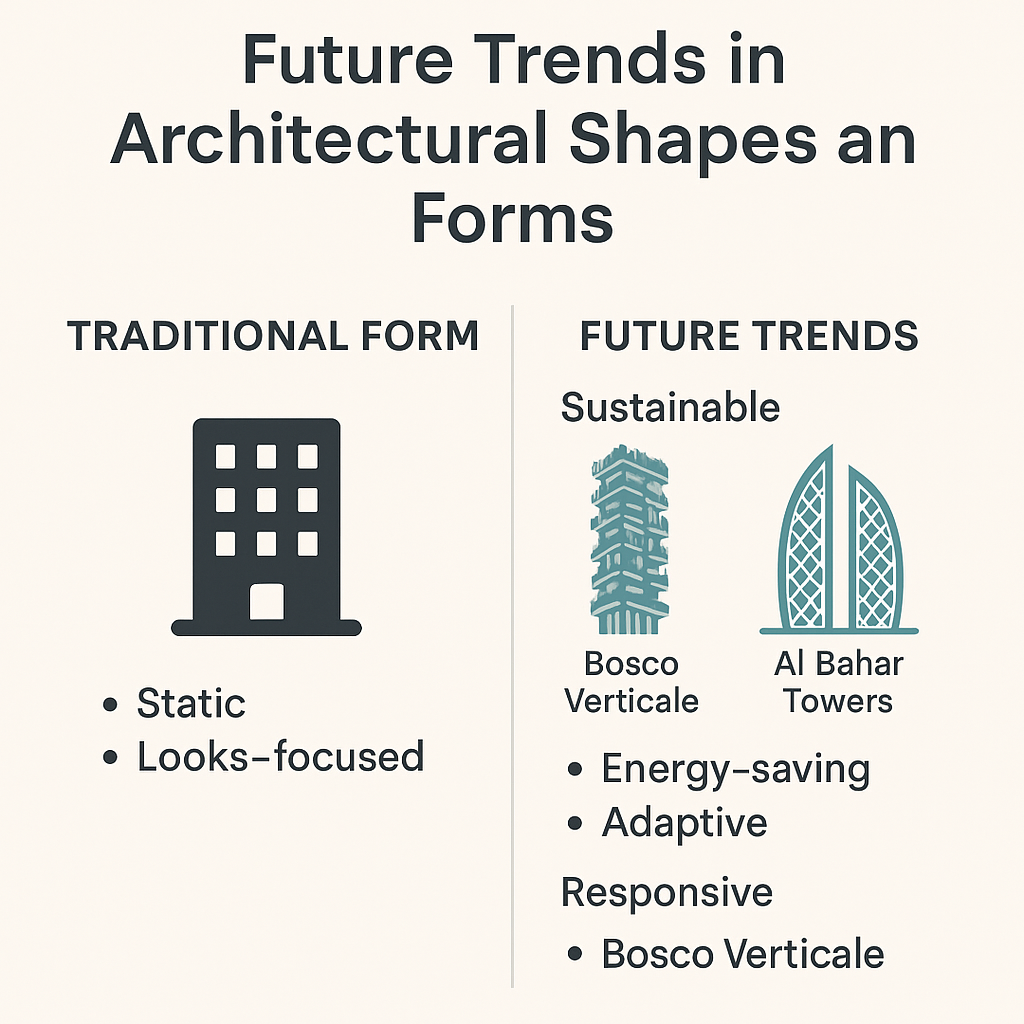
Architectural shapes aren’t standing still. They're evolving—fast.
The future of form is dynamic, sustainable, and responsive to real-world challenges like energy use, climate, and livability.
▪ Sustainable Forms That Do More Than Look Good
Tomorrow’s buildings aren’t just pretty—they work harder.
We’re seeing forms that:
● Boost airflow naturally
● Use angled roofs to capture sunlight
● Integrate greenery into the building’s structure
→ Real Example: Bosco Verticale, Milan
High-rise towers with trees and shrubs built into the balconies
→ Cuts down pollution, improves insulation, and looks stunning doing it
▪ Responsive Architecture That Reacts in Real Time
Some forms now adapt to the environment—like buildings that move, shift, or change based on sun, heat, or wind.
→ Real Example: Al Bahar Towers, Abu Dhabi
▪ Facade covered in mechanical mashrabiya panels
▪ Opens or closes automatically depending on sun intensity
▪ Reduces cooling load while creating a living, breathing exterior
The next generation of architecture is about shapes that do more—save energy, respond to people, and fit the world we’re actually living in.
FAQ
What is architectural form?
Architectural form is the shape and structure of a building.
It includes the geometry, volume, and how spaces are arranged.
How do architectural forms impact functionality?
● The form controls how a building is used, flows, and performs
● A tall narrow form (like a skyscraper) helps save space in cities
● A courtyard form can boost natural light and ventilation
What’s the difference between geometric and organic forms?
● Geometric forms use clear shapes like rectangles, triangles, and circles
● Organic forms copy nature—curved lines, irregular shapes, flowing edges
→ Geometric = clarity and order
→ Organic = movement and emotion
How has technology changed architectural forms?
● Tools like BIM and 3D modeling help test form and performance
● 3D printing allows for shapes that can’t be built with traditional methods
● Architects can now create complex, curved, and optimized structures
What is parametric design in architecture?
● It uses algorithms and rules to shape buildings
● Forms respond to real inputs like sunlight, wind, or function
● Creates unique, data-driven designs—no guesswork
Can building shape affect maintenance?
Yes—bad form can create long-term problems.
● Curved glass, deep recesses, or overhangs can trap dirt
● Some forms make repairs or cleaning very difficult
● Always plan how the form will age, not just how it looks
Why do some buildings change after they're built?
● Sometimes, form clashes with real-world conditions
→ Example: London’s Walkie-Talkie melted cars due to focused sunlight
● Fixes often involve adding shades, redesigning facades, or even legal changes