
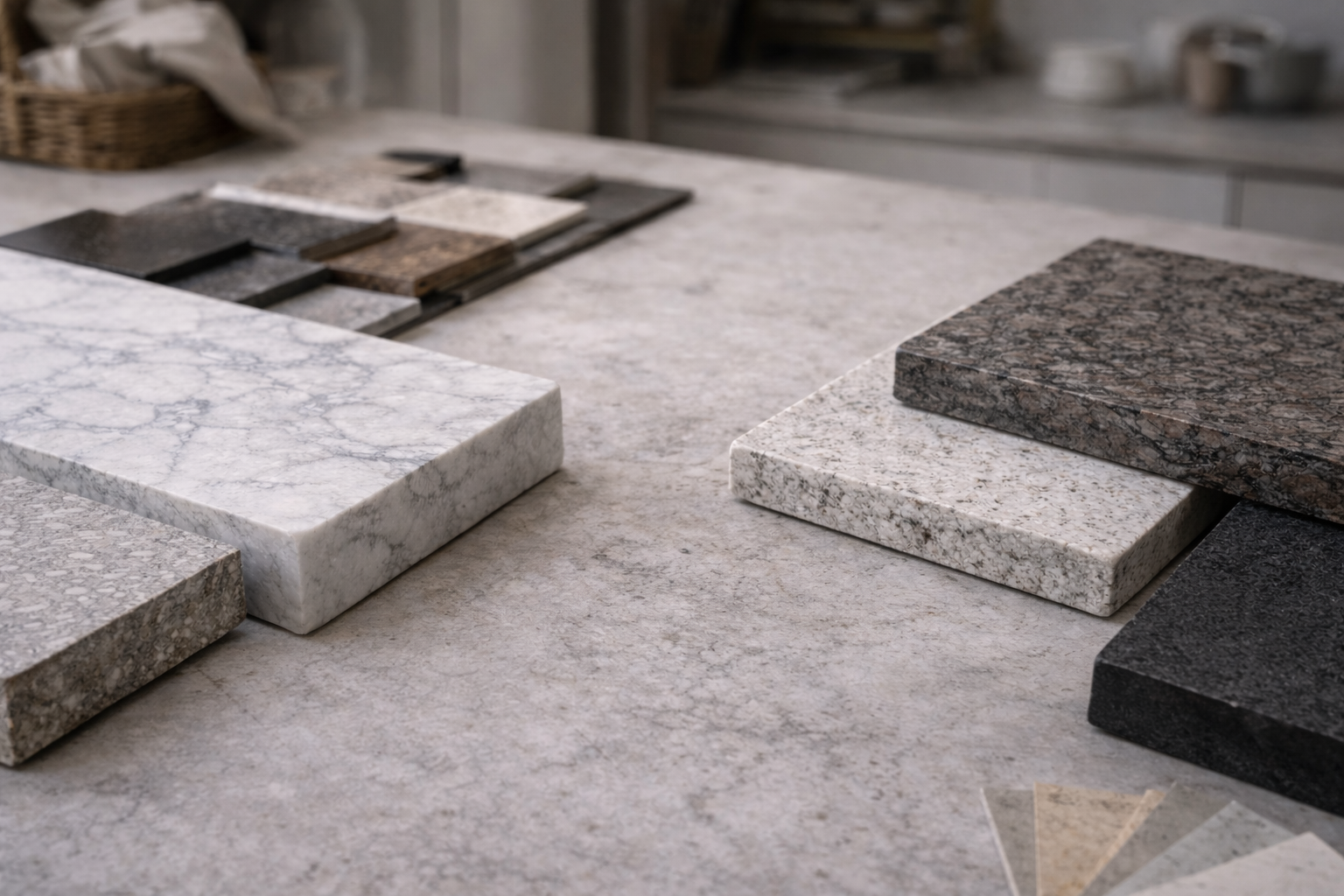
Everything You Need to Know About New Kitchen Benchtops
A new kitchen benchtop changes the room fast. It can also be the place where people spend real money… and still end up annoyed every day.
This is the practical side of it: picking the right surface, sizing it properly, planning the sink/cooktop cuts, and not getting surprised by seams, edge details, or installation limits.
If you want the bigger “materials + pros/cons” overview first, start with our kitchen benchtops guide, then come back here when you’re ready to choose.
New Kitchen Benchtop: What’s Hot, What’s Not, and What Ages Well
Start with your reality
(not the showroom)
Before looking at colors and patterns, get clear on how your kitchen gets used.
- Heavy cooking, messy cooking: you’ll notice stains, heat marks, and cleaning friction more than the average person.
- Kids + chaos: corners chip, stools hit edges, hot mugs land where they shouldn’t.
- “Mostly coffee and toast” kitchen: you can prioritize looks more—just don’t ignore cleaning and durability completely.
Small decision that saves pain: figure out where hot pans land and where groceries land. That’s where surfaces get abused. Design around those landing zones.
Benchtop materials
(What they’re good at, and what they do badly)
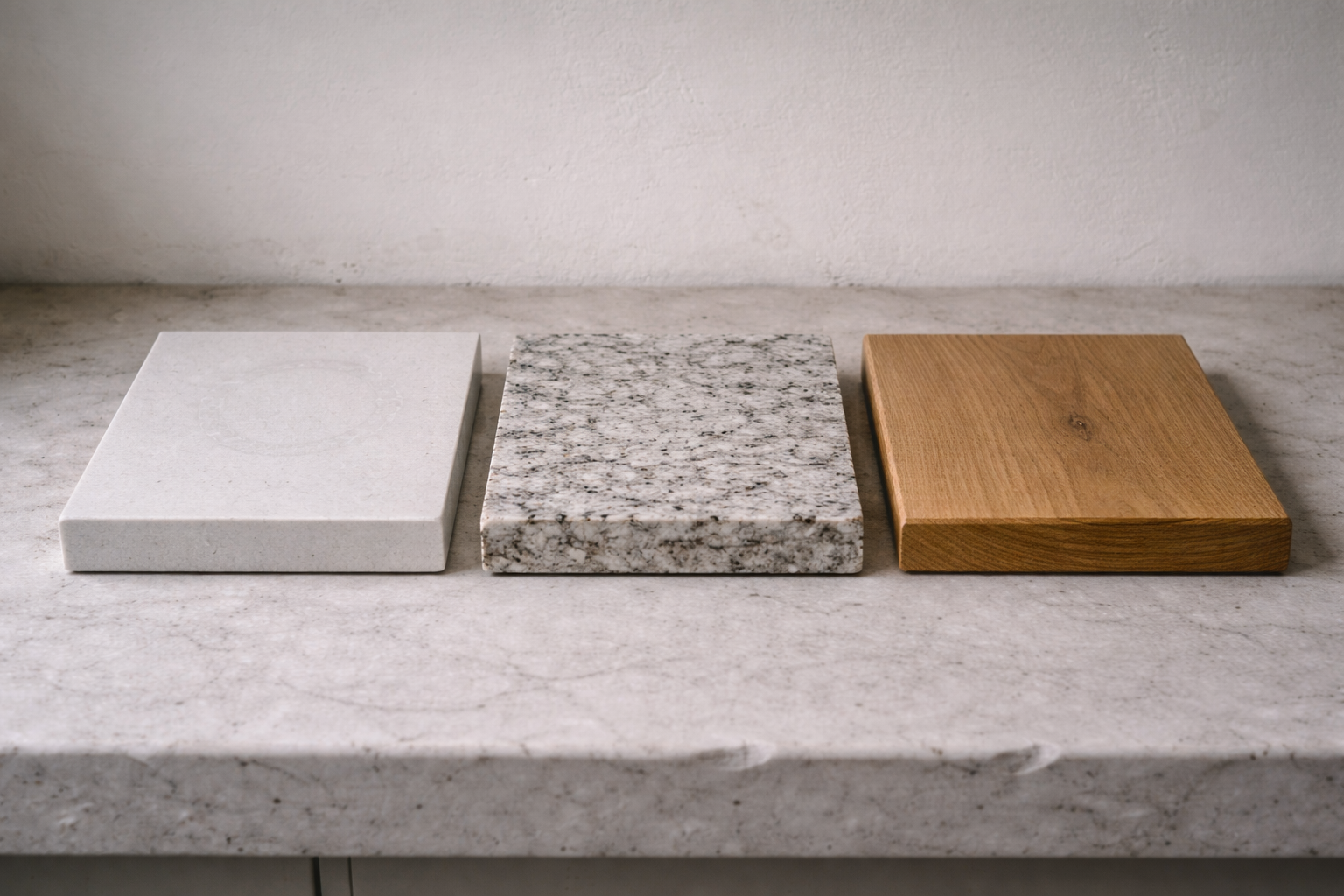
Most people don’t regret the material because it “looked wrong.” They regret it because it behaved wrong for their kitchen.
Quartz / engineered stone
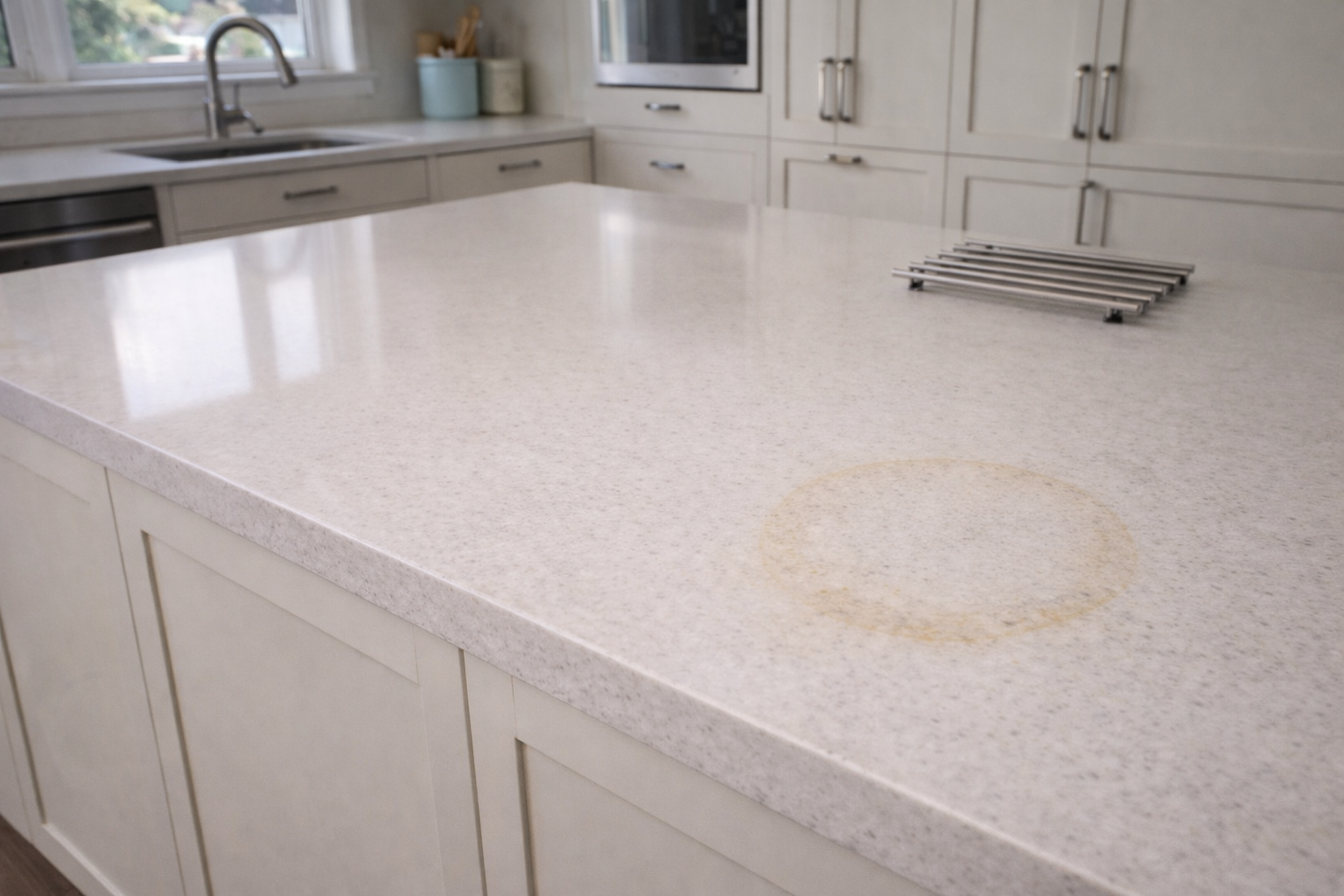
Popular for a reason. Low-porosity, consistent look, usually easy day-to-day.
- Good for: busy kitchens, low-maintenance households, clean modern looks.
- Annoying part: heat can be the weak spot. Hot pans straight onto the surface is where people get marks.
- Reality: it’s forgiving until someone treats it like stainless.
Granite
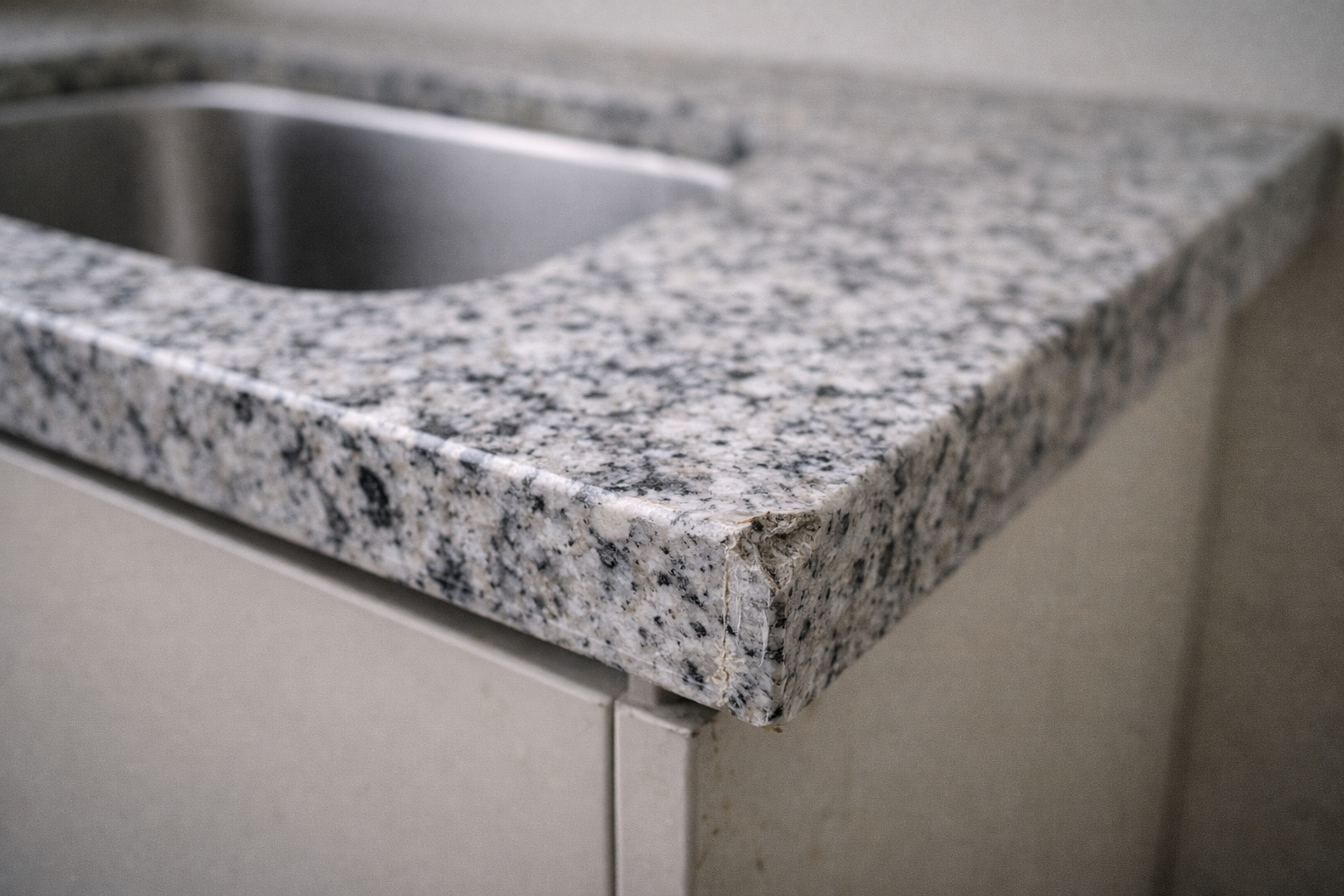
Tough, natural, and still one of the better “real stone” workhorses.
- Good for: cooks who want natural stone but don’t want to babysit it as much as marble.
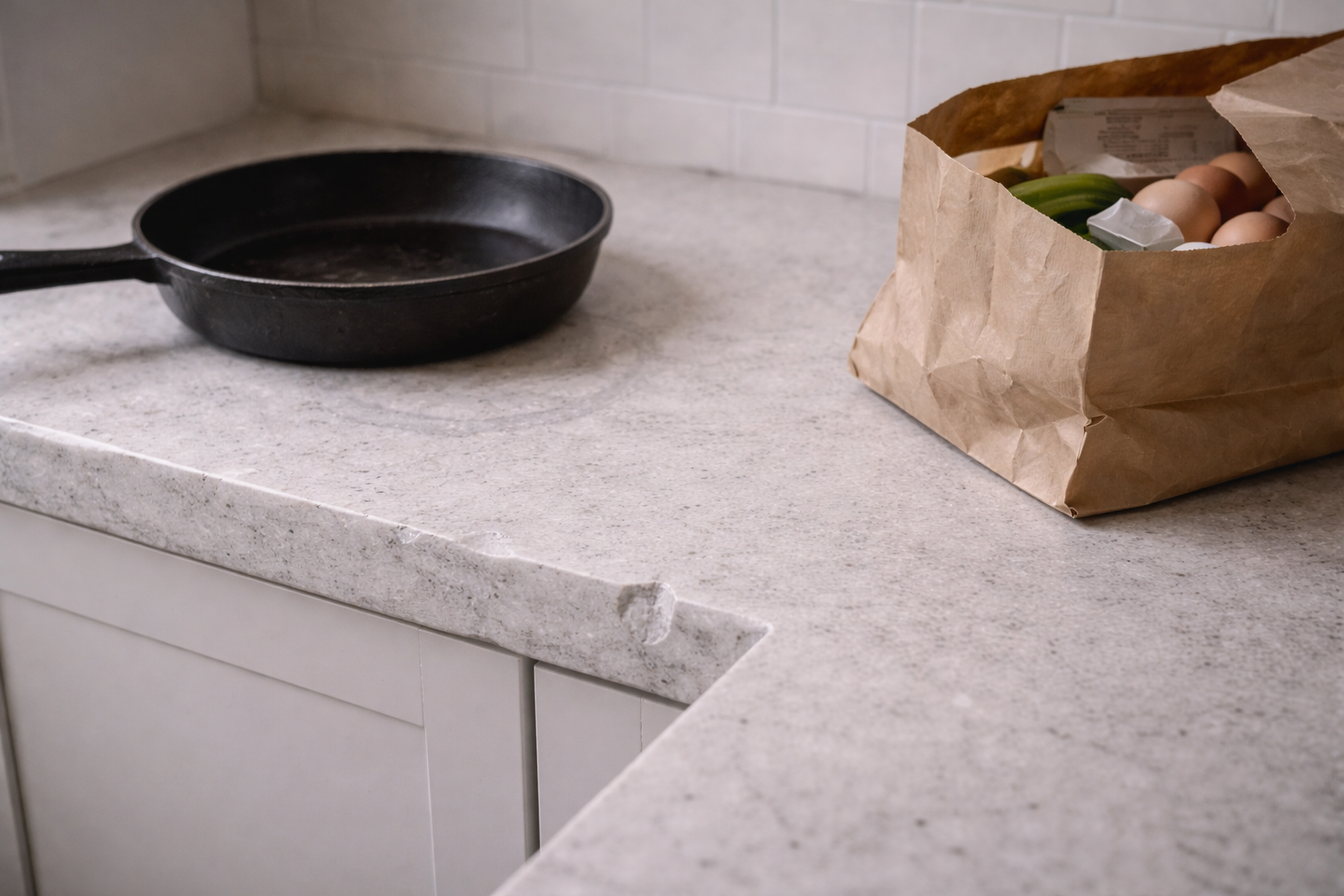
- Annoying part: needs sealing in many cases. Chips happen at sharp corners and thin strips near cutouts.
Marble
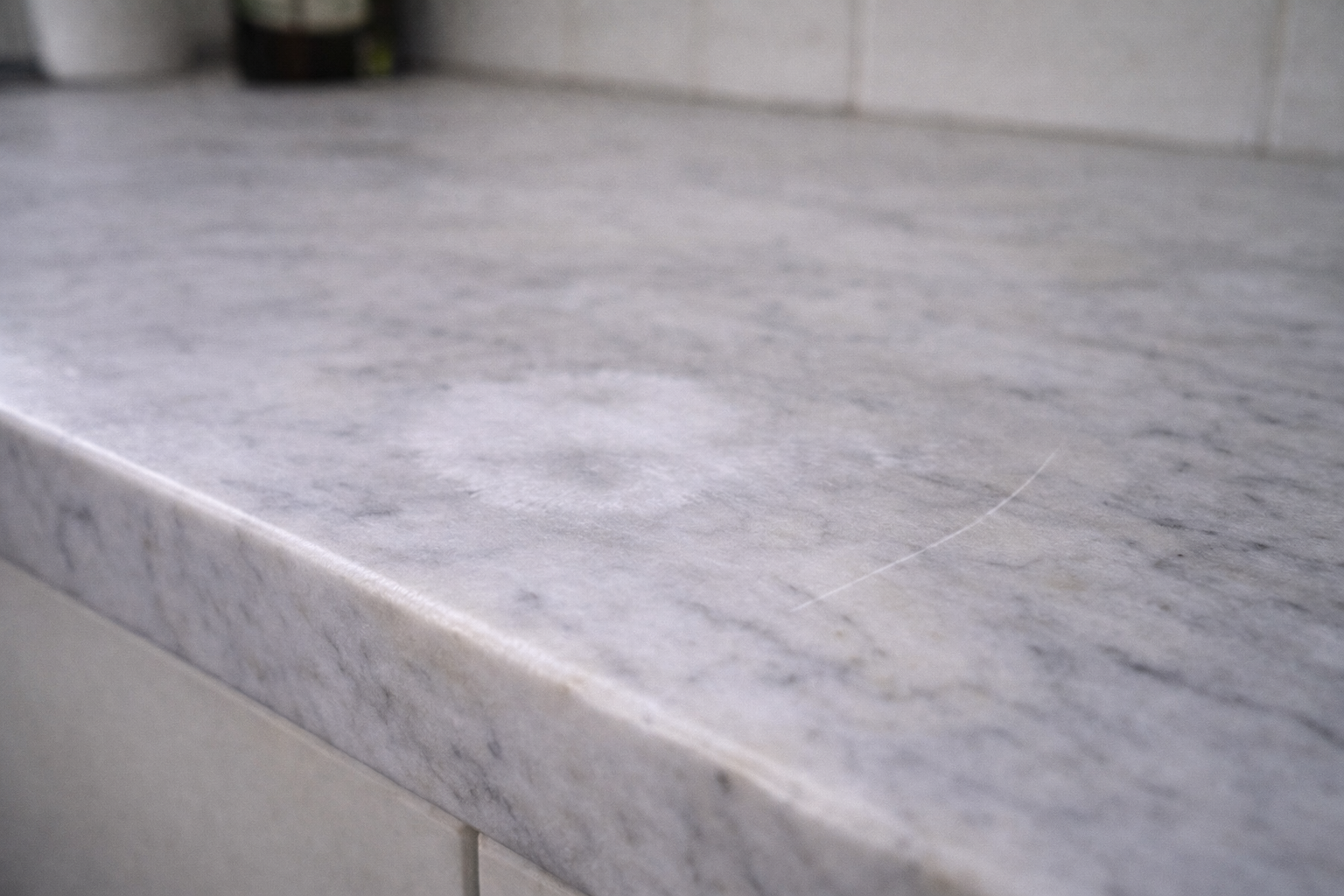
It’s beautiful. It also shows life. Fast.
- Good for: people who accept patina (etching, dull spots) as normal.
- Annoying part: acids (lemon, vinegar, wine) can etch. Scratches show. “Stain panic” is common.
Porcelain / sintered stone
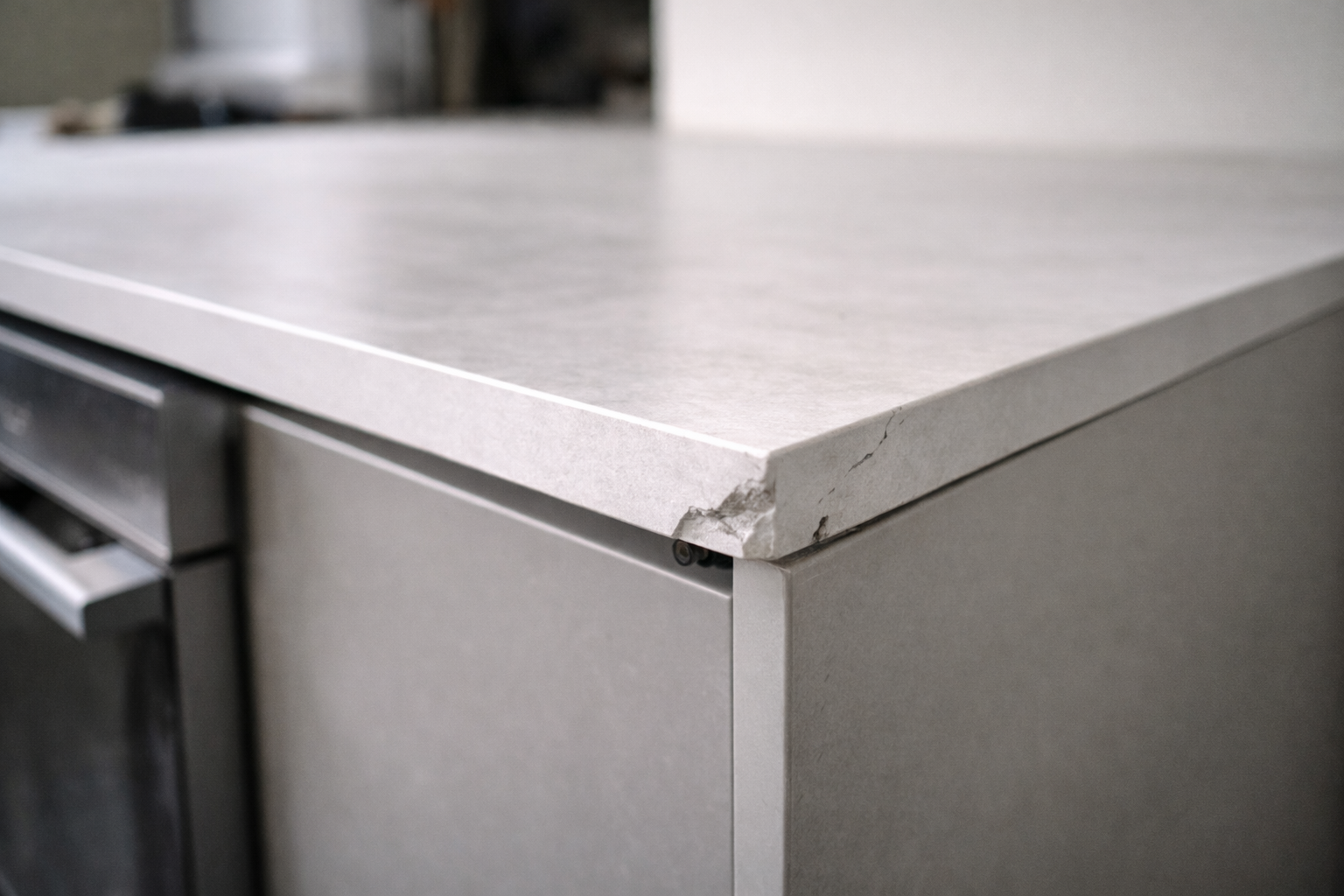
Hard surface, often great on heat and staining, but edge details and support matter.
- Good for: modern kitchens, thin profiles, high heat tolerance.
- Annoying part: fabrication quality matters a lot. Bad edge support and rushed installs show up later.
Laminate
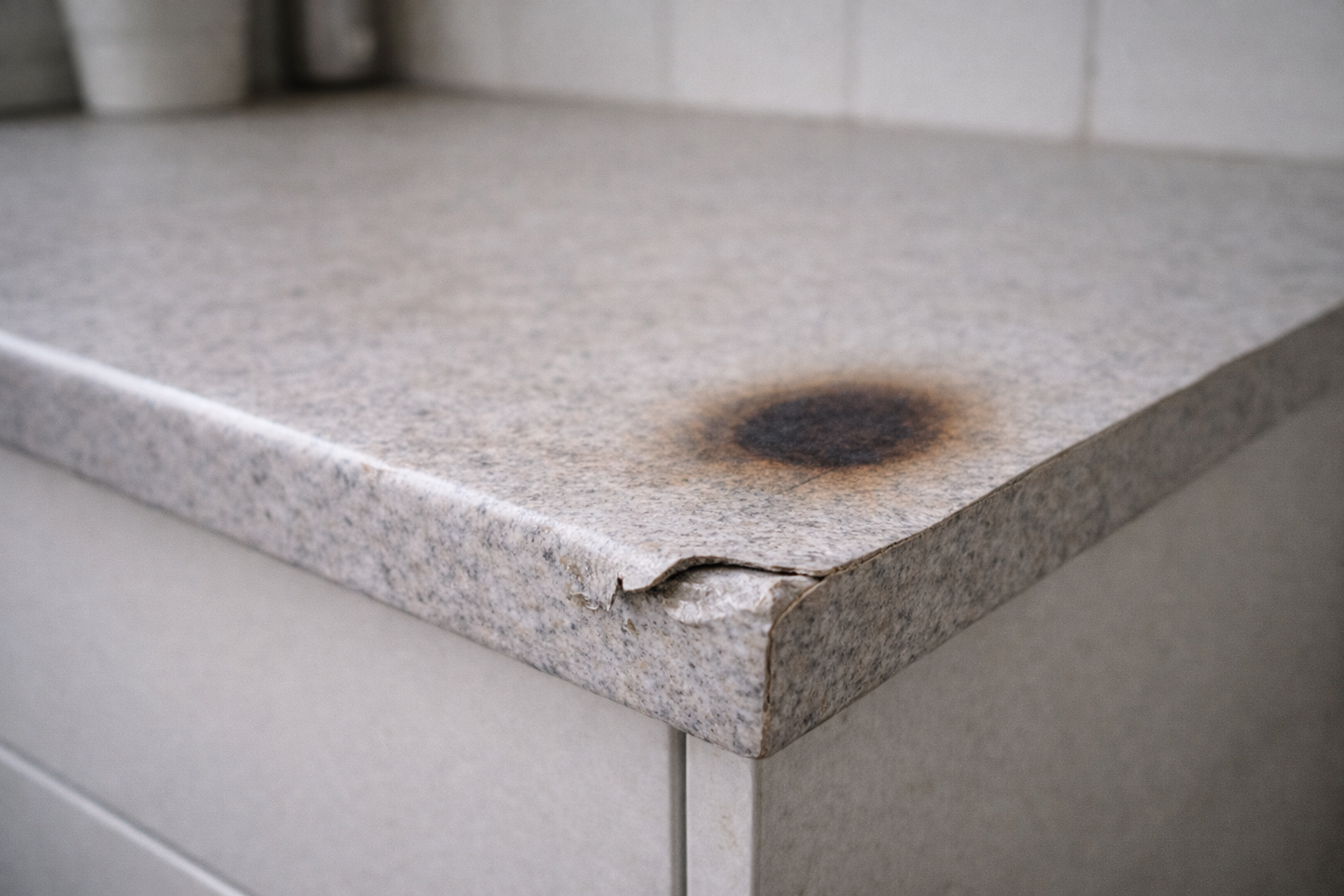
Still the budget champ. New laminates look better than people expect.
- Good for: rentals, quick upgrades, tight budgets, “I need it done” kitchens.
- Annoying part: heat damage and edge swelling if water gets in. It’s not a trivet-free surface.
Timber
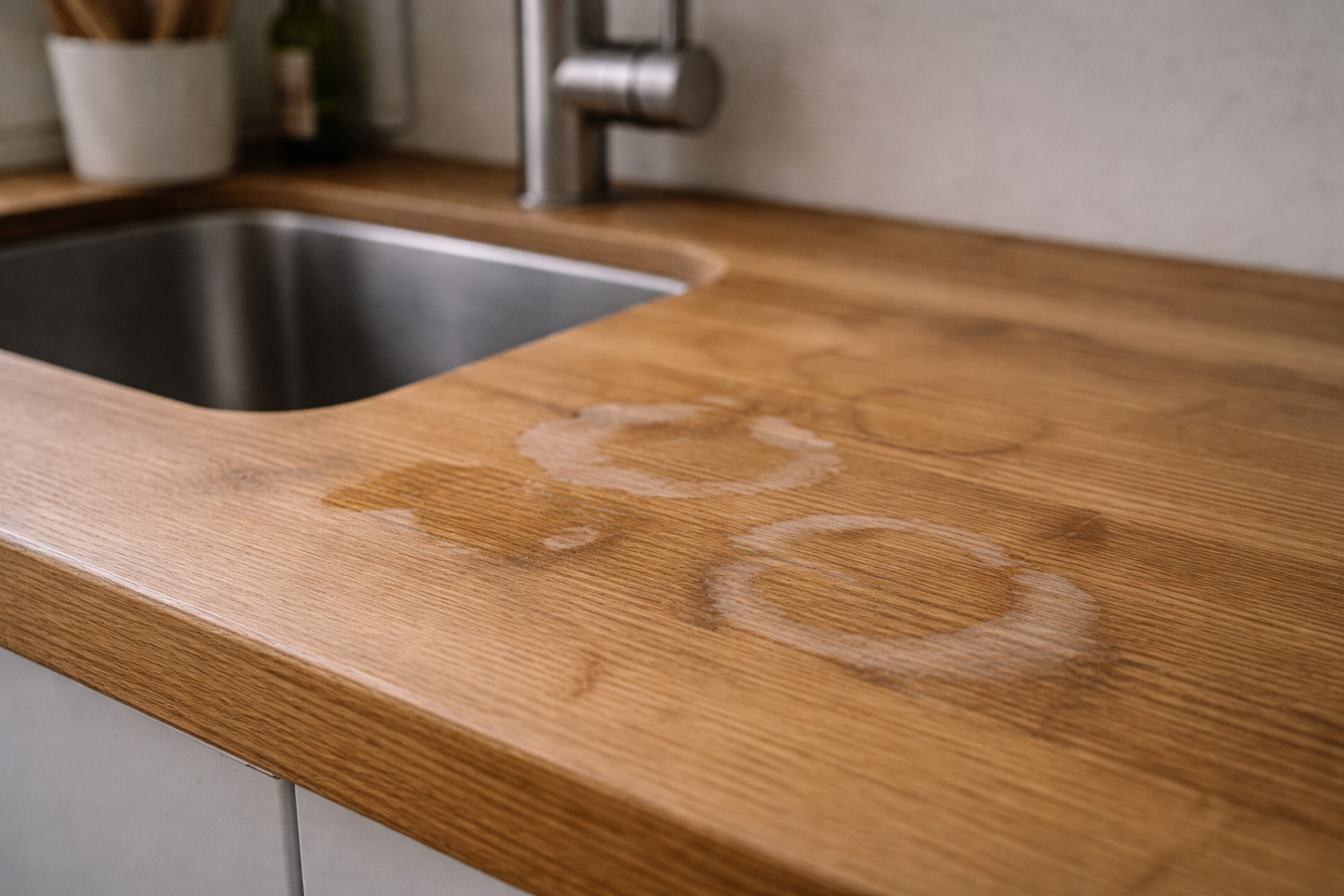
Warm, forgiving-looking, and it makes a kitchen feel less sterile.
- Good for: people who like natural materials and don’t mind basic upkeep.
- Annoying part: it needs oiling/sealing, and you can’t ignore spills forever. It’s not “set and forget.”
If you’re going custom shapes, mixed edges, waterfalls, or complex islands, it’s worth reading your custom benchtop planning guide before you lock anything in.
Design details
(The stuff that decides if you love it or hate it)
1) Thickness: real thickness vs “looks thick”
A lot of thick-looking benchtops are a thinner slab with a built-up/mitred edge. That can look great. It can also add labor and cost. Ask your fabricator to price both ways so you’re not guessing.
2) Seams: where they go matters more than how many you have
Seams are normal. The mistake is putting them where you stare at them forever: right beside the sink, right through the main prep zone, or in a spot that gets wet constantly.
Simple rule: keep seams out of the “attention zone” (sink + prep + cooktop runs) when you can.
3) Edge profiles: comfort + chipping + cleaning
Square edges look sharp. They also chip more easily than a slightly eased edge, especially on stone. Big fancy profiles cost more and usually don’t add function.
4) Overhangs and seating
If you’re doing an island overhang for stools, don’t treat it like a styling move. It’s a structural detail. Heavy materials need proper support (brackets, panels, legs). Skipping this is how you get cracks or sag later.
5) Sink choice drives cost
Undermount sinks usually mean more fabrication (polished cutout) and more care at the seam and edge. Farmhouse sinks can force awkward stone geometry depending on cabinet layout. Pick the sink early. Lock it. Then template.
Installation: what usually goes wrong
A benchtop install is not just “drop it on the cabinets.” The job lives or dies on level cabinets, clean templating, and correct cutouts.
- Cabinets not level: installers can shim, but there’s a limit. Big uneven runs become stress points in brittle materials.
- Last-minute appliance changes: moving a cooktop or changing a sink late can blow up the whole template.
- Walls not straight: most walls aren’t. Good templating accounts for it so you don’t end up with ugly gaps or “why is this caulk line huge?” moments.
If you’re pricing stone and trying to avoid surprises, keep this nearby: stone benchtop prices and what drives them.
DIY vs professional install
(be honest about what you’re installing)
Stone / porcelain / most engineered surfaces: usually pro territory. Weight, handling risk, templating, polishing, seam joining… it’s not a “Saturday afternoon” job.
Laminate and some timber tops: more DIY-friendly if you can measure cleanly and you’re careful with joints and sealing. The failure mode is usually water getting into an edge or seam.
Warranty note: some manufacturers and suppliers want pro install for warranty coverage. Worth checking before you start.
Keeping a new benchtop looking new
Daily cleaning (most surfaces)
- Use mild cleaner and a soft cloth.
- Avoid abrasive pads unless you’re sure the finish can take it.
Heat habits that prevent damage
- Use trivets near the cooktop. Make the landing zone obvious so people actually use it.
- Don’t set hot pans straight onto engineered surfaces unless you want to gamble.
Stone sealing (when applicable)
Some natural stones need periodic sealing. The goal is stain resistance, not “making it bulletproof.” If your supplier says “never seal anything,” ask what they mean by that and what the care plan is.
Final thoughts
A new benchtop is worth it when the material matches your kitchen habits and the install details are handled cleanly: seams placed well, sink chosen early, cabinets level, edges that don’t chip the first year. The surface is the work zone. Treat it like one.
FAQ
- What’s the most durable benchtop material?
For many households, engineered stone/quartz-style surfaces are the easiest “durable + low maintenance” option. Granite can also be very durable, but may need sealing depending on the stone. - Can a benchtop be installed over old countertops?
Sometimes (overlays exist), but it depends on the system, the thickness, and whether your cabinets and substrate are suitable. It can save demo cost, but it can also create height and edge issues. - How often do granite benchtops need sealing?
It varies by stone and use. Many people land in the “every 1–2 years” range, but the real answer is: seal when it stops resisting stains the way it used to. - Are waterfall ends worth it?
They look great, but they add cost and complexity (more material, more edge work, more risk). If budget is tight, keep stone horizontal and spend on lighting or storage instead. - What benchtop is best for a small kitchen?
One that stays bright, cleans easily, and doesn’t need constant babysitting. Lighter engineered surfaces and durable laminates are common winners in small spaces because they keep the room calm.