
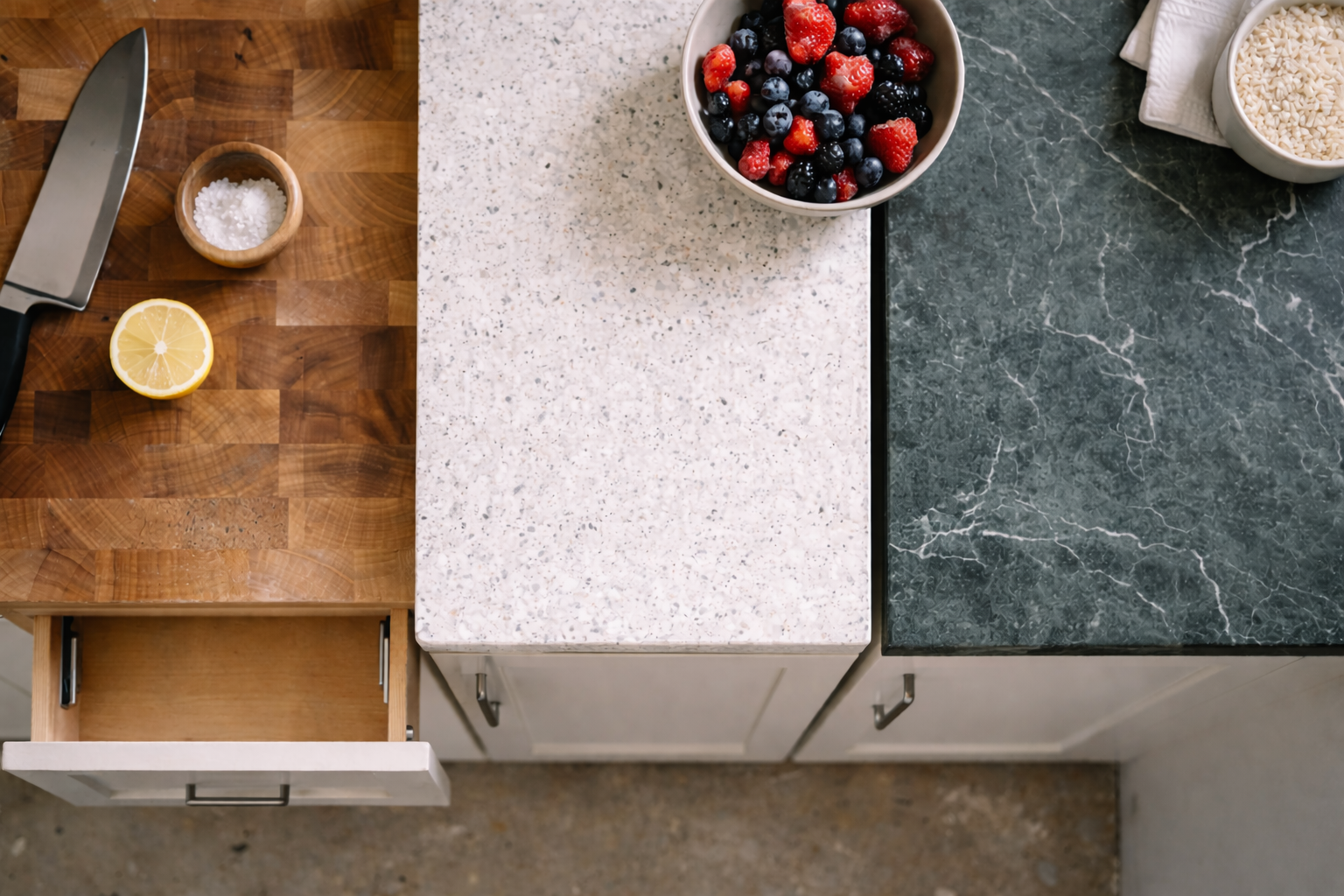
Kitchen Benchtops Ranked: Style, Durability, Maintenance, and Cost
I’ve watched more kitchen budgets get chewed up by benchtops than almost any other single choice. Not because people pick “bad” materials — but because they pick a surface for the photo, then live on it for ten years.
Here’s the pattern: you fall for the slab in the showroom (great lighting, no toddler juice, no coffee rings, no oily hands), then you install it… and the first month teaches you who you are. Heavy cook? Wipe-and-go person? A “I’ll reseal it later” optimist? A baker who pounds dough on the island? Benchtops punish mismatches.
This guide is written the way I talk clients through it on site: what fails, what holds up, what the fabricator won’t say out loud, and what you’ll regret when the kitchen’s beautiful but annoying.
Start Here
The Benchtop Decision That Saves You From Regret
Most people start with “What looks best?” I start with two quieter questions:
- What will damage this surface in your house? Heat, acid, water sitting by the sink, kids banging cups, knives, staining oils, abrasive cleaners.
- How do you want the kitchen to feel after three years? Crisp and uniform, or lived-in with patina and stories.
If you get those two right, the rest is details: edge profile, thickness, seams, and who installs it.
If you’re also deciding whether to replace, resurface, or go custom, your “scope” choices matter just as much as the material. These two pages help frame the options: new benchtop planning and going custom (what it changes).
The Five Regrets People Keep Repeating
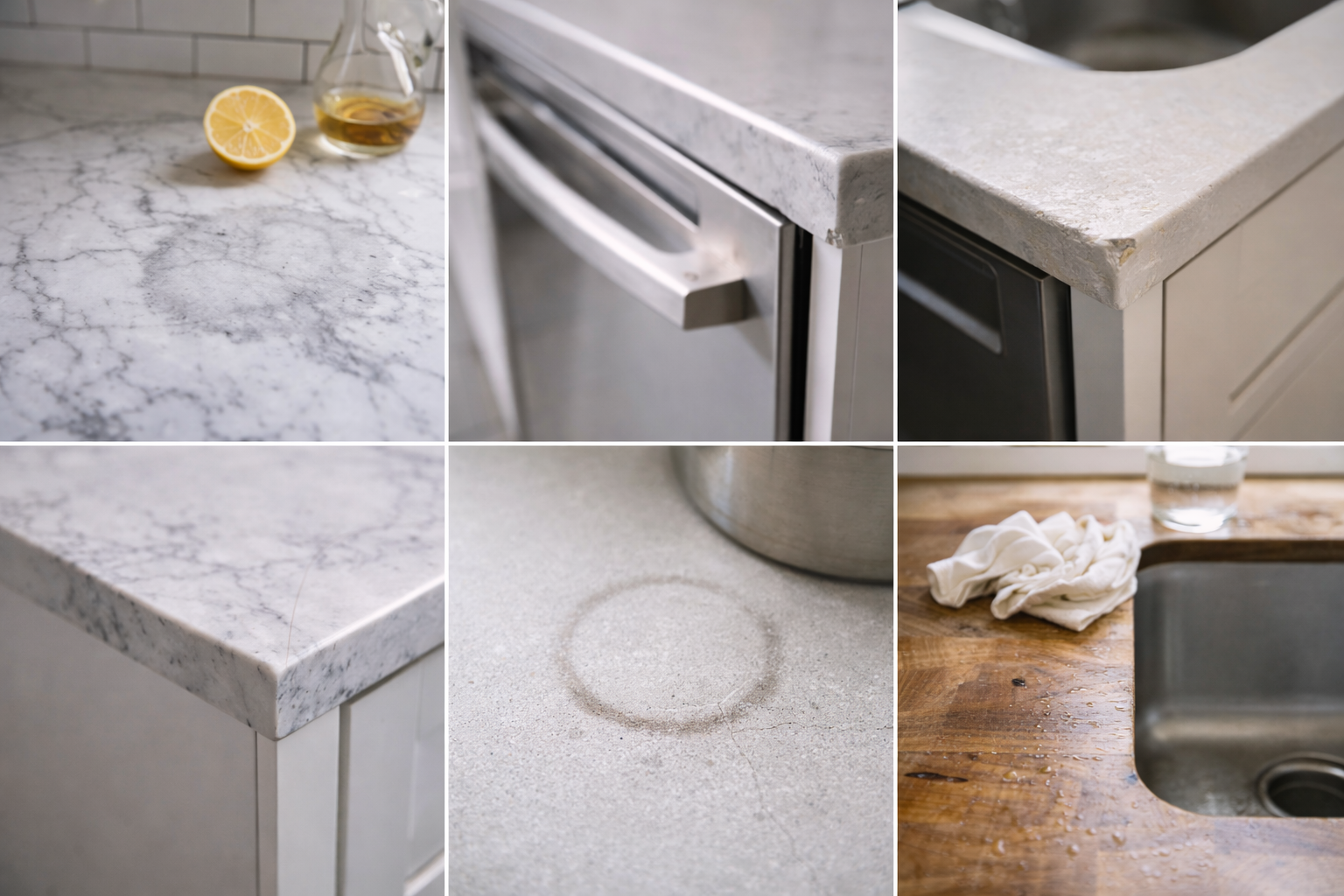
1) “I didn’t know etching was different than staining.”
This is the marble/limestone problem in one sentence. Stains are pigments soaking in. Etching is a chemical mark — the finish changes. People seal, feel safe, then discover that sealers help with stains, not chemistry.
2) “It chips at the edge where we live.”
The edge by the dishwasher. The corner by the stool. The sink cutout. That’s where stone and porcelain get tested. A beautiful, sharp, thin edge is a magnet for impact chips if your kitchen is busy.
3) “The seams bug me way more than I expected.”
Seams are normal. Bad seam planning is not. If you stare at a waterfall island all day, “close enough” bookmatching becomes “why did we do this.”
4) “Heat rules are stricter than the marketing.”
Many engineered surfaces survive daily heat, then get cooked by one forgotten pan. The damage looks like a dull ring, a hairline crack, or a subtle color shift — not dramatic, just permanent.
5) “Maintenance sounded fine… until life got busy.”
Wood needs love. Marble wants gentle habits. Concrete wants acceptance. If you want low-thought ownership, pick a surface that doesn’t require you to become a part-time caretaker.
Material Cheat Sheet
(Pick Your Pain)
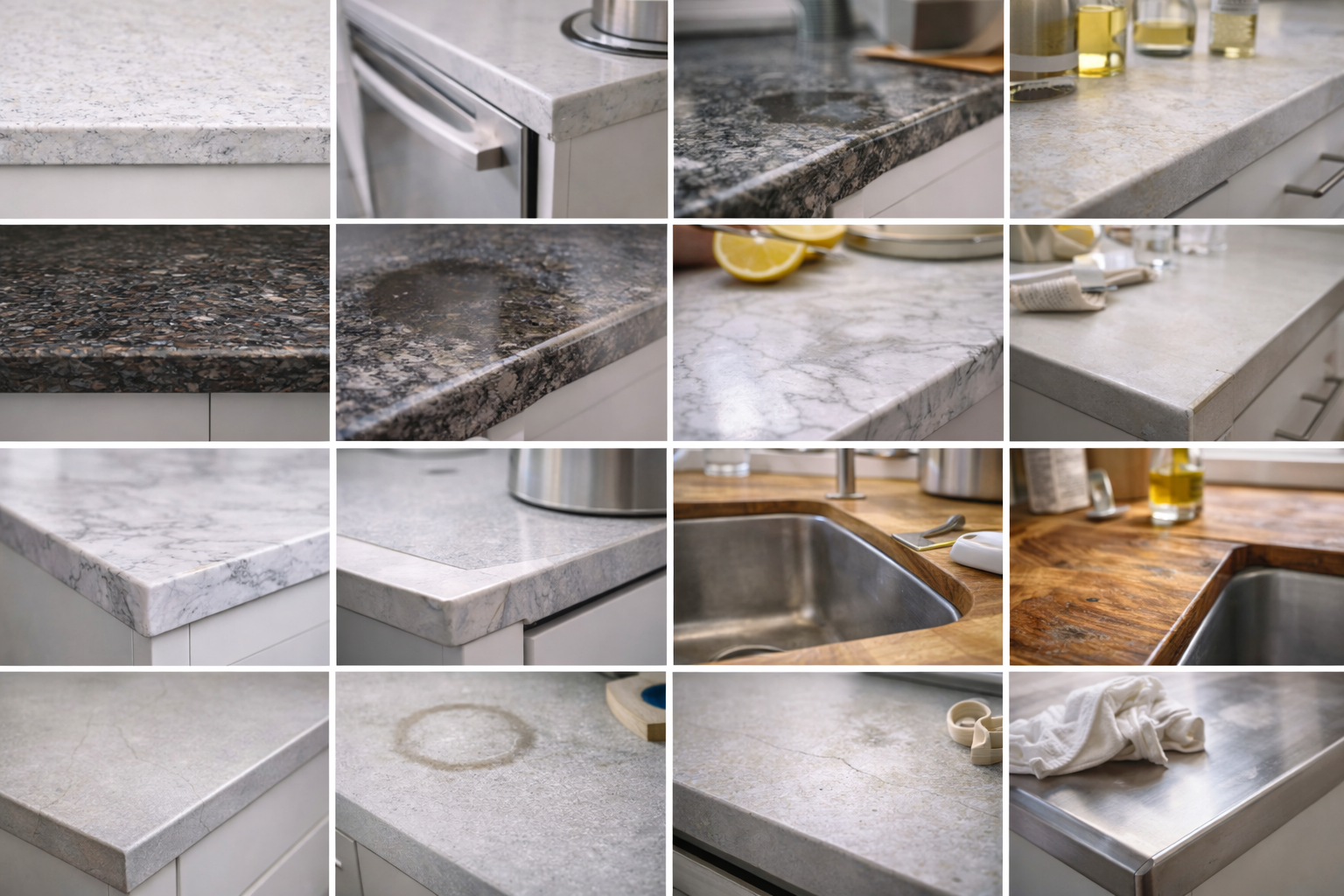
No benchtop is invincible. You’re choosing what kind of “damage” you can live with: a stain, a scratch, a dull patch, a chip, or a slow change in color.
| Material | Best at | Where it fails (in normal homes) | Care style |
|---|---|---|---|
| Quartz (engineered) | Low-maintenance, consistent look, stain resistance | Heat shock / hot pans, dull spots from harsh cleaners, edge chips | Wipe-and-go, use trivets |
| Granite | Heat tolerance, toughness, natural variation | Can stain if neglected; needs sensible cleaning | Periodic sealing, mild cleaners |
| Marble / Limestone | Depth, softness, high-end character | Etching from acids; scratches; needs gentler habits | Patina-friendly ownership |
| Porcelain / Sintered | Heat, UV, thin profiles, modern look | Edge chipping, handling/install risk, visible corners | Easy cleaning, protect edges |
| Wood (butcher block) | Warmth, repairable scratches, quieter feel | Water around sink, swelling, staining if neglected | Oil/seal schedule matters |
| Laminate | Cost control, lots of looks, easy install | Heat blistering, water at seams/sink, edge chips | Gentle heat habits |
| Concrete | Custom shapes, industrial feel | Hairline cracks, staining, variable finishing quality | Seal + accept character |
| Stainless steel | Hygiene, heat, pro-kitchen vibe | Scratches show; dents possible; noise | Looks better with age |
If you’re leaning stone, this page goes deeper on what you’re buying (and what you’re maintaining): natural stone benchtops basics.
The Details That Decide Whether You’ll Love It
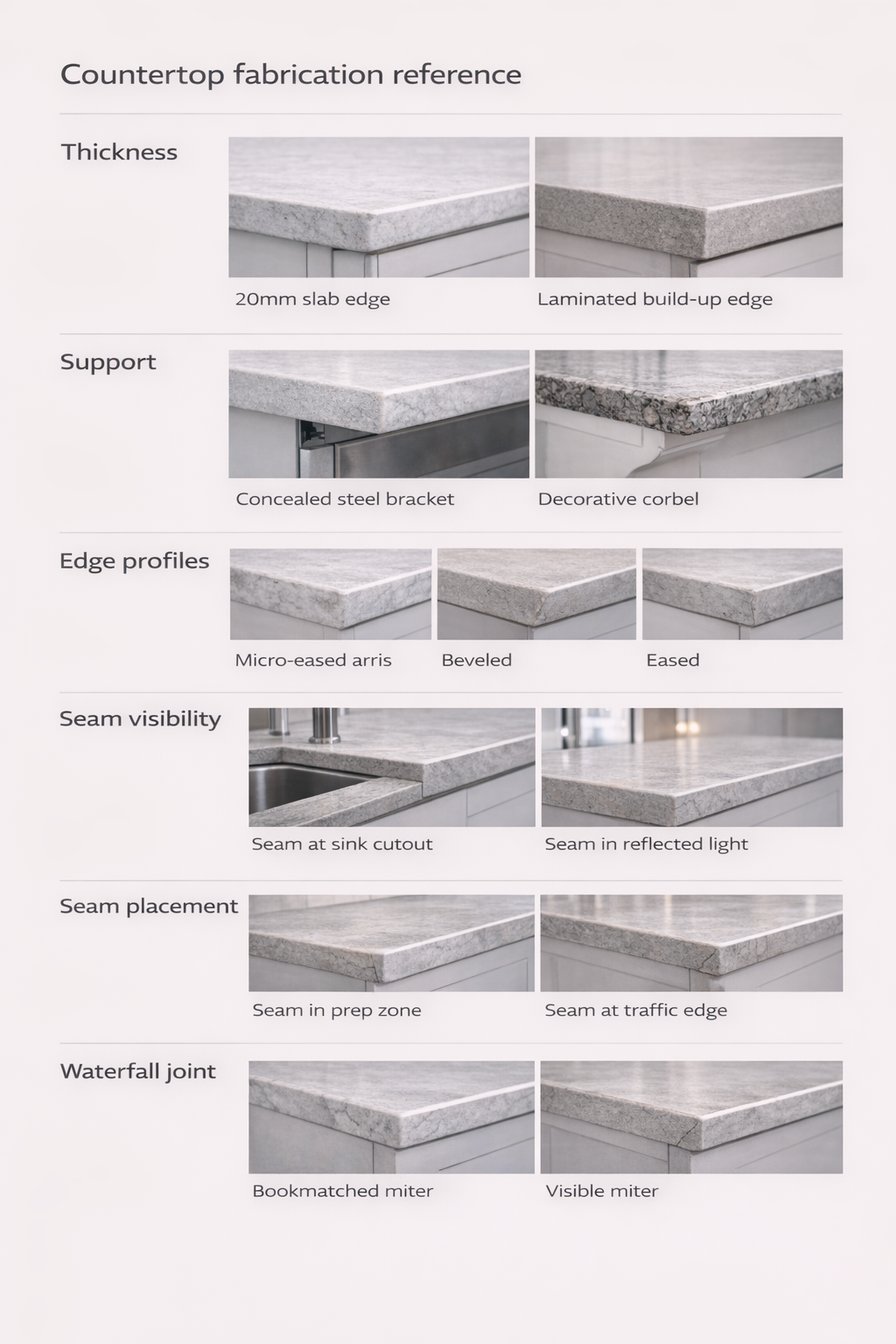
Thickness: don’t choose it like a fashion trend
Thin benchtops look sharp. Thick tops feel grounded. The mistake is choosing thickness without thinking about edges and overhangs.
- Thin profiles can look premium, but edges chip faster if you run stools tight and people hit corners with belts, buckles, and chairs.
- Thicker edges hide slight cabinet inconsistencies and feel sturdy, but can look heavy in small kitchens unless you balance with lighter cabinetry.
Overhangs: islands fail here first
Overhangs are where people sit, lean, and climb (kids do what kids do). If you want a big breakfast bar, plan support like it’s part of the design — not an afterthought you “solve” with random brackets later.
- Stone overhang limits depend on thickness and what’s underneath. If you push far, you’ll need corbels or concealed steel.
- Porcelain/sintered looks thin, but the substrate and support plan matter a lot.
Edges: pick the one you want to touch daily
Edge profiles aren’t just aesthetics. They change durability, cleanability, and how chips read visually.
For a full visual breakdown (and why some edges are trouble near sinks and stools), use: countertop edge profiles.
Seams: plan them where your eye doesn’t live
Seams should land where they’re least visible and least abused. Bad seam placement is the fastest way to make an expensive kitchen feel “patched together.”
- Put seams away from sink cutouts when possible.
- Avoid seams right at the most used prep zone (the spot between sink and cooktop for most people).
- On islands: align seams with lighting and sightlines. A seam that catches under pendant light becomes a daily annoyance.
Waterfall edges: beautiful, but they amplify imperfections
Waterfalls read like “one continuous object,” which means any mismatch in veining, any chip at the bottom corner, and any seam line becomes more visible.
If you’re considering it, read this before you commit: waterfall countertop decisions.
Living With It: The Daily Reality (Stains, Heat, Scratches)
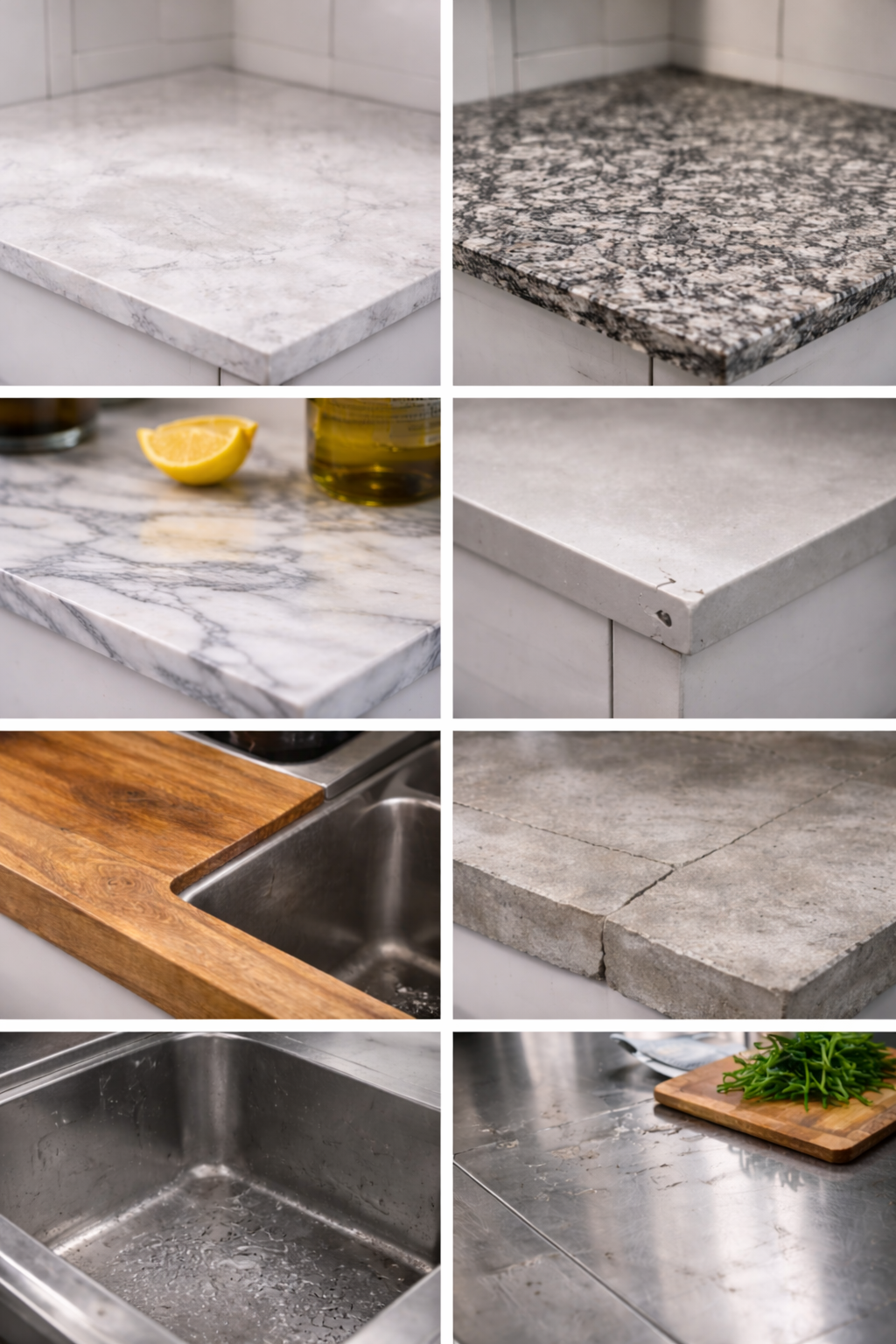
Quartz (engineered stone): low-maintenance, but heat-sensitive
Quartz wins because it behaves predictably: consistent color, good stain resistance, easy cleaning, and no sealing schedule. It’s a solid choice for busy kitchens.
The downside is heat. Quartz surfaces are made with resins — one overheated pan can leave a dull mark that looks like a “cleaning problem” but isn’t. If you cook hard, build the trivet habit into the kitchen culture from day one.
Budget note: not all engineered stone is equal. Some lines are better finished, some chip easier at edges, some show marks under raking light. If cost is the driver, start here: engineered-stone options that don’t feel cheap.
Granite: forgiving and tough, if you keep it simple
Granite handles normal kitchen abuse well. It’s not indestructible, but it’s forgiving: it tolerates heat better than many engineered surfaces, and it doesn’t demand constant babysitting.
Where people mess it up is cleaning: they use harsh chemicals, abrasive powders, or “miracle” products. Over time the surface looks dull and blamed on the stone — it’s usually the cleaner.
Marble (and limestone): the patina choice
Marble is gorgeous. It also records your life. If you want the surface to stay pristine and uniform, marble will annoy you. If you like a kitchen that looks lived-in — soft wear, small marks, light etching — marble can feel rich and calm.
The biggest trap is thinking sealing makes marble “safe.” Sealing helps with stains. It doesn’t stop etching from acids like lemon, vinegar, wine, tomato, and many cleaners. If that sounds like stress, choose something else and copy the marble look in a lower-maintenance material.
Porcelain / sintered stone: modern performance with edge risk
These surfaces can be excellent: heat resistance, UV stability, thin modern profiles, and lots of looks. The trade-off is edge vulnerability and install handling. They can chip at corners, especially on islands, stool edges, and waterfall bottoms.
If you go this route, design for it: soften edges slightly, protect corners, and hire fabricators with real experience on that exact product line.
Wood (butcher block): warm, repairable, and honest
Wood is the most “human” benchtop. It’s quiet. It’s warm. Scratches can be sanded. It also hates standing water, especially around sinks and dish racks. That’s where it swells, stains, and turns into a maintenance fight.
If you love wood, use it strategically: an island prep surface away from the sink can be a joy, while the sink run gets stone or engineered.
Laminate: underrated, until heat and water show up
Modern laminate can look clean and sharp, and it’s often the smartest move when you’re controlling budget and timeline. The failure points are predictable:
- Heat: hot pans and slow cookers can blister the surface.
- Water: seams and sink cutouts swell if water sits and seeps.
- Edges: chips read as “cheap” fast if you pick a fragile profile.
Laminate works best when you accept its rules: heat pads, wipe water, don’t flood the sink rim, and don’t pretend it’s stone.
Concrete + stainless: specialist choices
Concrete is a vibe. It also cracks. Hairline cracks aren’t a “defect” the way people imagine — it’s concrete behaving like concrete. If that idea makes you mad, skip it.
Stainless is the pro-kitchen move: hygienic, heat-friendly, almost impossible to stain. It scratches, and those scratches become the finish. If you like that, it’s one of the most functional benchtops you can own.
Buying + Installation: Where the Project Gets Won or Lost
Templating: the day you want everything calm
Templating is when small measuring errors become permanent. Clear the counters, be there if you can, and confirm decisions you’ll forget later: faucet hole placement, sink reveal, overhang depth, seam locations, and edge profile.
Slab selection: look at it in different light
If you’re buying a slab with movement (veining, pattern, heavy speckle), view it in both showroom lighting and daylight if possible. Ask where seams will land on that slab. Make them show you the layout.
Support and substrate: the boring part that prevents cracks
Islands, dishwasher spans, sink cutouts — these are structural problems disguised as design. Good fabricators think about support. Weak ones focus on polish.
If you’re unsure, pricing context helps you judge quotes. This page frames what costs tend to include (and what gets left out): stone benchtop pricing and what drives it.
Maintenance That Fits Real Life
Daily cleaning: keep it boring
Most surfaces live longer when you keep cleaning simple: mild soap + water, soft cloth, and don’t grind abrasives into the finish.
- Avoid abrasives (powders, harsh scrub pads) on stone and polished finishes.
- Avoid acids (vinegar, lemon-based cleaners) on many natural stones.
- Don’t “disinfect” your benchtop to death with aggressive chemicals as a daily routine.
Sealing: do it when the stone asks, not on a calendar you’ll ignore
Sealing isn’t magic armor. It’s stain resistance insurance. If water darkens the stone quickly, it’s time to reseal. If it beads for a while, you’re fine.
Heat: set up the habit with the kitchen layout
If your trivet is buried in a drawer, you won’t use it. If it lives beside the cooktop, you will. Design beats discipline.
WORTH OWNING
The Kitchen Book (Terence Conran) — good for perspective on layouts, proportions, and why some “pretty” kitchens age poorly.
SHOP NOTE
Kitchen Culture: Re-Inventing Kitchen Design (Johnny Grey) — less “catalog,” more thinking about how people move, cook, and gather.
FAQ
Kitchen Benchtops (What People Ask Right Before They Spend Money)
What’s the best benchtop material for a busy family kitchen?
If you want low-drama ownership: quartz or a durable granite. They handle routine spills and mess without asking you to change your life. Prioritize a forgiving finish and a fabricator with clean seam work.
Can I put hot pans on quartz?
I wouldn’t build your kitchen habits around that. Use trivets or heat pads. Quartz can be heat-sensitive; one mistake can leave a permanent dull mark. If you cook hard and hate rules, consider granite or stainless.
Does sealing marble stop etching?
No — sealing helps with stains, not etching. Etching is a finish change from acids. If you love marble, choose it knowing it will record life. If you want a surface that stays uniform, pick something else.
Is porcelain/sintered stone better than quartz?
It’s not “better,” it’s different. Porcelain/sintered can be impressive for heat and UV, and it can look very modern. The risk is edge chipping and install handling. If your island corners take hits (kids, stools, tight walk paths), design edges accordingly and hire the right installer.
What benchtop is easiest to maintain?
Quartz is often the easiest for most households. Stainless is easy in a different way (it shows scratches, but you stop caring). Laminate is easy until you expose it to heat and standing water at seams.
Should I do a waterfall island?
Only if you’re ready to pay for alignment and accept that imperfections become more visible. Waterfalls can look incredible, but they magnify seam planning, corner durability, and veining match.
Honed vs polished: what’s better?
Polished hides some day-to-day marks but can show glare and reflections. Honed feels calmer and hides small scratches, but it may show oils and darkening on some stones. Pick based on how you use the kitchen, not on showroom lighting.
What edge profile is the most practical?
Slightly eased edges are a strong default: comfortable, cleanable, less chippy than razor-sharp edges. Big ornate edges are harder to keep clean and can look dated faster unless your whole kitchen commits to that language.
Is butcher block around the sink a bad idea?
It’s a high-maintenance zone. Standing water and wet towels are constant there. Wood can work if you’re disciplined about wiping and maintaining the finish, but most households end up fighting it at the sink run.
How do I stop laminate from swelling?
Protect seams and the sink cutout. Wipe water fast. Don’t let wet items sit at the joint line. Heat pads matter too — heat damage can open the door to moisture damage.
What should I ask the fabricator before I sign?
- Where will seams land (and why there)?
- How will you support overhangs and dishwasher spans?
- What’s your plan for sink cutout reinforcement?
- What happens if there’s a chip on install day?
- What cleaner do you recommend (and what should I never use)?
Dont think of benchtops as a material choice — they’re a lifestyle fit. Pick the surface that matches how your kitchen runs on a Tuesday night, not how it looks in a staged photo. Get the details right (edges, seams, support), and your kitchen will feel calm for years instead of “almost perfect, but annoying.”